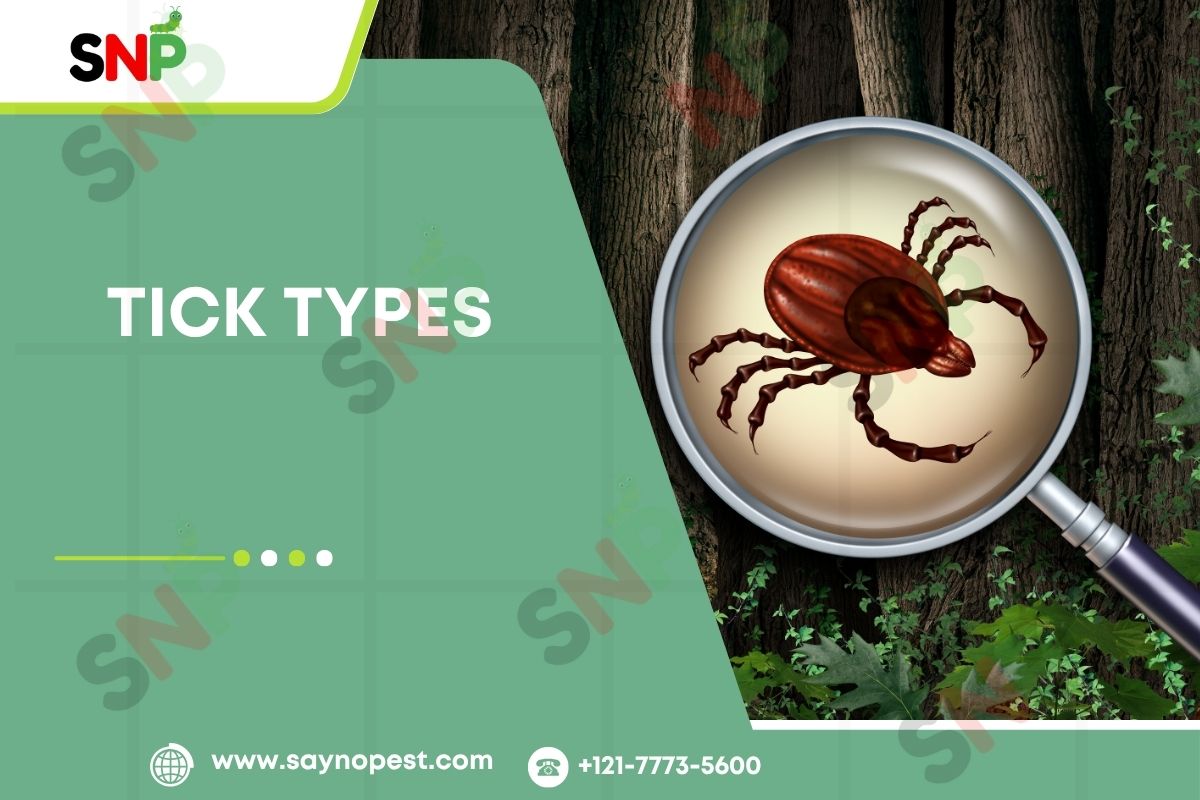
Tag: Tick Types

  • Tick Types and the Signs of Tick: Every American Should Know

    Tick Types and the Signs of Tick: Every American Should Know

    An understanding of Tick Types and the signs of tick infestation is important to shield anyone who resides in or travels to the United States. As tick populations increase and their health threat widens, understanding tick types, where they prefer to reside, and indicators of infestation is the most important key to shielding yourself, your family, and your animals. This guidebook will take you through the fundamentals of Tick Types and the signs of tick, taking into consideration pets in general, to ensure you stay updated and safe all year round.

    Tick-Types

    Introduction to Tick Species and Symptoms of Tick

    Ticks are small arachnids that feed on reptile, mammal, and bird blood. Early detection of them and diagnosis of symptoms of tick infestation can avoid a host of serious health conditions that range from skin rashes to the transmission of lethal diseases.

    The frequent signs and symptoms of tick bites among animals and humans are:

    • Redness or rash due to biting for which there is no cause
    • Itching or burning
    • Itchiness

    Discovery of a tick on the skin

    Flu-like signs like fever, headache, or tiredness if tick-borne illness occurs

    Early detection of such indications of tick issues is an extremely vital element of pest control for American homes.

    Tick Types: Hard Ticks and Soft Ticks

    All the ticks belong to two major groups: soft ticks and hard ticks. Human encounters with most of the ticks are with hard ticks, like blacklegged ticks and American dog ticks, while soft ticks are rarely encountered on animals and humans. Hard ticks can be easily recognized by the shield-like plate at the posterior of the tick and are the primary vectors of all the tick-borne diseases in the U.S.

    Key Tick Species to understand:

    Blacklegged Tick (Deer Tick)

    • American Dog Tick
    • Lone Star Tick
    • Brown Dog Tick
    • Western Blacklegged Tick
    • Rocky Mountain Wood Tick

    Each of these Tick Species has its own unique perils and regions where it is most frequently encountered.

    Top Tick Species in the US

    Learn the top Tick Species in the US—they’re coast to coast and spread a range of health threats.

    Blacklegged Tick

    widespread in the Northeast, Midwest, & mid-Atlantic

    • Gloomy colored, Tiny legs and orange-brown-colored frame
    • Spreads borrelliosis disease, babesiosis, and other illnesses

    American Dog Tick

    Shrublands and grasslands, mostly in the East and parts of the West Coast

    • Reddish-brown, heavier body with white or gray marks
    • Transmits Rocky Mountain spotted fever and tularemia

    Lone Star Tick

    • Southeastern and eastern states are infested
    • Female has a white mark 

    Identified to bite aggressively and cause ehrlichiosis, tularemia, and alpha-gal syndrome 

    Brown Dog Tick and Western Blacklegged Tick

    The brown dog tick resides indoors alone and is found throughout the country

    • The western blacklegged tick is a West Coast plague, doing well normally in California to spread Lyme disease
    • These are the typical Tick Types that exist in the US and cause most tick bites American homes get.

    Tick Types in America for Dog Owners

    You need to be aware of Tick Types in America as a dog owner so that you and your dog can be protected. Ticks present in the park, on trails, or even in your own back yard.

    American Dog Tick: Particularly dangerous to dogs, paralysis inducing, and carrier of life-threatening disease

    Blacklegged Tick: Spreads Lyme disease in dogs, leading to lameness, fatigue, and kidney disease

    Lone Star Tick: Will transmit ehrlichiosis and anemia in canines

    Brown Dog Tick: Will infest kennels and dwellings and be a nuisance year-round

    To stop problems with Tick Types in America on your canine, check your canine after every excursion, apply veterinarian-approved tick preventives, and clean up your yard.

    Tick-Types-and-the-signs-of-tick

    How to Know If Your Canine Has Tick Infestation: Sign of Tick

    Your lifeline is information about Tick Types and symptoms of ticks. Be alert for:

    • Itchy or swollen skin, exclusively in secret area’s of the body
    • Small red spots on skin, scalp, or pet’s fur
    • Ticks in skin at hair cylinder, in ears, or between toes

    Mysterious behavior or unusual sign in pets, i.e., limping, fever, or drowsiness

    If you spot any of these ticks, pull off the tick at once with tweezers and check for signs of illness.

    Conclusion

    Of all the Tick Species and signs of tick problems, the adult blacklegged tick is quite troublesome. Adult blacklegged ticks are tiny but can transmit Lyme disease & other illnesses. Adult blacklegged ticks roam more during cold weather and inhabit woodland and grassland environments.

    As Tick Types and the signs of tick are a pain in the neck for millions of Americans, it’s highly important to stay in peak preparedness, keep a lookout for preventive measures, and take action immediately if you spot any tick. For reliable pest tips and additional tips on how to defend your home and your pet, visit saynopest—your pest control partner.
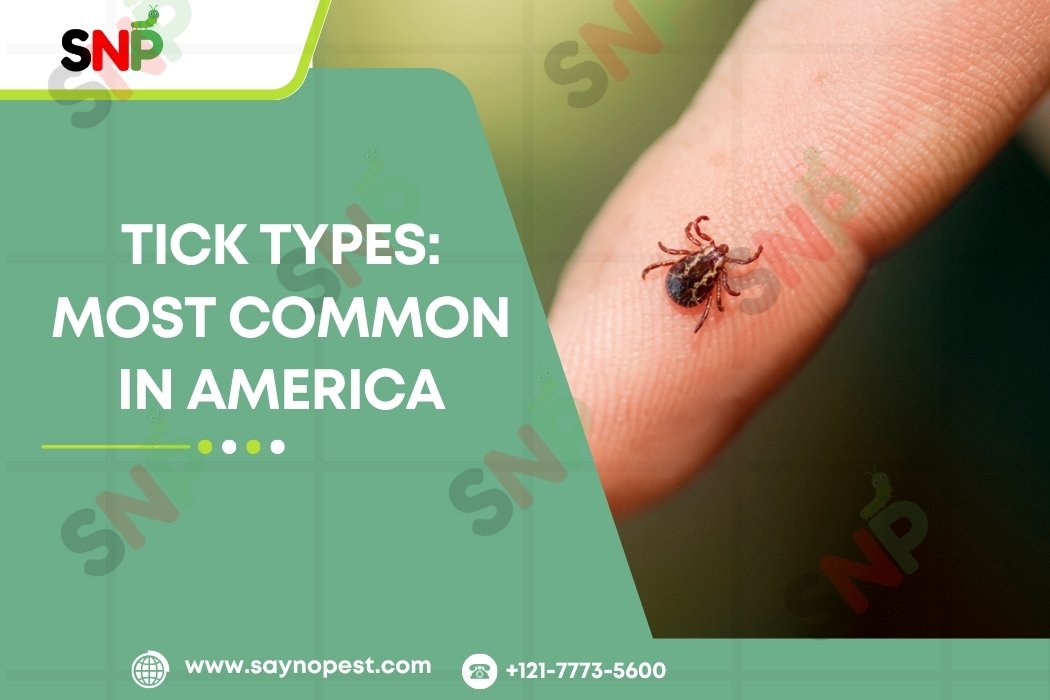
  • Tick Types: Most Common in America

    Tick Types: Most Common in America

    Several Tick Types in America can be the carriers of dangerous diseases like Lyme disease, Rocky Mountain spotted fever, and ehrlichiosis. The knowledge of the most common Tick Types and the signs of tick growth in pets can be a certain protection for pets from these tick bites.

    5 Common Tick Types in the United States

    5-Common-Tick-Types-in-the-United-States

    5 Tick Types that are currently in the United States, and that are most likely to come into contact with your dog are-

    1. American Dog Tick (Dermacentor variabilis)

    • The American dog tick has always been one of the most common Tick Types in the US. Adult specimens are about to be found just at first glance due to the combination of their brown bodies with white or silver markings on their backs. When engorged, female ticks change color to gray.
    • American dog ticks are well known for causing diseases like tularemia to dogs and humans. Dogs seem to be their preferred victims but they can easily switch to other species. For example, people in addition to cattle and wildlife.
    • These ticks are mainly seen in the spring and early summer. After a feast, the female tick may spawn thousands of eggs, hence an infestation is hard to be rectified. Ticks virtually never infest buildings but are quite a threat where there is a little canopy of trees outdoors.

    2. Blacklegged Tick

    • Western regions know it by the name blacklegged tick, and in the east, it goes by the name deer tick. The black-legged tick is tinier than the dog tick yet it is very dangerous. The adult black-legged tick is about 0.9×0.5mm in size and is almost two times smaller than the adult dog tick. They are usually found in grassy and woodland areas.
    • Due to global warming, the ticks are increasing. They are mostly present in the Midwest and Northeast and along the Pacific Coast. They are predominant in areas where the rodent reservoirs are and later transmits to humans.
    • These ticks are well known for being the transmitters of Lyme disease, as well as babesiosis, anaplasmosis, and ehrlichiosis. Nymphs of these species are dangerous since they can hardly be detected. These tick species are active from spring to the end of autumn, and one bite can transmit Lyme disease if the tick is not removed in time.

    3. Lone Star Tick

    • This tick has a single white dot on the back of the adult female. Lone Star ticks are not only aggressive biters but are also very likely to bite dogs, humans, and wildlife. They cause red and itchy rashes and transmit ehrlichiosis, tularemia, as well as another disease-STARI.
    • Important- Some people, that have been bitten by the Lone Star ticks, become allergic to meat, and this disease is called alpha-gal syndrome. These ticks are most active during early spring and late fall.

    4. Brown Dog Tick (Rhipicephalus sanguineus)

    • Brown dog ticks are bicolored and have a conical, elongated form. The larvae, nymphs, and adults of this species are the cause of a theoretical illness called erliquiosis, amongst the symptoms of which are: headache, sore muscles, fever, etc. Toddlers, seniors, and the one with weaker immunity are the most likely to catch the infection.
    • Brown dog ticks are only found indoors, so their hosts are strictly limited to dogs, and they survive by remaining in one place an entire life-cycle. The ticks can move from a pet to its owner and cause severe symptoms. The transmission of the pathogens to the bloodstream can lead to the growth of the disease.

    5. Rocky Mountain Wood Tick (Dermacentor andersoni)

    • Rocky Mountain wood tick can be found in the states near Rocky Mountains and in the parts of the Pacific Northwest. These are similar to the American dog tick, which has a red-brown body with silver spots.
    • Mostly these ticks are active during the spring and the beginning of the summer. Their preferred habitats are grassy, bush, or forest areas in highlands. The infection by Rocky Mountain Wood Tick from one host to another can be Rocky Mountain spotted fever, Colorado tick fever, and tularemia.
    • Moreover, they have the potential to cause tick paralysis in canines and humans-a rare but very serious condition. If you go hiking or camping in the Rockies, don’t forget to check your dog (and yourself) in time after every outdoor adventure!

    Conclusion

    If you’re a pet owner, one of the responsibly common things to do is get yourself familiar with the Tick Types in America for dog protective measures and for the safety of your family.

    The thorough understanding of a species individual behavior, and risky diseases is quite crucial when it comes to seeking the best preventative measures while some other strategies like regular tick checks, unstoppable prevention, and on-time extraction will give the results. The constant protection of your pet (and yourself) against ticks is important.