Tag: termites in house

  • Orkin Termite Treatment Cost & Process Explained

    Orkin Termite Treatment Cost & Process Explained

    Termites are the most destructive pests in the United States. Every year, they cause billions of dollars in damage by eating homes which are made up of wood. What makes them truly dangerous is their quiet nature by the time most homeowners identify the problem, termites have caused serious harm. This is where Orkin termite treatment comes to help you. Known for its best and expert service, Orkin provides complete termite checking, treatment, and prevention plans and termite treatment cost designed to protect your home.

    Understanding the Termite Threat

    There are three main types of termites in the U.S.—subterranean, drywood, and dampwood termites.

    • Subterranean termite live underground and make mud tubes to reach wood.
    • Drywood termite infests dry wood like home interiors, which is made up of wood and attic beams.
    • Dampwood termites live in damp, damaged wood, often found in basements or near leaks.

    Each type behaves differently, but all feed on cellulose found in wood, drywall, and paper. It is very important to understand the termite damage because once they damage your property then you have to handle a large amount of repairs. Early detection through a termite inspection Orkin can prevent your home from heavy loss..

    How Orkin Helps to Deal with Termite Problems

    Orkin is a company that has been assisting American homeowners in the struggle against termites for years. They do not have a single-size-fits-all approach to it but a science-grounded and individualised process involving finding infestations, eliminating them, and preventing.
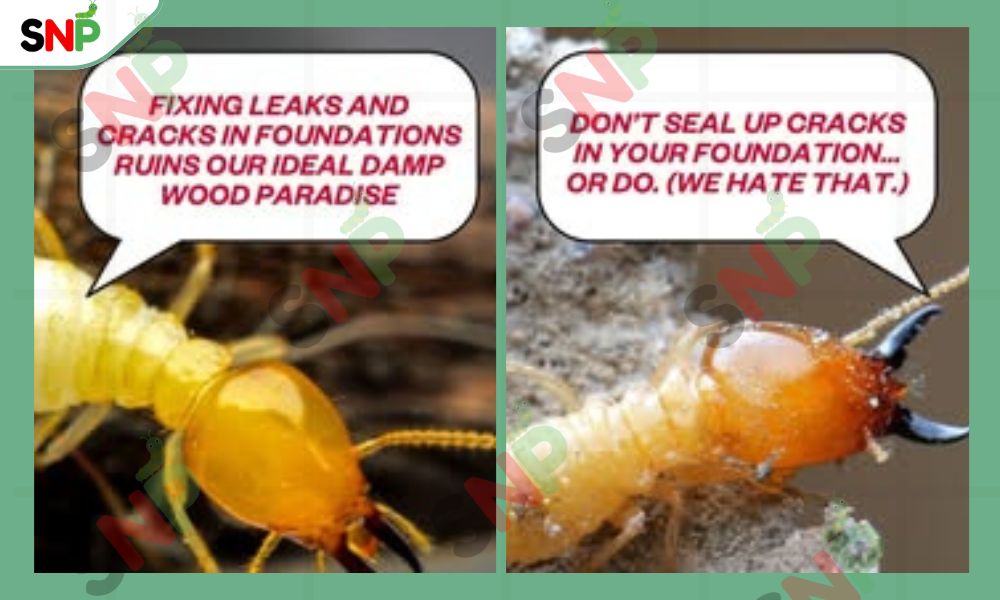
    Their professional staff begin by ensuring that your property is correctly inspected, and then they proceed to develop a specific plan which will help in addressing the correct type of termites and the level of infestation. Orkin’s treatments combine modern methods and best treatments, that help to remove termites from its main point and reduce the repair amount.

    This professional process is what makes termite control by Orkin the best method nationwide.

    Step 1 — Thorough termite inspection

    Full inspection of termites, Orkin involves the attic, crawl spaces, foundation, and outside wood inspection as well as other risk areas. The professionals target dynamic termites, damages, and factors that facilitate intrusion, such as moisture and contact of wood and soil. This checking is the main point of any best treatment plan and helps to remove the termite and also reduce the termite treatment cost if the invasion is small.

    Step 2 — A customized treatment plan

    After proper checking, Orkin makes a treatment plan based on the termite type and invasion level. The treatment method can be changed because of the termite type, location, and size of the invasion. Plans can also be changed because a small, localised drywood problem needs a different method than a serious subterranean invasion. Orkin discusses the method, suggests results, and follows up before work begins. 

    Step 3 — Common treatment methods Orkin uses

    Orkin uses several industry methods depending on the situation:

    • Liquid barrier treatments: This method is used near the foundations to make a chemical barrier that kills or repels termites that cross it.
    • Baiting systems: Stations with attractive bait placed around the property. Termites take the bait back to the colony, which can reduce or eliminate the colony over time.
    • Foam applications: This method is used in voids or inside the walls where liquid application is difficult.
    • Localised fumigation or tenting: Used mainly for drywood termite infestations in a whole structure (less common but effective for certain cases).

    These methods match modern integrated pest management practices. Orkin also uses specialised termiticides and monitoring tools to ensure treatments are targeted and effective. The termite treatment cost is directly affected by which methods chosen. 

    Step 4 — Monitoring and prevention

    After treatment, Orkin often follows the checking or protection process. Monitoring can include regular checks of bait stations, annual checking, and tips to reduce the future invasion problem. Many homeowners choose protection agreements or bonds that include follow-up treatments if termites return. termite inspection orkin. 

    Orkin Termite Treatment Cost: What Homeowners Can Expect

    The average termite treatment cost in the U.S. is based on several key factors, which are the size of the property, the level of the invasion, and the treatment method. On average:

    • Localized treatments can start around $300 to $800.
    • Comprehensive treatments for larger infestations is between $1,000 and $3,000.
    • Severe infestations or structural fumigation can amount to upwards of $5,000.

    These prices are in line with the industry rates, and they are in line with the pricing model of Orkin throughout the country. When your technician is on inspection, he/she will give you a comprehensive quote, detailing what is to be included.

    Homeowners like the fact that the Orkin termite treatment price includes not only the removal price, but also further protection and inspection.

    Key Factors That Influence the Cost

    When measuring the final termite treatment cost, several factors should be considered:

    • Type of termite species infesting your property
    • Level of the infestation and damage level
    • Treatment method & plan 
    • Accessibility to affected areas
    • Property size and foundation type
    • Service plan duration and warranty coverage

    Orkin’s specialists ensure complete transparency, so customers understand every component of their quote. This clarity has made Orkin termite treatment cost one of the most trusted and clearly communicated pricing structures in the industry.

    Why Orkin Termite Treatment Is the Best Choice
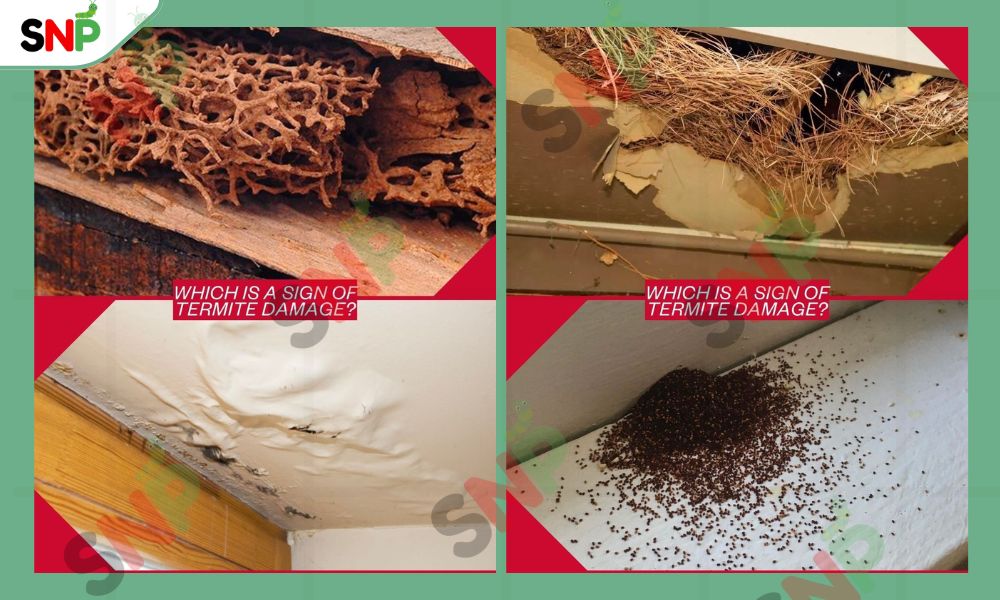
    There are several reasons why termite control by Orkin is one of the best in the pest control industry:

    1. Extensive Experience: They have the experience of many years which makes the trust them. 
    2. Certified Technicians: Every Orkin expert follows the proper training process to learn the treatment and method.
    3. Advanced Tools and Technology: They use modern methods and treatments which help to remove termites and maintain future protection. 
    4. Customized Plans: Each treatment plan is based on the customer’s wants and after checking the proper problem.
    5. Comprehensive Warranties: Orkin gives a re-treatment promise and makes sure to give future protection.
    6. Eco-Friendly Solutions: Their treatments are safe for families, pets, and the home.

    When you choose Orkin, you are not just paying for treatment; you are protecting your home from serious damage. 

    Preventive Tips to Keep Termites Away

    After expert treatment, homeowners should follow these tips to keep their home safe: 

    • Remove wood waste from your garden and home. 
    • Repair all the water running pipes and control the damp places.
    • Keep a distance between the wood and the soil so that it does not cause termite problems. 
    • Keep wood away from your home.
    • Contact Orkin for termite inspection Orkin to check and maintain protection.

    These small tips, when followed properly with the expert help, will keep your home safe and free from damage. 

    Conclusion: Protect Your Home with the Right Partner

    Your home can be ruined by termites, and you are not even aware of their presence, but with the help of Orkin, there is a way to resist them. Orkin services guarantee your home is free of termites all year round with advanced monitoring and custom treatment, as well as checking on preventive measures.

    When you see evidence of the termites or just need to get a good sleep, call Orkin today and have them conduct a termite check. Their experts will give you a comprehensive plan and specific estimate of the cost of your Orkin termite treatment, which will save you the most prized asset: your home.

    In terms of quality, efficiency, and professional termite control, termite control by Orkin is one of the recommendations that a homeowner can make in the United States.
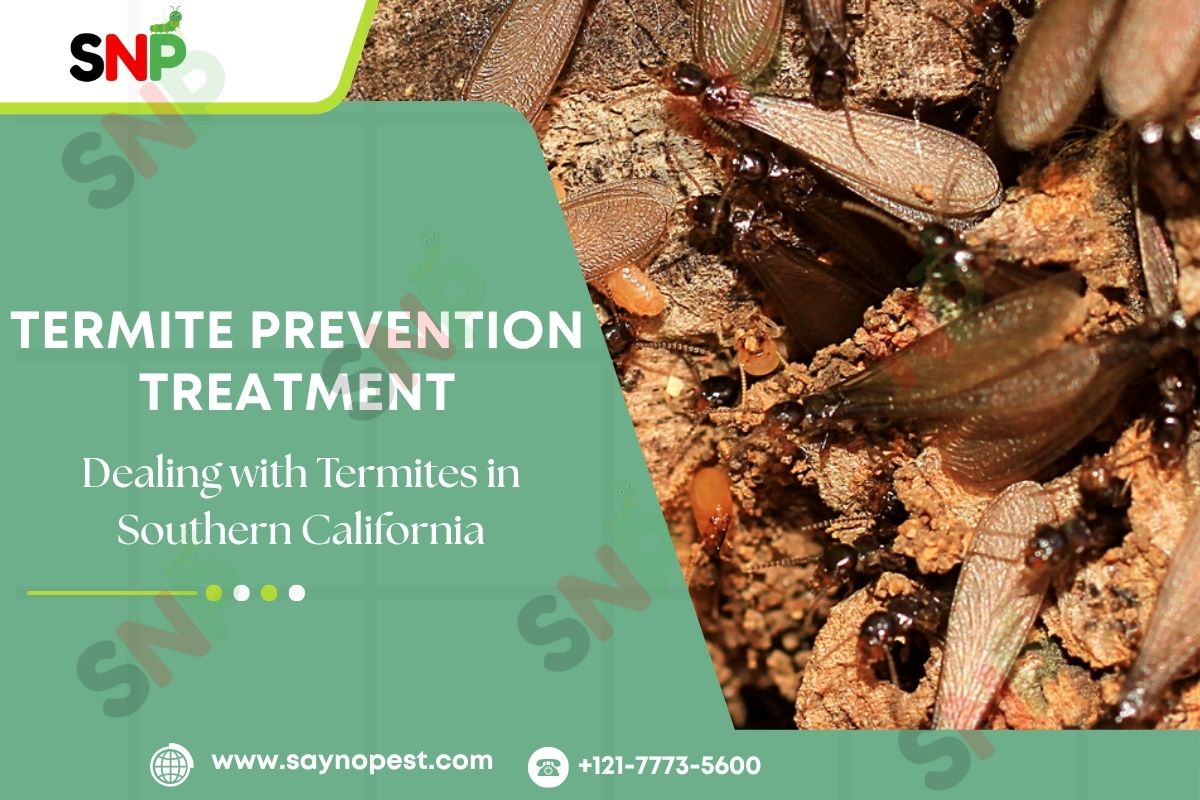
  • Dealing with Termites in Southern California: Best Season for Treatment

    Dealing with Termites in Southern California: Best Season for Treatment

    Termites are one of the most harmful pests which homeowners deal with in Southern California. The hot climate, normal winters, and humidity create the perfect surroundings for these wood-loving pests. If you do not take treatment at the right time, termites can silently damage your property’s design and lead to heavy repairs. Understanding the right time for termite prevention treatment is important for homeowners who want to keep their homes safe and termite-free.

    Why Termite Problems Are Common in Southern California

    The climate in Southern California is characterised by pleasant warmth throughout the year, and the same conditions provide a favourable environment to termite colonies. Los Angeles, San Diego, Orange County, and Riverside are some of the areas that experience common termite infestation owing to the humidity and wooden structures found within urban areas.

    Termites do not hibernate in winter, unlike most other pests. They keep on moving and feeding their colonies as they are still active in the ground or within the walls. This renders treatment of termite prevention to be an all-year-round requirement and not a seasonal activity.

    Understanding Termite Behaviour in Southern California

    In Southern California, two main types of termites are the subterranean termite and the drywood termite.

    Subterranean Termite: The underground termites live in the ground, and they enter homes using gaps found in the base or buildings made up of wood. They become more active following rainfall.

    Drywood Termites: Drywood termites, however, are the insects which feed on dry wood, and they may reside in furniture or in the beam of the attic, and hence difficult to identify.

    They become most active in warm and humid seasons when swarming is taking place. Swarming normally begins between March and June; however, in the mild seasons, swarming may continue. This is why persons who own houses should be provided with concern in early inspection and termite prevention treatment before the swarming season.

    The Best Season for Termite Prevention Treatment

    The best period for administering a termite prevention therapy in Southern California is at the termination of the winter and the commencement of spring.

    In this phase, termites are not very active and the pest control firms can easily attack the colonies before they start their swarming season. Treatment at early stages also avoids large scale infestations, which are difficult and costly to manage at later stages of the year.

    This is the reason why this timing is the best:

    • Treatment can penetrate wooden structures because of mild weather.
    • Preventing termites at an early stage will prevent them even before they start reproducing.
    • Reduced number of colonies implies cheaper and prolonged treatments.

    Householders are also advised to have the house inspected twice a year before spring and after summers to ensure that no colonies are formed in the house. Periodical inspection can be an important component of long-term termite prevention treatment plan. 

    Professional Termite Solutions: Why Timing and Expertise Matter

    The treatment plans provided by professional pest control companies in California are determined by the kind of termites and the level of infestation as well as time of the year. These professionals employ the use of sophisticated equipment like moisture meters, infrared cameras and baiting systems to help detect the concealed colonies.

    The most popular solutions are:

    • Treatments of the liquid soils: Prepare a barrier that will kill the termites entering the house.
    • Termite bait stations: Attract and kill all colonies gradually but successfully.
    • Fumigation: This is applied in severe cases of termite infestation by the drywood.

    Selecting the best termite company in California will guarantee results and professional follow-ups in the long run that cannot be achieved by DIY methods. It is not enough to provide the company with termites and remove them but to ensure that they do not come back.

    Brand Spotlight: Orkin LA – Trusted Expertise in Southern California

    Orkin LA is also among the best termite company in California as far as reliability and expertise are concerned. Having over 120 years of experience in the pest control field, Orkin established a reputation for utilising science-based techniques and technology. They have technicians who are well-trained in the detection and treatment of local termite species and mostly those that are found in the Southern California area.

    Orkin LA provides a full inspection procedure, personalised treatment protocols and follow-ups to make sure that the activity of termites is eradicated. Their liquid treatments and monitoring systems are sophisticated, and they find termites in the depths of the wooden construction and the soil layer.

    Their seasonal approach is one of the primary strengths of Orkin LA. Their professionals know that the climate of California needs versatile solutions, either in the form of prevention therapy at the beginning of spring or specific goals in the summer of maximum activity of termites.

    Orkin is a service provider that can be considered by homeowners who need a professional year-long coverage to cover their homes. You can explore the services of Orkin using the services of trusted pest control providers such as Saynopest that help to connect homeowners with certified specialists and efficient termite eradication packages. This will make sure that you receive the best termite prevention treatment as well as save on time and money.

    Natural Alternatives: Dr Killigan’s Eco-Friendly Termite Solutions

    To the portion of homeowners who like using natural and environmentally friendly methods of pest control, Dr Killigan’s has become a household name in the market. Dr Killigan is a safe substitute for the harsh kind of pesticides that are usually applied in the conventional treatments due to its non-toxic and chemical-free pest control products.

    Their product line consists of natural sprays, dusts, and essential oil-based repellents, which do not harm pets or the environment and prevent termites and other pests. Natural alternatives do not work well since they do not eliminate the huge infestations; however, they are best suited for preventive treatment or in the treatment of small termite problems in and around the house.

    The products of Dr Killigan are highly valued by homeowners who would like to keep the indoor air quality and eliminate chemical usage, particularly in family homes. They especially come in handy when forming a barrier around furniture, floors, or attics that are usually made of wood.

    Using affiliate platforms like Saynopest, homeowners collect the opportunities to study the natural termite prevention options proposed by Dr Killigan and compare them with the professional treatment which is proposed by such companies as Orkin LA. This will enable them to select solutions according to their needs, budget, and environmental preferences of their home.

    Orkin LA and Dr Killings are both brands that offer the best solution to a termite problem, be it the high-tech professional services or the safe natural choice. Which of them to pick is based on the level of the infestation and life priorities.

    DIY vs. Professional Termite Control: Which Is Right for You?

    In mild cases or as a proactive measure, DIY techniques of termite control can be used. The activity of termites in the area of your house can be reduced with the assistance of natural repellents, boric acid, or essential oils. However, additional help is required in case of severe infections or structural destruction.

    A certified technician can detect concealed colonies as well as implement treatment which penetrates deep into the walls or foundations. The accuracy of this level cannot be provided by DIY approaches.

    To achieve the final and full outcome, one would want to depend on the number best termite company in California, particularly in the swarming season.

    Preventive Tips for Long-Term Termite Control

    Keeping termites away requires consistent care and awareness. Follow these points to keep your space termite-free: 

    • Schedule professional inspections at least twice a year.
    • Keep gutters and drainage systems clean to avoid excess moisture.
    • Fill all gaps from the base and wooden material.
    • Store firewood away from the house.
    • Use natural products or termite prevention treatment products for added protection.
    • Fix plumbing areas as soon as possible to remove damp areas that attract termites.

    When these small steps are put together with professional treatments, the possibilities of termite infestation would go down considerably.

    Conclusion

    Termites are small pests, & their destruction could be disastrous. Prevention of termites before the swarming season can help you save the trouble of future headaches and the cost of repair before it is too late. 

    Are you going to rely on the skill of Orkin LA, which has been rated as one of the best termite companies in California, or do you want to do it in a way that is friendly to the environment, which, in this case, Dr Killigan would be the choice.

    Homes can search with ease with websites like Saynopest which allow people to contact the best rated pest control companies and natural alternatives all at one location.

    Then do not wait to have the termites settle in. You should act today and invest in preventive measures to select the most suitable termite company in California that suits you so that your Southern California home is maintained as strong, safe, and free of termites throughout the year.

  • Hidden Threats: Termites and Spiders in Your Home

    Hidden Threats: Termites and Spiders in Your Home

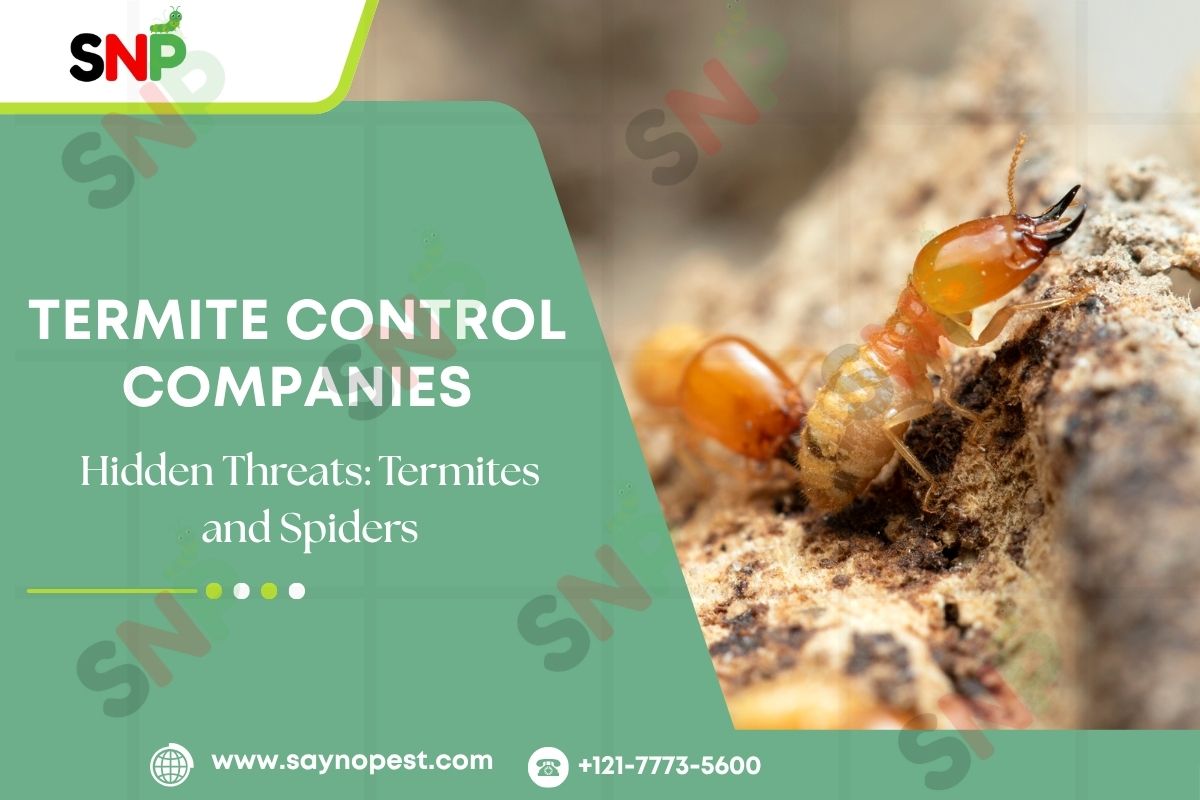
    Homes in the United States face many hidden problems. The most common problems are termites and spiders. Termites quietly damage wood and the structure of the home. Spiders can cause stress when you spot them and, in some cases, health problems as well. This blog explains how to find signs, prevent problems, and when to call professionals. It also discusses how a major provider, like Terminix, inspects and treats both termites and spiders, as this is one of the most famous in the United States under the termite control companies. Understanding these pests will help you take proper treatment on time and remove them. 

    Why termites are a serious problem

    Termites live on wood and other materials that have sugar or a sweet element in them. They can cause damage slowly over months and years. The first signs are small: hollow-sound wood, mud tubes on foundations, or discarded wings near the window. Because damage can be hidden inside walls, homeowners may not identify these signs early till the repair becomes high. That is why homeowners always contact the best termite control companies for inspections and treatment. Expert help can find problems very fast and handle them.

    Common termite types and signs

    There are several termite types in the U.S., which are subterranean, drywood, and dampwood. 

    • Subterranean make mud tubes and live in the soil. 
    • Drywood termite live fully in wood and do not need contact with soil. 
    • Dampwood termite like wet wood. 

    Their signs, which need to be checked, are:  mud tubes, damaged wood, small holes in drywall, and small wings. If you see any of these, contact a termite control companies right away, as they have experts and know how to handle them. The best expert can easily identify the types and suggest the right treatment.

    Spiders: nuisance vs. risk

    Most spiders are not dangerous and can even help us by eating other pests. But some types, like black widow & brown recluse, are very dangerous. Spiders like dark places: basement, attics, crawl spaces, and garages. Remove waste, fill gaps, and cut extra plants will help to remove spider places where they make their web. Vacuuming webs and removing egg sacs helps too. When you see many spiders or identify any dangerous type, expert help is the best. Many termite control companies now offer integrated pest solutions that include spider management as well, along with other pests. 

    Why regular inspections matter

    Inspections help in detecting the problems before they become serious. An expert inspection includes looking at the foundation, crawl area, attic, basement area, and outside areas for signs of pests and things that welcome them. Experts use experience and tools to find hidden activity. They can suggest with best treatments or preventive tips. For homeowners, once in a year check is an affordable way to protect a home’s value and safety. Expert termite control services mix inspection, treatment, and follow-up to keep pests away.

    How professionals treat termites and spiders

    Termite treatment includes baiting systems, liquid barrier treatments, and, in some cases, fumigation. 

    • Bait stations work by attracting termites and carrying poison back to the colony. 
    • With liquid barriers, a treated area is formed around the structure to prevent and kill the termites attempting to enter. 

    For spiders, experts remove webs, places where they hide the most, and reduce settings that allow other insects. Treatments are used carefully, with attention to safety for people and pets. Many providers also give ongoing plans that include regular visits & monitoring to keep homes protected every time. These plans are a key part of good termite control services.

    Brand spotlight — What Terminix does and how they do it

    One of the most recognisable companies in the U.S in terms of termite control is Terminix. They offer a complimentary first inspection and various treatment plans. A Terminix specialist inspects a house, inside and outside, during a termite inspection that involves attics, crawl spaces, foundations, etc. They will seek termite indicators, moisture and rotten wood. Moisture meters and visual inspection tools are some of the tools that experts use to identify hidden problems.

    They also check situations that make termite activity more likely. For treatment, Terminix installs the Sentricon® System with Always Active™ technology in many locations. This baiting system is made to protect the home regularly and to remove termite colonies by targeting the termite queen and the colony. 

    Depending on the type of termite and the requirements of the home, Terminix might also provide liquid barrier treatment and other procedures. In the case of spiders, Terminix provides key locations, gets rid of the webs, and provides specific treatments and preventive strategies to lessen the future action.

    Their main focus is safety for families and pets and which includes follow-up visits or ongoing service plans to keep problems from returning. These methods—deep inspection, use of proven systems like Sentricon, and follow-up—are reasons many homeowners choose Terminix among termite control companies.

    What to expect from a Terminix inspection and plan

    A particular Terminix inspection is thorough and starts with looking for visible signs. The inspector will check particular areas and note any damage or situations that allow pests to enter. If termites are found, Terminix suggest a plan. Plans may include Sentricon bait stations, liquid treatments, and scheduled checking visits. Terminix also explains the options and costs and will answer questions about safety and timing. Many homeowners have a written plan and the option for ongoing protection from a best company

    Practical prevention tips for homeowners

    You can reduce harm by taking a few simple steps:

    • Store wood, firewood away from home.
    • Fix drips and maintain crawl spaces.
    • Close the gaps in doors and windows.
    • Minimise the home interior and exterior clutter.
    • Prune shrubs and maintain mulch low along the sides.
    • Arrange year pest inspections with a professional.

    All these methods will reduce the danger of termites, as well as make your house less appealing to spiders and other pests. When you already notice some signs, do not attempt to treat it by yourself; instead, call a professional since such a serious invasion is to be treated by experts. 

    Choosing the right company for your home

    When choosing a termite control companies and spider, look for experts, clear inspection output, and honest explanations of methods. Ask about assurance, follow-up visits, and safety measures for people and pets.

    Read local reviews and check whether the company offers mix plans that cover both termite and spider concerns. Many homeowners choose the best termite control companies that combine inspection, treatment, and ongoing checking. If you want continuous protection, look for providers with plans and clear methods about what they will do.

    Conclusion — Act early, protect your home

    Termites, as well as spiders, may be a source of serious problems that may prove to be dangerous over time. Early detection and prompt intervention are cost-saving and stress relievers. To a large number of homeowners, a combination of detection, treatment and prevention with the help of highly professional termite controlling firms offers the optimal option with respect to the pay-off.

    In case you prefer a popular choice, Terminix provide thorough inspections, established systems of termite management such as Sentricon and specialised spider management services. They are a good option among termite control companies and even among those who are calling termite control services because they combine techniques, experienced specialists, and continuous programs. Make a little step now: check, close, and possibly hire a professional to make your house safe.

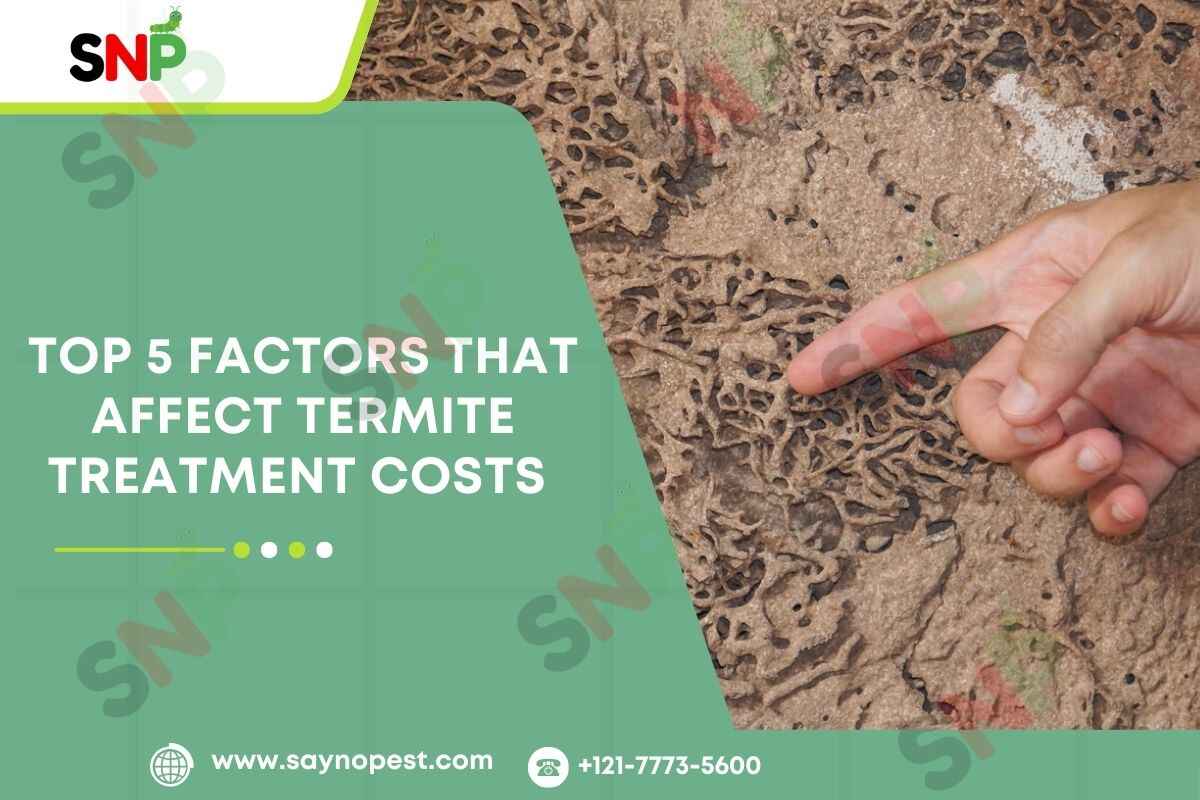
  • Top 5 Factors That Affect Termite Treatment Costs in the U.S. 

    Top 5 Factors That Affect Termite Treatment Costs in the U.S. 

    Termites may look small, but they can cause serious problems in your home and which require high costs to repair if you do not identify them early. If you are looking for a pest control company, it is important to understand what leads to the cost of termite treatment so you can choose the right option and budget properly. This blog will discuss the top 5 factors that affect termite treatment costs, followed by what a leading provider like Terminix offers. 

    1. Type of Termite Species 

    One of the most important cost factors is which type of termite invasion in your home. In the U.S., the most common are subterranean termites, drywood termites, and dampwood termites. The best pest control company will give you the correct information about these types and help you to get rid of them. 

    • Subterranean termites mainly live in soil and need treatment around foundations, done with liquid barriers or bait systems. These treatments are more labour-intensive and expensive. 
    • Drywood termites live in wood itself and sometimes require fumigation or harder treatments to reach the hidden colony. 
    • Dampwood termites are less common, but if moisture issues exist, removal plus treatment of damp areas adds to the cost. 

     Different species need different methods—and that leads directly to differences in cost. 

    2. Size & Severity of the Infestation 

    Even within the same type, the extent of the invasion matters a lot. Treating a small infestation is far less costly as treating a colony that has spread through multiple areas or through structural components. Understand the importance and reach out to the best pest control company providers as they will guide you with all the factors of your house which may lead to the infestation cost.  

    • If termites are small to one wall or one beam vs broad, which spreads across walls, floors, attic, etc. 
    • If the invasion is larger, there may be hidden damage, which increases labour and materials. 
    • In some cases, follow-up or repeated treatment is required which is an addition to the overall price. 

    3. Treatment Method Chosen 

    The treatment method plays an important role in cost. Common methods include: 

    • Liquid barrier treatments around the foundation 
    • Bait systems are placed in the soil and check regularly  
    • Wood treatments (drilling & injecting termiticide, applying surface treatments) 
    • Fumigation or “tenting” for drywood termite infestations 

    Each method has different cost components: chemicals or materials, labour, time, and whether the home needs to be vacated (in the case of fumigation). Some methods are more expensive upfront but may last longer. 

    4. Property Size, Structure, & Location 

    The size of your home, design, foundation type, and Area play an important role in deciding the termite treatment cost. All these factors affect the cost lot.  

    • Square footage: Bigger homes need more coverage (barriers, bait stations, inspection time). 
    • Foundation type: Homes with crawl spaces, basements, or wood‐to-soil contact can be more difficult to treat. 
    • Availability & labour: are also affected by the thickness of the wall, the complexity of the design and the wood framing. 
    • Climate & region: In warm, moist states (like Florida, Texas, and Louisiana), termite risk is high, which leads to how much a pest control company will charge. Also, stricter local regulations and environmental safety rules can increase costs. 

    5. Follow-Up, Warranty and Duration of Treatment. 

    Homeowners are not used to this added cost in terms of follow-up, warranties and long-term protection plans. 

    • In case it is necessary to monitor the treatment (bait stations, inspection), it costs annually. 
    • In some of the plans of the pest control company, there are some guarantees: in case the termites strike back, the company will go back and will retreat at no additional cost. 
    • It is a matter of protection length (how long a treatment can be used): depending on the method, treatments can take 5 years or longer. 

    What Do Costs Look Like? Industry Insight: What Major Providers Like Terminix Offer 

    This is what Terminix, which is among the topmost options when individuals compare the best pest control company in terms of work, charges, time, and guarantees to be completed: 

    Terminix quotes treatment prices at an average of 400- $1500 per year with their inspection and preventive plans, mainly depending on the size of the home, type of termite, and severity of infestation.  

    They indicate that smaller infestations or medium infestations with less complicated foundation types will push towards the bottom, whereas larger houses or the severity of infestations will push up to the top. Terminix also provides a free inspection that determines the issue then estimates are provided.  

    Treatment term and guarantees: Terminix offers one annual inspection as part of their protection plans, and most of the treatments are likely to last approximately a year with their plans, although there are also a few techniques that can provide longer coverage.  

    Their service guarantees are Terminix It Guarantee, which means that in case of a recurrence of the termites, they will come back and treat again at no additional fee; the It and Fix It Guarantee, which states that they will fix the damage caused by the termites (up to 250000 dollars in most instances) in case of recurrence and you still hold the plan.  

    Such a warranty of clarity and frequent checkups may be a huge point of comparison to the various pest control company’ offerings to ensure that you are actually getting long-term value and not a quick-fix solution. 

    How to Choose the Best Pest Control Company for Termite Treatment 

    Considering the above cost factors, the following are indications of how to choose the most best pest control company, such that your investment would provide the maximum protection: 

    • Obtaining several estimates – Compare treatment procedures and cost of material used, is inspection in the package and follow-ups. 
    • Check guarantees and warranties –Make sure that the plan has a guarantee of retreatment in case the termites come back, and perhaps repair of the damage. 
    • Find experience in your region/type of termites – A company that is well-versed in local termite behaviour will tend to treat better. 
    • Inquire about treatment time and follow-ups. How long is the coverage? Is monitoring included? Do you service bait stations once a year? 
    • Check credentials and reviews, License, customer reviews and the speed at which the company responds when you call. 

    Conclusion 

    The cost of treating termites in the US is based on a combination of the type of termite, the extent of the infestation, the type of treatment to be applied, the nature of the property, and the level of maintenance or warranty you desire. Assessment of these will enable you to prevent surprises. 

     When you engage an established best pest control company or, even better, the best pest control firm in your location, you would be paying a higher upfront cost, but you would have the peace of mind and one of your major investments, your home, to be secure. Pull the trigger before an inspection is scheduled in case you notice some suspicious indicators–it will save thousands later. 

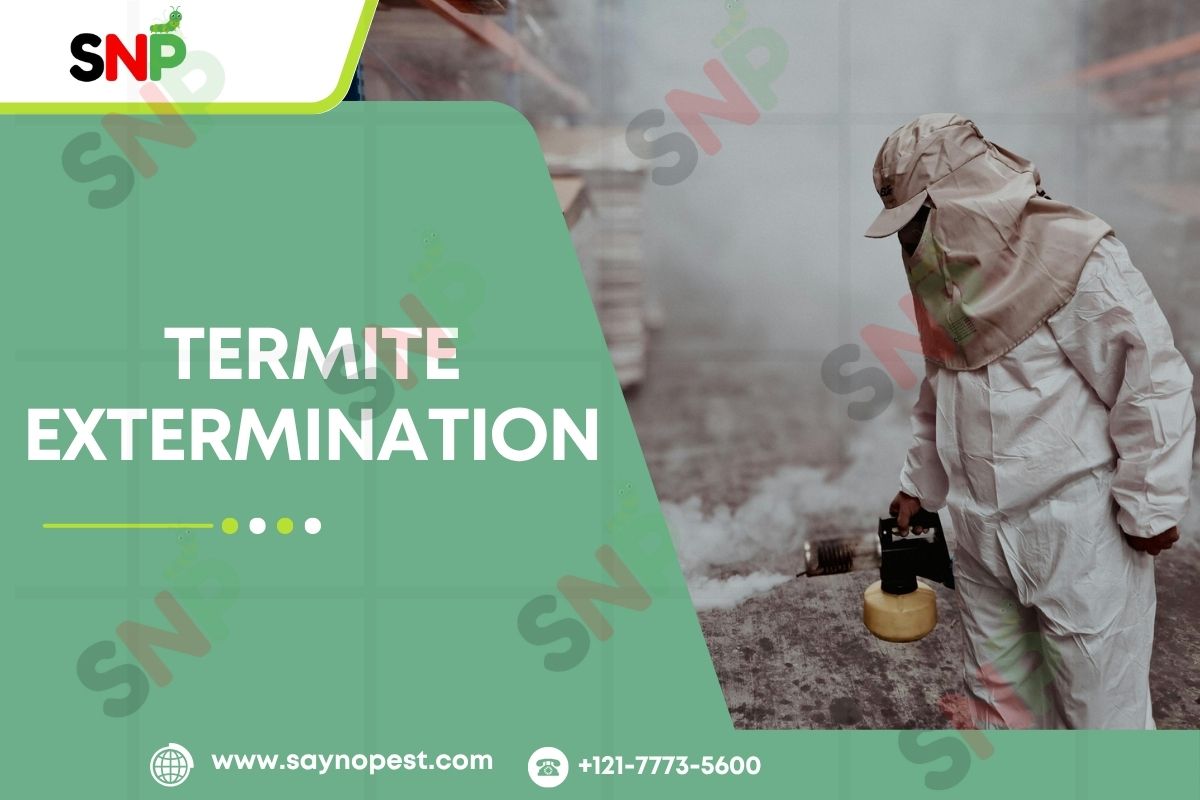
  • Termite Extermination: Protecting Your Home and Peace of Mind

    Termite Extermination: Protecting Your Home and Peace of Mind

    In the United States, home ownership includes Termite extermination. On the outside, they appear to be small and unworthy creatures, but termites are capable of silently destroying the most important aspect of your house. Here in this blog, we are going to discuss the factors on why the process of termite extermination is so crucial, the time involved in the process, the best methods to exterminate termites as well as the reasons why a natural response of typing in the line- What is a termite exterminator near me is most appropriate once you detect the presence of termites in your house. After that, you will possess every fact that is require to protect your home,

    Why Termite Extermination Is Crucial for Homeowners

    The presence of termites goes by the name silent destroyers and this name is well deserve. When in wood and paper, they feed on cellulose; hence, they may enter homes through even the smallest cracks or points of access to the ground. In America alone, the cost of termite damage is more than 5 billion dollars annually in our homes- a figure which insurance policies can hardly take care of. Most homeowners learn of the infestation when a lot of damage has already done, and most of them are costly.

    termite-in-house

    The Hidden Menace of Termites in Home

    • Termites can go on unnoticed for years at a time.
    • They undermine support beams, floorboards and walls in the building.
    • Termite queens can lay thousands of eggs, which, when multiplied rapidly, can reach large proportions even with small infestations.
    • Termites not only damage the wood and beams of the house they also damage the books and sometimes electronic items.

    Understanding the damage and getting rid of it is so important to safeguard your home and property and save the biggest investment that you may spend on this damage.

    How Long Does the Termite Extermination Process Take?

    The question is raise by homeowners as to how long it takes to exterminate termites. This really goes on the type of termite infestation, the type of termite and the type of method of treatment.

    Typical Timelines

    1. Subterranean termites: An average of 15 to 90 days may required to exterminate them with the help of bait stations. Results of liquid soil treatments might observed within a few weeks.
    2. Drywood termites: Fumigation is the most popular treatment that may require 3-7 days to remove an infestation. Smaller and local therapies can end the problem in a week.

    This could be longer when the infestation is severe or when termites in house are recurring, depending on the repairs carried out on the building structure. Pest control professionals will handle the situation, offer a bespoke solution and provide a better time scale which fits your situation.

    Effective Termite Extermination Methods

    In the case of termites extermination, one size does not fit all. These are some of the strategies mostly taught or apply:

    Liquid Termiticides

    • When used on the ground around the home, they cause a chemical barrier.
    • People wipe out the termite colonies when walking over termiticide or consuming it, or spreading it.
    • Provides long-duration protection up to five times or more, depending on the type, but is unsafe and unrealistic to apply by an amateur.

    Bait Stations

    • Around your property, bait systems are install.
    • Termites feed on the bait and transport it to the colony, destroying it at the point of origin.
    • More gentle than liquid therapies, and they might need patience since it might require months to eradicate colonies of larger infestations.

    Fumigation

    • This is primarily used as a drywood termite in the house.
    • The tenting and fumigation of the house involves killing termites all over the building.
    • Lengthy and quick, usually between 24-72 hours, consists of total loss; so it may require some relocation and cannot handled by amateurs.

    Alternative Treatments and Heat

    • Treatment with heat and microwave does not involve any use of chemicals, and can be used in case of localised infestations.
    • It is also possible to use a spot extermination with liquid nitrogen (so-called cold treatment).
    • Such are the most suitable for smaller or some limited problems of termites.
    termite-treatment

    Even though there are some over-the-counter powders and sprays, those seldom address the original issue. Termite-killing services provided by professionals bring with them permanent results and security.

    Understand What Termite Fumigation Is

    Termite Fumigation Turns out termite fumigation refers to a complete method of pest control that can be applied to eliminate an infestation of termites within a building, especially where the infestation is widespread or its location is inaccessible to the localised forms of control. The tent, which is a special tent, is applied to the whole site to surround every corner of the structure with the tent and then a gas called fumigant gases, usually sulfuryl fluoride, is released into the structure, thus killing all the termites in the property, reaching the wood, corners and the places of hiding among others.

    The process occurs in 24-72 hours, and all homeowners with pets and plants should make sure everybody moves out within these hours to be safe. Once the exposure time is over, the tent is pulled out, and the building is cleaned up with fresh air circulation, the gas can escape, and the building can be occupied once again. This approach is quite powerful in removing all the termites in the building and leaving no survivors to rebuff the colony.

    Conclusion

    There is no good news that a homeowner will be keen to hear that he/she has termites in their house. Structural risk, repair costs and stress are not worth the wait. Early adequate termite control has the benefit of protecting your house, maintaining its value and helping your family live well.

    Whether you see the signs of termites or you are concerned and just want to get to the bottom of the matter, keep in mind one thing: prevention is the best approach. The surest way to have a correctly structured work done in one go and avoid incidents of retribution, termite nightmares, is to seek professional help from a trusted termite exterminator in my locality.

    Prevention is much better than a cure. To get sound and quality protection against termites in the houses, you can contact Saynopest and deal with them as your comrade in total pest management and prevention.

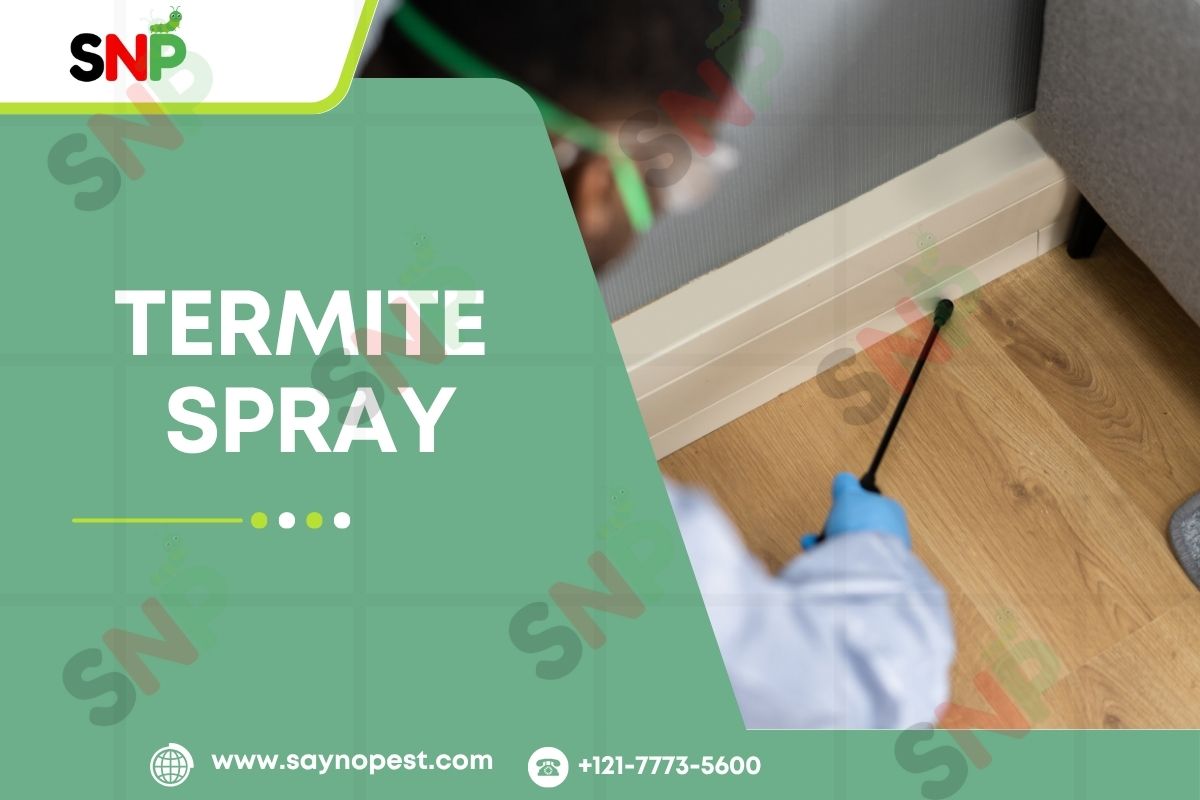
  • Termite Spray: Your Ultimate Guide to Wood Protection

    Termite Spray: Your Ultimate Guide to Wood Protection

    Termites are the greatest natural disaster that can happen to American homeowners. These pests’ brand-name sting operations cause damage of billions of dollars a year without their owners even realizing that. However, it is good to know that the correct application of termite spray can help to protect your house from them. In this all-embracing guide, you will find out all about the best ways of using a termite spray for wood and thus will be able to protect your house from termites in an effective manner.

    Termite Spray for Wood: Natural Solutions for Effective Protection

    termite-spray-for-wood

    Natural termite spray for wood treatments gives users the possibility to choose among several different environmentally friendly options that, at the same time, are effective against termite infestations. One of the natural ingredients that can used as a wood preservative is borate, which is a very effective natural agent. This product, derived from the mineral deposits all over the world, is obtain through the combination of oxygen and boron atoms.

    If the treatment is done using the pressure method, the borate composition will impregnat through the wood fibers, hence creating an unbreachable barrier for the termites. This method basically kills the termites because it is based on the idea that the treatment alters the metabolism of the termites in such a way that when they continue to eat the treated wood, they will not be able to metabolize the food and, therefore, will die of starvation. The fact that the procedure is slow allows the fags to take the poison all over their nest and thus be more effective.

    Another example of the natural way to deal with a termite problem is orange oil insecticide, which is power by the principle of the intrinsic toxicity of the oil toward termites and at the same time its safety toward humans and animals. Among the essential oils that are most suitable for this procedure are: neem, clove, and garlic oils. The spray is the easiest to administer. Just soak cotton balls with the oil and put them in the places where the termites are the most active. To prepare a natural spray for eliminating insects, you can use boric acid, which, when combined with water, creates a strong natural remedy. The suggested proportion is 1 teaspoon in a cup of hot water.

    Pros and Cons of Using Best Termite Spray

    Exploring the best termite spray pros and cons will help people who are in the home-repair business to be more knowledgeable in deciding their pest control strategies.

    Advantages of Termite Spray

    1. Fast-acting efficiency: Fast-acting efficiency illustrates the main advantage of quality termite spray treatments. If these solutions are apply in the right way, they will not only kill the termites immediately on contact, but they will also create a residual barrier for the next pest invasion. Professional-grade best termite spray products are the ones that offer barrier protection for days, and some treatments can last even 10 years of being active.
    2. Versatile Application method: Besides that, termite spray is convenient because it comes in different application methods, which make it easy to use in various cases, from localized treatments to covering the whole area around the house. Moreover, the agents in liquid form generate an impermeable shield around structures and, therefore, the liquid agent would cheaper compared to the baiting systems that might necessitate constant reloading of baits. Concurrently, the majority of the current formulations of termite sprays are odorless and non-staining, which fact makes the employment of these types of substances possible indoors in terms of no aesthetic concerns.

    Disadvantages of Termite Spray

    1. One big problem that comes with limited penetration depth is the fact that it may substantially reduce a termite spray. Surface treatments may only be able to eradicate pictures of infestations present on the surface without getting into deeper colony nests, thus the problem of the termites may continue to exist. Complex application requirements further complicate the process, and robots are essential for doing tasks such as trenching or drilling for barrier treatments in addition to manual installation of the seed.
    2. Safety considerations are still a major concern when using chemical best termite spray products. Most of the chemical termiticides are definitely safe when they are dry but they are, however, during the initial application, they contain toxic chemicals for humans and pets. Environmental impact concerns are such as possible contamination of groundwater and the situation of beneficial insects in the treated areas.

    Quick Tips for Natural Termite Spray Application

    termite-spay-for-wood

    American homeowners can extend the lifespan of their wooden furniture and structures by following proper techniques and timing while applying a termite spray that is suitable for wood.

    Moisture Control

    Controlling the moisture in the house will be the most important step to assure the most efficient termite prevention. The moisture in the house should dealt with before spraying the termites. This can done by fixing leaking roofs, gutter, and pipes. The lower the moisture the less the chance of an infestation.

    Surface Preparation

    The surface has to be clean to be sure that the spraying of the termite is going to penetrate deeper, and also the spraying is going to be more effective. Get rid of dirt or mulch that is in contact directly with wooden structures, and at least keep a six-inch clearance between the ground level and the wood components. This prevents termites from damaging wood through hidden pathways that bypass treated surfaces.

    Application Time

    Generally, the application should also be timed in the best possible way to achieve the best results. The application of treatment must be carried out at dawn or dusk with no rain expected to fall in the next 24 hours, and consequently, the elongation will be optimal. The coverage needs to penetrate into all vulnerable wood surfaces, including those hidden places where the pests mostly enter buildings; therefore, a thorough application is necessary.

    Insepection

    Hence, following an inspection schedule aids in retaining the effectiveness of the termiticide over the course of time. Make it a habit to have termite inspections at least once a year to gain early intervention of the problem before it grows into a large infestation. Recording practices should involve noting the places, dates of applications, and the indications of termite activity in order to follow the changes in the treatment’s efficiency through time.

    Safety

    Safety precautions are useful not only to the applicators but also to citizens in the event of the termite spraying of wood. When administering medications indoors, it is always preferable to wear appropriate personal protective gear and ensure a healthy ventilation system. Besides, let the treated surfaces dry first before being touched by kids or pets.

    Conclusion

    Successful termite spraying protection comes with the knowledge of the different treatment methods, and the choice of the appropriate method so that your case is addressed very well. Chemicals have alternatives such as environment-friendly termite moisturizing sprays such as borate spray. The kind of spray that would be most appropriate when fighting a termite menace is subject to different aspects like the kind of termite, the degree of the infestation, and the impact on the environment.

    Remember, the termite control occasionally requires proficient expertise, particularly in situations where they involve the barrier type of implementations. Whereas DIY termite spray in wood use may be applicable in cases of minor infestation, serious infestation can normally require the attention of professionals to eradicate the full colony.

    To ensure full termite protection package and proper advice on the selection of the ideal termite spray to be applied in your home, pay a visit to Saynopest, your ideal company in American termite control. We have an experienced team that assists homeowners all over the United States to employ efficient, long-term termite protection measures that are locality-specific and adapted to the species of termites.

    Successful termite prevention is based on regular monitoring of the issue, effective application methods, and the use of quality best termite spray products. Purchase quality professional solutions and keep up with your treatment regimes to ensure both the integrity of your home as well as your family economically by resisting such ravaging pests.

  • Termites in House: How to Spot, Prevent, & Handle

    Termites in House: How to Spot, Prevent, & Handle

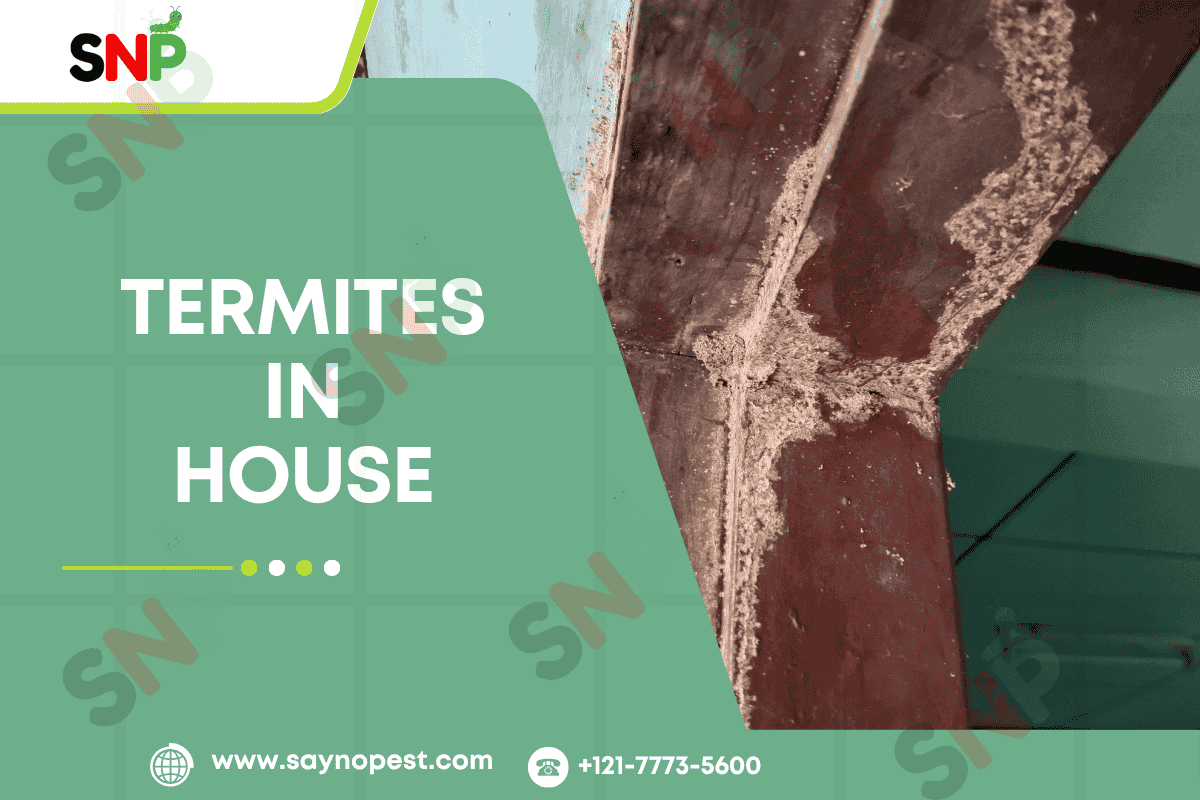
    In the United States, termites in house present a quiet threat to homeowners who continue to incur destruction worth billions of dollars annually. The realization about the great importance of knowing the signs of termites in house, termite nests in houses, and the ways to prevent the occurrence of these destructive insects can be quite effective in safeguarding your assets. Saynopest is going to help you understand how to get rid of the termite problem and also how to recognize it before it gets out of control and becomes costly.

    Signs of Termites in House

    Signs-of-Termites-in-House

    Recognizing the symptoms of a termite infestation in the home at the earliest stage can save you from a lot of expenses. Watch out for the following indicators:

    1. Mud Tubes: Subterranean termites are tunnel-building insects that create mud tubes on the surface of the ground (foundations, walls, or crawl spaces) to connect their nests to the food sources. These tubes are the air pockets in which termites can breathe while they move through the soil to get to their food.
    2. Hollow-Sounding Wood: The wood surfaces to be knocked on. If the knocking sound is hollow, then wood-eating insects, probably termites, have made the wood inside out while leaving a thin surface.
    3. Buckling or Blistered Floors: The wavy or blistered wood floor may indicate that there is termite undermining the surface.
    4. Frass (Droppings): Drywood termites get rid of these little sand-like droppings (frass) that are close to the wood that is infest by the termites.
    5. Discarded Wings: Termites are known to get rid of their wings after swarming, and those wings are left near windowsills or entry points as a result of the accumulation.
    6. Visible Swarmers: The flying termites indoors indicate that the colony of termites is active inside your house.

    If these signs of termites in house are present, then you really have to act with urgency because procrastination will lead to more harm than you can imagine.

    Termite Nest in House

    A termite nest in house can also be refer to as various things depending on the species of the termite:

    1. Subterranean Termite Nests: These are mostly place underground near the base of the house. Ground termites do not only dwell underground, they also use the mud tubes to their nest and the wood in your house to navigate along. Therefore, when you notice something such as mud-filled cracks, then they are probably along the foundations/lower walls and have not penetrated all the way through.
    2. Drywood Termite Nests: The drywood termites are wood dwellers in the truest sense of the word. If they get you, they will go into your house and eat the wood of the furniture. Their nests is nothing more than complicated tunnels inside the wood, and, commonly, these are always follow by heaps of frass in the immediate vicinity.
    3. Dampwood Termite Nests: These termites are also called dampwood as they are found in wet and rotting wood, e.g., basements or attics. Therefore, these nests may also become places where pulp and frass are left.

    If a termite nest in house is identify, do not try to get rid of it by yourself. Contact the best Pest control company as they know how to deal with them using the best treatment and process.

    Flying Termites in House: Why and When They Appear

    The flying termites in house, known as wings or barbs, are the reproductive caste that are looking for a new colony establishment. The fact that you see these termites around and in your house means they have an ongoing area there.

    Reasons why flying termites get into the houses?

    • They are light-loving creatures, so they hardly resist the temptation of a well-lit room and thus trickle in by open windows and doors.
    • They are often understood as beings seeking to procreate and as places to find adequate conditions for the birth of new colonies. In their explorations, they may become their own downfall if, in their search, they find it easy to penetrate the cracks and holes in the construction of your house.

    The time of the appearance of flying termites.

    • The amount of rain and high temperature, and humidity are mostly important since this is when the subterranean termites start swarming during the spring and the beginning of the summer season.
    • The drywood and certain ground types tend to swarm at the end of the summer period or during fall times, according to the local weather conditions.
    termites-infestation

    Spotting flying termites in house is a warning sign—addressing the issue promptly to prevent a new infestation.

    How to Prevent Termites from Entering Your Home: Quick Steps

    Termites in house can avoided if you are alert and take measures in advance:

    1. Sealing Cracks and Openings: One should also ensure that there is no diversion in the house. Patch any of the holes in your foundation, walls or around penetrations of plumbing.
    2. Dry: A termite cannot feel good living in a very dry place. Termites like wet locations. Restore leaks, install proper drainage and make sure that gutters and downspouts are free of obstruction so that water does not run towards your foundation.
    3. Maintain Ventilation: Ventilation in the crawl space as well as the attic have to enhanced so as to reduce the level of humidity at these locations.
    4. Remove Wood-to-Ground Contact: Never put wood for fire, lumber, or mulch against your house side directly. Use pea gravel or hardscape materials around the foundation.
    5. Regular Inspections: It is a good idea to have a professional check for any signs of termites once a year.
    6. Fix Roof and Gutter Leaks: Feasibility of moisture buildup which is the major moisture attracting factor can avoided by immediate repair of roof and gutter leaks.

    By adhering to these measures, you can considerably reduce the probability of having termites in house and keep your property safe.

    Conclusion

    Damage done to your house by termites is a very serious issue and thus you must treat it on an emergency basis. By searching for indications of termites in your house, getting familiar with the termite nest in your house, and tracing when the flying termites in your house appear for what reason, you will, thus, be on time to prevent the menace from causing deep harm. The best way to defend yourself against them is to prevent their infestation first; seal entrances, minimize moisture supply and make regular inspections. To get some specialist assistance and read more read saynopest and protect your home against termites now.

  • What Does a Termite Look Like? A Complete Guide – 2025

    What Does a Termite Look Like? A Complete Guide – 2025

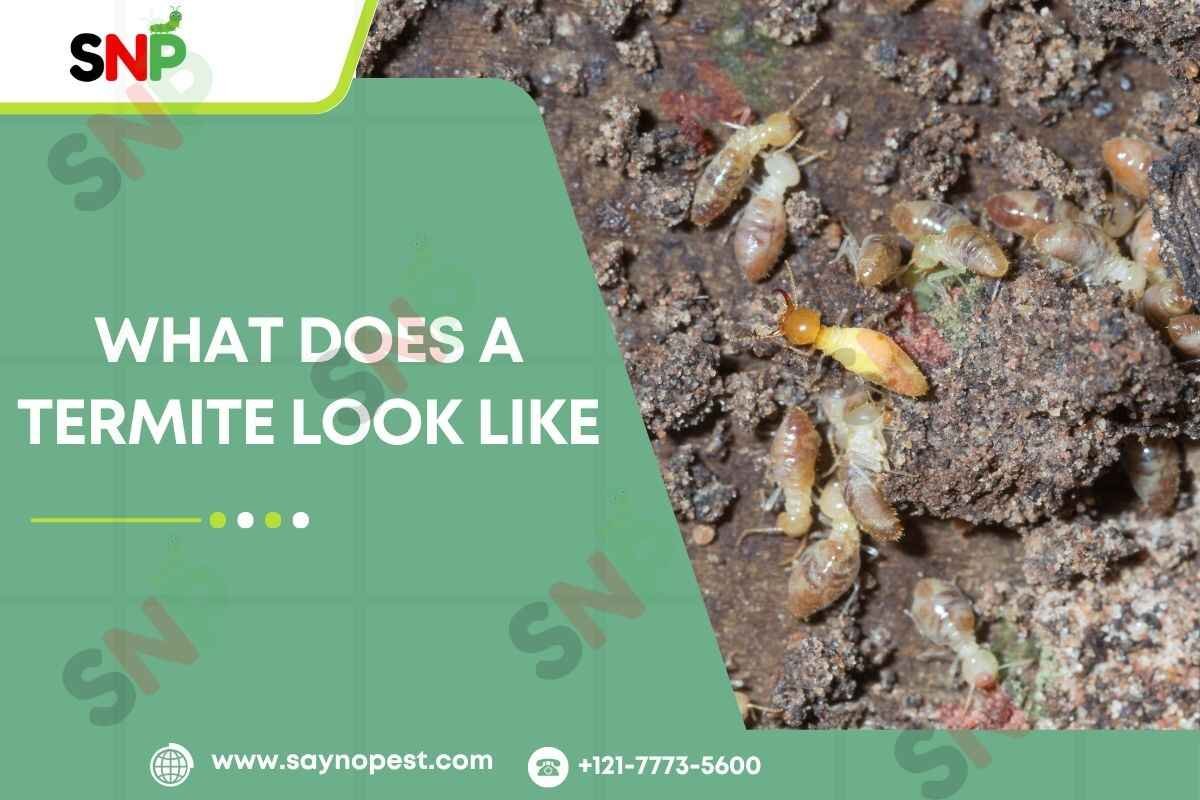
    Have you ever heard the phrase “it’s what’s inside that counts”? Well, regarding termites, what’s inside your walls could cost you thousands without knowing it! These sneaky little critters are among the most destructive wanted guests in the United States—causing billions in property damage yearly. And the worst part? They’re masters of staying hidden until it’s too late. If you’ve ever asked yourself, what does a termite look like?” — you’re not alone. In this blog, we’ll help you crack the code. From spotting what does a termite look like to early warning signs and understanding the different types yes, there’s more than one! — we’ve got you covered.

    What Does a Termite Look Like?

    Termites are small wood munchers, often similar to ants and can easily confuse you when seen inside your property. Below is a step-by-step guide on how to identify them:

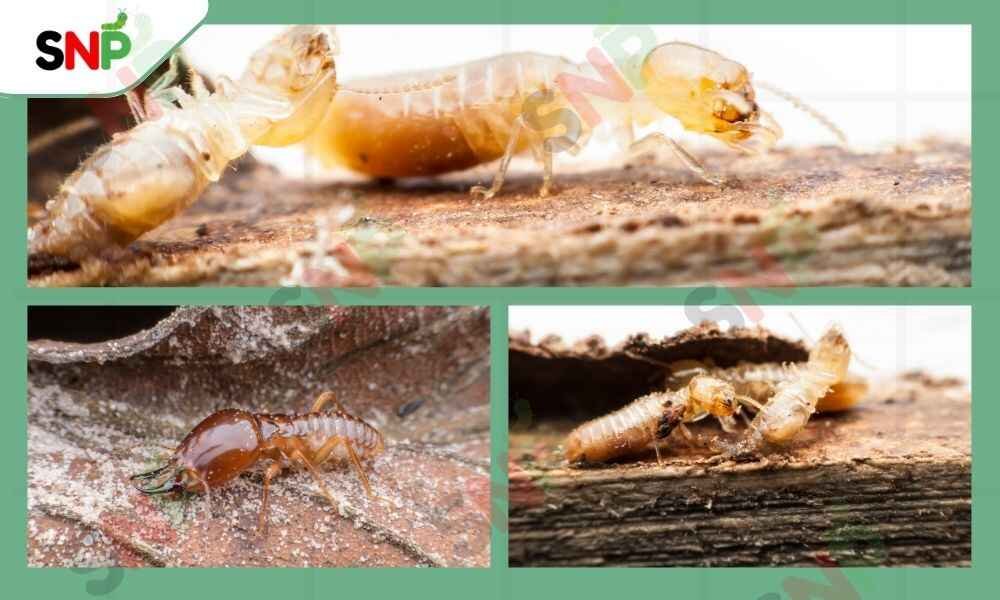
    Colour: Most termites are cream-coloured, which will be creamy white to light brown. Also, Worker termites, the most common caste, are pale and almost clear, while soldiers have cloudy heads. Reproductive termites (swarmers) are mostly brown or black with wings.

    Body Shape: Termites do not have the typical “waist” of ants and have a straight body that is consistent in width. Also, their antennae are straight and necklace-like, not curved.

    Size: The workers and soldiers are almost 1/4 inch in length. On the other hand, slimmers (future kings and queens) are slightly larger, with wings as long as their bodies, twice that of the standard ones.

    Wings: The reproductive termites have double pairs of wings, both of which are transparent and of equal length. After the flights for mating, these are often thrown away, leaving the wings dissected near the windows or at the doors.

    Recognizing termites at home is a tough task, but confirming what does a termite look like is the first thing to do to prevent and control these tiny wood eaters .

    Signs of Termites Activity

    Some signs of termites infestation are the very quiet destruction, usually until severe damage is done. These warning signals will tell you that there is a termite in your house:

    Swarmers or Discarded Wings: The sight of flying termites or discovering heaps of discarded wings, particularly in the spring, is a surefire indication.

    Mud Tubes: Forage termites, in contrast, establish small, tube-like, and thin tunnels from the foundation, walls, or crawlspace of the house to the source of their food.

    Wood Damage: Wood could be hollow because termites eat it from the inside. It could also have a blister-like appearance and feel weak.

    Frass (Droppings): Drywood termites get rid of tiny, ridged-shaped droppings called frass, often found in small piles near infested wood.

    Bubbling or Uneven Paint: Paint can bubble up or warp due to termite activities that lead to moisture.

    If you notice any of these signs of termites in house, it’s time to call a pest professional for a thorough inspection.

    Stages of Termites

    Understanding the stages of termites’ life cycle helps explain why infestations can proliferate, and these pointers will help you to detect what does termites look like so that you can control these wood munchers quickly. Let’s discuss them:

    • Egg: The termite queen lays thousands of tiny, white eggs every day, which hatch after a few weeks. This was interesting!
    • Nymph: Newly hatched termites (nymphs) are pale and soft. Depending on colony needs, they molt several times, eventually developing into workers, soldiers, or reproductive termites.
    • Adult: Adults fall into three main castes:

      Workers: Most are responsible for feeding the colony and caring for eggs.

      • Soldiers: Defend the colony with strong jaws.

      Reproductives (Swarmers):The reproductive swarmers develop wings to depart the nest for mating activities, which establish new colony environments.

    All termite queen colony development depends on the queen, who produces eggs as she rules the colony through chemical signals (pheromones).

    Types of termites

    Type of TermiteAppearanceWhere FoundDamage Potential
    SubterraneanCreamy white to dark brown or black; 1/8–3/8 inch; straight waist; soft body; build mud tubesEvery state except Alaska; thrives in moist environments; underground coloniesMost common and destructive; causes 95% of termite damage in North America; and can destroy foundations, beams, and more


    DrywoodPale brown to dark brown; 3/8–1 inch; do not require soil contact; live entirely in dry woodSouthern tier states (California, Southeast, Gulf Coast); attics, doorframes, wooden furnitureSerious but slower than subterranean; damage wood from the inside out; can go undetected for years


    DampwoodLarger than other termites; light brown to dark brown; prefer moist, decaying woodPacific coastal states, desert Southwest, southern Florida; attracted to damp wood and plumbing leaksLess common in homes but can cause smooth, clean damage in wood; thrive in high-moisture environments
    FormosanCaramel to yellow-brown; 1/8–1/2 inch; massive colonies; aggressive; build mud nestsSouthern U.S., Hawaii, Gulf Coast (Louisiana, Texas, Florida, California, Carolinas, Georgia)Most destructive; can cause extensive damage in a short time; difficult to control once established
    ConeheadDark brown to black; aggressive foragers; move above ground like antsLimited to parts of South Florida (Broward County); invasive speciesExtremely aggressive; spread quickly; cause widespread property damage in a short period


    Conclusion

    If you’ve got termites in house, you’re not alone. These destructive little invaders threaten homes across the U.S., especially in warm, humid places like Florida, Texas, California, and much of the Southeast. And here’s the kicker: when you see the damage, it’s often already deep inside your walls.

    That’s why it’s so important to know what does a termite look like and catch the warning signs early.

    Here’s a smart move: if you suspect a termite queen, get a Professional ASAP. SAYNOPEST will help you connect with the best Professional who suits your location and prices. Your home is one of your most significant investments—don’t let a secret colony chew it to pieces.