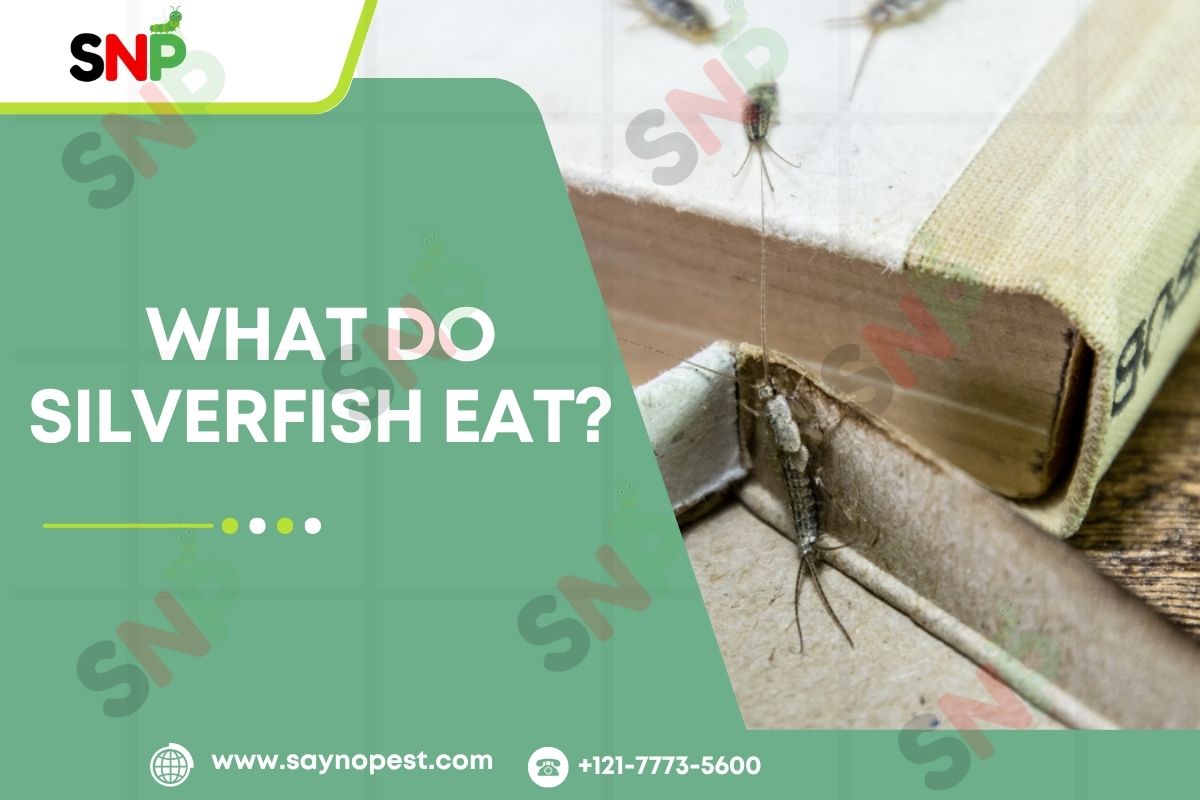
Silverfish probably is not the first home invader that comes to your mind when you think about the unwelcome household pests. However, these tiny silvery bugs are surprisingly prevalent in the United States and they can create much more harm than you would think. Unless you have lived under a rock, had the good fortune of not encountering a silverfish and sat on the fence asking yourself What Do Silverfish Eat, then this comprehensive guide on silverfish is what you need. In this post, you will find out what attracts these bugs, issues that they cause, their sources, the best alternative to eliminate silverfish, and why dealing with these unwanted guests is important.
What Do Silverfish Eat? A Closer Look
Everybody wonders what Silverfish eat, knowing the answer to that question is essential in pest control! Silverfish have a huge diet, which means they can eat all starchy and sugary foods, and all protein. Here are the things which they eat the most:

- Books, magazines and documents, paper and cardboard
- Adhesives and sticky stuff (they are in wallpaper, books, and envelopes)
- Fibres such as cotton, linen, and silk, starched or dirty apparel
- Food items that can utilised as food storage, such as cereals, flour, oats and dried pasta
- Shed skin and dead insects
- Vegetables and some dried foods
The broadness of this food source enables it to expand so much so that silverfish can survive in numerous American homes-more so in dark, damp areas where they have good access to food.
Silverfish tend to found close to pantries, laundry rooms, attics, and bookshelves, in short, wherever there are starches and papers. The first step you should take to avoid the infestations is to know what do silverfish eat.
Understanding Baby Silverfish
In the event you notice a small, nearly sheer insect scampering across the floor of your bathroom, you have, most likely, encountered a baby silverfish. These young bugs are called nymphs; they are smaller, resembling adults in appearance, though of whitish colour and not glossy.
The eggs, which are hidden in the small openings (cracks in the walls or under the floors), are hatched by baby silverfish. They are small, less than an inch long, with long feelers and a thin tail-like stand. They look for food just after they are born. These nymphs renew their skins several times in growing, until at last they get their silvery scales, and are swift as silverfish are.
The interesting thing with silverfish is that a baby silverfish already lives on the same diet as adults. The question, What Do Silverfish Eat, holds at all levels of life. The infant stages of baby silverfish feed on paper, glues, linens, and even microscopic food waste; thus, baby silverfish are equally troublesome as the adult ones.
One more thing to say about the silverfish lifespan: it can take several months (or even years) till the nymph grows and develops to full adulthood, yet all through the time of his/her development, he/she feeds and develops in your house.
The Problems Silverfish Cause in Our Homes
Silverfish are not capable of biting and causing diseases in human beings, but their feeding behaviour is a threat of great concern to your property. This is why all American household owners have to be alert:
- Destruction of books and valuable papers: Silverfish live off bindings, glue and paper, destroying books that cannot be replaced.
- Holes in clothing and linens: They will eat cotton, silk and starched materials, and will cause holes that cannot be fixed, making holes in your wardrobe and linens.
- Tainted pantry goods: These pantry goods are contaminated most of the time, primarily because silverfish end up in the pantries, destroying cereals, flour, oats, and even pet food.
- Yellow stains and scales: When silverfish shed their skin, they leave behind stains and small scales of the skin on the surfaces.
The first indication of a problem is the presence of a baby silverfish in the open, holes on fabrics, or unexplained damage to a book or wallpaper. Some knowledge about What Do Silverfish Eat enables you to respond fast to the first signs you see.
These pests do not like daylight and humans, but when infestations are not curbed, they end up causing heavy losses to properties over time.
Where Do Silverfish Come From?
Wait! If you are thinking Where do silverfish come from you are not the only person. These insects have the surprise of being versatile in their origins. Although the silverfish are common in most parts of the world, the origin of silverfish in an American setting is in most cases, outdoor locations of the same nature as the former, which simulates the perfect living conditions of silverfish indoors: the dark, humid and wet indoor environments.
There are several ways by which silverfish get into your house: through cracks, improperly sealed doors, or vents. Favourite ones are high-humidity rooms: basements, bathrooms, and kitchens. They can also stow away in your house in cardboard boxes, books or infested material.
Where do silverfish come from, and What Do Silverfish Eat are two questions that go hand in hand. These are the reasons why insects and pests love our home a lot because it suits their living habitat, the environment, which they prefer mostly found in our homes and properties.
How to Get Rid of Silverfish Naturally

Having to do with baby silverfish or adult bugs, there are natural ways to manage them, either by cutting down or by eradicating them:
- Keep the air dry: Silverfish are moisture lovers. Put dehumidifiers and ventilate areas such as bathrooms and basements well.
- Seal cracks and crevices: Do not open the doors to cracks and crevices by caulking cracks around our baseboards, doors, and plumbing.
- Get rid of their food: Store books, papers and foods made up of starch in sealed containers. Remove the mess and clean the area properly by vacuuming it.
- Natural repellents: Silverfish don’t like the smell of various things like orange peel, cinnamon stick, lavender and cucumber peel. These smell irritates them a lot and help the homeowner to remove them from the house with the help of natural ways.
- Routine cleaning: Mall regularly vacuum and dust, which restricts food material as well as harborage of baby silverfish and adults.
When you notice a baby silverfish, concentrate on removing it in the area where it was noticed because such is usually a breeding point. Whereas chemical solutions are available, natural pest control may be appropriate where infestation is low-level, since it is less toxic to families and animals.
Conclusion
Understanding the question Which Food Do Silverfish Prefer, their origin, and effect on the house is not just a trivia means of protecting your house, but a crucial knowledge in that regard.
Remember:
Silverfish and baby silverfish love everyday items around the house and cause both expensive and irritating damage.
As you learn how silverfish reproduce and what the expected lifespan of silverfish is, you can take advantage and avoid further issues.
An array of moisture management, use of natural insect repellents, as well as careful attention to storing, will go a long way towards nipping baby silverfish as well as adults in the bud.
Do not allow small vermin to bite into your peace of mind. Begin now, and in case you require professional assistance or further hints in regard to pest control, just rely on the recommendations presented at saynopest.
In case you are eager to know more about what Do Silverfish Eat, discover what a baby silverfish looks like, or want to find a solution to a troublesome infestation, check out SayNoPest because they have the best pest control solutions to suit an American home.


