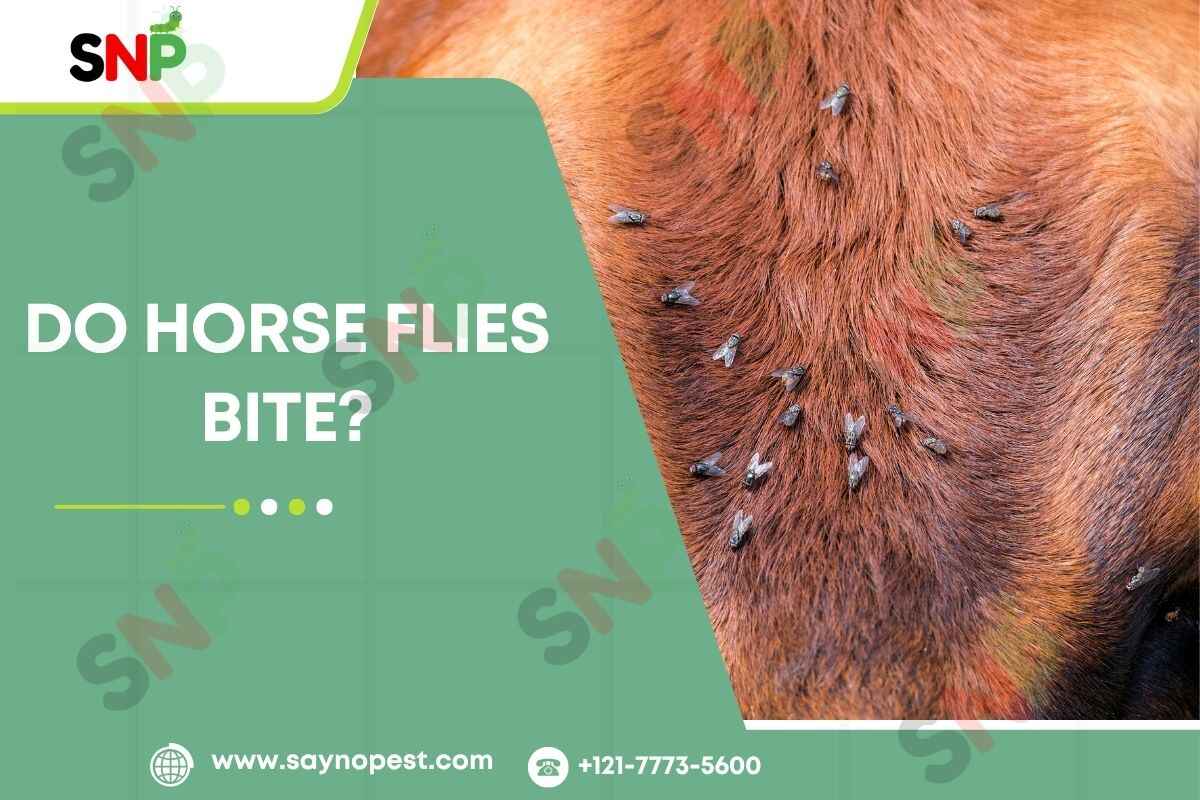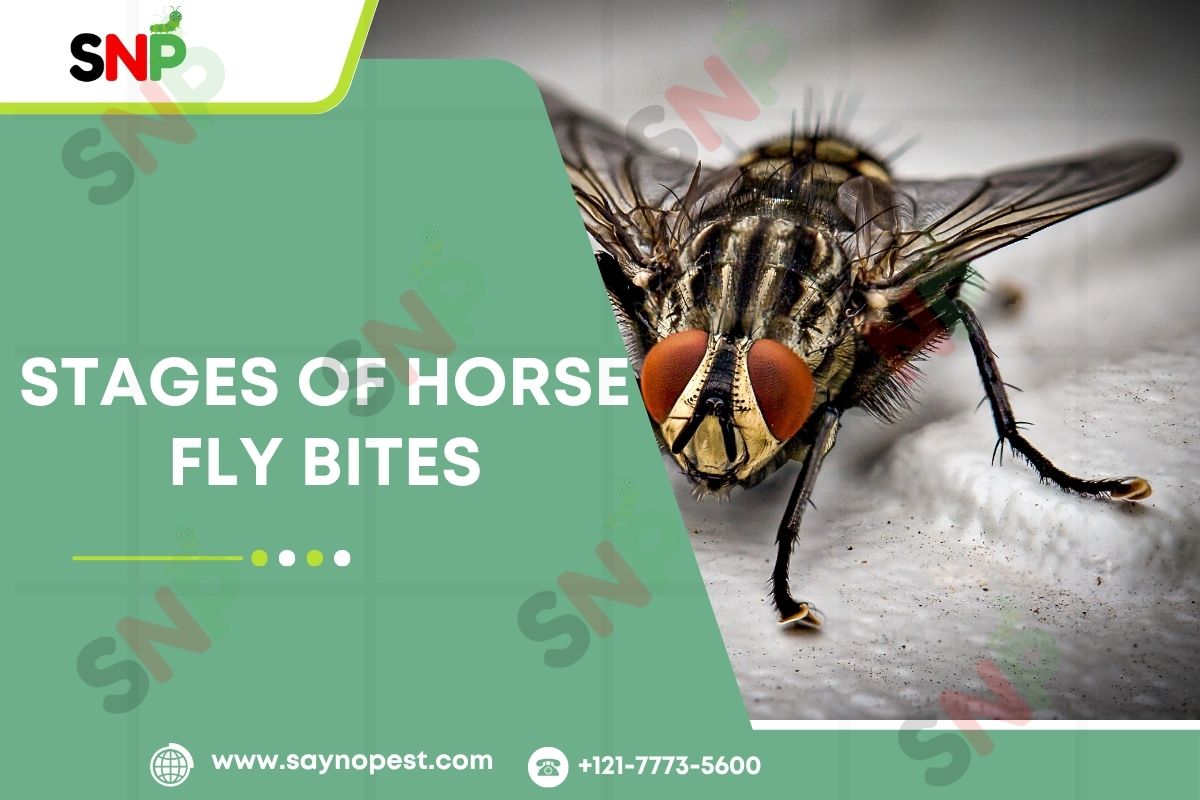
Each summer of the year across the United States arrive swarms of nuisances, one of the most irritating to humans and animals alike and the horse fly. It is advantageous to understand and be acquainted with the stages of horse fly bites in order to advance effective treatment, prevention, and overall comfort outdoors.

Horse Fly Bites: All You Need to Know
Horse flies are huge, heavy insects with very powerful jaws. The insects bite the mammalian blood for reproductive purposes, and the bites are intensely painful. Where they differ from common fly bites is how they do it whereas mosquitoes stab stings into the body, horse flies stab into the body, and horse fly bites are piercing burns with immediate swelling.
- Clear signs of horse fly bites are:
- Harsh, sudden stinging pain upon biting
- Redness, swelling, or color-changing bump
- Itching, redness, & swelling
- Infection risk if the bite is not controllable
The initial phases of a horse fly bite are actually the bite of a cracking, stinging cut that can easily lead to redness and swelling in minutes. Within minutes, often hours, the area can be itching or even develop an easily visible welt. In some individuals, there is always the possibility of an allergic reaction such as swelling, rash, or even difficulty breathing, though a condition of this sort rarely happens.
Phases of Horse Fly Bites
Knowledge of phases of horse fly bites is a strategy for prompt treatment of symptoms and prevention of complications. Every phase of the above-listed phases is having some challenges:
1. Instant Stage
Since the horse fly is still on the skin, its scissor-mouth pierces tissue and feeds on blood. Its phase is accompanied by immediate pain and burning.
2. Inflammatory Stage
The immune system of the body reacts shortly after the bite. The location where the person has been bitten becomes red and inflamed and is usually itching too because histamines are expelled. The inflammation is from a few hours up to several days.
3. Healing Stage
When the body has metabolized the initial trauma, it heals. Swelling or weal will eventually fade away, but itching will persist in the process of healing. The horse fly bites will heal without intervention, but scratching can result in delayed healing or infection.
4. Complications (Uncommon)
Though rare, anaphylaxis or infection is a possibility. Redness at the site, pain swelling, fever, pus, or systemic symptoms such as dizziness are signs of this. These must be reported to the doctor at once.
Scratch fewer and take care to note signs of infection or allergy during these stages of horse fly bites to recover safely.
How Can I Treat Horsefly Bites
If you request, How do you treat horsefly bites, there is an initial response, immediate and easy, which steers clear of severe pain and second-stage complications. The following eliminates infection and relieves pain and swelling:
- Clean the bitten area with soap and water well.
- Always Apply a cold compress or ice pack to the affected area for 10–20 minutes.
- Topical creams like calamine or hydrocortisone may be applied to relieve itching; oral antihistamines in case of persistent itching.
- Avoid scratching as it will enhance the risk of infection and the healing process.
- Consider elevating the bitten arm if possible, to reduce swelling.
Most serious: watch closely for the bite at all stages of horse fly bites. Pus, harsh redness, continuous pain, or allergy signs showing up, seek a doctor immediately.
The signs of horsefly bites can be treated using medications. Homemade Natural remedies, such as oatmeal baths or aloe vera, could be helpful, but use antidote that have approval from Doctors for optimal results.
Black Flies Control
Horse flies are problematic, but black flies often plague similar outdoor environments, too. Effective black flies control is crucial if you’re looking to minimize fly bites and related risks.
Key measures for control of black flies:
- Clear trash from around home or property water sources to reduce breeding places.
- Always Apply larvicides, especially with Bacillus thuringiensis israelensis (Bti), in standing water to kill the larvae.
- wear light-colored protective clothing, dark colors will attract horse and black flies.
- Spray good fly repellents on clothes and skin.
- Screen windows and doors to keep flies out.
Although complete elimination cannot be achieved, these measures keep the population under tolerable levels and preclude stinging bites, particularly in hot weather during summer.
Prevention and Detection of Horsefly Bites
Prevention, treatment, and elimination of black flies are as imperative as prevention. To avoid horse fly bites & the discomfort that follows and to avoid them, keep in mind the following:
- Wear shirts, trousers, & shoes when you go outside, especially in grasslands or forests.
- refuse perfumes & scented creams that act as fly attractants.
- Use insect repellents prior to going outdoors.
- Avoid locations where horse fly activity is observed, where possible.
- Keep the grazing pastures clear and unobstructed for cattle and horses.
Early diagnosis knowledge of the phases of horse fly stings enables timely treatment and fewer complications.

Conclusion: Say No to Black Fly Bites with Saynopest
Horsefly bites are a nasty but natural summer pest across America. Understanding the course of horsefly bites allows you to recognize and treat symptoms early on, evade complications, and be outdoors again in a few hours’ time. And don’t forget, healing horsefly bites essentially means speedy cleansing, chilling, and careful watching.
Starting black flies control not only protects you and your home, but also your animals and pets.
For expert consultancy, professional services, and tried-and-tested solutions for all your pest problems, appoint “saynopest” as your pest control solution partner. Remain bite-free, remain safe, and say no to horse fly and black fly bites this summer!