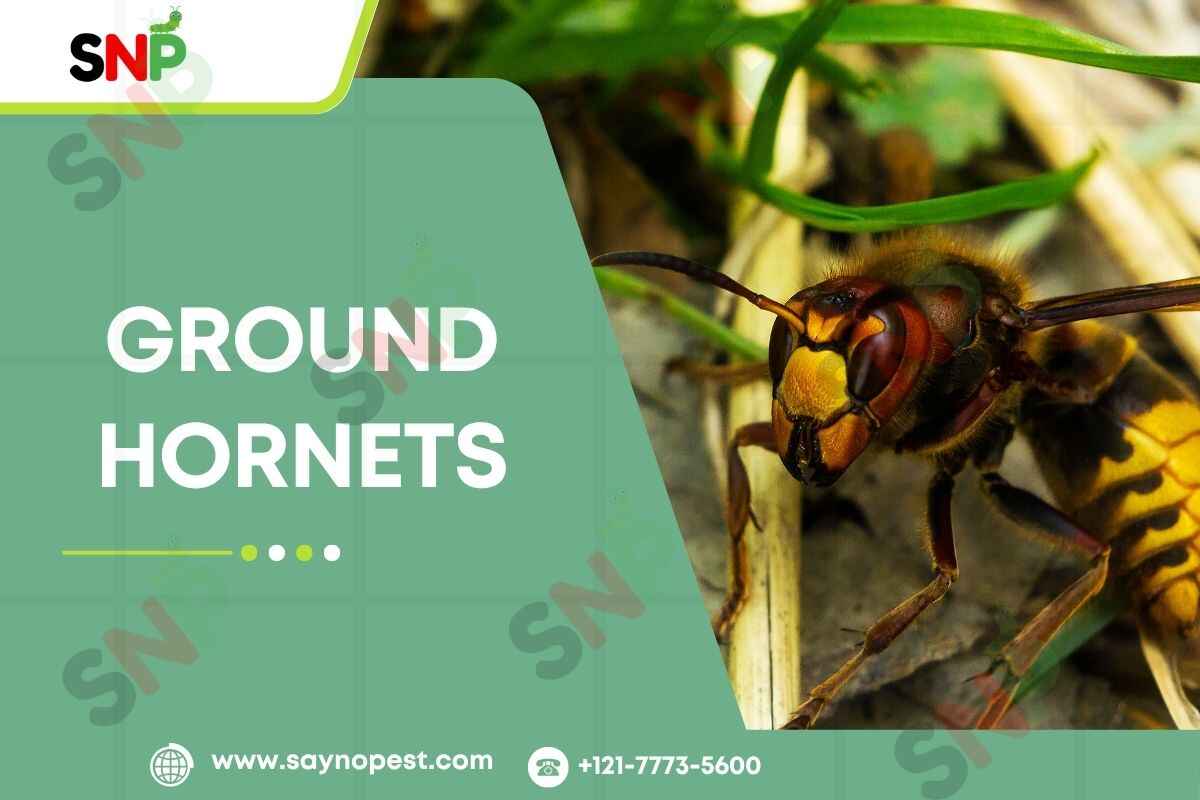
When you have dug up a place in the ground and you have heard a creepy buzzing sound close to that place, you may have observed ground hornets. These being very strong insects, also referred to as cicada killers or digger wasps are native to most of the United States. Being inform of the nature of a ground hornet sting, being ready to stung by a ground hornet and learning how to solve the problem of Ground Hornet Nests correctly will not only save you in case you are outside in your yard, but also keep your yard healthy. This guide from SayNoPest aims to give you correct information about these dangerous insects, risk assessment, and safe steps to follow if you meet these stinging creatures along your way.
Do Ground Hornets Sting?

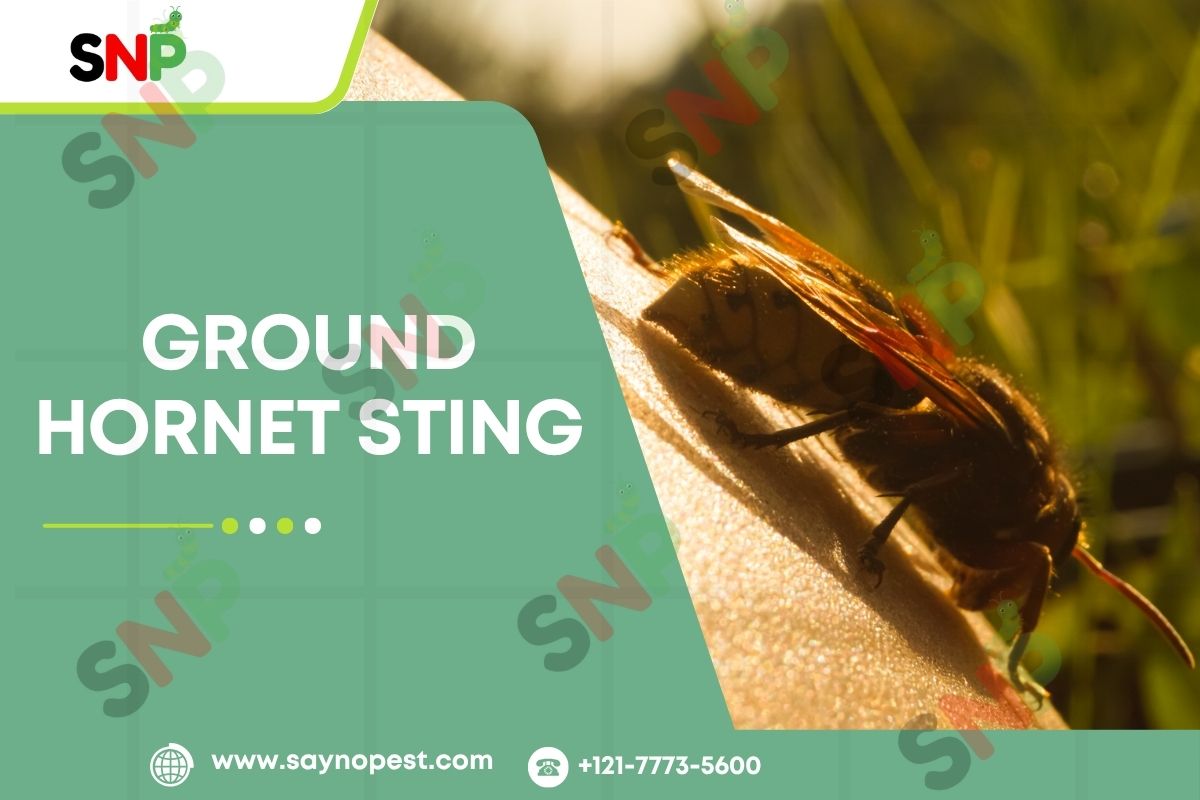
Sure, A double-edge nature: only female ground hornets, if they are interest, can make a sting, but that one is going to be very unpleasant. Ground hornets are stinger-less like bees; hence, they can only sting once. Hence, they are even more harmful when they have stung severely and, say, their nest or territory is being attack. Other than the pain, the sting may also be a cause of danger to such individuals who are highly sensitive to, or allergic to, the poison of the insect.
Typically, ground hornets are not aggressive, and they work in solitude. They are digging the ground and rearing their offspring in tranquillity. Of course, if their nest is disturbed—lawn mowers, pets, kids, or even foot traffic—they do not hesitate and attack it in a very short time, and thus can swarm to defend their home. This is indeed their most aggressive protection mechanism, which implies that the occurrence of a ground hornet sting is, in most cases, when the nest is unwittingly discovered.
Signs and Symptoms of a Ground Hornet Sting
You will recognise it at once, in case you have been unfortunate enough to get a hornet sting. Redness, swelling, itchiness, and burning sensations are the major symptoms of stinging points, and they can persist up to a few hours. Some people might also see discoloured areas or get hives. Besides these, the stinging area might feel red and hot to the touch and swollen. A list of the symptoms in greater detail follows here:
- Sharp pain that spreads from the sting spot was observe.
- Redness and swelling: The infected area will get red, feel warm, and swelling may come very fast.
- Itching and burning: A strong pain and sensation may last for a long time. Discolouration or rash may seen on the affected area in some individuals.
The majority of the local people in the US are only going to get local reactions, and these will only clear up with time and basic care. Ice therapy, the use of antihistamines and the cleanliness of the area normally reduce the pain. An ice pack may used at the onset of the local reaction, antihistamines may consumed, and the area may kept clean.
The most important thing is to spot the signs of health problems that may caused due to the hornet sting.
- Non-sting hives
- Facial, tongue or throat swelling
- Hard breathing or wheezing
- Indigestion, sickness or lightheadedness
These hornets’ stings may cause a serious health problem and may require urgent medical help.
What Makes the Sting so Intense?
Ground hornets physically damage through the injection of venom that contains substances that cause the skin to become inflamed and that activate the immune system. Because they can sting multiple times, the amount of venom may increase, especially if the stings come from several individuals of the same species. That is exactly why a hazardous situation can create by a few minutes of an unintentional intrusion into the scene of the outbreak of the Ground Hornet Nests

Quick Note: Ground Hornet Nests
The Ground Hornet Nests are very different from the typical paper-covere hornet or wasp nests that are usually hanging on a tree branch. However, ground hornets are the ones that make underground chambers—sometimes even as long as 18 inches—mostly in sandy or loose soil
Some important facts the Ground Hornet Nests:
- Location: Mainly, these hornets prefer the locations like dry and sunny places like playgrounds, lawns, yards or any open area.
- Appearance: Their nest look like a volcano shape, and people may find dirt and soil at the entrance.
- Structure: These nests are nature’s remarkable structures create by insects, but at the same time, they can be dangerous for people and animals. If you do it unknowingly or disturb the nest in any way, you have just become the quickest way to get an aggressive reaction from the hornet and thus end up with a sting from the hornet.
Prevention and Protection
Protecting your family, pets, and property from the risks of a ground hornet sting starts with awareness:
- Observe: Keep observing the hornets’ activity near your home and property, like visible mounds of dirt— this could be the reason for the of ground hornets.
- Limit Disturbance: Don’t poke or disturb possible nest sites. Avoid mowing or digging where you see hornet activity.
- Professional Help: Never attempt to remove or destroy Ground Hornet Nests on your own. Expert pest control services will help you deal with the hornet problems.
- Emergency medicine: Anyone with a known allergy should always carry an epinephrine injector and be ready to get help immediately if they are stung.
Conclusion
Once a day buzzing of a ground hornet can ruin anyone’s mood, but being knowledgeable is a big help. The main thing: ground hornets are not looking for a fight with you; they are just very loyal to their underground nests. You can prevent the encounter with-bee-hell if you follow simple rules: don’t get too close to the place where the signs of their presence can be seen, and suspicious burrows if you come across a place that seems like a beehive, then leave the removal to the professionals.
You also need to learn about the nature, dangers and the living place of ground hornets to be able to be on the good side with them and thus keep your yard and family safe. For safe nest removal, pest control advice, and expert support, turn to the professional team of SayNoPest—your friend in American pest management.
Be cautious, be safe, and get hornet-free outdoor activities with the help of saynopest!