Tag: german cockroach life cycle

  • Cockroach Life Cycle: What Every American Should Know

    Cockroach Life Cycle: What Every American Should Know

    In pest control, it is half the battle to know your enemy. The Cockroach life cycle is an interesting yet essential topic for those who want to consider hygiene and health in their home, apart from being interest. Here in the blog, we will categorise the life cycle of cockroaches, how long do cockroaches live, and the specific life cycle German Cockroach, the oriental cockroach, and the American cockroach. Living in a pest-free home is the desire of every human being, and to achieve this, you require details brought to you by SayNoPest.

    The Cockroach Life Cycle Explained

    One cockroach’s life cycle inherently embodies a pattern in nature, which can be described as simple and thus efficient: egg, nymph, and adult. The stepwise process in three stages enables cockroaches to spread quickly, hence they become the most difficult household pests to control in the USA.

    cockroach-life-cycle

    Egg Stage

    By now, the female cockroach feels that there is a need to come up with a case to convey the eggs, which are referred to as ootheca. Ootheca can come with 16 to 50 eggs, and that is what varies depending on the species of cockroaches. In most cases, they are concealed in the warm and damp secluded areas, like behind the machines or even in enclosed cabinets.

    Nymph Stage

    The nymphs appear as smaller and without wings after the eggs hatch. They go through the process of several moults where they are changing their exoskeletons in order to grow. This stage is indispensable because the nymphs are very hungry and therefore, can contaminate food sources very fast.

    Adult Stage

    Upon the last moult process, the nymphs turn into adults and are capable of reproduction, so that they can go on with the Cockroach life cycle. Adults move with more energy, and they are more persistent; hence, once they are around, getting rid of them becomes a challenge.

    How Long Do Cockroaches Live?

    The lifespan of a roach tends to be well pegged on the species and the environment that it inhabits. Normally, the cockroach’s life cycle may take a few months up to a year or even more. Temperature, humidity, and feeding additionally impact a cockroach’s lifespan to a great extent.

    • American cockroach life cycle: Usually lasts around a year; however, it can continue to 15 months if the conditions are perfect. German cockroach life cycle: Much shorter, with only about 100 days to complete a full cycle.Oriental cockroach life cycle: It is a medium life cycle, which is generally about half a year to a year to be finished.
    • German cockroach life cycle: Much shorter, with only about 100 days to complete a full cycle.
    • Oriental cockroach life cycle: It is a medium life cycle, which is generally about half a year to a year to be finished.

    German Cockroach Life Cycle

    The German cockroach life cycle has become infamous for its speed and ability to efficiently cover all the necessary stages. The females provide great care to their offspring by carrying the ootheca until just before hatching. Every ootheca consists of 30 to 40 eggs and the darlings grow very quickly, becoming adults in a mere 60 to 100 days. This rapid rotation makes it possible that the infestations get out of control very fast if they are not taken care of.

    • Egg: 30-40 eggs per ootheca, carried until hatching.
    • Nymph: Multiple molts over 60 days.
    • Adult: About 3 – 6 months lifespan, reproducing abundantly

    The German cockroach life cycle is just the factor that makes these pests so common in American homes and businesses.

    Types-of-Cockroach

    Oriental Cockroach Life Cycle

    The oriental cockroach life cycle is a bit slower. The females lay oothecae with 16-18 eggs in which they put in safe, humid places. The incubation period may be of an optimal length between 42 and 81 days due to the room temperature difference. Youngsters need a whole year to become adults, and they grow up to seven times (molts) before they become adults. Depending on the conditions in the environment, the life span of the oriental cockroach may be 34-180 days.

    • Egg: 16-18 eggs per ootheca, hidden in damp areas.
    • Nymph: Seven molts over about a year.
    • Adult: May survive for 6 months.

    Because oriental cockroach life cycle is so hardy, it makes these pests especially resistant to living in cool, damp basements and crawl spaces

    American Cockroach Life Cycle

    The American cockroach life cycle is the longest among common household species. The females make oothecae containing about 15 embryos and place them in hidden, damp places. The nymphs come out after 6–8 weeks, and they become adults in six to twelve months after shedding their skin several times. The adults are able to live up to a year and even longer in some cases, thus being able to survive in huge and continuous populations.

    • Egg: The Number of embryos in one ootheca is 15.
    • Nymph: 10–13 times the insect molts in six to twelve months.
    • Adult: The life span is up to a year or even longer

    The American cockroach life cycle explains why these large roaches are a common sight in sewers and commercial buildings across the U.S.

    Conclusion

    The knowledge of the Cockroach life cycle, together with the details of the life cycle of the German cockroach, oriental cockroach and American cockroach life cycles, is important in any pest control. Every animal has its peculiarities in habits and schedules so a special approach is significant to achieve long-term success. When you suspect cockroaches in your house, it is not worth wasting time and doing nothing.
    The first step towards your pest-free house is having knowledge of cockroach’s life cycle. With this information at hand, you will be able to take precautionary measures and maintain a healthy living environment. In order to seek other information and advice in professional pest control, consult SayNoPest, your pest preventive expert.
  • German Cockroaches: The Unwanted Guests in American Homes

    German Cockroaches: The Unwanted Guests in American Homes

    The German cockroach species creates problems because these insects infest homes throughout the United States. Every homeowner, tenant, and business owner needs to understand the nature of these undesired house conditions to successfully remove them while improving their living conditions. All meanings regarding German Cockroaches need to be fully understood. Whether it is related to the german cockroach life cycle or learning about the German cockroach Nymph and exploring German cockroach vs American Cockroach, we will help you to understand each and every point.

    What is the meaning of German Cockroaches?

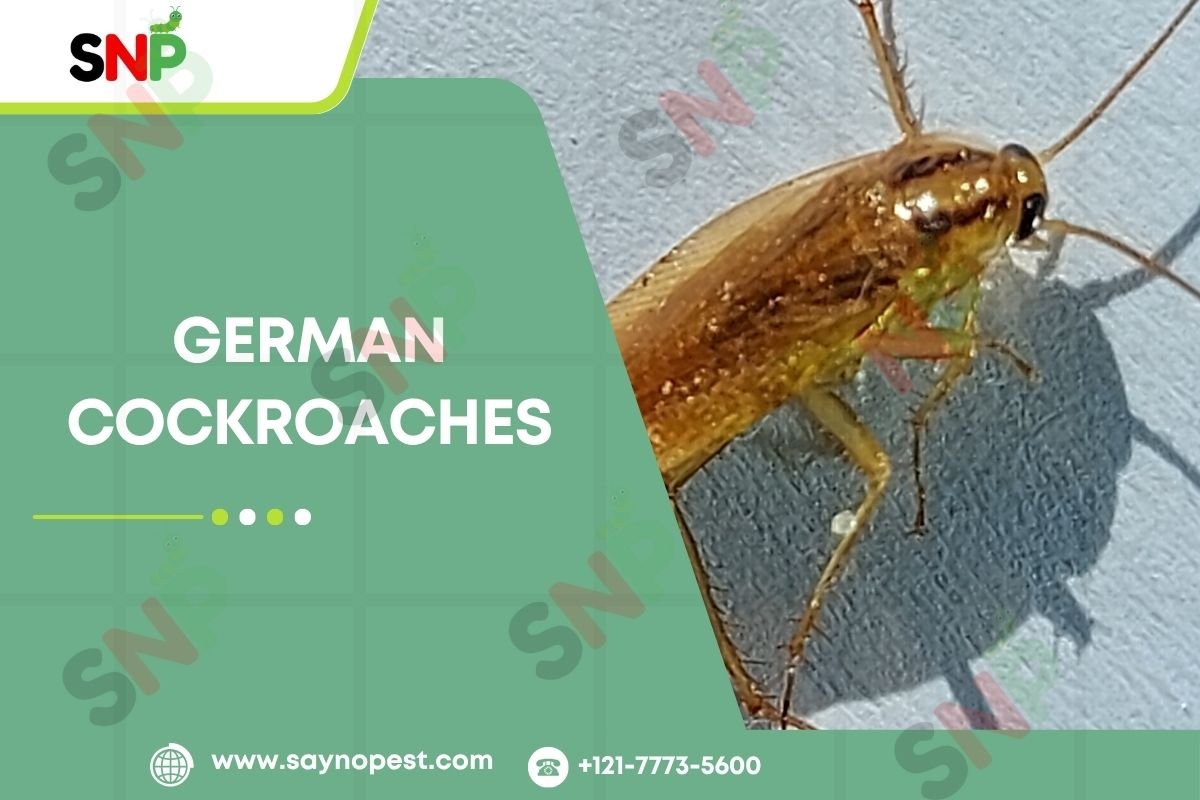
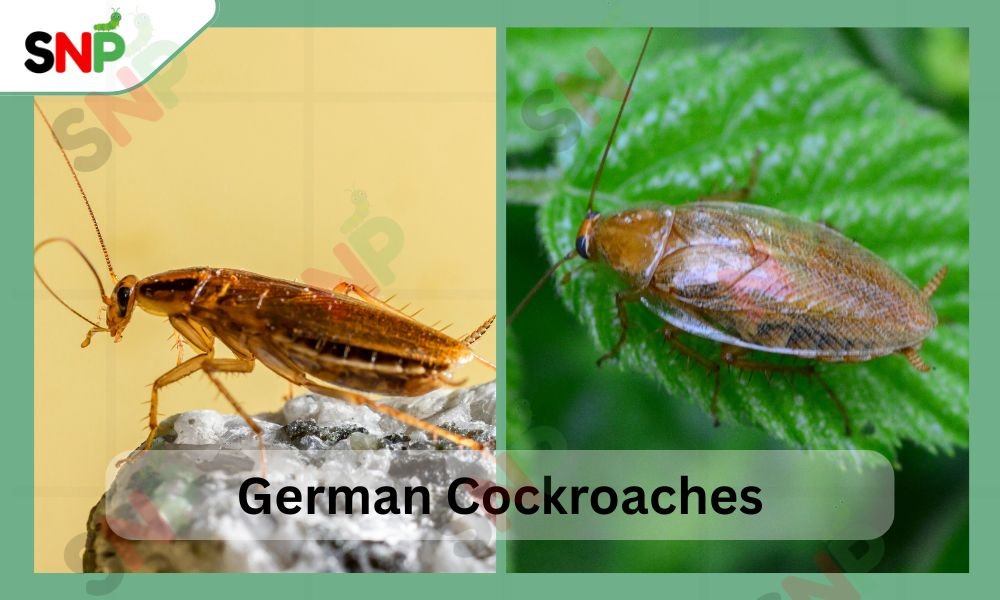
    German cockroaches (Blattella germanica) are small insects with brown to tan color, usually about 0.5 inch in length. While some of their friends might be apt to say ‘cockroaches are German roaches’, these animals would venture to express: German cockroaches have some wings, but they hardly ever fly. Instead, they like to move very quickly over the surfaces, especially when there is light present.
    These are most commonly found in the kitchen, bathroom, and where there is plenty of food and moisture, these pests will thrive. Such a liking for the human environment would mean the presence of this kind of cockroach mainly inside houses and not outdoors, relating to its prevalence as a constant indoor pest in the USA.

    german-Cockroach

    German Cockroach Life Cycle

    The German Cockroach life cycle is one of the main explanations for its fast breeding and development. These species have three significant stages:

    Egg Stage

    The first is the egg stage, which is followed by the nymph stage, and lastly, the adult stage. The whole life span of a German roach finished in as little as 10 weeks, but usually, it’s about 100 days, mainly depending on the temperature and food available.

    Egg period

    Throughout the egg period, female German cockroaches develop oothecae containing about 35–40 eggs. Throughout the development of her egg case, the female roach maintains it on her body surface until the embryos are ready to hatch. She selects a safe area to put her nearly prepared eggs before their hatching.

    Nymph Stage

    The newly hatched newborns receive the classification of German cockroach nymphs. German cockroach nymph begin life as small, hideous, colored creatures that lack wings and are darker than when they reach adulthood. German cockroaches undergo six to seven complete changes of their outer skin on their way to becoming adults in two months under perfect environmental conditions.

    Adult Stage

    The last molt marks the time German cockroaches complete the transition from immature to adult stage, along with the continuation of life cycles. A female German cockroach produces hundreds of offspring throughout her life span, which can rapidly multiply into an uncontrolled outbreak of these pests.

    German Cockroach Nymph

    German-Cockroach-Nymph

    The survival of German cockroaches depends completely on the stage known as the nymph. The small wingless and diminutive nymphs retain the scavenging skills and ability to conceal themselves in tight spaces, which parallels their mature counterparts. German cockroach nymph in your home signify an active infestation because nymphs make up most of the population within built colonies.
    The nymphs possess high resistance levels and need minimal food sources, which makes both their removal complex for professionals and renders them incredibly difficult to eliminate. Their dark body, combined with small dimensions, creates conditions for nymphs to hide until maturation occurs, which obstructs control attempts.

    German Cockroach vs American Cockroach

    Understanding the difference between the German Cockroach vs American Cockroach with the help of a few points:

    Size:

    • The German Cockroaches are about 0.5 inches.
    • American Cockroach are 1.5-2 inches in size.

    Colour:

    • German cockroaches are light brown and tan, with two dark stripes.
    • American Cockroach are reddish brown

    Preferred Habitat:

    • German cockroaches are mostly found in kitchens, bathrooms, and indoor areas.
    • American cockroaches mostly found in both indoor and outdoor areas, along with basements and drainage areas.

    Infestation Frequency:

    • German Cockroaches are the most common household pest.
    • American Cockroaches, on the other hand, are less common household pests.

    Conclusion

    The aggressive and quick life cycle of the German cockroach, known as the German cockroach nymphs, makes them almost impossible to kill. This information regarding the nature of the German cockroach vs American cockroach provides the premise for the battle against the pest.

    If the German cockroach is in your home, a late action can mean a very critical issue, as they not only multiply in large numbers quickly but also carry diseases to your family members. You require a trustworthy pest control service provider that will destroy the German cockroaches easily and keep them away so that you can gain a stable lifestyle in no time. Keep an eye on your home, family, and so on, and maintain a high level of awareness and proactivity, and you will be successful in fighting against these unwanted guests.