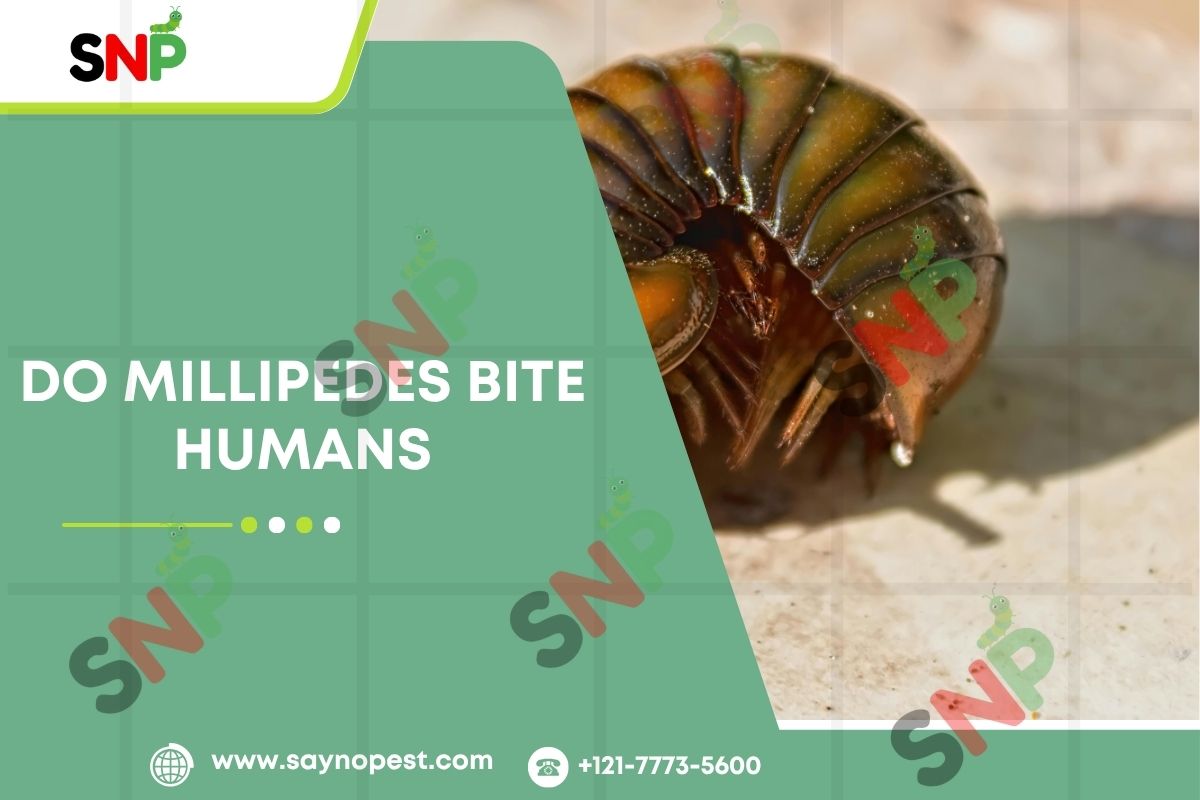
Tag: Do Millipedes Bite Humans

  • Do Millipedes Bite Humans? Discovering the Truth

    Do Millipedes Bite Humans? Discovering the Truth

    Introduction To Do Millipedes Bite Human?

    Did you ever see a long, multi-legged creature moving on your floor or crouched in a wet corner? You must have wondered, do millipedes bite humans? They may look scary at first sight, but the truth is not that scary.

    Here in this blog, we will reveal whether millipedes bite or not, discuss the problem of millipedes in house, discuss their chemical releases, and describe whether they are poisonous. We will also discuss some other related pest issues like How to Get Rid of House Flies so that you can eliminate pest-free premises.

    Millipedes in House

    It is not rare that there would be millipedes found in home areas, particularly in damp areas such as basements, laundry rooms, and garages. Millipedes like moist conditions and eat rotten plant material.

    They are going to be coming through cracks, doorways, or otherwise “not-closed” windows. Although their unannounced arrival will be a shock, millipedes are harmless and will simply stay away from you.

    But if you’re always getting house millipede issues, it may be a sign of too much dirt or dampness near or on your home. Eliminating these conditions not only keeps millipedes out of the home but also assists other pest issues, like How to Get Rid of House Flies, as flies and millipedes are generally attracted to the same things

    Chemical Secreations

    Millipedes do not bite. All they have is the release of Chemical Secreations from the body glands when threatened.

    The secretions can include chemicals such as benzoquinones, alkaloids, phenols, or hydrogen cyanide in minute quantities. The idea is to discourage predators, not hurt people.

    Though these chemical secretions are not harmful, they can induce a minor irritation of the skin, redness, or stinging if, apart from touching a millipede, you touch your skin or eyes. The best protection against reaction is to wash your hands with soap and water immediately.

    Knowledge of chemical secretions is worth having if you have frequent contact with millipedes as it allows them to be handled safely and restricts exposure to irritation.

    Are Millipedes Toxic?

    Although they have a ghost-like appearance, millipedes are not dangerous to human beings. They do not possess toxic fangs and are unable to inject poisons. The primary threat lies in their chemical secretions, which are transiently inflammatory.

    Reactions can be:

    • Mild burning or stinging
    • Redness and swelling
    • Brown skin discolorations (“millipede burn”)
    • Eye irritation if accidentally touched

    In rare cases, sensitive skin can respond more strongly. If that happens, wash the affected part well & apply a mild skin cream. Avoid rubbing your eyes after handling house millipedes or other such insects.

    Although they pose little threat, having them indoors is all about sound home pest control just as understanding How to Get Rid of House Flies maintains a clean, healthy environment.

    Conclusion

    So do millipedes bite people? No. Millipedes are harmless detritivores that assist with crumbling organic matter. Their sole defense mechanism is the release of chemical secretions, which are light and generally harmless to people.

    If you’re seeing millipedes in house often,  you must focus on:

    • Reducing excess moisture indoors
    • close cracks and gaps
    • Keeping surroundings clean & free of rotting material

    And if additional pests are an issue as well, keep in mind that having knowledge of How to Get Rid of House Flies can contribute to a pest-free home as a whole.

    For expert guidance on pest control and safe options for removal, turn to saynopest your source for high-quality pest control service throughout the United States.
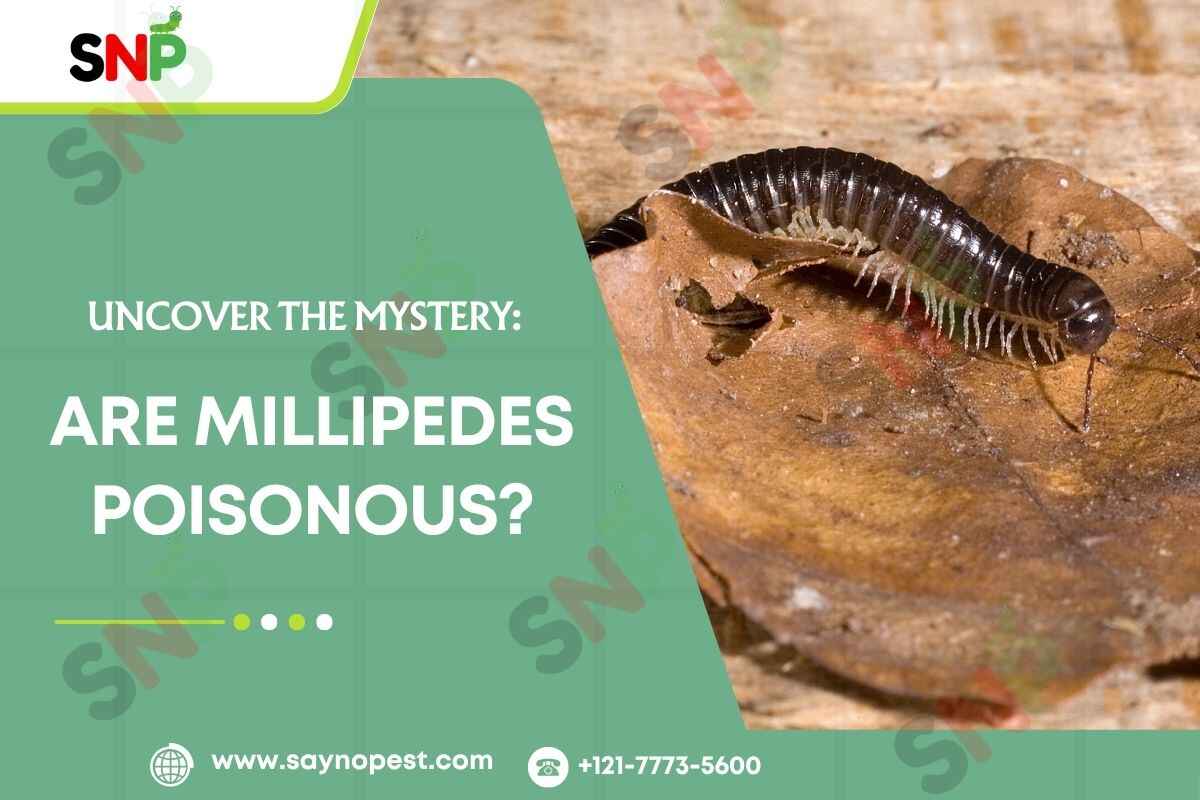
  • Uncover the Mystery of Are Millipedes Poisonous?

    Uncover the Mystery of Are Millipedes Poisonous?

    Theyare believed to be highly harmful and dangerous due to the number of legs they possess and their worm-like appearance. However, understanding their real nature can help you determine whether you actually need to eliminate them or they are safe.To answer Are Millipedes Poisonous, you must know thatthese old arthropods have been on the planet for several million years, and they are very much misunderstood! They are basically harmless to humans.

    Millipedes in House: What Do You Think They Do?

    When millipedes invade a house, the creatures are only looking for a place with water to hide with no intention to harm. Millipedes are nature’s friends who help clean up, eat mostly dead plant matter like decaying leaves, wood, and other parts of plants. They can’t survive without very high humidity, neither do they have the ability to reproduce indoors.

    Millipedes belong to the arthropods. These arthropods like dark and wet areas. They are predominantly located in basements, crawl spaces, and ground-level first-floor locations. Millipedes do not infest food, clothing, or wood as do termites or other destructive pests.

    Most millipedes that come into the house die in a few days because these places lack moisture, hence, the infestation is temporary. They will not be able to continue living in the dry atmosphere of the house unless very moist conditions are present.

    Millipedes-in-House

    Do Millipedes Bite Humans?

    Millipedes biting humans? A big no! Millipedes do not have teeth which are needed for biting. Millipedes are by no means similar to centipedes, which possess poisonous fangs. They certainly lack any biting mouthparts, stingers, or venom injection sites.

    If millipedes feel threatened, they act in a totally different way to defend themselves from predators. Even in the case where a millipede tried to catch human skin with its mandibles, this would be an unintended rather than a hostile action.

    People often say millipedes bite, however, this is a misconception that frequently leads them to confuse these creatures with centipedes. While centipedes can certainly inflict painful bites with their venomous fangs, millipedes are totally safe in this regard. The confusion can be attributed to the fact that they look alike, yet their defence mechanisms are totally different.

    Are millipedes harmful to humans? As nature intended, they have the poison fangs to defend their food storage.

    Are Millipedes Poisonous?

    When attacked, a millipede discharges a fluid through the glands placed along the segments of its body as the source of the secretions.

    This secretion is a mixture of various chemicals one of which is hydrogen cyanide. It is a response that one of the millipedes may give because some of the chemicals released are water vapor, hydrochloric acid, hydrogen cyanide, carboxylic acid etc. The secretions have an almond-like smell due to the hydrogen cyanide present in them. These chemicals are very poisonous to small predators such as birds and insects, yet millipedes produce it in minute amounts that cannot poison humans.

    There are people who can be very sensitive to millipede secretions and that can indeed cause them to experience allergy symptoms that can be in the form of skin redness, itchiness, burning sensation, or discolor.

    Chemical-Secreations-of-Millipedes

    Negative Impacts of their Chemical Secreations

    In the case that millipede secretions get into the eyes, they may cause-

    • A burning sensation
    • Excessive lacrimation
    • Conjunctivitis
    • Corneal damage

    However, serious systemic poisoning from millipede secretions is extremely rare.

    Millipedes can spray their defensive secretions up to 32 inches away, which is quite a distance. However, the amount of the secreted substance is not enough to cause any serious harm to humans. The chemical defence mainly functions as a repellent against potential enemies rather than a source of energy for the millipede.

    The solution for millipede toxin attack is that you need to wash the area immediately with soap and water. Over-the-counter antihistamines are good for allergic reactions, and aloe vera gel can be used to relieve the skin that is irritated. However, the cases of allergic reactions become so severe that the person must have medical help are very rare, and symptoms can be swelling of the face, difficult breathing, or a rash that is spreading.

    Conclusion

    Knowing are millipedes poisonous and do millipedes bite is a key for Americans to be able to act and react in a right way towards these arthropods.

    Although millipedes do have chemical systems for their protection. They only cause a mild irritation on the skin in some people, and they are not harmful to humans. All in all, they do not bite. Millipedes show up in houses usually if the conditions are good. It means they stay only to use up the moisture in the air as they are unable to survive without it.