Tag: do millipedes bite

  • Uncover the Mystery of Are Millipedes Poisonous?

    Uncover the Mystery of Are Millipedes Poisonous?

    Theyare believed to be highly harmful and dangerous due to the number of legs they possess and their worm-like appearance. However, understanding their real nature can help you determine whether you actually need to eliminate them or they are safe.To answer Are Millipedes Poisonous, you must know thatthese old arthropods have been on the planet for several million years, and they are very much misunderstood! They are basically harmless to humans.

    Millipedes in House: What Do You Think They Do?

    When millipedes invade a house, the creatures are only looking for a place with water to hide with no intention to harm. Millipedes are nature’s friends who help clean up, eat mostly dead plant matter like decaying leaves, wood, and other parts of plants. They can’t survive without very high humidity, neither do they have the ability to reproduce indoors.

    Millipedes belong to the arthropods. These arthropods like dark and wet areas. They are predominantly located in basements, crawl spaces, and ground-level first-floor locations. Millipedes do not infest food, clothing, or wood as do termites or other destructive pests.

    Most millipedes that come into the house die in a few days because these places lack moisture, hence, the infestation is temporary. They will not be able to continue living in the dry atmosphere of the house unless very moist conditions are present.

    Millipedes-in-House

    Do Millipedes Bite Humans?

    Millipedes biting humans? A big no! Millipedes do not have teeth which are needed for biting. Millipedes are by no means similar to centipedes, which possess poisonous fangs. They certainly lack any biting mouthparts, stingers, or venom injection sites.

    If millipedes feel threatened, they act in a totally different way to defend themselves from predators. Even in the case where a millipede tried to catch human skin with its mandibles, this would be an unintended rather than a hostile action.

    People often say millipedes bite, however, this is a misconception that frequently leads them to confuse these creatures with centipedes. While centipedes can certainly inflict painful bites with their venomous fangs, millipedes are totally safe in this regard. The confusion can be attributed to the fact that they look alike, yet their defence mechanisms are totally different.

    Are millipedes harmful to humans? As nature intended, they have the poison fangs to defend their food storage.

    Are Millipedes Poisonous?

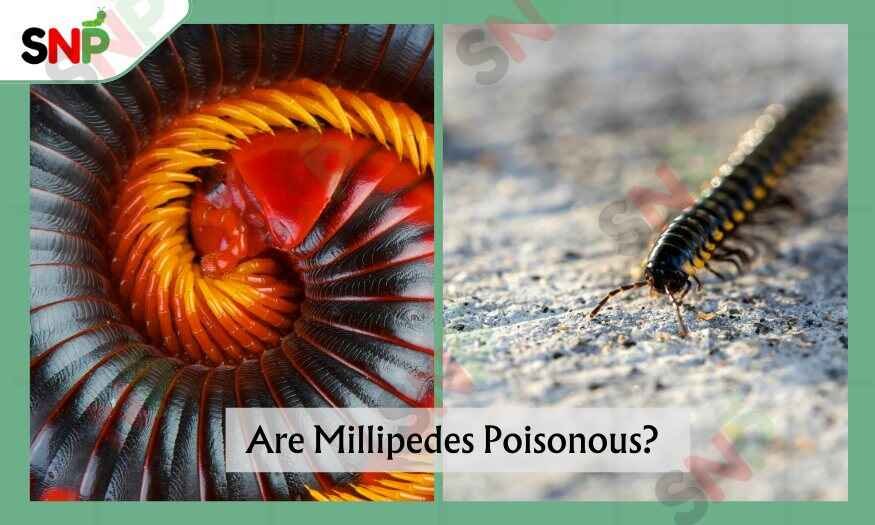
    When attacked, a millipede discharges a fluid through the glands placed along the segments of its body as the source of the secretions.

    This secretion is a mixture of various chemicals one of which is hydrogen cyanide. It is a response that one of the millipedes may give because some of the chemicals released are water vapor, hydrochloric acid, hydrogen cyanide, carboxylic acid etc. The secretions have an almond-like smell due to the hydrogen cyanide present in them. These chemicals are very poisonous to small predators such as birds and insects, yet millipedes produce it in minute amounts that cannot poison humans.

    There are people who can be very sensitive to millipede secretions and that can indeed cause them to experience allergy symptoms that can be in the form of skin redness, itchiness, burning sensation, or discolor.

    Chemical-Secreations-of-Millipedes

    Negative Impacts of their Chemical Secreations

    In the case that millipede secretions get into the eyes, they may cause-

    • A burning sensation
    • Excessive lacrimation
    • Conjunctivitis
    • Corneal damage

    However, serious systemic poisoning from millipede secretions is extremely rare.

    Millipedes can spray their defensive secretions up to 32 inches away, which is quite a distance. However, the amount of the secreted substance is not enough to cause any serious harm to humans. The chemical defence mainly functions as a repellent against potential enemies rather than a source of energy for the millipede.

    The solution for millipede toxin attack is that you need to wash the area immediately with soap and water. Over-the-counter antihistamines are good for allergic reactions, and aloe vera gel can be used to relieve the skin that is irritated. However, the cases of allergic reactions become so severe that the person must have medical help are very rare, and symptoms can be swelling of the face, difficult breathing, or a rash that is spreading.

    Conclusion

    Knowing are millipedes poisonous and do millipedes bite is a key for Americans to be able to act and react in a right way towards these arthropods.

    Although millipedes do have chemical systems for their protection. They only cause a mild irritation on the skin in some people, and they are not harmful to humans. All in all, they do not bite. Millipedes show up in houses usually if the conditions are good. It means they stay only to use up the moisture in the air as they are unable to survive without it.
  • Do Millipedes Bite?

    Do Millipedes Bite?

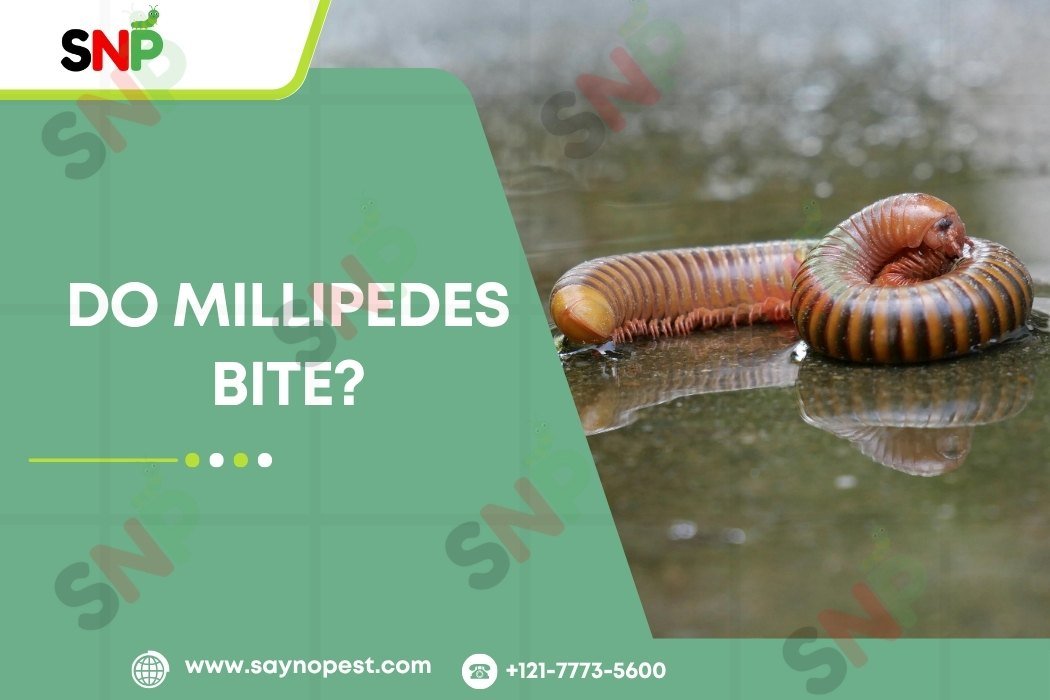
    Millipedes, sure, they are among the most misunderstood arthropods that are found all over the United States of America. People are very often the ones who come across these many-legged creatures quite unexpectedly in their gardens or basements or simply outdoors and then they immediately start wondering: “Do millipedes bite humans?” This question is obviously raised due to natural concern after finding unfamiliar creatures around their property.

    Do Millipedes Bite?

    When we try to figure out if millipedes bite, we need to check the structure of their mouth as well. Millipedes have mouthparts that are specifically designed for them called gnathochilarium, which are described by experts as fused maxillae that make a simple feeding apparatus. This part of their body is used only for processing the soft, dying plant matter and is not for giving bites to other creatures.

    The gnathochilarium is not only weak but also it is made in such a way that it can not penetrate human skin. The millipedes do not use these mouth parts for anything else but cutting up the rotten leaves, fungi that are going to be the main part of their diet. Their moving mechanism is a soft grinding and processing instead of an aggressive biting.

    Do millipedes bite even when they are feeding? Millipedes at no point even when they are feeding their favorite foods, they do gentle scraping and grinding rather than recklessly biting vigorously. Their mandibles are working hand in hand with those digestive secretions in order to soften the food materials before the intake thus making it easy.

    Are Millipedes Poisonous? What Science Says!

    Are-Millipedes-Poisonous

    Millipedes are not poisonous and cannot bite. But they possess special chemical defenses. Some millipedes secrete a combination of chemicals when they are threatened or mishandled.

    The quantity of poison that millipedes secrete is insignificant to cause any serious damage to human beings. But individuals with sensitive skin can experience irritation such as itching, redness, or burning sensation after contact with the secretion of a millipede. The skin can become brownish in other instances, but the problem can be resolved by washing with soap and water.

    Even larger millipedes are able to spray their chemicals up to 32 inches, although the spray is not strong enough to be harmful to most people. These defense tricks have been in use by millipedes since more than 400 million years. Each body segment has special glands that secrete their own chemical combinations.

    There are chemicals that can kill bacteria and others that are used to repel enemies. Millipedes usually curl into a ball when they are attacked and secrete smelly substances through small holes in their bodies. This cushions their tender legs and creates a shield against harm. Other millipedes enhance their own defenses by incorporating plant chemicals in the food they consume.

    Staying Safe Around Millipedes

    Although millipedes have minimal direct harm potential, following rules ensures safety. Knowing correct safety precautions becomes very necessary when you come across millipedes in your garden.

    • Use gloves for protection when you take care of millipedes.
    • You need to clean places where they have gathered.
    • Do not touch your eyes it after the contact with millipedes as their secretions can cause irritation.
    • If, however, the contact is accidental, wash the place of the contact with plenty of soap and water straight away.
    • Do not use cleaners that are alcohol-based as they can contribute to irritation.
    • If the situation becomes very severe to the extent of symptoms like wide blistering, shortness of breath, or allergic reaction signs, you should call for help immediately.
    • It is advised that pet owners keep an eye on their pets near millipedes. Pets that are full of curiosity can be endangering themselves by going after millipedes for a treat.
    • Even though millipedes secretions are minimal in terms of the harm caused to pets, they may go through a short period of irritation in the mouth or may have diarrhea.

    Key Differences between Millipedes vs Centipedes

    Millipede-vs-Centipede

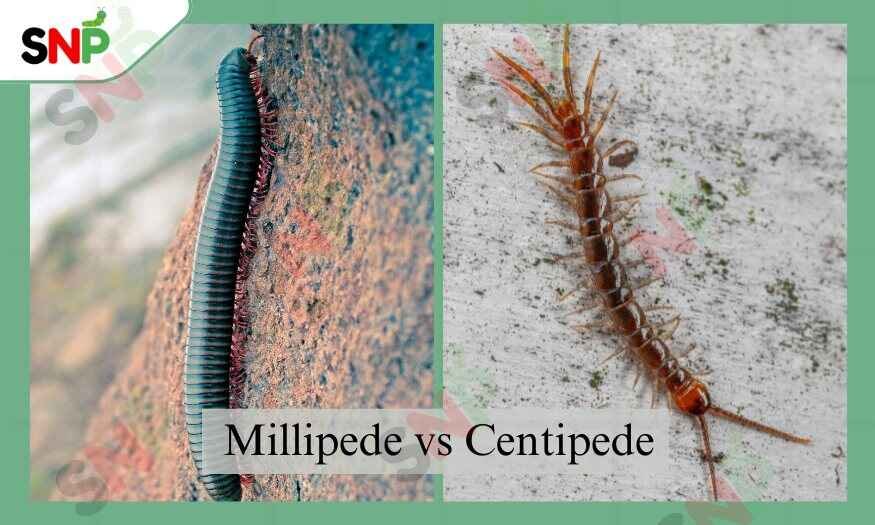
    Most people confuse Millipedes vs Centipedes with each other. From the ecological point of view, these two arthropods are very different. There are millipedes that cannot bite while centipedes are capable of giving painful bites.

    Centipedes have venomous fangs known as forcipules with which they harm the prey and also protect themselves. They give painful bites to people, however, it is seldom that they become a serious problem for the doctors. On the other hand, millipedes have no biting apparatus at all and they depend only on their chemical defenses.

    The structure of the body also vary to a large extent in these arthropod groups. Millipedes are creatures with cylindrical bodies rounded in shape that have two pairs of legs for each segment. Centipedes have flattened bodies and one pair of legs for each segment only.

    Millipedes are slow movers and they do it deliberately, while centipedes are fast moving predators that directly chase the prey of other arthropods.

    Intake of food also is the factor that makes these animals different from one another. Millipedes are peaceful decomposers that survive on dead plant material. Centipedes are go-getters and hence they outdo others in numbers by catching and consuming other arthropods, worms, and small creatures.

    Conclusion

    To answer the question “Do millipedes bite“. Millipedes have no poison in the usual sense, but if the defense chemicals they excrete come into contact with the skin of the very sensitive someone, only mild irritation can be caused. Having enough knowledge about these creatures will help you to understand how you need to behave with them.