Tag: cluster flies

  • Cluster Flies In House? Know What to Do!

    Cluster Flies In House? Know What to Do!

    Cluster Flies in house are not dangerous to your health, but their presence can be irritating for some. A little more information on cluster flies in house will help you to do a good job in getting rid of them and making your house clean and comfortable.

    What are cluster flies and how to distinguish them?

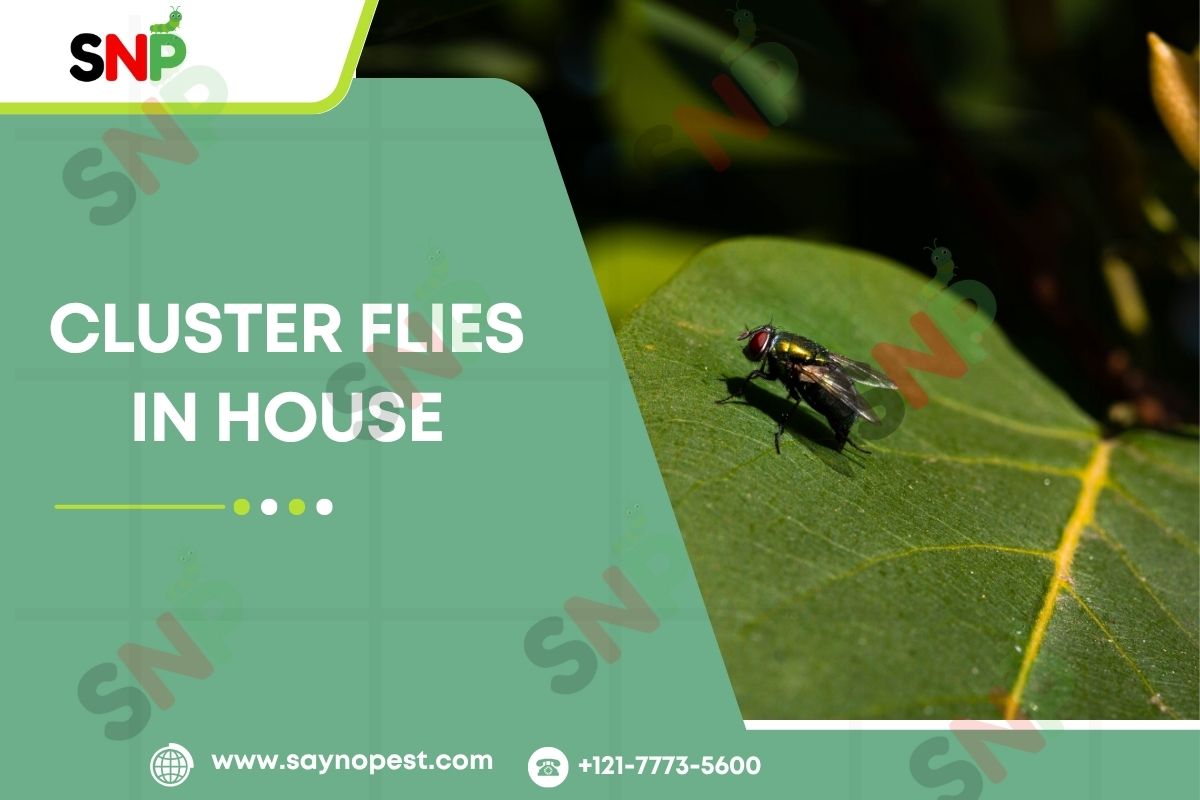
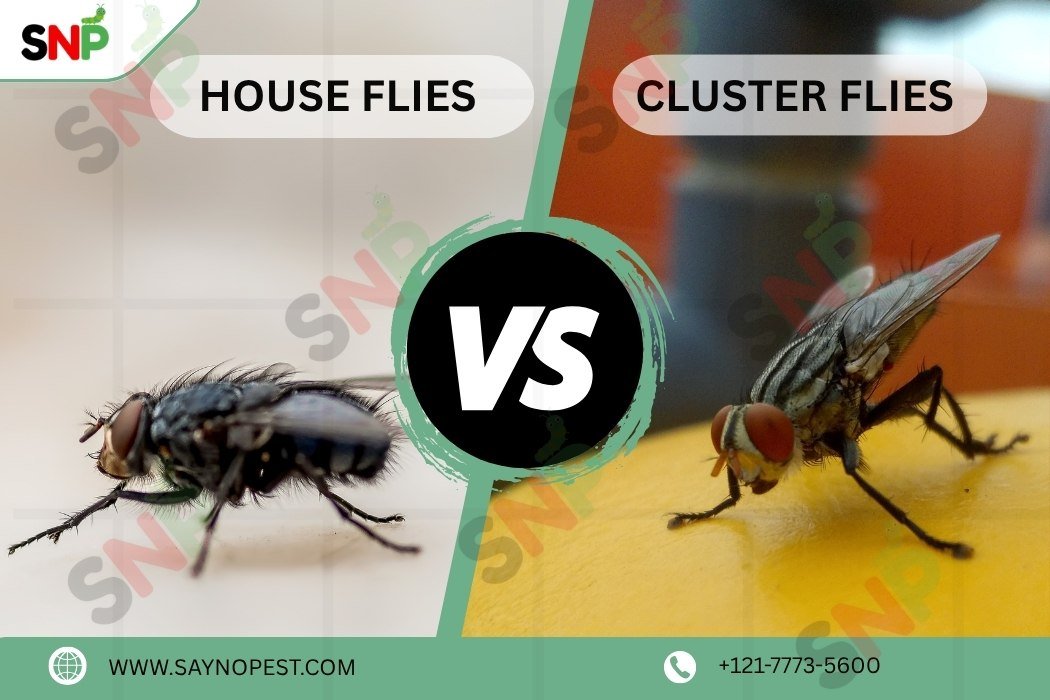
    Cluster flies, or attic flies, or grass flies, are of the genus Pollenia. They are a little bigger than the house flies, measuring 8-10 millimeters. They are the dark gray color with the golden-yellow hairs on the thorax and a chessboard-like pattern on the abdomen. Their wings are parallel to each other when they are resting unlike the house flies whose wings are spread.

    As compared to the normal house flies cluster flies in house don’t reproduce indoors. On the other hand, the larval period of these flies takes place in the outdoors.

    These flies decide to come inside homes during the late summer and fall. They prefer places such as rooms, attics, wall voids, etc. where they tend to invade in large numbers. This is why they are called Cluster Flies.

    What-Do-Cluster-Flies-Eat

    What Do Cluster Flies Eat?

    The diet of cluster flies in a house is completely different from other flies. As larvae, they feed on earthworms. Adult cluster flies, on the other hand, have no appetite for garbage, decayed matter or human food, as house flies do. They only eat nectar and other plant-based liquids when they are outside.

    What Are the Risks/Diseases Caused by Cluster Fly?

    Cluster Flies are not a threat to the health of your family or the pets. However, these flies do not carry diseases that they can transfer either to humans or animals. They do not pollute the food and they do not bite or sting.  Although these flies are non-venomous, but their numbers could make them a nuisance to people.

    Methods to Get Rid of Cluster Fly

    Methods-to-Get-Rid-of-Cluster-Fly

    The cluster flies can be managed through prevention and elimination of the pests:

    • Seal cracks and gaps: Inspect the exterior of your house and seal any cracks or gaps with an appropriate material.Screen windows and vents: Properly screen windows, doors, and attic vents, leaving no gaps or holes and flies cannot enter.
    • Insulate attics: The reduction of hiding spots for cluster flies can be achieved by using proper insulation and sealing of attic spaces.
    • Clean up properly: Get rid of food and drink spills, stagnant water, open rubbish bins, and pet waste helps to eliminate the sources of attraction.
    • Use a vacuum cleaner: Vacuum is the ideal way of getting rid of flies because it removes them directly from the place where the fly is hiding without disturbing them.
    • If you have a certain area in your room where the flies love to go, put a trap over that spot. This way you will attract and capture all the flies there.
    • Long-lasting insecticide: Use a long-lasting insecticide on exterior cracks in your home. Never ignore the label instructions.
    • Professional pest control: If the infestation is chronic or very severe, call a licensed pest control service to receive special treatment. They will also help you in long-term prevention.

    Conclusion

    Cluster flies are a problem, mainly in rural and sub-urban regions. They do not transmit disease but there nature of invading in large groups can be an issue. You can prevent them in your home by knowing their habits and how to prevent and eliminate them. When you are overwhelmed with cluster flies in house, consider professional pest control services.
  • House Flies vs Cluster Flies

    House Flies vs Cluster Flies

    If you are worried which fly species has invaded your home, cluster flies vs house flies? We might be able to help you figure it out. These flies have various differences. They are different in shape, color, habits, and in the health risks they pose. Let’s take a look at the main points of cluster flies vs house flies to help you spot them and get rid of these pests.

    How to differenciate between House Fly vs Cluster Fly?

    Let’s start with cluster flies!

    Cluster flies are large in size and darker as compared to the house flies. A cluster fly has a dark gray to black body with a silvery, checkered abdomen. They usually have short golden hairs on the thorax.

    Wings and Resting Position: The wings of cluster flies overlap when they rest. So if a fly is sitting near you, you will be able to tell what type of fly it is by the position of the wings.

    Movement and Behavior: One of their characteristic is their slow movement and the fact that they usually gather in clusters. Cluster flies can be in the sunlight near windows or in the attic. Due to this they form clusters.

    Habits: Cluster flies make a beeline for the houses in the late summer and fall for their hibernation, they like the attic and space in the walls. They have no intention of replicating indoors.

    House Flies

    House flies are small in size. They are about 3-8 mm long. The gray-color body of the house fly has four black stripes running along the back.

    Movement and Behavior: House flies are more energetic and move faster. You are more likely to spot them while they are looking for food or water in your house.

    Habits: House flies, in contrast, are powerfully attracted to food, rubbish, and decay. They deposit their eggs on these substances and thus they are able to multiply rapidly inside of your house.

    Lifespan of Cluster Flies vs House Flies

    The duration of lifespan of house flies vs cluster flies is different too:

    Cluster flies have been known to survive beyond a few months especially when they enter into a hibernation state during winter. Their lifetime is deeply connected with the seasons since they look for warm places in houses to survive the cold.

    The house flies are likely to live shorter which is about 15 to 30 days. But they multiply very fast and a small number of them can grow to a big number within a very short period when the weather conditions are in favor.

    Which Fly is More Hazardous?

    To decide the better option between cluster flies vs house flies, the health hazards need to be focused on first.

    Are Cluster Flies Harmless?

    Cluster flies are known as nuisance pests. They don’t transmit any diseases to people, and neither do they contaminate the food or surfaces in your house. The life of the larvae is in the soil, and they get their food from earthworms, therefore, they are not the ones that lay eggs on food or garbage.

    Are House Flies a threat to your health?

    House flies are a great danger to health. They are prime carriers of bacteria and germs. These flies feed and propagate on garbage, excrement, and the decomposition of organic matter. Pathogens can be transmitted by house flies to food and surfaces, thus, people must be careful.

    Therefore, house flies are more dangerous than cluster flies.

    Conclusion

    The first step to effectively eliminate the pests and ensure that your home is safe, is to know the difference between house flies vs cluster flies. You should focus your energy on the quick removal of house flies and the maintenance of your house, and on sealing the entry points to ensure that the cluster flies do not get into your place to hibernate in winters. By understanding house flies vs cluster flies, you can take the right steps to protect your family.