Tag: chipmunks

  • Chipmunks: Identification and Lifestyle

    Chipmunks: Identification and Lifestyle

    Introduction to Chipmunks

    Chipmunks are small, energetic ground-dwelling rodents which inhabit forests, gardens, and residential areas all around the United States. They may look cute to many people, but when they dig burrows around houses or when they destroy plants they become a big problem. They may appear harmless initially but cause soil erosion, structural cracks and broken gardens.

    This is why it is important to grasp their habits and lifestyle. Identification of their signs at an early stage will help homeowners take preventive measures before the infestation reaches its peak. Chipmunks control services keep the properties of many families around the country safe. To all citizens with recurrent problems, professional Chipmunks control in USA service on reliable sites such as saynopest means a long-lasting satisfaction.

    Appearance: How to Identify Chipmunks.

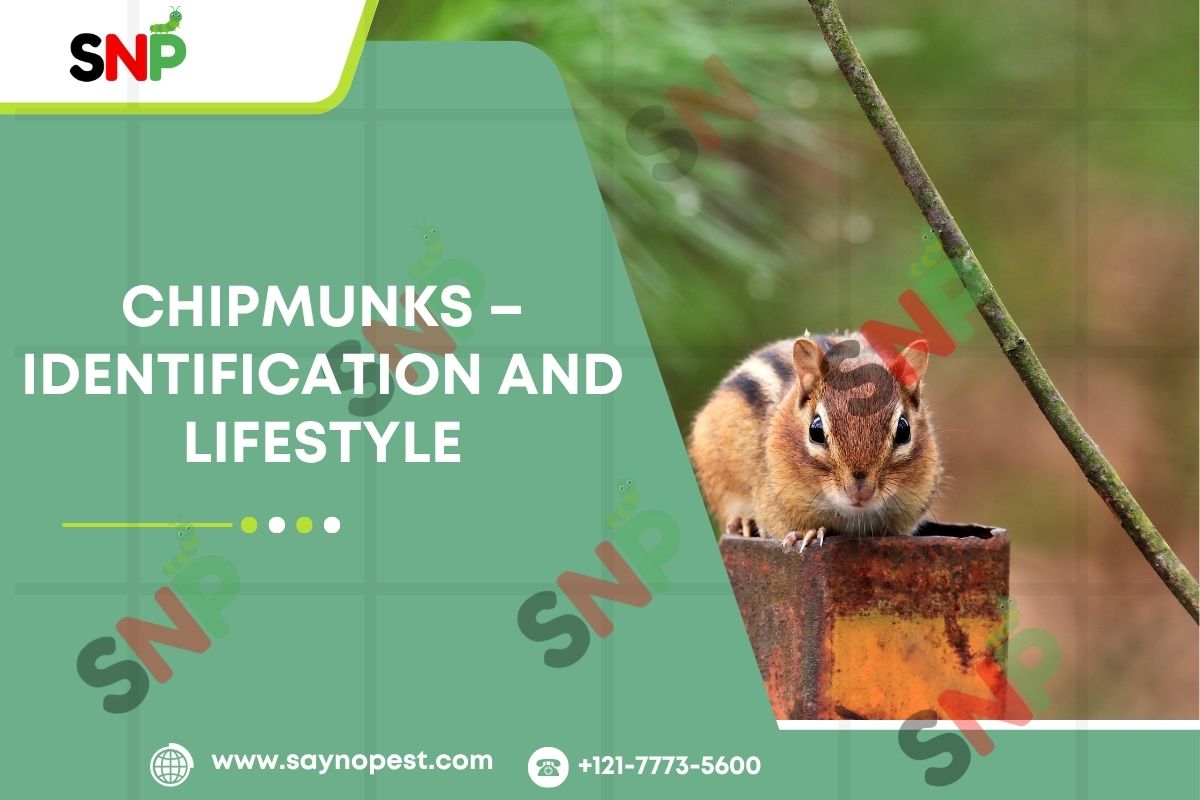
    Size: Chipmunks are small rodents with lengths of 6-12 inches including the tails.

    Color and Markings: These are reddish-brown in their fur with five dark stripes on the back and face to keep them out of the way of the squirrels.

    Cheek Pouches: Cheek pouches have large pouches to transport food to storage burrows.

    Movement: They have fast movement, often jerky & with upright tails.

    Common Species: The Eastern Chipmunk & Least Chipmunk are commonly found in the U.S.

    Clues Outside Homes: Scan the ground around decks or gardens looking to find small burrow holes, seed shells and nut piles.

    When infestation is prevented early, it is possible to inhibit infestation, and Chipmunks control services are capable of inspecting and treating the infested areas.

    Burrowing Mannerisms The Burrowing Tunnels Under Your Yard.

    Chipmunks are diggers in nature. They construct a complicated set of burrows, up to 2030 feet down, with distinct sleeping, food storage, & nesting chambers. These tunnels are usually installed in areas under decks, patios or garden beds, so they are not easily noticed. The entrance holes are not large, perhaps not more than two inches, and are skilfully hidden so that there are no heaps of dirt around them.

    Although these underground networks are a home to chipmunks, they can cause severe damage to lawns and structural stability of surrounding buildings. Burrows loosen soil, disrupt root systems of plants and may even cause retaining walls or sidewalks to move over time. This is why Chipmunks control services are necessary to home owners who observe abnormal digging habits. In the USA, professional technicians control inhumane practices by humane means to block and remove these tunnels without damaging other wildlife.

    Diet: What Do Chipmunks Eat?

    Consumer food: They consume plant and animal food, and are opportunistic eaters.

    Foods: Seeds, nuts, grains, fruits, berries, mushrooms & garden vegetables.

    Intake of protein : They also feed on small insects, worms and occasionally bird eggs.

    Food storage: Chipmunks hoard food gathered in their cheek-bags and bury it in holes to survive winter.

    Effects on Homes: They forage and damage gardens, bird feeders, and stored grains.

    When Chipmunks begin to invade garden beds or outside pantries, homeowners usually call Chipmunks control services.

    Prevention measures that can make chipmunks unwelcome to human activity is facilitated by the sureness of reliant Chipmunks control in USA.

    What are the characteristics between Chipmunks and Squirrels?

    They are similar like rodents but their behavior and appearance are different. Chipmunks nest in burrows as well, but the squirrels nest in trees and on high grounds.

    The other change lies in their lifestyles: the chipmunks are ground tributaries collecting nuts and seeds on the ground, as compared to the squirrels who typically climb trees to find acorns or fruit. Due to these minute differences, house owners at times confuse one with the other. The employment of Chipmunks control services aid in the confirmation of the species causing the problem so that the appropriate solution can be administered.

    Conclusion – learn to control Chipmunks

    Before it becomes too late and they have caused havoc in your yard and foundation, chipmunks may appear cute and innocent. This information on the look, burrowing behavior and feeding can assist the homeowners to observe the signs of activity and to take action before the issue spirals out of control.

    The best and safest way to control infestations of chipmunks is to hire professional Chipmunks control services since they can inspect, remove, and prevent the infestations without damaging the environment. Homeowners in USA through saynopest prefer Chipmunks control in USA as their preferred choice to keep their homes and gardens safe of undesired wildlife.
  • Chipmunk Traps Made Simple: How to Protect Your Yard

    Chipmunk Traps Made Simple: How to Protect Your Yard

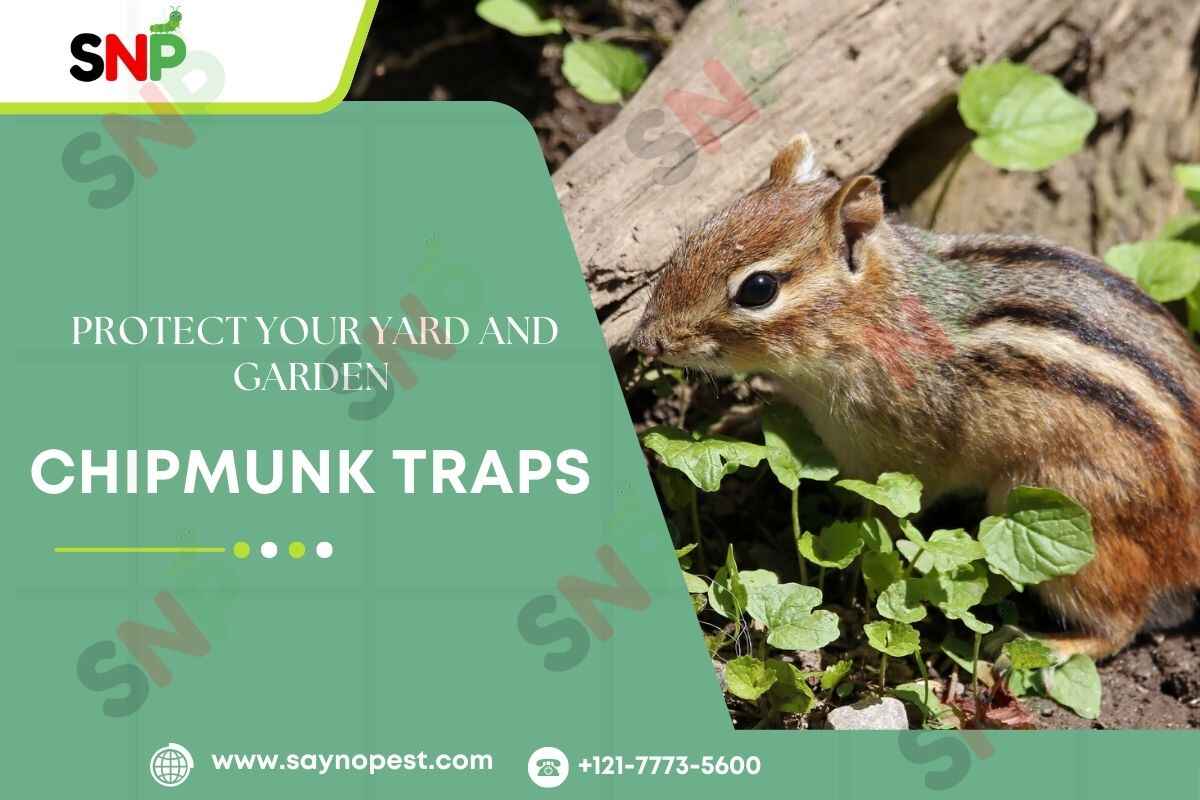
    Chipmunks are small creatures who are known to fight homeowners all over the United States in their yards and gardens. Adorable looking at a distance, these tiny rodents can dig trenches beneath patios, chew light bulbs and power wires, and steal bird feeders. It is at that point that chipmunk traps become a serious consideration. This post discusses the reasons why homeowners are using chipmunk traps, types of chipmunk traps, safety tips, advantages and disadvantages of using the different types of traps, and finally, a conclusion is provided so that you can be in a position to make the right decisions. This is offer by SayNoPest.

    Why Homeowners Use Chipmunk Traps

    chipmunk-traps

    Chipmunk traps are use by homeowners for a few reasons:

    • Prevent damage: Foundations, patios, stone walkways, and flower beds are all burrowed by chipmunks. That compromises buildings and leads to safety, drainage and aesthetic problems.
    • Guard gardens and plants: These species of animals raise bulbs, consume seeds and young plants, steal bird food, and otherwise strip the landscaping of its beauty and productivity.
    • Minimise health hazards and nuisance: Chipmunks are not particularly dangerous as compare to other pests, but their burrows encourage other pests to move in, and their droppings can minor hazards, and most people will not like watching their yard be damage or seeing holes dug.
    • Keep property safe and secure: A yard with burrows will cause people to stumble, a lawnmower or other equipment may ruined, and the house will overall become less appealing. The trapping is considere to a proactive investment.

    Due to these factors, the application of chipmunk traps is a feasible, even mandatory measure.

    Types of Chipmunk Traps

    Some of the primary types of chipmunk traps include a number that are appropriate to various circumstances. There are four, which include live, snap, electronic and DIY.

    Live Traps (Humane Options)

    Live traps are types of traps that entrap chipmunks without harming them. They are frequently spring-door or one-way: the animal is attract (with bait such as nuts, seeds, peanut butter) by the door, and when it steps on a trigger, it closes. When the chipmunk is caught, it is move (when the law do not forbid it).

    Snap Traps (Quick Kill Traps)

    These are deadly devices whereby the chipmunk is kill instantly with a quick spring or a snapping metal bar. They resemble conventional mouse or rat snap traps, but of the right size. The animal is entice to the trigger by a bait, and the trigger closes suddenly. These traps are select in circumstances where the homeowners find the lethal approach more viable.

    Modern Solutions (Electronic Traps).

    Electronic traps are battery-power or can plugged in to provide a quick electric shock on entry by a chipmunk. They have sensors, indicator lights, sealed chambers to avoid touching the animal and are more hygienic. These are more technologically advanced and, in many cases, more costly at the beginning.

    DIY Traps (Homemade Options)

    Other house owners choose homemade options. Another typical variant is a bucket-type trap wherein a plank of wood or a holder with a bait makes the chipmunk fall in. Simple cages can be made of wire mesh by others. Depending on design, DIY traps may be cheap and less controllable or humane.

    chipmunk

    Safety Tips When Using Chipmunk Traps

    Chipmunk traps should be use safely, and in particular, traps must used in homes with children, pets or wildlife. Here are some key safety tips which you should know for dealing with the problems of how to get rid of chipmunks:

    • Keep children and pets safe: Inaccessible Trap areas. Electric or snap traps are dangerous when someone opens them by accident. When necessary, use enclosures or covers.
    • Check traps regularly: Live traps must be inspect at least once or twice a day so that an ensnared chipmunk is not harmed, beaten or shown to its predators. In the case of snap and electronic traps, frequent inspection merely makes sure that they have not ceased to function efficiently and successfully.
    • You should use good baiting procedures: You should put on gloves when you are dealing with bait or the trap in case you leave a human smell that should repel the chipmunks. Use baits that are friendly but harmless.
    • Follow regulations and laws of the area: There are various states where it is illegal to relocate wildlife or there are conditions on how to do it in a humane manner. You should never ignore your local wildlife control regulations.
    • Positioning: Place traps on chipmunk paths, these traps must not in full view because they can accidentally disturbed, trap anchoring must in place so the traps are not tippe over.

    Conclusion

    There is more than mere effectiveness in making a choice between the various chipmunk traps, it is about your values (humane vs. lethal), your cost, your house, and the law. Live traps, strong electronic traps, can provide a compromise to many U.S. homeowners, whereas, in more critical or serious cases, snap traps come in. Self-made traps may work fine in certain situations but in most cases they are risky and their morality may be questionable.

    And it does not matter what type you choose, but remember to adhere to all safety precautions, reread traps frequently, so that the animal suffers less, and to see that the animal is treat justly and humanely. In this way, you save your garden, your property, and your peace of mind–and do a good deed to the critters.

    And saynopest can offer you reliable resources, help and useful tips to control all the chipmunks around, as well as to recommend you the best tools to use, and professional assistance in case of problems. Select judiciously and set traps and have a pest free yard.