The chipmunk vs squirrel debate causes much more confusion in the United States than any other animal when it comes to garden pests or backyard visitors. These fast-moving furry animals are observed scurrying around by homeowners who cannot be certain of whether it is a Chipmunk or one among the hordes of squirrels normally found in residential areas. It makes a difference knowing the difference only to satisfy your curiosity, but to safeguard your property, and to make informed choices on what to do to eliminate chipmunk and squirrel problems. Take a closer, in-depth read into the distinctions, behaviours, the damage they may cause and tactful ways of tackling them to ensure your place becomes pest-free using saynopest.
Chipmunk Vs Squirrel Difference
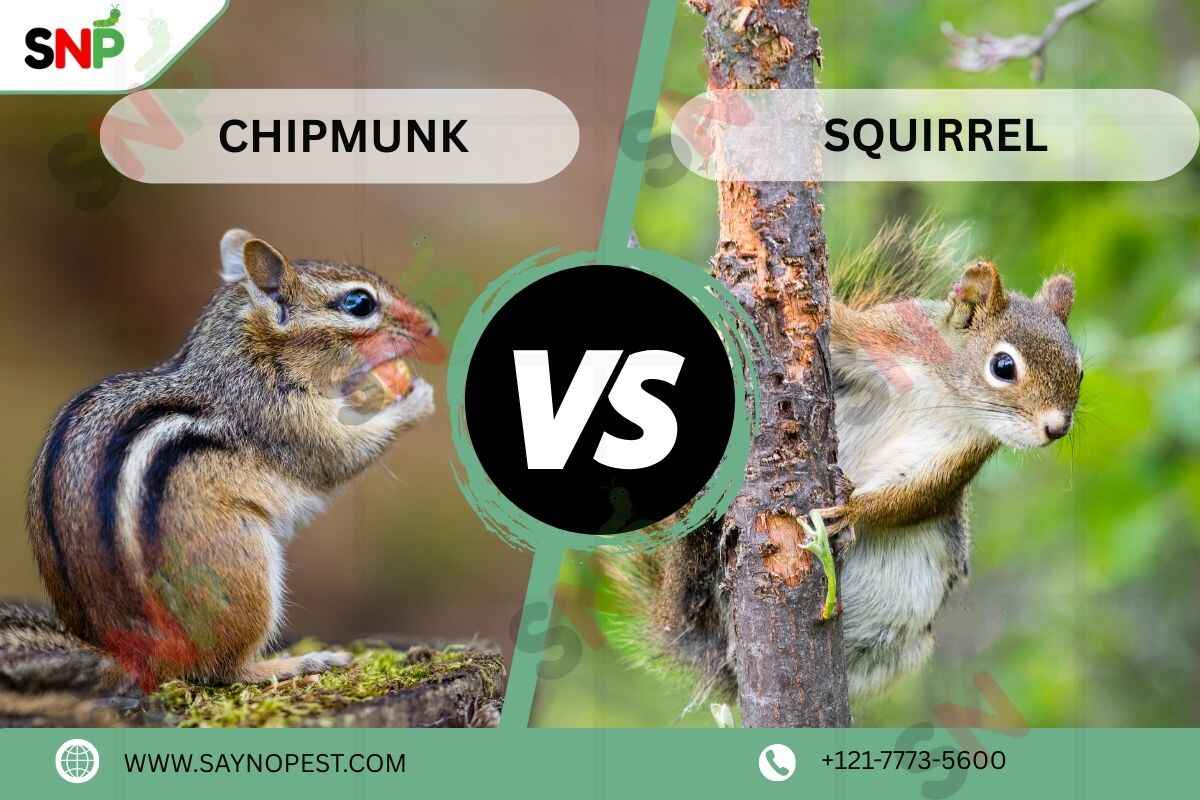
It’s not that tough to mix up chipmunk and squirrels. Both are rodents, inhabit similar areas and give trouble to residents. But several things set them apart:

- Size and Appearance: Squirrels, particularly tree squirrels, are much bigger, about 16–20 inches long with long fur resembling a tail and about 1.5 lbs. Chipmunks are smaller, ranging in size from half to less than 8–10 inches, with slender striped bodies and weighing only a couple of ounces. The stripes on chipmunks are a key trait that is, going from head to tail, while squirrels can have spots or uniform colour, but rarely stripes going all the way down the body of the chipmunk.
- Habitat: Squirrels live mainly in trees. You will see them jumping between branches or power lines. In comparison, chipmunks are ground specialists and love to burrow beneath patios, stone walls, or gardens, and can climb up when they are required.
- Tail: The tail has a story to tell — bushy for squirrels, less so for chipmunks.
Being aware of which animal you are up against is what makes successful intervention and what makes for knowing the special kind of risks each one brings to your home and garden.
Behaviour and Activity: Who Does What?
Squirrels and chipmunks are lively creatures that best fit in a bright personality, but also vary in their behaviour differently which makes them very interesting to observe, however difficult to deal with.
- Activity Patterns: Both are active during the day, but their routine, preferred environment differ. Most of the time, Squirrels just go up and down the trees, and collect their food.
- Walk up or burrowing: Squirrels are great climber; they have strong legs and sharp nails, and they can climb trees very fast. On the other hand, chipmunks are mainly burrowers. Their elaborate burrow holes allow them to extend as much as 10 feet below the ground, which has their storage rooms and sleeping quarters.
- Food Storage: One of the distinctive activities of the chipmunk is the use of its cheek pouches to carry seeds in the mouth before concealing the seeds in underground rooms. During the winter, they come out of torpor at odd intervals to do a nibbling on their store. Squirrels store food in several ground locations with the help of good memories to remember it in the future.
- Social Behaviour: Squirrels are normally found in play chases or even quarrels and sometimes act in small groups, particularly in lively cities. Chipmunks, however, are lonely and bounded creatures, and chip-chip-chip warning calls help them to protect the entry to their burrows
Squirrel Damage vs Chipmunk Damage
It is important to know who is causing which damage when considering the situation between chipmunk vs squirrels around your home.
Squirrel Damage:
- Structural Hazards: These are the most frequent structural risks that involve squirrels invading attics and roof spaces where they chew holes in vents, soffits, wiring (this is a severe fire hazard), insulation and even contents.
- Garden Pests: They love unearthing flower bulbs, peeling off tree bark, crashing bird feeders, and chewing on decks and fences–and cause serious cosmetic and structural damage in many cases.
- Larger Pest- Larger Mess: They are larger in size and taste and usually bring about more devastating and widespread destruction, mostly within even the homes.

Chipmunk Damage:
- Underground Problems: Chipmunks burrow long tunnels underneath the patios, porches, walkways, and foundations. Such tunnels will ultimately loosen hardscaping or cracks may appear.
- Garden Trouble: Seeds and bulbs get dug up, and fruits are nibbled upon, and they can even upset decorative plants. But they have less far-reaching effects and are typically not as damaging as squirrels.
- Digging, Not Entering: In contrast to squirrels, they do not break into the rooms at all often and instead stay at their digging holes and other outdoor areas close to them.
The difference is mostly in the scale; squirrels are masters of massive and extensive damage, particularly to the interior, whereas chipmunks are slow to build up damage in the exterior.
How to Get Rid of Chipmunks & Squirrel
When it comes to a chipmunk vs squirrel infestation, you will want to base your strategy on the perpetrator. However, most of these strategies overlap and this is what is most effective in your American home. It is important to know how to get rid of chipmunks & Squirrels. Follow these points:

Repellents
Squirrel repellents. Most commercial chipmunk repellents also repel squirrels. You may apply sprays, taste-aversion products, or granules everywhere, including around gardens and entry points. Some of the natural ones involve sprinkling cayenne or planting daffodils and alliums around the garden (both of which are disliked by the animals).
Physical Barriers
Put in mesh fencing, weighted to at least 8 inches depth to prevent tunnelling, and fabric to deter and prevent digging. To keep both pests out of your yard, block all the small holes and cracks or the entry point.
Clean Up and Remove
Remove fallen seeds, nuts as soon as possible. Store the pet and bird’s food in the best containers. Clear any clutter in the yard- keep woodpiles, rocks, and bushy growth to a minimum as places to hide.
Traps and deterrents
Live traps work, but you must ensure you follow up on regulations of local areas when it comes to relocating wildlife. In the short term, predator decoys may be effective (though the decoys should be changed frequently to work).
Maintenance
Check your attic, siding and foundation regularly to make sure no new holes have appeared and take care of them at once to keep both a step ahead of squirrels and chipmunks.
Putting together these strategies, particularly careful cleanup, protection-barrier, and considerate repellent application, is a perfect way to prepare yourself on how to eliminate chipmunk vs squirrel problems around your home. To people requiring professional help, SayNoPest provides professional help and the most modern pest management services.
Conclusion
Knowledge of chipmunk vs squirrel activity could be an asset to you, and cost savings to your pocketbook. Although there is plenty of room to confuse the two, distinguishing features of the two leave behind different paths of evidence, such as the burrows and food stores, attic damage, and garden raids. Squirrels will balkanise your attics and up on high, whereas chipmunks are your subterranean moles. It is not enough to know the difference between the two; the trick is to act quickly and thus efficiently.
With attention to prevention, regular upkeep, and correct remedies, you can eliminate (or at least reduce) both squirrel and chipmunk problems, so your backyard will be a refuge, not a battlefield. To learn to remove the chipmunks & squirrels permanently, rely on the given tips and address the experts of SayNoPest – the team of professionals in matters of reliable and American-oriented pest control consultation. Looking out over a city lawn or country garden? It is very important to understand the difference between chipmunk vs squirrels as this will help to deal with them.