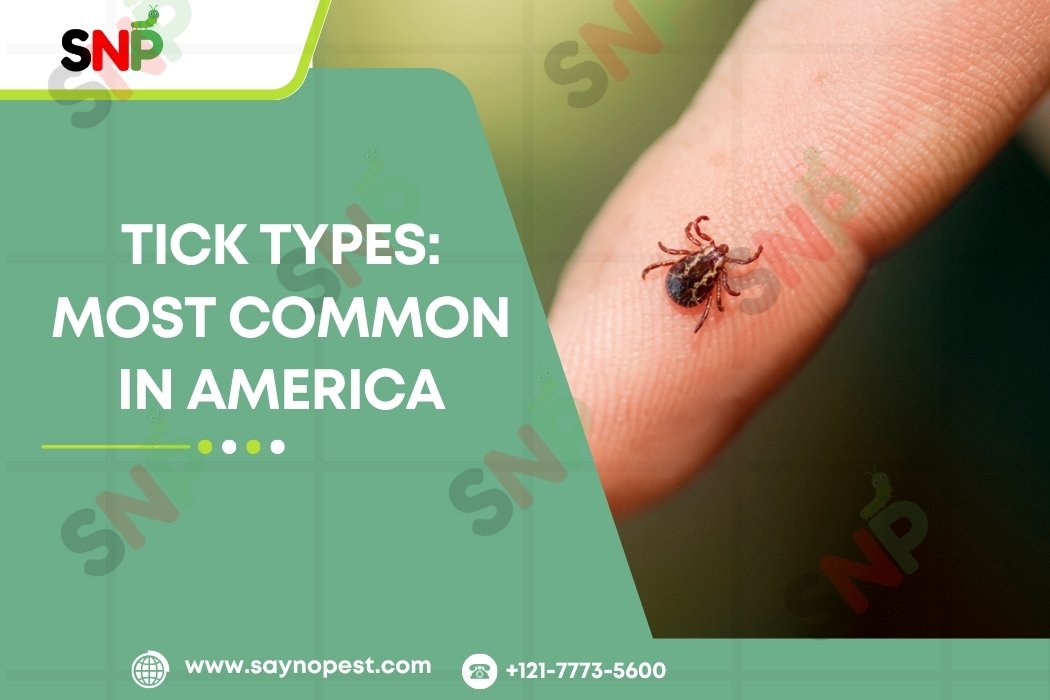
Protecting your pets and family against pests should become your core priority, and not many creatures cause more concern than the blacklegged tick. This seemingly small but elusive and even treacherous arachnid is becoming a major issue around the United States because of its relation to a number of health hazards. It does not matter whether you love to spend time outside or you just want to remain tick-free at your home; you should know about the blacklegged tick and how to avoid it. So, in this blog, we will see the reason why the blacklegged tick becomes a distinguished pest, the danger of these bites, where the blacklegged ticks are located, what troubles its existence presents to humans, and finish with some solutions on what you could do to help resolve their appearance.
Understanding the Blacklegged Tick
Scientifically referred to as Ixodes scapularis, otherwise known as the deer tick, the blacklegged tick is a small tick with a hard body that has made an important headline in the realm of pest control and the sphere of health. As opposed to other prevalent pests, the blacklegged tick is tough and specially adjusted to the environment. Adult females are approximately 3-4mm in length, although males are smaller at that stage, and hence they may easily get ignore, particularly during their nymph stage.

This tick is named after its very dark legs, which are characteristic of this type of tick. Known to be tenacious, blacklegged ticks must have a blood meal during every stage of their lifecycle, which takes two years. They live on mammals, birds and even reptiles, although in the United States, common hosts are white-tail deer and mice. This taste of large mammalian hosts renders them particularly problematic to human beings and pets that cross into habitats that support ticks.
Blacklegged Tick Bites: How They Happen and Why They Matter
Blacklegged tick bites are a ticket to some of the most worrying tick-borne diseases in North America. The difference between these bites and mere nuisances is the prospect of contracting a disease, especially when the attached tick persists beyond some days.
The blacklegged tick does not jump or fly. Instead, it is made to resort to behaviour, called questing, to wait patiently at the ends of grasses or bushes and attach itself to passing hosts. After getting transfer to an individual or animal, the tick crawls over to the appropriate part of the body, but they have a preference for muddy, warm and hidden areas like armpits, behind the knees, or the waistline. It then punctures the skin, lets out some anaesthetic in order not to detected and starts feeding.
When one person is tick-bitten, it may turn out to be a small red bump, but with the infection of Lyme disease, a few days after the bite, a rash in the shape of a bull’s-eye may appear. In some cases, victims are unaware of being eat, and this explains why one needs to pay some attention upon spending time outdoors in areas where these ticks thrive.
Where Are Blacklegged Ticks Found?
One of the questions that may emerge is where blacklegged ticks found in the United States. The response is imperative to everyone aspiring to enjoy outdoor life, to pet lovers, and to all those who have an interest in the prevention of pests.
The blacklegged tick is mostly concentrat on the eastern side of the United States, with the shelter extending from Maine in the northeast and Florida in the southeast to the Great Lakes and West Texas. Similar species can also discover on the West Coast, but they usually found in the highest concentration on the Northeast, Midwest, and the Upper South.
They prefer deciduous forest, woodland, tall grass and high leaf litter, which gives it the humidity and also animals to feed on that would sustain the tick. Black legged ticks are hot spots in trails, the woodland perimeter and even in the backyards of homes along forests. Although “where are blacklegged ticks found” can primarily answer as in the forests and grasslands, they also extending to new territory, depending on climate change and the movement of animals.
Key habitats:
- Forests of deciduous and mixed woodlands
- Leaf littered and Shrub areas
- On woodland fringes and the animal paths
- Close to houses near the forest
Be aware that the risk is the greatest in spring, summer, and fall, yet at any time when the temperature goes above freezing, you can encounter blacklegged ticks.
Problems the Blacklegged Tick May Cause to Humans
The medical issues of the blacklegged tick extend far beyond the itchy skin. These ticks are effective carriers of several dangerous ailments:
- Lyme Disease: The most hype illness linked to the blacklegged tick, which is caused by bacteria known as Borrelia Burgdorferi. At the earlier stages, the disease manifests itself through fever, fatigue, pains in the joints, and the characteristic bull skin rash. An untreated Lyme disease may cause infections in the heart, the central nervous system, and the joints.
- Anaplasmosis: This is an illness accompanied by chills, fever, muscle pains and possible complications due to lack of treatment.
- Babesiosis: The disease is aggressive on the red blood cells that are destroy, causing cardinal manifestations like fever, fatigue, anaemia or organ complications.
- Ehrlichiosis and Powassan virus: These two can be fatal, although not often spread as Lyme disease is.
It should mentioned that not every bite of a blacklegged tick results in a disease. The risk of diseases carried by ticks also rises the longer the tick is attach, so removing the tick within 24 hours is the surest method to prevent both Lyme and some other diseases. There is also a great concern among pet owners because dogs and cats are also inclined to tick bites and disease because of blacklegged ticks.

Preventing and Managing Blacklegged Ticks
The best way how to get rid of blacklegged ticks is to understand them and prevent them.
- Wear full clothes, cover your hands and legs at the time of outdoors.
- Keep walking in the middle of paths and do not touch high grasses and bushes.
- After being outside, check yourself, children, and any pets that have out looking in areas that are either hide or which give them warmth, as well as finding ticks.
- Using fine-tipped tweezers, remove any tick as soon as possible, pulling straight up so as not to leave a mouthpart attached.
- One way you can reduce a tick-friendly environment is to keep your lawns cut and clean the leaf litter off your yard.
Another way is to check yourself visually, as a bite of the blacklegged tick or the appearance of the bull’s-eye rash requires evaluation by a healthcare practitioner and the potential treatment provided; in this case, it is essential to act quickly.
In the case of the house and land ownership, it will be a great idea to engage professional pest control to minimise the chances and have some peace of mind when it comes to rejecting unwanted ticks.
Conclusion
The blacklegged tick may be small in size, but it is gigantic in the risks that it poses to American households. Be alert, be it outdoors or in the backyard. Learning about where blacklegged ticks are located, blacklegged tick bite identification, and the threats these creatures pose, you can put the situation under control. It is easy to reduce the risk and to protect the family and pets by preventing risks through clever habits and active prevention.
To get effective solutions to all your pest problems or get enlighten on how to prevent ticks effectively, visit SayNoPest- your reliable partner to a pest-free life.