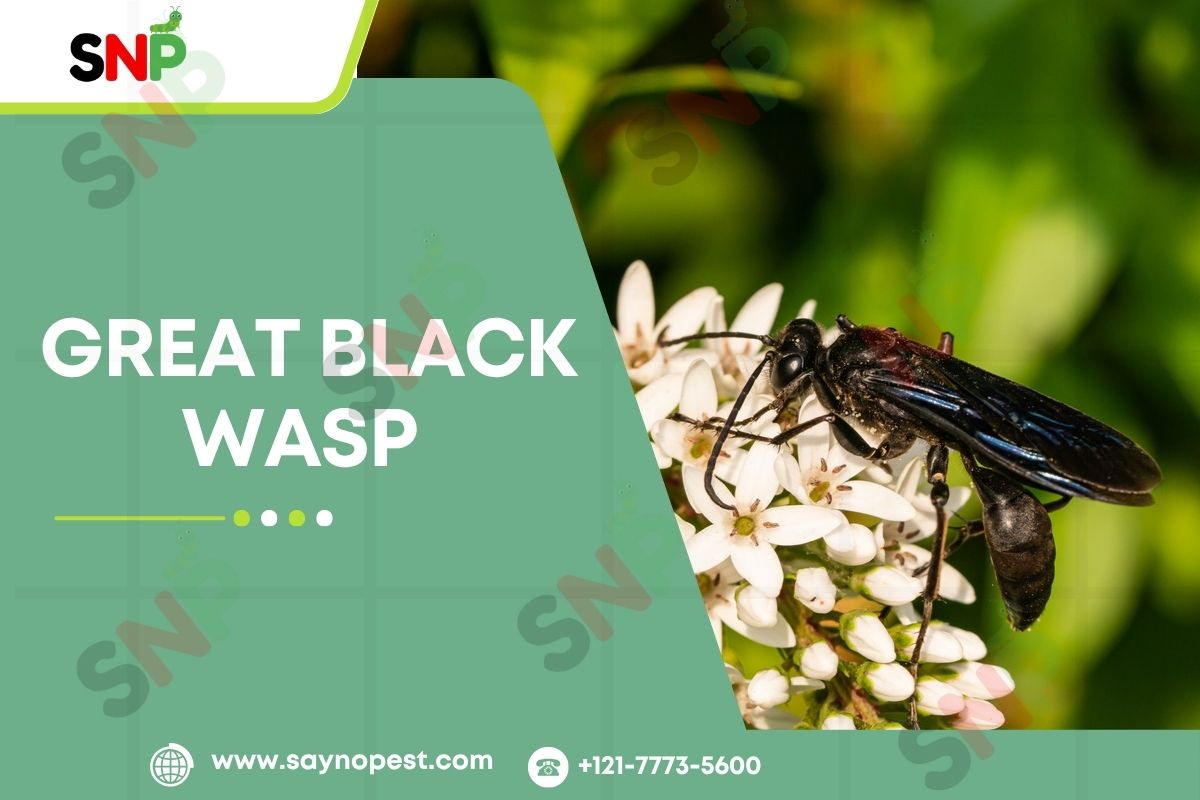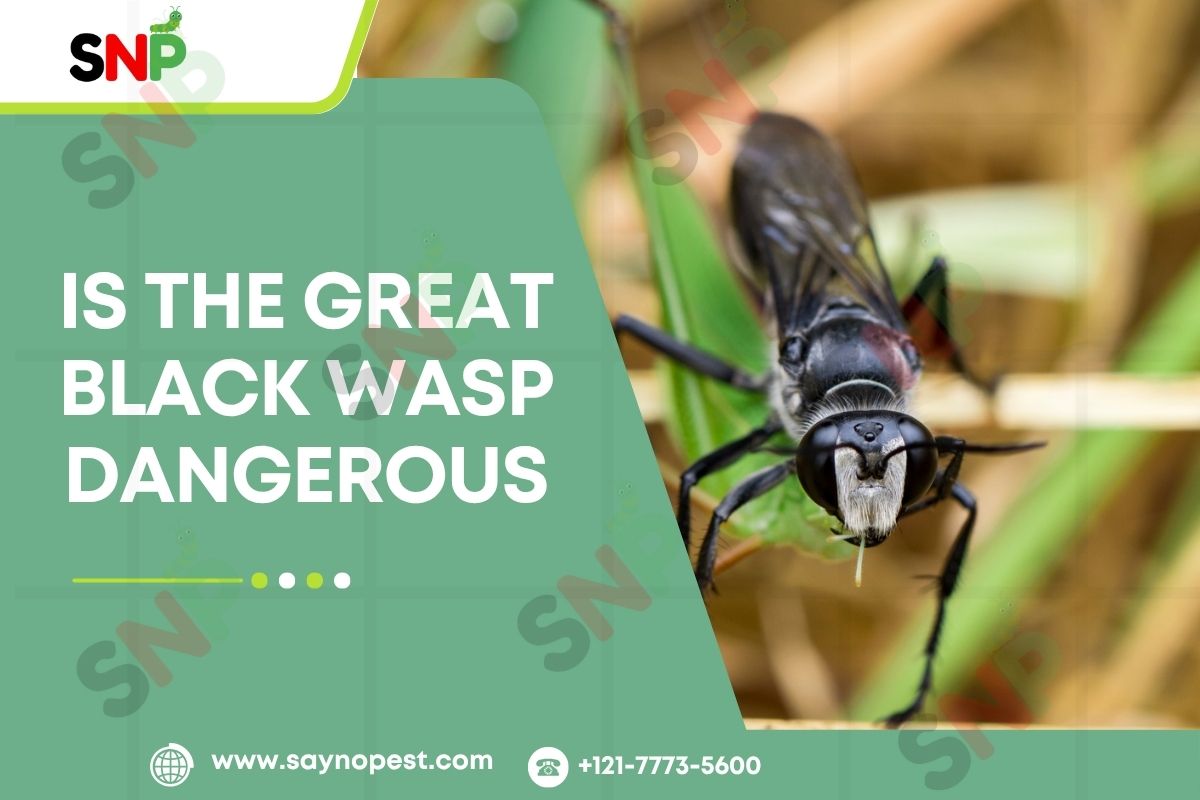
Regarding pest management in the United States, most homeowners have encountered the great black wasp, a striking, solitary insect that can be alarming due to its size and intimidating appearance. This blog will address the main questions frequently asked about this wasp, clarify is the great black wasp dangerous or just a myth, and provide tips on how to keep your property safe, including some DIY hints. You are a nature lover or the person who needs to defend his/her family, the information available here is useful and genuine.
Do Great Black Wasps Sting?
Yes, maybe the great black wasp stings, but only in some conditions. Contrary to common species like the yellowjackets, which are predatory and aggressive, the big black wasp is solitary and not aggressive. The following is what you should know:

- Female wasps are the only ones that sting: Male wasps lack a stinger and can therefore not sting.
- When Will They Sting: The wasp is generally only going to sting in the case that her great black wasp nest is bothered or when she is being threatened herself.
- Pain Factor: The sting is somewhat painful and not life-threatening unless you are allergic to stings of wasps.
- During their sleep time: In their sleep, the great black wasp is non-aggressive as long as it is left alone to go on hunting or to gather nectar and to avoid human beings whenever possible.
Although stings are never pleasant, the risk of the great black wasp is, in comparison to very low that of the social or colony-nesting wasps.
What Attracts Great Black Wasps & Is the Great Black Wasp Dangerous?
It is very important to understand all the factors that pull black wasps toward them, to solve the question of many people, that is the great black wasp dangerous or not. The points are as follows:
- Prey: These wasps are being attract by various insects, and they hunt them and provide food for their larvae. If you have a garden overrun with these pests, you tend to see the great black wasp coming to check out the next meal.
- Nectar and Flowers: Adult wasps, too, are attract to nectar and pollen, and they feed on these.
- Sheltered soil for nesting: The big black wasp nest is almost all brought in a hole in the ground on ridged, soft sandy soil, like next to grassy or floral sections.
Is the Great Black Wasp Dangerous?
- To Humans: Not really, the answer is. The large black wasp is of little or no danger to humans; it will only sting if threatened. Its sting can hurt and may at times cause an allergic reaction, but serious injury occurs rarely in people who are not allergic.
- To Pets: Allergic reactions can certainly occur when pets disturb a beautiful black wasp colony, but again, it is a small danger for normal animals.
- Ecological Role: Far from being a pest in itself, it is an aggressive predator of garden insects and an important issue of flowers for the pollination of plants.
Great Black Wasp Lifespan: Each Stage Explained
The knowledge of the great black wasp lifespan sheds light on how it looks and what it does throughout the year. This wonder travels through four main stages, namely: egg, larva, pupa, and adult.
Egg Stage
- Nest Building: The female wasp builds a large nest of the black wasp by creating tunnels in the soil in which she forms small chambers to keep each of her eggs.
- Provisioning: The female preys upon a grasshopper or a katydid and stuns it before stashing it in the chamber as a food source for the larva before laying an egg.
- Laying of Eggs: Eggs are laid individually into each chamber, and this ensures each larva has enough food.
Larval Stage
- Feeding: Feeding of the larvae is perform by consuming the paralysed prey in several days to a few weeks as the larva increases in size and draws all the needed nutrients from its meal.
- Solitude: The great black wasp nest is a lone structure, so every larva develops in isolation, without colonial siblings around.
Pupal Stage
- Metamorphosis: The fed larva weaves a security cover or cocoon and transforms itself into a pupa after a few weeks into an adult.
- Seasonal Pause: In many cases, the pupae pass a period of inactivity during the winter months within the large black wasp nest and come into activity only when the weather turns warmer.
Adult Stage
- Emergence: As the heat of summer comes, so do adults exiting their underground galleries and in search of nectar and seeking to make their nests.
- Mating and Death: Males only die after reproduction, but during mating, females start the cycle yet again by making nests and depositing the breeding eggs. The adult life of the great black wasps is usually of short duration, several weeks to slightly over a month, but the whole life cycle (egg to adult) takes several months.
- Cycle Repeat: This cycle continues as each female can lay more than one nest per season and this guarantees the survival of this helpful kind of species.

DIY Tips to Remove the Great Black Wasps
Even though the great black wasp is a garden helper, you can also wish to keep them out of the high-traffic part of your garden by making it so that they will not nest there. Safe, effective do-it-yourself tips are available here:
Name the Nest
Examine hasty soil, or plant-beds, at the sight of small holes downward-a good black wasp nest is close there.
Observe wasps during the day and note where they enter and exit the ground.
Prevent Attraction
- Reduce Prey: Keep grasshoppers and other insects at a minimum so that the amount of food available to the great black wasp is less.
- Keep Flowers Away from Meeting Places: Do not plant so many flowers near seating areas or any areas where people may play because this will attract foraging adults.
Physical Removal
- Safety Clothes: Always wear safety clothes while dealing with wasp like pants long shirt, gloves and more.
- Most Opportune Moment: Nest destruction should be done during dusk or dawn when wasps are not in the active stage.
- Insecticide Application: With hard to get rid of problems, apply a wasp insecticide dispersion or spray to the openings. Details and directions of the products must be followed, and kids and pets should never be allowed in a place that is not safe.
- Manual: Manually Remove: Sometimes, in cases of rare incidences, the soil with the nest can be moved to a desolate area, keeping in mind the avoidance of being stung.
When it is Time to Call a Professional
When you are allergic or when there are numerous nests of the creatures or there are frequent problems, you are better off calling a pest control specialist.
Conclusion
In short, the large black wasp usually does not present much risk to humans and pets, and in fact enhances and contributes to your yard in that it pollinates the flowers and helps control pests. Although the nest of the great black wasp and the mighty big black wasp may seem fearsome, they are better view at a considerable distance. Keep in mind that, provided that you do not interfere with them, encounters are safe and most of the time fruitful.
When you get a wasp problem that you do not know how to manage, or just to have a piece of mind, then don’t forget to check out saynopest. It is always much easier to maintain your house safe, cosy and free of pests with the help of professional advice that you can count on.