Blog

  • Dragon Millipedes: Explore the Unique Pest!

    Dragon Millipedes: Explore the Unique Pest!

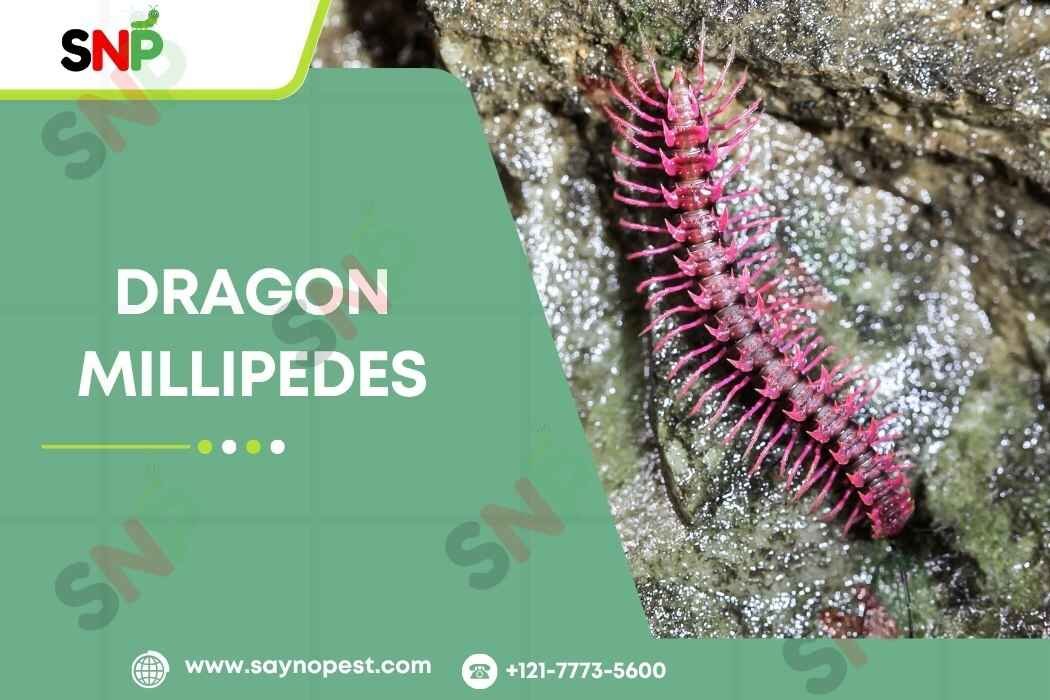
    The dragon millipedes is one of the most visually striking and attractive in the natural world. Its lively colors and the horned, dragon-like texture are the reasons why the millipede was loved by the people. Even though it may look scary, the dragon millipede is an example of how nature employs color to survive.

    All About dragon millipedes

    The dragon millipedes are so unique in their shapes. The spiny projections they carry on their bodies make them look like dragons. The majority of the species are of small size, with the length being no more than 3 centimeters (1.2 inches). They have low stature, and each of the segments have lateral folds which produce a shape similar to a dragon.

    The best thing about a dragon millipede is that it can produce a poison called hydrogen cyanide for its defense. This poisonous substance is used to scare predators and at the same time, it makes the millipede smell like almonds.

    While many species of millipedes are brightly colored, those that live in caves, on the contrary, are losing their color. Some even appear pale or completely transparent.

    Pink Dragon Millipede
    pink-dragon-millipedes

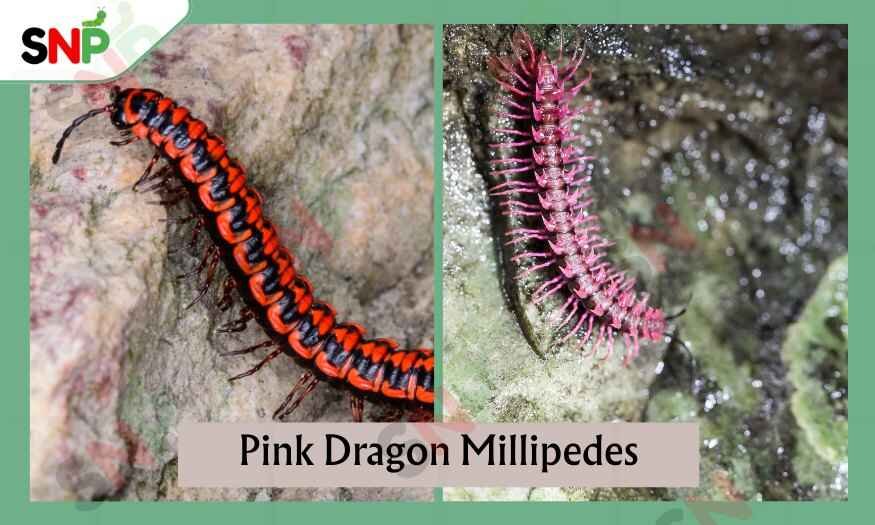
    One of the species of millipedes, the Pink Dragon Millipede (Desmoxytes purpurosea) is the most popular. It is also the most attractive one genetically. First found in Thailand, this of millipede won recognition from many other lands because of the incredibly bright pink body.

    The pink color of the millipede tells the predators not to approach it as it has a protective device inside – the poison that it releases when it is being attacked by the predators.

    The Pink Dragon Millipede is about 3 centimeters long, it has a spiny, flattened body that makes it look like a miniature dragon. Mostly, it is seen on the ground on leaf litter, especially after it rains. And no aggressive behavior is often reported as its main trait.

    In most cases, the millipede will not attack you even if it looks like that! It is usually hiding and trying to avoid confrontation through chemical defenses.

    Places They Are Found In

    Dragon millipede species are predominantly from Southeast Asia with the highest number coming from countries like Thailand, Malaysia, Myanmar, and southern China. An example is The Pink Dragon Millipede. There were other species in otjer the parts of the world like India, Sri Lanka, etc can be the habitat of as well as the result of the unintentional transportation by human beings.

    The habitation of the vibrant rainforests and damp leaf litter and decaying wood where most of the dragon millipede species are found favors the life of those insects. Some species have developed cave-dwelling characters to an extent where they have evolved very long legs and antennae or reduced the colors or completely lost the colors.

    Are They Dangerous?

    The dragon millipede is not regarded as a danger to the human race, it is not to say that they are not able to spray with a toxic chemical liquid as a means of its natural defense. If a human being gives it a feeling of being threatened, it naturally secretes hydrogen cyanide, a toxic chemical that is used as a warning to its aggressors and is also the source of the almond smell usually associated with millipedes. This secretion is toxic; however, the dosage the millipede issues out is of no harm to healthy adults when they come into a brief touch. Still, it is highly recommended that one should avoid touching the millipedes without any equipment, particularly if you have cuts or sensitive skin, and always wash your hands thoroughly after any contact.

    No children and animals should try to handle these millipedes. Why? Because they are so small and their bodies are so thin, therefore they can easily get killed. Another reason is that their chemical defenses could cause a mild irritation.

    Dragon Millipedes Conclusion

    The dragon millipede definitely stands as a prime example of nature’s creativity. It has a unique body structure, and chemical defenses, to survive in a region. You may be fascinated by the radiant pink color of the Pink Dragon Millipede. These millipedes give you a sneak peek at the natural world’s amazing things. With the proper care and treatment, these animals are harmless to people, and a popular choice among exotic pet lovers. If you ever come across a dragon millipede, take your time to glorify its beauty from a close distance
  • Natural Flea and Tick Prevention for Dogs

    Natural Flea and Tick Prevention for Dogs

    I am assuming you are among the vast majority of pet owners who have a sincere wish for your pet to stay healthy and happy. You do not want your pet to suffer from harsh chemical treatments. In this case, a natural flea and tick prevention for dogs can be your saviour. This not only grants you peace of mind but also provides a much-needed itch-free summer for your beloved pet.

    Profits from organic and eco-friendly companies are on the rise since pet parents want to keep their pets safe!

    Introduction To Natural Flea and Tick Control

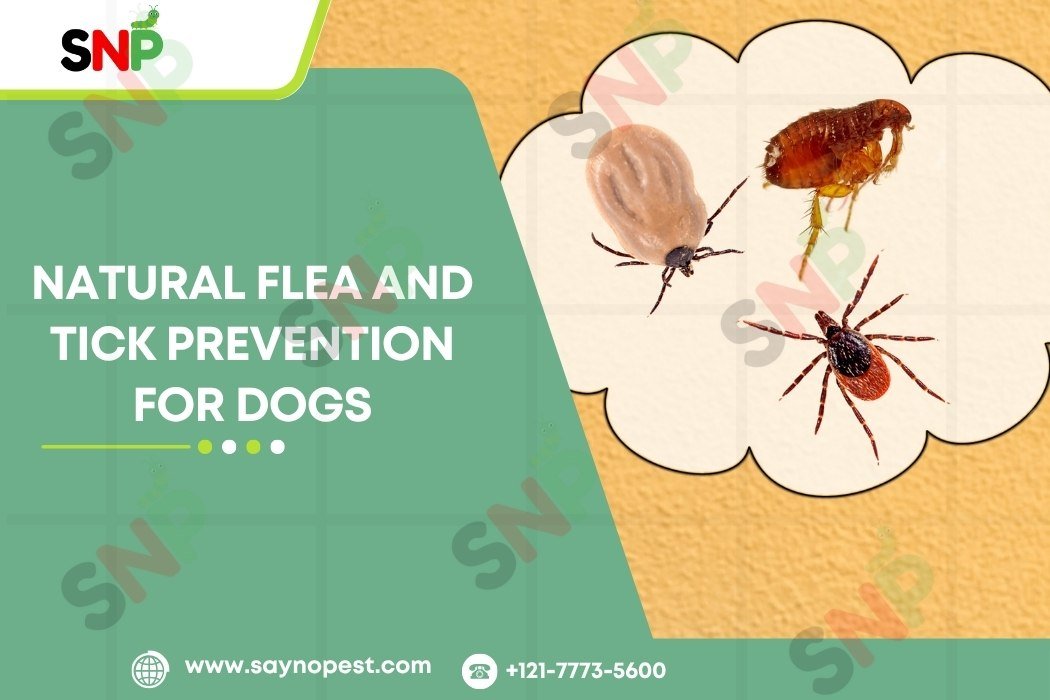
    It’s not only that fleas and ticks are a bother because they can lead to skin irritation, allergies, and transmit canine diseases.  Using natural flea and tick control is essential. They help not only in getting rid of the bugs in a more natural way but are also contributing to the less polluted world. And I’ve seen people wanting more and more eco-friendly products.

    5 Ways to Get Rid of Fleas and Ticks Naturally

    Ways-to-Get-Rid-of-Fleas-and-Ticks-Naturally

    Educate yourself about the natural options that Mother Nature provides for keeping the house and your pet free from fleas and ticks. Here are a few natural methods:

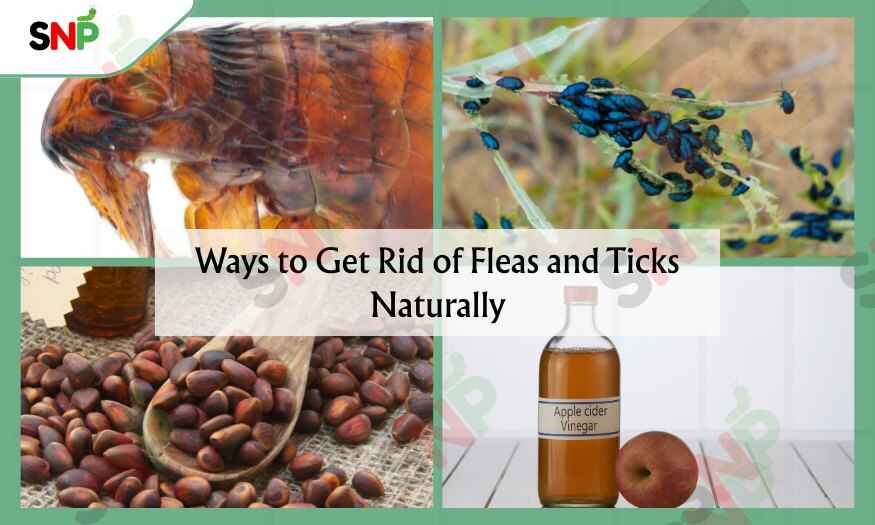
    1. Yard Hygiene: It has been scientifically proven that flea exposure can be reduced by taking care of your lawn hygiene. Mashed lawn, for instance, can not only be infected by ticks and flea eggs but also be a home and a well-furnished dining area for them.
    2. Use Oils: Animals attract mites, fleas, and ticks because of their odor. Essential oils like cedarwood can be used. You just have to dilute them with water. The essential oils serve as a natural method to keep ticks and fleas away without the risks of toxic chemicals.
    3. Diatomaceous Earth: Food-grade diatomaceous earth serves as a natural flea killer when you spread it on carpets and bedding and scatter it across your yard. The natural dehydration properties of this powder eliminate fleas effectively. Make sure to avoid exposing your dog’s eyes and lungs to this substance.
    4. Bathing and Grooming of Pets: Mild pet-safe shampoo during regular baths effectively removes fleas and ticks from your pet. A flea comb should be used between baths to remove any remaining fleas.
    5. Apple Cider Vinegar Spray: Spray your dog with apple cider vinegar mixed solution through a bottle while avoiding their face area. The scent from this mixture protects dogs from fleas and ticks while remaining harmless to their health.

    Natural Tick and Flea Control for your Pet Dogs

    Consistency is key when it comes to Natural Tick and Flea Control for dogs!

    • Daily checks: Running your hands through your dog’s fur after outdoor activities helps you detect hitchhikers and take timely measures.
    • Natural Sprays: Essential oils with an active ingredient like cedar or peppermint will help. Such products can keep your pet safe all the time with no side effects from chemicals.
    • Environmental Control: Handle your house and garden with the same care you give your pet. The flea life cycle can be interrupted through regular vacuuming and washing dog bedding and applying natural repellents to both indoor and outdoor areas.
    • Good Health: The main focus of the wellness process should be on-
      • Good nutrition
      • Regular exercise
      • Stress reduction

    In case you are living in a high-risk area or your dog is an outdoor pet most of the time, then natural product aid from your vet will be a great help. Combining natural ways with vet-recommended products will give your dog complete protection.

    Healthy Diet Plan for your Dogs

    • A strong immune system is the first step of a natural defense strategy for the health of your dog. Feeding your dog a fresh, whole-food diet -a good blend of lean meats, veggies, and healthy fats – can be the first thing you should consider if you want to keep the fleas and ticks away. On the contrary, over-processed food and sugar can attract pests.
    • Supplements: By the recommendation of the veterinarian, few types of supplements like Brewer’s yeast, omega-3 fatty acids, or a small dose of garlic are known to have anti-flea properties.
    • Hydration: Clean water and the right diet ensures the skin of your dog is always in a healthy condition.

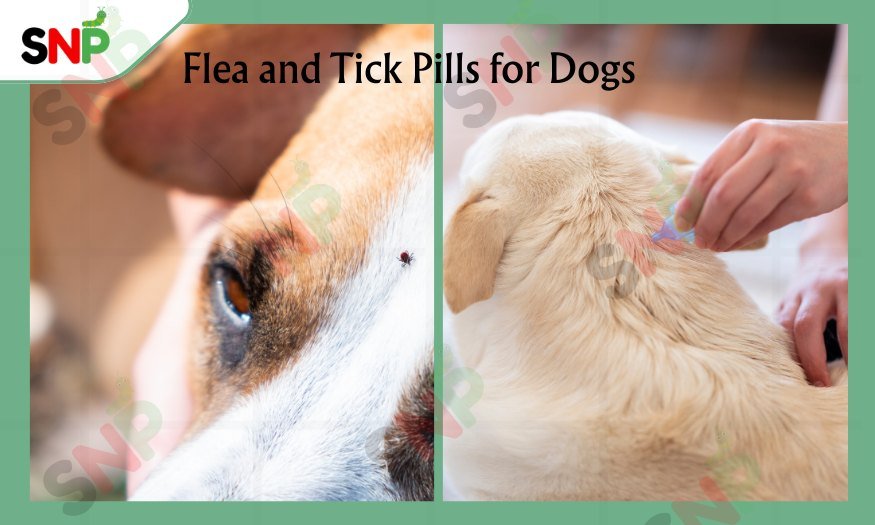
    Flea and Tick Pills for Dogs

    Flea-and-Tick-Pills-for-Dogs

    Natural means of repelling pests are good, but at times, you need something more that during peak flea & ticks season. This is where flea and tick pills for dogs come into play.

    These pills that are given by mouth are recommended by a veterinarian and provide long-lasting defense against fleas and ticks, since they also kill the pests that are inside the dog. The flea and tick pills can be a real game-changer for dogs that have sensitive skin.

    Always follow your vet’s advice when using flea and tick pills for dogs. Discuss any health concerns or potential medication interactions before starting.

    Conclusion

    Do not make the mistake of thinking that you can only save your dog from fleas and ticks by choosing either one of the safety measures. For example, by using natural flea and tick prevention for dogs , it is possible to keep your beloved pet free from fleas and tickles and happy and healthy. Besides that, the combination of these smart habits, a balanced diet, and, if required, flea and tick pills for dogs are also important.

  • Mud Dauber Wasp: Identification, Nests, and Control Methods

    Mud Dauber Wasp: Identification, Nests, and Control Methods

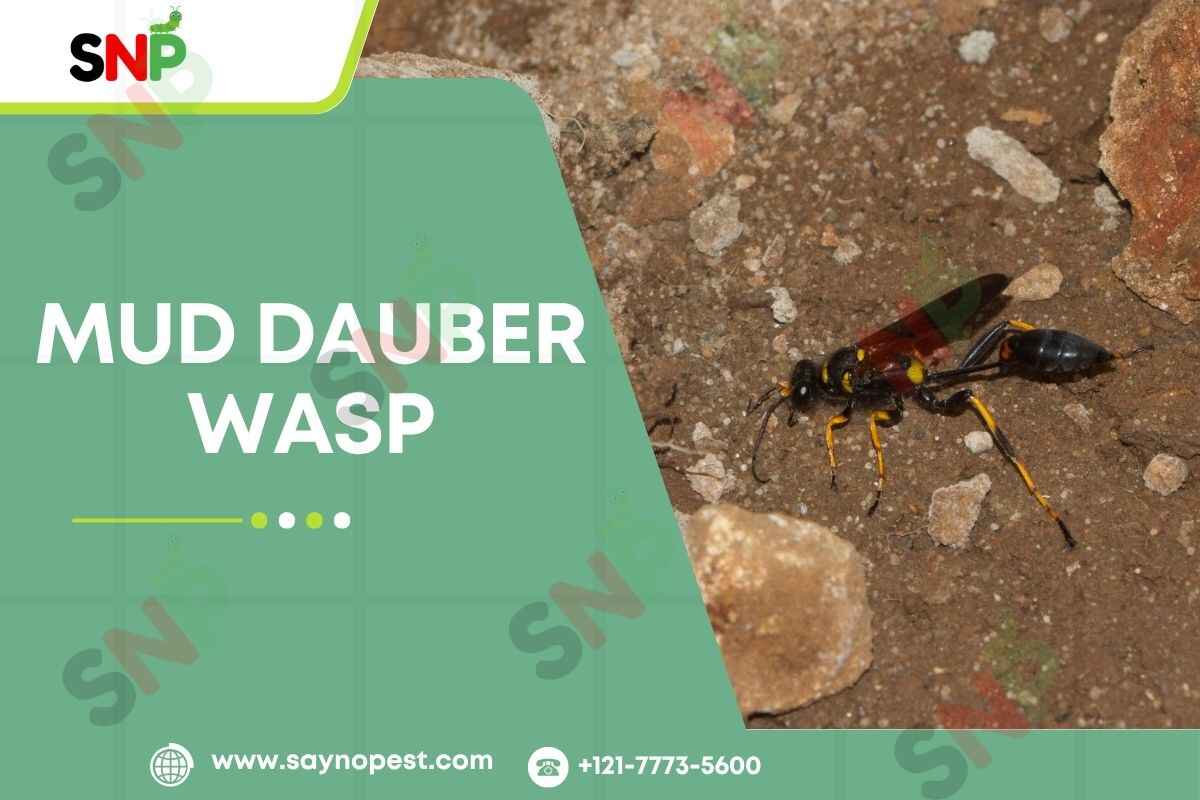
    Mud dauber wasp is a common sight near American homes especially in the warm weather season. Although they are not typically inclined to be aggressive, their unique mud nests are often considered an eyesore on the buildings. This resource addresses all issues that homeowners need to know about these wasps and mandates some practical control methods in case of the nuisance.

    What Are Mud Dauber Wasps?

    The mud dauber wasp exists within Sphecidae or Crabronidae families with Sceliphrinae as its subfamily designation. Mud dauber wasps share their solitary life patterns and natural building instincts with yellow jackets among social wasps yet construct their nests exclusively from mud. They are usually ½ to 1-inch long with wasp waists and slim in body, which makes them look even more slender.

    The three main species that you are likely to come across include:

    • Black and yellow mud dauber wasp (Sceliphron caementarium)
    • Organ pipe mud wasps (Trypoxylon politum)
    • Blue mud wasp (Chalybion californicum)

    They possess a variety of colours, with metallic blue or black with yellow spots. The wasp-waisted body is their most unique feature across all the subspecies of mud wasps. Mud wasp most active period is spring to fall, when they hunt spiders and at the same time build their mud homes.

    Mud-Dauber-Wasps

    Do Mud Dauber Wasps Sting?

    Female mud dauber wasps rarely sting humans because all stingers come from females and they will only deliver a sting while experiencing direct assault or when handled. Social wasps are the aggressive ones among the species, but this does not hold for the mud wasps. It is good to know that none of the males can sting, and thus females use it mainly for paralysing spiders to feed their young.

    If, say, you do have the chance to get bitten by a mud wasp, the pain is not as severe as that of other wasps. Nonetheless, people allergic to the venom of wasps should be careful, as such relatively quiet insects can provoke very dangerous reactions, including death.

    Mud Dauber Wasp Nest Identification

    The mud dauber wasp nest is a masterpiece of natural design and looks different according to the species. Each mud dauber wasp serves as a nursery for the embryos, with each cell full of subdued spiders and a single egg; each nest does so.

    The black and yellow mud dauber wasp constructs cigar-shaped bundles, usually in groups and looking like a fist-sized lump, the configuration of which, due to the potential species, is observed to have several variations. The organ pipe mud wasp builds structures in the shape of organ pipes, doing so usually in the form of vertical rows. The blue mud wasp almost always prefers to use abandoned nests and not construct new ones.

    Common locations for a mud dauber wasp nest

    • Under the roof eaves
    • On porch ceilings
    • Along the bridge undersides
    • Inside garages or sheds
    • On the walls of buildings
    Mud-Dauber-Wasp-Nest

    How to Get Rid of Mud Wasps

    While mud dauber wasps provide ecological benefits by controlling spider populations, sometimes removal becomes necessary

    1. Get rid of the insect’s food supply: Get rid of spider webs from the surroundings of your house, as spiders are the main food for mud wasp larvae.
    2. Targeted treatment: At night, when mud dauber wasps are less active, use a wasp-specific aerosol insecticide and directly apply it to their nests. Do not forget to put on protective clothing while treating the house.
    3. The nest removal: Once you have killed all the wasps, scrape off the mud dauber wasp nest with a paint scraper. If the nest is tough to remove, you can soften it with water first.
    4. The preventive measures: Regular insecticide applications at the perimeter of the house with lasting residuals can keep new mud wasp activity away from your home.
    5. Use Water for Quick Removal: A strong stream of water from a hose or sprayer proves suitable for removing newly built mud dauber wasp nests through water pressure alone. Smooth surfaces combined with tender nests make water a very effective solution.
    6. Wear Protective Gear: Protection such as long sleeves combined with gloves and eye protection should be worn when extracting mud wasp nests because the risk of being stung remains minimal.
    7. Choose the Right Time: For safer nest removal of mud dauber wasps conduct the procedure in evening or early morning hours while the wasps remain inside the activity center.

    Conclusion

    The ecosystem receives advantages from mud dauber wasps because they control both dangerous and common spider groups, including black widow spiders. Although the appearance of their mud dauber wasp nests may be undesirabl,e they present no significant danger to human beings.

    Professional pest control services offer both risk-minimised and secure solutions for removing persistent mud wasp infestations. Your best defensive approach against these insects involves regular inspections as well as removing empty nests, since it leads to the most successful long-term protection.
    Your decision about mud dauber wasps depends on your knowledge of their behavior for proper property management.

  • How to Get Rid of Silverfish: A Complete Guide

    How to Get Rid of Silverfish: A Complete Guide

    Finding small and silvery insects swiftly running around your bathroom floor or running away in your basement probably indicates you are dealing with silverfish. These creatures not only look unsettling if found in the house, but also are capable of gnawing into the pages of books or clothes. Today, in this article, we are going to have a good look at what are silverfish, where they come from, silverfish lifespan, and last but not least – how to get rid of silverfish.

    What Are Silverfish?

    Silverfish are wingless, primitive insects known for their conspicuous metallic luster and movements similar to those of fish. They are placed in the group Zygentoma, and households in the United States are their comfort zones. These pests are active during the night, quick temper, and flee from light; thus, they are not easily found during the day. Although silverfish don’t bite or spread diseases, they can still cause various damage to products that have starch.

    Where Do Silverfish Come From?

    Silverfish originated from the tropical region, but currently they are worldwide, with the highest density in North America. Found outdoors, they prefer dark and humid places like under the rocks, in the leaf litter, and under the debris. Inside houses, they are in constant search of the highest level of humidity, i.e., they can be anywhere from the basement to the bathroom, the kitchen, or the laundry room. Cracks, crevices, and gaps around door and window frames are common places of entry for silverfish, who are looking for moist and food sources. If you happen to come across a silverfish, probably, there are more of them hide, as they tend to stay together in places where there is a lot of food and moisture.

    Silverfish Lifespan

    The long silverfish lifespan makes them difficult to eliminate. Depending on how well the environment suits them, silverfish can live between 2 to 8 years of their life. Because silverfish can live for a long time while maintain regular reproduction, the management of a small initial infestation becomes crucial to avoid developing into a major problem. Knowledge of silverfish life spans allows you to develop successful management strategies because persistence becomes crucial throughout your control measures.

    How to Get Rid of Silverfish

    how-to-get-rid-of-silverfish

    If you are not aware of how to get rid of silverfish, be aware that it is possible through the implementation of a multi-faceted plan that focuses on the areas they like and their food sources. Here’s a simple but detailed guide:

    Loosening Moisture

    Silverfish cannot live in a dry place, so with dehumidifiers in basements and bathrooms, fix of leaking pipes, and prior arrangements for better ventilation in the rest of your house, you have developed a drier air field, which is in no case want by silverfish lifespan. It is prove that not only do your living spaces get cozier for yourself when you make them drier, but also in case of any existing silverfish, this could lead to a shorter life cycle for these insects.

    Removal of Nutrition

    Keep your cereals, flour, domestic animals’ food, and other such starchy items safe in well-sealed containers. The most important thing is to take out the pests from your house – clean the storage and regularly vacuum carpets and floors. Then you won’t have to face pests like silverfish.

    Block the Outside Entry

    If you fill with caulking agents the gaps and entry points on windows, baseboards, and doors, then your house will remain free from pests. In particular, the holes, which are often the places of pipes in and out of the walls, have to be check very well for the presence of pests. They are the primary sources of their entry points into the house.

    Desiccants and Insecticides

    Use desiccating agents (e.g., diatomaceous earth, boric acid) by simply placing them in cracks, crevices, and other likely hiding sites of the insects. They kill the silverfish by drying the moisture out of their bodies. Consider contacting professionals when you notice that silverfish have taken over the house. The professionals will apply insecticides that are strong enough to kill an infestation in no time and safely get your house back to its original state.

    Professional Help

    In case any methods you get involved in do not help, you can take help from those companies who master in the field and have both the expertise and equipment to give you a personalized strategy for the pest problem in your house.

    With these techniques, the infestation will be not only controlled but also prevented thus, the place where you stay will not be a perfect home for silverfish and later, you will not see their silverfish lifespan in your living space that often.

    Conclusion

    During winters, silverfish remain active among humans as the pests lead long lives while bringing both damage and frustration to American household residents. You need complete knowledge about silverfish species, alongside origin points and lifetime duration, to understand how to get rid of silverfish. Your success in eliminating silverfish from your home depends on a four-part plan that reduces moisture and removes their food and secures all entry areas while using precise treatments. This strategy will defend your house from silverfish for numerous years. Seek professional help for a stubborn infestation because professionals will ensure your home remains free from silverfish.

    The fundamental elements for reaching success include persistence together with proactive action. Your constant attention will succeed in keeping silverfish out of your home.

  • Ground Hornets: Identification, Risks, and Control Methods

    Ground Hornets: Identification, Risks, and Control Methods

    Ground hornets, for many households in America, can be a scary nuisance because they dig their nests in the soil located in the homeowner’s yards. This kind of insect-related problem may be very dangerous for the residents. The guide below contains a description of the ground hornet, including the ways to recognize it, its habits, and effective ways to kill it.

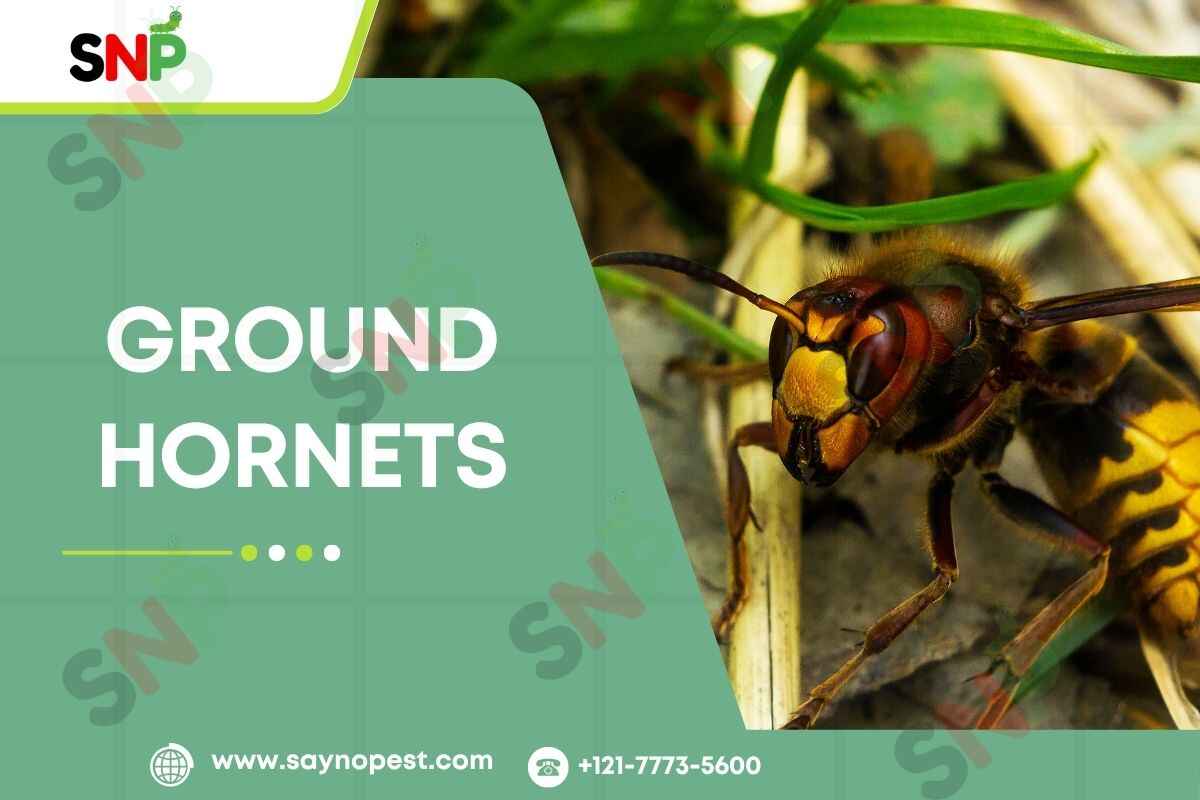
    ground-Hornet

    What Does a Ground Hornet Look Like?

    Basically, ground hornet is a collective name for a number of larger, ground-dwelling wasp species, with the cicada killer being the most widespread in the USA. These are really quite big wasps:

    • Adult ground hornets are 1-2 inches in length
    • They are mostly black in color but with some yellow markings
    • They are like yellow jackets in appearance but are considerably larger than they are
    • They have three pairs of yellowish legs extending from their bodies
    • Some red comes with their wings; others are orange or brown in color
    • Female ground hornets are very visible and are bigger than males

    These features make the hornet bug easy to spot in the garden or yard. These large animals easily steal their food from other animals and passersby, so, the bright colors on them are warning colours, apart from the fact, that they are barely aggressive.

    Ground Hornet Nests

    Ground Hornet make a different and unique type of nest that will help you to understand their infestation and identification.

    1. Usually, underground tunnels not only descend about 10 inches but also move horizontally for about 18 inches.
    2. Tunnel openings are circular with a measure of approximately 1.5 inches.
    3. Distinctive U-shaped heaps of loose soil are a clear indication of the entrance to the nest.
    4. Ground hornets, unlike other species, will choose looser soils or sands with better sun exposure.
    5. A bed of flowers, a golf course, or along sidewalks or driveways are typical areas a hornet would pick out for nesting.

    These subterranean habitats result in enormous, ugly dirt piles scattered all over your lands and might even dismantle constructions near the foundation or the walkways.

    Ground Hornet Sting: What to Expect

    Despite their frightening appearance, most ground hornets are far from being willing to sting unless extremely provoked. Cicada killers, especially, are unlikely to affect people unless, of course, they are irritated, disturbed, or perceived as a potential danger. Even so, it is very important to be aware of the potential hazards that can arise from a ground hornet sting:

    • A ground hornet sting usually results in sudden pain, swelling, redness, and itching
    • Only female ground hornets can sting; The non-stinger-bearing gender of these insects is the males
    • The pain from a ground hornet sting is not usually as strong as when stung by other species of wasps
    • Symptoms of a ground hornet sting don’t usually extend over a few hours
    • More than one instance of a ground hornet sting can likely take place at a time because these insects do not lose their stingers

    An allergic reaction due to the sting of the ground hornet in some people can be highly life-threatening, leading to rapid admission to a hospital to prevent the situation from worsening. Keep watching the signs, such as breathing difficulty, dizziness, or widespread hives, these are the sings of the stings.

    Ground-Hornet-Sting

    How to Get Rid of Ground Hornet

    There are multiple efficient strategies available to manage ground hornets that have infested your property.

    1. You should treat these insects during night hours or below 55°F because the ground hornets become inactive in cold conditions.
    2. A shop vacuum can remove ground hornets by placing its intake near the nest entrance.
    3. A dish soap solution applied directly to the nest represents one of the best natural approaches how to get rid of ground hornet.
    4. A diatomaceous earth perimeter outside the entrance requires proper protective equipment for the respiratory system.
    5. A professional insecticide treatment with specific products should be selected for ground hornet control.
    6. When dealing with severe ground hornet infestations professional pest control specialists deliver the safest as well as optimal methods for removal.

    Entire body protection is essential when attempting any self-performed method to deal with the problem of how to get rid of ground hornet.

    Conclusion

    The best information about ground hornets enables people to decide correctly how to get rid of ground hornet. Fast action for ground hornet removal plays a vital role in property protection because you can either handle the problem yourself or hire professionals. The elimination of cicada killers must proceed after proper identification because these insects serve to manage other pest species despite their aesthetics. Correct management techniques allow homeowners to control ground hornets, which leads to peaceful outdoor use of their properties.

  • How Do I Get Rid of Drain Flies Overnight?

    How Do I Get Rid of Drain Flies Overnight?

    Ever seen tiny flies buzzing around the drains? Quite a several households in the United States suffer from drain flies, also known as sewer flies or moth flies, mostly in kitchens, bathrooms, and basements. We will help you know the tips and tricks of How do I get rid of drain flies and what are the most suitable way to keep your home free from these pests.

    Identification and Understanding of Drain Flies

    Characteristic of drain flies are-

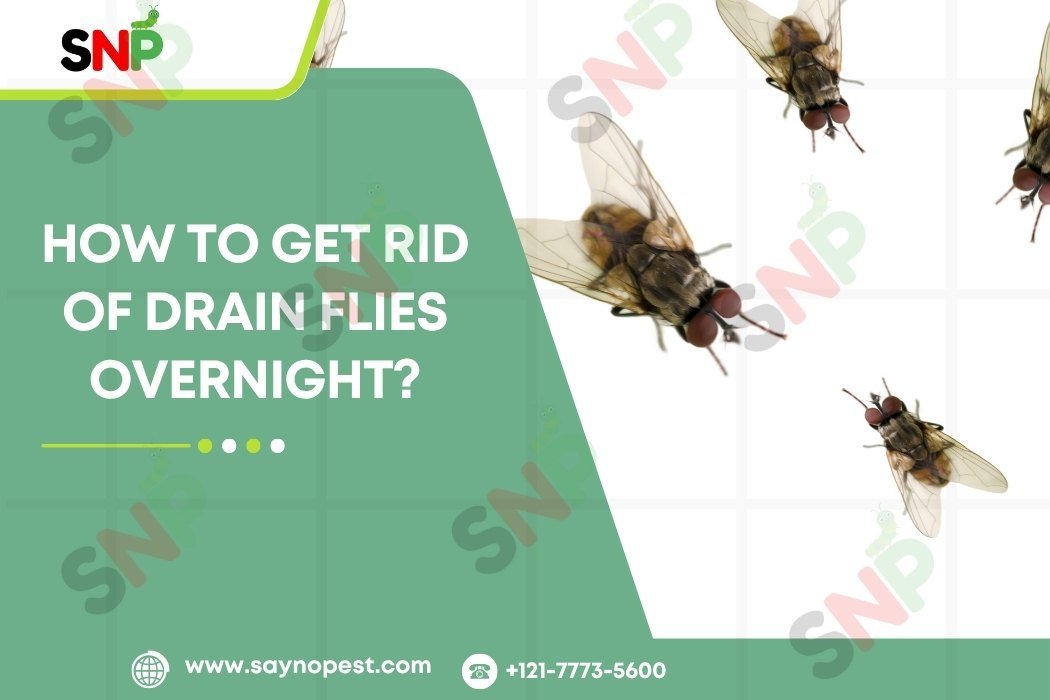
    • The drain flies are small and are 1/8 inches long.
    • They have hairy bodies and hairy wings that resemble those of moths.
    • The common name are ‘sewer flies’ or “moth flies”.
    • Their favorite spots are moist surroundings, the organic matter that builds up inside drains, sewer lines, and even in standing water near refrigerators and washing machines.
    • You’ll find them resting on walls near sinks or bathtubs, or see them flying in short. Their larvae feeds on the cheeky gunk in your pipes making your kitchen and bathroom drains the ideal breeding colonies.
    • Many of you don’t realize how much dirt exists in the drains, but if you put a clear piece of tape over the drain, and check in the morning, you will find some flies stuck in the tape, you’ll know.

    Are Drain Flies Harmful to You?

    Are-Drain-Flies-Harmful

    Many people ask, are drain flies harmful? My answer to that is they do not bite or sting and do not carry any diseases that are harmful to us. However, the presence of these small flies can cause sanitation issues and can be a reason behind the origin of other health hazards.

    Even though drain flies do not sting directly, they can be carriers of germs and pathogenic agents from the foul-smelling areas where they breed. They can cause allergy and asthma symptoms in sensitive individuals. Drain flies usually show up in unclean conditions that makes the air worse, and if they keep coming back, it could mean a clogged drain which might cause more drain problems in future.

    Are Drain Flies Harmful in the sense of biting or stinging? No. But they are a nuisance, can worsen respiratory conditions, and signal that your drains need attention.

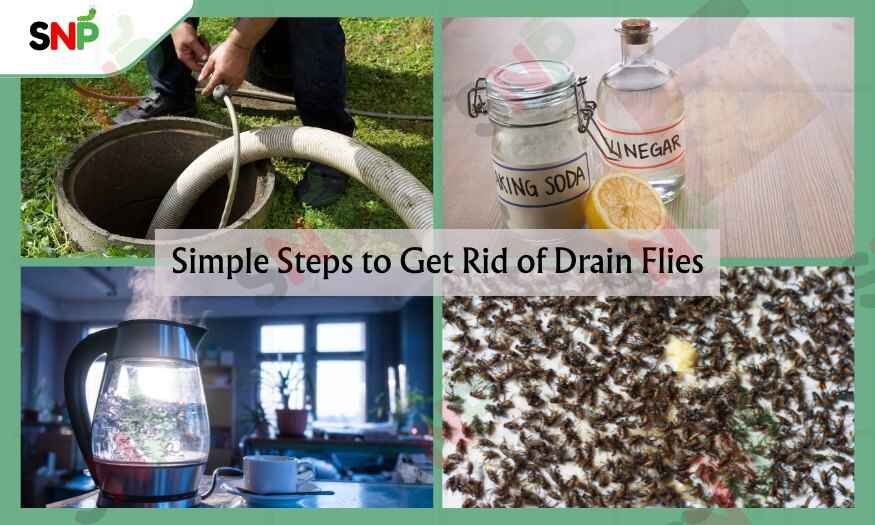
    7 Simple Steps on How Do I Get Rid of Drain Flies

    Simple-Steps-to-Get-Rid-of-Drain-Flies

    If your home is already infested with drain flies, here is a time-proven, detailed method for the step-by-step that can be taken to get rid of drain flies in your house, which is efficient and practical:

    1. Locate the Source

     Look for which drains are affected by using tape traps or visually examining the area.

    2. Manual Cleaning

    Get a pipe brush and thoroughly clean the insides of infested drain and remove all the organic residues.

    3. Boiling Water

    For 7 days, continue to pour a kettle of boiling water into the drain to kill the larvae and clear the channel of dirt.

    4. Use Baking Soda and Vinegar

    Boiling Water: For a week, keep pouring boiling water down the drain and wash away the gunk.

    5. Apply Drain Cleaner (If Necessary)

    An enzymatic or microbial drain cleaner will be perfect for stubborn infestation, as it is specifically produced for organic matter digestion, and these are chemical-free cleaners that won’t harm the pipes. Other drain cleaners can damage the pipe with their strength.

    6. Adult Fly Traps

    Set up a bowl of apple cider vinegar with a few drops of dish soap near the drain. The flies that come close to it, get caught. Another good alternative is to cover a bowl of vinegar with a plastic wrap, drill holes in it and allow the insect to go in but not come out.

    Make it a habit to check and wash the drains out, eliminating flies and eggs, until there are no more signs of the pest. If the problem exists even after the cleaning has been done, the flies have probably made their way deeper into the plumbing system or sewer lines. In that case, you should consider hiring a professional pest control or plumbing service for help.

    Conclusion

    Drain flies represent a typical pest problem which homeowners can effectively control. Drain flies disappear when you eliminate their breeding sites through proper drain maintenance and cleaning. You may wonder Are Drain Flies Harmful, they are not directly dangerous but can be a cause to major hygiene problems.

    To know how do i get rid of drain flies and expert pest control tips and solutions across the United States, trust SayNoPest as your go-to resource.

  • Types of Hornets: Identification, Diet, Pest Control, and Comparison

    Types of Hornets: Identification, Diet, Pest Control, and Comparison

    The United States possesses various stinging insects, yet hornets maintain the distinction of being the most recognisable insects throughout the country. Identifying types of hornets alongside their lifestyle patterns and their distinctions from other stinging insects enables efficient hornet pest control, which protects both residential areas and family members from harm. This post examines the major types of hornets, together with hornet insect food choices and effective hornet insect control methods, and the distinctive characteristics between bee vs wasp vs hornet.

    Types of Hornets

    The world is the home of a handful of common types of hornets, a few of which can be found in the United States.

    1. European Hornet: The European hornet is the only real hornet in the Americas. They are large, about an inch to 1.4 inches, with a yellow and brown color and are not typically aggressive. They tend to construct their homes in the hollow of trees, barns, or attics. They are social insects living in colonies of 200 to 700.
    2. Bald-faced Hornet: Despite its name the actual outbreak should be classified as a wasp rather than a hornet. Although it goes by the name of hornet bug in the U.S. it remains a wasp in genuine identification. This insect exists in black color combined with a white body structure and tends to build large football-shaped nests throughout trees or bushes. Each single colony contains many workers which total up to hundreds.
    3. Asian Giant Hornet: The scientific name for this species may be murder hornet but we must recognize that it originates from elsewhere and continues to exist solely in the Pacific Northwest. This enormous hornet currently stands as the largest insect species worldwide because of its size, yet possesses deadly sting power along with a feared reputation in attacking hives.
    4. Common Yellow Hornet: This native American hornet is also known as a ground yellow jacket, as it has a black body with yellow bands and typically builds its nest above the ground.
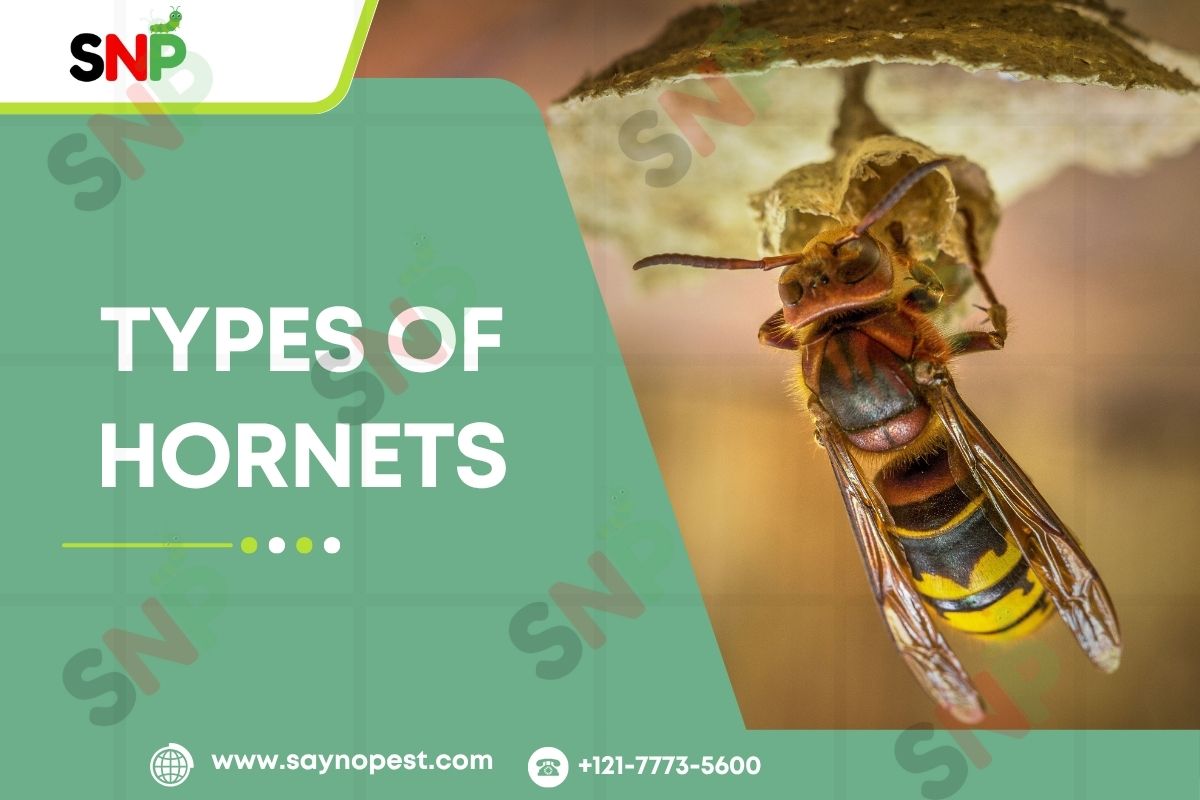
    types-of -hornets

    What Do Hornets Eat?

    Hornet bugs’ food sources are diverse, both for their individual needs and the conservation of their environment. The adult hornets rely mostly on sweet substances, including nectar, together with fruit juices and tree sap, in their diet. Due to their sweet preference, hornets seek out both beverage sweets and syrup together with beer, regardless of whether they just woke up. They do not lose any time in stockpiling their food reserves when they detect possible danger or when hibernating, it is also around then that hornets drink all the sweet stuff around, which is not consumed by insects.

    Hornets are predators who search for other insects that they can eat, including flies, caterpillars, and sometimes even other wasps and bees. They chew their catch well and produce so-called “soup,” having a high content of protein, and feed their youngsters with it. This is the behaviour of a predatory animal that also controls the population of pest insects. However, it is also a threat to the existence of the honey bee colonies.

    hornet

    Hornet Pest Control

    It is impossible to overestimate the importance of effective hornet pest control as a method of ensuring everyone’s safety from those hornet nests that are located nearby or in areas where people are usually present. Here is a series of steps on how to manage a hornet infestation:

    • Locate the Nest: Observe and ass the hornet activity at dawn or dusk, as during those hours, the hornets are less active.
    • Use Targeted Sprays: Apply the wasp and hornet killer spray on the entrance to the nest directly during the evening, when all hornets are inside. Wet the nest well to make sure there are no more hornets in it and that all the hornets killed.
    • Apply Infestation Barriers: Take products, such as Sylo Insecticide, and spray the area around your home to keep new nests from being built. Spray the entry points, eaves, and similar areas, as well as the nest.
    • Treat Voids: Apply dust pesticide to any possible holes, cracks, and similar voids where hornets might hide or nest.
    • Professional Help: Professional hornet pest control services should employed when you cannot handle a big nest or access it due to its location or you have allergies to hornet stings.

    Attack on a hornet nest should never occur in daylight since hornets maintain extreme territorial behavior and show intense aggression toward intruders.

    Bee vs Wasp vs Hornet

    Bee-vs-Wasp-vs-Hornet

    The bee vs wasp vs hornet debate often confuses, but understanding the differences is key to identification and safe

    Bee

    • Body Shape: Round and hairy
    • Color: Yellow-brown with black stripes
    • Aggression Level: Low; generally non-aggressive unless provoked
    • Nesting Style: Builds wax combs; nests usually hidden in hives or cavities
    • Diet: Primarily nectar and pollen
    • Sting: Barbed sting; can sting only once, then dies

    Wasp

    • Body Shape: Slender and smooth
    • Color: Bright yellow and black with a shiny appearance
    • Aggression Level: High; can sting multiple times
    • Nesting Style: Builds paper-like nests; can be exposed or hidden in eaves, bushes, or attics
    • Diet: Feeds on insects and nectar
    • Sting: Smooth sting; capable of stinging repeatedly

    Hornet

    • Body Shape: Large, robust, and smooth
    • Color: Usually brown and yellow, or black and white
    • Aggression Level: Very high; extremely defensive and aggressive
    • Nesting Style: Creates large paper nests, often in trees or on buildings
    • Diet: Consumes insects, nectar, and fruit
    • Sting: Smooth sting; can sting multiple times and is more painful than bee or wasp stings

    Hornets are generally larger and more aggressive than both bees and wasps. Their stings are more painful and can cause severe reactions, making hornet pest control especially important near homes.

    Conclusion

    One must understand what the different types of hornets are and what their habits consist of, so effective pest control of them can be carried out, and the stinging insects that swarm over someone’s property can be identified so that they can be dealt with. The bugbearers are that kinds of creatures that are aggressive to a person, in case a conflict erupts between them, and that are predators of many other species. The different natures of bee vs wasp vs hornet, allow you to react accordingly to their bites and prevent their occurrence in your environment.

  • Yellow Jacket Wasp : LifeCycle and Control

    Yellow Jacket Wasp : LifeCycle and Control

    Throughout the United States, the yellow jacket wasp flies freely while differentiated by black and yellow markings and receiving both positive and negative public perception. Understanding yellow-colored insect behaviours becomes vital when attempting to manage these pests since many people experience summer picnic stings and outdoor dwelling contacts with their nests. This article investigates Yellow Jacket characteristics by analysing specifically their queen species as well as the yellow jacket wasp life cycle and successful insect control practices.

    YELLOW-JACKET-WASP-QUEEN

    What Does a Yellow Jacket Wasp Queen Look Like?

    The yellow jacket wasp queen is the head of the pack in her nest crew, who is different from the other members. Those among the worker wasps are usually half an inch long, but the yellow jacket wasp queen is considerably larger, with a typical queen being around three-fourths of an inch in length. She has the same body shine and shiny figure as those of other nests and the characteristic alternating bands of black and yellow, but her size and sometimes a more abundant abdomen mark her as different. In contrast to the fur-covered honeybees, yellow jackets, of which the queen is an example, are shiny, hairless insects that look practically shiny. A larger, solitary wasp may be seen in the early stages of the breeding season, looking for a place to settle–that could well be the queen before she starts the colony.

    The Yellow Jacket Wasp Life Cycle

    Having knowledge about the yellow jacket wasp life cycle is the basis of effective pest control and prevention. The life cycle initiates at the beginning of spring when the fertilised queen of the yellow jacket wasp arises from her wintering spot, which might be in logs, leaf litter, or even man-made structures. The yellow jacket wasp queen searches for an appropriate building site where she constructs either underground dwellings or protected cavities or small paper nests by combining plant fibres with saliva.

    After preparing cells for the eggs development, the yellow jacket wasp queen lays her offspring in each cell. She gives the larvae food until they turn into sterile female workers, a process that usually lasts about 18 to 20 days. The workers then take up the different tasks of fetching, building new cells, and caring for the queen and her offspring, so that the queen can concentrate entirely on her egg-laying duties.

    In the middle of summer, the size of the colony rises quickly, sometimes getting up to 4,000 to 5,000 workers and a nest with 15,000 cells. At that time, the queen begins to produce males (drones) and new queens that she does as the season moves on. These sexual wasps mate and then the males die, while the fertilised new queens find places to survive the winter. The original colony that includes the founding queen and the rest of the workers bids farewell as the winter season comes, and the cycle starts all over again next year.

    The Role and Importance of the Yellow Jacket Wasp Queen

    The queen of the yellow jacket wasp is a critical necessity for the colony’s survival and expansion. She is the only egg layer that gives life to every member of the nest. Many times her death threatens the workers’ life, which means bees will protect her and the young no matter what, giving yellow jackets the human-like attribute of being especially aggressive when someone/something disturbs them. Following the queen of the yellow jacket wasp life cycle, reproduction becomes the queen’s role, while other duties are done by the workers, such as food search, expansion of the nest, and protection of the colony.

    The end of summer and early autumn see the queen generating the next generation of queens and males. After these reproductives go to mate, the queen’s mission comes to an end, and along with the rest of the brood, she dies, leaving the newly fertilised queens to ensure the survival of the species through the winter.

    YELLOW-JACKET-WASP

    Managing and Controlling

    Their aggressiveness and pain-inducing sting being the characteristic features, it is essential to manage the yellow jacket population around your home, especially if you have allergies or small children. Here are some points :

    1. Prevention: Seal your home’s exterior cracks and holes, keep food and waste underground and make sure to not leave sugary drinks or meats outside because the latter attract the yellow jackets.
    2. Traps: Commercial traps for yellow jackets can reduce the volume of wasps, especially in the spring when it is the time of actively searching for queens. These traps use the scent of meat or sweet objects as bait to attract wasps.
    3. DIY Solutions: Spraying the nests with a mixture of dish soap and water importantly erases the wasps on the spot, however, it is necessary to be always careful and wear protective clothing.
    4. Pest Control: Always consult the pest control service when the pest invasion is high as they know how to deal with them in best possible way.

    Conclusion

    The yellow jacket serves as an essential controller of pest insects, although its aggressive nature becomes dangerous when humans disturb their nests. Learning about yellow jacket wasp reproduction patterns, together with queen dependencies, allows individuals to both understand their ecosystem value and implement proper safety measures for their home areas. When you see yellow jacket wasp nest activity or notice excessive activity, it is essential to contact professionals who will handle their removal safely. You can live happily in your outdoor areas by understanding yellow jacket wasp behaviours and taking proper preventive measures.

  • Types of Flies & How to Stop Them

    Types of Flies & How to Stop Them

    If you have ever inhaled an intruder who was buzzing in your kitchen, or seen tiny insects circling your fruit bowl, congratulations, flies have invaded your home. Flies are the most common insects that are sharing your home with you. To recognize the Types of Flies in your place and learn how to stop them is the first step to effective prevention and control.

    How many species of flies exist?

    There are 120,000 described species on a global scale with probably lots of those still yet to be discovered. In the United States, there are several Types of Flies, which enter the house, expose you to diseases, and, of course, make it uncomfortable for you to stay at home. Knowing the species enables you to direct your anti-insect actions and save your health.

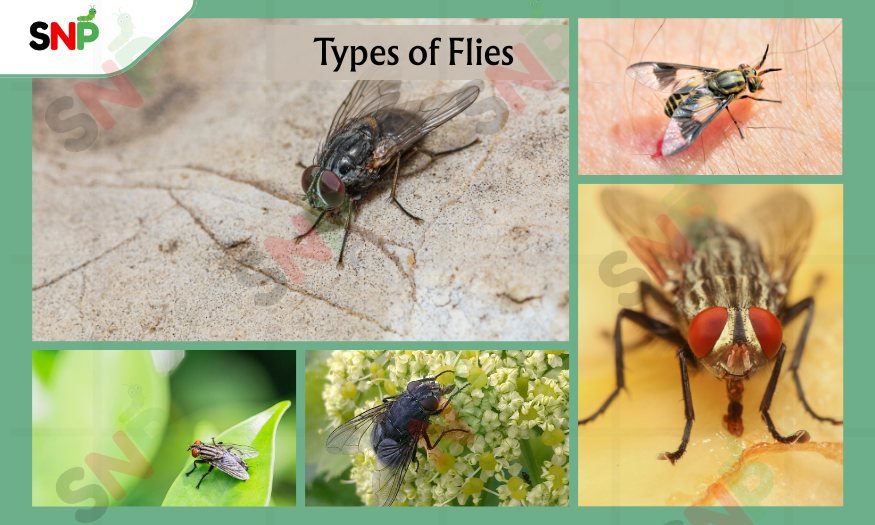
    Top 7 Types of Flies

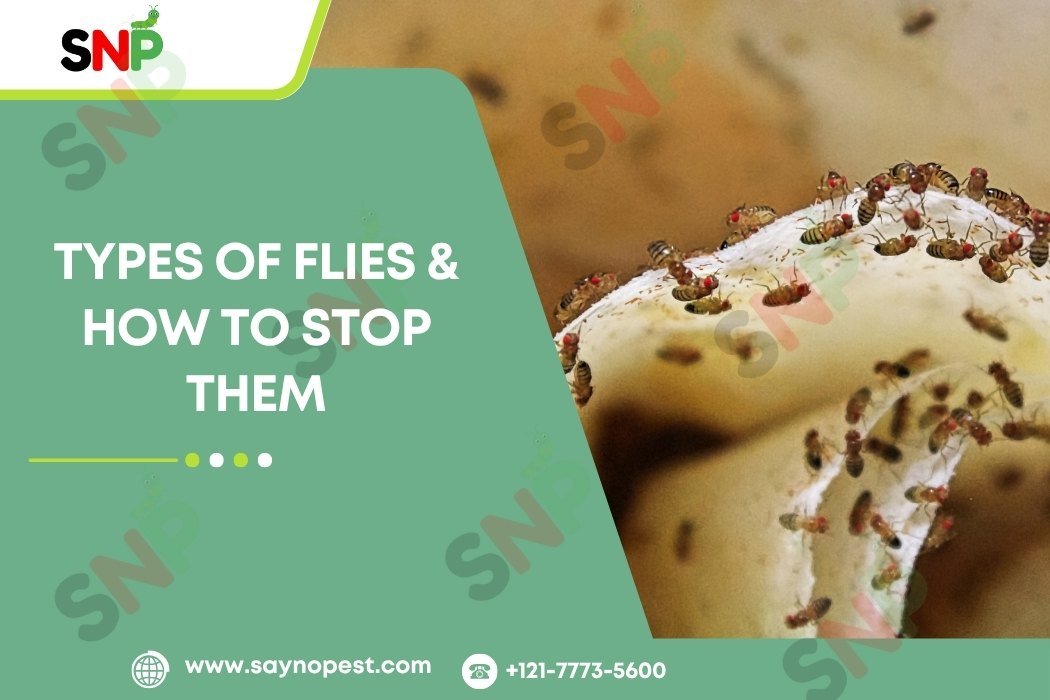
    Types-of-Flies

    The idea is to elucidate the most prevalent Types of Flies across the US.

    1. House Flies

    The classic nuisance, house flies are grey with four black stripes on their thorax and measure about 1/8–1/4 inch long. They reproduce in decaying organic materials like dung, and other waste from which they hatch fast due to favorable temperatures and are disease carriers.

    2. Drain Flies (Moth Flies)

    Drain flies are small, shaggy, and are often taken for moths mainly due to their coloring and size. Moist areas of the house like drains, sewer systems and sink lines provide a suitable breeding ground for these flies. They turn into larvae and eat up the leftover organic matter in the pipes which consequently combine to be a sign of plumbing problems or lack of hygiene.

    3. Fruit Flies

    Small, about 1/8 inch long, tan, or dark brown with red eyes shining, fruit flies are primarily attracted to ripe fruits, vegetables, and sweet liquids. The rapid breeding cycle of these flies allow females to produce 500 eggs which hatch into new flies within 24 hours thus causing fast infestations during summer.

    4. Blow Flies

    Green or Blue Bottle Flies are also called the blow flies because of their sparkling green coat. They are a bit bigger than house flies. These flies lay their eggs in decaying meat or carcasses and the presence of these flies can be an indicator of a sanitation problem or a rotten animal in walls or attics.

    5. Fungus Gnats

    These are one of the craziest groups of flies and these flies are quite similar to mosquitoes. Fungus gnat larvae utilize fungi and rotting plant matter as their food, even though they do not sting, they can be dangerous if they feed on your plant’s roots. The growth of the plant will stop.

    6. Cluster Flies

    Cluster flies are different from those of house flies since they are more prominent, with darker color that reside in lofts or wall voids, especially in late winter and spring. To get through winter, they gather in huge numbers indoors, but they neither breed nor spread diseases.

    7. Horse Flies

    Horse flies are larger, more violent, and they have itchy bites and are mostly found in water, next to the farm, and in the woods. They can cause allergic reactions besides the transmission of diseases to animals.

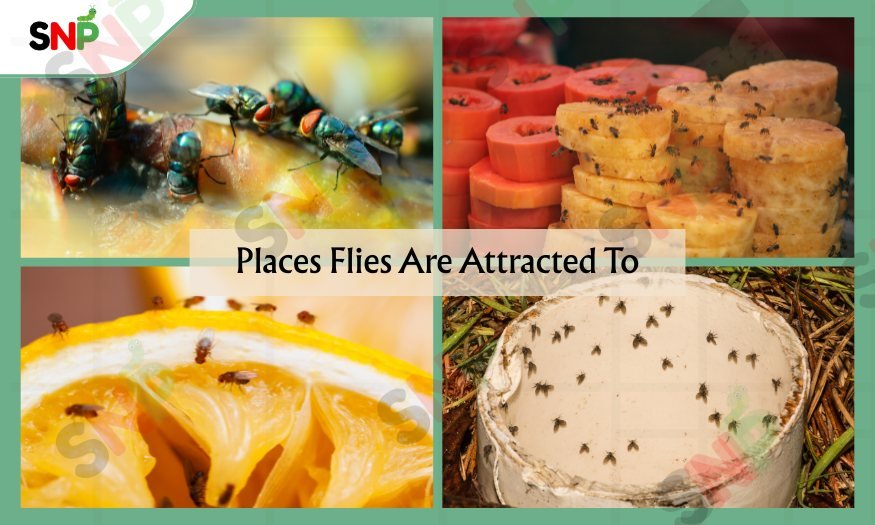
    Places Flies Are Attracted To

    Places-flies-are-attacted-to

    The environments that attract flies consist of areas which offer food sources and moisture together and suitable breeding sites. All Types of Flies primarily have four main attractants:

    • Flies seek out moist organic waste materials that exist in garbage containers and compost heaps and food leftovers. Both food sources and suitable breeding sites exist in unsealed trash and leftover food.
    • Fruit flies along with various other fly species love overripe produce and sweet liquids including fermented beverages such as soda and liquor and vinegar.
    • The breeding grounds for drain flies and fungus gnats exist in humid environments that standing water and moisture sources create including leaky pipes and water-filled plant saucers.
    • House flies and blow flies are strongly in favor of to animal carcasses and pet waste because these items provide both food sources and breeding opportunities.

    Know how to Prevent Flies

    Keeping flies out requires a proactive approach. Here’s how you can deter all Types of Flies:

    • Maintain Cleanliness
    • Manage Moisture
    • Seal Entry Points
    • Use Traps and Baits
    • Professional Help

    Conclusion (Understanding the Types of Flies)

    Effective pest control requires proper identification of the different fly species that invade residential and commercial spaces. Professional pest control experts are always there for you when pest infestations become challenging to manage. They will free you from fly infestations and provide a fly-free environment.

  • 6 Natural Ways to Identify and Get rid of Flies

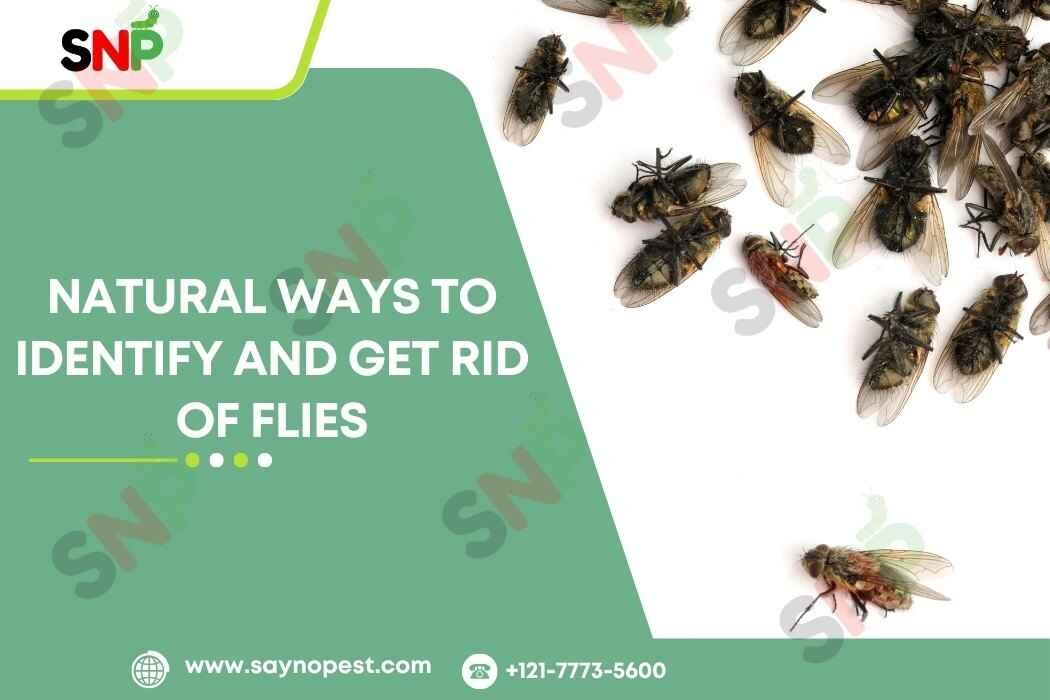
    6 Natural Ways to Identify and Get rid of Flies

    Flies have an annoying presence and also carry diseases. It’s important to identify and get rid of flies completely. Understand what attracts these pests, where they feed, and safe ways to remove them. It will help you have a clean, healthy environment for your family.

    You need to eliminate flies no matter if you have a few kitchen flies or a complete infestation. This will gradually make a healthier environment for your family.

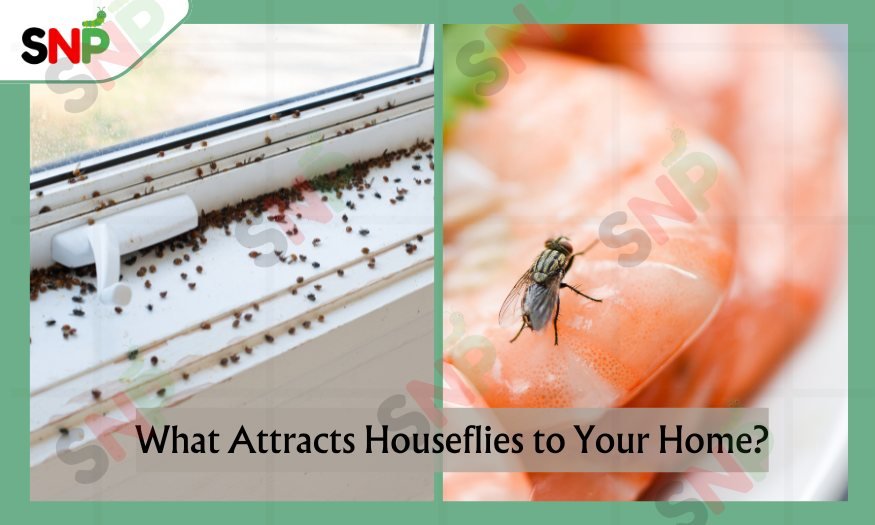
    What Attracts Houseflies to Your Home?

    What-Attracts-Houseflies-to-Your-Home

    The most powerfully smelling foods and materials that are most likely to turn into breeding sites for flies. The primary attractions for flies include:

    We can say that the things that are more likely to attract flies are:

    1. Unsealed garbage bins wand other waste: If you have decaying materials in your garbage bins, that is one possible factor that attracts flies. Seal your bins, as no one wants to have a smelly trash can, and neither do they want the flies.
    2. Standing water and moisture: Breeding sites included leaky faucets in the house, water-filled plant saucers in the garden, and any still bodies of water can be occupied by the flies.
    3. Uncovered food: The pet food or the leftovers of last night’s dinner in your kitchen are all subjects for the flies to challenge.
    4. Decaying vegetation: The waste found in the yard and compost piles are also places where flies can breed and feed.
    5. Humid environments: Flies attract the warm and humid weather. Flies grow faster and multiply in numbers when the temperature is high than when it is low. They also grow quite well in made conditions of high humidity. This case is more scaring because it contributes the most in the increase of the breeding of flies.

    Your first sure way to nip the problem in the bud and not let it spread and get out of control now is to find the cause. It is a rather manageable step that will help you remove flies from your home.

    Top 5 Places that Attract Flies

    5-Places-that-Attract-Flies

    Flies can settle just about any place that has food, water, and a roof over their heads. Some well-known trouble spots are:

    • Kitchens and pantries: Crumbs, spills, and the aroma of food are all that flies need to move in.
    • Trash cans and recycling bins: The smell of decaying materials is what the flies can’t resist.
    • Drains and sinks: The accumulation of organic matter that seals the drains gives them perfect breeding space, especially for drain flies.
    • Pet areas: Dirty pet food bowls, litter boxes, and garbage excite flies, so they come back again and again.
    • Dark and Damp Spots: Flies choose to rest in dark and poorly ventilated spaces that are also warm areas such as attics and basements and behind appliances when these areas contain clutter or dampness.

    Your fly control strategy requires you to identify and eliminate fly breeding sites first.

    Are Flies Dangerous?

    Flies may look harmless but that is completely not the case. The most common type of flies cause diseases. They feed on trash bins, garbage, dead bodies, and livestock and as they do so, they become spreading agents of diseases, and parasites. These chemicals and parasites are the cause of bacterial and viral infections like typhoid, cholera, dysentery, etc. in the situation that flies have landed on your food or in your living area. Thus, even a small number of flies can quickly escalate into a large infestation which will add to health and comfort risk.

    6 Natural Ways to Identify and Get Rid of Flies

    Not every situation can be solved through chemical use so one must also be open to the idea of removing flies naturally. Liquid fly bait is a sure way of killing flies just in case you have trouble with them. Natural ways of Identifying & Getting Rid of Flies can be applied as well if the problem is in the early stages.

    1. Apple cider vinegar and dish soap

    Pour apple cider vinegar into a jar, add a few drops of dish soap, and close it with a plastic wrap poked with small holes. Flies come to the trap being attracted by the scent of vinegar, go into the jar and there they are trapped by the soap, unable to move or fly again.

    2. Herbs and essential oils

    Using essential oils and herbs like rosemary, and peppermint oil as a repellent to flies is a safer option. Fresh herbs can be placed near the door or oil diffusers and sprays spreading a citrus scent. These are the components of the homemade fly repellent.

    3. Sticky paper or fly traps:

    The strip flypaper is used by hanging it in areas where a lot of flies gather, so they get stuck once they touch it and can be gotten rid of quite easily.

    4. Bottle traps:

    This trap is effective and gentle to flies. They would fly to the bait and find it difficult to leave the trap, until they die of exhaustion or hunger. One of the environmentally friendly and least risky ways of reducing the fly population.

    5. Clean the drains to get rid of the water:

    Every 2-3 months, brush your drain pipes and use teas of boiling water or other organic solvents to wash away an organic substance which is a nest of drain flies.

    6. Make hygiene a habit:

    Wipe away scraps, mop up stains, and don’t let animal waste lay around the house. Apart from that, do not forget to properly close the trash cans and do garbage disposal regularly.

    Conclusion

    The fight against flies does not need to result in defeat. A professional pest control service should be your first choice when persistent fly infestations become too much to handle because they will help keep your home free of flies while maintaining its health. Acting swiftly and persistently to identify and get rid of flies is necessary.