Blog

  • How to Get Rid of Clothes Moths: A Complete Guide

    How to Get Rid of Clothes Moths: A Complete Guide

    Your favourite clothes and precious family items can easily become damaged by clothes moths. Should you notice holes in your clothes or small moths in your closet, it’s not unusual. Over the years, many homes in America have dealt with these constant pests. This guide will teach you how to get rid of clothes moths, see why moths like to eat our clothes, What do clothes moths look like and keep them away for good.

    Clothes-Moths

    Why Do Moths Eat Clothes?

    Have you ever wondered why do moths eat clothes and or enter our closet? The easiest answer is no. It is usually the larvae that destroy fibres, and not the adult moths. Clothes moth caterpillars are the ones to eat keratin, a protein found in animal-based fibres like wool, silk, cashmere, feathers, and fur. The larvae use these materials to build their bodies and develop into adult moths. That is why your warm woollen sweaters, fine silken scarves and even your rugs can appeal to these worms. Yet even these adult moths do not feed AT ALL and exist to lay their eggs on the suitable fabrics, which the offspring can eat from when they hatch.

    How Do You Know If You Have a Clothes Moth Infestation?

    The quicker you find a clothes moth infestation, the less the damage will be. Here is how you can figure out if a moth problem has occurred at your place:

    • Do a check on the clothes for the holes that have particularly irregular shapes in them, this usually happens in wool, silk, or fur clothing.
    • Silky tunnels or webs mostly on or near fabrics are the typical signs left by moth larvae.
    • Can you see tiny, sticky tubes (larval casings) clinging to clothes, rugs, or the corners of closets?
    • Would you notice any inordinate shedding from fur garments or a loopy damage on wool rugs?
    • Login to look for those small, pale, and sluggish moths which usually fly or crawl on fabrics, especially in dark, and rareky disturbed areas such as closets or storage boxes.

    If you identify any of the above signs, you should immediately take any required steps to get rid of the clothes moths and then click here to learn more about how to get rid of clothes moths before the problem escalates.

    How-To-Get-Rid-of-Clothes-Moths

    What Do Clothes Moths Look Like?

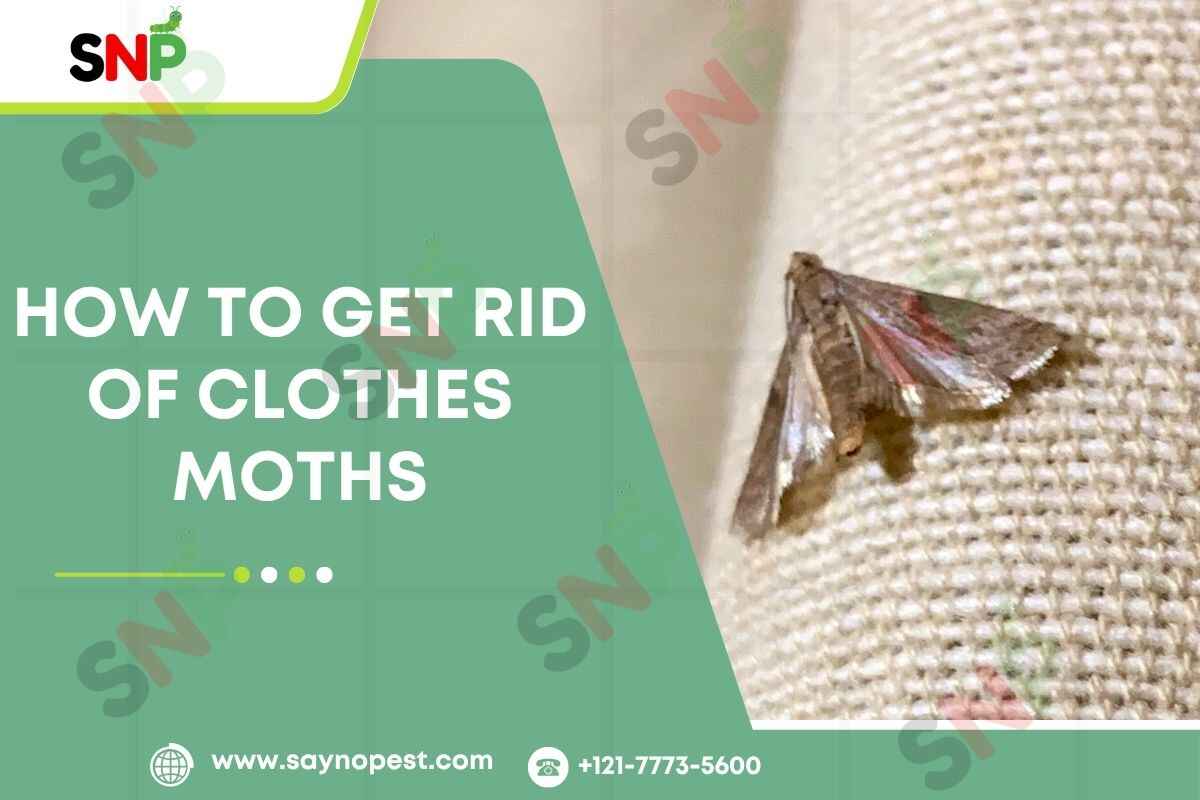
    It is very important to know what do clothes moths look like so that are there for effectively managed. Clothes moths are tiny in size, usually no more than 1 cm long and have a pale yellow or greyish colour. They usually shun light and like to stay in dark and hidden parts. The pests of the clothes, which are the ones doing the real damage, are small and yellowish caterpillars with brown heads. Another way of detecting them is with their webbing or case trails, which will take the shape of small tubes or be spotted as small silky formations on the fabrics.

    How to Get Rid of Clothes Moths

    If you’re looking for advice on killing clothes moths, these effective ways are worth following:

    Deep Clean and Declutter

    Do away with all clothing and soft furnishings from infected areas. To keep the items, either wash or dry-clean them–clothes moths at a high temperature of water (over 120°F) or professional dry cleaning will kill larvae and eggs. Several clothes cannot be wash, so to clean them, you can use heat treatment by using a dryer, or low oven, or freezing them

    Vacuum thoroughly

    Clean your wardrobe, drawers, and carpets properly. Remove every crack, crevice, and dark corner that is infeste with moths and larvae. Moth expands into them. They can hide unseen all sorts of filth and garbage you might not think are actually there.

    Discard Heavily Infested Items

    If an item is so damage that the infestation is in a critical stage, it’s a good idea to get rid of it to avoid it from spreading.

    Use Moth Traps

    Harbour lures with pheromones in closets and storage areas. These lures can attract and capture male moths, stopping the breeding cycle and indicating the degree of infestation that you face.

    Apply Moth Sprays

    Insecticidal sprays that are suitable for clothes moths will be needed for significant infestations. Biological pesticides that are daisy-based insecticides, particularly chrysanthemum, can also be as effective and safe for most types of fabrics.

    Store Clothes Properly

    Make sure to get clean clothes properly store since body oils and food stains usually lure in moths. Put out-of-season clothes in airtight storage bags and also you can put natural repellents like cedar or lavender into the closet and drawers optionally.

    Monitor and Repeat

    Be sure to inspect potential moth locations frequently. Afterwards place new monitors every couple of months and in addition keep up with cleaning in order to prevent reinfestation.

    Conclusion

    Understanding How to get rid of clothes moths is necessary to preserve your clothes and living space. Spotting clothes moths, understanding their reason for eating clothing and acting right away can prevent them from damaging your possessions. Keeping your clothes clean, putting them away in a tight space and using traps/sprays will prevent moths from appearing. Steer clear of moth damage to your wardrobe by addressing the problem now and enjoying the security of knowing they are safe. Get the best help for your clothes moth problem by calling a specialist who has dealt with similar infestations.

  • Are House Centipedes Dangerous? Everything You Need to Know

    Are House Centipedes Dangerous? Everything You Need to Know

    Have you ever seen a swift many-legged insect running on your bathroom floor? Then you’ve probably asked yourself, are house centipedes dangerous? The odd appearance of house centipede combined with their many legs can be alarming but learning about their characteristics lets you determine if they pose a threat to your household.

    What Is a House Centipede?

    The house centipede is by far one of the most common arthropods in U.S. homes. The house centipede is not like other species of centipedes. It can be recognized by its very thin and yellowish grey body marked with three dark stripes along the back and the presence of up to 15 pairs of extremely long and delicate legs – a “feathery” look as they run quickly along the walls and the floor. Adult house centipedes measure 1 to 1.5 inches from head to tail, yet their long legs make them appear much larger. The cylindrical body structure of house centipedes sets them apart from flat species because they move at speeds far greater than other flat species.

    house-centipede

    House Centipede Diet: Nature’s Pest Controller

    One main reason why many professionals and homeowners are okay with the existence of house centipedes is that they act as a wide range of pest controllers. Over 90% of the house centipede diet made up of other insects and arachnids, meaning they mostly eat their kin. Their main prey items are cockroaches, spiders, silverfish, ants, bed bugs, moths, termites, and sometimes even other centipedes. By putting their long antennae to use and locating the prey, house centipedes have a very effective way of removing their unwanted home bugs with the use of paralyzing venom from adapted claws. They can crawl under fridges and other appliances, reaching out to dark corners, chasing and eliminating pests very effectively.

    These different types of food are consumed, and it make them more effective in the destruction of various species of undesirable bugs. Furthermore, the house centipedes’ love for live bait will make them indispensable in pest control in your home, meaning that chemical treatments will not always be needed.

    House Centipede Lifespan: How Long Do They Live?

    The longest-lived attribute about house centipedes stands as their extraordinary lifespan. House centipedes survive for more than seven years while typical insects survive for only a few months, but most house centipedes reach three years of age before death. House centipedes complete their life cycle through four distinct stages that follow this sequence: eggs to larvae to larval molting to adult centipede. First, the eggs hatch into the larval stage, with only four pairs of legs. The lifecycle begins when eggs produce larvae, which start with four legs before molting progresses to more legs until adult house centipedes develop numerous legs.

    Are-House-Centipedes-Dangerous

    Are House Centipedes Dangerous to Humans or Pets?

    So, are house centipedes dangerous? The answer is: not really. Due to their weak jaws, house centipedes deliver bites that create no significant pain when they bite human tissue. The pain from a house centipede bite feels like a bee sting, although severe reactions from these bites occur rarely. House centipedes spread no diseases and neither destroy property nor threaten human beings or their pets. The biggest “danger” they can pose is frightening someone, which will lead to an accidental fall or injury. For most people, their being is more a source of mental disturbance than an actual danger.

    Where Are House Centipedes Most Common in the U.S.?

    House centipedes are a species widely distributed in the United States, but they are mostly found in the hot, moist regional areas where they can get their higher chance of better prey. Based on pest control reports and the most favorable environmental conditions for their proliferation, we can mention the top states where house centipedes are the most common:

    1. Florida
    2. Texas
    3. California
    4. New York
    5. Pennsylvania
    6. Illinois
    7. Ohio
    8. Georgia
    9. Washington
    10. Oregon

    These states offer the damp, cool environments that house centipedes prefer, such as basements, bathrooms, and crawl spaces.

    Conclusion: Should You Worry About House Centipedes?

    So, are house centipedes dangerous if we sum everything up? If we go directly to this point of the essay and answer the simple question- if house centipedes are dangerous- the response will be negative, meaning they are not harmful to people or animals, and their attacks are rare and not severe. The house centipede is a consumer of unwanted insects and thus it is recognize as a valuable executor due to its different diet from the pests in your house. These creatures might be interpreted by you as long-time partners-their life cycle is around seven years-that will help you eliminate the invaders of your space. Not only that, they are also the source of a big surprise in your life.

  • Giant Water Bug: America’s Aquatic Predator

    Giant Water Bug: America’s Aquatic Predator

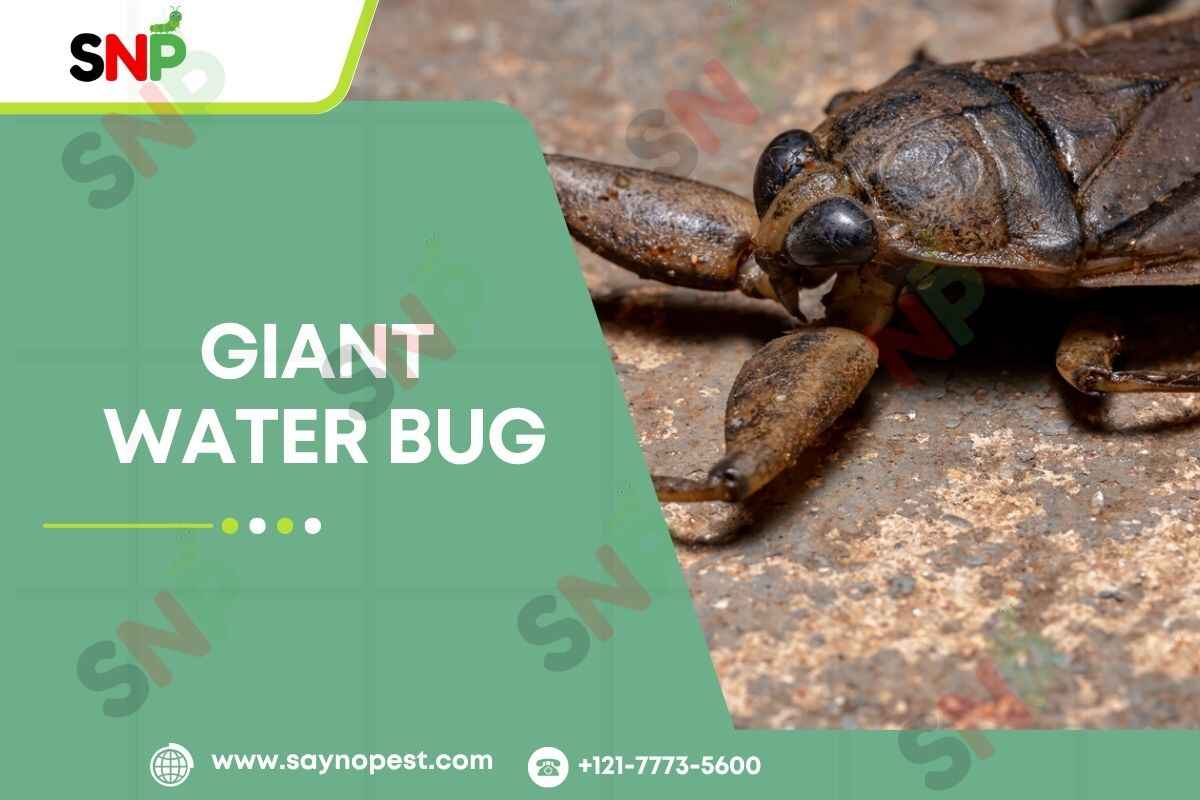
    The giant water bug is the most impressive and also the fiercest aquatic insect found in the United States. People know this specie for the highest quality and the most deadly, and they usually seen in ponds, lakes and streaming rivers and sometimes will even emerge under bright lights even in the evening. In case you’d like to learn more about the giant water bug, its body, life cycle, giant water bug bite, and Are Giant Water Bugs Dangerous, then continue for a complete, authentic guided tour.

    What Does a Giant Water Bug Look Like

    A giant water bugs is a bug that appears unlike most other bugs when you first lay eyes on one. Adults reach sizes of 2 to 4 inches, making them some of the largest insects we have in North America. They typically range from dark brown to tan, are flat, oval in shape, and resemble a great deal like aquatic animals, and worth noting is that they’re difficult to keep out of reach of other animals. The legs at the front are the parts that represent those hostile features, which are banded by the bug with the needles that for the bug to catch the victim. The legs have hook-like claws at their ends, which means that they can easily grasp and touch the slippery prey.

    water-bug

    The giant water bugs is also equip with a rostrum, which is the name of the short and pointed beak placed under its head. It is use for piercing the next presumable prey of the bug. The hind legs of the bug are flatten, and the hairs fringed them, thus forming the paddles for the swift swimming. The wings are unattractive when they are the last ones on the back, and the abdomen forms a pattern that represents the symbol “X”. The last segment of the bug’s belly is a breathing siphon, which allows the bug to be in water and still breathe.

    Giant Water Bug Eggs: Life Begins Above Water

    Reproduction for the giant water bugs is very special and interesting. After the mating season has passed and it is still summer, the female lays on the leaves of the aqua many of those giant water bug eggs that have a brown colour, which are unbelievably 150 in number and waits for the eggs to be gilled. In some cases, females may deposit the giant water bug eggs on the male’s back, and the male will then be the one who will take care of and aerate the eggs until they hatch if present possibly providing a food source for the individual that hatches.

    This is the assurance of the life cycle continuity of the insects when the mother looks after the eggs and then oversees their hatching and growth of the larvae. Such larvae proceed through several different stages before the pupae of nymphs turn into adult water bugs, where in each stage, they moult off their skins and grow bigger every time.

    Giant Water Bug Bite: A Powerful Weapon

    The function of the giant water bug bite is primarily as a hunting tool, and it can also be a defence mechanism. Through the use of its sharp rostrum, the bug can inject a deadly bite into its prey. Digestive enzymes released will then paralyse and liquefy the victim. With this ability, the giant water bugs can consume its victim seamlessly such as if it were a protein shake. Although being a direct food supply, humans, either through inadvertent handling or disturbance of these bugs in the water or may suffer some bites. In reality, the giant water bug bite is indeed very painful, often categorised among the most severe insect bites and yet, in most cases, this does not pose danger to the common healthy adult.

    Are-Giant-Water-Bugs-Dangerous

    Are Giant Water Bugs Dangerous?

    The giant water bugs is a main player in water food chains and holds its place as being fearful, but normal people are not threatened if they see one up close. But if an individual does get bitten by the giant water bug, they will experience the following: children will become painful, swollen, and develop an allergy that is not always apparent in adults. These bugs usually do not attack people, and when they do so they do for their safety. The giant water bug eats snails, fish, etc. They help to maintain the ecosystem by doing that. If there were no predators such as the giant water bug, small animals in lakes and ponds would compete for food, disrupting the balance.

    Conclusion

    Besides being interesting, this bug is crucial for American freshwater populations. With its big size, strange form, special way of reproducing, and powerful hunting ways, the giant water bug earns a lot of respect in water environments. When a giant bug bites you feel uncomfortable, they are not out to bite people and best observed from afar. If you find eggs of giant water bugs or see one swimming in the water, it shows their strong hunting expertise.

    Knowing about the giant water bugs is helpful if you love nature, have a house by a lake, or simply want to know what is living in the water.

  • Types of Water Bug : Identification, Habits, and Control

    Types of Water Bug : Identification, Habits, and Control

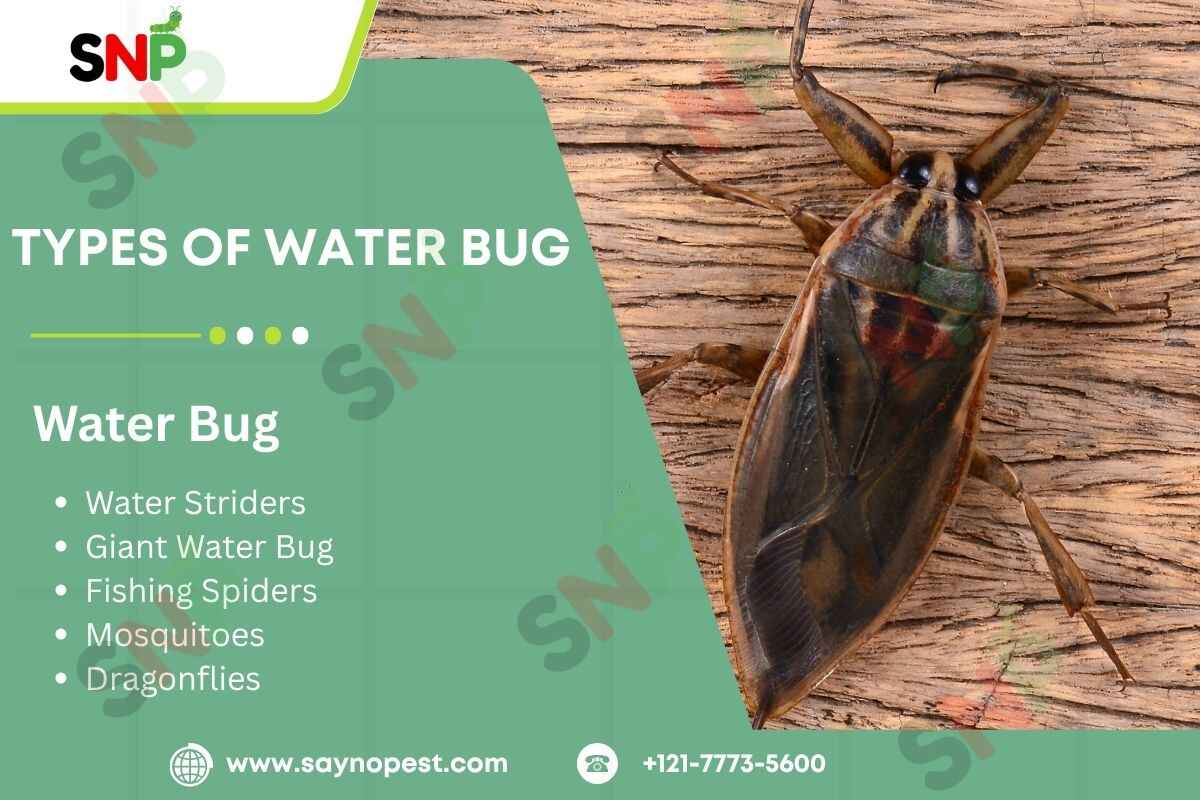
    Water bugs are insects that belong to a widely varied group and can be found throughout the United States. They tend to multiply most in wetlands like lakes, ponds, and streams. The term water bug is being used to refer to cockroaches on some occasions, although real water bugs are not only insects with unique behaviours but are aquatic as well. First of all, knowing the types of water bug, how they behave, and how one can control them can be of great help to keep your house and surroundings free of these pests.

    Types of Water Bug

    types-of-water-bug

    Water Striders

    Water striders are some of the sweetest and cutest animals that are there in the many types of water bug living in the water. It’s their long, skinny legs that make them very easily recognisable, and through them, they can “walk” on the water. This interesting capability comes from the hydrophobic (water repellent) hairs on their legs, which distribute their weight evenly and do not let them sink. Water striders all thrive on insects that fall on the water, and this makes them natural pest controllers, beneficial for pond and stream life.

    Giant Water Bugs

    Giant water bugs are the king, I mean, the giant among water bugs. They even got the nickname “toe biters,” which is purely spot on. Not all bugs can compare. They are among the big in North America, with a size of 4 inches. Their body structure is flat, oval-shaped shaped and has powerful front legs to catch the pest and their food. Giant water bugs is being describ as very aggressive fish feeders that preying on amphibians, fish, and turtles. They are not to anyone’s liking as long as they do not provoke humans into a fight.

    Fishing Spiders

    Fishing spiders are a types of water bug that will be most interesting to anyone who is into insects. They are everybody’s secret favourite water bug species. Even though fishing spiders are engrossing predators, they cannot parachute down from high altitudes to catch prey. Due to their hydrophobic legs, they have the privilege to walk on the surface and, when needed, perform underwater activities such as hunting for food. They mostly found at the corners of ponds and streams, and lakes, in search of food.

    Mosquitoes

    Many people don’t know that mosquitoes also come in the category of water bugs, but this is tru;e they also share the same habitat. Their larvae are pupae that come from standing water, and adult mosquitoes that usually rest as floats on the water surface. There is no need to introduce them a lot as they are well-known for their biting behaviour and are the typical annoying presence around water bodies.

    Dragonflies

    Dragonflies are truly unreal water insects with large, multifaceted eyes and two pairs of powerful wings. As naiads (nymphs), dragonflies spend the first stage of their life in the water, where they are the natural enemy of almost all aquatic insects, but in reality, mainly of mosquito nymphs. After the nymph stage, only the stronger ones reach adulthood. Once they fully grow, they have developed magnificent power and could challenge almost anything. A very important, indeed essential, stage in the development process of dragonflies is the emergence from the nymphs. The fully grown dragonflies only emerge from the nymphs once they are ready to be adults.

    Can Water Bugs Fly?

    One of the most curious questions is, can water bugs fly? The answer to this might be yes or no, depending on the particular species. The majority of water bugs can fly. As an example, females, who are the larger ones, present in a variety of habitats, can do so, as they are especially drawn by light at night. They may be found near porch lights or streetlights during the warm season. Still, there are some species, such as water striders, which do not fly, but only through the movement that takes place over the surface of water.

    giant-water-bug

    Water Bug Traps

    Preventing water bugs from appearing indoors usually requires a range of methods. Furthermore, water bug traps are a really helpful tool when it comes to the capture of such insects, especially in places like the basement, the crawl space, or the near the drains that are damp. Sticky traps, glue boards, and bait stations can put where water bug are active. For larger infestations, professional pest control may use more advanced water bug traps and targeted treatments.

    When it comes to the green part of controlling water bugs, natural treatments also make a difference. Boric acid and baking soda are among those natural remedies which can be of real help. As they are both very dry, these two substances kill the water bugs upon contact. A powder made from the remains of algae, for example, diatomaceous earth, may also be of use. If chemical substances need to avoid at all costs, essential oil sprays such as peppermint or eucalyptus can sprayed near the water areas where bugs are most likely to nest as a preventative measure.

    How to Identify the Signs of Water Bug Infestation in Your House

    The first symptom of a water bug infestation that leads to action is crucial:

    • Poop or Cases of Eggs: Small black pellets could signify cases of water bug droppings or egg casings.
    • Spottings: The finding of those big, flat insects moving around in a moist place, especially at night, is a sure indication of their presence.
    • Strange Smells: Some water bugs may emit a bad or musty odour.
    • Wetness Issues: Persistent dampness, leaks in pipes, or water that is not moving invite water bugs indoors.
    • Algal Blooms: Algae can attract a few types of water bugs, usually in pools or near furniture.

    Conclusion

    Educating yourself on the types of water bugs inhabiting the whole of the US is important for the successful destruction of the water bug infestation. As water striders, giant water bugs, fish, mosquitoes, and dragonflies are examples of such species, people and, especially, children should be educated about wildlife and their roles in the ecosystem for sustainable living. Most types of water bugs have wings and can therefore move around in houses or bunch together near lights outside. Prevention of these pests is attainable through the installation of traps, ensuring that your residence remains dry, and treating dampness. In case you suspect that there could be such pests in your residence, you are advised to contact professional pest control agents. They can give you a solution that targets the killing of water bugs and thus making your home their territory again for comfort.

    Staying knowledgeably updated and vigilant will certainly keep you free from bugs while learning about the interesting world of nature through water bugs.

  • Do Carpenter Ants Eat Wood Like Termites?

    Do Carpenter Ants Eat Wood Like Termites?

    Introduction

    Carpenter ants are one of the most viral house pests in America. But wait a minute, do carpenter ants eat wood? The answer to the question is vital to people who are in the flock of those wanting to maintain lovely houses free from infestation of pests. However, let me give you a hint- they are builders not eaters!

    Just imagine a scenario: you are enjoying at your home, sipping coffee when suddenly you notice a line of big black ants coming through your kitchen counter. And, further on, you find a suspicious heap of sawdust near the edge of the window. The panic starts-are the ants hollowing out your house from its core? If you have ever asked yourself the question, do carpenter ants eat wood, you would be surprised as it is exactly your case. It’s about the right time to know the facts and tell the difference between carpenter ants and termites before your sweet home becomes hollow.

    Carpenter Ant Diet- Builders not Eaters!

    Before we start off answering the big question, do carpenter ants eat wood, let us quickly explore the type of food that these ants normally go for.

    • The carpenter ant only give a limited sigh of relief because the real situation is, they are not as dangerous as the termites. They just do not eat wood but are also the only source of nutrition for their lives i.e. carbohydrates and proteins.
    • The ants usually eat the living and the dead insects that they catch while still outside their nest. This act is mainly for protein purposes.
    • Alternatively, when those insects produce a sweet sticky substance called honeydew, the honeydew also becomes the ant food. This element is purely because some insects produce honeydew as a result of extracting juices from plants. These ants actually drink the honeydew, as it has a high sugar content, and also use it as a delicacy to get the living insects excited so they can take more honeydew from them.
    • Once in a while, they manage to capture a variety of food from your kitchen like-
    • Jelly
    • Cold Meat or Pork
    • Sugary Food
    • Syrup
    • Honey
    • Their cravings for sweetness are evident reasons behind the recurring kitchen invasions, especially when they are most active, i.e. at night. They just pick what satisfies their hunger.

    Do Carpenter Ants Eat Wood- NO!

    Do-Carpenter-Ants-Eat-Wood

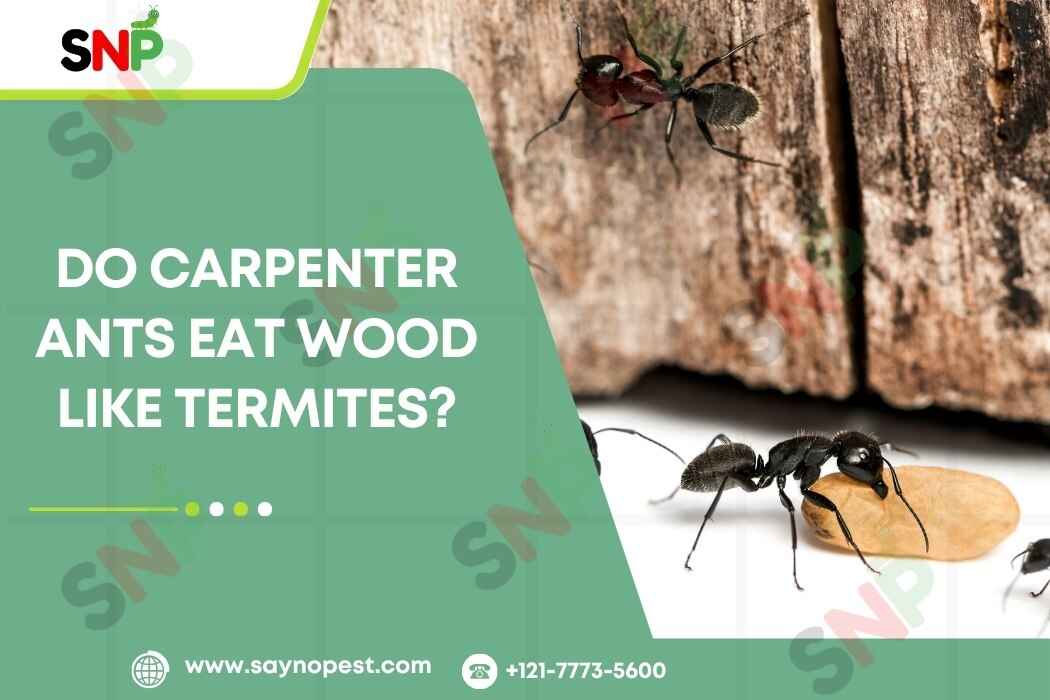
    The latest information shows that No, they do not. Termites are able to digest wood because they have the necessary enzymes in their bodies. Carpenter ants can bore holes with wood since they are provided with very strong jaw muscles. They will use not to consume it, but to dig tunnels and unnecessary galleries for their nests.

    Besides digging, carpenter ants remove the wood shavings, referred to as frass, out of the nest a lot of times, which leads to those typical piles of sawdust around your house.

    Carpenter Ants are often misrepresented as wood-eaters. But a wood-eater eats the wood away. In actuality, they are just making a way for the colony’s expansion. Yes, there is significant damage they can physically do, especially if the wood is damp or rotten but anyhow, they do not actually consume the wood they bore through. Hence, every time you’ve asked, do carpenter ants eat wood, keep in mind that you’ve also taught them that they are builders, not eaters.

    How to Know if It’s a Termite or a Carpenter Ant Eating Your Wood?

    The source of the problem which can either be termites or carpenter ants. The good thing is, it’s easy to distinguish the culprit even without professional help:

    1. Appearance: Carpenter ants are mostly black or red and black, with a marked narrow waist and slightly curved antennae. Termites are smaller, and their bodies are straight with straight antennae.
    2. Wings: Both flying termites and carpenter ant species are similar, with termite wings being of the same size, while carpenter ants frontal wings appear to be more prosomal in comparison with their hind wings.
    3. Frass: Is that pile of sawdust mixed with insect parts? If yes, it would be a good guess if I say it was from carpenter ants. It is important also to know that termite droppings look like small, hard, and not mixed with wood shavings.
    4. Moisture: Carpenter ants can usually be found in wet, decaying wood, near a leak, or in a water-damaged area, which is their preference. Termite species determine whether the wood should be dry or wet.
    5. Visibility: Carpenter ants are most commonly known as food gatherers, especially at night. But termites are not seen outside their tunnels when they are not swarming.

    If you have doubts, you must refer to a pest control professional. A correct identification is the first step in the treatment and prevention of the infestation.

    Conclusion:

    Just know that they only cut the wood for building their nests and not to eat it. The best way to defend your home against ants is to keep it dry, close the entry points, and eliminate food sources. By being alert, your house will remain a clean, healthy, and ant-free area.

  • Do Water Bugs Bite? Everything You Need to Know

    Do Water Bugs Bite? Everything You Need to Know

    If you’re asking yourself the question of do water bugs bite, then, obviously, you have a lot of company. Water bugs, aquatic insects and their interactions with humans are something that many Americans have experienced, and the scary look of water bugs is usually the first reason why anyone gets worried about their safety. In this piece, we are going to figure out the ins and outs of the water bug world, tackle issues like Are Water Bugs Poisonous, and explain the procedure of getting bitten. No matter if you are a homeowner, a swimmer, or just an outstanding, early inquisitive, here are some of the most significant aspects of water bugs and their bites for you.

    What Are Water Bugs?

    Water bugs, being giant water insects, are animals that live in the United States primarily in lakes and ponds of slow or stagnant water. The biggest of the water bugs, for instance, the giant water bug, also called a “toe-biter,” can grow to 4 inches in the most menacing scenario. Conversely, there also exist tiny bugs that inhabit water, like backswimmers and water boatmen, which usually occur in pool water in backyard pools.

    It’s a myth that water bugs are roaches. They have wide, oval bodies and their front legs are very powerful, which helps them to catch their prey powerfully, and they swim like fish. Most of the time, that is, during the night, both the small water bugs and their big relatives act as nocturnal predators, the prey being fish, tadpoles, and other creatures that live in the water.

    Do Water Bugs Bite?

    The answer is yes-do water bugs bite humans? Absolutely, but only when threatened or handled. The giant water bug, in particular, is infamous for its painful bite. While the smallest of water bugs, such as backswimmers, can also bite, the pain caused by it is not that severe.

    If a water bug bites, it does not follow the way a mosquito or a spider bites, but the former uses a pumpkin-shaped rostrum to break through the skin while injecting the prey with digestive enzymes. After it has happened, you will feel a sharp and unbearable pain, even after several hours. Remember, the bug only attack when someone confined or handled, since, in general, small water bugs and their relatives will not go out of their way to cause problems for people.

    Are Water Bugs Poisonous?

    The question that comes up most often is whether water bugs are poisonous. Water bugs do inject a poison-tinged saliva into their prey, which leads to their paralysis, and then the bugs are eaten. On the other hand, how about humans, are water bugs poisonous in a dangerous way? Not at all. Although their bite can be excruciatingly painful, the venom is not one of the major causes of death amongst people. Rarely will the worst you will experience be signs of local pain, swelling, and some tingling or numbness in a particular area. In some, very few cases, these are allergic signs of breathing that are difficult or a breakout of hives. In these cases, medical attention is critical.

    Even though it may be true that do water bugs bite and inject venom, the response to are water bugs poisonous is that they are not dangerous in the way snakes or spiders can be.

    Do-Water-Bugs-Bite

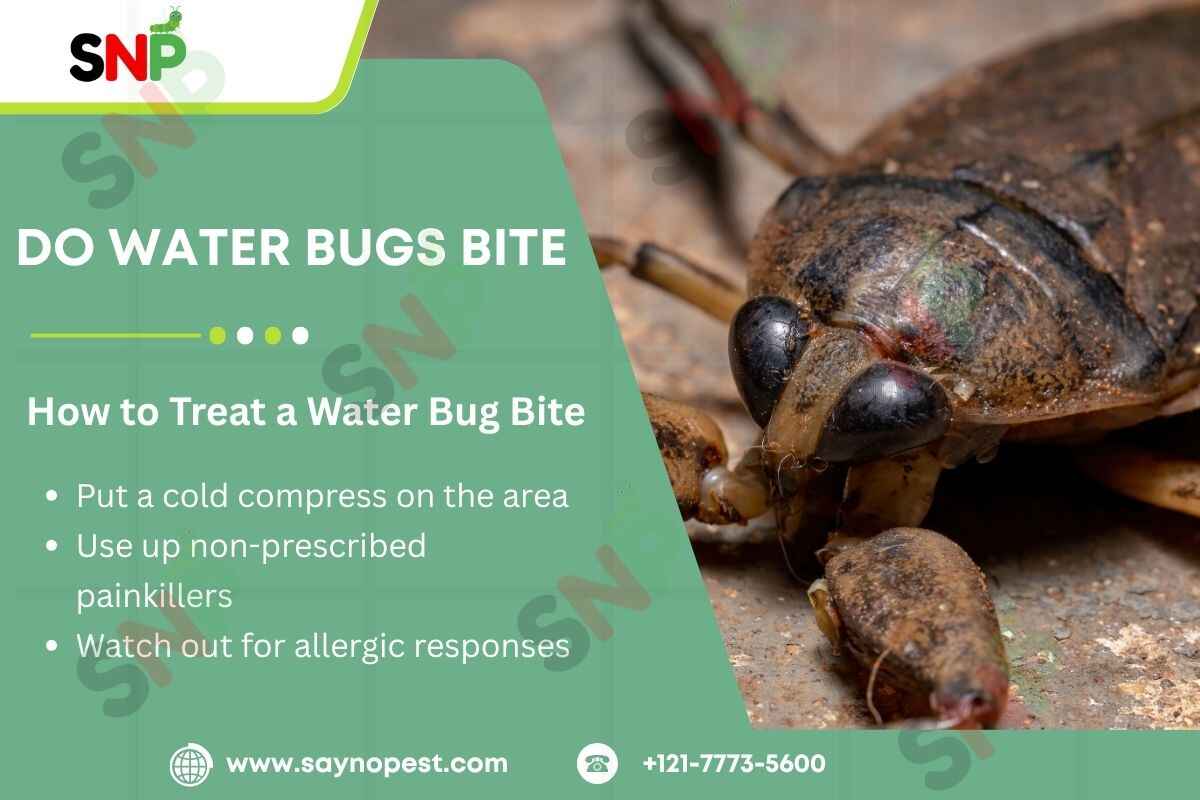
    How to Treat a Water Bug Bite

    When water bug bite, the following steps should taken to treat the water bug bite:

    • Put a cold compress on the area: This reduces pain and swelling.
    • Use up non-prescribed painkillers: Ibuprofen and acetaminophen are pain relievers which can used to alleviate discomfort.
    • Watch out for allergic responses: If you have shortness of breath, skin rash, and you find local swelling getting bigger, than don’t hesitate to seek help from a doctor.

    Most bites from small water bugs and their larger relatives clear up within a few hours, although a sensation of numbness or tingling may persist for up to five hours. Don’t scratch the bite, as this can lead to more infection.

    Conclusion

    Is it true do water bugs bite? First of all, the direct answer should be no. The pain from a water bug bite is very disturbing but not severe. Are water bug poisonous? Their toxin is used for the prey, not humans, so there is no need to worry. The interaction with a water bug sting will be nothing more than temporary pain and a bit of swelling, and usually, simple first aid will be enough. Keep in mind that both small and large water bugs shun people, so the most effective method is to leave them alone and keep your swimming areas clean.

    Figuring out the conditions of whether water bugs bite, if water bugs are poisonous, and if a water bug bite happens to you, you can venture outdoors with the utmost assurance. If small water bugs and their bigger versions pay too much attention to you, it is a wise option to get in touch with the professionals of a reputed pest control service and enjoy a trouble-free life at home.

  • How to Get Rid of Black Ants Fast

    How to Get Rid of Black Ants Fast

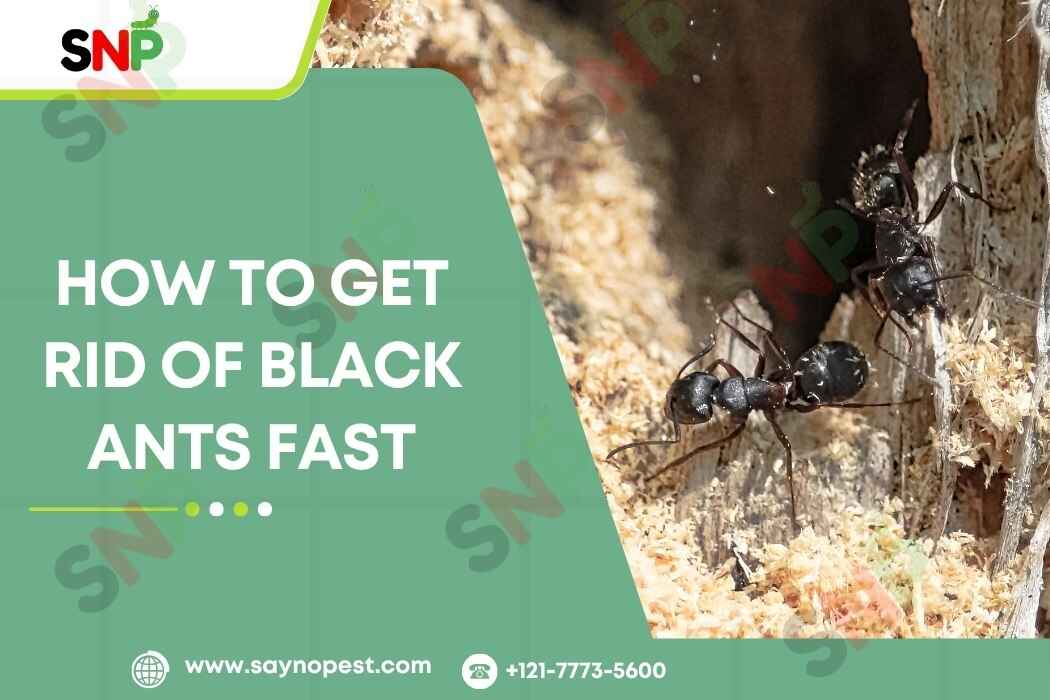
    Imagine seeing a column of small, shiny, black ants crawling towards your kitchen counter. These tiny unwelcomed visitors are one of the most common household pests in the U.S. . This article will help you take a look at the situation and know the real identity of black ants. Most importantly it will tell you how to get rid of black ants completely.

    What Types of Ants Are Black Ants?

    what-type-of-ants-are-black-ants

    First of all, not all black color ants are alike. However, we know that “black ant” is a collective name for several species of ants. Each species has its own characteristics, favorite food, and habitat:

    1. Black Garden Ants (Lasius niger): The black ant found in the garden, these insects are shiny.
    2. Carpenter Ants (Camponotus spp.): They are larger in size (up to ½inch), and have the capability of doing more harm. They chew their way through wet wood, thus endangering the house’s stability and safety.
    3. Little Black Ants (Monomorium minimum): Small being (1.5-2 mm) but great power, they get into the kitchen through the tiniest cracks and crevices, lured by their sweet tooth and protein hunger.
    4. Pavement Ants (Tetramorium caespitum): Pavement ants are named so because they build nests in or under cracks in pavement. These dark brown to black ants can also invade structures.

    Even though the majority of black ants are not harmful, you should be aware of the urgency of the carpenter ants issue as they are a real destructive force.

    Characteristics: Size, Color, Structure, and Risks!

    About black ants, some of their characteristics are common while others differ to a large extent in terms of behavior and hazard:

    • Size: Fits in the range from 1.5 mm (little black ants) to ½ inch (carpenter ants). Workers are the ones who are tinier, while queens get bigger.
    • Color: Shiny black bodies, although carpenter ants might have reddish tinges.
    • Structure: Bent at the elbow antennae, the bodies are segmented into parts (head, thorax, abdomen), and there are mandibles strong to the extent of being able to do the work of digging or chewing.
    • Behavior: Black garden ants are the ones who farm aphids and prosper in the soil. Carpenter ants are the ones who dig out the wet wood but do not eat it. In addition to that, little black ants are the ones who are involved in the formation of slow-moving trails toward sugary or oily foods.
    • Black garden ants farm aphids and thrive in soil.
    • Carpenter ants excavate moist wood but don’t eat it.
    • Little black ants form slow-moving trails to sugary or greasy foods.

    Are Black Ants Dangerous?

    • Most black ants are considered as the structural pests mainly for their wood-bearing ability. They are capable of constructing tunnels to their nests in the beams of your house resulting in your home being seriously damaged.
    • Most black ants are regarded as domestic pests, while carpenter ants are able to destroy the wood in buildings.
    • Bites are now and then only if occurs that not to be that serious, may be dangerous mainly if a person is allergic, but their presence can still pass on disease to humans through contamination of food.

    5 Proven Ways on How to Get Rid of Black Ants

    Are-Black-Ants-Dangerous
    • Seal Entry Points: Seal all the cracks in the walls, windows, and foundation with caulk so that the lines of the black ant trails are broken.
    • Use Borax Baits: Sugar and borax in a 1:8 ratio are dissolved in water. Soon one can find the cotton balls with this solution, next to the nest- the ants will bring the poison back to the colony.
    • Natural Repellents: Along the pathways of ants spray, the vinegar and water solution or peppermint oil to deter their scents.
    • Eliminate Food Sources: Close-fitting lids of containers, spotless kitchen floors, and taking-out of, residues on a daily basis are the best ways to get rid of ants.
    • Call Pros for Severe Infestations: It is best to use professional-grade insecticides on the persistent colonies of carpenter ants.

    Conclusion:

    Though black ants may go unnoticed in your space, they still have the power to cause considerable damage. The more promptly you learn the species and start the process of eradication (plugging of entry points, baiting, and staying clean), the better chances of success you will have and it will be easier for you to get the control of the situation. Keep in mind: Black ants are mostly after your food, but carpenter ants are a direct threat to you. The key is to be the one who takes care and not allow the tiny creatures overstaying in your home!

    Knowing the right strategies, the problem of how to get rid of black ants infestation can be solved easily. It’s time to go and have that snack without ants interfering!

  • How to Get Rid of Water Bugs: A Complete Guide

    How to Get Rid of Water Bugs: A Complete Guide

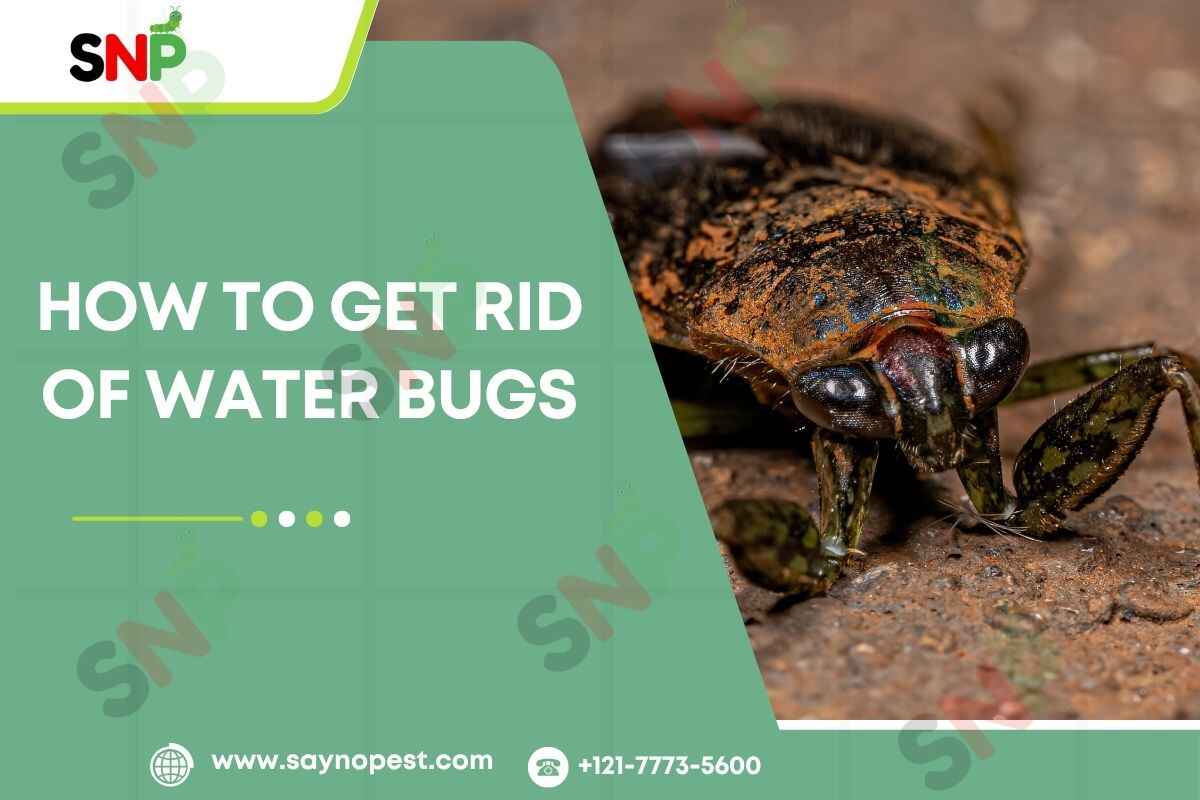
    Water bugs are common pests in most households in the United States, particularly in damp homes. Whether you have ever seen it darting across your bathroom floor or you have suffered a serious invasion of waterbugs, it’s good to know what a water bug is, Where do water bugs come from, and How to get rid of water bugs, all of which require living in a clean and healthy environment. Here, we will provide you with a complete guide on water bug-related issues as well as the necessary steps to get rid of them.

    What Is a Water Bug?

    The question giving rise to confusion is as to what species of insect the water bug is. When the term “water bug” is used, it is often believed that it is about cockroaches, however, the fact should be established whether what is a water bug is clear. Real water bugs come from Hemiptera and are water insects, for example, giant water bug (Belostomatidae) or water boatmen. The appearance of such insects is oval and flat. They are extremely good at adapting to water life, for which they use their legs as paddles just as humans do. These swimming insects, namely, are raptorial, which makes them predatory, and the primary source of their food is other aquatic organisms. Furthermore, they are capable of biting (in force).

    Still, in many households in the USA, when people mention the same question, what is a water bug, they usually mean the oriental cockroach, Blatta orientalis. These are not water bugs but pests that are a nuisance in homes, especially in the dark and humid areas. The pests are about one inch in length and come in the form of shiny, dark brown, or black. Furthermore, they are often discovered in cellars, crevices, and bathrooms.

    How-to-Get-Rid-of-Water-Bugs

    Where Do Water Bugs Come From?

    Knowledge of water bugs’ populations is of great importance in understanding the prevention of water bug invasions. The water bug, mainly oriental roaches, gets into the house in different ways, such as:

    • Carried in on food packages or laundry
    • Crawling under doorways or through air ducts
    • Scaling water pipes or entering through cracks in foundations

    They were insects that loved dark and moist places and scraps. Places with high humidity, such as basements, bathrooms, kitchens, and even around leaking pipes or garbage chutes, will also have water bugs in them. In the open, they live in mulch beds, under leaves, and near structures where moisture accumulates.

    How to get rid of water bugs

    If you want to know about how to get rid of water bugs, don’t worry, you’re not the only one. If you adopt an effective strategy, you can eliminate the pests and get your home back. This is an effective water bug removal guide:

    Eliminate Moisture

    If there is a leak problem in your home or in your property, make sure to repair it as soon as possible because wet places attract water bug problems. Use dehumidifiers in the basement to keep your place dry.

    Seal Entry Points

    You should scout the exterior of the dwelling place and seal up the cracks, cracks around the door and windows with caulk. This is an important action in preventing new water bugs from getting into the house.

    Maintain Cleanliness

    The disposal of garbage frequently and the timely cleaning of the drains are some of the methods people use in the prevention of water bug attraction. Besides that, washing the dishes as soon as they are used is another good habit. Additionally, keep pet food in the open overnight.

    Trim Vegetation

    Distance the plants and shrubs from your home foundation through regular trimming to reduce moisture and elimination of water bugs hiding.

    Do-Water-Bugs-Bite

    Use Natural Remedies

    Borax and boric acid can be spread in the areas where the water bugs can be seen, but they need to be kept away from children and pets. Also, citronella or peppermint are another way you can use essential oils to keep water bugs away simply by mixing with water and then spraying in the actionable areas.

    Apply Chemical Treatments

    Cockroach baits and insecticides if placed near water bug hiding spots can be effective, in particular. Also, always heed label instructions and contact a professional if the situation is serious.

    Professional Help

    Your tasks may not be enough for the issue to vanish, so it might be wise to get in touch with a pest control professional. Firstly, they utilize more powerful treatments and on the other hand, hunt down the nest of the infestation, thus, eliminating the root of the problem.

    Conclusion

    Water bugs can be annoying, but if you know what’s a water bug, where do water bugs come from, and how to get rid of water bugs, you can prevent your house and family from them. Through maintenance, controlling the moisture, and sealing the entry points, these are your best lines of defense. And if you still have problems with water bug infestations, do not hesitate to call the exterminators in order to utilize effective and long-term solutions.

    Bear in mind that when you know how to get rid of water bugs and act in a timely manner your living environment will be clean and free of pests. If you are faced with a few rogue bugs or an infestation, these measures guarantee you are going to be prepared when it comes to any water bug disaster.

  • What Do Stink Bugs Eat? A Complete Guide

    What Do Stink Bugs Eat? A Complete Guide

    If you’ve noticed that a lot of stink bugs have suddenly invaded your house or garden, be sure that you are not the only one. The shield-shaped insects are indeed a subject of concern for both residents and farmers all over the United States. Before dealing with the stink bite and its problem, it is important to know a few basic questions to deal with that in the best possible manner. What do stink bugs eat, what are stink bug good for, are stink bugs dangerous, and, finally, how to deal with a stink bug infestation.

    What Do Stink Bugs Eat?

    what-do-stink-bugs-eat

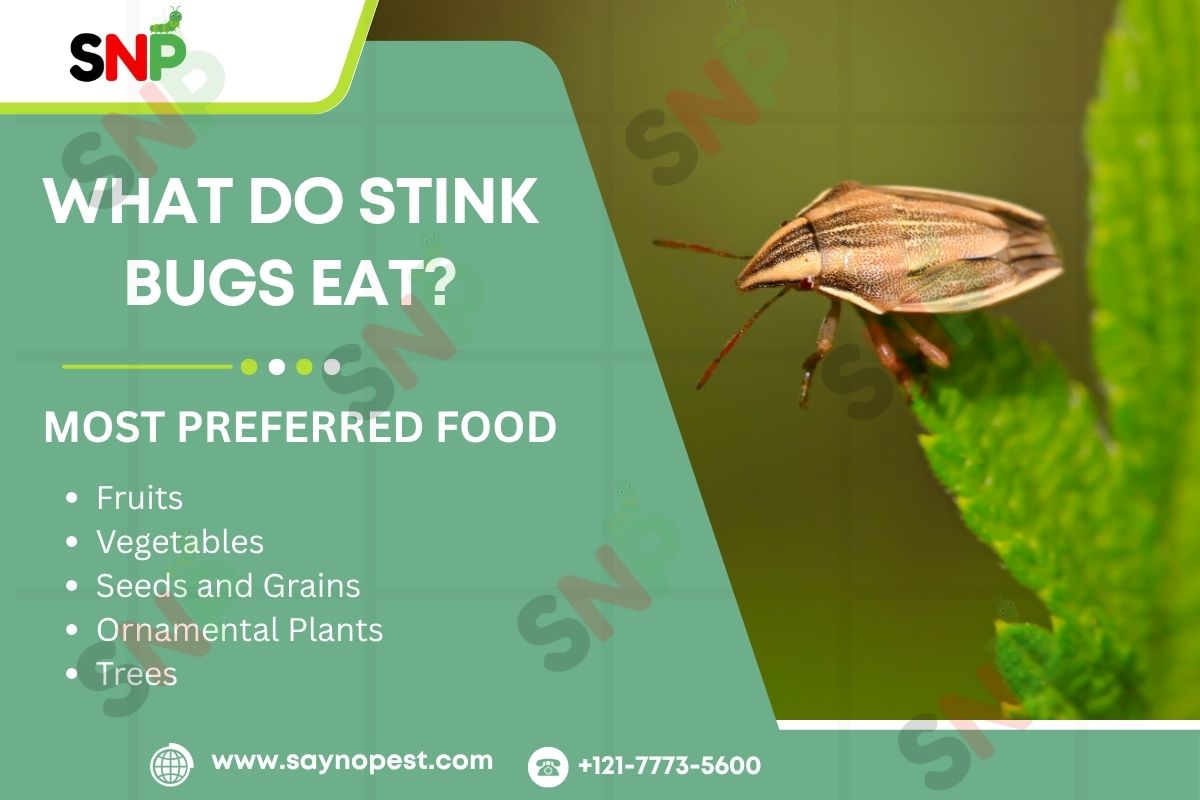
    This question usually comes to the minds of many people across the United States that what do stink bugs eat . Most of the stink bugs are “polyphagous,” that is, they can feed on different plants and crops. They have quite a rich diet, and that’s why they are a very big threat to people who can be destroyed easily, such as gardens, orchards, and agricultural fields.
    Let’s enumerate their most preferred foods.

    • Fruits: Apples, pears, peaches, apricots, figs, grapes, nectarines, berries
    • Vegetables: Tomatoes, peppers, cucumbers, beans, okra, eggplants, sweet corn, field corn
    • Seeds and Grains: Soybeans, rice, pecans, cotton, sorghum, grains
    • Ornamental Plants: Magnolias, sunflowers, holly, mimosa, Eastern rosebud
    • Trees: Maple, elm, oaks, and more

    Given the chance that they are inside, the insects may eat indoor plants, and if any fruit is left unprotected, they may consume that, too. The ability of stink bugs to feed on such a vast array of fruits and vegetables is what explains their rapid reproduction and significant destruction to the agricultural sector and gardens.

    What Are Stink Bugs Good For?

    At first sight, the majority of people don’t think of stink bugs in any way other than being pests. Surprisingly, the truth is that they do have a positive side. Namely, what are stink bugs good for?

    Natural Pest Control

    Some types of stink bugs are predatory and they eat such destructive insects for crops as caterpillars, beetles and even other stink bugs feeding on plants. This is why destructive pests would make good allies for farmers and gardeners who want to control them.

    Ecosystem Balance

    The process of vectoring by stink bugs allows the plant to trigger the production of compounds that serve as a natural shield against the pests. Those plants that face future pest problems will be more healthy and ‘less tasty’ due to this variety.

    Food Source

    In some parts of the world, such as Asia, stink bugs are a good source of protein and essential nutrients.An added advantage to this is that they help in the reduction of crop destruction caused by the stink bugs as they are eaten.

    Well, this is all true, but it should be taken into account that the brown marmorated stink bug and those of a similar nature are the most common stink bugs in the US, and thus, such insects are firstly plant-eaters of the crops and are not beneficial insects.

    Are Stink Bugs Poisonous?

    The question about the poisonous nature of stink bugs is popular among homeowners and most often stands like “Can stink bugs hurt you?” The answer is “Yes”. This is the fact that stink bugs secrete a substance from their glands, which produces an insufferable odor, thereby not letting their enemies attack their bodies. The question is, if stink bugs poisonous? Stink bugs are poisonous in the sense that they produce a bad smell that cats and dogs detest, and this can be toxic to the animals, but the bugs can also be big environmental protectors.

    • Human Health: The release of the liquid is potentially responsible for mild allergic reactions in some people, such as sneezing, itchy eyes, or skin irritation (dermatitis), but isolated cases are rare. If a stink bug bites you, just wash your hands with clean water and soap.
    • Pets: Stink bug secretions are report to be non-poisonous to cats and dogs, but the odor may be irritating.

    To sum up, it is fair to say that stink bugs which cause humans no direct harm can affect their health, and in the case of pets are a bigger nuisance without harming the two-legged roommates.

    Stink Bug Infestation: What You Need to Know

    Infestation of the stink bugs is not easy to manage once it gets into your home, especially during the fall season, as they are seeking warmth, hence they try getting indoors more than ever. Here is how you can find and manage the infestation:

    are-stink-bugs-poisonous
    1. Signs of Infestation: Looking at numerous stink bugs gathering on walls, windows, or within your home, especially in cooler times of the year.
    2. Prevention: This is the simplest way of preventing the invasion: it is to seal cracks in and around the windows, doors, siding, utility pipes, and chimneys. Another major move is to repair and replace broken screens and to trim down the outdoor vegetation, thus fewer havens are left for the pests.
    3. Removal: Indoor stink bugs can be remove using a vacuum cleaner. They emit an unpleasant smell. If they have become too much, call a pest control expert. More so in the case of severe invasions, a pest control professional must be contact.
    4. Lifecycle: Female stink bugs are capable of laying hundreds of eggs, so this can quickly lead to a large population.

    Conclusion

    At the beginning, knowing what do stink bugs eat is the most crucial factor in controlling these very stubborn pests. Although we identify stink bugs as a plant-feeding insect species that can make a mess of the crops and gardens, they also have a minor role in natural pest control and ecosystem balance. Wondering if stink bugs are useful is a bit tricky to answer because even though they are not bad, they’re causing more and more problems for farmers

    Fortunately, the stink bug odor cannot endanger the life of humans and animals, yet be unbearable and, in the case of some allergic reactions, even be fatal. If you find that there is a stink bug infestation in your home, you will need to take the preventative measures immediately, or you will be sure to succeed in having a bug-free home, garden, or farm.

    People have the information they need to avoid or get rid of stink bugs, they won’t have to worry about them in their territory. If your home, garden, or farm is under a stink bug attack, be sure to instantly look for advice from pest experts for professional ways to get rid of the problem.

  • The Green Stink Bug: A Guide for American Homeowners

    The Green Stink Bug: A Guide for American Homeowners

    Anyone who has a garden or orchard in the US has probably encountered the green stink bug at some point. Much maligned for its signature odor and recognizably shieldlike shape, this pest causes more than a nuisance; it can devastate your plants and crops. This blog seeks to inform readers of the green stink bug and its identification, contribution to the environment, detrimental impact on garden and orchard produce, and practical means of eliminating it.

    What Are Green Stink Bugs?

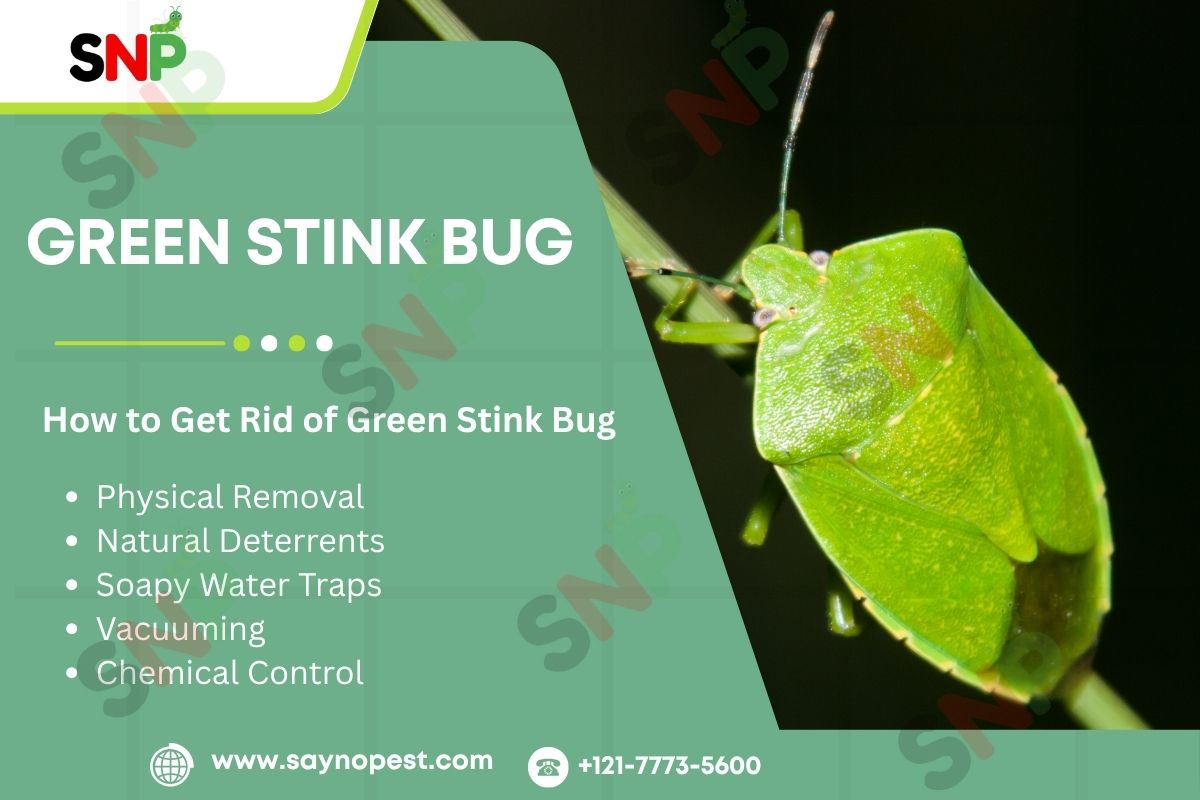
    It is easy to spot the Green Stink Bug as it is a part of the family of Pentatomidae and has a bright green and shield-shaped body. Adult bugs measure about 13 to 17 mm long and 8 mm wide. The colour varies from deep green in the warmer periods to a dull brownish affair in autumn. When the wings are at rest, there is an unmistakable X pattern that is creat on its back, and the antennae are mainly compose of alternating dark and light segments. Nymphs or juvenile stink bug undergo a drastic change in their appearance from being very small, dark, and wingless insects with ornamental marks to those with modified markings as they grow and molt. More common in late spring to summer, the green variety of stink bugs is mostly locate leisurely maneuvering across leaves, fruits, and stems.

    Being disturb or killed, a release of a malodorous chemical is a possible occurrence. The chemical is a defensive reaction of stink bugs, and it causes the odor that makes them all stink bugs.

    green-stink-bugs

    What Are Green Stink Bugs Good For?

    The green stink bug is not an out-and-out pest to crops, but it contributes, briefly, to the balance of the ecosystem. Stink bugs, or this species, feed on predator insects, birds, and spiders, in the same way other stink bugs do. Their presence is sometimes a sign that an ecosystem is abundant in a variety of species since they are attract toward locations with a variety of plants. Although these insects have some advantages, their adverse impact on crops and ornamental plants becomes more obvious. As a result, the elimination of infestations is most pressing for the overwhelming majority of homeowners and farmers.

    Green Stink Bug Damage and Detection

    One of the things that is particularly damaging about the green stink bug is that it causes a great variety of plants, mainly fruits and vegetables, to be damage. Using their piercing-sucking mouthparts, the stink bugs suck the sap out of the plants and especially go after the seeds, the fruits, and the young shoot. This kind of sucking or drinking of the plant fluids is very harmful that is they will cause the following damage:

    Necrotic Spots and Deformation

    Pricking or biting holes from their feeding leaves the fruits and vegetables with small, hard, brown, or black spots. Afterwards, such feeding that is continuously repeat can result in “catfacing,” where fruits grow a surface that is rough, lumpy, or misshapen.

    Withering and Stunted Growth

    The stink bug green can draw sap from the plant, thus causing leaves to wilt and the plant to eventually remain undeveloped, or cause a part of it to die.

    Entry Points for Disease

    The feeding sites created by stink bugs are the primary cause of infection by bacteria and fungi; these infections weaken the plant and shorten the shelf life of the crops.

    Detection

    Seek eggs laid in a cluster on the underside of the leaves, observe nymphs that appear in many colors, and watch out for the adults, always carrying the characteristic green shield. Eventually, fruits showing dents, colour changing, or wrinkled skin predominantly in crops like tomatoes, peppers, peaches, and grapes, can be seen.

    How to Get Rid of Green Stink Bugs

    Successful green stink bugs management requires the combination of prevention procedures, on-ground removal, and, in cases, spraying chemicals.

    Physical Removal

    During routine inspections, find the presence of eggs, nymphs and adults on your plants. Care for small populations before by physically exterminating or flattening the bugs.

    Natural Deterrents

    Apply garlic spray on windowsills, doorways and on plants composed by combining water with garlic powder for a natural repellant of stink bugs.

    Soapy Water Traps

    Place a jar containing soapy water underneath stink bugs; whenever the bugs are irritated, they will fall in the solution and die. Wipe entry points and plants with a soapy water solution to reach out to stink bugs and help dehydrate and kill them.

    Vacuuming

    To be able to take care of stink bugs inside do use a vacuum cleaner with a HEPA filter to capture them safely and avoid release of their smell. Clear and throw away the vacuum debris immediately you’re done vacuuming.

    Barriers and Exclusion

    Install an insect net over greenhouses or open crops, and block up room gaps or holes in your house to prevent stink bug entry.

    Chemical Control

    If the infestation by pests is serious, you should consult a pest control expert on the best way to use insecticides. Change between a couple of insect sprays to allow stink bugs to resist a little and minimize side effects on useful insects by using them with care.

    Conclusion

    The green stink bug is a constant menace to American gardeners and homeowners, and though it has a unique look and can give off an unpleasant stench, the main thing it is known for is the destruction it causes to a broad range of crops. It is one of the unpopular ecological actors, but its negative effect on the production of fruits and vegetables makes it imperative the control. If you know how to spot, observe, and handle the stink bug green, you will be able to protect the plants from the acts of garden pests and at the same time, have their beauty and productivity amplified. In case you recognize a green stink bug invasion in your household and you’re unable to treat it, it is necessary to contact local pest control specialists to get personalized solutions.

    Remember, finding the problems early and solving them regularly are the ways to control those stink bugs. This way, your plants and other garden produce will be safe throughout the next season.