Blog

  • Termites in House: How to Spot, Prevent, & Handle

    Termites in House: How to Spot, Prevent, & Handle

    In the United States, termites in house present a quiet threat to homeowners who continue to incur destruction worth billions of dollars annually. The realization about the great importance of knowing the signs of termites in house, termite nests in houses, and the ways to prevent the occurrence of these destructive insects can be quite effective in safeguarding your assets. Saynopest is going to help you understand how to get rid of the termite problem and also how to recognize it before it gets out of control and becomes costly.

    Signs of Termites in House

    Signs-of-Termites-in-House

    Recognizing the symptoms of a termite infestation in the home at the earliest stage can save you from a lot of expenses. Watch out for the following indicators:

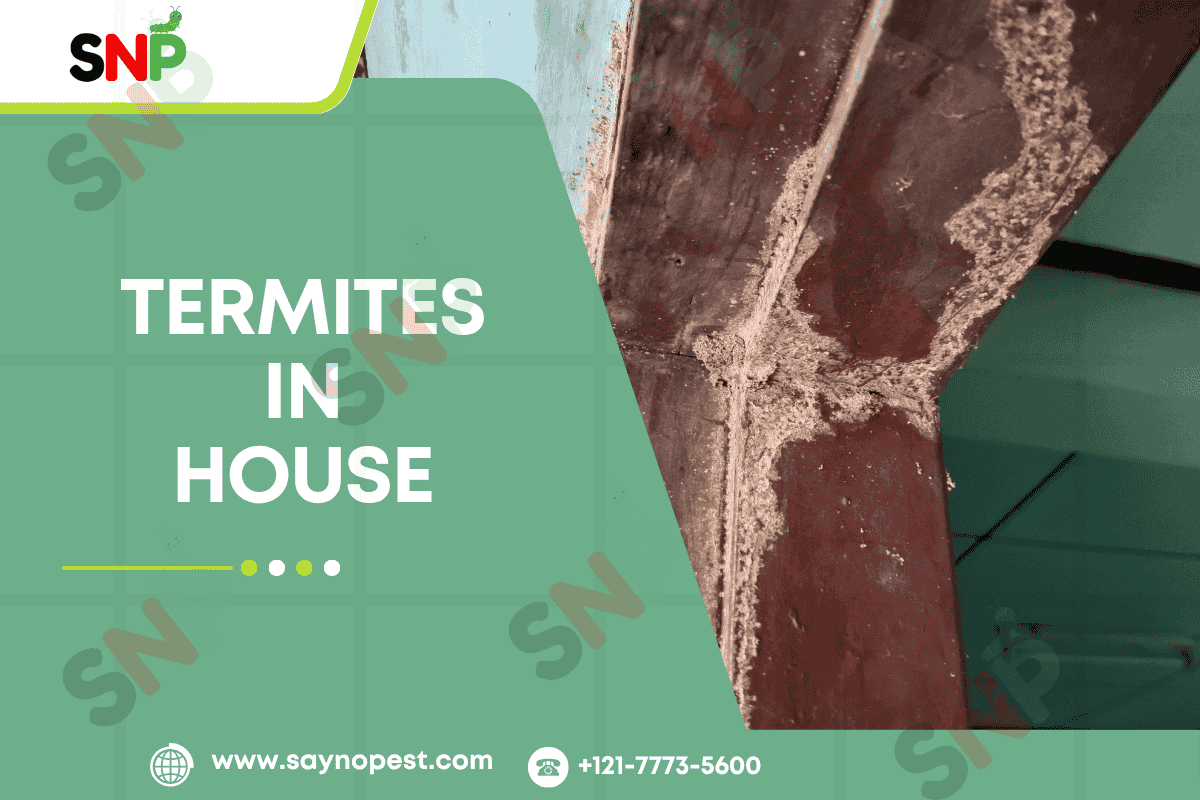
    1. Mud Tubes: Subterranean termites are tunnel-building insects that create mud tubes on the surface of the ground (foundations, walls, or crawl spaces) to connect their nests to the food sources. These tubes are the air pockets in which termites can breathe while they move through the soil to get to their food.
    2. Hollow-Sounding Wood: The wood surfaces to be knocked on. If the knocking sound is hollow, then wood-eating insects, probably termites, have made the wood inside out while leaving a thin surface.
    3. Buckling or Blistered Floors: The wavy or blistered wood floor may indicate that there is termite undermining the surface.
    4. Frass (Droppings): Drywood termites get rid of these little sand-like droppings (frass) that are close to the wood that is infest by the termites.
    5. Discarded Wings: Termites are known to get rid of their wings after swarming, and those wings are left near windowsills or entry points as a result of the accumulation.
    6. Visible Swarmers: The flying termites indoors indicate that the colony of termites is active inside your house.

    If these signs of termites in house are present, then you really have to act with urgency because procrastination will lead to more harm than you can imagine.

    Termite Nest in House

    A termite nest in house can also be refer to as various things depending on the species of the termite:

    1. Subterranean Termite Nests: These are mostly place underground near the base of the house. Ground termites do not only dwell underground, they also use the mud tubes to their nest and the wood in your house to navigate along. Therefore, when you notice something such as mud-filled cracks, then they are probably along the foundations/lower walls and have not penetrated all the way through.
    2. Drywood Termite Nests: The drywood termites are wood dwellers in the truest sense of the word. If they get you, they will go into your house and eat the wood of the furniture. Their nests is nothing more than complicated tunnels inside the wood, and, commonly, these are always follow by heaps of frass in the immediate vicinity.
    3. Dampwood Termite Nests: These termites are also called dampwood as they are found in wet and rotting wood, e.g., basements or attics. Therefore, these nests may also become places where pulp and frass are left.

    If a termite nest in house is identify, do not try to get rid of it by yourself. Contact the best Pest control company as they know how to deal with them using the best treatment and process.

    Flying Termites in House: Why and When They Appear

    The flying termites in house, known as wings or barbs, are the reproductive caste that are looking for a new colony establishment. The fact that you see these termites around and in your house means they have an ongoing area there.

    Reasons why flying termites get into the houses?

    • They are light-loving creatures, so they hardly resist the temptation of a well-lit room and thus trickle in by open windows and doors.
    • They are often understood as beings seeking to procreate and as places to find adequate conditions for the birth of new colonies. In their explorations, they may become their own downfall if, in their search, they find it easy to penetrate the cracks and holes in the construction of your house.

    The time of the appearance of flying termites.

    • The amount of rain and high temperature, and humidity are mostly important since this is when the subterranean termites start swarming during the spring and the beginning of the summer season.
    • The drywood and certain ground types tend to swarm at the end of the summer period or during fall times, according to the local weather conditions.
    termites-infestation

    Spotting flying termites in house is a warning sign—addressing the issue promptly to prevent a new infestation.

    How to Prevent Termites from Entering Your Home: Quick Steps

    Termites in house can avoided if you are alert and take measures in advance:

    1. Sealing Cracks and Openings: One should also ensure that there is no diversion in the house. Patch any of the holes in your foundation, walls or around penetrations of plumbing.
    2. Dry: A termite cannot feel good living in a very dry place. Termites like wet locations. Restore leaks, install proper drainage and make sure that gutters and downspouts are free of obstruction so that water does not run towards your foundation.
    3. Maintain Ventilation: Ventilation in the crawl space as well as the attic have to enhanced so as to reduce the level of humidity at these locations.
    4. Remove Wood-to-Ground Contact: Never put wood for fire, lumber, or mulch against your house side directly. Use pea gravel or hardscape materials around the foundation.
    5. Regular Inspections: It is a good idea to have a professional check for any signs of termites once a year.
    6. Fix Roof and Gutter Leaks: Feasibility of moisture buildup which is the major moisture attracting factor can avoided by immediate repair of roof and gutter leaks.

    By adhering to these measures, you can considerably reduce the probability of having termites in house and keep your property safe.

    Conclusion

    Damage done to your house by termites is a very serious issue and thus you must treat it on an emergency basis. By searching for indications of termites in your house, getting familiar with the termite nest in your house, and tracing when the flying termites in your house appear for what reason, you will, thus, be on time to prevent the menace from causing deep harm. The best way to defend yourself against them is to prevent their infestation first; seal entrances, minimize moisture supply and make regular inspections. To get some specialist assistance and read more read saynopest and protect your home against termites now.

  • Field Mouse vs House Mouse: Key Differences

    Field Mouse vs House Mouse: Key Differences

    It is essential to know how to differentiate between field mouse vs house mouse in case you want to eliminate these rodents forever. These are the two most common species of rodents that require different methods of eliminating them. This is because they represent different levels of danger to your family and your home.

    All About Field Mouse vs House Mouse

    Physical Appearance- Field mice are about 3 to 4 inches in length with tails of 6 to 9 cm. These little animals have a brown fur with very distinct white bellies, legs, and feet. Their tails are in a bi-colored pattern – dark on top and light underneath – and are covered with fine hairs.

    The house mouse (Mus musculus) is normally smaller in size with a body length of 2.5 to 3.75 inches and the tail of 2 to 4 inches.  A house mouse is almost hairless all over its body and the tail looks like it has scales.

    On one comparison, the ears of field mice are small and they are not very round whereas the ears of house mice are big and very noticeable. Field mice also have bigger eyes, great for outside as compared to house mice.

    Behavioral Differences

    Field mice are fond of outdoor spaces such as open field, forests, meadows, etc. These small creatures tend to visit the homes during the cold season when they require warmth and a sleeping place. They will most probably nest in sheds, garages, and outbuildings and not in the houses.

    House mice are the animals that live with us throughout the year. They have become the residential and urban environment’s well-adapted species. They live very close to humans and do not have any problems in making permanent nests inside houses.

    The reproduction rate of house mice is faster than that of field mice, with females giving 5 to 10 litters yearly, each containing from 4 to 16 young.

    Furthermore, the way they store the food is also different. Field mice, for instance, pick up the stolen food and store it near their nests. Whereas house mice, usually eat the food straight away when it is found.

    Field mice follow the seasonal diet pattern of seeds, berries, insects, and root vegetables, while house mice stick to their favorite cereals and grains but they can be omnivores if there is nothing left around.

    House mice are well-adapted to living in residential and urban environments. They establish permanent nests inside homes. House mice reproduce more rapidly than field mice, with females producing 5 to 10 litters annually containing 4 to 16 young each.

    Health Risks from Field Mice

    Field mice pose risks to the health of humans due to contamination with diseases that they carry. The main issue here is the Hantavirus Pulmonary Syndrome (HPS) that can cause death and is a virus that is transmitted by the deer mice.

    Transmission of this virus may occur due to-

    • Mouse urine
    • Droppings
    • Mouse Saliva

    The initial signs of the disease are fever, headache, and muscle pain, after which coughing will become very intense, fluid in the lungs will appear, and if no treatment is given, there will be death as the final stage.

    In this sense, field mice are the biggest threat when it comes to the rural area, cabins, and warehouses; if there are people there, they have to be aware that such places are potential unintentional sources of contamination of the environment with high concentration spots of infectious material.

    Health Risks from House Mice

    House mice are the main carriers of Salmonella disease, rat bite fever, and lymphocytic choriomeningitis (LCM). The symptoms are fever, headache, and muscle pain.

    LCM is especially dangerous to pregnant women as the infection may lead to birth defects or lost pregnancy. Latest research reveals that some mice that live in houses carry bacteria that are resistant to antibiotics thus infections will be harder to manage.

    What are the Causes of Food Contamination

    Food contamination is an even bigger threat because rodents of both species will leave their droppings and urine everywhere they will be moving. They make places so smelly by frequent urination. This results in an environment that is not hygienic and moreover, it can cause allergic reactions to people.

    Signs of Infestation of Field Mouse vs House Mouse

    1. The tiny dark-color or black droppings that are found inside or near the food.
    2. The gnaw marks that the mice have done on packaging and/or the structures
    3. The scratching noises that are heard in the walls or ceiling at night.

    Prevention and Control Strategies

    Effective rodent control will only come from consistent and extensive prevention practices such as closing ingress points, eliminating food sources, and shelter reduction.

    Mice are highly adaptable and can squeeze through holes that are even smaller than the thickness of a pencil, and therefore sealing the entire house is a very crucial exercise.

    Homeowners need to fill in the small holes with steel wool and caulk. Larger holes can be filled with metal screening or cement patching.

    In case of worst infestation, the best solution is to hire professional pest control services.

    Small mouse problems can be resolved using snap traps baited with peanut butter, seeds, or cheese. The traps need be placed along walls because that’s where mice usually move.

    Conclusion: Field Mouse vs House Mouse

    Knowing the difference between some field mice vs house mice allows you to take suitable prevention and control action.

  • Flea and Tick Pills for Dogs: Complete Protection Guide

    Flea and Tick Pills for Dogs: Complete Protection Guide

    Flea and Tick Pills for Dogs are one of the most efficient and convenient ways to safeguard your dog from parasites that can harm them. A very serious problem for the pet owners all over the United States is that they have to fight with blood-sucking pests that can transmit dangerous diseases to both dogs and humans without being noticed.

    Flea and Tick Pills for Dogs provide systemic protection which is a method that works from the inside out and thus makes it the first choice for pet parents. Realizing how Flea and Tick Pills for Dogs work and why they are important comes next. This way you can help yourself as well as your pet.

    What is the Need for Flea and Tick Pills?

    These parasites are the carriers of very dangerous diseases that may cause serious health problems to dogs. Tapeworm infections and skin diseases like flea allergy dermatitis, etc is caused by fleas. They are the most common cause for death among pets.

    Some of the death causing diseases that are transmitted by ticks include Lyme disease and Rocky Mountain spotted fever, among others. These diseases can be very harmful to the health of your dog and in case you fail to treat them, they can even lead to death.

    The flea life cycle includes 4 stages that is the egg, larva, pupa, and adult. A single female flea can lay up to 2,000 eggs during her lifetime provided the conditions are favorable.

    Ticks are also very dangerous, their life cycle is complicated and it takes about two years. During the feeding process, ticks introduce digestive enzymes, which might carry pathogens and infect your dog’s blood directly.

    The Reasons Why Pills Are Better

    1. They start working in hours.
    2. Long-Term: Provide consistent protection in the long-term.
    3. All-Year Safety: Assist in keeping dogs safe all year round.
    4. City Dogs are not Safe: City dogs are not immune to fleas and ticks, some species live indoors or all year round.

    Most importantly, Prevention is safer and easier than curing infestations. Therefore, the pills are an intelligent and safe option to keep your dog safe.

    Flea and Tick Pills for Dogs

    Flea-and-Tick-Pills-for-Dogs

    Prevention proves to be more efficient than treatment in the case of flea and tick infestations. Flea and Tick Pills for Dogs are designed to meet these conditions by giving a reliable protection which can be noticed within few hours after the administration.

    Most Flea and Tick Pills for Dogs are in pretty tasty, and easily chewable.  This makes it easier for pet parents to give their medication stress-free.

    Clinical studies prove that such pills are more effective than other treatment methods. A 90-day study that compared the oral and topical treatment showed that oral drugs were 99.9 percent effective whereas topical treatment only reached 88.4 percent.

    How do the pills work?

    1. These pills enter the bloodstream and tissues of your dog and make your dog an unsafe environment to fleas and ticks.
    2. Parasites die before they can transmit disease or lay eggs when they bite and absorb the medicine.
    3. Pills are faster than creams, which may require 12-24 hours to kill most fleas.

    Conclusion

    Flea and Tick Pills for Dogs are the necessary means of protection against the harmful parasites that endanger the health and comfort of your pet. These pills work better and are easier to give. They protect your dog better than creams or collars. Visit your trusted vet and talk to them about which pill is best for your dog. Depending on your dog’s size, health, and daily routine they will suggest you some good options. When you give these pills regularly, it helps keep your dog protected all year from fleas, ticks, and the diseases they can spread.

  • Dangers of Fire Ant Bites on Humans and Pets

    Dangers of Fire Ant Bites on Humans and Pets

    Introduction to Fire Ant Bites

    Fire ant bites can be life threatening! These ants are both very aggressive and are fast in attacking. They gather and attack any threat that comes their way. Fire ants are unique not because they can bite and sting. But they also release a venom that makes your skin feel like it’s on fire.

    What does a fire ant bite look like?

    From what is known, fire ant bites has symptoms of a red, swollen bump which usually appears immediately after the sting. Some people even have had a group of small, itchy blisters sometimes in a semicircle especially if they have had a close encounter with fire ants. It is usually possible to recognize these blisters. These can last for several days and even leave an infection which can become a scar.

    Symptoms and Causes of their Bites

    Symptoms-and-Causes-of-Fire-Ant-Bites

    The primary reason for fire ant bites is their aggressive defense mechanism, through which fire ants attack with a pack mentality and take bites out of the skin while stinging. This venom triggers a wide variety of symptoms, such as:

    • First, you will feel burning or stinging at the site of the fire ant bites.
    • Next, you will observe red, raised bumps that quickly become blister filled with fluid.
    • There will be uncontrollable itching that can last more than a few days.
    • Moreover, there is a possibility that the swelling may extend beyond the sting site, particularly when numerous fire ant bites are in the same location.

    The symptoms are not dangerous but uncomfortable. However, there are people who can have serious allergic reactions.

    • Severe swelling and redness
    • Feeling sick
    • A feeling of tightened chest
    • Troubled breathing
    • Swelling in the tongue and throat.
    • Feeling dizzy
    • Experiencing low blood pressure (these are some signs of a life-threatening allergic reaction).

    Pets can also be in danger. The immune systems of dogs that have been bitten by fire ants may display signs of pain, itching, and swelling on areas that have little fur like the belly or around the eyes.

    What happens when you get bitten by fire ants?

    They first bite into your skin using their jaw. Then, the ants turn around and sting you many times, injecting venom with each sting. The venom is the one that causes the pain and blisters. The ants only attack in groups, so it is very common to be bitten by several fire ants at once. The pain can last up to one hour, and the itch and swelling can still be there after several days.

    How to treat fire ant bites?

    How-to-treat-fire-ant-bites
    • Leave the place quickly to avoid more bites.
    • Wash the bitten part with soap and clean it carefully to remove any infections.
    • In order to ease the pain and decrease swelling, apply an ice pack for 15 minutes and remove it. Do it for 15 minutes and then repeat.
    • Visit a drug store and purchase some cortisone cream. Use a prescribed medicine for itching and swelling. This will be especially useful if you have quite a few fire ant bites.
    • Use an oral antihistamine for itching and swelling. This will be especially useful if you have quite a few fire ant bites.
    • Don’t scratch the blisters because not doing so will prevent infection and scarring.
    • Non-prescribed pain relievers can be used not too frequently only when pain occurs.
    • If any signs of the infection occur (increased redness, pus, or fever), the most important thing to do is calling a healthcare professional.

    Conclusion

    Fire ants are not only a mere inconvenience but may also cause a lot of pain, discomfort, and in rare cases, serious health problems. Identifying fire ant bites in time will keep you in no danger zone. Keep in mind the fact that quick action accompanied by proper care is the best way to prevent the venom of fire ant bites.

  • Are House Centipedes Dangerous? The Truth Them

    Are House Centipedes Dangerous? The Truth Them

    When you see a fast-moving bug-like insect with many legs moving around the floor of your bathroom, you might ask yourself this question: Are house centipedes dangerous? The straightforward answer is the fact that the house centipedes pose very little danger to humanity, yet once seen, they provoke the use of panic in the house owners.

    What Are House Centipedes?

    House Centipedes are domestic arthropods of strange shape and color which contributes to easy identification.They are creatures with bodies of grayish-yellow color that have three dark stripes running along the back. A grown-up house centipede is about 1-1.5 inches long, but due to their legs, they look bigger than that, with an overall length 3-4 inches.

    house-centipede

    Moreover, these creatures are experts at having 15 pairs of very long and thin legs, and the last pair of legs is almost twice the length of their bodies. Their legs are strip with light and dark colors, and they have long antennae, which are often longer than their body. The largest implication of the house centipede insects is that they are extremely fast. They can run extremely quick on their floors, walls and even the roof in case they are irritat.

    Are House Centipedes Dangerous to Humans?

    The issue of are house centipedes dangerous or not is answer by the question of are house centipedes dangerous? Most people have an addresser. The centipedes of the house are not found in the list of dangerous animals to humans and pets. These are venomous animals although what they have is used against their prey not tough enough to harm larger animals like people.

    Scutigera coleoptrata are technically venomous, however, they should not be feared at all by human beings since they tend to flee on sight of the human being and they never bite.In case a centipede bites a person, it is mostly as a result that the centipede felt that it was in danger or was handled by mistake. The bite is more comparable to a quick pinch, provided by their modified front legs, called forcipules.

    The main threat that house centipedes can cause is that they have the potential to scare someone so much that the person may lose balance and fall if the encounter is not expected. The creatures’ quick dashes and their strange looking might make people get frightened, however, this is only a reaction of the mind and not of the body.

    House Centipedes Bite: What to Expect

    House centipedes bite are usually the mildest cases that can be easily taken care of by a person. The bite of a house centipede is, accordingly to the dual forcipules of their nature, so two small punctures made. The bite may cause:

    • At once stinging or burning sensation in the place of the bite
    • Redness and swelling at the bite site
    • Mild itchiness or burning feeling
    • Loss of sensation or pins and needles in the affected area
    • Small bleeding from puncture marks

    Most of the symptoms, which are the consequences of a house centipede bite, do not require medication and fade throughout between several hours to 48 hours. It is said that the pain of getting this sting is comparable to the one received with a bee sting, and also the pain is not severe enough that it needs a doctor to administer medication.

    Being allergic to the poison, which is the outcome of a centipede bite, is possible only to some people, and this may result in the existence of an allergy. The symptoms of severe allergic reactions, such as Epidermal Lung, include some parts that include difficulty in breathing, tachycardia, and swelling of the throat. In case the above symptoms come up after the house centipede bite, get emergency help immediately.

    Signs of House Centipedes and How to Treat Bites

    Identifying House Centipede Presence

    What will make you sure that the house centipedes have invaded your house is if you see them. They are nocturnal insects that hide during the day and are most active at night. They are spot in the following places:

    • Basements
    • Bathroom and kitchen
    • Closets
    • Behind baseboards and in wall cracks

    Other signs include an increase in their prey populations; therefore, house centipedes are the ones that consume insects like silverfish, cockroaches, spiders, and moths. The presence of these creatures is the result of the pest problem that exists at the place and is the reason for their being.

    House-Centipede-Bites

    Treating House Centipede Bites

    In case of a centipede bite, carry out the following steps to treat that:

    Immediate Care:

    • Wash the bitten place copiously with soap and water
    • Wrap ice in cloth and use it for 10 minutes in intervals
    • Do not apply alcohol on the wound

    Pain Management:

    • Use painkillers and antihistamines recommended by your doctor
    • Honey is an anti-inflammatory agent, therefore, its application is recommend
    • Put aloe vera gel on the itch area so it will be less swollen and get cool relief
    • Mix water with baking soda and create alkaline relief paste

    Natural Remedies:

    • Apply the mix of turmeric and rose water for 10 minutes
    • Tea tree oil or lavender oil are good for healing
    • Paste of fresh tulsi leaf can used for natural anti-inflammatory

    When to Seek Medical Attention:

    If you feel unendurably severe pain that medications do not relieve, local infection symptoms (pus, increased redness, warmth), or any symptoms of allergic reaction appear, immediately get in touch with your doctor.

    Prevention and Management

    Nonetheless, centipedes are the good guys as they eat other pests that can be harmful to your home and hence are a natural pest control option. Numerous homeowners are, however, of the opinion that it is better to have fewer. Particularly:

    • Use dehumidifiers to reduce moisture
    • Get rid of cracks and entry points by sealing them up around windows and doors
    • Place sticky traps in dark corners and along baseboards
    • Remove moisture sources and fix leaks
    • Frequent vacuuming to get rid of centipedes as well as the insects they feed on

    Safe repellents such as peppermint oil, tea tree oil and diatomaceous earth will give a hand in keeping house centipedes off without the use of toxic substances.

    Conclusion

    The knowledge of what the reality is about house centipedes can make your worries less serious. Although the question of whether or not a house centipede is dangerous may come to mind when you have to deal with these eight-legged visitors, the facts remain that they are not that harmful to human health. The bite of a house centipede is uncommon, and it is usually characterize by insignificant effects that can managed easily and quite easily at home.

    Instead of thinking house centipedes are dangerous pests, think of them as small animals that are good controllers of pests introduce by Mother Nature in your house that cause you greater problems. But in cases where their presence is not comfortable to you, there are easy warm prevention measures that would bring down the number of their presence without the use of dangerous chemicals.
    If you want to say goodbye to your house centipedes or are trying to deal with the root pest problems that are drawing them, then you can contact professional pest control services. Say No Pest realizes the need to have a comfortable house that is free of pests without compromising the ecological role that these creatures perform in nesting some other pests in the house.

    Note that the best way to deal with pest-related anxiety is to be well informed. Knowing all about the house centipedes and the minimum danger they present, you get to act accordingly to seeing them and draw the necessary conclusions about further pest control back home.

  • Cranberry Spiders: The Silent Guardians of America’s

    Cranberry Spiders: The Silent Guardians of America’s

    While you may enjoying the tart cranberry sauce at your Thanks giving dinner, most probably you do not even realize the tiny eight-leg heroes that are involved in the process of protecting your favorite fruit without any effort. Cranberry spiders play a very important role in the feeding of cranberry crops all over America by acting as nature’s pest control system in the cranberry bogs from Massachusetts to Oregon.

    Cranberry spiders are not just the very small and creepy creatures that are always there in the wetlands, but they are the most important partners in sustainable agriculture. Such very efficient arachnids have changed to fit perfectly with the bog environment, where they hunt the harmful insects that can be very dangerous to the cranberry harvest. Getting to know these interesting creatures makes us understand how complex the ecosystem that provides us with cranberries is.

    cranberry-spiders

    Top 5 Interesting Facts About Cranberry Field Spiders

    Master Survivors During Harvest Season

    Cranberry field spiders demonstrate great survival techniques when water floods to collect the cranberry bogs. They can avoid getting wet by using the surface tension of water due to these hairs. Note: The bodies of spiders are cover by tiny hairs as call setae, which keep them dry and permit them to step onto water. Thus, when walking through the flooded bogs, the spiders tend to make their way onto the bodies of human beings and thus have a different route (rather than water) to travel and have a strange alliance with human harvesters and spider survivors.

    Natural Pesticide Alternatives

    Spiders in the cranberries consume a total of 2000 insects in a year, which makes them super-efficient biotic pest controllers. Their main course consists of cranberry fruitworms, aphids, leafhoppers, beetles, and other harmful insects that destroy crops. Such predation by nature thus ensures the reduction in the use of chemical pesticides, which gives support to the organic farming practice.

    Specialized Bog Hunters

    Most of the cranberry field spiders are not the web-spinning type but are instead the ones who actively hunt their prey, that they chase begging the bog surface. Besides that, their light bodies allow them to glide swiftly on both the water and the dry sandy soil of the cranberry bogs – a peculiar feat unmatched by other terrestrial predators.

    Penny-Sized Protectors

    Upon closer inspection of cranberry spiders, you will find them to be very tiny; usually, they are the size of a penny. As a result of their presence, pest control is successfully and ecologically done, and bogs are the perfect example of this.

    Multi-Generational Bog Residents

    A population of Massachusetts cranberry field spiders has become the most permanent of all the residents of North American cranberry bogs. They especially do very well in the acid soils of the northern United States and Canada. For instance, one of the species, namely wolf spiders, not only carry their young on their backs but also are their next generation of protectors of cranberry crops.

    What Are Cranberry Field Wolf Spiders?

    Cranberry field spiders are equally comprise of wolf spiders (Family Lycosidae) that are the most prevalent type of arachnid in the cranberry bogs. They are powerful hunters that sit between 0.4 and 1.4 inches in shade and said to have good eyesight and strong legs.

    Cranberry field Wolf spiders got their name from the fact that they hunt in the same way wolves do – they sneak up and chase prey without making webs. These cranberry spiders live on the ground and are brown or gray, which makes them fit perfectly into bog environments. Their eight eyes are arranged in three rows, with two big ones located front and center so they get the best vision while hunting.

    Mature female wolf spiders are normally larger than males, and they take care of their egg sacs by tying them to their spinnerets until the eggs hatch. After the hatch, the spiderlings cling to their mother’s back for protection – this is a very common sight in cranberry bogs during breeding seasons.

    cranberry-field-wolf-spider

    Get Rid of Spiders: Quick Control Tips

    Though cranberry field spiders are good guys in agricultural settings, homeowners might desire to have a spider population under their control indoors. To get rid of spider, follow these rules:

    1. Essential Oil Repellents: Put some peppermint, lavender or tea tree oil in a spray bottle of water. Apply in and around entry points and corners.
    2. Be Clean: Cleaning by vacuum regularly and de-cluttering would help to remove hiding places and food attraction, which would attract the spiders and their prey.
    3. Seal Entry Points: Fill gaps around the windows, doors, and cracks on the foundation blocks that are entry points for the spiders using caulking.
    4. Plants: Plants that can be used as natural repellents are lavender, mint, eucalyptus, and citronella, as these plants will not only keep the spiders away but also keep other insect species at bay.
    5. Salt Solution Spray: Saltwater spray is a natural spider repellent that is effective on spiders. Mix four tablespoons of plain salt with one cup of water, and spray it on the spiders will kill them because the salt will dehydrate them.
    6. Remove Outdoor Attractants: Reduce the number of outdoor lights where it is not needed, and keep the garden clean to prevent the overgrowth of insect populations, which will consequently prevent the attraction of spiders.

    Conclusion

    The cranberry field spider is the most typical picture of how nature’s balanced ecosystem functions. These incredible arachnids are not only the life-savers of the American cranberry harvest, but they also demonstrate their abilities to adapt perfectly to the wetland environment. Besides their amazing and efficient survival tactics during the flood and their pest control services, cranberry spiders are the ones that show that the food production system can not do without the participation of even the tiniest creatures.

    Recognizing and valuing these bog-dwelling predators, we realize the significance of sustainable agricultural methods, which are in harmony with nature and not against it. Next time if you take cranberry products, do not forget about those tiny guardians that are laboring invisibly behind the scenes to make your meal possible.

    Need a pest control service that is effective, environmentally friendly, and able to maintain the natural balance of the ecosystem in the case of a beneficial species like cranberry field spiders? Then go for environmentally conscious pest management services provided by SayNoPest, which are experts at giving you green pest management services.

  • Pantry Moths: A Complete Guide for American Homeowners

    Pantry Moths: A Complete Guide for American Homeowners

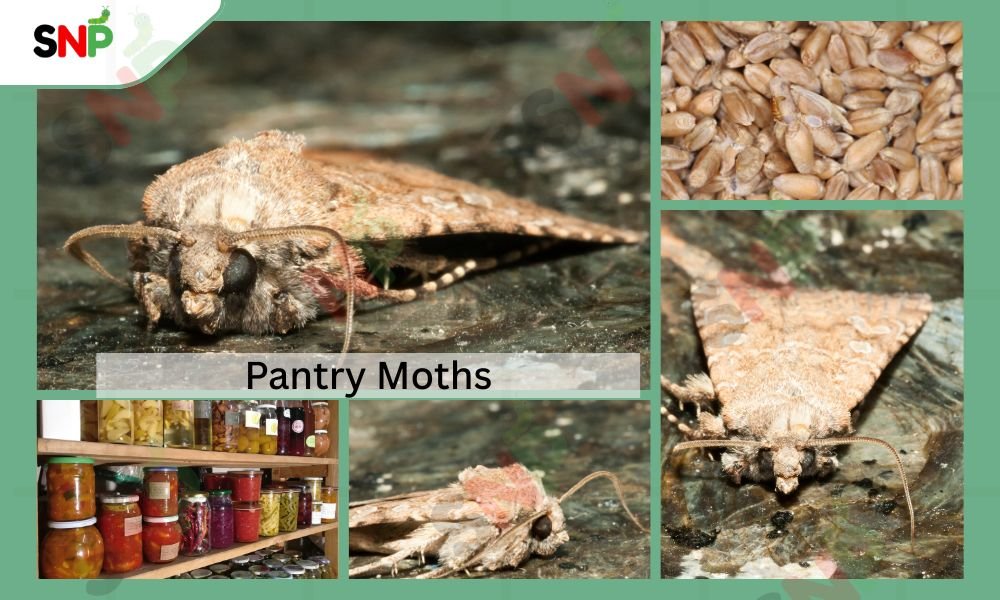
    Pantry moths are one of the commonest and most annoying household pests that American families can find in their kitchens. These small and tiresome bugs can easily and rapidly turn a well-stocked pantry into a disaster for themselves. They will not only contaminate the food but will also make an unwelcome mess in it. Learning the nature of these pests is the most important thing to be able to prevent and control them during the whole process of solving the problem, which makes the present guide an indispensable aid to every homeowner who is dealing with the problem of pantry moths.

    What are Pantry Moths?

    Pantry moths are little creatures that love grain and thus only dry food they can find in the kitchen and the pantry. They are a night kind of animals and, besides that, they are not one but many species that are quite similar and have a similar kind of food and thus feeding habits. The common types of pantry moths that are found in an American household are the Indian Meal Moth, Mediterranean Flour Moth, and Angoumois Grain Moth.

    pantry-moths-life-cycle

    The insects called pantry moths that are in their adult stage are very small. The most recognizable by people, the Indian Meal Moth, looks like it has a pair of bronze-colored wings, but if you look closely, two colors can be seen – the one which is next to the head of the moth is grayish-white, and the far end is the reddish-brown copper color. Unlike butterflies, these moths are quite small and have a weak flying ability, so they tend to rest with their wings folded, and when they are disturbed, they show the flight pattern which is very characteristic of them – they fly in a zigzag maneuver.

    Pantry moths have launched an attack on stored food products that are of an extensive variety, such as cereals, grains, flour, beans, nuts, dried fruits, spices, chocolate, pet food, birdseed, and even packaging materials. These pests are quite troublesome, mainly because they tend to invade food packaging – their larvae can make holes in plastic bags, thin cardboard, and even in some sealed containers to get at the food. The harm caused by pantry moths has gone far beyond food consumption, only because they have now become a nuisance in several products due to their droppings, shed skins, silk webbing, and body parts that have led to the whole food supplies being rendered unusable.

    Pantry Moth Larvae: The Real Culprits

    The most life-threatening phase of the pantry moth life cycle is the larval stage. The pantry moth larvae are tiny, worm-like creatures, usually off-white with brown heads, that can reach a length of 1.7 cm. Once they hatch from eggs laid directly on food, these little ones become ravenous and consume whatever is at hand – flour, grains, nuts, and more.

    During their eating, pantry moth larvae give off frass (waste) and the silky webbing, which acts as a glue for the particles of the food, thus indicating a very big infestation along with the smell of them. Not only will their presence will destroy the food, but also their rapid spread, as they can chew not only cardboard, but also thin plastic to get to new food sources, will cause the spreading of the infestation.

    The larva stage of their development may continue from a minimum of 2-3 weeks, if the temperature is high, to even a few months, if the environment is cold and the food is insufficient. It is this time that they do the most contamination and, therefore, they are the main cause of food being thrown away.

    Pantry Moth Life Cycle

    Understanding the pantry moth lifecycle is very important to remove them outside your house because you never know which corner they are building their family in. They go through a complete process of four stages.

    1. Egg Stage: One female Pantry Moth can give a maximum of four hundred eggs, directly or near a food source. These eggs are so small that they look like a white, grey haze.
    2. Larval Stage: This is the most damaging phase. The pantry moth larvae consume food for up to 3 weeks (sometimes even longer) and thus spread the pollution everywhere they go.
    3. Pupal Stage: When the larvae have eaten enough, they move away from the food and spin their cocoons in the cracks, corners, or even under the food packaging. The pupa period is the time when the insect changes inside the cocoon from being a larva into an adult moth, which lasts about 15-20 days.
    4. Adult Stage: Adult Pantry Moths come out mainly to mate and lay eggs, their life span being about 1-2 weeks. They don’t eat during this period; the only thing they do is reproduce.

    The entire pantry moth life cycle may last from 30 to 300 days, depending on the environmental conditions. This will then allow the population to grow rapidly if it is not under the control of humans.

    How-to-Get-Rid-of-Pantry-Moths

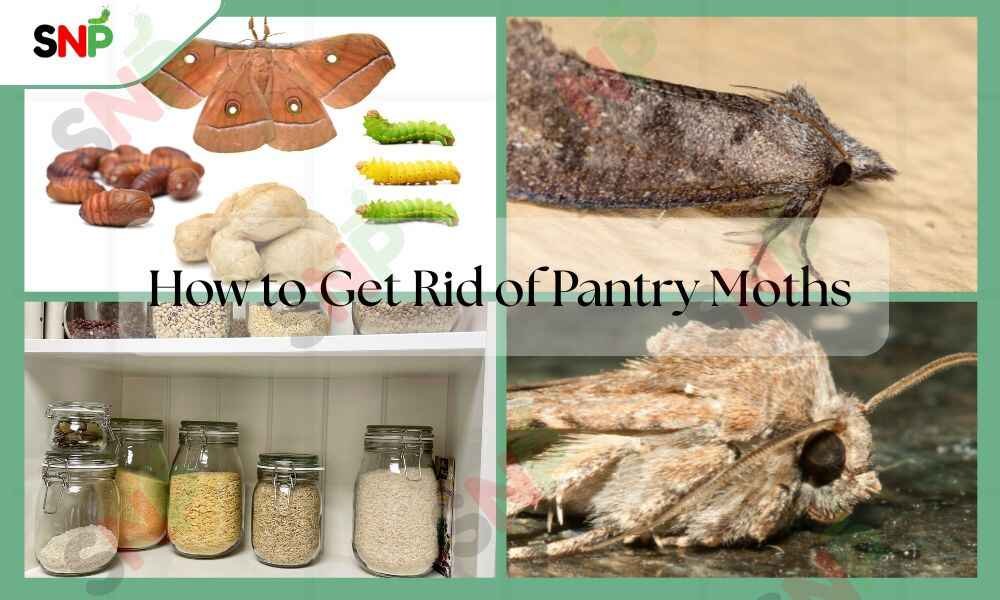
    How to Get Rid of Pantry Moths

    If you understand that we’re having a problem with an infestation of these pests, here’s a quick guide on the way to how to get rid of pantry moths:

    • Check every container or item in your pantry for the presence of moths, larvae, webs, or anything sticking together.
    • Throw away all the infest food as soon as possible and ensure that they are zip in bags before throwing them away.
    • Washing shelves and corners of the pantry, plus containers with hot soapy water or a vinegar solution, is to done.
    • All your dry goods should be store in glass, plastic, or metal after being well clean in air-tight containers. This will guard against re-infestation of your pantry.
    • You will also be able to break the cycle of breeding by applying the pheromone traps to trap the adult moths.
    • Start checking your pantry more often and rotating the food; this way, you will notice a problem quite early.
    • Seal any cracks or entry points in your pantry, so they will not attract new moths.

    Conclusion

    Pantry Moths are continually annoying for American households; however, this issue is not unsolvable. Once you get a clear understanding of the pantry moth life cycle as well as their destructive behavior of the pantry moth larvae, you will be able to protect not only your food but also your family. Implementing the correct pollution and prevention measures will become a guarantee that your pantry will be free of pests and food will be safe for use.
    For more experts’ tips and tricks on how to find effective solutions to get rid of pantry moths, head to SayNoPest, your most reliable source of pest control across the United States.

  • Termite Swarm:Fascinating World Of Termites

    Termite Swarm:Fascinating World Of Termites

    It could have happened that you noticed your windows or porch lights surrounded by a sudden cloud of insects and then found out that it was a swarm of termites. Although the idea of a flying termite swarm can be very scary, knowing about the behavior of the flying insect swarm is pivotal if you want to protect your house and become a smart consumer in the market of pest control.

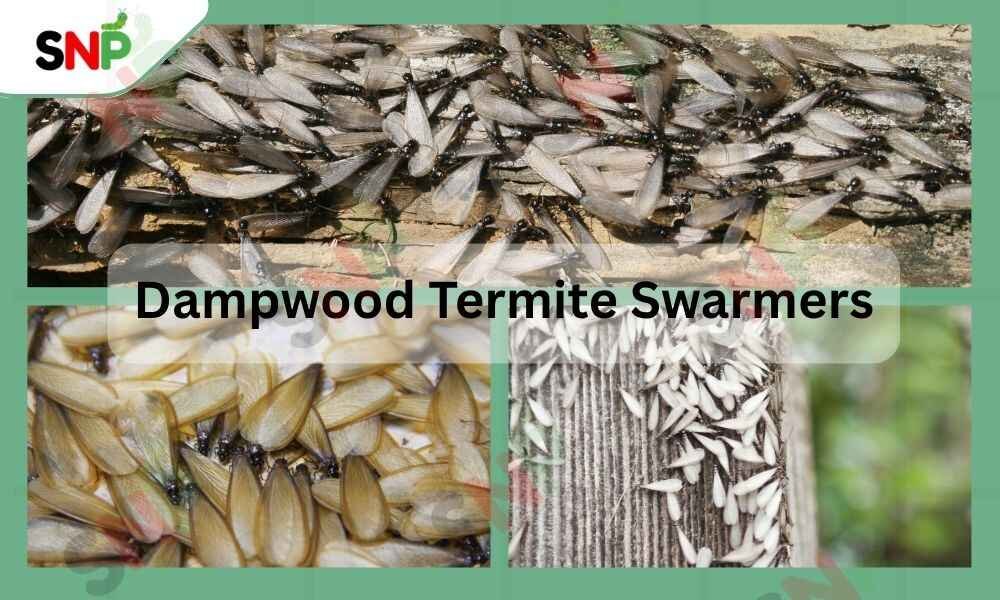
    This piece of writing concentrates on the parts of the whole story of the insect pests which include the questions such as the time when the insects of the species of termites go in swarms, the typical season of the swarming of the insects, how long the swarm will be there, whether it is a good or bad sign if we see the insects flying in a group inside our house, and the info on the species of the termites called “Dampwood Termite Swarmers” that are the members of a reunion.

    What Is a Termite Swarm?

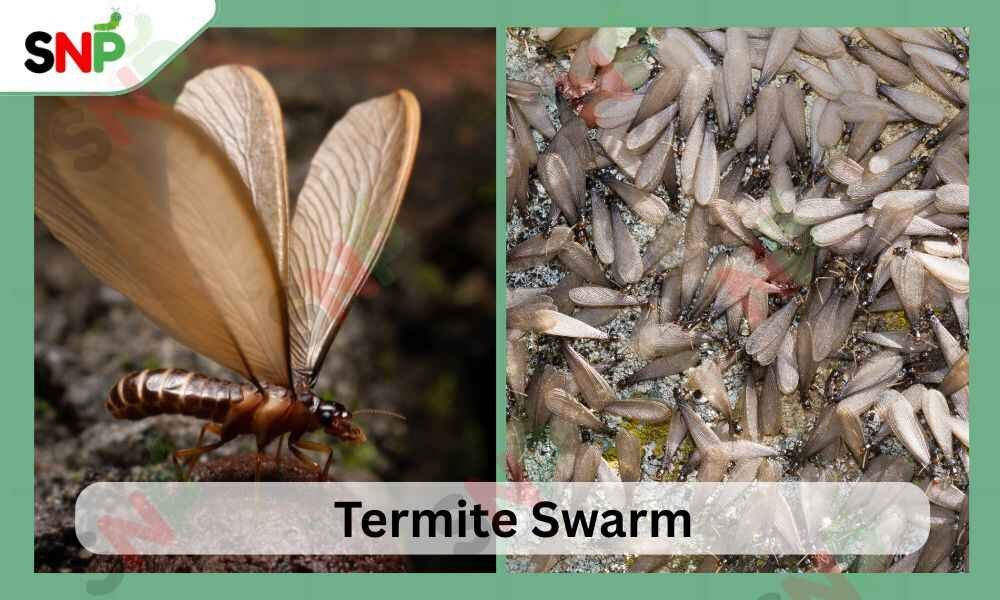
    A termite swarm is the consequence of the typical life cycle of the species of termites. If a colony is fully grown and the environmental conditions are perfect, then the wing reproductive termites take flight in large numbers. Such a flight of the flying insects is nature’s physiological way of allowing the termites to impregnate and create new families. The words “alates” and “swarmers” are often use interchangeably to describe flying reproductive termites. While the primary role of local workers and soldiers is to maintain the present colony, the role of reproductive swarmers is to disperse and thus continuously supply the population with new colonies.

    termite-swarm

    When Do Termites Swarm?

    One of the most basic issues the homeowners consider is when do termites swarm. Of course, the answer lies in the species of the termite and in the region where you live. Major termite swarm incidents in the U.S.A. are observe during spring or early summer, especially after a rainfall when the air is humid and the ground is moist. Subterranean termites, which are the most destructive ones, normally swarm during the day in spring. Drywood termites usually prefer the late summer or early fall period for their nocturnal swarming activities. Dampwood Termite Swarmers are typically active during the summer.

    Understanding the Termite Swarming Season

    The termite swarming season is a time when these insects have the chance to double their numbers. The termite swarming season in the US starts from February to June, with some alterations according to local climate and the presence of different termite species. Subterranean termites generate the vast majority of infestations and are mostly active during this time. On the other hand, Dampwood Termite Swarmers will be more frequent in the summertime, particularly in places with high humidity.

    How Long Do Termites Swarm?

    If you see a swarm of flying termites, the first thing that may come to your mind is how long the swarm will last. It is not a long time. A normal termite swarm is only 30 to 40 minutes; in some cases, it can be up to an hour. Nevertheless, the act is short, but the process of swarming can performed a few times during the termite swarming season because the quotas of the reproductive species are release in waves for mating and picking up new places. The duration of the event is still short, but it is very crucial for termite reproduction, and the real danger lies in the potential of these reproductive swarmers that can make new colonies inside or outside your home.

    Termites Swarming Inside House: What Does It Mean?

    The sighting of termites flying in your house can compared to raising a red flag. Out of door swarms may only a signal of the presence of the colonies next door; however, the presence of an indoor swarm is an indication that the mature queen is there, the colony has very big population, the whole infrastructure of the nest is already built, and is continually developing inside the home’s structure. These swarmers are attract to light; therefore, you are most likely to find them around windows or light fixtures. In case you find wings of insects or dead insects indoors in clusters, it is imperative to call a pest control professional without any delay. Structural damage that may happen due to this situation can be very costly to fix in case the problem is ignore for some time.

    Spotlight on Dampwood Termite Swarmers

    Dampwood-Termite-Swarmers

    Dampwood Termite Swarmers: This species of insect is very interesting because its larvae enjoy wet decaying wood. They do not invade houses as readily as do underground or drywood termites; however, they can also prove very devastating, particularly in those locations where the wood is always wet, caused by leakage or drainage problems. The swarmers in this species are larger than compared in other species of termites, and they swarm during summer. If you live in the Pacific Coastal States or you have wood that is in ground contact, you are well advise to extra careful and seek out such moisture-loving pests.

    Conclusion: Protect Your Home with SayNoPest

    A termite swarm is, unfortunately, more than just an irritating little thing—it actually can be the indicator that your property has a hidden problem. Learning to recognize the signs of a flying termite swarm, deciding when termites swarm, and knowing the rules of termite swarming season may provide you with an opportunity to react in due time. If it occurs to you to see the presence of next to no termites swarming inside your house or you are sure that there are some Dampwood Termite Swarmers, call the pest control experts as soon as possible.

    Professional help combined with early detection provides the opportunity to keep away exhaustive damage caused by termites.
    We at SayNoPest are devote to supporting American homeowners in being informe and protect. Contact me today in case of any professional guidance or examination. You can lose your sleep over a termite swarm, but with SayNoPest to protect your dwelling through the year, that is not going to happen.

  • What Attracts Pavement Ants to Your Home?

    What Attracts Pavement Ants to Your Home?

    Knowing what attracts pavement ants becomes a very important step for homeowners who are after the most effective pest management solutions. Pavement ants are a species that most definitely have topped the chart of most persistent house insect pest around the United States.

    Appearance of Pavement Ants 

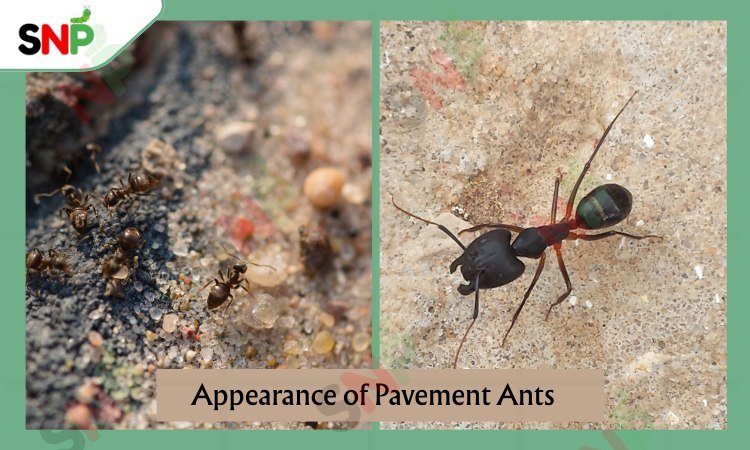
    Dark brown to black in color, these small insects are known for their notorious behavior of establishing their colonies under sidewalks, driveways, and concrete structures.  These tiny invaders have a length of approximately ⅛ inch and distinguish themselves by the small mounds of excavated soil they make around pavement cracks.

    The ant colonies of pavement ants can consist of 3000 to 10,000 ants, but some colonies reach 30,000 ants in number. More than one queen in a larger colony makes it harder to get rid of these pests.

    Appearance-of-Pavement-Ants 

    What Attracts Pavement Ants to Your Yard?

    1. Food Sources

    Pavement ants love all kinds of food. Be it sweet or not, and thus your home becomes a very attractive place to them.

    The list below represents the ants main food that they like:

    • Greasy food
    • Meat
    • Nuts
    • Cheese
    • Honey
    • Jam and cookies
    • Bread
    • Crackers, and what not!
    • The ants will also eat honeydew from aphids, dead insects, plant juices, pet food, garbage scraps, etc.

    These ants are very active in searching for carbohydrates and proteins, and among other things, grease, and meat are the most preferred by them. The ants feed on various things such as sugar, nectar, tiny seeds, and the remains of insects.

    2. Moisture

    What attracts pavement ants is not only related to food but also to the moisture sources. These creatures only survive if they have continuous water supply, and are humid. Besides, kitchens and bathrooms are the most favorable due to the higher moisture levels that they have.

    Moreover, leaky faucets, dripping pipes, pet water bowls, and condensation around appliances will turn out to be perfect spots for them.

    3. Warmth and Shelter

    Pavement ants have a very strong preference for warm environments. Within homes, these bugs go wherever there is heat. They make their nests in the closest distance to where the heating apparatus, furnace, air conditioning, and other such parts of the building.

    The perfect temperature accordingly to pavement ant’s needs l is between 21-27 degrees Celsius.

    During winters, the problem with the pavement ant is more severe because outdoor food becomes scarce. So, they invade homes.

    4. Structural Entry Points

    Another point in what attracts pavement ants is that they need openings to enter homes. In order for them to be undisturbed, they look for crevices in the foundation, basement windows and doors, and gaps around places where they can run their wires through. The most common places they use to get in are the weep holes, the areas where the pipes go through the walls, and the cracks that are in the basement walls or concrete floors.

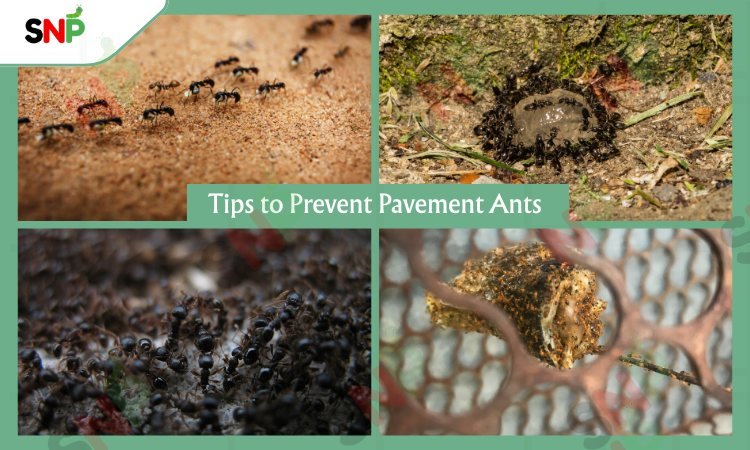
    5 DIY Control Tips to Prevent Pavement Ants

    1. Eliminate Food Sources Completely

    • Clean all the spaces daily.
    • Keep food in airtight cans and clean the crumbs, spills, and any other residue immediately.
    • Empty the trash daily and keep it in a closed container outside the house.
    • Pet food needs special care, thus bowls should be removed after feeding and feeding areas should be cleaned.

    2. Create Natural Repellent Barriers

    • Essential oils can be considered as a powerful weapon for nature against the things that bring to the pests that attract pavement ants. The oil of spear mint is one of the strongest natural repellents for ants. Make up a spray solution with 30-40 drops of essential oil, 30 drops of alcohol, and 60ml of distilled water. The list of good oils goes on and includes tea tree, lemon, eucalyptus, cinnamon, and clove oils.
    • Top areas where ants tend to come in, for example, doorways and windows, with essential oil spray.
    • Do not forget to reapply the solution regularly, particularly after cleaning, and also when the ants come back.
    • Mix oils to obtain a more efficient formula – peppermint, clove, and citrus oils are the perfect combination.
    • Vinegar is another natural alternative since a half and half mixture of white vinegar and water will erase the scent that ants have been using to follow.

    3. Deploy Strategic Bait Systems

    Ant baits that are homemade attract the needs of pavement ants and at the same time kill their entire colonies.

    Put stations with poison along the trails where ants are seen and near the place where they get in.

    Provide baits to the ants without any restrictions as they will carry the poison to the nests thus killing queens and larvae.

    It’s important to keep the bait stations until no ant activity is noticed at all. Also, refill the baits if it is needed.

    4. Seal Entry Points

    By systematically sealing entry points, you definitely make it harder for ants to find their way into your house. To fill cracks use either caulk or a concrete patch.

    Do it around windows and doors, weatherstripping will be applied so that gaps will be eliminated. Sealing will be done at the place where pipes and wires enter the home.

    Fill gaps of the joints formed during the expansion of the slabs and mend the mortar parts that are damaged in the brick facades. Be extra careful in the areas that are closest to heat sources because that is where ants mostly enter. But, when bait systems are used, it is better to wait until ants are completely inactive before sealing. If sealing is done before it is time, the ants will not be able to carry the poison to their nests, hence, the treatment will be ineffective.

    5. Modify Environmental Conditions

    • Clean gutters regularly and direct downspout water away from buildings.
    • Fix all leaking plumbing, including faucets, pipes, and irrigation systems. Remove standing water sources around the property.
    • Trim vegetation so there is at least six feet of clearance from structures. Replace wood mulch with pea gravel to minimize nesting areas.
    • Remove potential nesting sites not only under landscape stones but also under pavers and other objects that are on the ground level.

    Conclusion

    Knowing what attracts pavement ants gives the homeowners the power to carry out prevention strategies that are targeted. These invaders are very persistent as they look for food sources, moisture, warmth, and open entry points within homes. It is not enough to only control one factor; all of them have to be considered if one wants to eliminate the infestation of pavement ant.

  • Japanese Beetle Life Cycle: Understanding, Identifying & Managing

    Japanese Beetle Life Cycle: Understanding, Identifying & Managing

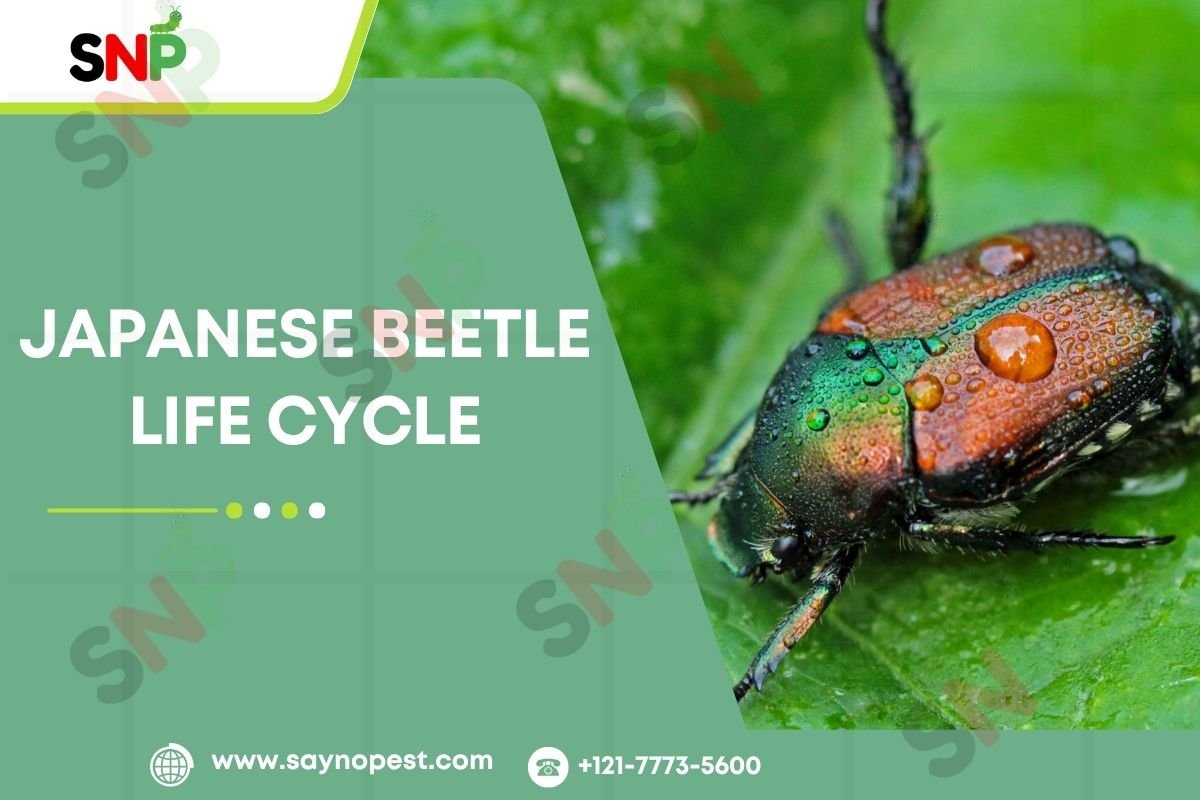
    The beetle known as a Japanese beetle is one of the most interesting life-cycle mealworms, yet at the same time, it is a very damaging process, and also, it is something that every American homeowner and gardener should be well informed about. Such metallic green and bronze beetles are taking nature by storm across the whole of the U.S.A. because of the feeding that is far beyond their simple need. To save you from an infestation of the pest, SayNoPest is on a mission to give you real and practical information about the Japanese beetle life cycle and teach you the methods of how to get rid of carpet beetle by using effective ways.

    Japanese Beetle Life Cycle: Four Key Stages

    Japanese-Beetle-Life-Cycle

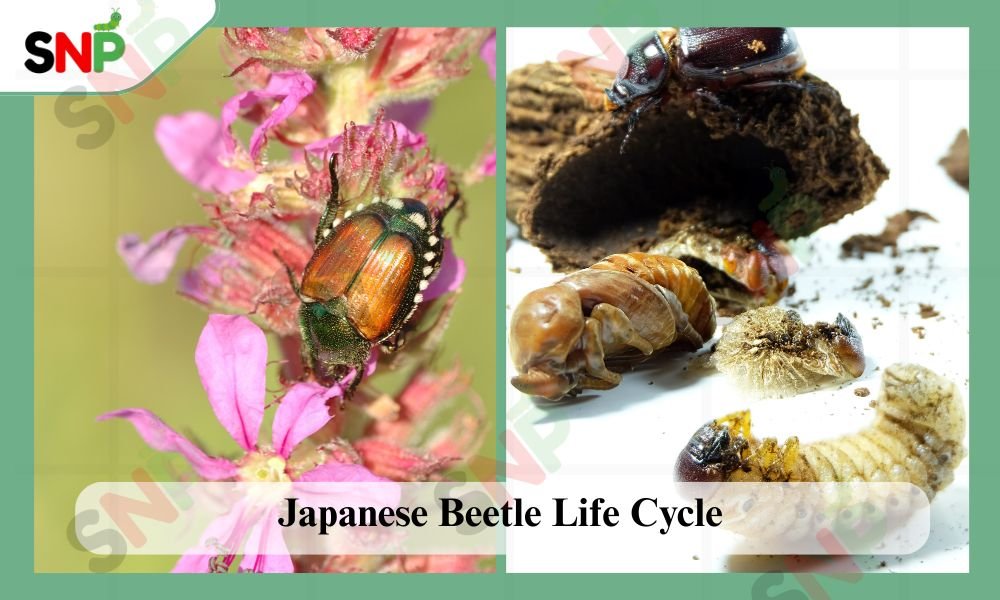
    Japanese Beetle life cycle has four important stages, those are: egg, larva, pupa, and adult. This cycling lifestyle that has been complet ensures their continuity and makes them a continuous nuisance.

    Egg Stage

    Since the female Japanese beetles lay their eggs after a feeding and post-mating session, they usually select a location in the soil 2 to 4 inches deep and moist with a high level of moisture in the soil to lay their eggs, then they fly back. A female may lay up to 60 eggs that have to deposited at various locations so that they are not hatch at the same spot. The eggs are small and oval-like and have a light yellow color with a smooth surface. The development period of the eggs is 14 days.

    Larval Stage (Grubs)

    The eggs have spawned, which are C-shaped, small, and white in color, with their heads of yellowish-brown color, thus neonates of Japanese beetle larvae. The larvae rapidly consume the grass roots that are located near the soil surface, and make brown, spongy loopholes in the lawns. By the time they develop, they have already gone through the process of molting three times (instars) and are approximately 1 inch long (figure below). In the season of fall, the larvae dig deep to survive the cold and come back to the surface to resume feeding in spring.

    Pupal Stage

    Following feeding in spring, the caterpillars go through the pupal stage during which they change inside the earth. This stage of non-feeding duration is approximately two weeks; after that, the adult beetles come out.

    Adult Stage

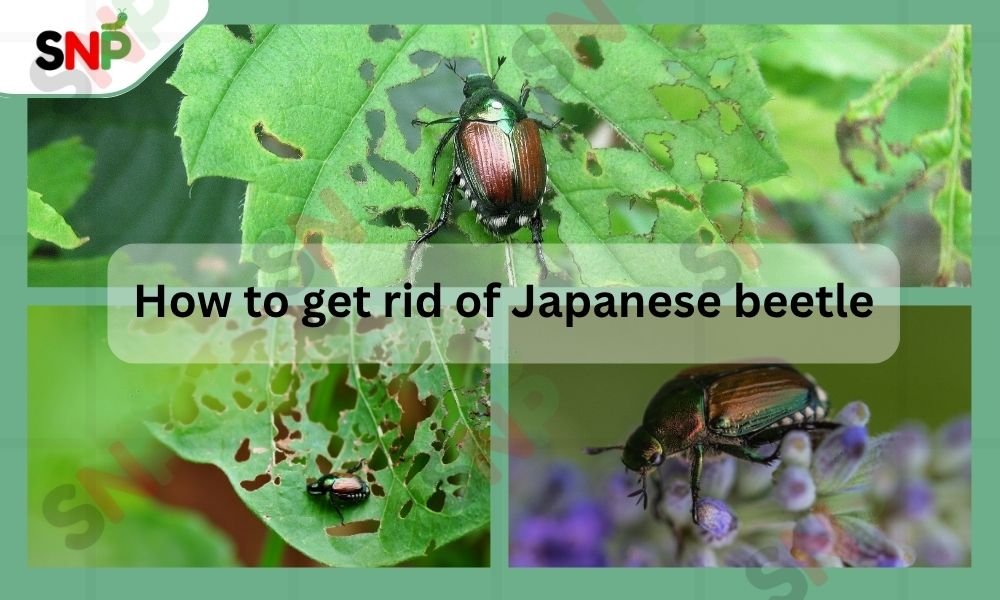
    Late spring to early summer, the adult Japanese beetle leaves the ground, and its life cycle is 30 to 45 days. These move about in parties and devour leaves, flowers, and fruit incessantly. The leaves, as a result of this feeding, end up with a skeleton appearance, and in case this persists, it must curbed since it can cause problems to the plants. Adults further release pheromones which amplify the attraction of more beetles, thus exponentially increasing infestations.

    Japanese Beetle Larvae: The Hidden Destroyers

    Japanese beetle larvae are the most damaging stage for lawns. These C-shaped grubs consume the roots of the grass, which results in brown patches where the animals, such as skunks and birds, become more active, as they dig for the grubs. The easiest way to watch this is after you have observed that the turf lifts easily or looks like it is dead in patches; it is therefore a very clear sign of a grub infestation in the lawn.

    Japanese Beetle Traps: Myths and Best Practices

    Homeowners greatly resort to using Japanese beetle traps to get rid of the adult beetles. The best traps use pheromones to attract the beetles that are already there, and not the ones that come from several miles away. However, it is of utmost importance where the traps will be placed—do not set the traps too close to the plants you like the most, because you might end up attracting the beetles there instead of the traps. Besides, when the traps are set properly, they pose less danger to the environment and do not result in the killing of non-targeted pest insects, but rather, only the target pest insects.

    Do Japanese Beetles Bite?

    The most common question that comes is Do Japanese beetles bite humans. The answer to this question is very comforting: Japanese beetles do not bite people. Their jaws are intend for plant material, not for skin. In case a situation like this arises, very rarely, if a beetle gets the impression that it is in danger, it might give a quick defensive pinch, which is very weak and sometimes it does not feel.

    how-to-get-rid-of-japanese-beetle

    Signs of Japanese Beetle Infestation and How to Get Rid of Japanese Beetle

    In order to control an infestation effectively, identifying it early is important. Observe for these signs:

    • Skeletonized, lacy leaves on plants and trees
    • Groups of adult beetles eating collectively, soft areas in lawns that can removed without effortMore frequent sightings of animals digging in your garden
    • Groups of adult beetles eating collectively
    • Brown, soft areas in lawns that can be removed without effort
    • More frequent sightings of animals digging in your garden

    How to get rid of japanese beetle include various methods:

    • Hand-picking and Soapy Water: Kill them by putting the rack in the container with soapy water.
    • Soapy Spray: Spray plants that need protection with a solution of mild dish soap (although it may be harmful to beneficial insects).
    • Companion Planting: Grow garlic, marigolds, or catnip that are the natural enemies of beetles.
    • Milky Spore Treatment: Fill the lawn with milky spore during late summer or fall for the grub stage of the beetle’s life cycle. This method reduces future populations by continuously killing the larvae.
    • Proper Trap Placement: Place your Japanese beetle traps in spots that are far away from the plants that you want to protect.

    Conclusion

    The Japanese beetle life cycle has been a never-ending and very destructive force for the American gardens and lawns that it attacks. Understanding each phase from eggs to Japanese beetle larvae to adults is the key to finding the signs of the problem at the early stage and taking proper steps accordingly. Using traps, natural repellents, or biological controls, all those methods how to get rid of japanese beetle are the most important for the security of your landscape.
    Get in touch with SayNoPest to keep yourself updated on the new pest control issues and the best solutions.