Blog

  • Crane Fly or Mosquito Hawks? Debunking the Biggest Confusion

    Crane Fly or Mosquito Hawks? Debunking the Biggest Confusion

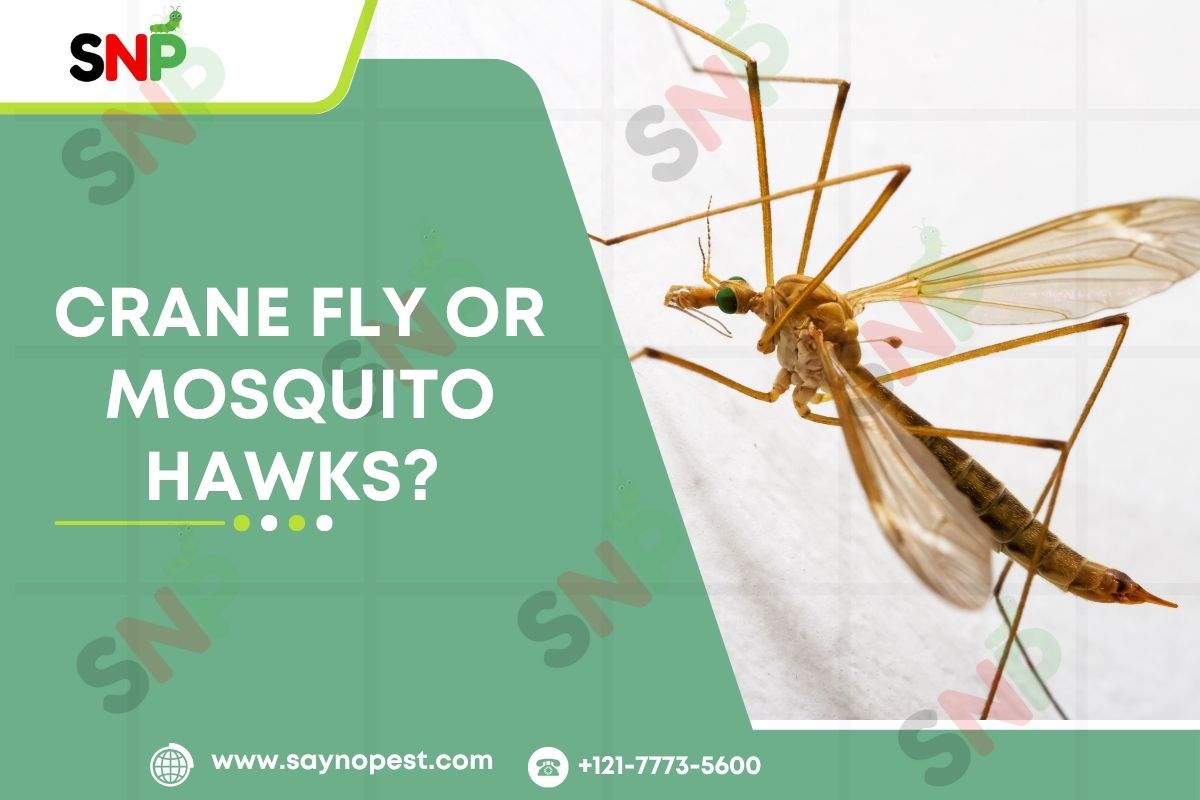
    The crane fly is a pest which people often confuse with a mosquito.  It has a slimy body type, long legs and looks like a funny mosquito in home. These flies and the mosquitoes are similar because of their external features. In fact, the crane flies do not bite or sting humans and they are very safe as compared to the mosquitoes. You can usually spot them in damp places like lawns, gardens, and near water all around places. Their fragile look, with legs that are very easy to detach, makes them a very common insect in the late summer and fall.

    Crane fly lifespan

    • The female flies lay eggs in the moist soil or sometimes in the water. These eggs take a week or two to hatch, releasing larvae called leatherjackets due to their hard skins.
    • The larval stage is the stage at which the crane fly lives the longest and most active. Depending on the species and the environment, the larvae survive a few weeks to a year. During this time, they are the largest consumers of organic matter, plant roots, and rotting vegetation.
    • Then the crane fly enters the pupal stage lasting approximately one to two weeks where the transformation of the larva to an adult occurs. The transformation period into the adult phase takes place during the pupa stage which lasts approximately one or two weeks.

    Adult Life of a Crane Fly- The life of an adult crane fly is very brief and typically varies from 1 to 15 days. Reproduction is the only mission of the adult part of the life cycle.

    Normally, adults don’t eat, and if they do, it is just a little nectar or water. Their mouthparts either donot develop or are non-functional which makes it difficult for them to eat. Therefore, the crane fly lifespan as an egg to an adult may take six weeks to several months.

    Do Crane Flies Eat Mosquitoes?

    Do-Crane-Flies-Eat-Mosquitoes

    The fact that crane flies are considered as great mosquito hunters is still a misunderstanding among the public. Hence, they are incorrectly called “mosquito hawks.” Nevertheless, this is far from accurate.

    The question do crane flies eat mosquitoes is an easy one to answer.  The reply is negative. No, and in addition to that, they do not bite and are not dangerous to people. The majority of the adult flies do not eat at all, and those which do are only like sipping nectar. While some aquatic larvae of certain crane fly species might occasionally eat small invertebrates, including mosquito larvae, this is rare and not their main diet. So, it is nonsense to trust crane flies for the purpose of mosquito controlling.

    What do crane flies eat?

    What-Do-Crane-Flies-Eat

    To better understand what do crane flies eat we need to discuss their larvae and adult stage.  The main consumers of food in the larval stage are the flies of the crane family. In general, they feed on a great variety of organic materials like rotten plant stuff, grass roots, seedlings, fungal, algae, and sometimes small animals. This activity not only breaks down organic substances but also contributes to the improvement of the soil and the cycling of nutrients. But, if the numbers of the flies are very high, they can do a lot of damage to the lawns and the plants in the fields because they will be eating the roots of the plants.

    As adults, their dietary habits become completely contrasted with their larval forms. Owing to their lifecycle being very short and their mouthparts being either completely absent or non-functional, the majority of crane flies do not feed at all. In cases when they feed, it is mostly nectar or water that they consume which barely gives them any energy for their short adult lives. The main goal of their adult phase is to reproduce, not to eat.

    Conclusion

    The crane fly is an insect that has a very important function in the ecosystem, particularly during its larval stage. Although it is a weirdly shaped pest often misidentified as a mosquito, but the crane fly is neither mosquito eater nor a threat to people.  This is because it doesnot bite.

    The larvae of the crane fly are also responsible for the nutrient cycle since they consume dead organic materials, although they may be the source of some small problems in lawns. The crane fly lifespan is limited and concentrated only on mating, as the adults hardly eat during the whole time. Knowing what do crane flies eat will make the situation with them clearer, the good ones who help nature get rid of the dead things instead of hunting the mosquito.

    So, the health-conscious homeowners who realise that crane flies may become their best friends by making the right choices in the matter of pest control and care.
  • Dragonfly Eggs: A Fascinating Look at Dragonfly’s Life

    Dragonfly Eggs: A Fascinating Look at Dragonfly’s Life

    Those who have spent time around waterbodies in the US may have caught up in the flight of the dragonflies, the crazy colors, and the shimmering of the sunlight reflecting off them. But have you ever thought of how these cute creatures get start? Our team at SayNoPest is commit to provide and discussing reliable and useful information about the good and bad in the insect world. Today, our venture extends to the digging of dragonfly eggs, finding out their shape, the place of laying, and the process of their becoming the amazing baby dragonfly.

    What does Dragonfly Eggs Look Like

    The most frequently asked question from people is: What is the picture of the eggs of a dragonfly? The reply to this is a very simple one, but also quite intriguing. Generally, dragonfly eggs are small, round, and their length is around 0.5 mm. The color may be different from place to place in a species. The difference is due to the elongated eggs of some species, especially during insertion into plant material, while the majority of the dragonfly eggs are more or less spherical or ellipsoidal. The jelly-like substances that usually cover these eggs are also a very big reason why they are shield by the predators in most cases, and also by the environmental changes. The dragonflies have whitish or transparent eggs that may be darker as they increase their development.

    What is also important is that the eggs are so tiny and camouflag that it is rarely that they are rarely notice by people who are not on the lookout for them. Therefore, if you intend to find some dragonfly eggs, then you better focus on the edges of the water or areas where the water plants are most dense, because these are the places where the dragonfly eggs are usually found.

    Dragonfly-Eggs

    Where Do Dragonflies Lay Their Eggs?

    Dragonflies are completely aquatic, and so is the case with egg laying. The female dragonflies fly, whose typical size is a few batches, distribute a couple of hundred of their eggs within a few days or weeks. Where do the dragonflies lay eggs?

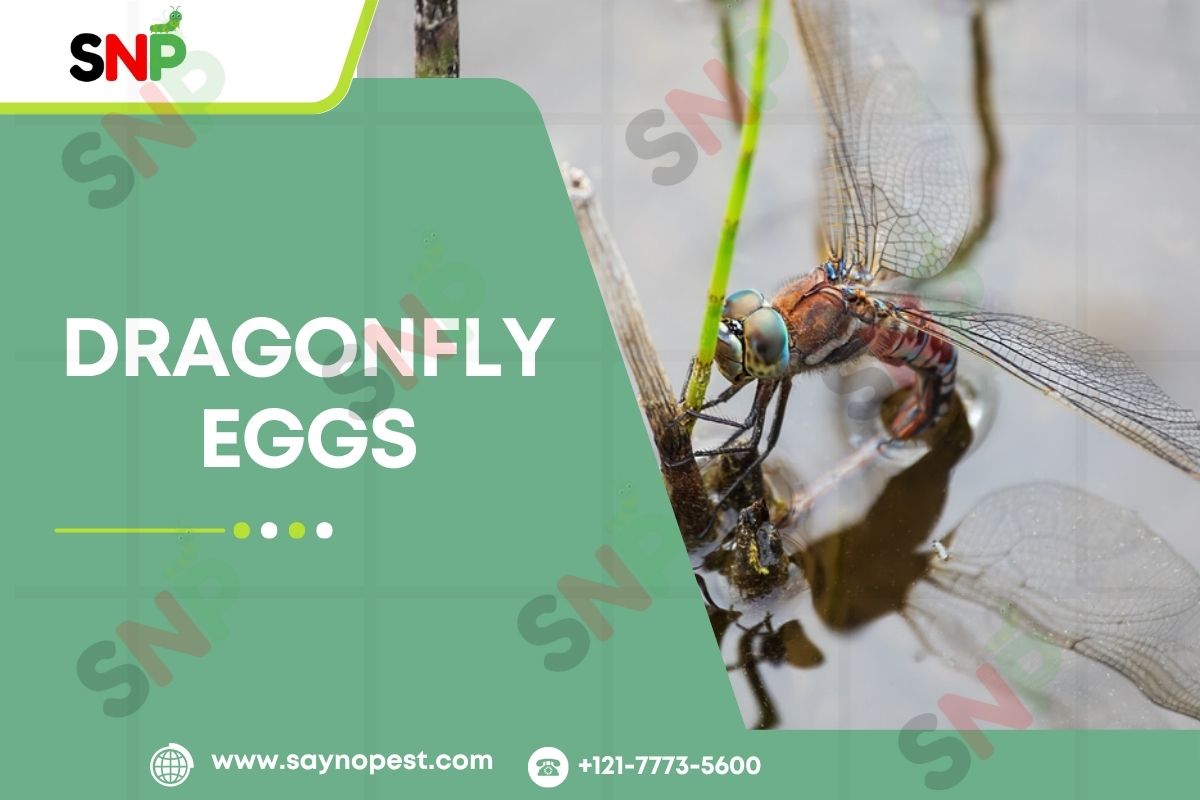
    • Directly in Water: This way of laying eggs is follow by the majority of species, and it involves dipping the abdomen in and out of the water and in which eggs are deposit. These eggs are deposit at the low depths, usually in stagnant or slow flowing waters such as ponds, marshes or lakes.
    • On or Inside Aquatic Plants: This is a very common behavior of the dragonflies; the insects use the ovipositor to prick the water plants and in doing this way they successfully lay the eggs on the surface of the water plants.This strategy helps protect the developing eggs from aquatic predators.
    • On Damp Ground: Rare instances may arise when moistened soils or mud near the water are locations of egg deposition if water plants are not available.

    The location itself, among many other things, will decide if the eggs of the dragonfly will survive. Water temperature, the type and the amount of vegetation, and the absence of strong currents are some factors that contribute to the eggs being able to hatch into the next life stage.

    Baby Dragonfly: From Egg to Aquatic Predator

    So it took one to five weeks, and the magic was done – the dragonfly eggs hatch, and the first stage of the baby dragonfly appeared. This phase is the larva or the nymph, but for all practical purposes, let’s call it the baby dragonfly.

    A baby dragonfly is a different species from the adult one that is saw flying over the water. The body has wide and dirty hair. The animal is a water body that has six legs, large eyes, and a mouth shape like a scoop, which is particularly made to ambush prey. The baby dragonfly, as opposed to the damselfly larva, which still has the external gills, the animal gathers its oxygen intake in its internal gills found in the abdomen. This adaptation enables the insect to move very quickly through water, expelling the water out of its tail-end-which is termed as underwater jet propulsion.

    baby-Dragonfly

    The young dragonfly is spending nearly all his brief life in the water, and is feeding on minute water animals, among which are mosquito larvae, tadpoles, and even fry. As it gets bigger, it creates new skin over the old one several times, sometimes even 14 times, before it can change into an adult. Therefore, according to the species, the period that this phase could last will result in being from several months to many years.

    When the baby dragonfly has reached full growth and is at an ideal place, it leaves the water by climbing onto land, it takes off its larval skin for the last time, and becomes the familiar figure of a beautiful adult dragonfly that can fly and continue the repetition of the cycle.

    Conclusion

    The expedition of dragonfly eggs from minuscule, almost invisible globes to powerful aquatic carnivores and then to magnificent aerial hunters is a story of the marvels of nature. Finding out what dragonfly eggs look like, understanding where do dragonflies lay their eggs, and having a look at the changing of the baby dragonfly can lead you to a deeper appreciation of the good insects.

    At saynopest, we are of the opinion that conveying correct, interesting information about the insect life of all the stages—dragonfly eggs that are generally unnoticeable—helps to develop a balanced view of pest control and environmental stewardship. Next time you spot a dragonfly skimming the surface of a pond, remember the incredible journey that began with a single, tiny egg.

  • Is American Dog Tick Dangerous?

    Is American Dog Tick Dangerous?

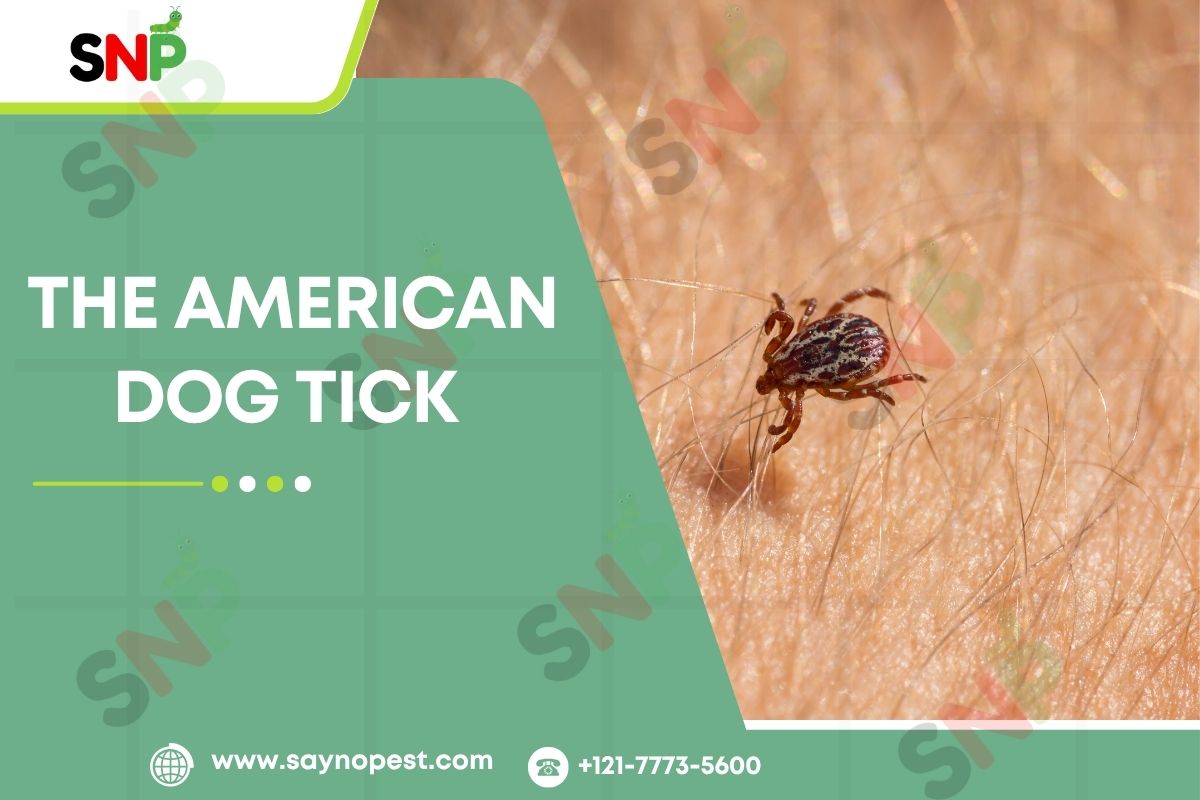
    The American dog tick is arguably the most abundant tick species found all over the United States. Most of the time, in grassy fields, forest ends, and areas with little trees.. This tick is mainly active from early spring to early summer.

    Adult ticks only prefer medium to large mammals for their food, and these are animals like dogs, raccoons, and humans. While the younger stages are still looking for smaller animals such as mice and chipmunks. It is extremely important to have full knowledge of the American dog ticks because they are very common and they come in contact with pets and people a lot.

    List of 5 Diseases Caused by American Dog Tick

    5-Diseases-Caused-by-American-Dog-Tick

    This tick are carrier of several highly contagious diseases that they can transmit to both people and animals.

    The following are the most common diseases you get from the dog tick infestation:

    1. Rocky Mountain Spotted Fever: This disease includes fever, headache, muscle ache, and a common rash. Without treatment, it may cause very severe conditions like organ failure and even death.
    2. Tularemia: This bacterial infection may pass along symptoms to a person in the form of fever, swollen lymph glands, and ulcers on the skin at the point of the bite. Cases of severe illness may include pneumonia and other problems.
    3. Tick Paralysis: Infinitely rare but very dangerous, tick paralysis happens as a result of a poison that comes from the tick’s saliva. It can cause the muscles to weaken so much that, in the worst scenarios, if no one understands in time, it can lead to breathing failure.
    4. Canine Babesiosis: The disease that is generally related to dogs. In this disease, anemia, pale gums, weakness, and vomiting will be seen in the animal. The carrier is usually the american dog tick which if not treated can turn into a life-threatening condition.
    5. Canine Ehrlichiosis: Although brown dog tick is the main carrier for this disease, the american dog tick can also be the transmitter of it.

    Are American Dog Ticks Dangerous to Dogs?

    Definitely, the American dog tick is a primary source of danger for dogs. These ticks along with blood, cause several harmful diseases, which are the main causes of blood disorders in pets.

    Though it inherently spreads diseases, an American dog tick bite can also bring about a reaction in the body such as irritation, redness, and swelling.

    Protect Your Dog from Tick Bites

    Protect-Your-Dog-from-Tick-Bites

    These are a very safe and the most effective ways to keep your pets safe.

    • Implement vet-approved tick prevention measures.
    • Mow your lawn regularly and carefully keep a check.
    • Avoid walking your dog in areas that are infested with ticks during months of high activity.
    • Also, performing tick inspections and removing them immediately are the most important steps in protecting your dog from the American dog tick harm.

    Conclusion

    The American dog tick is the most widespread pest in the United States, which is a danger to one’s health not only for people, but also for pets. For the owners of dogs, the danger of these ticks is real since this can lead to very dangerous diseases and the dog’s suffering. Being alert, carrying out protection actions, and constantly checking ticks are the most efficient ways to protect yourself from the danger of these harmful ticks.

  • Mud Dauber Nest: Guide to Identification, Removal

    Mud Dauber Nest: Guide to Identification, Removal

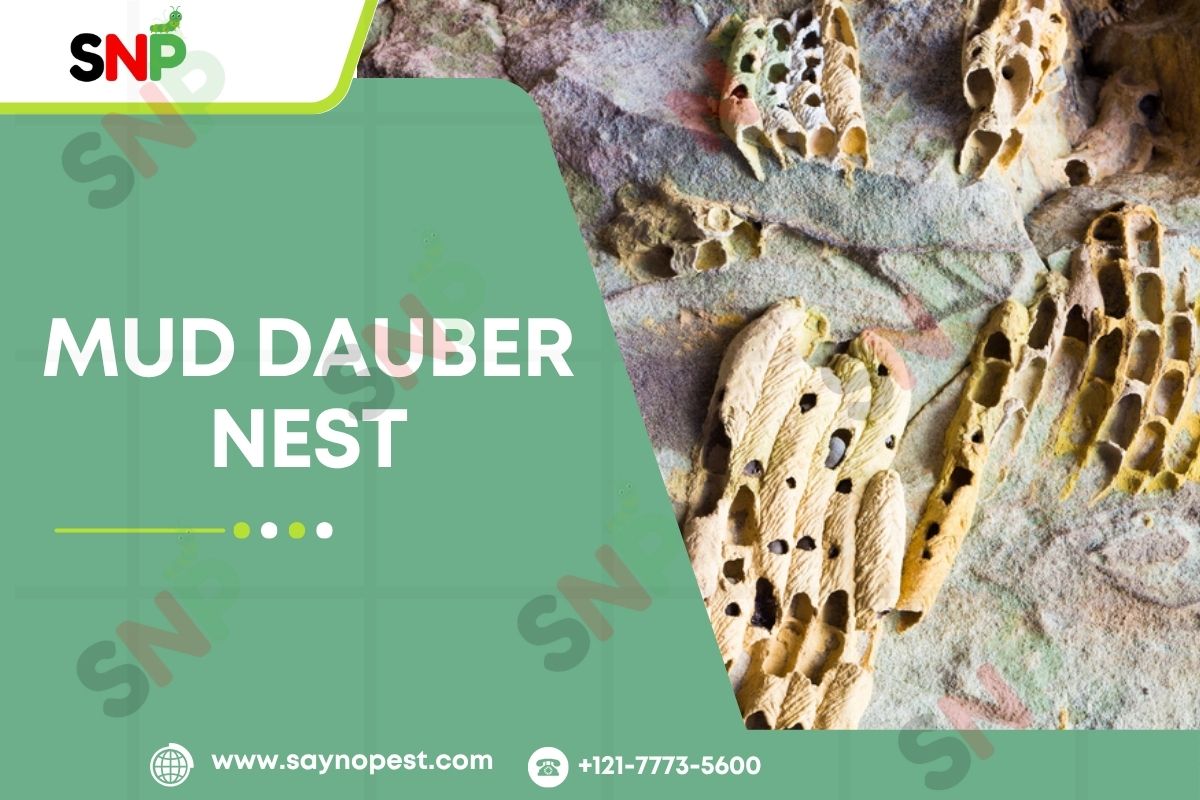
    Mud dauber nest are the first of the most recognizable wasp houses one will come across in the vicinity of American homes. These intriguing but sometimes worrisome creations are construct by solitary wasps call as mud wasps or mud daubers. To be really effective in managing them and still be safe, it is necessary for homeowners to know such insects and their nests.

    Although they are not aggressive, social wasps, mud dauber wasps are typically peaceful and will very rarely have to sting humans. But at the same time, their peculiar mud wasp nests may become the last thing you want on your property and cause you to worry about your family. Here is the cheat sheet to guide you through the process of identifying, understanding, and handling these fascinating creatures in a safe manner.

    How To Recognize A Mud Dauber Nest?

    Mud-Dauber-wasp-nest

    The nests of mud daubers are so characteristic that it is hard not to notice them once you get to know the signs. These habitats are solely compose of mud and clay, which makes the nests become unique among other wasp nests. The shape may differ from one species to another, but they all have the same features.

    Perhaps the most widespread species that one can meet is the organ pipe mud dauber for that nest looks like parallel tubes aligned side by side, just like the pipes of a church organ. These cylindrical structures can be up to 8 inches long and are usually a shade of brown, tan, or gray, depending on the local soil they are using.

    Black and yellow mud dauber nests have the form of a simple mass of material like a cylinder that is glue to a surface. Usually, these mud wasp nests consist of one to three cells, which are the core of the nest, and they are cover only with the dried mud. If run your hand over the surface, you will feel that it is hard and crunchy when dry, with a pattern of cracks that resemble the outlines of the mud dauber nest.

    The building material has a story – the local women mud wasps gather mud from puddles and unhealthy places and because of the high number of visits to different locations, the nests of these wasps become different color in strips or parts thus a natural striped pattern that is just like the different soil sources used in the nest construction is shown.

    Prime Spots Where Mud Dauber Wasps Build Their Nests

    Weather

    The mud wasps habitats are normally located somewhere that is weather and animal free. The area tends to insulate to some great extent by the natural elements and also predators tend to disruptions of such sites. These places can, thus, be trace by examining the locations which are most conducive to the mud wasp nest.

    Under and Outdoor Covered Areas

    The mud dauber nests can most easily be found in places that are under the eaves of the house, under the porch ceilings, and in covered outdoor living places. These places are the ideal shelters against rain and bright sunlight but, at the same time, accessible to the female mud wasp during the period of construction and provisioning at the same time. These spots are frequently an ideal trinity of acting dry in rain, cool in the direct sunlight as well as readily accessible in the building as well as stocking of the nest by the female mud wasp.

    Inside Garages, Sheds, and Attics

    The mud dauber wasps prefer circles to establish the nest in garages, sheds and attics. These enclosed spaces are considered a safe resting place all year round and tend to be very quiet so that the development of the brood is also not hindered. Mud wasp nests located in these places can last for a long time, thus, attracting other bugs to come and reuse the empty structures.

    On Rough Exterior Walls

    The exterior walls, especially those that have textured surfaces, such as stucco and brick are excellent areas where the mud dauber builds nests. The raw surfaces create better adhesion to the mud thereby stabilizing the grounds of such architectural marvels. Protected corners and crevices are especially attractive to mud wasps seeking ideal nesting conditions.

    Man-Made Structures

    Bridge underpasses, covered patios, and similar man-made structures are often the places that the mud daubers use to make their nests. Such spots not only allow the female mud wasps to be higher up but also shield them from the elements thus, enabling them to use their instinct of selecting a perfect place for the nest

    How to Get Rid of Mud Dauber Wasp Nests Safely

    mud wasp nest

    Understanding how to get rid of mud bauber wasp nest is very important as this will help you to easily removal of them.

    Timing

    The best time to remove a mud dauber nest is in the night because then the female mud wasp is probably not there. Besides, social wasps usually are aggressive and attack in groups, whereas mud daubers only go singly or in pairs, hence a much safer removal for homeowners.

    Technique

    If you go for a physical removal, a paint scraper or putty knife is a good choice because you can gently and carefully get the nest off without damaging the surface. Nests of mud wasps that are old can removed more easily if they are wetted before. Cleaning the place with soap and warm water after scrapping will make sure there is no residue that can become a source of odor which may attract future nests.

    Washing

    Besides that, pressure washing is another method that may applied to clean off the mud dauber nests from the outside of the house. This method is suitable in case there are multiple nests or you find it hard to reach up high. The water stream at high pressure not only physically rips the dried mud apart but also helps the surface get cleaned at the same time.

    Repellents

    Before starting, get rid of the active mud wasps by using a knockdown insecticide spray, if you consider it necessary. Pyrethrin-based products give an instant kill by contact. Thus, you can start with physical nest removal after you are sure no wasps are there. Besides, always read the directions and safety recommendations when chemical agents used.

    Pest Control Expert

    The best way of destroying a mud wasp nest is by professional pest control services especially when it is in a hard to reach place or when there are several nests to be destroy. The professionals have the equipment, the know-how, and the skill to perform the removal task in a fast way as well as to avoid a re-infestation.

    Conclusion

    Learning about the nature of mud dauber nests and their territorial owners, the interesting mud wasp is able to help a homeowner to make the proper decision on how to handle management and removal of a nest. The insects are special but in some cases they become bothersome, by helping to control spiders as inherent natural pest control.

    Even though the nests mud wasps create may seem alarming to first time sight, having some awareness of the harmless nature of mud wasps and the useful behavior they perform will help them go into the right perspective. Should removal necessary there are safe and effective ways to deal with mud dauber activity that are described in this guide without putting undo risk to humans nor these useful insects.

    Do not forget that mud dauber wasps are usually peaceful insects, who just do not want to involved in human relations. Their rare mud wasp nests are spectacular animal architecture and creativity. As much as we may decide to eliminate them or leave them to stay, knowing how these creatures are can help us develop a closer bond with the nature around our dwellings making the relationship with the environment more harmonious.

    To get rid of mud dauber nest or benefit of full pest control services, turn to the professionals so that a licensed expert can remove the nest safely and efficiently and manage them as per your requirement and respective conditions.

  • How Long Do Ticks Live: Ticks Uncovered!

    How Long Do Ticks Live: Ticks Uncovered!

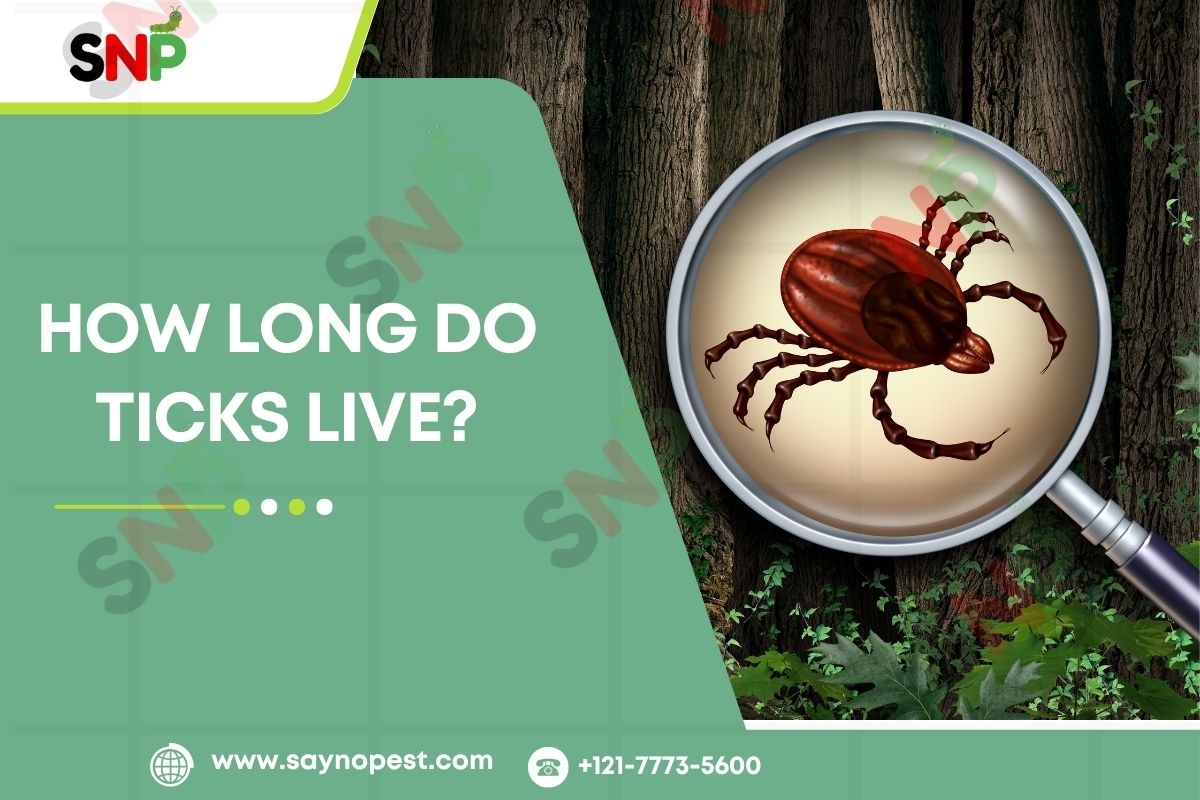
    Want to know how long do ticks live? These tough individuals are able to live for a long time without a host. Moreover, it has been found that some tick species can survive for as long as three years. They undergo a four-stage process during the lifecycle. The lifespan is directly related to the species, climatic conditions, and the number of hosts available.

    Ticks are more comfortable in places where the moisture is high. Thus, if you want to have a safe place without ticks, you have to take care of your yards and houses throughout the season.

    How long do ticks live?

    Life span of ticks mainly depends on their species and the stage they have reached. For example, the American dog tick usually lives about two years and blacklegged ticks can survive for up to three years.

    Throughout their whole life, ticks go through the four main stages of their development: egg, larva, nymph, and adult. The feeding of blood is necessary for every stage besides the egg to continue to the next one.

    In spring, adult female ticks deposit thousands of eggs and it takes up to 60 days for the eggs to hatch. The lifespan of a tick without food changes during the stage of its life. Larvae are capable of living without food for a period of 3 to 5 months and for some species the period can be as long as three years in order to reach complete maturity. Tick larvae, usually called seed ticks, are able to survive without a host for a number of months, and some species were reported to last as long as eight months.

    It is difficult to tell the exact period of life for a tick because the timespan may vary from a few months to more than a year without a meal. If nymphs do not get any food during the first season, some of them are able to last without a blood meal not only through the first but also the second season. Adult ticks possess the best survivability. American dog ticks are the most durable in that they can go without food for two to three years, and cases with the longest survival of 1,053 days have been reported.

    Environmental factors that Affect How Long Do Ticks Live

    Temperature and humidity- These are the main factors that determine the life span of a tick. Ticks rely on humidity of about 85% or higher for their best survival. Try to keep the surroundings warm and dry as it makes them lose water rapidly hence their life span is shortened. Cooler temperatures make ticks decrease their metabolism as well.

    The blacklegged tick life cycle generally takes two years during which the eggs and larvae grow in one year and the nymphs and adults the next year.

    Seasons that Affect Tick Lifespan

    In the winter period, ticks become inactive or enter a state of hibernation which means that they can survive without feeding for a longer time. Therefore, tick populations are able to survive throughout the changing unfavorable seasons.

    Different tick species have different survival characteristics. Unfed American dog tick larvae can reside for a period equalling 15 months, nymphs for 20 months, and adults for 30 months without food. It is also important to understand that the duration for which ticks can exist without a host is species dependent and ranges from as little as 24 hours for ones that require immediate feeding to as long as two years for the most resilient ones, such as the American dog tick.

    How to get rid of ticks

    I am giving you 4 most effective solutions:

    1. Trim your landscape. This may be quite effective since it can also clear the hiding places of the animals. Trim shrubs and trees to enable more sunlight to enter your yard thereby lowering the level of humidity. This might decrease the survival of ticks. The main factor of how to get rid of ticks is that ticks will not have the preferred places if you do consistent yard maintenance.
    2. Make use of barriers- Set up three-foot wide barriers to stop tick migration.
    3. Eliminate bird feeders or keep them clean to prevent rodents that carry ticks. Do not let animals from street enter your yard or your home.
    4. Apply DEET-based repellents on skin. Do tick checks within two hours of being outdoors, paying attention to armpits, hair, etc. The process of removing ticks off your body is by detecting them early and removing them with fine-tipped tweezers.
    how-to-get-rid-of-ticks

    Conclusion

    In order to be successful, one should implement different strategies regularly rather than concentrate on a single solution. Preventive measures will protect you and your pets against these dangerous parasites that continue to threaten the health of the population in the United States.

  • Flying Spiders: Fact vs. Fiction for American Homeowners

    Flying Spiders: Fact vs. Fiction for American Homeowners

    If you have heard the stories about the flying spiders that are going to take over the United States, you certainly are not the only one. The notion of spiders flying in the sky is scary, especially to people who are worried about pests in their houses. But what is actually behind these stories? At Saynopest, we focus on delivering genuine and interesting messages about pest control in America. We can discuss the issue of flying spiders and answer the question, “can spiders fly?” Then, we can go through the phenomenon of the joro spider flying, and finally, we can unwrap the mystery of the flying spiders with wings.

    What Are Flying Spiders?

    flying-spiders

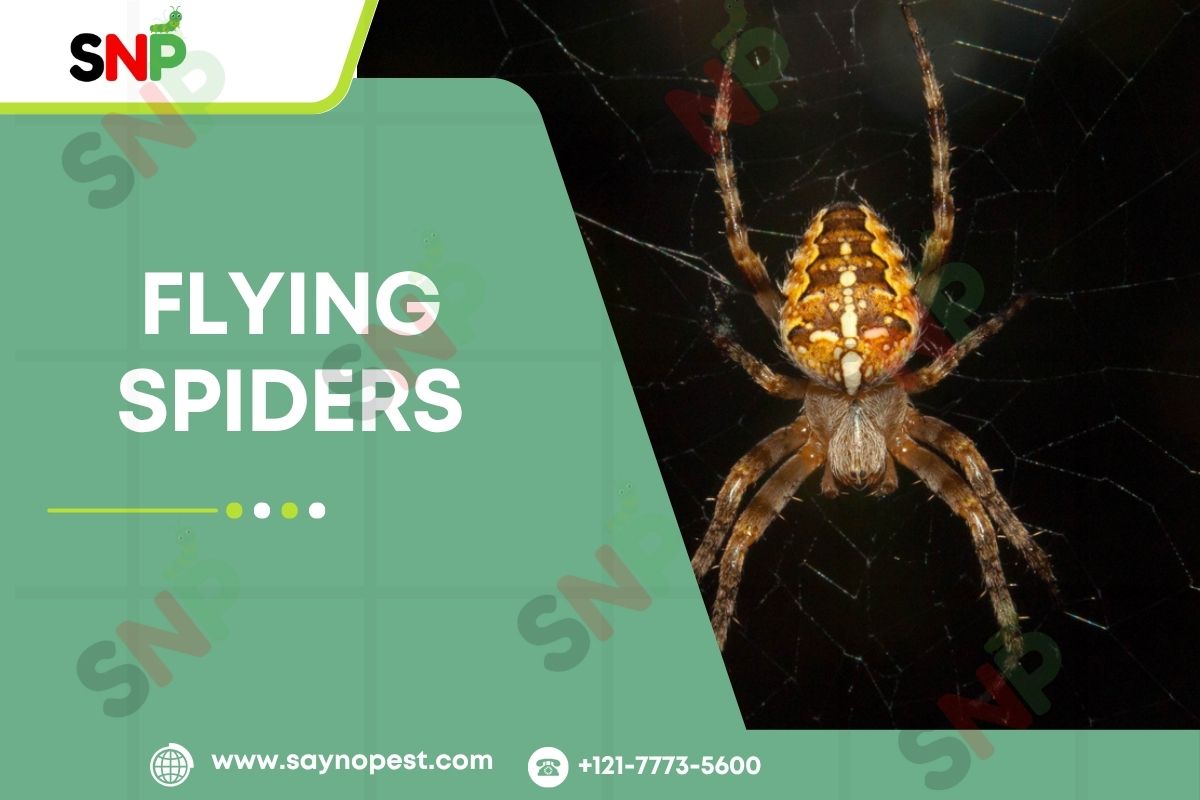
    Spiders that are called flying ones may exciting to some people as those with wings fans. They came to mind that they saw such creatures flying through their backyard, but the truth is far from that. Of course, we do not meet any spiders with wings, and also the spider family is not the one that can fly the way birds or insects can. That is why the name of Flying Spiders actually denotes a highly interesting activity of spiders known as ballooning. The spiders, namely, little spiderlings, are sending very thin silk filaments into the sky, which catch the wind and thus are transport far distances. This is, of course, a very ingenious nature’s mechanism that allows spiders to find themselves in new areas, hide from foes, or just have a bite to eat.

    Such a phenomenon as ballooning has proven by many experiments where spiders have appeared both far across the oceans and high in the sky. Hence, the term “flying spiders” is a good example of such travel of their sojourn through the air but it does not signify that they are the creatures with wings or that they furiously beach through the skies.

    Can Spiders Fly?

    We are better off to tackle the matter of “Can spiders fly?” question openly, and the answer will both affirmative and negative, depending on what exactly is meant by flying. Spiders do not have wings and therefore, they are not able to fly by themselves. The only way, however, through which they can become airborne and thus cover considerable distances is the phenomenon of ballooning. They do this by gaining some height, bending their abdomens upwards, and giving out silk that serves as a kind of parachute or a sail. Besides, the Earth’s energy field can also give a boost to spiders, and they can even feel the right moment for flight.

    Even though – can spiders fly – is quite a fascinating question to answered, the truth is that spiders take advantage of a very smart combination of silk together with the targeted forces of the environment to mimic a “flight” without wings.

    Joro Spider Flying

    The most widely discussed example of the U.S. news featuring flying spiders is the joro spider flying phenomenon. The Joro spider is indigenous to East Asia but has started its invasion in areas of the eastern states like Georgia, South Carolina, and Pennsylvania, just recently. These spiders with their brilliant yellow striped and black bodies are also known to really big and their legs extend quite well towards 10 to a size of centimeters, because they are left with no choice but to travel around using ballooning.

    Joro-Spider-Flying

    Considering that you are discussing something like a joro spider being able to fly, you are not discussing how the spiders are making use of what they have developed (the silk thread) to make them adhere to the wind and move to another destination, but that they are flying, using their wings. In spite of their frightening appearance and venomous bites, the Joro spiders belong to those bugs that do not present a threat to human beings and domestic animals. Rather than so, they are highly delicate and quiet and do not want to see people; the insects, mosquitoes, and stink bugs are the chief source of their food.

    Flying Spiders With Wings

    The idea of flying spiders with wings is nothing but a myth. No spider species has ever grown wings, and there are no scientific documents of spiders with this attribute. This confusion is most likely to attributed to the practice of ballooning that might deceive the eye into believing that the spiders might be floating in mid-air or flying in the air. The truth of the matter is that social media and viral postings can be exaggerat but fear not: there are no flying spiders with wings in the natural world.

    When you see a spider zooming along on the air, he is not a flyer with wings (Air), but again it is a matter of air currents that are utilizing silk as an improvised glider. This is an efficient mode for migration but it does not allow the spiders to manipulate or regulate their flight as birds or insects do.

    Conclusion

    In conclusion, there is such a thing as flying spiders, although not as experienced by some people, who see spiders in their imagination. The spiders do not fly, and they do not have wings. Rather, spiders such as the Joro ones get to travel via ballooning as their air transport, and more often than not, they end up travelling very far. Are spiders able to fly? and the answer to this question is that they can only fly when they exploit the use of wind fields and electric fields with their silk. No such creatures like flying spiders exist with wings, and what you might hear in the search of such information online is usually not at all close to the truth or even lies.

    For people who live in the US, getting the right picture of flying spiders can definitely be the key to understanding these creatures without fear and focusing on good pest control practices. If you are afraid of spiders or other animals in your house, you can always rely on the saynopest team to give you good advice on the topic and to be with you in the fight. The more you know, the safer you are, and we will be glad to join you in keeping the pests away from your home.

  • Cluster Flies In House? Know What to Do!

    Cluster Flies In House? Know What to Do!

    Cluster Flies in house are not dangerous to your health, but their presence can be irritating for some. A little more information on cluster flies in house will help you to do a good job in getting rid of them and making your house clean and comfortable.

    What are cluster flies and how to distinguish them?

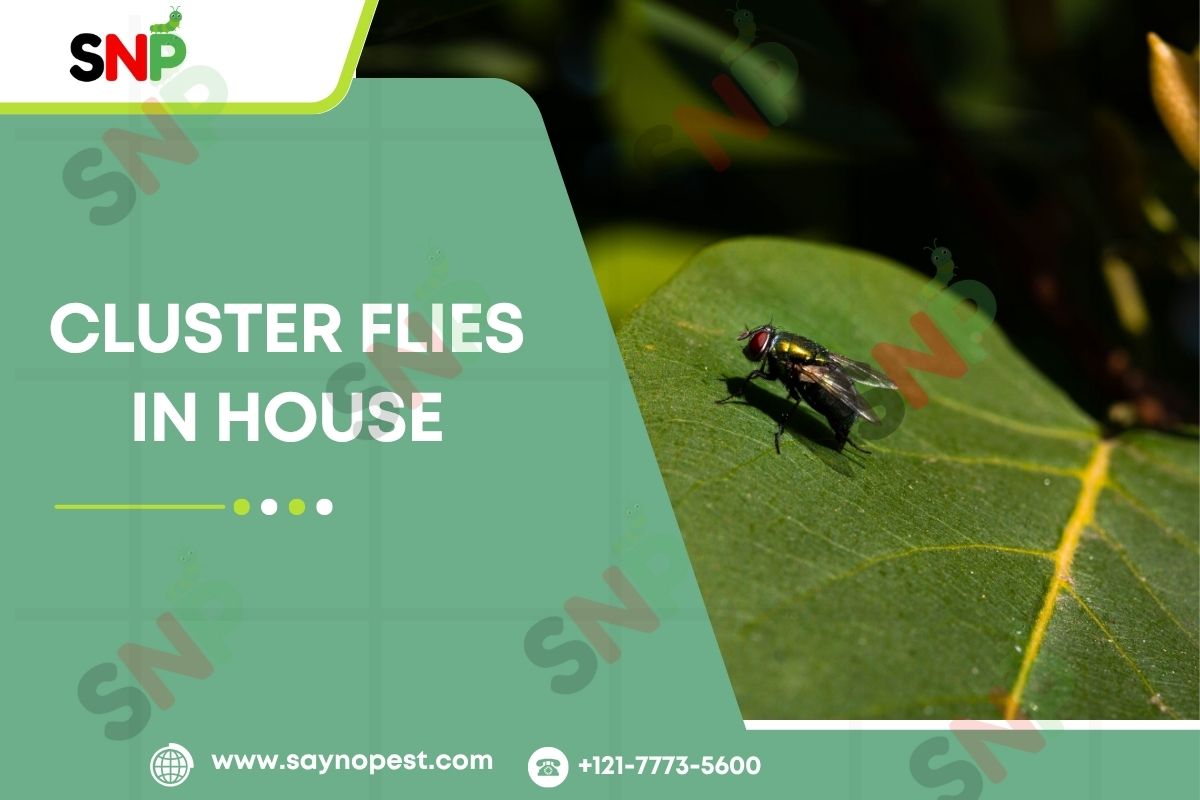
    Cluster flies, or attic flies, or grass flies, are of the genus Pollenia. They are a little bigger than the house flies, measuring 8-10 millimeters. They are the dark gray color with the golden-yellow hairs on the thorax and a chessboard-like pattern on the abdomen. Their wings are parallel to each other when they are resting unlike the house flies whose wings are spread.

    As compared to the normal house flies cluster flies in house don’t reproduce indoors. On the other hand, the larval period of these flies takes place in the outdoors.

    These flies decide to come inside homes during the late summer and fall. They prefer places such as rooms, attics, wall voids, etc. where they tend to invade in large numbers. This is why they are called Cluster Flies.

    What-Do-Cluster-Flies-Eat

    What Do Cluster Flies Eat?

    The diet of cluster flies in a house is completely different from other flies. As larvae, they feed on earthworms. Adult cluster flies, on the other hand, have no appetite for garbage, decayed matter or human food, as house flies do. They only eat nectar and other plant-based liquids when they are outside.

    What Are the Risks/Diseases Caused by Cluster Fly?

    Cluster Flies are not a threat to the health of your family or the pets. However, these flies do not carry diseases that they can transfer either to humans or animals. They do not pollute the food and they do not bite or sting.  Although these flies are non-venomous, but their numbers could make them a nuisance to people.

    Methods to Get Rid of Cluster Fly

    Methods-to-Get-Rid-of-Cluster-Fly

    The cluster flies can be managed through prevention and elimination of the pests:

    • Seal cracks and gaps: Inspect the exterior of your house and seal any cracks or gaps with an appropriate material.Screen windows and vents: Properly screen windows, doors, and attic vents, leaving no gaps or holes and flies cannot enter.
    • Insulate attics: The reduction of hiding spots for cluster flies can be achieved by using proper insulation and sealing of attic spaces.
    • Clean up properly: Get rid of food and drink spills, stagnant water, open rubbish bins, and pet waste helps to eliminate the sources of attraction.
    • Use a vacuum cleaner: Vacuum is the ideal way of getting rid of flies because it removes them directly from the place where the fly is hiding without disturbing them.
    • If you have a certain area in your room where the flies love to go, put a trap over that spot. This way you will attract and capture all the flies there.
    • Long-lasting insecticide: Use a long-lasting insecticide on exterior cracks in your home. Never ignore the label instructions.
    • Professional pest control: If the infestation is chronic or very severe, call a licensed pest control service to receive special treatment. They will also help you in long-term prevention.

    Conclusion

    Cluster flies are a problem, mainly in rural and sub-urban regions. They do not transmit disease but there nature of invading in large groups can be an issue. You can prevent them in your home by knowing their habits and how to prevent and eliminate them. When you are overwhelmed with cluster flies in house, consider professional pest control services.

  • All About Flying Ants in the United States

    All About Flying Ants in the United States

    Have you ever seen a crowd of flying ants in your house or office? We understand how unfortunate and disturbing this can be! These tiny-flying invaders are a unique and fascinating part of the ant world.

    In this blog, we’ll explore everything you need to know about these ants and the strategies for how to get rid of flying ants and why do they appear out of nowhere.

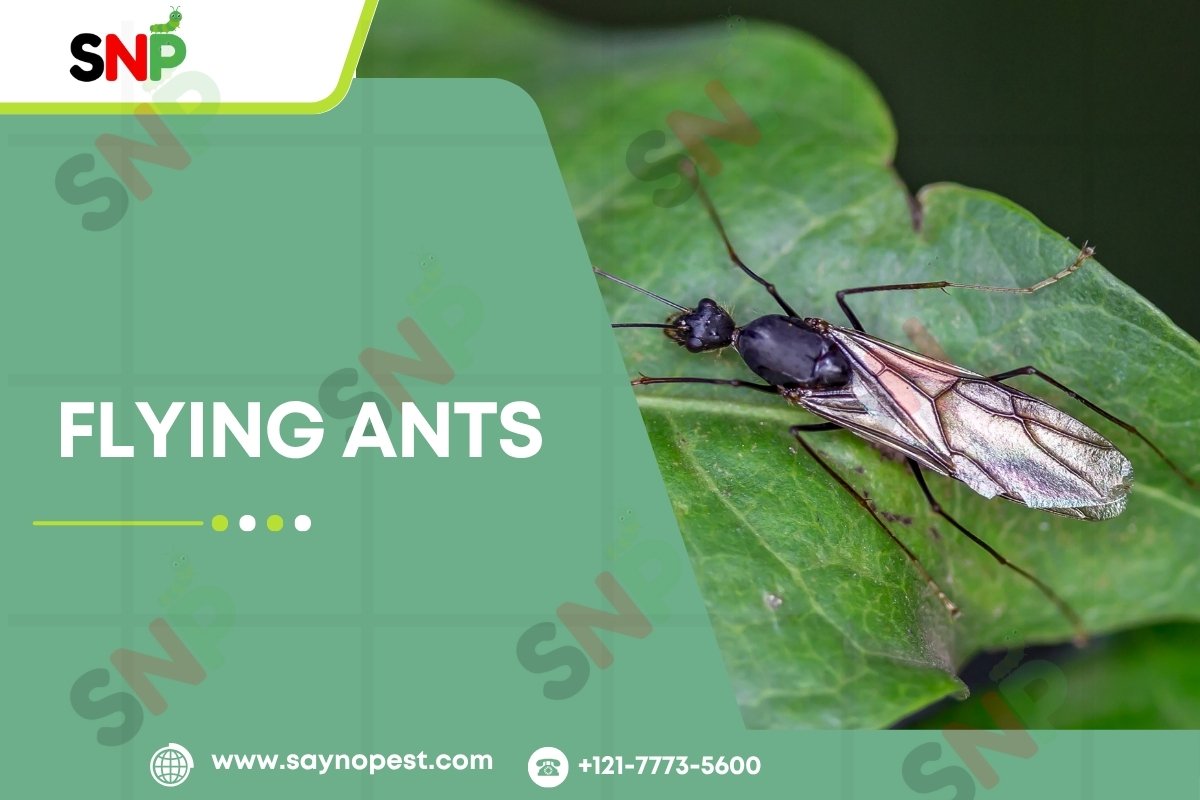
    Alates are also called flying ants. They are the male ants and future queens that leave the colony to start new ones. You can figure them about easily from regular ants because they have two pairs of wings, the front wings are longer than the back ones. People also mistaken them with termites but these ants also look different from termites. While termites have thick, straight bodies, alates have thin bodies with a narrow waist, kind of like an hourglass shape.

    Most of these ants are black or brown in color, though some species, like fire ants, may have a red-brown tone. 

    Size: Queens are the largest and measure 15mm, males and workers are smaller and measure 2-8mm.

    Do Flying Ants Bite?

    Flying ants are an aggressive species of ants and they do not normally bite or sting human beings.But here is a twist! There are black ants that are harmless and there’s red ants also known as fire ants that can bite or sting. They are ants that may make you feel uncomfortable or develop allergies in case you have a sensitive skin.

    But the positive side is, flying ants are more interested in mating than biting people, so the bites are not common!

    The ants have their big moment during a nuptial flight (ant mating party). This is when lots of them swarm out of their nests at the same time. It happens after rain when the weather is warm and humid. Ants search for a mate by flying into the air during the nuptial flight. The fertilized female ants land and start creating new colonies after the male ants die after mating.

    In terms of diet, flying ants are omnivorous. They are attracted to sugar, sweet foods, sweet food crumbs, and they feed on nectar, honey, and small insects. Sometimes they also feed on dead insects for protein needs.

    HOW DO YOU AVOID FLYING ANT IN YOUR HOME?

    Dealing with flying ants in house can be a task, but there are many effective ways for how to get rid of flying ants

    1. Use a Vacuum Cleaner: Quickly remove all the ants in house with a vacuum cleaner.
    2. Soap and Water Spray: Make an anti-ant spray! Mix water and dish soap together, you will get an anti-ant spray and you can spray directly on the area affected with the ants. This kills them on contact.
    3. Sticky Traps/Baits: Place sticky traps near windows or entry points. Use ant baits to target the colony. The ants bring the bait back, eventually removing the nest.
    4. Seal Entry Points: Seal the cracks, windows, doors, etc to avoid future attacks.
    5. Essential Oils and Natural Repellents: You can use natural ant repellents like- Peppermint, Tea tree, and Lemon oils mixed with water. All these can kill flying ants when sprayed around entry points.
    6. Professional Pest Control: If you have a continuous or large infestation, contact a professional for expert and safe treatments.

    Why Do Flying Ant Suddenly Appear?

    Seeing a bunch of flying ants suddenly appear in your house? This might seem random, but it’s actually part of their natural love story! This process is called nuptial flight. It occurs when mature ant colonies send out males and females to mate and start new colonies. These swarms usually happen after rain, when the weather is warm and humid which is perfect flying conditions.

    All the ants take off around the same time to boost their chances of finding a mate and mixing up their genes. If you spot them indoors, especially near windows or lights or you find tiny wings lying around, it could mean there’s a mature colony nearby or even hiding somewhere inside your home!

    5 FUN FACTS ABOUT FLYING ANT

    1. Flying ants are regular ants with wings!
    2. Queens fly find mating partner and when they mate with a male, they set up new colonies.
    3. Flying ants might be annoying but they do not harm!
    4. Female Flying ants are bigger than male ants.
    5. After mating, queens bite off their own wings and discard them.

    Conclusion

    Flying ants= Occasional trouble makers? Yes, when they target your home they become a huge trouble! However, they are important in the natural world. Being aware of their appearance, their behaviour, and the way to eliminate flying ants can help you cope with these tiny terrors.

    Remember, most flying ants in house are harmless and temporary visitors so call the experts to take economical measures while appreciating the ecological role these insects play.

  • Termite Spray: Your Ultimate Guide to Wood Protection

    Termite Spray: Your Ultimate Guide to Wood Protection

    Termites are the greatest natural disaster that can happen to American homeowners. These pests’ brand-name sting operations cause damage of billions of dollars a year without their owners even realizing that. However, it is good to know that the correct application of termite spray can help to protect your house from them. In this all-embracing guide, you will find out all about the best ways of using a termite spray for wood and thus will be able to protect your house from termites in an effective manner.

    Termite Spray for Wood: Natural Solutions for Effective Protection

    termite-spray-for-wood

    Natural termite spray for wood treatments gives users the possibility to choose among several different environmentally friendly options that, at the same time, are effective against termite infestations. One of the natural ingredients that can used as a wood preservative is borate, which is a very effective natural agent. This product, derived from the mineral deposits all over the world, is obtain through the combination of oxygen and boron atoms.

    If the treatment is done using the pressure method, the borate composition will impregnat through the wood fibers, hence creating an unbreachable barrier for the termites. This method basically kills the termites because it is based on the idea that the treatment alters the metabolism of the termites in such a way that when they continue to eat the treated wood, they will not be able to metabolize the food and, therefore, will die of starvation. The fact that the procedure is slow allows the fags to take the poison all over their nest and thus be more effective.

    Another example of the natural way to deal with a termite problem is orange oil insecticide, which is power by the principle of the intrinsic toxicity of the oil toward termites and at the same time its safety toward humans and animals. Among the essential oils that are most suitable for this procedure are: neem, clove, and garlic oils. The spray is the easiest to administer. Just soak cotton balls with the oil and put them in the places where the termites are the most active. To prepare a natural spray for eliminating insects, you can use boric acid, which, when combined with water, creates a strong natural remedy. The suggested proportion is 1 teaspoon in a cup of hot water.

    Pros and Cons of Using Best Termite Spray

    Exploring the best termite spray pros and cons will help people who are in the home-repair business to be more knowledgeable in deciding their pest control strategies.

    Advantages of Termite Spray

    1. Fast-acting efficiency: Fast-acting efficiency illustrates the main advantage of quality termite spray treatments. If these solutions are apply in the right way, they will not only kill the termites immediately on contact, but they will also create a residual barrier for the next pest invasion. Professional-grade best termite spray products are the ones that offer barrier protection for days, and some treatments can last even 10 years of being active.
    2. Versatile Application method: Besides that, termite spray is convenient because it comes in different application methods, which make it easy to use in various cases, from localized treatments to covering the whole area around the house. Moreover, the agents in liquid form generate an impermeable shield around structures and, therefore, the liquid agent would cheaper compared to the baiting systems that might necessitate constant reloading of baits. Concurrently, the majority of the current formulations of termite sprays are odorless and non-staining, which fact makes the employment of these types of substances possible indoors in terms of no aesthetic concerns.

    Disadvantages of Termite Spray

    1. One big problem that comes with limited penetration depth is the fact that it may substantially reduce a termite spray. Surface treatments may only be able to eradicate pictures of infestations present on the surface without getting into deeper colony nests, thus the problem of the termites may continue to exist. Complex application requirements further complicate the process, and robots are essential for doing tasks such as trenching or drilling for barrier treatments in addition to manual installation of the seed.
    2. Safety considerations are still a major concern when using chemical best termite spray products. Most of the chemical termiticides are definitely safe when they are dry but they are, however, during the initial application, they contain toxic chemicals for humans and pets. Environmental impact concerns are such as possible contamination of groundwater and the situation of beneficial insects in the treated areas.

    Quick Tips for Natural Termite Spray Application

    termite-spay-for-wood

    American homeowners can extend the lifespan of their wooden furniture and structures by following proper techniques and timing while applying a termite spray that is suitable for wood.

    Moisture Control

    Controlling the moisture in the house will be the most important step to assure the most efficient termite prevention. The moisture in the house should dealt with before spraying the termites. This can done by fixing leaking roofs, gutter, and pipes. The lower the moisture the less the chance of an infestation.

    Surface Preparation

    The surface has to be clean to be sure that the spraying of the termite is going to penetrate deeper, and also the spraying is going to be more effective. Get rid of dirt or mulch that is in contact directly with wooden structures, and at least keep a six-inch clearance between the ground level and the wood components. This prevents termites from damaging wood through hidden pathways that bypass treated surfaces.

    Application Time

    Generally, the application should also be timed in the best possible way to achieve the best results. The application of treatment must be carried out at dawn or dusk with no rain expected to fall in the next 24 hours, and consequently, the elongation will be optimal. The coverage needs to penetrate into all vulnerable wood surfaces, including those hidden places where the pests mostly enter buildings; therefore, a thorough application is necessary.

    Insepection

    Hence, following an inspection schedule aids in retaining the effectiveness of the termiticide over the course of time. Make it a habit to have termite inspections at least once a year to gain early intervention of the problem before it grows into a large infestation. Recording practices should involve noting the places, dates of applications, and the indications of termite activity in order to follow the changes in the treatment’s efficiency through time.

    Safety

    Safety precautions are useful not only to the applicators but also to citizens in the event of the termite spraying of wood. When administering medications indoors, it is always preferable to wear appropriate personal protective gear and ensure a healthy ventilation system. Besides, let the treated surfaces dry first before being touched by kids or pets.

    Conclusion

    Successful termite spraying protection comes with the knowledge of the different treatment methods, and the choice of the appropriate method so that your case is addressed very well. Chemicals have alternatives such as environment-friendly termite moisturizing sprays such as borate spray. The kind of spray that would be most appropriate when fighting a termite menace is subject to different aspects like the kind of termite, the degree of the infestation, and the impact on the environment.

    Remember, the termite control occasionally requires proficient expertise, particularly in situations where they involve the barrier type of implementations. Whereas DIY termite spray in wood use may be applicable in cases of minor infestation, serious infestation can normally require the attention of professionals to eradicate the full colony.

    To ensure full termite protection package and proper advice on the selection of the ideal termite spray to be applied in your home, pay a visit to Saynopest, your ideal company in American termite control. We have an experienced team that assists homeowners all over the United States to employ efficient, long-term termite protection measures that are locality-specific and adapted to the species of termites.

    Successful termite prevention is based on regular monitoring of the issue, effective application methods, and the use of quality best termite spray products. Purchase quality professional solutions and keep up with your treatment regimes to ensure both the integrity of your home as well as your family economically by resisting such ravaging pests.

  • Types of House Mice in the U.S.

    Types of House Mice in the U.S.

    Introduction to Types Of Mice

    Mice appear small and harmless, yet regardless of their appearance, they can create huge issues within your home. Not only do they chew on things such as wires and furniture, but they are also capable of spreading germs that cause people to become ill.

    Top 3 Different Types of House Mice

    1. House Mice (Mus musculus)

    The house mouse is a very common rodent pest in American homes. House Mouse are small in size. They are 2.5 to 3.7 inches in length, and have a tail of similar length and have a soft, usually greyish-brown fur. They can be light brown or black in colour. The belly is lighter, often pale grey or cream.

    House Mouse possess big ears, tiny dark eyes, sharp nose, and long, thin, nearly bare tail. They are fast climbers and jumpers, and can squeeze through very small openings.

    What do House Mice eat?

    There is flexibility in their diet is a key reason why they thrive in human environments. The preferred foods are grains, seeds, fruits, and just about anything left unprotected in the kitchen. When in someone’s home, they eat crumbs, cereals, pet food, and even sweets.

    Can House Mice Climb Walls?

    It is true that house mice can climb walls, but only when the surface is rough. They have sharp claws which enable them to hold a brick, wood, or climb a drywall. Mice can also climb with the help of furniture, wires, or pipes nearby. They are also able to jump up to a foot high and this makes them reach higher surfaces easily.

    2. Deer Mice

    The deer mouse is another common mouse species found in the United States. Deer Mouse are comparatively bigger in size than the house mouse. Their 5 to 8 inches in length. They have a brownish upper body with a white belly and white feet. Deer Mouse have large eyes and ears, and a upper body with a white belly and white feet. Deer Mouse have large eyes and ears, and a sharp tail.

    What do Deer Mouse eat?

    Deer Mouse eat seeds, grains, berries, nuts, insects, and other food particles. Deer mouse usually store and hide all the seeds in various corners of your house which can attract other pests to that area.

    3. White-Footed Mouse (Peromyscus leucopus)

    These mouse are seen in the U.S. and a lot of people get confused between these and deer mouse because they have same colouring. These mouse are approximately 5.5 to 8 inches long. They have greyish-brown or reddish-brown fur on their back and face, and their belly and legs are bright white and that’s how they got their name.

    What Do White-Footed Mouse Eat?

    White-footed mouse love to eat:

    • Seeds
    • Grains
    • Fruits
    • Nuts
    • Even insects!

    One fun fact about them is that they like to hide extra food in different places. While it might seem smart, it can actually cause even bigger pest problems later if that hidden food attracts bugs or other animals into your home.

    What Food Attracts Different Types of House Mice?

    What-Food-Attracts-Mice

    It is important to know what food mice like to avoid mouse and trap them.

    1. Sweets: Dried fruit, chocolate, and anything that is high in sugar is irresistible.
    2. Nuts and Peanut Butter: These are high in protein and fat and therefore they are good trap bait.
    3. Pet Food: Dog and cat food are both big attractants when left out overnight.
    4.  Fruits and Berries: Apples, pears, and berries are some of the fruits that can attract mice into your house when not covered.
    5. Meat can also lure mice.
    6. Garbage: Any leftovers or improperly stored trash can be a feast for mice.

    How to Get Rid of Mouse in the House: Top 5 Easy Natural Tips

    If you’re facing mouse invasions at your property, here’s how to get rid of mice in the house using practical tips which has actually helped people:

    1. Seal Entry Points: Mice can enter through any point. They are able to squeeze through small openings. Seal all the cracks in pipes, and doors using caulk.
    2. Set Traps: Snap traps, glue boards, and electronic traps are some of the traps that are effective. Use not so boring baits like peanut butter, chocolate, or dried fruit. These are all the foods that attract mice.
    3. Bait Stations: For huge mouse problems, have tamper-proof bait stations. Be safe, especially if you have children and pets in the house.
    4. Sanitation: Maintain a clean and safe property. Wipe up all food spills, keep food in covered containers, and remove trash frequently. Good sanitation will not eliminate mice, but poor sanitation will certainly invite them.
    5. Remove Nesting Materials: Clear all the possible materials aur stuff that mice can use for creating nests.
    6. Professional Help: Still facing problems? Time to contact a pest control professional who can provide a solution to your specific needs.

    Conclusion

    To know the types of house mice is important for effective and long-term solutions. Each of them has a unique habit and food preference. If you know what food attracts mouse to your home, you can use this against them and learn how to get rid of mice completely. This will help you protect your family from severe health issues.