Category: Termites

  • What Does a Termite Look Like? A Complete Guide – 2025

    What Does a Termite Look Like? A Complete Guide – 2025

    Have you ever heard the phrase “it’s what’s inside that counts”? Well, regarding termites, what’s inside your walls could cost you thousands without knowing it! These sneaky little critters are among the most destructive wanted guests in the United States—causing billions in property damage yearly. And the worst part? They’re masters of staying hidden until it’s too late. If you’ve ever asked yourself, what does a termite look like?” — you’re not alone. In this blog, we’ll help you crack the code. From spotting what does a termite look like to early warning signs and understanding the different types yes, there’s more than one! — we’ve got you covered.

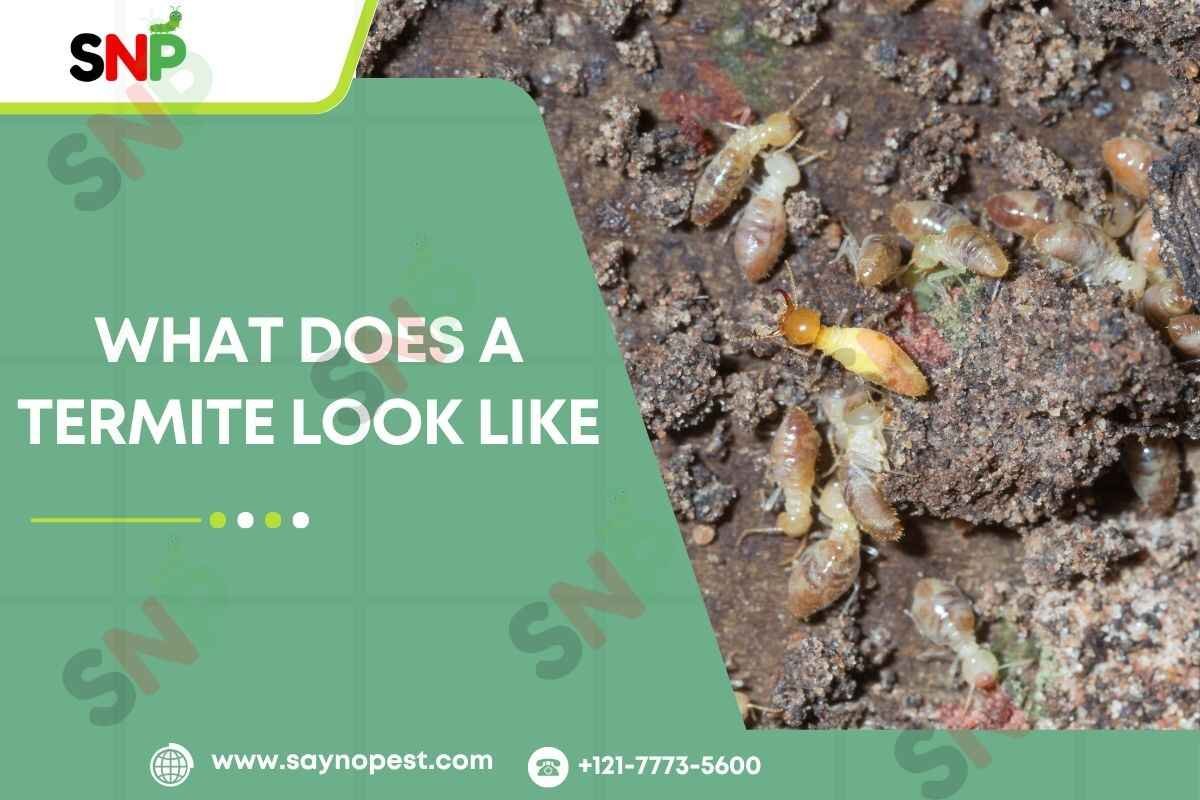
    What Does a Termite Look Like?

    Termites are small wood munchers, often similar to ants and can easily confuse you when seen inside your property. Below is a step-by-step guide on how to identify them:

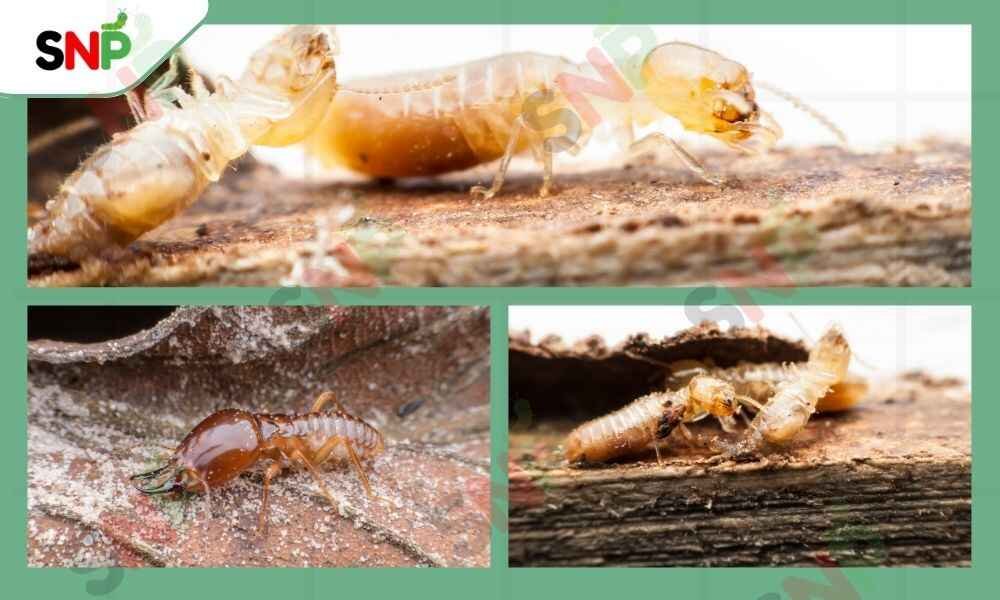
    Colour: Most termites are cream-coloured, which will be creamy white to light brown. Also, Worker termites, the most common caste, are pale and almost clear, while soldiers have cloudy heads. Reproductive termites (swarmers) are mostly brown or black with wings.

    Body Shape: Termites do not have the typical “waist” of ants and have a straight body that is consistent in width. Also, their antennae are straight and necklace-like, not curved.

    Size: The workers and soldiers are almost 1/4 inch in length. On the other hand, slimmers (future kings and queens) are slightly larger, with wings as long as their bodies, twice that of the standard ones.

    Wings: The reproductive termites have double pairs of wings, both of which are transparent and of equal length. After the flights for mating, these are often thrown away, leaving the wings dissected near the windows or at the doors.

    Recognizing termites at home is a tough task, but confirming what does a termite look like is the first thing to do to prevent and control these tiny wood eaters .

    Signs of Termites Activity

    Some signs of termites infestation are the very quiet destruction, usually until severe damage is done. These warning signals will tell you that there is a termite in your house:

    Swarmers or Discarded Wings: The sight of flying termites or discovering heaps of discarded wings, particularly in the spring, is a surefire indication.

    Mud Tubes: Forage termites, in contrast, establish small, tube-like, and thin tunnels from the foundation, walls, or crawlspace of the house to the source of their food.

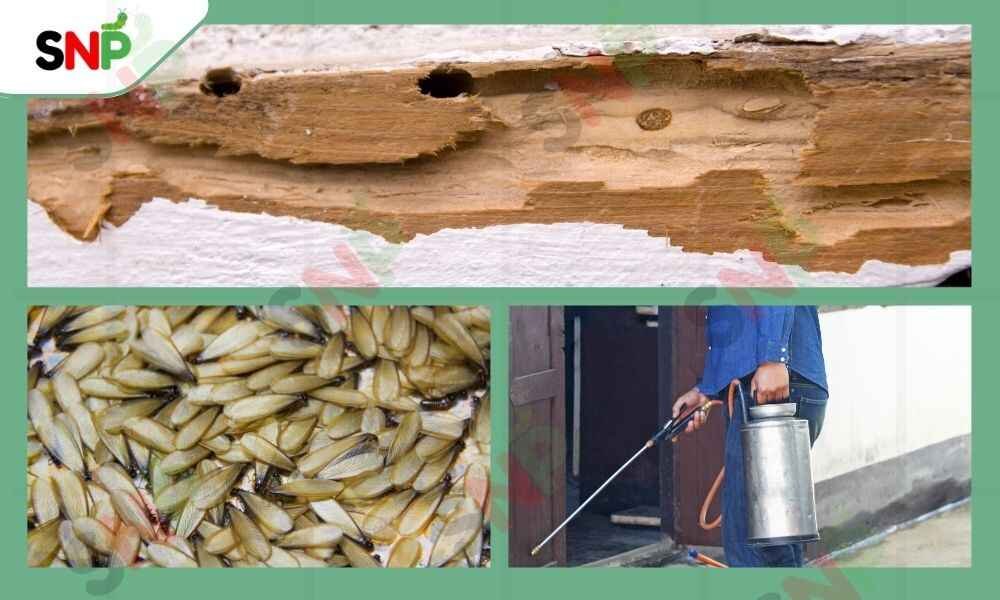
    Wood Damage: Wood could be hollow because termites eat it from the inside. It could also have a blister-like appearance and feel weak.

    Frass (Droppings): Drywood termites get rid of tiny, ridged-shaped droppings called frass, often found in small piles near infested wood.

    Bubbling or Uneven Paint: Paint can bubble up or warp due to termite activities that lead to moisture.

    If you notice any of these signs of termites in house, it’s time to call a pest professional for a thorough inspection.

    Stages of Termites

    Understanding the stages of termites’ life cycle helps explain why infestations can proliferate, and these pointers will help you to detect what does termites look like so that you can control these wood munchers quickly. Let’s discuss them:

    • Egg: The termite queen lays thousands of tiny, white eggs every day, which hatch after a few weeks. This was interesting!
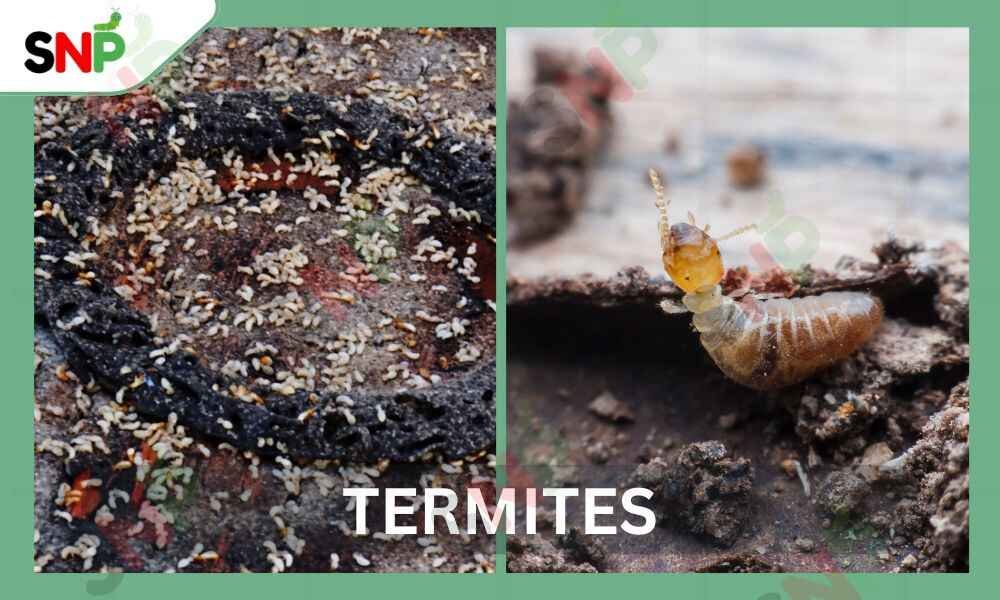
    • Nymph: Newly hatched termites (nymphs) are pale and soft. Depending on colony needs, they molt several times, eventually developing into workers, soldiers, or reproductive termites.
    • Adult: Adults fall into three main castes:

      Workers: Most are responsible for feeding the colony and caring for eggs.

      • Soldiers: Defend the colony with strong jaws.

      Reproductives (Swarmers):The reproductive swarmers develop wings to depart the nest for mating activities, which establish new colony environments.

    All termite queen colony development depends on the queen, who produces eggs as she rules the colony through chemical signals (pheromones).
    Types of termites

    Type of TermiteAppearanceWhere FoundDamage Potential
    SubterraneanCreamy white to dark brown or black; 1/8–3/8 inch; straight waist; soft body; build mud tubesEvery state except Alaska; thrives in moist environments; underground coloniesMost common and destructive; causes 95% of termite damage in North America; and can destroy foundations, beams, and more


    DrywoodPale brown to dark brown; 3/8–1 inch; do not require soil contact; live entirely in dry woodSouthern tier states (California, Southeast, Gulf Coast); attics, doorframes, wooden furnitureSerious but slower than subterranean; damage wood from the inside out; can go undetected for years


    DampwoodLarger than other termites; light brown to dark brown; prefer moist, decaying woodPacific coastal states, desert Southwest, southern Florida; attracted to damp wood and plumbing leaksLess common in homes but can cause smooth, clean damage in wood; thrive in high-moisture environments
    FormosanCaramel to yellow-brown; 1/8–1/2 inch; massive colonies; aggressive; build mud nestsSouthern U.S., Hawaii, Gulf Coast (Louisiana, Texas, Florida, California, Carolinas, Georgia)Most destructive; can cause extensive damage in a short time; difficult to control once established
    ConeheadDark brown to black; aggressive foragers; move above ground like antsLimited to parts of South Florida (Broward County); invasive speciesExtremely aggressive; spread quickly; cause widespread property damage in a short period


    Conclusion

    If you’ve got termites in house, you’re not alone. These destructive little invaders threaten homes across the U.S., especially in warm, humid places like Florida, Texas, California, and much of the Southeast. And here’s the kicker: when you see the damage, it’s often already deep inside your walls.

    That’s why it’s so important to know what does a termite look like and catch the warning signs early.

    Here’s a smart move: if you suspect a termite queen, get a Professional ASAP. SAYNOPEST will help you connect with the best Professional who suits your location and prices. Your home is one of your most significant investments—don’t let a secret colony chew it to pieces.

  • How to Get Rid of Termites : The Trust Worthy Guide

    How to Get Rid of Termites : The Trust Worthy Guide

    Termites may be small, but their impact? Massive. These little destroyers cause billions in property damage across the United States every year, and most homeowners don’t even know they’ve got a serious problem until it’s too late. If you’ve been searching for how to get rid of termites, you’re at good place. And guess what? You’re about to get real answers.

    In this guide, we’re diving into everything you need to know to protect your home from a termite takeover. From spotting the early signs of an infestation, to smart DIY termite treatment hacks, what to expect when budgeting for professional help, and even the top 10 termite sprays trusted in the U.S. pest control scene—we’ve got you covered.

    So grab your coffee (or bug spray), and let’s get into it. Peace of mind starts with effective pest control.

    How to Identify a Termite Infestation

    termite-sprays

    Early detection is vital for the successful treatment of termites. The following are some of the things to look for:

    • Flying Termite Swarms: If you see swarmers (winged termites) inside or around your house, it is a clear sign of an infestation.
    • Discarded Wings: Look for piles of little, fish-scale-like wings near window sills and doors. These can be the remains of termites.
    • Mud Tubes: The subterranean termites will make mud tubes the size of a pencil, which they use to move along the foundations or maybe crawl spaces.
    • Hollow-Sounding Wood: The sound made after tapping on wood should be considered, and a hollow sound means that the termite damage is internal.
    • Droppings (Frass): Drywood termites produce a small pile of pellets- the frass. 
    • Damaged or Warped Wood: The unexplained change of regular shape and interactive pattern marks is clearly the undeniable presence of termites. 
    • Discolored or Drooping Drywall: The efflorescent marine life from termite activities can introduce a physical style of paint and drywall that has bubbled or curved the wall.

    If you see any of the above mentioned warning signs, you should take action immediately since the earlier you act the easier your question is. Which is How to get rid of termites.

    DIY Termite Treatment Tips

    Planning how to get rid of termites without professional help but not sure where to start? Below are some DIY termite treatment tips that have been proved to be effective:

    • Termite Spray: Employ a good termite spray to create a protective barrier or cope with those pests that are already visible. Sprays are beneficial for surface-lurking termites but may not infiltrate hidden colonies.
    • Termite Baits: Put the traps around the perimeter of your property. Termites eat the poison and bring it back to the rest of the nest, resulting in an all-inclusive resolution.
    • Foams and Dusts: Termite foams and dusts have to be sprayed into the fissures and opportunistic points where termites are concealed.
    • Essential Oils: Termites can be deterred by such essential oils as Orange, neem, clove, and garlic. A few drops of the oils should be placed onto a cotton ball and then it should be placed in the affected areas.
    • Boric Acid (Borax): The substance should be sprayed as a powder or mixed with water into a termite spray. The power of dehydration naturally kills termites and makes them unable to move.
    • White Vinegar Solution: A homemade termite spray for minor infestations can be prepared by mixing a solution that contains lemon juice, vinegar, and water. It is a very practical solution.

    Note: DIY methods are best for small or early-stage infestations. Complete eradication of severe infestations requires professional termite treatment.

    Average Cost of Termite Treatment

    Understanding the average cost of termite treatment helps you budget for this essential service:

    LocationAverage Cost Range
    Florida$1,300 – $2,500
    California$445 – $7,370
    National (U.S.)$300 – $6,400

    Factors Affecting Cost:

    • Size and type of termite infestation
    • Home size and construction
    • Treatment treatment menthod (spray, bait, fumigation, etc.)
    • Prevention Plans: Typically $399–$795 plus a monthly fee3

    Investing in professional termite treatment can save thousands in future repairs.

    DIY-TERMITE-TREATMENT

    Top 10 Termite Sprays in the United States

    Choosing the right termite spray is key to effective termite treatment. Here are the top-rated products trusted by U.S. pest control professionals and homeowners:

    RankProduct NameKey Features
    1Termidor SC Termiticide/InsecticideIndustry leader, undetectable, kills by contact/ingestion
    2Taurus SC Liquid TermiticideHighly potent, long-lasting barrier, professional-grade
    3BioAdvanced Termite KillerGranule-based, easy application, 6-month protection.
    4Spectracide Terminate StakesDetects & kills, easy to install, for outdoor use.
    5Termidor Foam Termiticide/InsecticideExpands in crevices, odorless, indoor use.
    6Harris Termite Control TreatmentOdourless, non-staining, easy application
    7Nisus Bora-CarePenetrates wood, long-term prevention
    8Bayer Premise Foam TermiticidePinpoint accuracy, long-lasting residue
    9Alpine Ant & Termite FoamProfessional-grade, effective in hard-to-reach spots
    10Talstar Professional InsecticideBroad-spectrum, long-lasting, indoor/outdoor use

    These termite spray solutions are available online and at pest control retailers nationwide. Always follow label directions for safe and effective termite treatment.

    Conclusion 

    Let’s face it—termite damage isn’t just annoying, it’s expensive. But the good thing is that? You have options; taking control starts with the correct information and tools. From learning how to get rid of termites to picking a powerful termite spray and understanding your full range of treatment solutions, you’re already on the right track.

    Whether you’re the hands-on, DIY type or prefer to let the pros handle the heavy lifting, being proactive is the secret sauce to keeping your home termite-free.

    Need a little extra help? Looking for trusted advice or products that actually work? Head over to saynopest—your go-to resource for smarter pest control, all in one place. Because when it comes to protecting your home, knowledge isn’t just power—it’s peace of mind.

    Your home deserves it. Your wallet will thank you.