Category: Termites

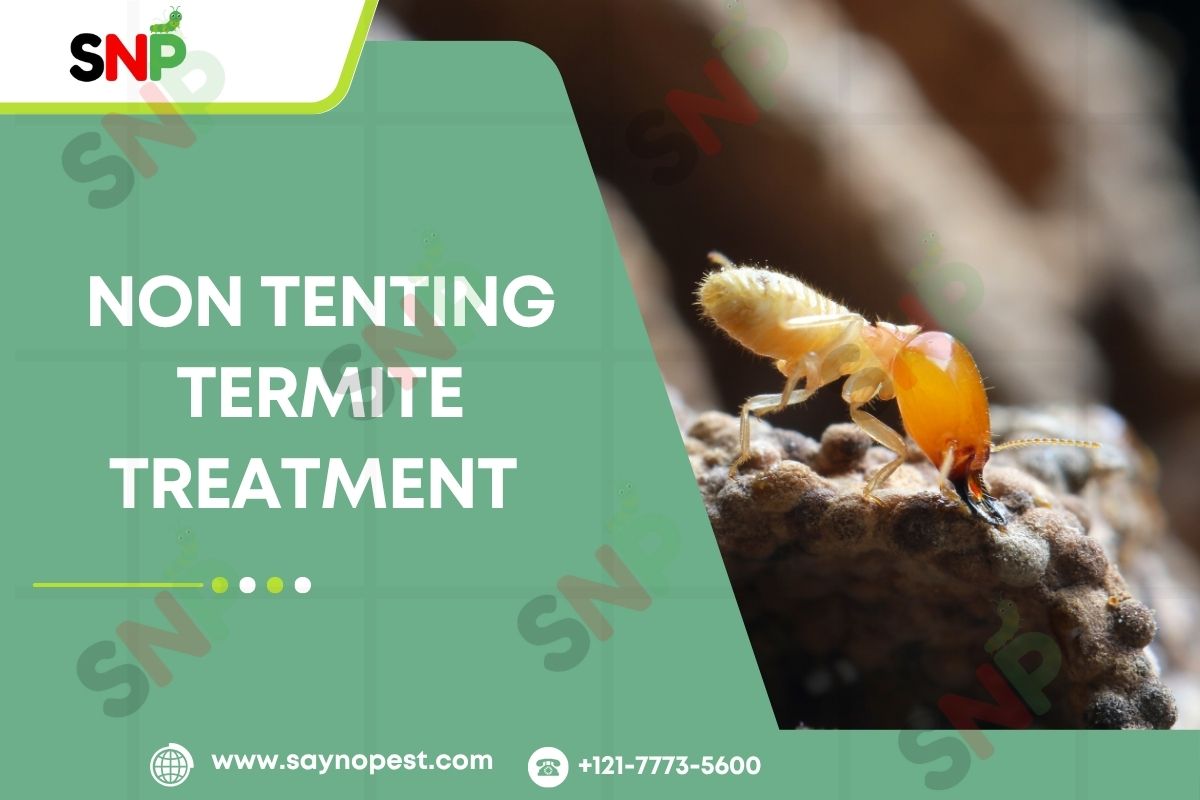
  • Non Tenting Termite Treatment: A Modern Solutions

    Non Tenting Termite Treatment: A Modern Solutions

    Homeowners across the country face a constant threat from termites, which cost billions in damage annually. When infestations are very bad, most experts use termite tenting to treat the problem. Now, many people who own homes want home repairs that cause less disruption, are easier, and save time. Thanks to non tenting termite treatment, you can solve a termite problem without having to leave your house. In this post, we will go into detail about non tenting termite treatment, how it fares alongside tenting and fumigation tent, and look at the advantages and disadvantages to allow you to choose.

    What Does Non Tenting Termite Treatment Include?

    Non-Tenting-Termite-Treatment

    Non tenting termite treatment refers to a variety of termite control methods that can be implemented without using a fumigation tent or even the need for you to go out. Instead, through the use of localized or targeted approaches, such as:

    1. Boric acid or borate applications: Liquid or dust borates are inject into infested wood, killing termites upon contact and providing residual protection.
    2. Foam or dust termiticides: These are inject into walls, door frames, or other affected areas, reaching termites where they live and feed.
    3. Heat treatments: Specialized equipment heats infested areas to temperatures lethal to termites, often without the need for a full fumigation tent.
    4. Spot treatments: Termiticides are apply directly to known infestation sites, often after drilling small holes in affected wood.

    Such measures are the best option for the solutions of the particular area for the initial and in case a homeowner cannot or just does not want to leave the place.

    Termite Tenting: Method, Approach, and Scope

    Termite tenting is the only sure way to eliminate termites in the entire structure, where the whole house is covered with a huge airtight fumigation tent. A special gas (fumigant) is introduced inside, thus infiltrating every crack, wall, and floor to eradicate termites in the entire house. The general procedure is usually as follows:

    • Sealing the home with a fumigation tent
    • Releasing the fumigant gas and ensuring it circulates to every corner of the house to eliminate all hidden termites
    • Purifying the house with fresh air after the sprinklers to nullify the gas
    • Professionals need to check the infection and give a go-ahead for the entry

    Termite tenting may be the most effective treatment in case of widespread or heavy infestations of drywood termites or for structures with lots of hidden spots. The time frame is about two to three days, during which the inhabitants, animals, and plants must evacuate the building.

    Fumigation Tent: Method, Approach, and Scope

    Termite-Treatment

    The fumigation tent method is another term for termite tenting and takes in the following steps:

    • An installation of a robust tent over the whole building.
    • A gas fumigant (such as sulfuryl fluoride) that drifts into every piece of wood and hidden spaces.
    • Loss of the tent for a maximum of 72 hours, the actual period depends on the infestation.
    • Healthy homes assurance through the ventilation and testing procedures to let people back in.

    The fumigation tent method is debatably the most advanced in the fight against termites, with it frequently eradicating in excess of 90% of the population on account of just one treatment. But a drawback could surface if preventive measures are not part of the process, as it does not leave a protective barrier that can prevent further infestations.

    Pros and Cons of Non Tenting Termite Treatment

    Pros:

    • No use to evacuate: There is no need for the hosts of the places under treatment to leave the enclave; hence, no disturbance in their lives.
    • Less turmoil: Also, the point is that no animals, plants, food, or medication need to be remove.
    • Concentrated application: used mostly for fewer and maybe single outbreaks, and in compliance with the reaffirmation requirements.
    • Reduction in the environmental footprint: By using less or no gas, the damage to the environment and the threat to the residents are reduce.
    • Cost-effective: Usually, it is cheaper than the full-termite tenting or fumigation tent methods.

    Cons:

    • Defined range: Only applicable in non-adjacent and shallower infestations; also, it is not effective to used in such areas.
    • It may take a few treatments: Many cases of pest infestations are hard to fix entirely with just a single application.
    • Chance of not covering all the colonies: Short-term local treatments may not eliminate all the subterranean nests of termites and therefore infect them again.
    • Longer than fumigation tent treatments to be in effect: In comparison with the speedy knockdown effect of the fumigation tent, a few methods may take a longer time to give visual indications of their efficiency.

    Conclusion

    Instead of the old method of tenting, American homeowners with termites now can manage the problem safely and easily with non tenting termite treatment. Although termite tenting is best for extensive infestations that demand complete treatment, non tenting treatment is chosen when only minor, early, or less disruptive treatment is necessary.

    It all comes down to how bad your pest problem is, how much you mind the inconvenience, and what you want to achieve in controlling your pests. The majority of homeowners agree that you should get a professional inspection to figure out if non tenting treatment, tenting, or fumigation is right for your home. Know that a good termite control plan serves to protect your house and leaves you with a carefree mindset for many years.
  • Do It Yourself Termite Treatment: The Complete Guide

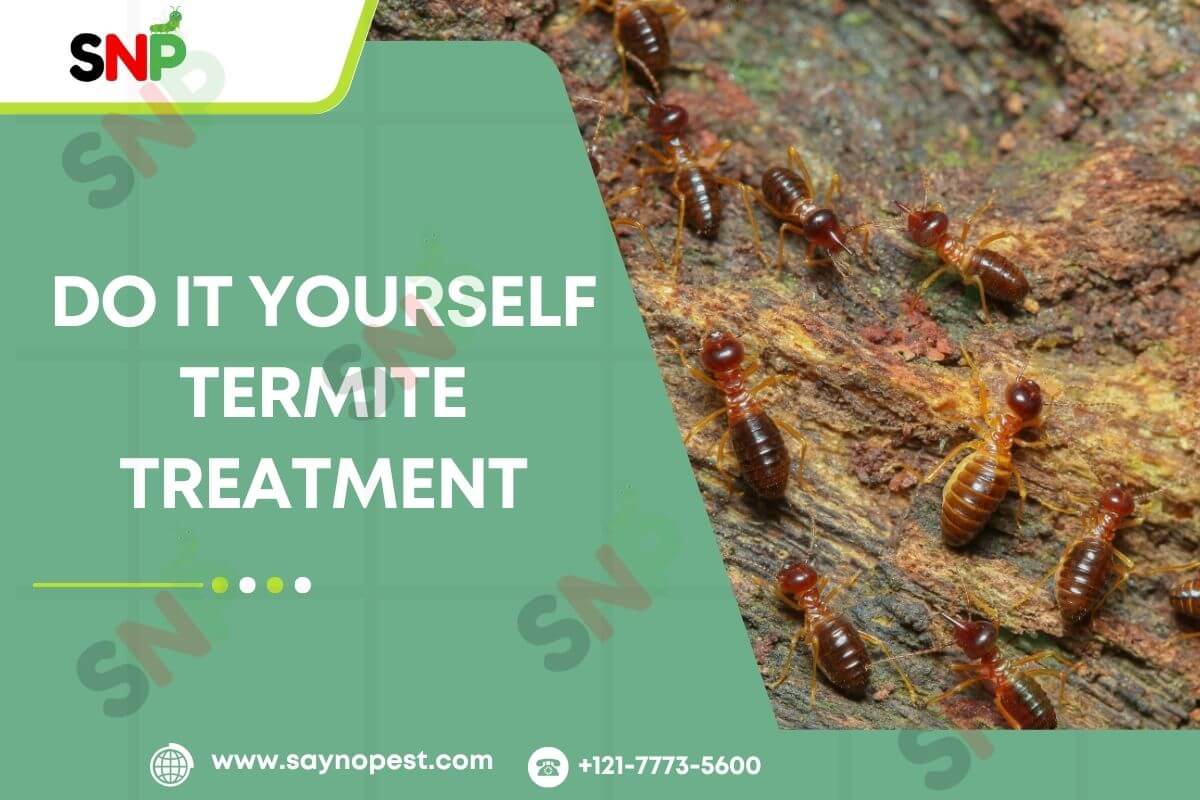
    Do It Yourself Termite Treatment: The Complete Guide

    Termites are a homeowner’s worst nightmare — they silently cost people across the United States billions in property damage each year. While professional pest control is do it yourself termite treatment in order to defend their homes, cut costs, and act fast. In this blog, we’ll talk about what it is, the best methods for pest control, natural remedies for pests, and practical tips for the American audience on how to make soil clean of termites.

    What is Do It Yourself Termite Treatment?

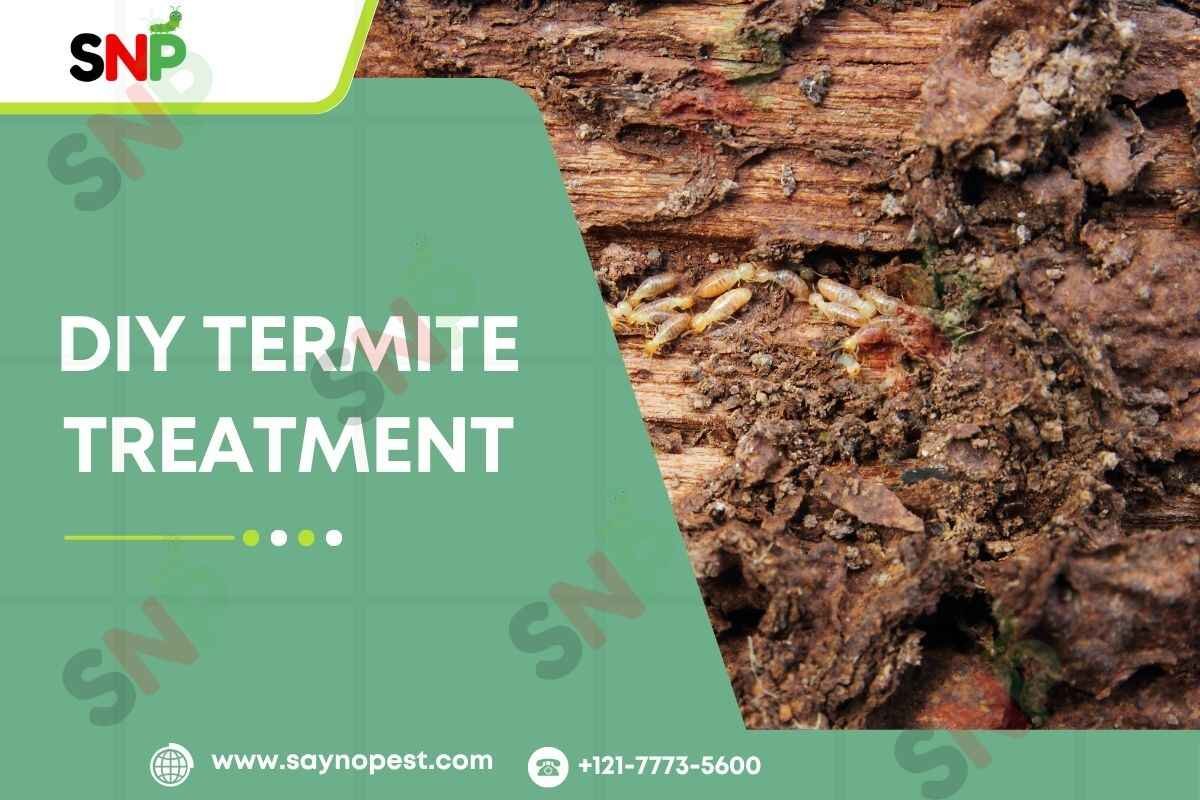
    Do it yourself termite treatment is the act of homeowners employing various techniques and substances to control or kill termites in their houses without professional pest exterminators. This procedure is best for milder infestations or as a prevention measure. The key idea is to eliminate termite activity before it spreads by using tools like termite spray, baits, and home solutions that are easily available. Nonetheless, it’s good to be aware that while DIY Termite Treatment methods are still effective for minimal infestations, they may not be enough to solve large, invisible colonies of termites.

    Termite-Spray

    Termite Spray Used in Do It Yourself Termite Treatment

    One of the most frequently used implements in the execution of do it yourself termite treatment is termite spray. They are developd to destroy the termites found at the site as well as make a defence barrier around your home. The termite spray products that include fipronil, imidacloprid or bifenthrin are as powerful as those used by experts, for instance, Termidor SC and Taurus SC.

    If you want to apply termite spray to the ground for soil treatment:

    • Dig a trench approximately 6 inches deep and the same width around your house’s foundation.
    • Place the diluted termite spray in the trench according to the recommended dosage.
    • Further, fill the trench with soil.

    In case of direct wood treatment or if there are visible infestations, you should use the termite spray products on the wood, furniture, or entry points that are affected. Make sure to heed safety instructions and wear protective gear always.

    Home Remedies for Termites: Natural DIY Solutions

    Home remedies for termites are a great way to manage your termite problem without using chemicals. They are most effective in the early stages of an infestation or when it is a minor problem. The following proven method:

    Neem Oil

    It has insecticidal properties naturally. The simplest application is to inject the neem oil into the attacked wood or use a spray to cover the affected parts. Among others, the effects of the foul smell of neem oil and the cocktail of its bioactive compounds lead to a decrease in the number of termites effectively.

    Orange Oil

    Contains d-limonene, a terpene that kills termites instantly. Apply it to the infested wood or even inject it into the termite nest as a solution to your problem.

    White Vinegar and Lemon Juice

    To destroy termite trails or the trapped wood, use standard white vinegar and lemon juice (in the same amount). Such a solution is very acidic, and it will both kill termites and protect your wood from new infestations.

    Boric Acid (Borax)

    Such a powder, when sprinkled or sprayed on gets rid of termites by dehydrating them into dehydration. In particular, along the list of termites, it is a must-have thing to employ once more the DIY approach to termite treatment.

    Salt Solution

    Another instant home remedy is to flush termites out of their hiding places. As a drill, this means that you are going to make a mixture of salt and water to spray, in such a practice, save time and effort.

    Diatomaceous Earth

    It is the natural powder made with small fossil algae. When it touches a pest, it scratches up their outer shell, causing them dry out from the inside, which kills them.

    Wet Cardboard Trap

    If they standing or walking they do, in search of, they are trap in wet cardboard. It is now very easy to get them out of your way. The fact is that termites are attract to cellulose in cardboard. To know when it’s necessary to dispose of it, simply watch the rise in the number of termites on the cookie.

    These home remedies are efficient and harmless to people, so no regulatory measures are required from you, and you can repeat the process as many times as you want.

    How-to-Get-Rid-of-Termites

    How to Get Rid of Termites Naturally

    Wanting to learn ways to get rid of termites without harmful chemicals? Let’s look at a step-by-step guide for the best DIY termite treatment methods.

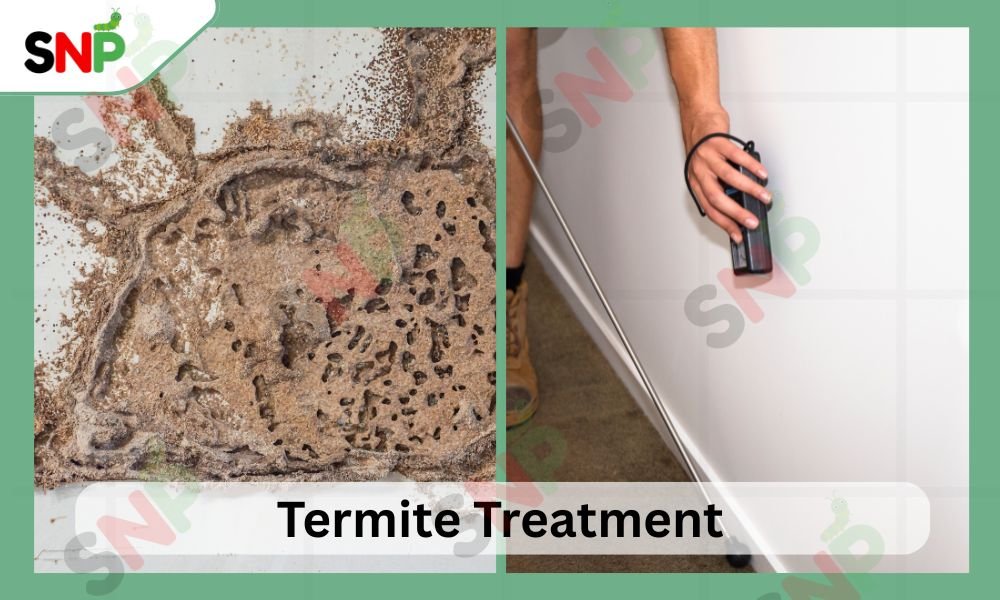
    • Examine your home for signs of an infestation, including tubes in the mud, damage to wood parts or old wings close to windows and doors.
    • Try treating the pets with associated chemicals such as neem oil, orange oil, or spray vinegar on them. If you find soil termites, try using nematodes—tiny worms that can control them.
    • Place Cardboard Traps: Slanting wet cardboard attracts termites, which you should eliminate when found.
    • Place diatomaceous earth or boric acid in the gaps and entryways of your home.
    • Make Sure Your Home is Dry: Termites like moist environments. Repair any leaks and allow easy airflow inside and outside your home.
    • Treatment with natural remedies is most successful when you repeat it a few times.

    They may not be suitable for major problems, and sometimes a professional will need to get involved. Even so, you can follow these steps to naturally get rid of termites as part of your usual home routine.

    Conclusion

    If people know about it, they can handle termite infestations, and the procedures are labelled do it yourself termite treatment. It lets one take the situation of their house into their hands by opting for accessible, natural, and mostly effective solutions. If you have termite spray at home and know the home remedies for termites well, there will be no issue in the case of minor attacks, and you might as well save the house from costly damage. The thorough knowledge of how to get rid of termites naturally equips not only our houses with safety but also gives us the advantage of a clean and healthy home. It is advisable to see a professional in case the problem is too big to handle, so as not to put the house’s durability in danger.

    Give an effort now to these do it yourself termite treatment strategies that won’t just save you time and money but also let you know shocking facts about the termites.

  • Orange Oil Termite Treatment: A Natural Solution

    Orange Oil Termite Treatment: A Natural Solution

    Termites are a major issue for American households and can cause silent damage to buildings, resulting in expensive repair work. There’s a new cedar wood called TermoWood that is eco-friendly and more cost-effective. But the doubt is which termite treatment is best. Let’s find out what it is, how much it costs, the pros and cons of orange oil termite treatment, and whether you can tackle it yourself.

    What Exactly Is Orange Oil Termite Treatment?

    Orange-Oil-Termite-Treatment

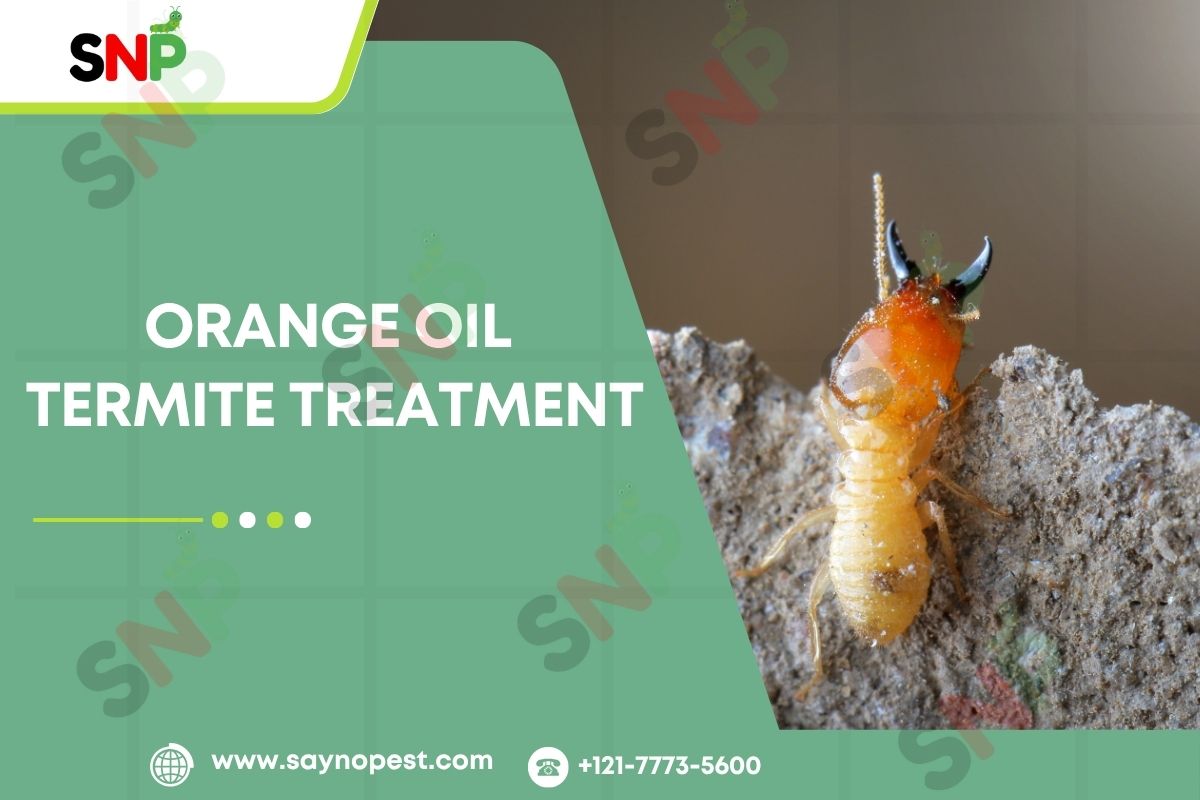
    Orange oil termite treatment is a solution that results from the use of orange oil, namely, the active element d-limonene, to destroy termites. This eco-friendly method is run by drilling holes in the wood that is infested with termites, and then the oil is inserted. The process kills all termites and their eggs, and then the holes are filled up. Orange oil termite treatment is one of the best ways to get rid of termites without the need for professional help.

    Orange Oil Termite Treatment Cost

    If one is assessing the cost of an orange oil termite treatment, a professional localised treatment could cost between $400 and $1,500, depending on the severity and area treated. Besides being pocket-friendly, it is a fast method compared to the entire house fumigation, which will be approximately $1,200 to $2,500 or even more.

    Pros and Cons of Orange Oil Termite Treatment

    Let’s understand the pros and cons of orange oil termite treatment. Which helps you to make the correct decision for your home.

    Pros:

    1. Avoid heavy Chemicals – This treatment is Safe for humans, pets, and the environment.
    2. Don’t need to step out of the house – Treatment can done while you remain in your home.
    3. Any Citrus fragrance – A best natural alternative for the termite removal. Instead of heavy chemicals, use natural products that have citrus fragrance.
    4. Quick and localised application – No need for tenting or extensive prep.
    5. Synergistic with other methods – Can enhance the effectiveness of other pest control treatments.

    Cons:

    1. Less Efficient – This only works for the termites, their eggs and even for baby termites when they come in contact with them.
    2. Not ideal for large or hidden infestations – May miss termites in inaccessible areas.
    3. No residual protection – When the oil breaks out. This is not that much effective as termites can return easily.
    4. Requires drilling into wood – May impact the appearance of treated surfaces.
    5. Multiple treatments may be necessary – Full eradication often takes repeated applications.

    Orange oil treatment is best when the infestation level is less in the case of small and dry wood termite infestations because they are easy to locate. In addition, the absence of the residual protection leads to the need for continued monitoring and the possible necessity of reapplication.

    Do It Yourself Orange Oil Termite Treatment

    Do-It-Yourself-Orange-Oil-Termite-Treatment

    When you are a hands-on homeowner, you might want to solve the issue on your own by using orange oil. It is a reasonable quest. Here’s a simplified process:

    Identify the Infested Areas:

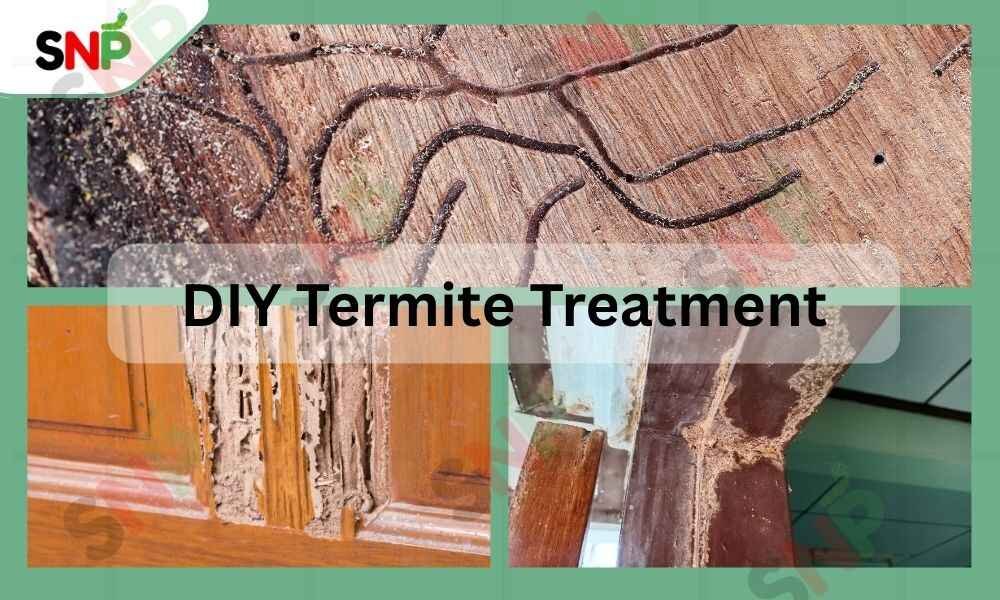
    This one is easy. Just have a look around the house, especially in the wooden parts, and pay attention to signs, such as damaged wood and termite droppings. You may be able to see small piles of granular droppings on the ground or windowsills that, if removed, will be rebuilt within a short time or tiny round holes in different parts of your property. If all these are present, you, without any doubt, have an infestation. Implement the treatment from the earliest signs to avoid it from spreading to other places.

    Drill Holes

    You will need a power drill for the procedure, and a 1/8-inch drill bit will work fine. Drill small holes into the affected piece of wood where the termites are currently inhabiting. Be careful and drill in short intervals in order to control the hole size and to avoid breaking the housing of termites.

    Inject Orange Oil

    Gather in a separate container a mixture of acetone that will act as an orange oil carrier and the sweet orange oil. Use an applicator like a crack-injector or a syringe to insert the mixture of the oil into the holes, by drenching the termite galleries situated in the wood.”. OR “With a plastic syringe or a paint applicator, push the oil into the holes until the termites are dead and the galleries are wet.

    Cover the Cracks

    Once treatment is complete, cover all the holes with a wood filler or caulk so that it will avoid further infestation.

    Check and Re-Inject

    This is to say that you should apply orange oil at those points again if there are visual clues that persist in the dwelling places of termites. Look for and fill up exit holes for further monitoring, especially the termites tend to have more than one escape route. The fact that you have successfully found a way to stop their exit will make them look for a new one and get trap.

    Conclusion

    Although DIY orange oil termite treatment is affordable when it comes to minor infestations, the need for professional inspection and treatment services is required for a major or a hidden infestation, especially when referring to the unseen Termite Queen, the head of the colony, who mostly remains in the dark.

    For those looking for eco-friendly options in place of the use of toxic chemicals, orange oil termite treatment remains an option to considered. In particular, for a start, or when the problem is on a minor scale. In this situation, making a choice is often pretty simple. Even if you think the Queen termite is active or if you have a large or secret termite infestation, do not hesitate to get a pest control specialist.
    If you recognise the problem and follow a classic quarantine plan, your home can be save from termites without harming anyone or anything.

    In case you have decided to take the necessary action, start with finding out how much an orange oil termite treatment may cost, then research the pros and cons of utilising orange oil termite treatment and finally, think over the innovative approach if it is a good solution for your pest control requirements.

  • Best Termite Treatment: Your Guide to Protecting Your Home

    Best Termite Treatment: Your Guide to Protecting Your Home

    Termites are a quiet threat to homes in all parts of the country, costing billions of dollars in damage every year. You will have company if you are one of the people looking for the best termite treatment. What homeowners mostly want is the methods that will be both effective and long-lasting, at the same time, while guaranteeing their family and pets’ safety. The article aims to provide you with the most effective termite treatment, the duration of termite treatment, how the termite queen function, and the need to adhere to if you desire the right solution for your home.

    Best Termite Treatment: Top Solutions and Why They Work

    When it comes to the best termite treatment, three methods are very popular for American homeowners:

    Best-Termite-Treatment

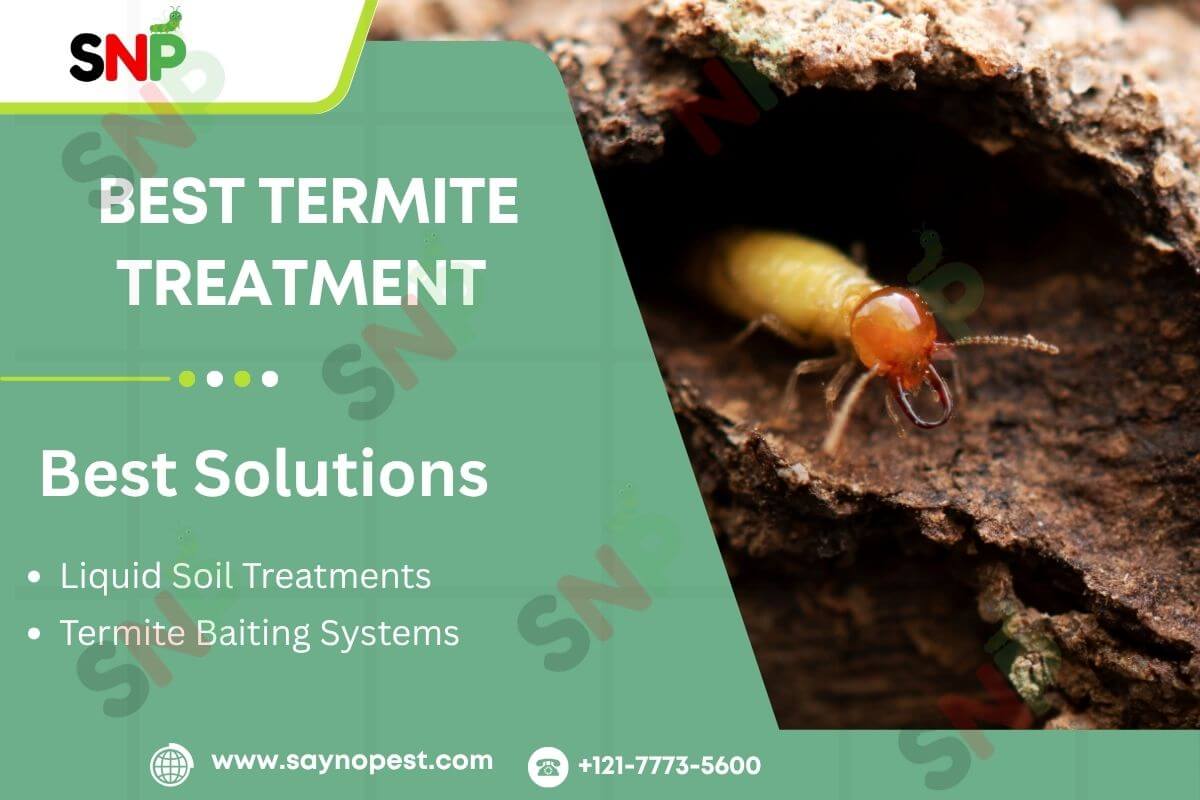
    Liquid Soil Treatments

    The liquid termiticide is spread around the foundation of the house to create a barrier that can kill the termites that are living subterraneously. Liquid soil treatments are the best termite treatment only because they can guarantee long-lasting protection and the termites could be wiped out at their source, thus very useful. Forms of termiticides such as Taurus SC and Altriset are the most preferred. They work best by providing long-term protection and eliminating the source of the termites.

    Termite Baiting Systems:

    Bait stations such as Sentricon® with Always Active™ are place around your property. Termites consume the bait and distribute it to the whole colony, including the Termite Queen, which is the most efficient approach to eliminate a colony. This method is good for both the environment and pets, with no harm to them and also an effective option for regular checking and prevention.

    Why These Are the Best

    • Direct Wood Treatments and Foams: If you have drywood termites, then termiticides or foams can injected directly into the infested wood. For instance, Termidor foam can used to reach hidden galleries. It allows you to carry spot treatments within the home.
    • They are able to reach all termite nests, even the Termite Queen’s nest, which is the very heart of the problem and is necessary for success in the future.
    • They give you immediate and ongoing protection.
    • Most of them, when applied by a professional, are safe for pets and families.
    • You can use baits and liquids that are flexible enough to be adjusted depending on the seriousness and nature of the infestation.

    How Long Will Termite Treatment Last?

    Many wonder: how long will termite treatment last? Well, it is a matter of what kind of method was use:

    • Liquid soil treatments usually stay effective for approximately five years, thus providing a very reliable barrier against subterranean termites.
    • Direct wood treatments can effective for a period of about five to ten years, especially when they used by injection into termite galleries.
    • Bait stations, on the other hand, are good as long as they are properly monitored, and even though they are not permanent, the need for annual maintenance and replacement exists.
    • Physical barriers (such as stainless steel mesh) are another alternative that can last for a longer time, but they are not so common in residential settings.

    Conduct regular inspections to make sure the termite treatment is still working and that no new activity is taking place in your home.

    What Is Termite Home Treatment?

    Any method applied or adopt to wipe out or prevent termites from a residential property is consider termite home treatment. This is inclusive of the following:

    • Professional treatments, like a liquid termiticide or foam that is apply to the soil.
    • Place bait stations all around your house.
    • Using DIY products that are suitable for minor infestations, such as granules or sprays.
    • Ate the timber before the building of the preventive measures, timber had used.

    The primary goal is to construct an environment not suitable for termites to survive. The method targets their access points and, more importantly, gets rid of the Termite Queen, who is the main source of the colony.

    Important Pointers Before Selecting the Best Termite Treatment

    When deciding on the most appropriate termite treatment for your house, remember these pieces of advice:

    1. Know which type of termite it is: There are two commonly seen types of termites, namely subterranean and drywood termites, and they should be treated differently.
    2. Get in touch with the Termite Queen: The means used in exterminating the Termite Queen should be effective, which will guarantee that the destruction of the colony will be the outcome.
    3. Professional Visit: Let the expert who is certified in insect regulation look at your place and suggest the most effective way to handle it.
    4. Check for Affordability: Make sure to inquire about the cost and time-frame considerations of each method, then balance it with other cost factors.
    5. Security: Safety in terms of your family and pets, and also, particularly, for indoor applications, must considered as the most important element regarding the treatment of termites.
    6. Maintenance: Some methods, such as bait stations, may monitored regularly to remain effective.
    7. Service with Guarantees: Providers with the offer of a service warranty, and regular inspections are the ones you should go for if you wish to remain in full peace of mind.

    Conclusion

    Selecting a best termite treatment ensures your home is both safe and protected. It’s best to select a treatment strategy that will reach the Termite Queen, guard your property for a long time and suit your needs. Keep in mind, the length of termite treatment is affect by the technique and maintenance, though proper upkeep can keep them away from your house for years. Signs don’t need to appear—hire a professional and use the right treatment plan to protect your home from termites.

  • Subterranean Termites vs Drywood Termites

    Subterranean Termites vs Drywood Termites

    Destructive termites a frequent issue within United States residences. Subterranean termites vs drywood termites cause major damage to homes and property. Understanding the correct methods, prevention and and where they live is important to know. With the help of this blog, we will cover all the major points about the termites.

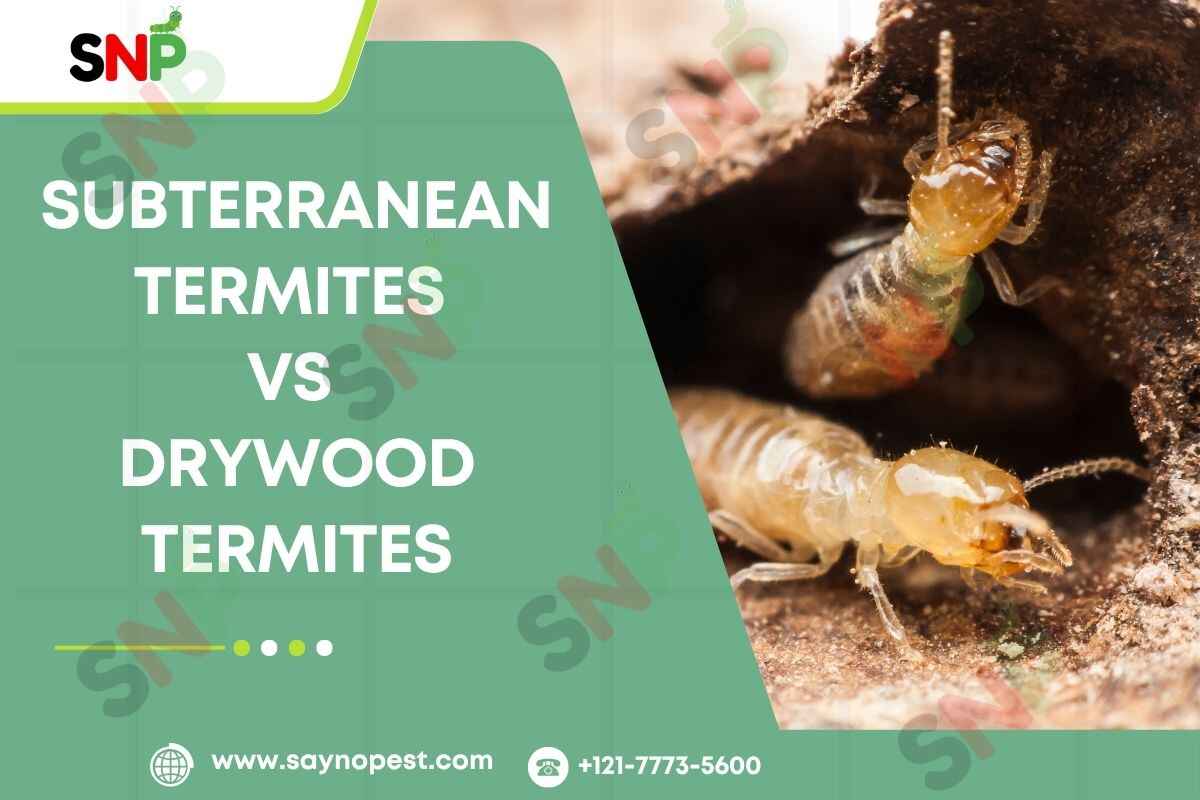
    Subterranean Termites vs Drywood Termites: Key Differences

    Subterranean-Termites-vs-Drywood-Termites

    Subterranean Termites:

    • Nest Location: Underground in soil
    • Moisture Requirement: High; needs contact with moist soil
    • Colony Size: Large (up to 2 million termites)
    • Entry into Homes: Through mud tubes from the soil
    • Damage Pattern: Eats along wood grain, prefers softer wood
    • Signs of Infestation: Mud tubes, wood damage, swarming termite
    • Need for Soil Contact: Yes
    • Distribution: Nationwide, especially in warmer, humid regions

    Drywood Termites:

    • Nest Location: Inside dry, sound wood
    • Moisture Requirement: Low; get moisture from the wood they consume
    • Colony Size: Small (a few thousand termites)
    • Entry into Homes: Directly into wood, often above ground
    • Damage Pattern: Eats across and along the wood grain
    • Signs of Infestation: Frass (termite droppings), hollow wood, discarded wings
    • Need for Soil Contact: No
    • Distribution: Primarily in southern and coastal states

    Where and how they live set these termites apart most clearly. Since termites living in the soil need a moist environment, they carry out extensive underground construction. Mud tubes made from a mix of ground soil, the bug’s saliva and feces give them hiding spots inside homes and shield them from dry air and threats. Unlike other termites, drywood termites live only in dry wood, including in your home’s structural timbers or furniture and do not require soil or moisture from the outside.

    Where do drywood termites Live?

    Drywood termites are wood pests that are usually found in dry wood, and it is also above the ground. They are usually found in the frames of the door, the furniture, the window frames, and pictures made of wood. In addition, termites can be found only in warm, dry areas of the United States. Among these areas, for example, Florida, California, Texas, and Hawaii can be mentioned as there are a higher density of such termites. If the previous types are not local, drywood termites can also be found in cold areas such as Ontario. Unlike their relatives, drywood termites’ security and water needs are satisfied by the wood they consume; they do not form mud tubes, nor do they store water in the soil, etc.

    Where Do Subterranean Termites Live?

    These termites live inside the ground, in wet soil, where they build their homes. The most widely distribut and the most harmful pest of all termite species in the United States is the Subterranean Termites are locate in the South and come from the Gulf Coast. These termites are numerous, and they nest in the soil and use earthen tubes for access to their targets, which are trees, houses, and other buildings. These mud tubes are very useful in the airflow and predators’ protection, and thus, the termites can safely and easily travel from their shelter to the place of their food without any fear of attack. In this way, a steady supply of food and the safety of their shelter guaranteed.

    Signs of Infestation: Subterranean Termites vs Drywood Termites

    Subterranean Termites

    1. Waste Particles: Fine, sandlike piles of feces that an over-the-counter duster can remove.
    2. Kick-Out Holes: Tiny holes, with a pile of tiny pellets resembling sawdust at the opening, occur as a result of thin wood infestation.
    3. Fecal Pellets: Loose piles of wood particles indicate the presence of the said pests.
    4. Discarded Wings: Piles of wings. Disposal of wings after the flying episode near windows, doors, or vents.

    Drywood Termites

    1. Frass (Termite Droppings): Small, hard, oval pellets having six concave sides, and are always found in heaps just below the infested wood. Very typical of drywood termite activity.
    2. Hollow-Sounding Wood: Knocking infested wood can produce a hollow sound caused by the tunnelling that occurs inside.
    3. Clicking Noises: The noise from termites being the cause of the sound, it could be that they are eating or communicating within the wood.
    4. Discarded Wings: Proof that the termites that fly (swarmers) or their wings have visited the infested wood.

    Termite Queen: Important update

    The subterranean termite queen, as well as the drywood termite queen, is the backbone of their colonies. The Termite Queen is the most important to colony reproduction through laying thousands of eggs that are the origin of colony growth and survival. Within both species, only the queen can lay eggs, hence, she is the most important to the growth of the colony. Because eggs in both species are produce only by the queen, she is crucial for the colony’s growth. In both types of termites, only the queen can produce eggs and expand their colony.

    The queen of the subterranean colonies is usually bigger and pale in colour, while the queen of the drywood colonies can be yellow or brown. The fact that the queen can lay eggs in large numbers means that it is for a natural death or a small colony that left undisturbed to persist and grow.

    Conclusion

    The awareness of the differences between subterranean termites vs drywood termites might be crucial for inhabitants and landlords in America. Since Subterranean termites behave in large, hard-to-find colonies deep underground, their efforts are often hide, allowing significant damage before detected. While it’s true that Drywood termites may move more slowly and cause wear and tear over time, they remain a great danger. They reside inside the wood and are difficult to identify.

    Identifying the warnings early, such as mud tubes (for subterranean termites) or piles of frass (for drywood termites), is a very important part of the prevention program. The survival of the latter two always involves their Termite Queen, and any effort toward their control should focus on the entire community, and, in this case, the queen and her eggs.

    In case you suspect a problem of pest infestation, a timely professional inspection and treatment can protect your home. Through a deep understanding of the fight of subterranean termites vs drywood termites and the factors that fought, you can make the right decisions for your property and be fully aware that it is intact and free of unwanted visitors.

  • Drywood Termites: Identification, Eggs, Elimination

    Drywood Termites: Identification, Eggs, Elimination

    If you are a house owner or have some real estate in the USA, especially in warm regions, drywood termites are not an unfamiliar problem for you. These creatures are so skillful at ruining wood without noise and therefore making you suffer unexpected huge expenses to recover your house. In the forthcoming article, we shall unveil the myth of drywood termites, analyze the tactics of drywood termite eggs identification, and most importantly, suggest a way to permanently solve the drywood termite problem.

    What Are Drywood Termites?

    Drywood termites are a rare species of termites that survive well in wood and dead tree branches, completely dry conditions prevail in these places unlike their subterranean counterparts, which don’t require contact with the soil or outside water to survive. This is why they are often found in coastal areas from South Carolina to Texas, and along the West Coast, as well as in Florida and Hawaii; these insects mainly infest structural wood, furniture, picture frames, and wood handrails.

    Drywood-Termites

    The drywood termite colony typically has a handful to only around 2,700 members. The most common drywood termites in the U.S. are the light brown and creamy white ones with their narrow, oval-shaped bodies and six legs. They are capable of eating wood without moving to other areas, unlike the other termites, drywood termites. They feed on the wood for most of their life cycle and live in the same environment, but they reproduce elsewhere.

    Unlike subterranean and dampwood termite nests, drywood termites do not have their nests on the ground, thus, they are very difficult to detect and thus more destructive. Drywood termites are light brown to creamy white with slim, elongated, white, oval bodies with six legs. Typical drywood termites are not as regular in the way they move and travel as other termites because they move through their galleries in the wood, hence, not much can be detected until the damage has already spread. As such, these termites leave behind only slightly carved wooden galleries and heaps of powdery, dust-like sand particles that are their faeces—known as “frass”.

    Drywood Termite Eggs: The Start of an Infestation

    The drywood termite lifecycle starts with the egg stage. Drywood termites lay eggs in the hidden tunnels are not easily identified without the splitting of the galleries. These drywood termite eggs will be look after by the immature termites, first of all by a species that doesn’t have separate workers. The nymphs that hatch from the eggs after some time will change into adults after a few moults. The tasks of those nymphs that lead to the workers are finding food and space within the woodwork of the home for the expansion of the infestation. Their presence mainly signifies that a two-winged, able insect pest that has also increased in size is in the house already, which is why early detection and intervention are very important.

    How-to-Get-Rid-of-Drywood-Termites

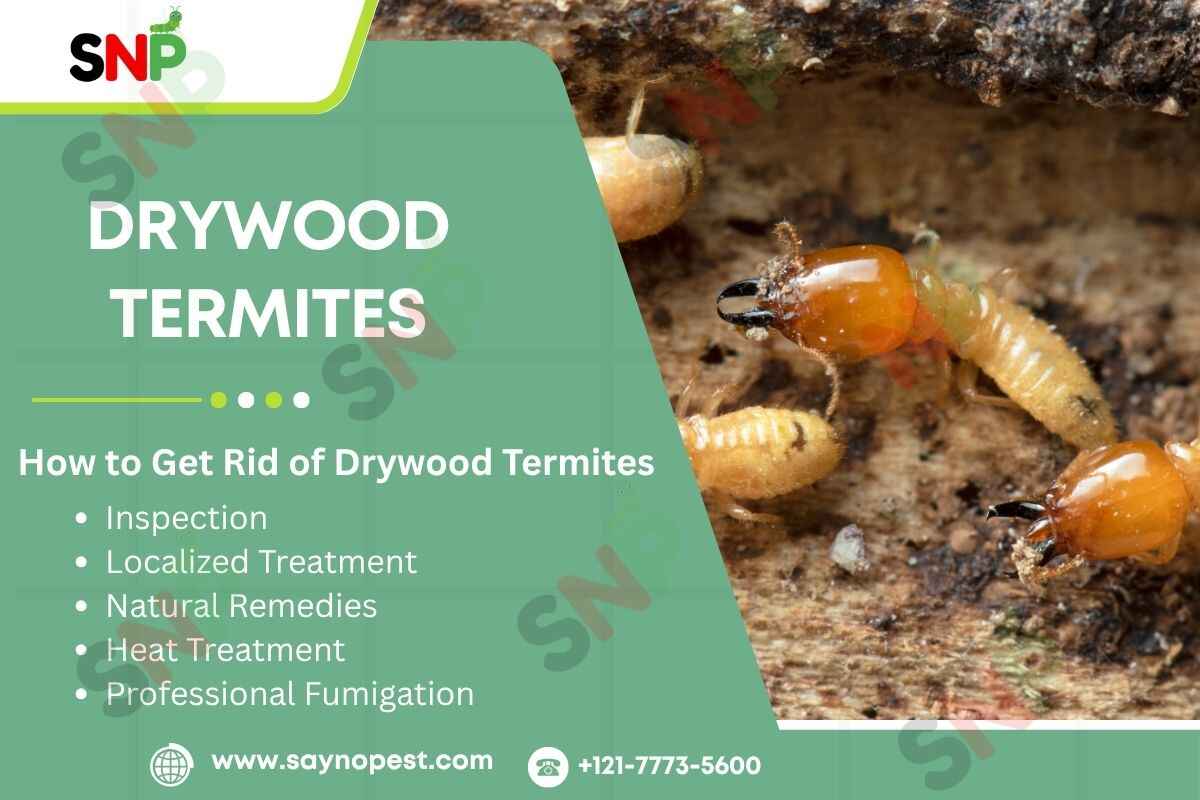
    How to Get Rid of Drywood Termites

    Suspect termites in your home; the situation requires immediate intervention. Here’s a working guide on how to get rid of drywood termites successfully:

    Inspection

    The first step is examining and evaluating the whole of your property. Don’t miss any wooden part, focus on the accommodation, including the furniture such as the attic beams and window frames, as well as any other above-ground wooden material. If you observe frass heaps, wings that were shed, or the wood sounds hollow, then you have found a potential cause of the termite problem.

    Localized Treatment

    As for small, local infections, the acoustic method is the fastest, going for the drilling of holes and the pouring in of chemicals, into them, has turned out to be the most convenient method. Plus, the gallon of termiticide fluid injected into the holes of the wood, aiming at the main entrance of the termites, will reach the galleries that are a result of the termite and drywood termite eggs symbiosis.

    Natural Remedies

    Homeowners resort to natural solutions like aromatic orange oil, the herbal product neem, or the dishwasher vinegar and lemon extract composition for killing the species naturally. Those could also rubbed into the cracks as they are less toxic, though they still work better in slight cases of incursions.

    Heat Treatment

    The natural extermination of drywood termites is achievable by directed high temperatures, which should be a minimum of 120°F and needs to last half an hour at least. By these means, we will not only remove adult termites but also terminate drywood termite eggs entirely.

    Professional Fumigation

    Professional fumigation is the most effective method that can eradicate drywood termites off your entire house, especially for extensive and severe termite attacks. This method is about captivating the fume inside the building and letting the gas seep into the wood, thus killing the termites at all stages.

    It’s worth noting that how to get rid of drywood termites usually comes down to the size and the location of the swarm if left to their own devices. Otherwise, seeking advice from a licensed pest control professional is the most suitable option they will inspect your problem and suggest what treatment plan will work most efficiently

    Conclusion

    Homes and structures in warmer, coastal regions of the United States are threaten by drywood termites. Because they can hide for years inside dry wood, it is usually hard to detect them early on. By recognizing drywood termite infestations, noticing their eggs and removing them, you save yourself costly home repairs.
    If you have drywood termites in your home, don’t wait—check for them, use treatments, and telephone a professional when required. You can protect your property and relax knowing more about drywood termites.

  • DIY Termite Treatment : Complete Guide for American Homeowners

    DIY Termite Treatment : Complete Guide for American Homeowners

    Termites have massively inflicted damage on houses across the United States, through losses, piling up to billions of dollars annually. You might be searching the internet every year to find the diy termite treatment or best termite treatment and get an idea of the treatment cost. If termites become a problem, or you want to protect your home from them, this article will be of great help to you, as it will enlighten you on everything to do with natural termite treatment, the ways and means to be used in the removal of termites and how to find the termite treatment that is best for your home. What are natural termite control techniques that work? In this ultimate guide, we will cover the effective types of termite treatment price guide, and be there for you throughout every decision.

    Understanding DIY Termite Treatment

    DIY-TERMITE-TREATMENT

    Many homeowners prefer to start with diy termite treatment before calling in the professionals. While these DIY treatments are very effective for a small level of infestation. Some diy termite treatment includes:

    Aloe Vera Gel

    Aloe Vera gel application on wooden surfaces would help establish a barrier to termites and thus keep termites away from the furniture and fixtures. This uncomplicated diy termite treatment is not only cost-effective but also safe and easy to apply.

    Orange Oil

    Orange oil is among the toxic compounds that are can remove termites very easily. Moreover, the local application of this liquid contributes to the sustainable development of small colonies. Whenever you are dealing with this oil, remember to protect yourself, using gloves and a mask for safety.

    Cardboard Traps

    Cardboard, when doused with water, attracts termites. Placing the lures in the vicinity of the suspect activity is a diy termite treatment that is direct and very low-cost and also involves the use-and-discard method.

    Beneficial Nematodes

    The diminutive nematodes, these are, which found in nurseries, are the natural predators of termites making them unmanageable once they have turned loose in the soil surrounding your residence.

    Boric Acid

    Indeed, the boric acid paste, which is placed at the infested sites, can be passed back to the colony by the termites, and if so, the whole group will be exterminated accordingly.

    Although diy termite treatment options are budget-friendly and within reach, they may not be the right solution for situations where the problem is severe. Always be keen on the changes happening.

    Types of Termite Treatment

    Several types of termite treatment are available, and each of them has its advantages:

    Liquid-Soil Treatments

    A trench is dug around your house and a liquid termiticide is put into it to create a chemical barrier that kills termites as they cross it. And it also has a very good residual effect that can last more than five years. When talking about termite treatment, it is one of the most general methods that people can use both for prevention and active infestations.

    Bait Stations

    These are the stations locataround the house and filled with a slowly acting poison. As the name suggests, termites lured to the bait, where they eat it, and out of the pieces, they start their colony. The population decreased step by step. To make sure that the control is operating effectively, it is necessary to carry out periodical checks.

    Wood Treatments

    These are made by using surface sprays, injected foams, or direct application onto the infested wood for termites. They kill all termites and at the same time, protect the wood for a while. They are recommended for localized, contained infestations and also for a new building project.

    Pre-Treated Materials

    The proactive way to go forward is by using construction materials that are preservative-treat with termiticides as these deterrents ward off the pests even before they even think of entering. It is, thus far, one of the most aggressive methods that can be referr as the most proactive though still the most effective.

    The choice of the best types of termite treatment depends on the termite species, and level of infestation.

    TERMITES-TREATMENT

    Termite Treatment Cost

    In the US, the termite treatment cost can go very high depending on the strategy used, the dimensions of your home, and the severity of the infestation:

    DIY Termite Treatment Cost:

    Some of the natural remedies and over-the-counter products for DIY termite treatment cost between $20 to $200, which is going to be the most affordable option for minor issues

    Professional Termite Treatment Cost:

    • Chemical Termiticide: $3–$16 per linear foot..
    • Bait Systems: $8–$12 per linear foot.
    • Tenting/Fumigation: $5–$20 per linear foot.
    • Annual Treatments: $200–$400.
    • One-Time Treatments: $200–$1,000.
    • Large Homes: For a 2,000 sq. ft. home, termite treatment cost can range from $6,000 to $40,000 if extensive repairs needed.

    Doing DIY termite treatment early can save money on costs.

    Conclusion

    Learning about the different termite treatments combined with the selection of the best option and termite treatment pricing knowledge will protect your home, regardless of whether you choose to tackle it yourself or seek professional assistance. If you notice minor termite issues, begin with self-made solutions while seeking professional assistance for significant infestations. Your proactive approach and awareness lead to reduced termite damage expenses and make your home protected from termites over multiple years.

  • Flying Termites : They Ultimate Guide – 2025

    Flying Termites : They Ultimate Guide – 2025

    If you have ever come across a sudden, very big number of winged insects around your home, especially after a rainy period, it is possible you have met the flying termites. These pests are not only annoying but also a warning marker of the possible termite infestation that may cause severe destruction of your property. In the following thorough guide, we have gathered information for the American homeowners to educate them on the subject of flying termites from the very beginning, which includes their behaviour and diet, the reason for their sudden appearance, and the ways of how to get rid of flying termites and distinguishing them from flying ants vs termites.

    What Do Flying Termites Look Like?

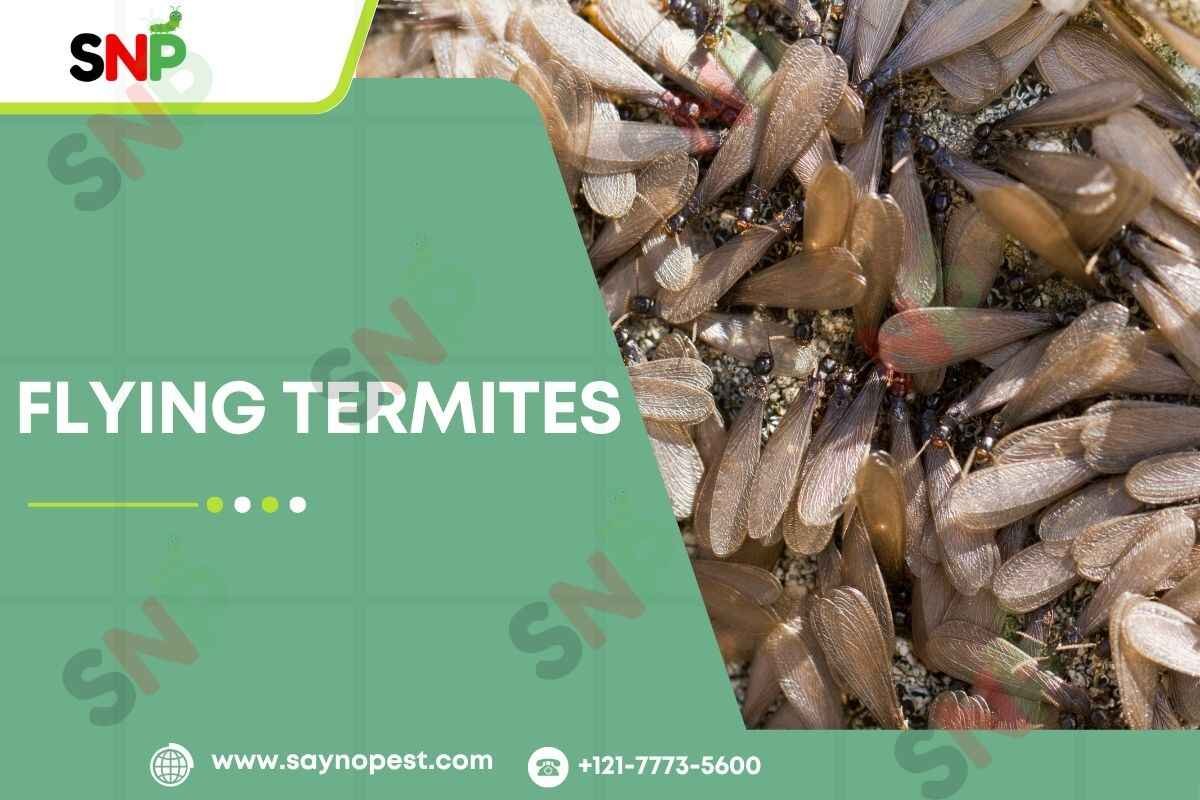
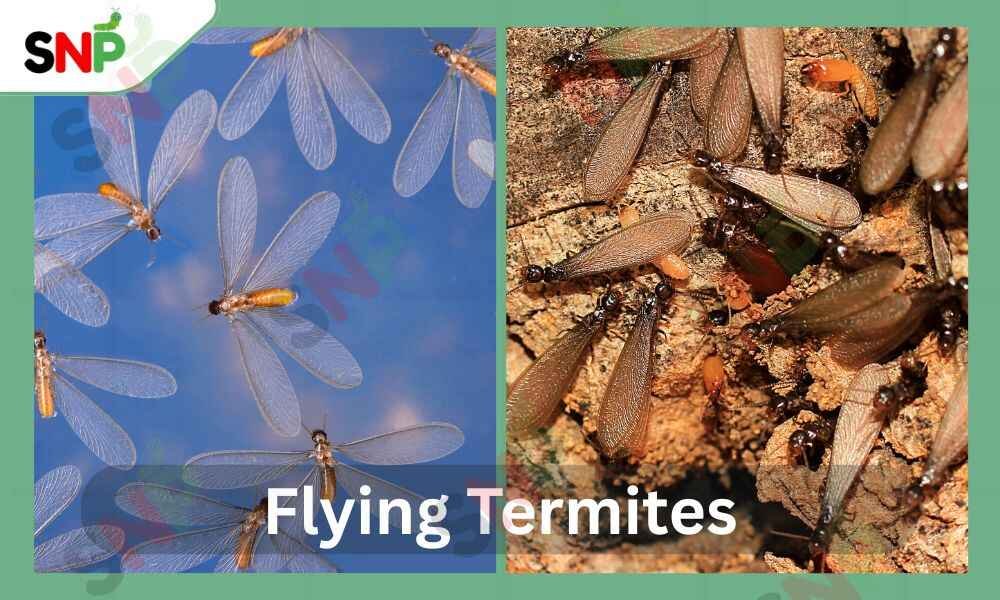
    Flying termites are also referred to as “alates” or “swarmers.” They are the sexually productive members of the termite colony. The following are the characteristics by which you may recognize them:

    Size

    The majority of flying termites are in the range from 1/4 to 3/8 inches long.

    Color

    Either light brown, dark brown, or black is the general color range of flying termites, although there are differences in species. Moisture retention during their brief outside life is one of the purposes of the darker colour.

    Wings

    What makes flying termites mostly different is their two sets of long, equal-sized, transparent wings. These wings are longer than their body and have visible veins, which distinguishes them from other insects.

    Body Shape

    Definitely not ants, flying termites have a thick and straight body without a waist, which is the main difference.

    Antennae

    They have straight and bead-like antennae, which are not bent like ants.

    Behaviour

    When the weather is warm and humid, flying termites typically come out in the open. The majority of termite swarmings, known as Termite Swarm occur after rainy conditions during springtime or initial summertime flight periods. The nuptial flight defines the mating event when termites secure their mates for colony establishment. They are generally strongly attracted to light and often surrounded by lamps and windows. After mating, their wings drop, and thereafter, they look for a place that is more secure to start a family.

    Diet

    Worker termites, unlike their counterparts who fly, do not eat wood. The sole reason for them is to multiply. When they become the king of a fresh colony, their offspring will feed on cellulose materials like wood, paper, cardboard, leaves, and even roots. This is the reason why a group of these flying insects is a warning signal: it suggests that there is a mature colony in the vicinity, and a new infestation may begin.

    How-to-Get-Rid-of-Flying-Termites

    How to Get Rid of Flying Termites

    If you see flying termites inside your home or close to it, quick, decisive action is a must. Here is what can be done to get rid of flying termites:

    Seal Entry Points

    You should seal entry points with caulk along with installing weatherproof seals and attaching mesh screens to windows in order to stop termites from getting into your house.

    Reduce Moisture

    Termites find their optimal environment when an area remains moist. Ideal house ventilation combined with moisture control and leak repair operations will keep pests away from your home.

    Remove Food Sources

    Remove all wood material sources because you should get rid of wooden debris and old furniture items, cardboard boxes alongside dead leaves from your outdoor spaces.

    Direct Treatments

    You can apply boric acid or orange oil to the places that are affected by termites. Both of these are natural solutions and kill termites on the spot.

    Use Nematodes

    By being placed within the soil, these worms will perform the job of attacking and exterminating termite colonies naturally.

    Install Bug Zappers

    Bug zappers are devices which are able to catch insects by luring them with light. Utilizing bug zappers can be one of the approaches to decrease the number of flying termites when swarming events.

    Professional Pest Control

    For extensive termite infestations, certified pest control companies carry out various anti-termite treatments, e.g., liquid termiticides (fipronil, imidacloprid, bifenthrin) or baiting systems, offering not only long-term protection but also total colony removal.
    Your first line of defence is regular termite inspections and preventive maintenance.

    Why-Do-Flying-Termites-Suddenly-Appear

    Why Do Flying Termites Suddenly Appear?

    Termites fly suddenly because of specific environmental conditions, mainly including high levels of warmth and moisture that commonly appear after rainfall. In general terms, these conditions are telling the mature colonies that the right time has come to let the reproductive alates swarm, mate, and start new colonies. It typically occurs once a year and takes only between 30 and 60 minutes, but it can recur for several days, provided that the conditions are still favourable.

    The moment that flying termites come into your eyesight unexpectedly is a sure sign that a neighboring colony has now reached a mature state and is actually thinking of extending its zone. Listen carefully! This is a red alert, not a mere stop sign for homeowners. The appearance of swarmers is likely to reveal the fact that the wood surrounding the house has already been attacked by worker termites.

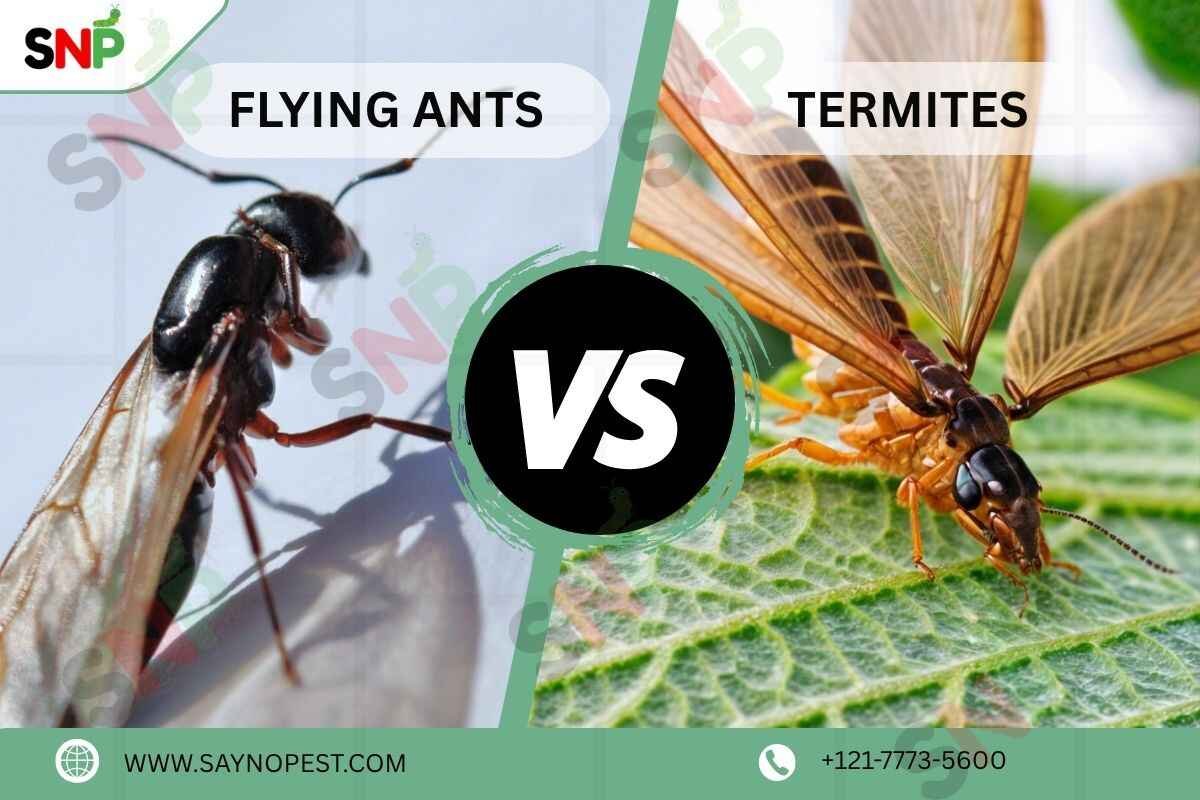
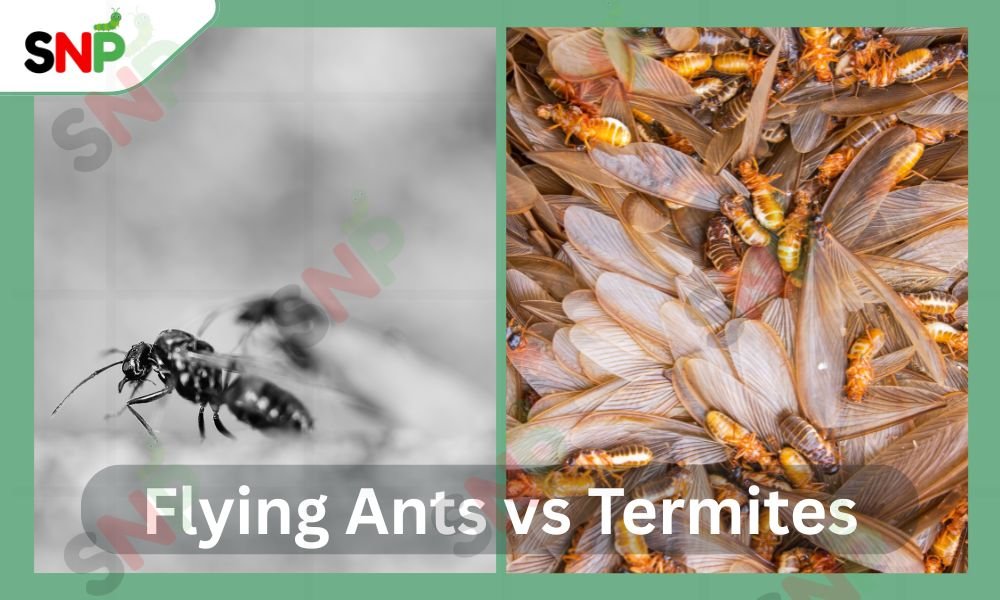
    Flying Ants vs Termites

    Flight Mating termites are highly required for the survival and increase of the termite colony, but, unfortunately, they are going to lead to the extension of a new one when they are ready to leave.

    Most homeowners mistake flying termite specimens for flying ants but need proper identification of these creatures. The proper control of both winged termites and flying ants requires accurate identification since their respective pesticides represent potential dangers to each other. Flying termites only eat their way through wood and are not good for anything else, while flying ants are free of wood and are not truncated to such a state and are the biggest destroyer of them. Flies are responsible for the pollination of plants and flowers. Insects and birds also participate in transporting pollen between the stamen (male) and the pistil

  • Subterranean Termites: The Hidden Threat Beneath Your Home

    Subterranean Termites: The Hidden Threat Beneath Your Home

    If you’re a property owner or manager in the United States, knowing what subterranean termites are can be a vital tool in the protection of your investment. These cunning insects are the top American termite species causing the most harm to buildings each year, which is the leading cause of property damage. This post will focus on the subject of subterranean termites, their appearance, their habitat, the signs of their existence, the harm they cause, and the most effective termite treatment options available in detail.

    What Do Subterranean Termites Look Like?

    Subterranean termites are insects that live in groups, and the groups are divided into three parts, each of which has its form required by the work, thus can be recognised by it. The three parts, also called castes, are workers, soldiers, and reproductives, and all of them have a different job to do.

    Workers

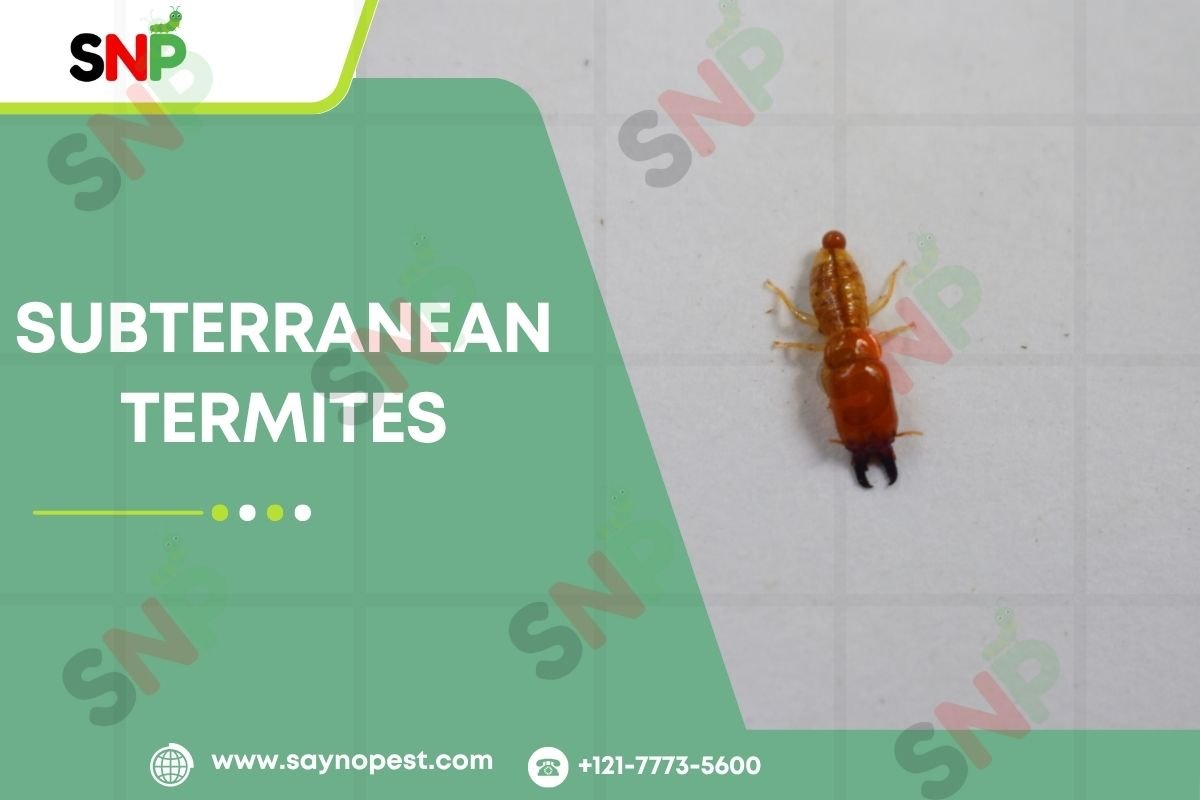
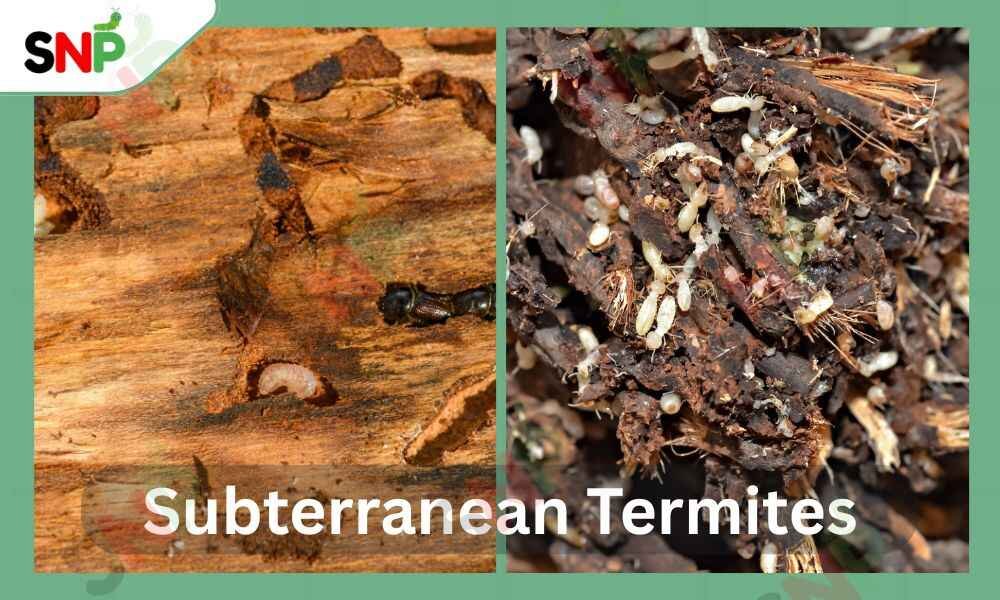
    These have a length of 1/8 to 3/8 inches, are creamy white to transparent, soft-bodied, and without wings. Most of the time, they are the most abundant and are responsible for the feeding of the nest and the collection of the eggs.

    Soldiers

    This group is oversized and small as workers, but they have large, dark brown heads and terrible mandibles (jaws) to protect the group. Their bodies are still cream-colored.

    Reproductives (Alates/Swarmers)

    The colour ranges from dark brown to black, the length of 1/4-1/2 inch, straight antennae, and two pairs of wings equally long and dusty white. They are similar to the flying ants, but the uniform wings and straight antennae make them different from each other.

    Termite Queen

    Termite Queen remains the dominant termite population member through daily egg production of 2,000 and a lifespan reaching up to 25 years. You can seldom detect this essential female as she maintains her position deep in the nest, but her presence drives the growth of the community.

    SUBTERRANEAN-TERMITE

    Habitat: Where Do Subterranean Termites Live?

    To exist, subterranean termites are dependent on moisture so that the colonies they make can be found beneath the earth’s surface or in areas above the ground that are dark and humid/have a lot of moisture. They can be in any U.S. state except Alaska and are particularly abundant in warmer and wetter regions. It’s known that the colonies are positioned 5 to 10 inches below the surface, with the cluster reaching up to 2 million members.

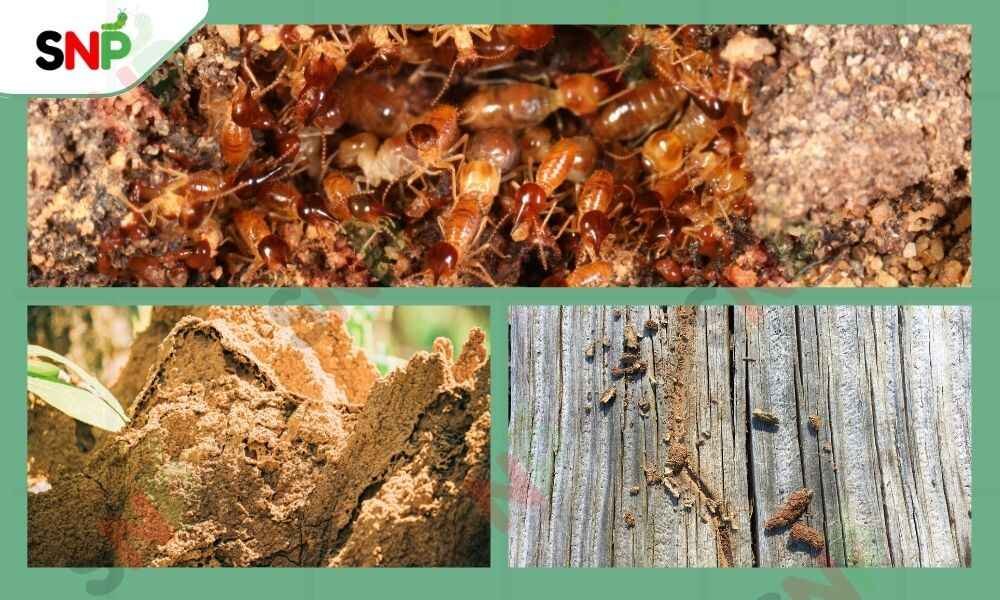
    Subterranean termites establish horizontal mud tunnels as pathways to their nutrition sources through a combination of their saliva and soil material. The tubes function effectively for two purposes because they serve both as predator protection and moisture preservation in arid conditions.

    What Do Subterranean Termites Eat?

    Cellulose is the main component of the major because of which they consume a variety of things, including wood, paper, fiberboard, and fabrics made of plant fibres. They eat along the wood grain and are more comfortable with sapwood; they leave behind a layer of as little as hardwood. With cellulose-digesting protozoa in their gut, they are very efficient wood plagues.

    Subterranean Termite Signs: How to Spot an Infestation

    The sooner you discover the problem, the less harm is done. Watch out for such subterranean termite signs (here are the main signs):

    • Mud Tubes: These are the most visible signs of termites because they are pencil-width and muddy tubes that you can see on the foundations, walls, or crawl spaces.
    • Swarmers and Discarded Wings: Winged termites (alates) show up in spring and summer. Old wings on or near windowsills, doors, or vents are a typical sign of a termite infestation.
    • Hollow-Sounding Wood: Simply tap on the wood; if it sounds dull or hollow, it is most likely that the termites have eaten the inside and only left a thin layer.
    • Buckling Floors or Bubbling Paint: Wood that affected by termites causes the surface paint to blister or the wooden floors to warp.
    • Frass (Termite Droppings): Small piles of frass or hollow material near tubes or sheds.

    Once you encounter these or any of the above subterranean termite signs, you should initiated to prompt action.

    Damage Caused by Subterranean

    Subterranean termites in North America account for 95% of the total termite damage, estimated to be about $2 billion annually. The presence of wood moisture already establishes termite feeding. Even a small colony can cause $2.3 feet of 2×4 board to disappear; hence, the wood quickly gets destroyed. The accumulated effect of this is gradual wood deterioration of the following kinds:

    • Beams, floors, and walls’ structural weakening
    • Buildings that collapsed or are extremely unsafe
    • Repairs that cost a lot and decrease the property value.

    The main reason damage caused by Subterranean termites gets so serious is due to the fact that it is often impossible to notice the damage until it has reached a critical level.

    TERMITE-QUEEN

    Subterranean Termite Treatment: How to Protect Your Home

    Fast and efficient pest control services for termite treatment are of utmost importance for eradicating the menace of subterranean termites. The most efficient methods include:

    • Thorough Inspection by Professionals: Certified pest control technicians use sophisticated technology to find hidden infestations and then suggest suitable termite treatment.
    • Baiting: A new smart bait system, e.g., Sentricon, baits the termites to poison bait, eliminating their base and source of the colony. This is the most efficient of all termite treatment methods, as it offers continuous protection.
    • Liquid Termiticides: Pressurised chemicals in Liquid Termiticides create barriers in foundation soil where they eliminate or deter. Termites that may attack your property.
    • Dehumidification: Your house should remain safe for subterranean termites through indoor humidity control and drainage system improvements, and pipe leak repairs.
    • Soil-to-Wood Contact: Your house foundation should maintain a separation from moisture-containing materials, such as mulch, along with firewood and non-treated wood.

    Proactive detection and regular maintenance are the most efficiently against termite treatment of termites. In the event that you identify any signs of subterranean termites. Do not hesitate and turn immediately to a professional termite treatment service.

    Conclusion

    Subterranean termites are an invisible yet the greatest enemy of residences and companies throughout the United States. Knowing how they look, being aware of their life. Being cautious if there are any termite signs. Using the services of a professional exterminator are the steps you can take to avoid the termites from causing harm. It is important to note that there is always a termite queen working in the termite colony to enlarge the place of living and as a result. Do not let your house be her next target!

  • Flying Ants vs Termites: How to Identify and Eliminate These Pests

    Flying Ants vs Termites: How to Identify and Eliminate These Pests

    The presence of flying insects indoors is disturbing to householders who must determine between flying ants vs termites infestations. These pests have noticeable differences between them despite their initial visual similarity. Knowledge about the differences between these pests becomes essential because termites inflict serious damage to house structures. At SayNoPest, we provide you with all the authentic information about the Flying ants vs termites and help you to make the right choice for choosing the Pest control professional by comparing their service quality, Best seller service, best feature, and many more.

    Physical Differences Between Flying Ants and Termites

    flying-ants-vs-termites

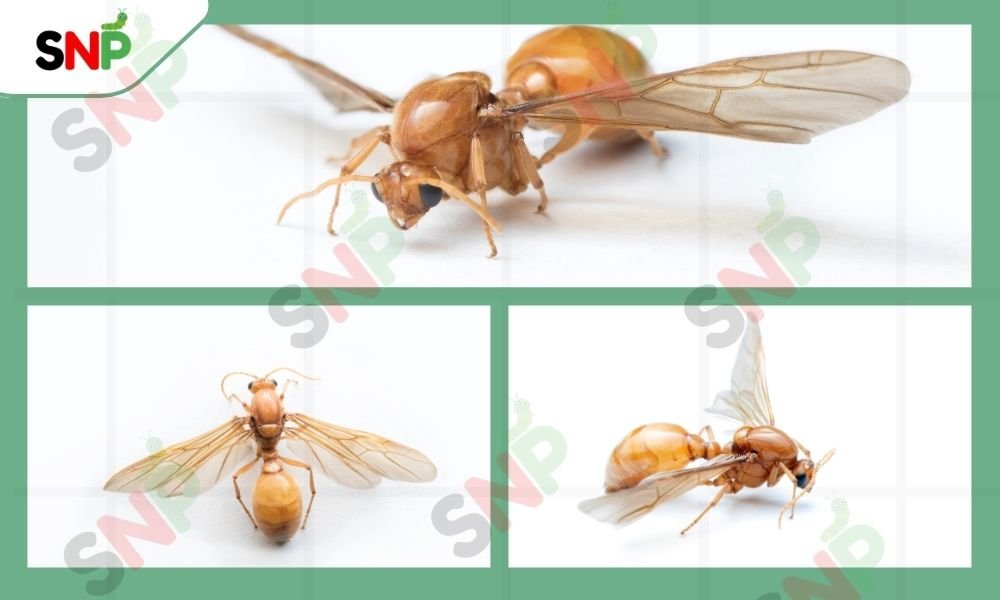
    When comparing flying ants vs termites with wings, look for these key physical differences:

    Body Structure

    • Ants: Their body is divided into segmented with a narrow waist, giving them an hourglass look.
    • Termites: On the other hand termites have a broad waist with a wider body shape

    Antennae

    • Ants: They have bent or “elbowed” antennae
    • Termites: Termites consist of straight antennae

    Wings

    Flying ants vs termites wings differ significantly. Ants have two pairs of brownish wings, with the front pair noticeably larger than the hind pair
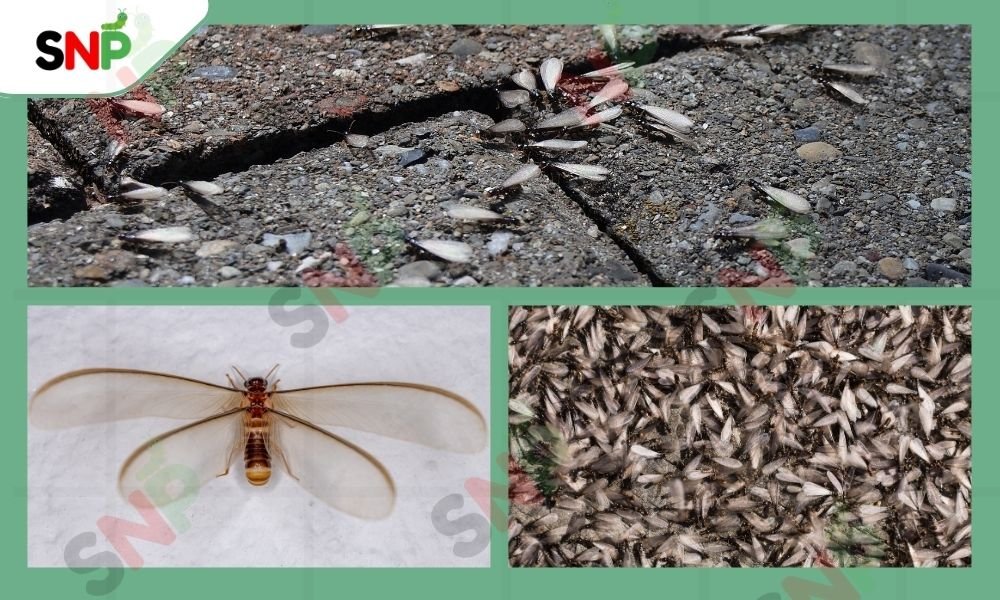
    Termites have two pairs of wings that are equal in length and typically translucent

    Color

    • Ants: Commonly appear black, brown, or reddish
    • Termites: Usually black or dark brown in color

    A fly ant bite may cause minor irritation, while termites don’t typically bite humans but destroy wood instead. These wood munchers can cause a heavy loss of property. Identifying whether you’re dealing with flying ants vs termites is the first step toward proper treatment. When you know the correct difference, you can easily kick them out of your house.

    Life Cycle of Insects

    The development of both ants and termites reflects the variances that constitute the life cycle of an insect.

    flying-ants
    • Ants: Experience full metamorphosis, which consists of four stages: egg, larva, pupa, and imago.
    • Termites: Are in the process of incomplete metamorphosis, in which there are three stages: egg, nymph, and adult – no pupal stage.

    Usually, the lifespan of a worker ant is only 6-8 weeks, whereas the termite queen can last up to several decades. After the mating process, male flying ants expire while females lose their wings to start new colonies. In the case of termites, both females and males remain alive after copulation in order to generate new colonies.

    What is noteworthy about a termite queen is that she may continue to lay eggs for many years and thus run a colony.

    Diet Differences

    A look at what these insects eat makes it clear why termites are causing the most damage:

    • Ants: Eat a variety of foods. Ants feed primarily on nectar, together with seeds and insects, while they also consume abandoned human food.
    • Termites: The diet of termites depends on cellulose, which can be found in wood as well as paper, alongside plants.

    The protective nature of flying ants toward their food supply probably explains their attacks because they normally avoid biting humans. The prime concern of a particular group of ants is the selection and inhabitation of a proper place, although these ants do not consume the wood part as their termite counterparts do.

    Signs of Infestation

    Look for these telltale signs when distinguishing between flying ants vs termites:

    flying-termite

    Termites:

    • Discarded wings in high concentrations
    • Mud tubes on exterior walls
    • Hollow-sounding wood
    • Visible damage to wooden structures

    Flying Ants:

    • Presence around food sources
    • Visible ant trails
    • Small piles of wood shavings (for carpenter ants)
    • Less likely to discard wings in large numbers

    How to Get Rid of Flying Ants vs Termites

    There are different methods for Flying ants vs termites control:

    Flying Ant Control

    • Clean up food spills and crumbs promptly
    • Seal entry points around your home
    • Use a vacuum to remove visible ants
    • Apply appropriate insecticides or bait stations
    • Though a fly ant bite seldom causes anything serious, it is better to prevent the infestation to avoid future bites.

    Termite Control

    • Create a chemical barrier around your property.
    • Use termite bait systems to remove the colony, which include the termite queen.
    • Consider professional treatment for established infestations
    • Remove wood debris near your home’s foundation.

    A professional pest control service offers the most efficient solution to differentiate between flying ants vs termites. It particularly stands out in dealing with termite infestations, which present a structural threat to buildings.

    Your first line of defence that you should count on would be periodic examinations and precautionary actions, which are the best way to shield you against both ants and termites. If you are well informed about the characteristics of the pests, you can ensure the security of your house and family, and at the same time, you can prevent costly damage.