Category: Squirrel

  • Squirrels – Types, Characteristics, and Habits

    Squirrels – Types, Characteristics, and Habits

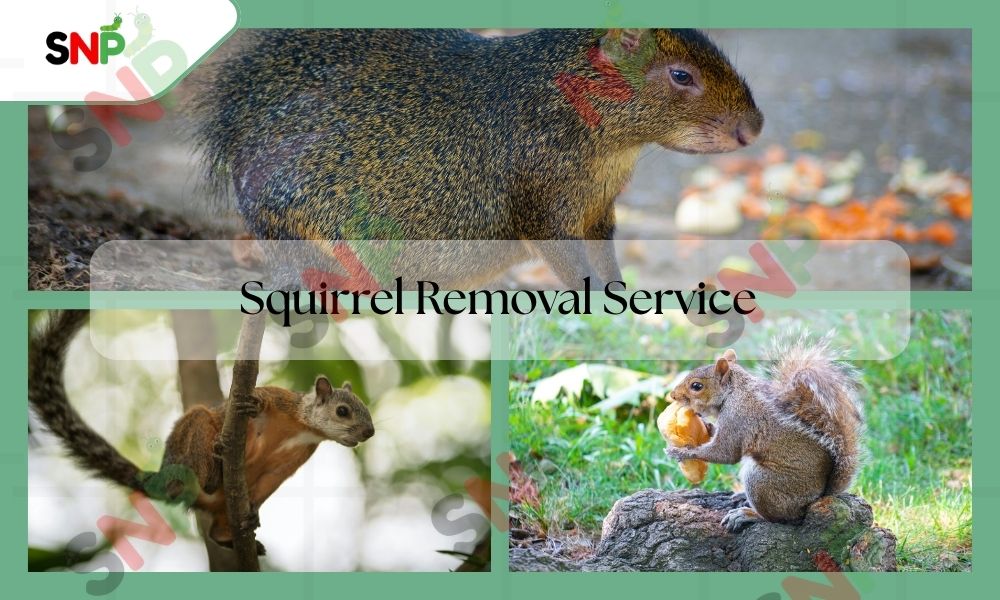
    It is expected that the squirrel is one of the most common types of wild animals in the United States. These small animals are very playful, whether running around the power lines, lawns which is full of grass & nesting in attics. Since they are an important component of nature, Squirrels can be an unwanted guest in homes and properties. Their kinds, their habits, and their behaviour in the season are the initial steps towards prevention, and in the event we need their service to remove them, knowing where to find a suitable squirrel removal service. 

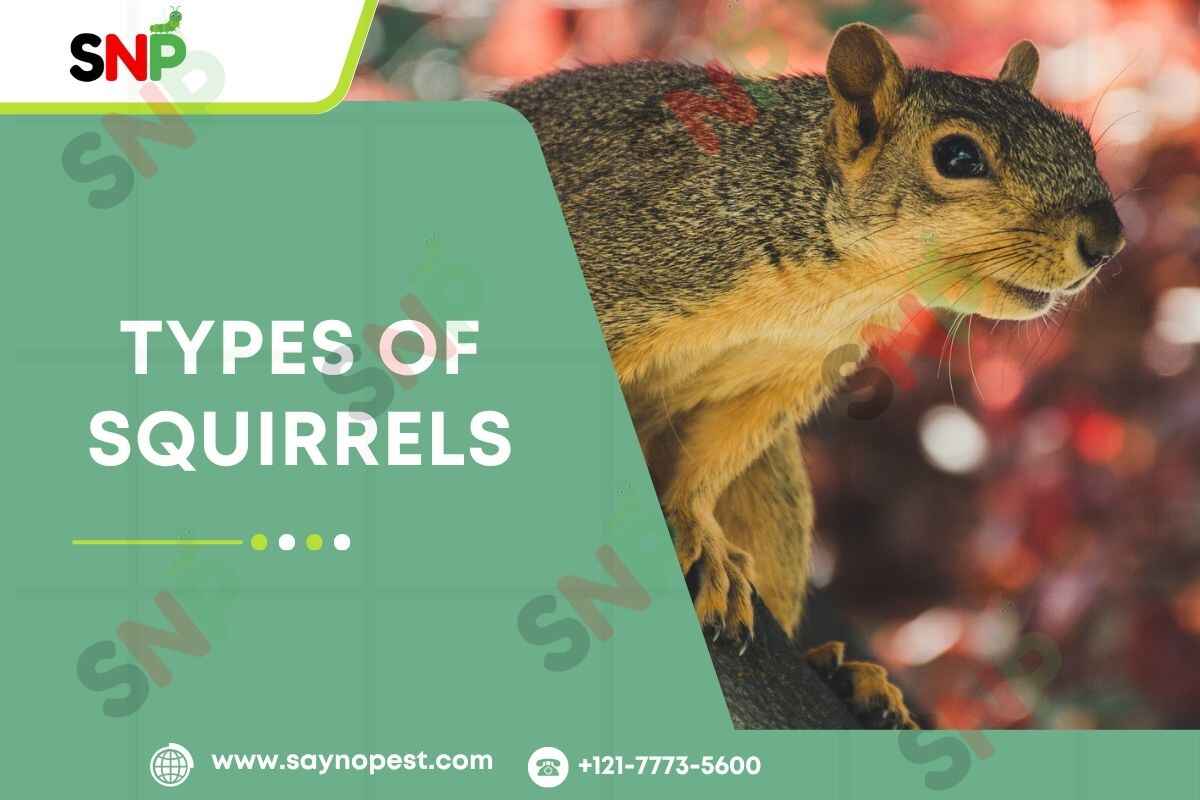
    Types of Squirrels

    Squirrels are divided into three main groups, with their different qualities:

    1. Tree Squirrels

    Tree squirrels are the most common type found in the area where people live. Types like the Eastern Gray Squirrel and Fox Squirrel live in the upper part of the trees and make their nest with the help of leaves. They are great runner and easily jump on trees and make their way into attics or chimneys, which causes problems for the people.

    2. Ground Squirrels

    Ground squirrels such as California Ground Squirrel burrow in the soil. They may destroy gardens, lawns, and create large tunnels underground, and this may cause a major issue with the building foundation. They also spend more time on the ground as opposed to tree squirrels, and can sleep during winter.

    3. Flying Squirrels

    Fly squirrels also, although less frequently observed, fly among the trees by means of a flap of skin known as a patagium. They love the nighttime and make their homes in the attics of the property and causing damage to your property in the same way as tree squirrels

    Understanding the type of squirrel you are dealing with is very important. It helps you when you need to remove squirrels from your home safely.

    Physical Appearance of Squirrels

    Squirrels are small rodents with pointed nails, hard teeth and a long tail with lots of hair, which helps them balance. Their fur is also type-dependent, with some being grey, brown, and reddish. They are fast, nimble and can squeeze through small holes, and this is what makes it very important to seal off entry points when we think of a squirrel removal service.

    What Do Squirrels Eat?

    Squirrels are eclectic generalist feeders. Their meals include:

    • Nuts, seeds, and acorns
    • Fruits and vegetables
    • Tree bark and fungi
    • Sometimes the eggs of insects or birds.

    Their food caching behaviour, burying nuts and seeds to be used in future, is critical to the development of the forest. But when found in residential neighbourhoods, they may destroy gardens and bird feeders in the course of their foraging. By attracting the squirrels to be near the homes, you are more likely than ever to find yourself having to get rid of the squirrels to avoid additional complications.

    Nesting Habits of Squirrels

    Squirrels are good construction workers. The tree squirrels nest in hollow tree cavities or in leafy round nests high up in the branches. Ground squirrels dig holes that have many exits, which form their safety areas against other animals. Most of the squirrels find their home in warm attics, moving spaces or sheds during the colder months.

    When they are inside, they can bite wires, clothes and furniture made up of wood, which leads to heavy repairs. When this happens, householders contact the best squirrel removal service provider to deal with the invasion before the damage becomes too big.

    Seasonal Behavior of Squirrels

    Squirrels can readily change behaviour over the course of the year:

    • Spring: Breeding begins, and they nest still more. 
    • Summer: Squirrels are busy plundering and breeding.
    • Fall: They collect their food for the winter.
    • Winter: Tree squirrels are active, and some ground squirrels are in active. 

    It is a cycle, and squirrels may be a problem any time of the year. In the fall and winter, when it is mostly hunting for warmth, their warmth-seeking behaviour may occasionally cause them to infiltrate human habitation, necessitating the removal of the squirrels from the attic or basement.

    Squirrels and Parasites

    In addition to property damage, squirrels may harbour parasites including fleas, ticks and mites. In other instances, squirrel fleas can enter the house and inflict bites on human beings or pets. Although this health hazard occurs infrequently, it demonstrates one more reason why the timely squirrel removal service is of such importance. Solving the problem immediately not only saves your house but also minimises the chances of exposure to pests.

    Pest Concerns with Squirrels

    Squirrels are not dangerous, but their action can create problems:

    • Chewing damage: Electrical wires, clothes and wood.
    • Garden destruction: Digging up plants, bulbs, and bird feeders.
    • Health risks: Parasites like fleas can come inside the house.
    • Noise: Scratching, running, and biting the attic or walls.

    When these problems come, the best option is to contact an expert who can remove squirrels with the help of a safe method and make sure your home is protected from future problems.

    squirrels- types, characteristics & habitat

    How to Prevent Squirrel Problems

    It is better to prevent rather than cure. Here are some practical tips:

    • Close openings in your roof, attic and siding.
    • Install vent covers and chimney tops.
    • Cut tree branches around your house.
    • Fasten bird feeders and pet food.
    • Keep firewood out of the walls as much as possible to reduce areas of concealment.

    In case of failure in prevention and squirrels have already infested, a professional squirrel removal service can offer humane/safe solutions. The specialists not only eliminate the problem at hand but also assist in avoiding future occurrences of the problem.

    Conclusion

    Squirrels are interesting animals having various kinds, habits and seasonal behaviours. As much as they have a significant role to play in nature, they may be a serious nuisance when they infest homes and properties. Ranging from chewing electrical wires and being a carrier of fleas, the dangers are both feasible and expensive.

    Householders should be vigilant and take appropriate actions, but once the squirrel gets inside the house, the most efficient choice, regardless of what happens, is to get them out by calling in a professional squirrel removal service. You have the opportunity to save your property, health and live peacefully knowing that your house is not threatened by unwanted wildlife.

    Frequently Asked Questions

    1. How long do squirrels live?

    Squirrels mainly live around six to twelve years in the wild, which depends on their type. Tree squirrels live longer than ground squirrels. They can live even longer years with proper care.

    2. What do squirrels eat?

    Squirrels mostly eat nuts, seeds, fruits, and vegetables. They also love tree skin and sometimes small insects or bird eggs. Their mixed diet helps them adjust to different seasons.

    3. How to get rid of squirrels?

    To eliminate squirrels, close openings, chimney radiators, and food sources. Clipping trees around your roof is also a good idea. When they are already inside, it is best to contact a professional squirrel removal service to have it removed safely and humanely.

    4. Can squirrels get rabies?

    Squirrels also carry rabies, but it is not so common. They are not common carriers of the disease. Most cases of rabies come from animals like raccoons, & bats, not squirrels.
  • Chipmunk vs Squirrel: These Common Yet Misunderstood Critters

    Chipmunk vs Squirrel: These Common Yet Misunderstood Critters

    The chipmunk vs squirrel debate causes much more confusion in the United States than any other animal when it comes to garden pests or backyard visitors. These fast-moving furry animals are observed scurrying around by homeowners who cannot be certain of whether it is a Chipmunk or one among the hordes of squirrels normally found in residential areas. It makes a difference knowing the difference only to satisfy your curiosity, but to safeguard your property, and to make informed choices on what to do to eliminate chipmunk and squirrel problems. Take a closer, in-depth read into the distinctions, behaviours, the damage they may cause and tactful ways of tackling them to ensure your place becomes pest-free using saynopest.

    Chipmunk Vs Squirrel Difference

    It’s not that tough to mix up chipmunk and squirrels. Both are rodents, inhabit similar areas and give trouble to residents. But several things set them apart:

    Chipmunk-vs-Squirrel
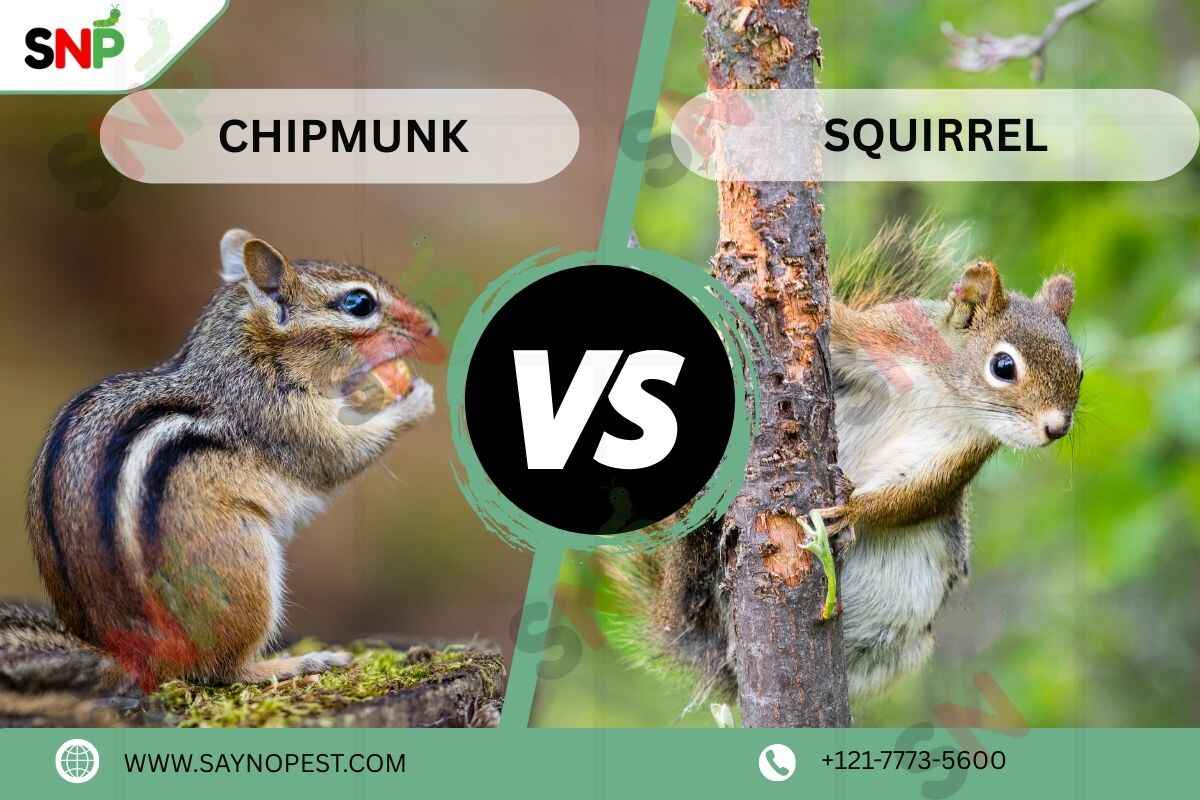
    • Size and Appearance: Squirrels, particularly tree squirrels, are much bigger, about 16–20 inches long with long fur resembling a tail and about 1.5 lbs. Chipmunks are smaller, ranging in size from half to less than 8–10 inches, with slender striped bodies and weighing only a couple of ounces. The stripes on chipmunks are a key trait that is, going from head to tail, while squirrels can have spots or uniform colour, but rarely stripes going all the way down the body of the chipmunk.
    • Habitat: Squirrels live mainly in trees. You will see them jumping between branches or power lines. In comparison, chipmunks are ground specialists and love to burrow beneath patios, stone walls, or gardens, and can climb up when they are required.
    • Tail: The tail has a story to tell — bushy for squirrels, less so for chipmunks.

    Being aware of which animal you are up against is what makes successful intervention and what makes for knowing the special kind of risks each one brings to your home and garden.

    Behaviour and Activity: Who Does What?

    Squirrels and chipmunks are lively creatures that best fit in a bright personality, but also vary in their behaviour differently which makes them very interesting to observe, however difficult to deal with.

    • Activity Patterns: Both are active during the day, but their routine, preferred environment differ. Most of the time, Squirrels just go up and down the trees, and collect their food.
    • Walk up or burrowing: Squirrels are great climber; they have strong legs and sharp nails, and they can climb trees very fast. On the other hand, chipmunks are mainly burrowers. Their elaborate burrow holes allow them to extend as much as 10 feet below the ground, which has their storage rooms and sleeping quarters.
    • Food Storage: One of the distinctive activities of the chipmunk is the use of its cheek pouches to carry seeds in the mouth before concealing the seeds in underground rooms. During the winter, they come out of torpor at odd intervals to do a nibbling on their store. Squirrels store food in several ground locations with the help of good memories to remember it in the future.
    • Social Behaviour: Squirrels are normally found in play chases or even quarrels and sometimes act in small groups, particularly in lively cities. Chipmunks, however, are lonely and bounded creatures, and chip-chip-chip warning calls help them to protect the entry to their burrows

    Squirrel Damage vs Chipmunk Damage

    It is important to know who is causing which damage when considering the situation between chipmunk vs squirrels around your home.

    Squirrel Damage:

    1. Structural Hazards: These are the most frequent structural risks that involve squirrels invading attics and roof spaces where they chew holes in vents, soffits, wiring (this is a severe fire hazard), insulation and even contents.
    2. Garden Pests: They love unearthing flower bulbs, peeling off tree bark, crashing bird feeders, and chewing on decks and fences–and cause serious cosmetic and structural damage in many cases.
    3. Larger Pest- Larger Mess: They are larger in size and taste and usually bring about more devastating and widespread destruction, mostly within even the homes.
    SQUIRREL

    Chipmunk Damage:

    1. Underground Problems: Chipmunks burrow long tunnels underneath the patios, porches, walkways, and foundations. Such tunnels will ultimately loosen hardscaping or cracks may appear.
    2. Garden Trouble: Seeds and bulbs get dug up, and fruits are nibbled upon, and they can even upset decorative plants. But they have less far-reaching effects and are typically not as damaging as squirrels.
    3. Digging, Not Entering: In contrast to squirrels, they do not break into the rooms at all often and instead stay at their digging holes and other outdoor areas close to them.

    The difference is mostly in the scale; squirrels are masters of massive and extensive damage, particularly to the interior, whereas chipmunks are slow to build up damage in the exterior.

    How to Get Rid of Chipmunks & Squirrel

    When it comes to a chipmunk vs squirrel infestation, you will want to base your strategy on the perpetrator. However, most of these strategies overlap and this is what is most effective in your American home. It is important to know how to get rid of chipmunks & Squirrels. Follow these points:

    Chipmunk

    Repellents

    Squirrel repellents. Most commercial chipmunk repellents also repel squirrels. You may apply sprays, taste-aversion products, or granules everywhere, including around gardens and entry points. Some of the natural ones involve sprinkling cayenne or planting daffodils and alliums around the garden (both of which are disliked by the animals).

    Physical Barriers

    Put in mesh fencing, weighted to at least 8 inches depth to prevent tunnelling, and fabric to deter and prevent digging. To keep both pests out of your yard, block all the small holes and cracks or the entry point.

    Clean Up and Remove

    Remove fallen seeds, nuts as soon as possible. Store the pet and bird’s food in the best containers. Clear any clutter in the yard- keep woodpiles, rocks, and bushy growth to a minimum as places to hide.

    Traps and deterrents

    Live traps work, but you must ensure you follow up on regulations of local areas when it comes to relocating wildlife. In the short term, predator decoys may be effective (though the decoys should be changed frequently to work).

    Maintenance

    Check your attic, siding and foundation regularly to make sure no new holes have appeared and take care of them at once to keep both a step ahead of squirrels and chipmunks.

    Putting together these strategies, particularly careful cleanup, protection-barrier, and considerate repellent application, is a perfect way to prepare yourself on how to eliminate chipmunk vs squirrel problems around your home. To people requiring professional help, SayNoPest provides professional help and the most modern pest management services.

    Conclusion

    Knowledge of chipmunk vs squirrel activity could be an asset to you, and cost savings to your pocketbook. Although there is plenty of room to confuse the two, distinguishing features of the two leave behind different paths of evidence, such as the burrows and food stores, attic damage, and garden raids. Squirrels will balkanise your attics and up on high, whereas chipmunks are your subterranean moles. It is not enough to know the difference between the two; the trick is to act quickly and thus efficiently.

    With attention to prevention, regular upkeep, and correct remedies, you can eliminate (or at least reduce) both squirrel and chipmunk problems, so your backyard will be a refuge, not a battlefield. To learn to remove the chipmunks & squirrels permanently, rely on the given tips and address the experts of SayNoPest – the team of professionals in matters of reliable and American-oriented pest control consultation. Looking out over a city lawn or country garden? It is very important to understand the difference between chipmunk vs squirrels as this will help to deal with them.

  • How to Get Rid of Squirrels in Attic: A Short Guide

    How to Get Rid of Squirrels in Attic: A Short Guide

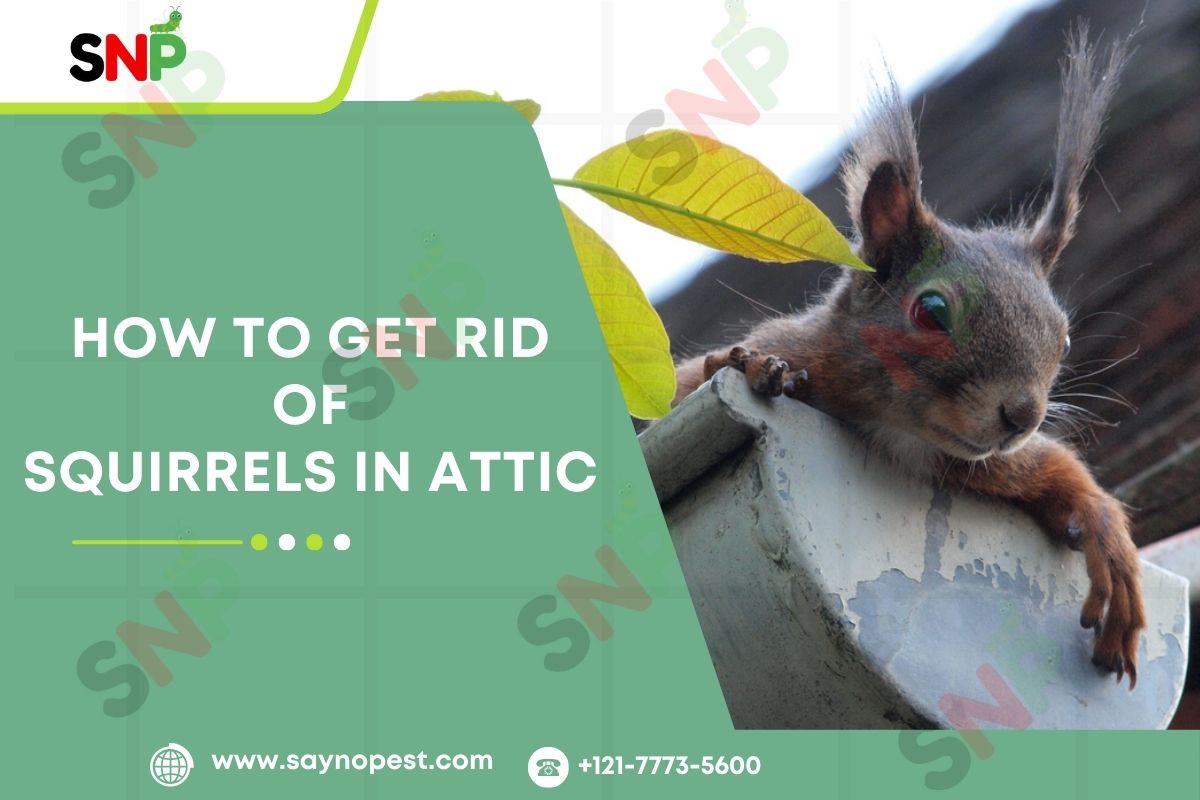
    Squirrels will cause a scratching, scampering or gnawing noise above in the attic. Many homeowners experience the problem. They produce constant noise, may eat through wood and other insulation, causing damage, and are most dangerous, chewing on electrical wires, creating a fire hazard. Their refuse is filthy and infested with insects. The more squirrels remain, the more they cause damage that is hugely expensive. Once the question of how to get rid of squirrels in attic reduces to little more than the removal of an unwelcome pest.

    How Do Squirrels Get Into Your Attic? Common Entry Points

    How-to-Get-Rid-of-Squirrels-in-Attic

    Squirrels are smart and take advantage of the situation. They are small & flexible, they can make their body small to enter a small gap. Normally, at entry points, there are:

    • Roof gaps: This is where roof shingles have been damaged or are missing.
    • Vents and chimneys: Chimneys and vents that are not capped or capped with loosely screened cappings are prime targets.
    • Soffits and fascia boards: Soft areas on a weak piece of wood or a piece of trim can be nibbled open.
    • Gable vents, roofs and edges, and plumbing mats: these structural overlaps always cover small cracks or gaps.

    Check these sites for chew marks, loosening boards or droppings to prevent a problem prior to its development. After understanding how to get rid of squirrels in attics it is important to close all the gaps.

    What Do Squirrels Hate the Most?

    The most important pillar to control in the long run is the knowledge of what squirrels hate most. Bad smells, in particular peppermint oil, capsicum (used in hot peppers), and white vinegar, are all highly offensive to them. Garlic, cinnamon, and coffee ground also does the same; they also help in removing the squirrels. These natural ways of deterring the squirrels can make them wary of getting inside. One other deterrent is noise. Squirrels hate noise, and boisterous radios, wind chimes, and even bright lights may scare them off. An experience of a smell mixed with sound can render your attic unfriendly to these pests

    Chipmunk vs Squirrel

    There are many people who do not know the difference between chipmunk vs squirrel. When dealing with attic invaders. Both types belong to the rodent family; their behaviour and impact are quite different.

    Squirrels

    • Adult squirrels are long and they have a hairy tail.
    • Tend to be grey or brown, with no stripes on either their bodies or their faces.
    • They prefer living in trees and are associated with getting into attics and other places in houses.
    • Generally inflict destruction through nibbling in wood, insulation and electrical wires within residential places.
    • Place feed in various out-of-sight places.
    Chipmunk-vs-Squirrel

    Chipmunks

    • About half the normal size, around 4 7 inches in length with a shorter, not as bushy tail.
    • Easily identifiable with light stripes down the backs of their body and across their faces.
    • They spend most of their life underground in burrows and rarely crawl into attics.
    • They are well known to dig in gardens and under porches instead of damaging the attics
    • They store food in their mouth, cheeks for eating later.
    • All these variations easily enable one to notice the difference between a squirrel and a chipmunk inside or around your house.

    How to Get Rid of Squirrels in Attic

    To know how to get rid of squirrels in attic, the following steps are workable to evict them and keep them out:

    1. Find Entry Points
    • Spot the holes, chew marks and nesting.
    • Check during the day for any daylight to shine at you through the cracks.
    1. Kick out the Squirrels
    • Make your attic unfriendly: Ask the lights to be bright, or play the radio loudly.
    • Make use of strong odours: saturate rags with vinegar, peppermint oil, or use store-bought repellents with natural irritants.
    • Put special exclusion doors with one-way access over the primary entrance so that squirrels can escape, but not go back.
    1. Trap and Relocate (more so as needed)
    • Place live animal traps (with peanut butter or seeds) where squirrels show activity.
    • Inspect traps frequently. After being captured, take the squirrel to a distance of a few miles in accordance with the local laws.
    1. Cover All Cracks
    • When you are confident that all the squirrels are out–there are no baby squirrels around–sheath every conceivable opening with steel mesh and caulk.
    • Cover vents with a metal plate or hardware cloth, chimneys and soffits.
    1. Clean/Disinfect
    • Remove the nests, the droppings and the damage products.
    • Wash the attic using a disinfectant to get rid of odours that can be used as a lure by future infestations.
    1. Eyes and Repairs
    • Pay frequent visits to your roof and attic to make sure that your house is free of new activity.
    • Think about continuing repellents (smell-based or commercial) during susceptible seasons.

    In case of the seriousness of the problem, how to get rid of squirrels in the attic may necessitate an expert solution, that is, pest control. The specialists do not only get rid of the pests but also make sure they completely gone and entry points are block.

    Conclusion

    Attic squirrels are not only undesirable visitors to your home, but they can pose a danger to its security, comfort and property value. To figure out how to get rid of squirrels in attic, a combination of eviction, exclusion, cleanup, and prevention should occur. A combination of some loud smells, sounds, physical obstructions and some persistence will bring your tranquillity back.

    In case you feel frustrate and you require fast yet professional assistance, remember SayNoPest. We offer professional advice and reliable affiliate leads on how to remove squirrels in the attic, making your home secure, peaceful and comfortable for the family.

  • Where Do Squirrels Live? An In-Depth Guide for Homeowners

    Where Do Squirrels Live? An In-Depth Guide for Homeowners

    How often have you seen the bush-tailed rodent scurrying across the yard, or heard scratching in the attic, and thought of where do squirrels live and why they, for some reason, take lodgings in our homes? Save your home and garden from unwelcome furry visitors and learn to humanely and effectively get rid of squirrels by getting to know some of their habits. This all-inclusive guide will discuss the natural habitats of squirrels, reasons why they trespass into your home, and doable but realistic measures, such as how to keep the squirrels off your garden to keep your premises pest-free.

    Where Do Squirrels Live & Why Do They Enter Our Homes?

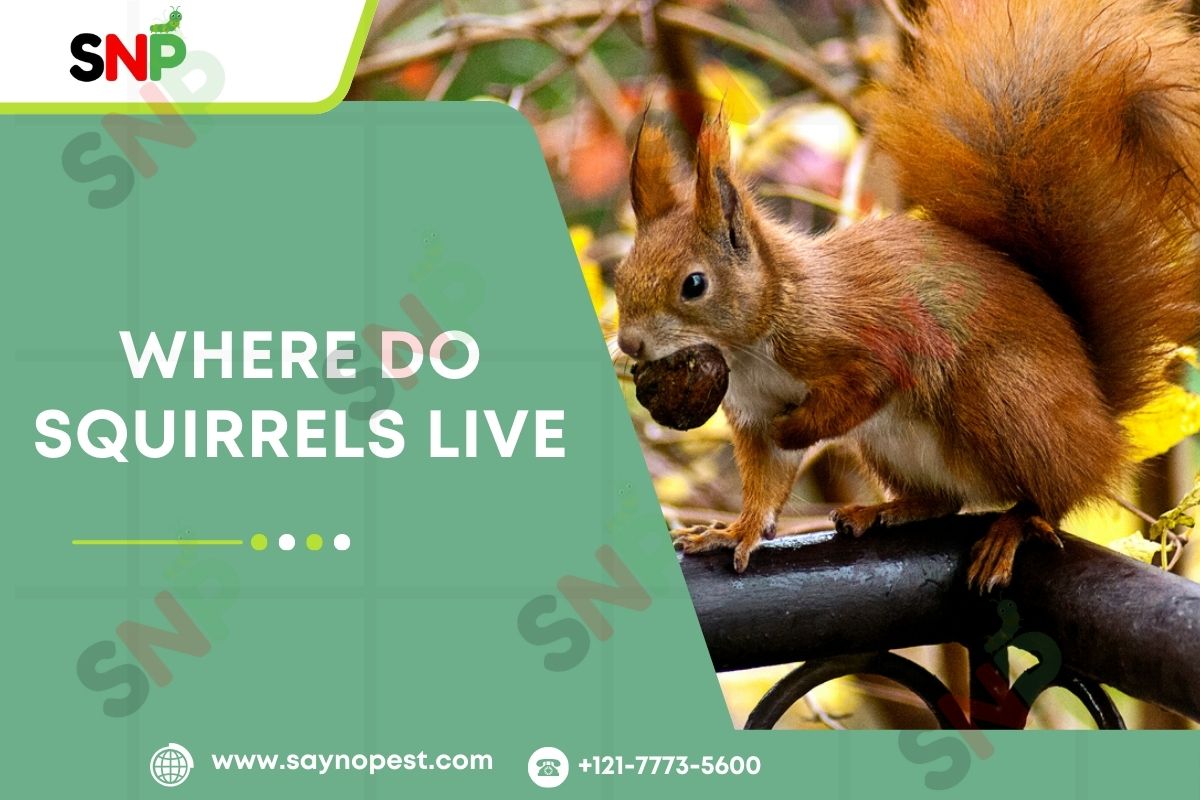
    Squirrels are very versatile rodents that exist in nearly all areas within the United States. One of the reasons why they survive is their impulses to find a safe nesting, food storing and young-raising spot. Of course, where do squirrels live depends on their type. , but in the urban and suburban setting, they move towards houses because they have shelter as well as food, and generally are safe.

    where-do-squirrels-live

    Some of the common reasons why squirrels live in our homes include:

    • Nesting: Attics, chimneys and wall cavities resemble tree holes.
    • Food: Many things can attract squirrels to enter your home, like bird food, pet food, or an open dustbin.
    • Safe space: Squirrels enter your home in search of a safe space where they can make their home in peace.

    It is these needs that make squirrels check out all the nooks and crannies, including crawl spaces, rooflines, basements as well and garages. Squirrel pest control is done in cases where they cause damage to property or health-related complications.

    The Different Areas Squirrels Live in Our Homes

    Squirrels do not discriminate when they intrude indoors; they will seize any place with shelter that is warm. The common places are:

    • Attics: These are the favourite hideouts of squirrels as their attics serve as good insulation material to make their nests.
    • Crawl Spaces and Walls: Easy entry is through tiny openings, and Crawl spaces and walls are dark and safe.
    • Chimneys: They are especially welcoming in winter.
    • Garages and Sheds: Human beings do not frequent them as often, and this makes them low-risk havens.

    When they get inside, the squirrel may create big problems, chewing on wires, wood and insulation, and this is the reason why squirrels need to remove.

    Where Do Ground Squirrels, Tree Squirrels, and Flying Squirrels Live?

    It is always nice to get to know the preferences and likings of the various species of squirrels before you call in the snake removal or removal expert:

    Ground Squirrels

    Spotted, thirteen-lined, and Richardson ground squirrels are just some of the examples of ground squirrels that prefer getting around in open landscapes that include grasslands, prairies, fields, even golf courses and cemeteries. They live in dry and well-drained soils, and they develop large burrow networks with many entrances- this provides protection when there is a potential predator and when there are unfavourable weather conditions. The ground squirrels search out places where they find ready food sources and soft soil before they settle.

    Tree Squirrels

    The tree squirrels (such as the gray tree squirrel and the American red squirrel) are spot in woodlands, parks, and urban neighbourhoods with establish trees in abundance. They prefer trees of considerable quantity and true varieties of oaks, pine or maples because these are necessary food and shelter for hole nests. They will replace the tree cavities with attics, eaves, and cavities, especially where there is easy food available, such as seeds and nuts, in cities and areas closer to cities. There is high activity of tree squirrels in urban areas where there are trees and feeders.

    Flying Squirrels

    Flying squirrels (particularly the southern flying squirrel) are fond of mature deciduous and mixed forests within the east in the eastern U.S. They seek places that have many trees and a lot of cover, preferably not in intensively developed places. These crepuscular animals nest in the natural holes of tall trees and fly through the trees in search of nut products, fungi, and insects. On some occasions, they might get into attics, particularly when forests are near and in cases of easy access.

    How to keep squirrels out of garden

    how-to-keep-squirrels-out-of-garden

    A good garden is an invitation to squirrels. Being aware of the means of how to keep squirrels out of garden is going to save you hundreds of dollars in crop and plant destruction, as well as the discouragement of indoor intrusion. The following is how your outdoor spaces can guarded:

    • Cover Crops: Putting chicken wire, hardware cloth or row cover around garden beds works to protect the vegetables, burrowing 1 foot down as a barrier.
    • Repellent Scents: Squirrels dislike strong smells, and hot pepper flakes, peppermint oil, and coffee grounds are some of the scents.
    • Decoys and Deterrents: Place plastic owls or rubber snakes, or sprinklers that come on when the squirrel is detect, to scare away the stubborn squirrel.
    • Squirrel removal plants: There are some plants which squirrels do not like, for example, marigold, etc. Their smells cause problems to squirrels, which leads to their removal.
    • Dustbins: Keep your dustbins properly; they should be tightly closed, and avoid leaving the fruits and nuts in an open area. Garbage cans should be closed tightly and avoid leaving fallen fruit and berries around
    • Regular Fixing: Cut the branches of the trees at least 6-8 feet off your house so that the squirrels have very few pathways to your house.

    Using these how to keep squirrels out of the garden together has an outstanding effect in curbing the activities of the squirrels and in preventing them from breaking into your house.

    Conclusion

    Knowledge of where do squirrels live helps you to reduce the number of confrontations you have with these smart rodents. Learning the environments where squirrels prefer to live, such as under your deck, in your attic and between your vegetable beds, you will be able to know their next move and prevent this damage. Once squirrels have discovered an opening, the most important thing is to get a timely and humane squirrel removal before damage already takes place and your peace of mind is compromised.

    After all, the most effective long-term way is to reduce the attractiveness of your home and garden by employing the techniques listed above–the most effective ones being the nut-scatterer and the way to keep squirrels out of the garden. If you are dealing with an ongoing infestation situation or are unsure how these actions can be carried out, then SayNoPest is the best person to go to and carry out the action of the squirrel elimination in the best possible manner and without any worry.

    Prevent squirrels from using your place as their playground and trust SayNoPest to provide you with the most reliable suggestions and procedures regarding squirrel avoidance and squirrel elimination

  • Squirrel Removal: Protecting Your Home with SayNoPest

    Squirrel Removal: Protecting Your Home with SayNoPest

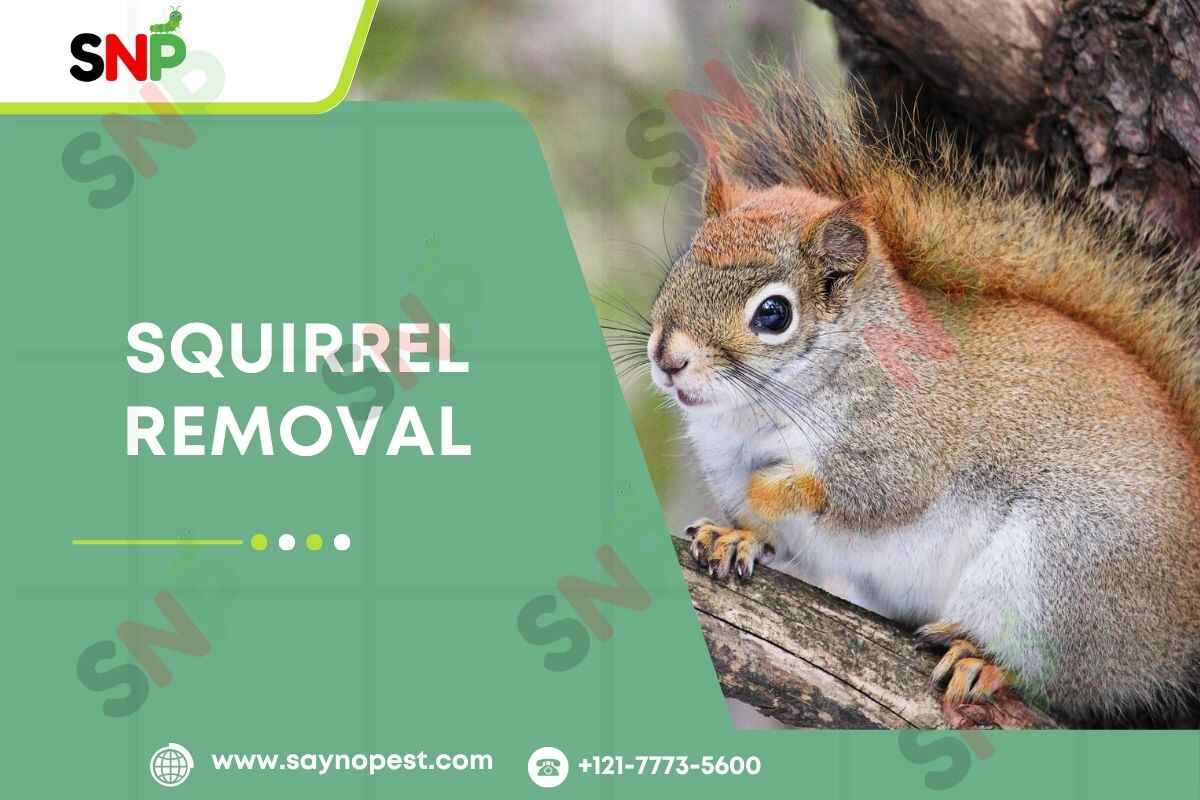
    It may seem that squirrels can be harmless creatures as they dash across your yard, but once they penetrate your house, they can turn into an extreme menace that cannot overlook easily, which is why squirrel removal should consider a highly important undertaking among the people residing in the United States of America. These aggressive rodents may end up creating a lot of destruction by gnawing not only through electrical wires and insulation but also through the structural wood, thus causing great loss by creating a risk of fire, and also by fixing the damages which can be very expensive. In addition to noises and messes squirrels cause at all times, they also present serious health hazards in terms of droppings and parasites.

    By being aware of the symptoms of a squirrel infestation and knowing where do squirrels live, you will be able to take some action to defend your property and your family. It is always important to learn how to remove the squirrels in the attic and other expose quarters promptly to ensure that your house is well taken care of and pest-free.

    Why Squirrel Removal Is Necessary

    Squirrels-Removal

    Where home intruders are concerned, there is hardly one more stubborn than the squirrels. These apparently adorable animals may be scurrying across your backyard, however, when they gain access to your property, squirrel removal is a must to all American homeowners. Why? Squirrels are a major menace once they have decided to transform their attic, roofs, chimneys and even the walls to their permanent homes.

    To begin with, squirrels are known to great chewers. These gnawing can harm your electrical wiring, insulation and wooden beams causing fire hazards and fixing this will be costly. The sound of scratching in the morning or towards the end of the day is likely to be them. In addition to the noise and aggravation, the incapacitated squirrels will leave behind urine and droppings which causes unpleasant odors and endangers the health of your family, such as; flea, tick and mite infestations. To protect your family and prevent losses on your investment you should also have fast and humanly squirrel removal services.

    Common Signs of a Squirrel Infestation

    Understanding squirrel problem is important as it help in dealing with the problem before it becomes too big. These are the points that should keep in mind:

    • Different Noice: Scratching, skittering, or chewing, mainly at dawn or dusk, are some of the common signs that you have squirrels.
    • Nests constructed of trash: Defective insulation, twigs and cardboard are just some of the materials that the squirrel builds in to create fine nesting spots in attics or roofs or chimneys.
    • Droppings: Pellet-like droppings are deposit in corners or attic beams, and in some cases strong smell of ammonia is emit
    • Chewed electrical wires and timber: The chewing of electrical wires, holes on the vents and roofing (which are often gnawe) and gnaw marks indicate almost certainly that the presence of squirrels.
    • Activity of the squirrels: The presence of squirrels running along the roof or seeing them hole up into tiny holes is quite a bright red signal.

    When you notice these escapades, it’s important to consider the existence of squirrel removal to prevent the worsening of damages.

    Where Do Squirrels Live

    Being aware of where do squirrels live, homeowners will be a step ahead of them. Types of environments that squirrels can live in are numerous and vary across the states of the United States. Of course, they reside in forests, parks and residential areas of cities. Popular ones are the tree squirrels who live in forests and even in cities near food sources and the ground squirrels who inhabit prairies or deserts or gardens by burrowing.

    Nevertheless, due to loss of natural habitats or in the quest to find warmth, a lot of squirrels tend to occupy households. Attics, chimneys and other parts of the home provide the same type of nesting place as trees caves. Awareness of where do squirrels live gives you the power of being able to strengthen those areas and make it even more inaccessible to the clever squirrels.

    Where-Do-Squirrels-Live

    How to Get Rid of Squirrels in Attic

    Are you one of those people who have discovered they are not alone in the attic and want to know how to get rid squirrels in attic? Eviction is carefully evicted by humane means, accompanied by prevention, and is the gold standard of squirrel eviction.

    1. Locate and block entry points: Look around your house and find any holes that have chewed off, vents that are dangling, or even the spaces under your eaves. These are the squirrel-highways!
    2. Humanely trap: Squirrels can caught using live traps baited with peanut butter or seeds and these kill less. Pay attention to the traps: check and do not touch them accidentally with your hands, not even through a thick glove.
    3. Control squirrels: Trapped squirrels will move several miles away and it is necessary to move them preferably in a wooded area so they cannot find their way back. This is crucial when evolving the removal of the squirrels.
    4. Caulk all openings: Once everything is out, seal any openings so new ones cannot get in. Protect in the long run using such robust materials as wire mesh and caulk.
    5. Repel and scare: Placing bight lights, loud music or spraying with smelly repellent (ammonia or apple cider vinegar) will serve to scare off any straggling squirrels.
    6. Pest exterminators: You might want to consider employing professional pest control persons to get rid of stubborn or severe cases of squirrel removal. Calling pest control experts such as SayNoPest will leave the building pest free and safe.

    These measures will keep your attic away to the squirrels. Bear in mind, good solutions can not only fix the question of how to get rid of squirrels in attic, but prevent their possible reoccurrences later.

    Conclusion

    Have an authority to deal with squirrels? You can’t afford to lose a coin or get bite by postponing. Recognizing the symptoms of the infestation and knowing where do squirrels live, you will be able to keep your home off the risk of invaders. Safe and effective squirrel removal techniques will safeguard your property as well as the wildlife and this will portray plenty of responsibility. Regardless of whether you take the task on your hands or hire professionals like SayNoPest, the squirrel removal should always be addressed proactively by the every American resident.

    It just requires vigilance, speedy action and the apt strategies. They have specialized skills; when such care is required, you can depend on SayNoPest to do them at your service in a professional and safe manner. Squirrels will not disturb your peace, but rather take some time to identify effective and humane ways of eliminating squirrels in your home with use of professional services!

  • What Do Squirrels Eat? Understanding a Squirrel’s Diet

    What Do Squirrels Eat? Understanding a Squirrel’s Diet

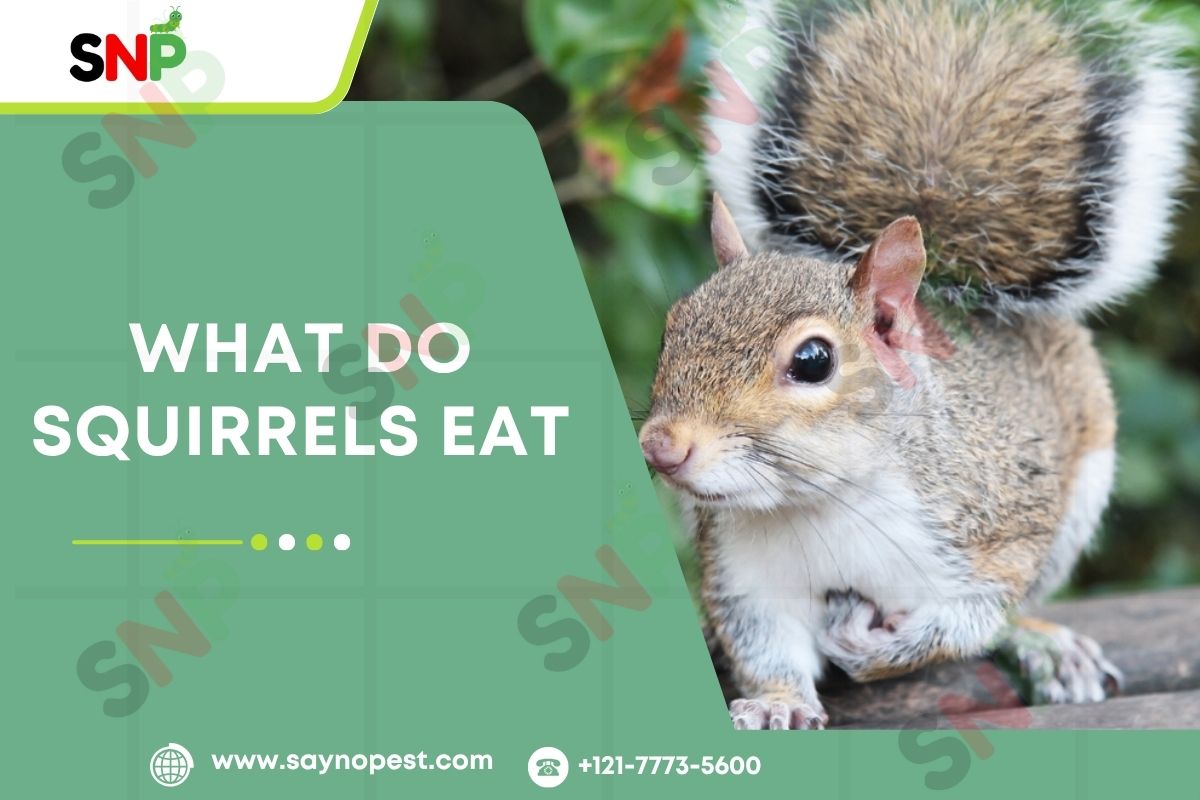
    Have you ever seen a squirrel running across your yard or scampering up a tree, and the squirrel around here and have to wonder what do squirrels eat? It is the conundrum that has stumped many diggers, planters and animal lovers. When you know the answer, it will not only be a matter of curiosity but also how to avoid occasions of squirrels on your property and ways of ensuring that they do not visit your garden or home. The squirrels are everywhere in the U.S, &, like the place where they live, their food choices are more.

    Do Squirrels Eat Meat? Interesting Facts

    Although the major population tends to visualise squirrels holding acorns or nibbling on the seeds located in bird feeders, these tiny fellas are not exclusive vegetarians. Factually, squirrels also have a rather varied diet, which involves some animal protein sometimes. They eat nuts, seeds, fruits and plant material, but when they have the chance, they will eat meat. A squirrel is not unlikely to grab a fat insect or a bird egg, or even a baby mouse or nestling when there are fewer plants to find. This selfish act enables them to live when food is scarce. Nevertheless, they constitute a small fraction of his total diet, as animal products are not their primary diet is plant-based foods.

    What-Do-Squirrels-Eat

    What Do Squirrels Eat

    The food that a squirrel eats is not always the same. It is good to be conversant with these changes when one wants to get to know how to stop squirrels in garden, how to stop squirrels in the garden and how to keep squirrels out of garden or how to stop squirrels in the house.

    • Spring: the awakening world, because squirrels are eating tree buds and tender shoots and the first flowers of the spring. They are fond of mushrooms, as well as fresh fruits, the sweet drops of the flowering trees.
    • Summer: There is plenty of food. The squirrels widen out their menu to include a selection of berries, fruits, and vegetables and now and then a juicy kernel of corn. It is also at this time that you can see a baby squirrel snacking on fresh foods as it goes through the learning process with its mother.
    • Fall: Autumn is the season when squirrels go. They begin squirrelling–acorns, walnuts, peanuts and hazelnuts are buried, or secreted in holes of trees. They have an impulse to save food, winter is coming, and fruit and other natural food are scarce.
    • Winter-There being snow on the ground, the squirrels have great need of their caches. They also eat fungus that is stored, and also chew bark, as well as dig up nuts and seeds. They can starve to the extent of making their way to your attic to find their calorie needs.

    These appetites change, and this is why sometimes you may find squirrels in gardens, through garbage, or sometimes chewing siding/attic vents. Have you ever seen an increase in squirrel activity at specific months? This could be happen due to climate change.

    How to Keep Squirrels Out of Your Open Space

    Most people in the USA are like their beautiful yards. It is essential to learn how to keep squirrels out of garden areas to prevent the problems this animal causes, including destroying your plants and causing extra damage by tunnelling into your precious sites. Use several strategies with one aim to build a strong defence:

    1. Physical obstacles: Cover your plants using bird netting, row covers or chicken wire to place a physical barrier around your vegetables and flowers. Barriers should also be buried at least a foot in the ground because squirrels are known to dig.
    2. Plants that Remove Squirrels: There are many plants which squirrels do not like marigold, mint & many more.
    3. Peppermint oil and scents: Squirrels don’t like the smell of peppermint oil and peppermint. Use peppermint oil or sprinkle coffee grounds regularly in your garden beds to use a biologically friendly keep-away.
    4. Make food sources inaccessible: Trash cans should be closed, fallen fruit should be picked up, and pet food should be kept off the ground. Reduced temptations will lead to reduced surprises in your garden.
    5. Fake predators: Though this might sound rather macabre, erect fake owls or rubber snakes in your yard and move them around frequently to maintain the illusion and keep the squirrels on their toes.

    Applying these tips to get rid of squirrels humanely, it is possible to identify how to make your garden investment safe, and plant and baby squirrel visitors safe as well.

    How-to-Keep-Squirrels-Out-of-Garden

    Squirrel Diet Quick Facts: What They Eat Most

    Wanting to be sure you have the required answer to a question as to what do squirrels eat every day, here goes a brief overview of their preferences:

    • Nuts: acorns, walnuts, pecans, hazelnuts, beech, pine and macadamia.
    • Seeds: sunflower, pumpkin, & now then grains.
    • Fruits and vegetables: apples, grapes, corn, squash, carrots, broccoli.
    • Herbs and trees, springing up and flowers.
    • Fungi: mushrooms of every variety and especially the summer mushrooms.
    • Ducklings, insects, bird eggs, nestlings, small animals, etc.–kept in check by sthe carcity of plant foods.

    Keep in mind that the biggest no-no food that should never given to a squirrel would processed human snacks and junk foods, as it will develop serious health problems.

    Conclusion

    Next time you encounter a busy squirrel in your yard, keep in mind that all they are doing is doing what comes their way to survive. The reason why the question what do squirrels eat is important is that it not only addresses a usual wildlife question but also has the benefit that now you should know what do squirrels eat and therefore can make educated choices on how to keep squirrels out of the garden or how to get rid of squirrels whenever you feel the need. A set of deterrents combined with habitat management can be quite miraculous when you are suffering from the same old poorly behaving squirrels. Both a homeowner concerned about damage to his/her property, and a backyard wildlife enthusiast concerned with maintaining a balance of visits, the most effective tool is knowledge.

    To learn more and find other solutions for controlling pests, go to saynopest, your new trusted companion when it comes to tricking even the smartest vermin.

  • Do Squirrels Carry Rabies? The Real Risks & Safe Practices

    Do Squirrels Carry Rabies? The Real Risks & Safe Practices

    Rabies is one of the first things that comes to mind for people in America when it comes to the threat posed by wildlife. To some people, the fears are local ones because they involve the squirrel population. It makes people feel anxious knowing that squirrels could give them rabies, and people contact many parents and pet owners. This is mostly based on a misconception of how rabies functions and the probability of danger caused by the squirrels. Well, here are the facts about do squirrels carry rabies to ensure that your family and pets are safe, and highlight the obvious measures that you can take in the process, like squirrel removal, should the need arise.

    Do Squirrels Carry Rabies? Here’s the Truth

    The brief response to the question of do squirrels carry rabies is that, although squirrels can succumb to the rabies virus, the number of cases is amazingly low. Scientists and pest control experts report that squirrels are one of the least likely mammals that contract or transmit rabies in the United States. Health authorities’ reports help to support the fact that there has never been a documented situation of an individual contracting rabies as a direct result of a squirrel bite in the US.

    Do-Squirrels-Carry-Rabies

    Why should that be so? Squirrels, similar to most of the small rodents, rarely spread rabies because of the following two reasons:

    • Natural Susceptibility: A squirrel is very prone in case of an assault by predisposed rabies animals (such as raccoons, skunks, or bats). Most of them, however, are kill easily in any such encounters and do not live long enough to develop or transfer rabies.

    Therefore, although the questions surrounding do squirrels carry rabies may have taken different forms, the actual risk of being attack is low compare to other wildlife animals. Nevertheless, caution is never a bad precaution, and this brings us to danger signs.

    Signs of a Rabid Squirrel: What to Look For

    Although the chances are low, the likelihood of preventing rabies in your pets and family is high, as you know the symptoms of rabies in wild animals. The majority of squirrels are active, talkative and are incline to avoid people. A healthy squirrel will dig, run, chase or go up trees, not come up to humans!

    Here are some of the signs to watch out for to see whether a squirrel is sick or not, perhaps with rabies or another disease:

    • Aggression or Attacks: A squirrel should be on alert when a wild one charges, bites, or behaves in an unprovoked, violent fashion.
    • Abnormal Behaviour: Destruction of normal fear of humans, circling and falling, dribbling, twitching, appearing lost, or even becoming paralysed.
    • Foaming at the Mouth: Rabies limits the animal to swallow, and the result is that there is visible drooling or foaming.
    • Unpredictable, Uncontrollable movements: Walking difficulty in a straight line, running round in circles, or assaulting inanimate objects.

    The majority of squirrels do not exhibit these symptoms. If you identify any of the symptoms, contact the pest control expert and stay of the infected squirrels.

    Squirrels-Removal

    How to Stay Safe Around Wild Squirrels

    Understanding how to get rid of wild squirrels is one of important as they can cause a serious health issue to the homeowners. These are common-sense safety measures that can be used by American families:

    Do not Feed Wild Squirrels

    The act of feeding makes sneaky squirrels learn that they do not need to be scared of people, and in the process increases the chances of getting bitten, and more likely to sneak into homes or business premises. Under extreme circumstances, it is possible to be bitten, and this is the reason why one should avoid bites.

    Teach Kids and Pets to Look, Not Touch

    Show children squirrels but not too close and tell children not to ever try and catch or touch a wild animal. More specifically, dogs can attempt to corner or chase squirrels, and as a result, injure themselves or expose themselves to other pests.

    Never Attempt DIY Squirrel Removal

    Do not attempt a do-it-yourself squirrel removal project; you will make matters much more difficult. Bears or any wild animals have a chance of biting or scratching you, or just injuring you, especially when stressed or unwell. Wear thick gloves in case you have to do it because of an emergency, and hire a professional squirrel removal service; it is safer and always effective.

    Seal Entry Points

    Do not allow the squirrels to make their homes in your living space; work to squirrel-proof your house, which includes sealing the holes and using screens and cutting tree branches which are close to your roof. Take into account professional recommendations or help to avoid absolute exclusion and squirrel removal.

    Get Rid of Foods

    Do not leave pet food or trash exposed outside. Squirrels are intelligent scavengers, and they come back once they detect a consistent source of food.

    In case you notice that a squirrel acts abnormally or you are bitten, you must wash the wound with soap and water as soon as possible, and an assessment of the risk is to be made at a medical centre. Rabies does not need to be of concern; however, in the vast majority of cases, it is tetanus or another infection of concern.

    Conclusion

    The belief that squirrels usually have rabies is more of a myth. Though conceptually, it is technically possible that a squirrel can contract rabies, in practice, this sort of eventuality is extremely rare and, in the United States, one that is unsubstantiated in any way, shape, or form. Through simple measures and safe socialising, it is possible to observe squirrels with rabies concealed and still have fun observing them.

    Whether you are already facing an invasion of squirrels in your house or you are just trying to make sure you do not have to deal with this issue in the future, professional squirrel removal is the correct solution that will help to guarantee that you and the animal will not be harmed. It is always better to seek humane and licensed services to keep your family, pets and own property safe.

    Have a pest free home and a safe living. Visit saynopest to get dependable pest advise and solutions.

  • Why Understanding Types of Squirrels Matters

    Why Understanding Types of Squirrels Matters

    When you begin to see the busy little animals going in and out of your backyard, your city park, or even your attic, chances are you are seeing different Types of squirrels. It is important to know what squirrels you have at home. Each type has its importance in the environment; some types may help in forest regeneration by burying the seeds, whereas some of them might be irritating to the homeowner by chewing wires or plundering the bird feeders. Knowing the kinds of squirrels you have is essential, whether you aim to take good care of any unwanted pests or enjoy the life of the Innocent Backyard Wildlife. Our mission at SayNoPest is to provide you with the correct information that would enable you to make both environment-conscious and property preservation decisions at the end of the day.

    Types of Squirrels in the United States

    This country has a lot of interesting types of squirrels. Squirrels have a lot of species that are spot in North America. They have three main groups, which are tree squirrels, ground squirrels and flying squirrels. A closer examination of each of them and what characterising species exist in them is a good idea:

    ground-Squirrels

    Tree Squirrels

    These are the squirrels that we get to see most in suburban estates and the woods. They live in trees and use hairy tails to balance them.

    1. Eastern Gray Squirrel: It is a common type of squirrel, and it is the most familiar in the eastern part of the United States as well as the cities across the country. It is grey, often with a white underside and is thought to clever and quick. The eastern gray may also be black or brown colored; this depends on the surroundings.
    2. Fox Squirrel: The fox squirrel is the common squirrel in North America, with orange-brown fur and a hairy tail, almost always red-tipped. It lives in open space and parks and is not as lively as the gray squirrel, though no less clever. They are squirrels distribute across most of the East, Midwest, and South.
    3. Red Squirrel: Known sometimes as the American red squirrel, the noisy, highly energetic species is easily recognisable through its smaller nature, unlike others that are gray, this species has red colouring, and with a loud chattering call.
    4. Western Gray Squirrel: The western gray squirrel is a large squirrel that is native to the western United States, pine and oak forests.

    Ground Squirrels

    Ground squirrels make their homes and nest underground in contrast with tree dwellers. They are very important in soil aeration, but may destroy crops and the landscape.

    1. California Ground Squirrel: It is an excavating ground squirrel that is often found in grasslands, foothills and even urban parks of California. It is a mottled brown and gray animal.
    2. Wyoming and Belding’s Ground Squirrels: The species exists in the US west. They are normally fatter and have shorter tails compared to the tree squirrels and live in groups and build great tunnel systems.

    Flying Squirrels

    Flying squirrels are one of the interesting types of squirrels. They have a special body part, which is their membrane between their back legs, that helps them to fly across trees.

    1. Southern Flying Squirrel: They are small squirrels in the U.S., & they have big black eyes. The animal is mostly only seen at night. It likes mature hardwood forests and bitternut pines in the Southeast and the East.
    2. Northern flying squirrel: This species occurs in cooler northern woods and is slightly bigger than the southern relative. Its wing membrane and cinnamon-brown, downy fur give it an air of difference. Flying Squirrels play a crucial role in the distribution of fungal spores that are responsible for the growth of trees

    Squirrel Identification Tips: How to Spot the Difference

    There are many types of squirrels. What is the difference? These are the easy strategies that help distinguish between squirrels in your yard:

    • Colour and Markings: Tree squirrels are typically solid and bushy-tailed and gray to reddish to black in terms of colouring. Ground squirrels have spot mark.
    • Size and Shape: Fox squirrels are larger and heavier in weight; red squirrels are small, more active. The squirrels which can fly are small and have flaps of skin with which to glide.
    • Behaviour: Three real squirrels are tree-scrambling up and down trees and jumping between branches. One can see ground squirrels dashing on the ground and diving into holes.
    • Environment and place: Squirrels like parks, open spaces, grassy lands, and long trees and squirrels like a particular environment.
    • Special Clues: Listen to special sounds. Red squirrels chatter; gray squirrels, who hold peace today in their minds by some dislocation of the brain, and who do not protest against justice when alarmed. Seek feeding evidence, conifer cones stripped of scales beneath trees are a clue to red or Douglas squirrels.
    Do-Squirrels-Carry-Rabies

    Do Squirrels Carry Rabies?

    This is one of the questions that many Americans will ask: Do squirrels carry rabies? It is a valid point of consideration for anyone who is spending time outdoors and has to contend with some possible pest issues. The speedy reply: the odds are so very, very low. Technically, any mammal can be infected by the virus, but through research and reports by the CDC and by experts in the wild, it is being found that it is extremely rare that a squirrel can test positive for Rabies. Scanty records exist where the squirrels are known to transmit rabies to humans.

    The majority of rodents, such as squirrels, are of low risk of rabies transmission. But in case of a squirrel behaving oddly, or being ill, it is best to see a doctor in case you are bitten or scratched. Most of the squirrels in American backyards are not rabid; however, the safety of a person is always the priority. Again, when you are not confident after seeing a wild animal, you know the tip suggested by saynopest is always to be on the safer side and contact a professional.

    Conclusion

    There are so many different types of squirrels manage and inhabit the United States of America; it is not only cool to get to know about them, but also practical to keep your house pest-free and to make sure that the wild is healthy. The answer to the question do squirrels carry rabies is comforting because the critters are some of the less probable ones to infect humans with the disease. To learn more about squirrels, useful information on pest management and more tips and tips, continue to visit saynopest, our favourite and best site to go to when we have questions and needs concerning our pests.

  • How to Get Rid of Squirrels: Smart, Safe, and Lasting Solutions

    How to Get Rid of Squirrels: Smart, Safe, and Lasting Solutions

    Once squirrels enter your premises, they can become more than adorable animals of the woods and turn into a major nuisance, spoiling your house and garden to an unrecognisable extent. It is very important to understand how to get rid of squirrels in a manner that will have no adverse effects on them, prevention, exclusion, and humane methods of squirrel removal must occur comprehensively. This book gives established solutions that can enable American property owners to regain their land back to these ever-present rodents.

    Why Getting Rid of Squirrels is Important

    Squirrels have several dangerous impacts on your property and the safety of your family, which makes it necessary that you get rid of them. These seemingly innocent-looking animals have the capability of making a lot of structural mischief by chewing through the electrical wiring and resulting in creating a lot of fire hazards. They are the relentless gnawers due to their constantly growing teeth, which consequently causes them to chew through insulation, wooden pillars, and even plumbing pipes.

    Squirrels can cause property damages that go beyond the confines of your house. They have a bad habit of chewing holes into siding, soffits and roof vents as a means of accessing homes, which leaves them exposed to weather and other creatures. Squirrels have been known to cause losses up to 20 to 80 acres when the big colonies take root in agricultural fields.

    Another vital issue is health risks. The carriers present in squirrels include various bacteria, some of which carry disease or parasites such as rabies and leptospirosis, which are even transferable to humans and pets. Their excreta and urine stain the floors and lead to unhygienic conditions in your house. Squirrels also reproduce in a very high rate, making noise that is annoying to the annoyance of the occupants in the houses.

    How-Long-Do-Squirrels-Live

    How Long Do Squirrels Live

    Under the current knowledge on how long do squirrels live, homeowners can better plan to have long-term control methods. The average lifespan of the squirrels are five to 7 years. But sometimes there are many factors which can cause an early death to them. Eastern grey squirrels can live twelve years.

    The life span of squirrels is also determined greatly by environmental pressure and predation. The average life span of Fox squirrels is 3 to 4 years, with the potential wild life of up to 6 to 7 years. According to the estimates, red squirrels die even more, with their average life lasting 5 years and the maximum wild lifespan reaching 9 years only. Depending on the living conditions, ground squirrels tend to live between 3 and 4 years, but they are capable of living to 6 years.

    The death rate among squirrels is high, implying that every year an estimated minimum of half of the population is killed by predation, diseases, falls and human activities such as vehicle collisions. The life span of a squirrel is a very important question to the homeowner, as female squirrels can give birth to several litters in a year, and the number may range up to six juveniles per litter, depending on the species of the squirrels.

    Types of Squirrels

    The three major types of Squirrels in the United States are tree squirrels, ground squirrels and flying squirrels. Under these headings, some of the species are widespread:

    Tree Squirrels

    1. Eastern grey squirrel: These are the most common and may be spotted all over the eastern part of the U.S and the midwestern part of the U.S as well. They can be accommodated both in the urban environment and in the suburbs, and they are grey with a bottom side of white in colour.
    2. Western Grey Squirrel: This is the type of squirrel that has silvery-grey colour fur, favours oak and pine forests and inhabits the states of California, Oregon and Washington.
    3. Fox Squirrel: The Biggest tree squirrel of America, an orange-brown squirrel. It comes in the east, central and the west states, at least in the open forest and woodlands.
    4. Red Squirrel: These squirrels are small, energetic & less in number, with reddish fur, and they mostly live in the northern range in coniferous forests.
    5. Black Squirrel: It was a different species, just a dark in colour (typically, but not necessarily of the eastern grey or fox squirrel) that contains more melanin, thus appearing black. The northern states had more of them.

    Ground Squirrels

    1. Thirteen-lined Ground squirrel: Thirteen white and brown striped small ones are common in prairies and grasslands of the central United States. Hibernates during winter and inhabits burrows.
    2. Rock Squirrel: They are Gray-brown, with mottled, large fur, and lives arid, rocky places in the Southwestern U.S..
    3. The other Ground Squirrels: The types which are in this is the California Ground Squirrel, the chipmunk.

    Flying Squirrels

    1. Northern Flying Squirrel: They are mostly found in northern part. Being active at night and gliding with the help of a membrane between the limbs.
    2. Southern Flying Squirrels: Appear in the eastern U.S. They are small compare to others & nocturnal, also they can fly long distances.
    Types-of-Squirrels

    How to Get Rid of Squirrels: Proven Strategies

    So now to the point,how to get rid of squirrels. This is a step-by-step breakdown for you to use at once:

    Remove Food and Nutrients

    • Keep your lawn free of fallen nuts, acorns and berries as this will make your yard less attractive to the squirrels.
    • Use lids on garbage cans, and no pet food should left out.

    Natural Repellents

    • Apple Cider Vinegar and Jalapeño Pepper-Vinegar Sprays: Squirrels will stay away without killing your plants as the scent is very strong.
    • Cayenne Pepper: Put it around the garden bed or use the cayenne pepper on the bird seed to keep the squirrels away.
    • Safflower seeds: Put these in bird feeders; they do not taste good to squirrels.

    Mechanical physical barriers

    • Fencing: Fence the gardens and the bulbs using a hardware cloth/wire mesh. heavy fences to 812in. deep.
    • Netting & Covers: It is possible to cover fruit trees and plots with the help of netting.
    • Mulch and Gravel: Squirrels do not like thick mulches, and they will not have an easy time digging through gravel.

    Gallop and Terror

    • Motion-Activated Sprinklers: Send the obnoxious squirrels in the room a harmless wet surprise the moment they invade your room.
    • Squirrels will driven out of bright lights and noises in attics by Strobe Lights, and Radios.
    • Predator Scents: A product containing fox or coyote urine is also use to imitate what would have happened naturally; the animals are already fearful of these places, and the use of a substitute in the area will further make them fear it.

    Humane Trapping and Relocation

    • Live Traps: Trade squirrel traps are use in catching wild animals without killing them; in addition, the animals lure using nuts or seeds. Before you move wildlife, always check, but the releasing of trapped squirrel, do so at least a few miles from your property.
    • Greenhouse or Caged Plantings: Enclose areas of vulnerable gardens by screening them further with mesh.

    After attending to these measures holistically and on a steady basis, one can demonstrate how to eliminate a squirrel population in a humane but effective manner, without necessarily endangering your property or the natural balance around.

    Conclusion

    Having a squirrel infestation is a nightmare, and with the knowledge on how to get rid of squirrels, you get control back over your home and yard. Be it linking how long do squirrels live or identifying different squirrels, it is necessary to serve with information so as to have an informed action. The most effective method is a combination of implementing food sources management and deterrence, barriers and humane removal techniques. Just remember, squirrels do not give up, and neither should you.

    To check out more professional advice on ways how to eliminate squirrels and keep your house safe and sound from other pests, go to saynopest, where you can find the right solutions on dealing with pests based on the American household.

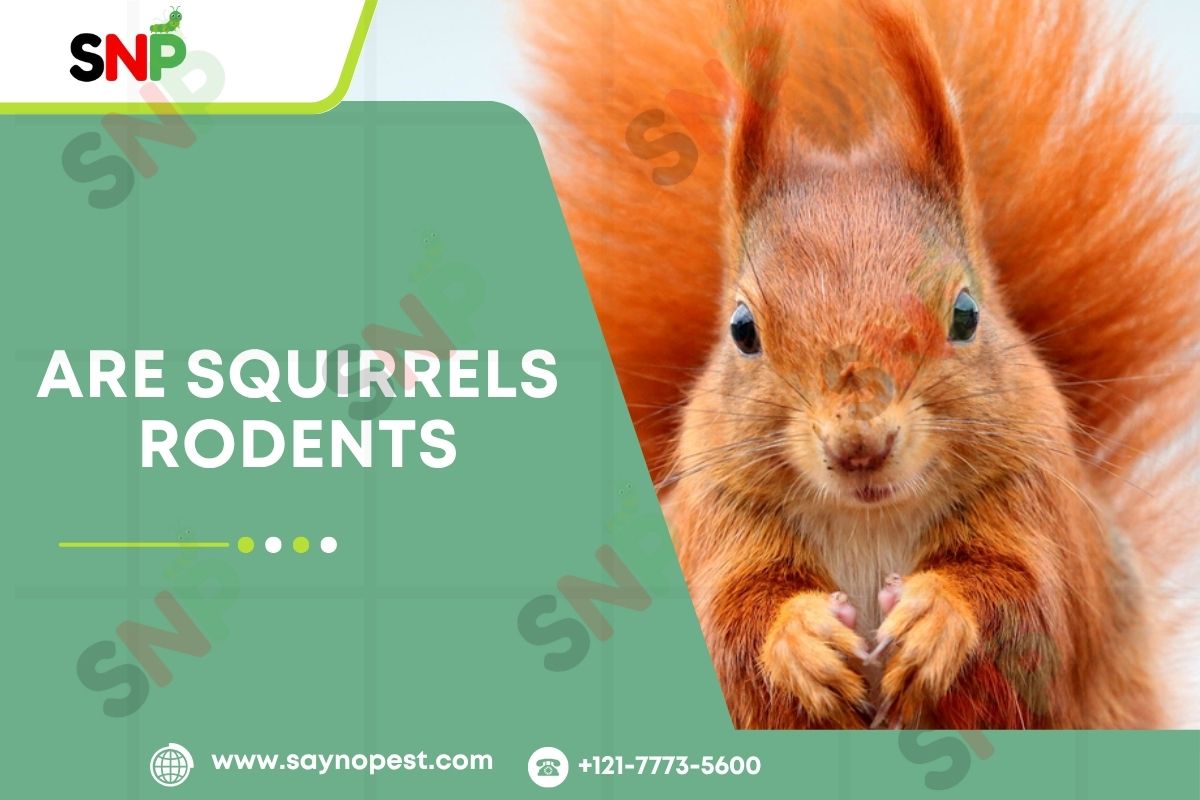
  • Are Squirrels Rodents? Everything You Need to Know

    Are Squirrels Rodents? Everything You Need to Know

    Those of you who have seen a squirrel run to the other end of your backyard may have asked the question: Are squirrels rodents? Small, intelligent, athletic, they swarm everywhere throughout the United States and take up residence in trees, attics, and even the odd garden shed here and there. In this blog, we will find the answer to a question and explore further details about Are squirrels rodents, what they eat, where they live, and most importantly, how to get rid of squirrels when they become pests. So let’s discuss a few topics that help you.

    Why Squirrels Are in the Rodent Family

    When people talk about rodents, most think of rats & mice, but squirrels are rodents too. This scientific division occurs due to the fact that all the major aspects of rodents hold true even in squirrels. What is most interesting about them is the fact that they also have two constantly growing incisors in their upper and lower jaws. These are the sharp front teeth that never stop growing, after which they keep sharpening against hard objects with constant gnawing by those squirrels to maintain them. This is a unique feature of all rodents; due to this, it is important to answer the question of are squirrels rodents. The answer to the same is yes.

    Squirrels are a type of rodent. The group adds tree, flying & ground squirrels, chipmunks, marmots. Which makes them different from rats & mice. Squirrels are small and have special-shaped teeth. They have a long tail, a thin body & strong back legs.

    Where-Do-Squirrels-Live

    Where Do Squirrels Live?

    You can spot them anywhere, but that depends on their type. The tree squirrel is the most common, and it constructs its nest primarily on a tree branch or, hollow trees and empty bird nests. You can frequently see their sl schon nests or crevices, as they call them, in parks, forests and even backyards, where they are placed in the forks of the larger branches.

    Chipmunks and ground squirrels burrow complex systems in the open land as well as in grasslands or gardens. Squirrels are very adaptive. In rural areas, forests provide shelter and nourishment, whereas in urban areas, they can decide to live in the attics, roof voids, chimneys or even within the home insulation in case they get inside somehow. The question regarding where do squirrels live has no definite answer since they are mostly everywhere as long as there is a food source, trees or shelter.

    What Do Squirrels Eat?

    Many people ask what do squirrels eat. The solution is: a piece of everything, but they also have some favourite food items. Squirrels are omnivorous and opportunistic, i.e. they feed on whatever they get, according to time and food that is there. During fall, they feed on acorns, walnuts, pecans, and hickory nuts that give them the much-needed energy over the winter. They also eat throughout the year:

    • Berries, grapes, and apples are some examples of fruit.
    • Fruits such as corn, carrots and squash
    • Seeds, mushrooms, roots, and bulbs
    • Sometimes the eggs of birds and the insects are eaten, particularly by flying squirrels

    To urban residents, squirrels may be infamous marauders of bird feeders, taking advantage of trash, even gnawing on vegetable garden plants. That is why, although the names of animals may sound close, as in the case of a squirrel question above, the fact is that, in most cases, the answer to the question of what squirrels eat is not always going to include what you had left on your plate.

    How to Get Rid of Squirrels

    Although it is interesting to watch squirrels but at the same time, they can irritate homeowners and damage their property by eating plants in gardens, chewing wires, and making their homes attics. Some of the major concerns of most homeowners in America on how to get rid of squirrels. These are some of the humane and effective ways of getting rid of squirrels:

    How-to-Get-Rid-of-Squirrels
    • Seal Entry Points: Look around your house and seal off any access point that leads to gaps in siding or holes, particularly around the roof. Close with wire netting or metal cloth vents and chimneys.
    • Trim Tree Branches: Removing branches within the 8-10 ft. range of your roof line will make it more difficult to access your home by air using the squirrels’ jumping.
    • Use repellents: Utilise products that deter the squirrels, like sprays and traps, fitted with hot pepper, apple cider vinegar or commercial repellents that will make the plants and attics unappealing to the squirrels.
    • Remove extra food: Get rid of nuts, fruits, bird feeders, & use squirrel proof bird feeders.
    • Motion Deterrents: Use motion products like strobe lights or sprinklers that operate when set in motion, can serve as a deterrent to the squirrels.
    • Mulching and Stones: Heavy mulch or decorative stones in garden beds would keep away the people who want to dig deliberately.
    • Live Trapping: Use humane traps to transfer squirrels. Were this practice were to be employed, it should be carried out by the local regulations, and animals must be moved a long way away.

    Making use of inhuman ways of getting rid of squirrels should always be a last resort. Poison and deadly traps are not only cruel but, most of the time, illegal and dangerous to pets and children.

    Conclusion

    And then, are squirrels rodents? Absolutely! Squirrels have long-growing, sharp teeth, a distinct classification within the rodent family and an amazing adaptability, which is the epitome of the Rodentia order. Get to know them more through their foods, habitat and behaviours; when the squirrels create a nuisance, you will understand how to drive away squirrels as well. You can have fun watching their acrobatics out the window, or you can keep them out of your garden with their inquisitive nature, but management needs to be done responsibly.

    To read further information on pest control tips and remedies, rely on our experts at saynopest who can help you prevent squirrels in your home and garden!