Category: Ants

  • How to Kill Carpenter Ants: Top 10 Methods

    How to Kill Carpenter Ants: Top 10 Methods

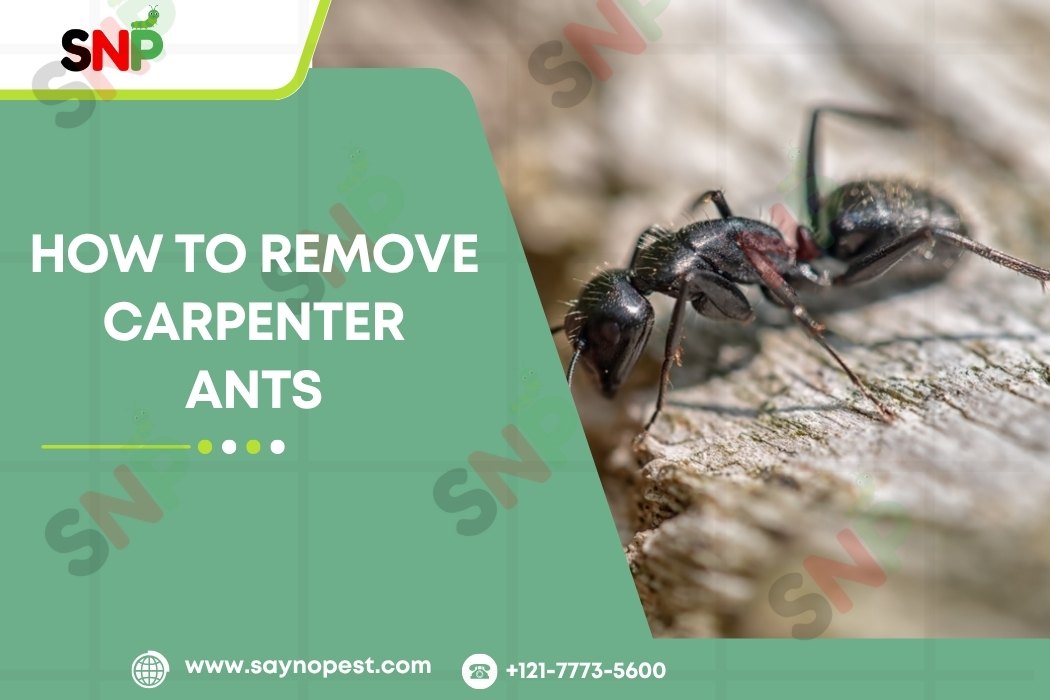
    One of the most common threat to homeowners in the United States are the infestations of carpenter ants. They build their nests in the wood by making tunnels and thus cause damages to homes. These are very expensive to repair. Unlike termites, they don’t eat wood. Knowing how to kill carpenter ants is necessary for many reasons, let’s explore them in this article!

    Do carpenter ants bite?

    You may ask yourself, do carpenter ants bite? They do bite, but it is a rare thing. Carpenter ants bite only when are provoked in any way.But, even when they do, their bites are light and pose no risk to the health of humans and pets. You might sense a slight burning feeling, but it will go away quickly. Unlike fire ants, the bites of carpenter ants cause problems like small swelling, etc.

    10 Ways for how to kill carpenter ants

    How-to-Kill-Carpenter-Ants

    Got the problem? Here are ten proven methods of how to kill carpenter ants and to keep your home free from them:

    1. Find the Nest:

    Your first course of action in the endeavor of how to kill carpenter ants would be to locate their nest. The signs you can look for are piles of sawdust, noises of movement in walls, or a group of ants trailing along the way to the wet wood.

    2. Use Ant Baits:

    Place purchased or homemade ant baits on the ant routes. Worker ants will transport the bait back to the nest, thus they will spread the poison and rid the colony. It can be said that one of the best alternatives to how to kill carpenter ants is this method here.

    3. Use Non-Repellent Insecticides:

    Apply a non-repellent insecticide around the house boundary. Carpenter ants would not be able to sense those insecticides hence they will walk through them and would eventually carry the toxins back to the nest.

    4. Powder Insecticides:

    Dust the wall voids, baseboards, or other infested areas with insecticide. The dust gets stuck on the ants and penetrates throughout the colony, making it an efficient way to kill carpenter ants.

    5. Boric Acid and Borax:

    Both boric acid and borax are kid and pet-safe as long as followed basic safety rules. Feed the ants sugar or peanut butter mixed with the substances, and in no time, they will consume the food. These baits work slowly and thus give the ants enough time to spread the poison.

    6. Food-Grade Diatomaceous Earth:

    Dust diatomaceous onto ant trails and other places they are entering the house through. The product, being all-natural, cuts off the water supply and kills the ants in one fell swoop. It is a non-toxic way to how to kill carpenter ants.

    7. Close the entry:

    Close the openings like cracks, gaps, and holes with the help of sealants for windows, doors, and foundations to not let the ants in. By doing this, you not only keep those creatures away, but you also send them to bait stations.

    8. Eliminate Dampness:

    Carpenter ants simply adore waterlogged wood. Therefore, it makes sense that eliminating excess moisture, fixing leaks, more natural ventilation, and keeping wood dry would repel these pests.

    9. Cut Off Vegetation:

    Remove the extension of tree branches and shrubs close to your house. Ants heavily rely on these to access our homes so by trimming you effectively reduce their reach.

    10. Consult a Professional:

    If your own attempts at pest management are unsuccessful, contact a pest control service. Professionals have access to a wider variety of products and have the necessary skills. They safely and thoroughly exterminate a big infestation, thus giving you full relief from the problem.

    What kills carpenter ants?

    What-Kills-Carpenter-Ants

    Know what kills carpenter ants, to end their infestation. The most favorable outcome is achieved using a combination of the most suitable baits and insect poison.

    • Bait that is enhanced by a combination of Boric Acid, Abamectin, and Fipronil: This kind of new bait has proven to be very useful in ant eradication. The transport of the bait by the ants to the nest causes the destruction of the entire colony, along with the queen.
    • Repellent-free reception of Aerosols: The products filled with zeta-cypermethrin or any other similar ingredient are able to get rid of ants immediately upon contact and at the same time, they keep affecting the ants going through the treated surfaces.
    • Food-Grade Diatomaceous Earth and powdered Borax: Those are the natural ways of ant control that are non-toxic to your pets and are functional in a way that the ants are killed by either causing damage to their exoskeleton or by disturbing their digestive systems.
    • Perimeter Insecticide Dust: It is possible to go to the extent of the colony in to kill them where other methods such as sprays and baits do not have the reach. 
    • Chemicals that are of Professional Grade: People who carry licenses can employ special baits and sprays that are not accessible to the public and as a result, they can solve severe infestations more comprehensively.

    Just adhere to the label’s instructions so as to safeguard pets and also do not put baits or chemicals where pets can get access to them. Always observe pet safety instructions and avoid baits or chemicals in places where pets can easily find them.

    Conclusion

    After you have acquired the knowledge and you understand how to kill carpenter ants, you will protect your home and your pets from damage and discomfort. Ants is a persistence issue in homes, so you have to follow all the instructions and keep your house dry and clean all the time. If at any moment, you feel the need to go to others for help, please do not postpone contacting the professionals.
  • Flying Ants vs Termites: How to Identify and Eliminate These Pests

    Flying Ants vs Termites: How to Identify and Eliminate These Pests

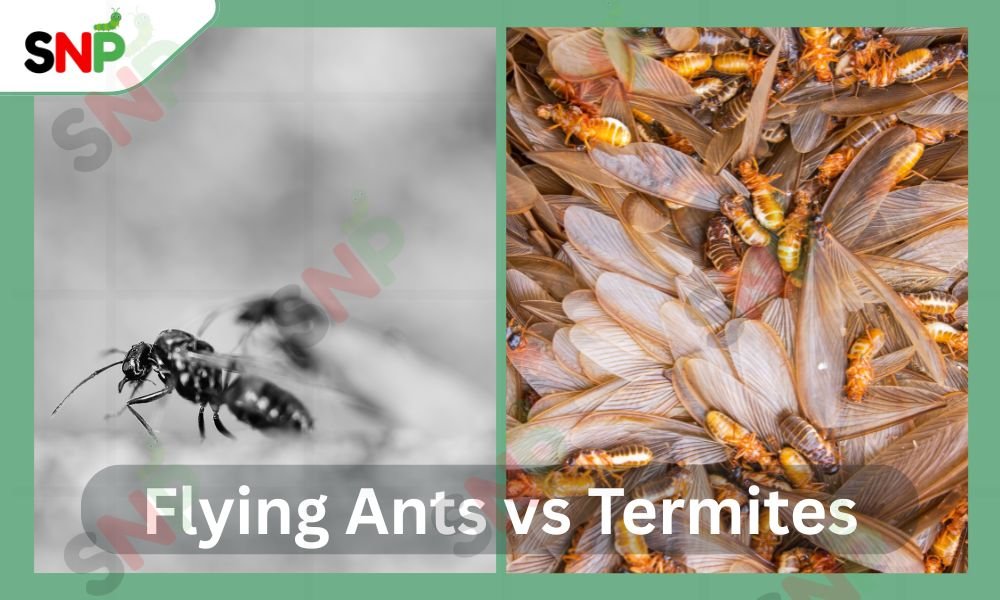
    The presence of flying insects indoors is disturbing to householders who must determine between flying ants vs termites infestations. These pests have noticeable differences between them despite their initial visual similarity. Knowledge about the differences between these pests becomes essential because termites inflict serious damage to house structures. At SayNoPest, we provide you with all the authentic information about the Flying ants vs termites and help you to make the right choice for choosing the Pest control professional by comparing their service quality, Best seller service, best feature, and many more.

    Physical Differences Between Flying Ants and Termites

    flying-ants-vs-termites

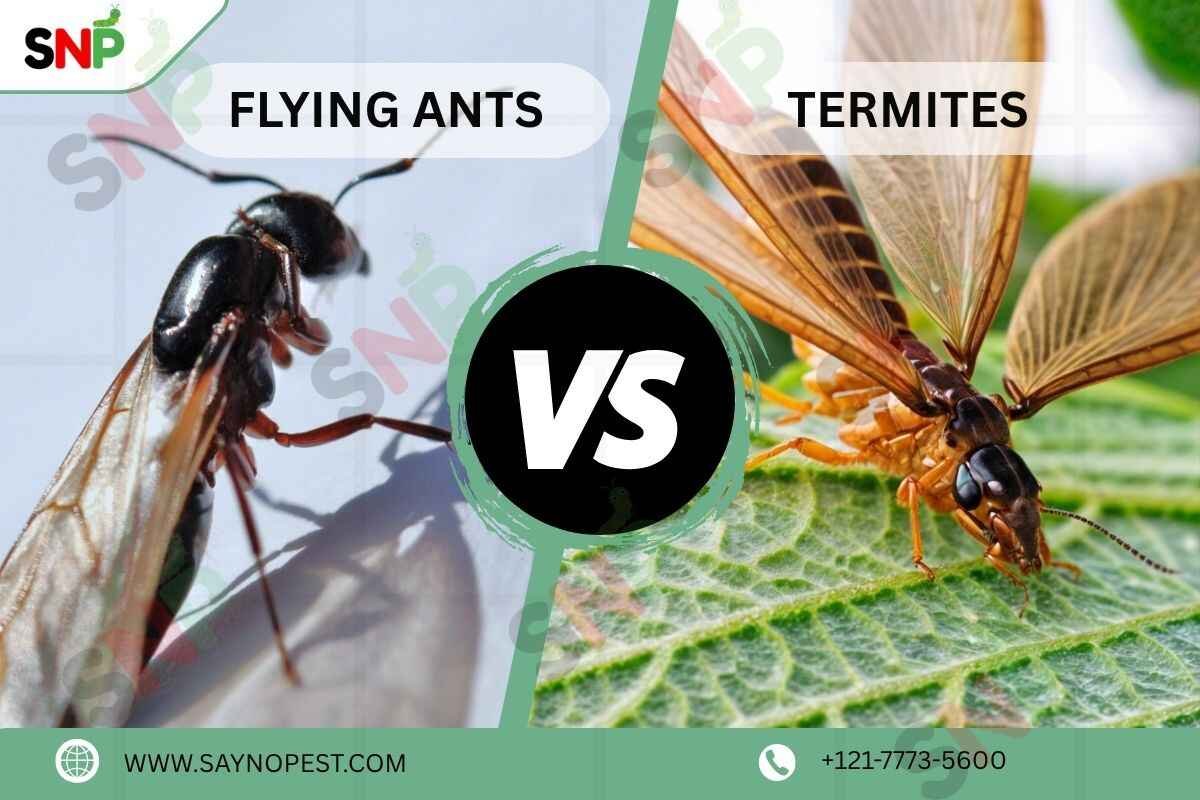
    When comparing flying ants vs termites with wings, look for these key physical differences:

    Body Structure

    • Ants: Their body is divided into segmented with a narrow waist, giving them an hourglass look.
    • Termites: On the other hand termites have a broad waist with a wider body shape

    Antennae

    • Ants: They have bent or “elbowed” antennae
    • Termites: Termites consist of straight antennae

    Wings

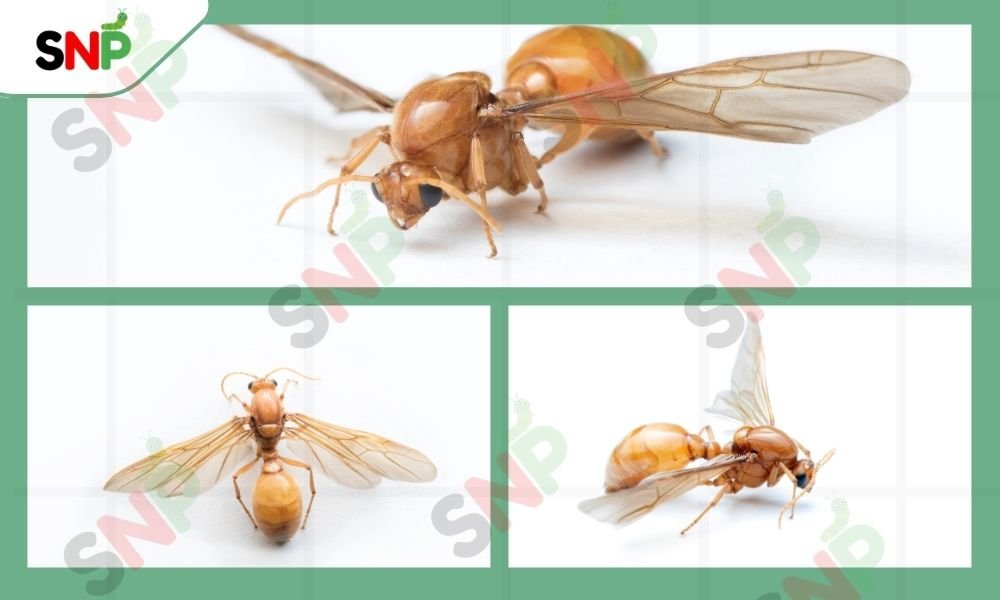
    Flying ants vs termites wings differ significantly. Ants have two pairs of brownish wings, with the front pair noticeably larger than the hind pair
    Termites have two pairs of wings that are equal in length and typically translucent

    Color

    • Ants: Commonly appear black, brown, or reddish
    • Termites: Usually black or dark brown in color

    A fly ant bite may cause minor irritation, while termites don’t typically bite humans but destroy wood instead. These wood munchers can cause a heavy loss of property. Identifying whether you’re dealing with flying ants vs termites is the first step toward proper treatment. When you know the correct difference, you can easily kick them out of your house.

    Life Cycle of Insects

    The development of both ants and termites reflects the variances that constitute the life cycle of an insect.

    flying-ants
    • Ants: Experience full metamorphosis, which consists of four stages: egg, larva, pupa, and imago.
    • Termites: Are in the process of incomplete metamorphosis, in which there are three stages: egg, nymph, and adult – no pupal stage.

    Usually, the lifespan of a worker ant is only 6-8 weeks, whereas the termite queen can last up to several decades. After the mating process, male flying ants expire while females lose their wings to start new colonies. In the case of termites, both females and males remain alive after copulation in order to generate new colonies.

    What is noteworthy about a termite queen is that she may continue to lay eggs for many years and thus run a colony.

    Diet Differences

    A look at what these insects eat makes it clear why termites are causing the most damage:

    • Ants: Eat a variety of foods. Ants feed primarily on nectar, together with seeds and insects, while they also consume abandoned human food.
    • Termites: The diet of termites depends on cellulose, which can be found in wood as well as paper, alongside plants.

    The protective nature of flying ants toward their food supply probably explains their attacks because they normally avoid biting humans. The prime concern of a particular group of ants is the selection and inhabitation of a proper place, although these ants do not consume the wood part as their termite counterparts do.

    Signs of Infestation

    Look for these telltale signs when distinguishing between flying ants vs termites:

    flying-termite

    Termites:

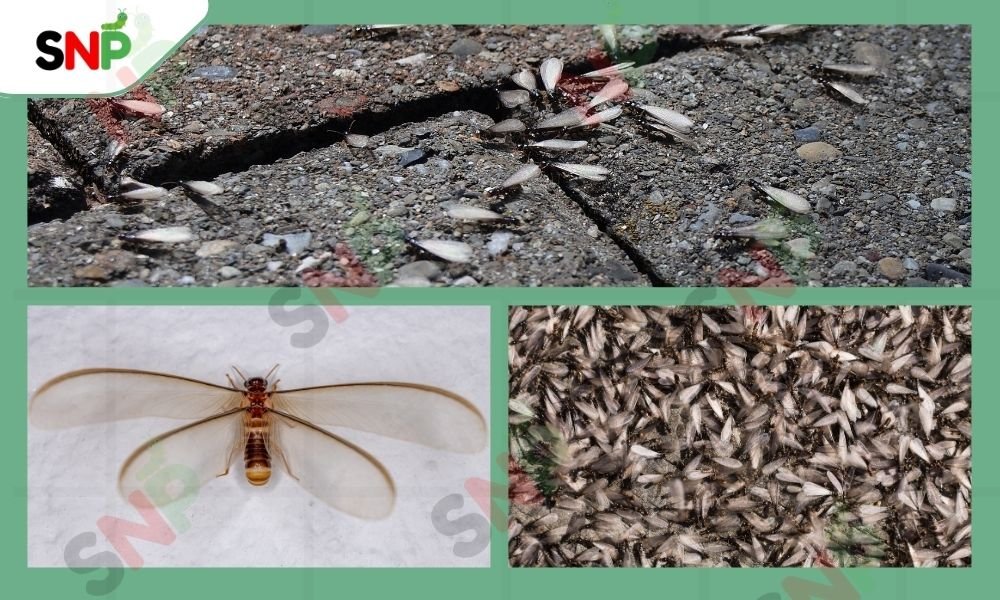
    • Discarded wings in high concentrations
    • Mud tubes on exterior walls
    • Hollow-sounding wood
    • Visible damage to wooden structures

    Flying Ants:

    • Presence around food sources
    • Visible ant trails
    • Small piles of wood shavings (for carpenter ants)
    • Less likely to discard wings in large numbers

    How to Get Rid of Flying Ants vs Termites

    There are different methods for Flying ants vs termites control:

    Flying Ant Control

    • Clean up food spills and crumbs promptly
    • Seal entry points around your home
    • Use a vacuum to remove visible ants
    • Apply appropriate insecticides or bait stations
    • Though a fly ant bite seldom causes anything serious, it is better to prevent the infestation to avoid future bites.

    Termite Control

    • Create a chemical barrier around your property.
    • Use termite bait systems to remove the colony, which include the termite queen.
    • Consider professional treatment for established infestations
    • Remove wood debris near your home’s foundation.

    A professional pest control service offers the most efficient solution to differentiate between flying ants vs termites. It particularly stands out in dealing with termite infestations, which present a structural threat to buildings.

    Your first line of defence that you should count on would be periodic examinations and precautionary actions, which are the best way to shield you against both ants and termites. If you are well informed about the characteristics of the pests, you can ensure the security of your house and family, and at the same time, you can prevent costly damage.