Category: Ants

  • The Complete Guide to Fire Ant Infestation across the United States

    The Complete Guide to Fire Ant Infestation across the United States

    Background of Fire Ant Infestation

    Fire ant infestation is among the toughest. The most abundant pest issues for homeowners and companies across the country, but particularly the South, Southeast, and California. Fire ant colonies develop with such rapidity that they can infest backyards, parks, fields, and even creep indoors. Not just pesky but an actual health risk, these fire ants are famous for their ferocity. Painful stings that can induce allergic shock in the afflicted. With mounds breaking out everywhere across lawns and landscapes. The situation of the fire ant infestation is more or less of distinct concern in an effort to offer quality control.

    Fire ants previously lived in South America decades ago, and fire ant infestation has expanded since then to over 367 million acres in the United States alone. Fire ants, once they infest, kill native wildlife, agricultural produce, and human life, causing gigantic economic and ecological loss. At SayNoPest, you will learn about how to detect, prevent. Treat a fire ant infestation to provide a healthier and safer environment for your family, pets, and property.

    Red Ants and Fire Ants

    Red ants are confused with fire ants because they acquire the same hue, but one must distinguish these two so that pest control can be effective. 

    They are smaller, 1/8 to 1/4 inch in length, &  typically reddish-brown with darker abdomens. Fire ants are very aggressive when threatened and bite in large numbers, causing painful burning stings.

    Red ants is a general description, occasionally applied to several red species of ants, which are non-stingers. True “red ants” are bigger, 1/4 to 1/2 inch, and less inclined to sting, they bite. They also have less aggressive colonies and mounds are not as large.

    The “Red Ants vs Fire Ants” problem is one that pest control service businesses encounter frequently because proper identification plays a key role in the determination of treatments.

    Fire Ants vs Red Ants Treatment

    The Fire Ants vs red ants treatment procedure to get rid of an infestation must be conducted in the correct process. Fire ants Lets  understand the treatment procedures makes it efficient and safe for your property. Fire Ants vs Red Ants treatment varies since the bugs are a different species and are harmful in a different manner.

    For Fire Ants:

    Labeled mound treatments or directed baits for application on fire ants.

    Fire ant baits will move quickly throughout the colony, preferably to the queen, as if the queen survives, the infestation persists.

    Severe fire ant infestation is typically treated using lethal chemical controls, contact insecticides, and growth regulators.

    Fire ant stings are unbearably painful and possibly life-threatening, so professional, immediate treatment where much of the time is spent in locations of high use. Children and pets spend considerable time playing is warranted.

    Red ants are more readily controlled with less drastic means, such as baiting with food items, boiling water spraying, or organic control using agents such as diatomaceous earth.

    Issues indoors will typically require substitute methods, such as sealing doors and windows, hand extraction of nests, or using indoor-safe pesticides.

    Prevention and exclusion is the best method because most red ants will not have as big or as aggressive a colony as a fire ant.

    If you’re not sure which ants you’re fighting, then professional advice is the way to go. SayNoPest can assist you in finding approved pest control service for correct diagnosis and targeted treatment.

    Fire Ants vs Red Ants Treatment: Best Practices

    Since the need for the proper Fire ants vs red ants treatment, following are best practices for both:

    Broadcast Baiting: To control yard-sized infestations outside, bait ants over the entire yard rather than the mound itself. This is an effective method of fire ant infestation since it kills the exposed and underground colonies.

    Direct Mound Drenches: Treat boiling water or insecticides directly into mounds in a manner that they reach the queen.

    Combined Treatments: Apply a combination of bait, soil application, and barrier sprays for general or repeat fire ant infestation.

    Watch and Repeat: Fire ant invasions as well as other ant invasions will often rapidly return. Treat again as appropriate, and constantly keep watch for new mound formation.

    Remember, Fire ants vs red ants treatment is always never one-size-fits-all. The difference between fire ants and red ants in aggressiveness and fire ant and red ant resistance makes you selectively adopt products and approaches after proper identification.

    Conclusion

    Fire ant infestation is an issue that endangers the comfort, well-being, and worth of your home and family. And with their aggressive nature to the pain and even toxic bites they carry, it’s no wonder something needs to be done pronto. Proper identification of fire ants vs red ants guarantees that you apply the correct Fire ants vs red ants treatment, providing yourself with the best chance at long-term control and assurance.

    Don’t let fire ants overrun your home or business. SayNoPest gives you great information and connects you with professional pest control experts, so you can tackle issues effectively and safely. Having learned how to identify fire ants and red ants, you can make effective product and technique decisions. Whatever it is, a complete treatment or ongoing prevention, rely on SayNoPest to help you regain your property.

    Take back your yard, safeguard your family, and know what’s going on with SayNoPest, the intelligent answer to every fire ant invasion in America.
  • Why fire ants are unique

    Why fire ants are unique

    Fire ants have marched through southern and now increasingly temperate areas of the United States, transforming backyards and parks into minefields of stinging mounds. Why fire ants are unique begins with their biology: colonies contain over 200,000 workers, multiple queens, and a complex tunnel system that branches out up to 25 feet from every mound. They work so well together that when floods come along, the ants stick to one another to create living rafts, an accomplishment that reinforces why fire ants are unique among U.S pests. Throw in their handy venomous sting and attacking swarming behavior, and you can see why fire ants are distinctive dangers to humans, pets, livestock, and agriculture.

    But their bite is also the same reason homeowners frantically search for answers. This guide demystifies what distinguishes their attack, how Fire ant bites react, the Symptoms and Causes of fire ant Bites, and most crucially How to treat fire ant bites quickly and safely.

    Why-fire-ants-are-unique

    Fire ant bites

    When they’re disturbed, elves clamp mandibles into flesh and turn in a semicircle, injecting venom again and again. Technically the insects sting, but the painful papules that result are everywhere referred to as Fire ant bites. An individual ant stings repeatedly, and hundreds can strike within seconds. That flood-tide strategy explains why fire ants stand apart among all the ants in North America; fewer other species in that continent orchestrate such mass, repeated envenomation.

    In most individuals, the first burn of Fire ant bites disappears within minutes, but itching soon replaces pain. Since so many ants sting in a tight arc, groups of tiny welts typically develop in characteristic semicircles. Left alone, these welts blister, then become filled with sterile pus within 8–24 hours, a classic indicator of Fire ant bites and one of the reasons Why fire ants are unique tormentors.

    Symptoms and Causes of fire ant Bites

    Symptoms and Causes of fire ant Bites start with solenopsin, the oily alkaloid component that constitutes over 95% of fire-ant venom. This chemical mix ignites immediate pain, localized redness, and swelling. Within a span of one hour, most victims get hive-like bumps; within 24 hours, the characteristic white pustule occurs in approximately 96% of cases. Identifying the Symptoms and Causes of fire ant Bites differentiates them from bee or wasp stings, which seldom cause sterile pustules.

    In addition to skin responses, causes of fire ant Bites can get worse. As many as 6% of American adults form venom-specific IgE antibodies and have the potential for systemic symptoms like dizziness, tightness in the chest, or outright anaphylaxis. In severe people, hundreds of stings cause potentially life-threatening shock, again highlighting Why fire ants are special medical dangers.

    The symptoms of fire ant Bites also differ with the number of stings. Ten single stings may cause localized swelling; 100 stings induce limb-wide edema; 1,000 stings jeopardize kidney damage and secondary infection. Early recognition of the Symptoms and Causes of fire ant Bites allows you to determine whether home care is sufficient or you need urgent assistance.

    How to treat fire ant bites

    Informed How to treat fire ant bites can save days of scratching and in extreme situations, a life.

    Get away from the mound at once; slap ants off with your hand instead of washing, which excites them.

    Use a cold compress 15 minutes on, 15 minutes off. This easy action is high on How to treat fire ant bites by minimizing swelling and discomfort.

    Clean the area with water and soap. Maintaining the blister roof intact avoids infection, a fundamental principle in How to treat fire ant bites.

    Employ over-the-counter 1% hydrocortisone cream or an oral antihistamine to suppress itching. Topical steroid strength is an established component of How to treat fire ant bites, particularly when developing large local reactions.

    If pustules break from scratching, wash with an antiseptic and apply triple-antibiotic ointment; wound care is another foundation in How to treat fire ant bites.

    Treat immediately medically for tongue or throat swelling, chest constriction, shortness of breath, or dizziness systemic manifestations that exceed home remedies for How to treat fire ant bites.

    Physicians can include oral steroids in the case of extreme swelling of the limbs or epinephrine auto-injectors for individuals who have had anaphylaxis so they manage How to treat fire ant bites until EMS arrives.

    Why-fire-ants-are-unique

    Diagnosing fire ant bites

    Rapid recognition affects comfort and How to treat fire ant bites. The most important identifiers are:

    Groups of pustules in arcs or rings on feet, ankles, or hands—usual points of attack when walking on underground mounds.

    A searing sting and after a few minutes, a raging itch, followed by a blistery swelling within a day.

    Numerous tiny punctures in each of the pustules under close inspection, showing multiple stings instead of one puncture.

    Once you know the Symptoms and Causes of fire ant Bites, such visual indicators simplify distinguishing them from mosquito bites or poison ivy. Knowing how to identify Fire ant bites quickly enables prompt first aid and avoids scratching that welcomes secondary infection.

    Conclusion

    From their rafts floating on the water to their stingers full of venom, each characteristic depicts Why fire ants are so special invaders of the United States. Their daring results in sore Fire ant bites, and knowledge of the Symptoms and Causes of fire ant Bites and expertise on How to treat fire ant bites gives families the power to remain safe outside. Keep in mind: rapid cooling, antihistamines, unbroken blisters, and urgent care for allergic reactions are the foundation of controlling Fire ant bites.

    Whether you’re gardening, hiking, or just cutting the lawn, look for reddish mounds and be ready. With insight from saynopest, you can enjoy Why fire ants are amazing works of insect engineering while still giving them the boot when they encroach on your home.

  • What Are Twig Ants: Guide to These Unconventional Pest Insects

    What Are Twig Ants: Guide to These Unconventional Pest Insects

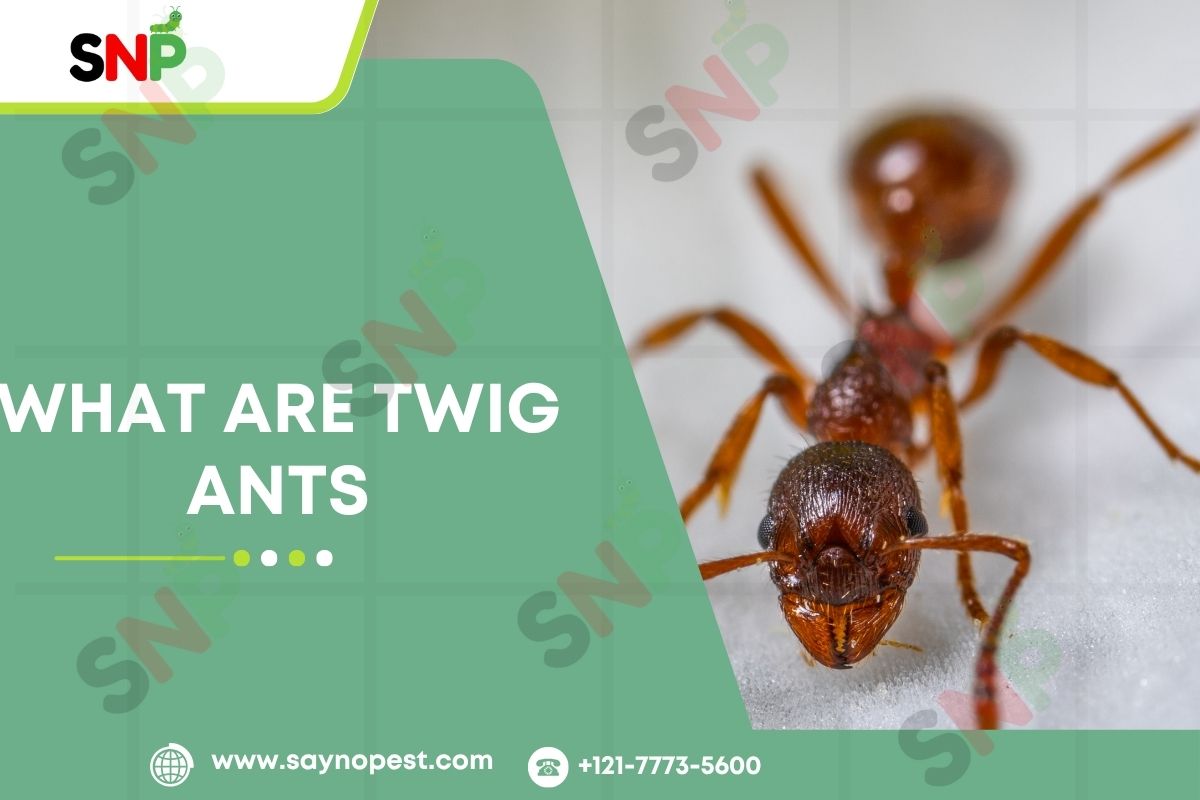
    During pest problem identification in American houses. What Are Twig Ants is a very important question for most homeowners with such unusual insects.

    Twig ants, also known as Pseudomyrmex gracilis, are among the most unusual ant species occurring all over the United States, especially in hotter states such as Texas, Florida, and Louisiana.

    what-are-twing-ants

    Introduction to What Are Twig Ants

    What Are Twig Ants talks about a fascinating insect species in relation to their distinctive features and behavior. Such incredible insects got their common name because their thin twig-shaped body makes them easy to hide in their natural habitat. Twig ants are distinguished from common household ants on the grounds of size as well as shape. Hence are relatively unique for pest control personnel as well as homeowners.

    The most prevalent ant species in the United States is Mexican twig ants or elongated twig ants or Pseudomyrmex gracilis. Mexican twig ants are their country of origin, but now they thrive all along the southern part of the United States, speaking volumes about the extent of their adaptability to different environmental conditions.

    Learning About Elongated Twig Ants

    Elongated twig ants have some unique features that distinguish them from other ant species. Workers measure about 8-10 millimeters in length, and that is rather large in comparison to the majority of ants found in the house. Their most noticeable feature is their wasp-like appearance, with a slender body structure that appears to be twigs or small plant stems.

    The coloration of elongated twig ants is different depending on their individual habitat but usually in a bi-colored form with dark heads and gasters paired with pale orange antennae, thorax, and legs. The distinctive coloration is a warning signal to predators, just like warning color patterns for wasps and other stinging wasps.

    Twisted twig ants have large, fleshy oval eyes that are highly efficient for observing. Unlike most other ants that use chemical cues to navigate. These improved eyes help them achieve success as predators and also help them correctly navigate complex tree environments.

    Mexican Twig Ants: Behavior and Habitat

    Mexican twig ants have interesting habits that are responsible for their prosperity as beneficial predators and at times. They are, for the most part, arboreal insects that spend most of their existence in trees. Nevertheless, they also easily succumb to living in urbanized areas and inhabit wooden fences, vegetation, and even homes.

    Mexican twig ant nesting is intriguing in that they look for hollowed-out spaces in plant material, such as dead twigs, small branches, and even wooden doors of buildings. The nest is small with only a single queen and few workers relative to the big colonies built by other ants.

    Mexican twig ants are lone predators that feed on various tiny insects and, most importantly, butterfly and moth caterpillars. They also assemble honey dew from sap-suckers such as aphids, an indication of their opportunistic tendency when foraging. This predatory behavior makes them useful insects in most situations because they suppress pest insects in gardens and ecosystems.

    Infestation of Elongated Twig Ants

    Detection of an Elongated Twig Ant Infestation is achieved by careful observation of indoor and outdoor spaces. Most species of ants are seen as visible lines, whereas twig ants may be observed as solitary scouts prior to developing larger infestations. Early indication typically involves seeing these characteristic ants on the stem, branch, and leaves of plants in outdoor spaces.

    Affiction of Elongated Twig Ants indoors normally commences when the insects inadvertently gain access into buildings while searching for food or shelter. They fall under clothing or small crevices, and this triggers defensive stinging. The homeowner can recognize these ants in wood structures because they can easily infest empty spaces in doors, window frames, and other wood structures.

    The Elongated Twig Ant Infestation is quite difficult to spot at first because such pests travel in rapid little rushes and can locate themselves under vegetation or wood products very quickly. Their very good camouflage and solitary foraging manner result in infestations that materialize gradually before becoming noticeable to homeowners.

    Prevention and Control Measures

    Habitat modification and exclusion are a drastic integrated approach to preventing Infestation by Elongated Twig Ants. The homeowner should ensure proper landscaping through the trimming of plant material around the house to an adequate height. Tree pruning is also crucial since twig ants live in hollow twigs, and such potential nesting areas are eliminated around the house for minimizing attractancy.

    Sealing gaps is yet another critical prevention technique. Twig ants can slip into very tiny clefts and cracks outside the house. Regular inspection and sealed these gaps, especially around doors, windows, and utility openings, renders indoor infestations much less likely to occur.

    Good housework is also essential in order to avoid Infestation of Elongated Twig Ants by removing food sources . These include Better food storage, keeping the dining area clean, & prompt cleanup of spills and crumbs.

    Professional Treatment Options

    Where Infestation by established Elongated Twig Ants is the case, professional pest control tends to be ideal. The pests can cause painful wasp-like stings, so attempts to control them in the home can be dangerous. Professional treatments are precisely crafted to target twig ant colonies without affecting pets and family members.

    Mexican twig ants and elongated twig ants react differently to control action than other ant species, hence necessitating species-specific control actions. The certified pest control professionals can identify the species accurately and take up proper management actions against existing infestations and also prevent future infestations.

    Conclusion

    Knowing What Are Twig Ants is a useful guide towards effectively managing these interesting pest insects. Elongated twig ants and Mexican twig ants are impressive examples of insect adaptability, having desirable predatory traits with exceptional pest characteristics when they also interact with human homes. Their distinctive shape, nesting habit, and defensive features make them worthy of respect and should be controlled with caution.

    For homeowners in the United States with Infestation of Elongated Twig Ants, the solution is early identification, effective prevention, and treatment from a professional if required. These incredible ants play valuable functions as predators of pest insects. It needed to be managed sensitively when they invade human activities.

    In resolving chronic concerns regarding What Are Twig Ants, expert advice ensures safe, effective elimination. To remove the whole pest control problem customized to your individual concerns, contact saynopest for expert advice. The trusted service in handling twig ant infestation and other pest issues throughout your property.

  • Introduction to What Types of Ants Are Black Ants

    Introduction to What Types of Ants Are Black Ants

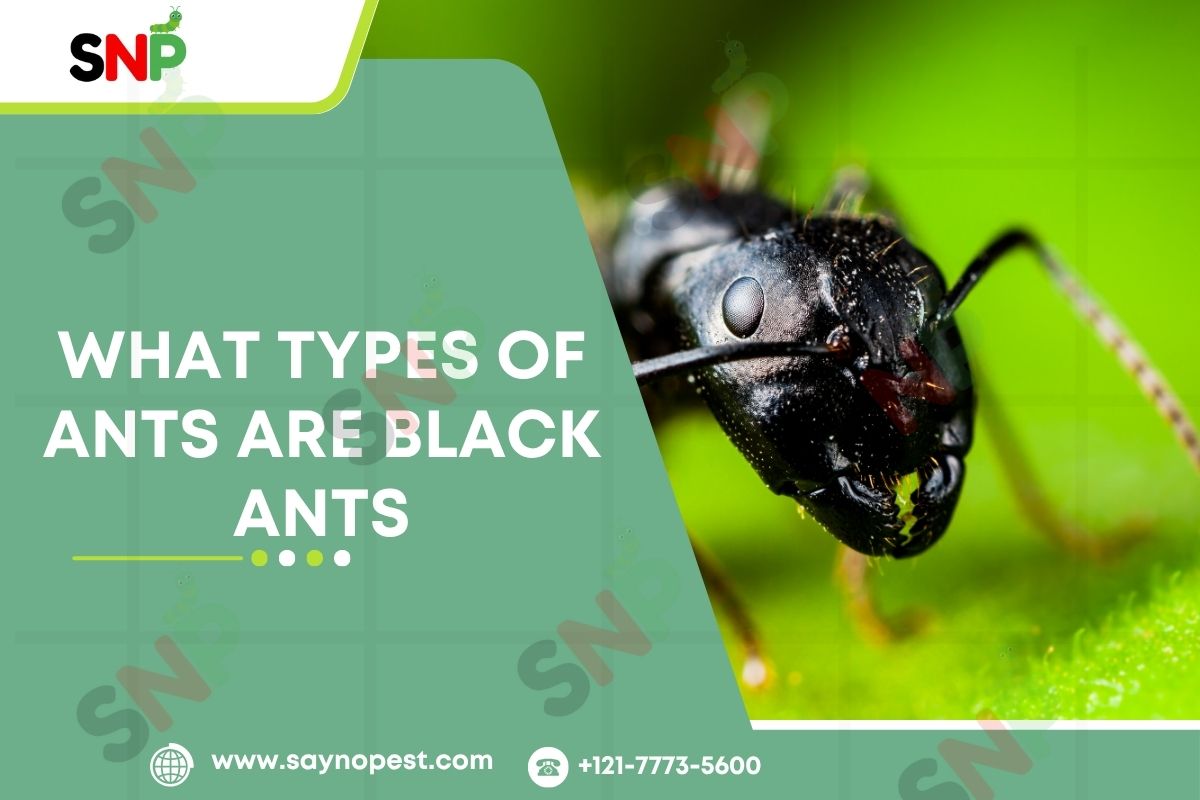
    What Types of Ants Are Black is a roll call of some of the most ubiquitous types to have residing in and around the United States. Whereas most folks just refer to “black ants” to those things in general terms, this is really more of an accurate description for many different species of ants which are black but each with their own individual traits and behaviors.

    It is necessary to Identify What Types of Ants Are Black are in order to be suitable for American homeowners because correct identification determines the most effective means of control. They comprise a number of species such as Black Garden Ants, Little Black Ants, Black Carpenter Ants, Odorous House Ants, Pavement Ants, and Argentine Ants.

    Most common black ants in American homes are the Little Black Ants, 1.5-2 mm long, shiny jet-black. The Little Black Ants are indigenous to North America and are variably distributed throughout southeastern Canada and northeastern and northern United States. The second primary group of black ants are the Black Carpenter Ants, whose workers are about ¼ to ½ inch in length, one of the larger black ants property owners will encounter.

    Pavement Ants are dark brown to black, 3mm in length, and will nest beneath sidewalk slabs and building floors. Odorous House Ants are brown-black, 3mm in length, and have a foul, rotten coconut odor when they are crushed. Argentine Ants are dark brown to black, 2-3mm in length, and establish huge colonies that can overwhelm other ants.

    They all exhibit different nesting habits and feeding habits. Black Garden Ants live chiefly on honeydew secreted by aphids, while Little Black Ants feed on proteins as well as carbohydrate food. Black Carpenter Ants excavate wood to form a nest but do not consume wood itself like the termites. Such information helps homeowners decide upon which specific category of black ant is infesting their home and employ selective control techniques.

    How to Get Rid of Black Ants

    How to Get Rid of Black Ants is a comprehensive process consisting of instant removal, prevention, and professional treatment techniques. The best way is recognizing that successful ant control is addressing the whole colony and not the surface workers that are wandering all over your structure.

    Instant Removal and Cleaning Methods

    The initial step in How to Get Rid of Black Ants is to eliminate the ants and break their pheromone trails. Mix equal amounts of water and white vinegar in a spray bottle. Spray it along ant trails and points of entry. The acidity of the vinegar breaks down pheromone trails ants employ as a means of navigation for the same trails to become untraceable to other ants within the colony.

    Liquid glass cleaner soap is another which will destroy perfume-type pheromone trails. Deposit a thin film that will discourage ants from coming in the future. Lemon juice will work, too, since lemon juice’s acidity will mask ant scent trails. Use freshly squeezed lemon juice on windowsills, doorways, and other points of entry.

    Natural Deterrent Methods

    Natural methods are part of How to Get Rid of Black Ants. Coffee beans are a good barrier that ants do not like due to their crunchiness. Dried coffee beans are what one uses to sprinkle over pet food, window sills, and where ants enter your home.

    Natural Noxious essential oils, like peppermint oil, can also be used. Mix together 10-20 drops of peppermint essential oil with 2 cups of water and spray along windows and baseboards.

    Bait-Based Elimination Systems

    The greatest long-term system on how to get rid of black ants is colony-targeting ant baits. Mix together equal parts of baking soda and powdered sugar – ants will be drawn by the sugar. The ants will be poisoned by the baking soda with their digestive tract.

    Professional ant baits containing borax or boric acid are professional and provide professional results. Poison is brought to the nest via worker ants which eventually kill queens and the rest of the colony. Bait along targeted ant trails and entry points, removing alternative food to stimulate ant feeding.

    Re-infestation prevention is an important element in How to Get Rid of Black Ants.

    sewer water sources by repairing dripping pipes, improving airing within damp regions, and drying off damp surfaces.

    Store food in air-tight containers and clean spills as soon as they happen. Particularly along appliance borders and pet food bowls.

    Seal points of entry by clogging cracks in windows, doors, and building foundation areas through which the ants would otherwise enter. Trim vegetation from around the outside of your building since ants will utilize plant matter as a runway onto buildings. Eliminate outdoor attractants like standing water, garbage piles, and organic material around the building foundation.

    Professional Treatment Options

    When home remedies fail to kill Black Ants, treatments from professionals are employed. Professional exterminators can identify some ant species. Employ specialized treatments in liquid residual sprays, dust products for wall voids, and specialized baits for some infestation of ants.

    Control using professionals will generally consist of perimeter sprays outside the building. crack-and-crevice sprays inside the building near where ants live or travel.

    Retreatment will have to be performed every 3 months to give long-term protection against re-infestation. Extremely heavy infestation, particularly in the case of Black Carpenter Ants which are a sign of wood structure moisture problems. They require professional inspection to deal with such underlying issues which attract such unwanted guests.

    What-Types-of-Ants-Are-Black-Ants

    Conclusion

    https://www.saynopest.com/blog/how-to-get-rid-of-black-ants-fast-saynopestKnowing What Types of Ants Are Black Ants enables American homeowners to recognize and control the common household insects efficiently. The six large types – Black Garden Ants, Little Black Ants, Black Carpenter Ants, Odorous House Ants, Pavement Ants.

    Argentine Ants – all require precise identification and control methods since they are solitary ants with nesting requirements.

    Successful What Type of Ants Are Black Ant elimination is not merely the use of short-term elimination methods but successful long-term prevention methods. But the most effective method for How to Get Rid of Black Ants is eliminating entire colonies.

    Prevention is always the better solution than controlling ants. Weeping outside dampness, caulking the joints up, regular cleaning. The raking the outside temptations off the edge makes the area less attractive to What Kinds of Ants Are Black Ants. Beginning early and moving fast once ants are initially observed avoids small issues turning into ginormous infestations.

    If nature does not work, professional control treatments offer professional treatments specifically for ant infestations and infestation severity.

    To receive quality pest control solutions and expert guidance on how to properly identify and eliminate What Types of Ants Are Black, get in touch with SayNoPest. The best treatments your home warrants. Proper identification, successful treatment. Preventive action are all American homeowners ever need in their attempt to successfully keep their homes ant-free and their homes and loved ones protected from these frustrating nuisance pests.

  • Approach to Professional Ant Control Methods

    Approach to Professional Ant Control Methods

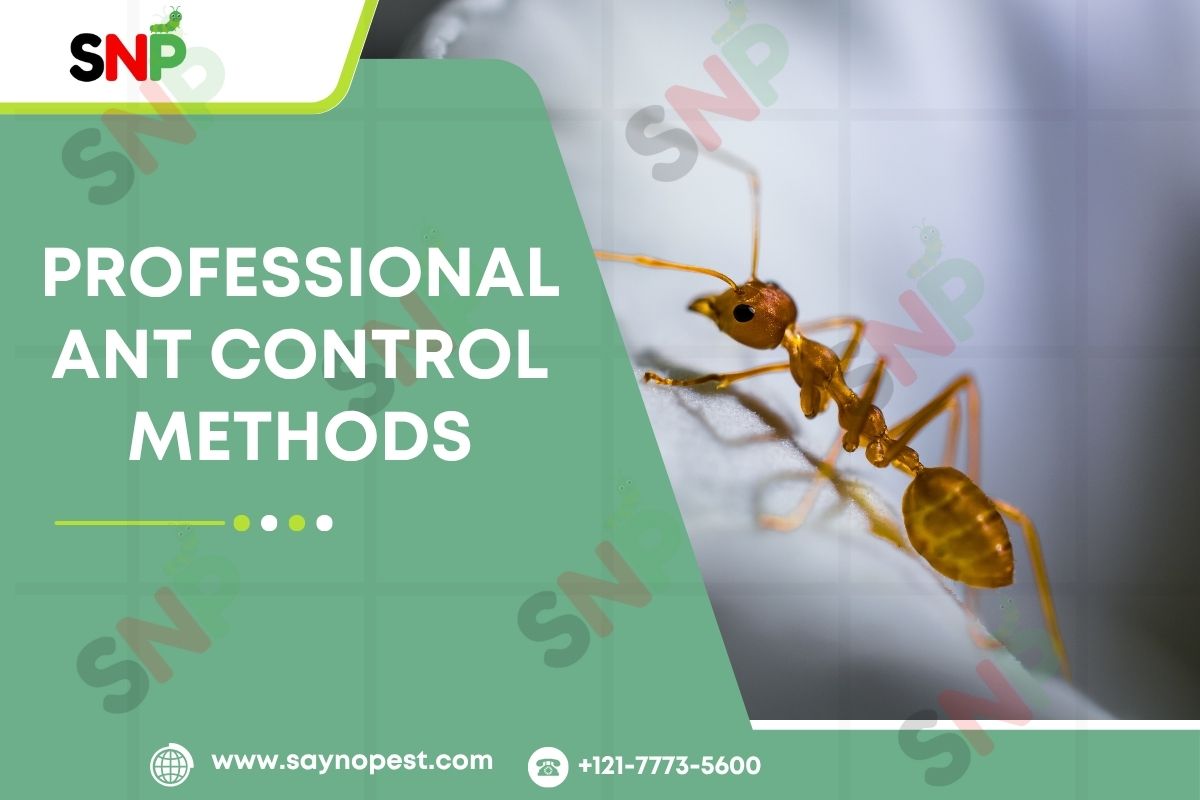
    There are no two ant problems the same, and both species invasive pavement ants or ruinous carpenter ants require an individualized elimination approach. Professional Ant Control Methods begin with comprehensive assessments with high-tech tools and seasoned vision. Technicians identify the exact ant type, chart their travel routes, locate nests, and determine entry points often not visible to the naked eye. This detailed analysis enables treatment to target at the root of infestation rather than just at the surface activity.

    Common professional techniques are:

    • Use of sophisticated detection tools like heat cameras and moisture meters
    • Detection of ants under magnification to determine the most effective treatment
    • Proper use of treatments according to building construction and setting

    While DIY solutions only mask the problem—Professional Ant Control Techniques kill it outright.

    professional-ant-control-methods

    How to Get Rid of Pavement Ants

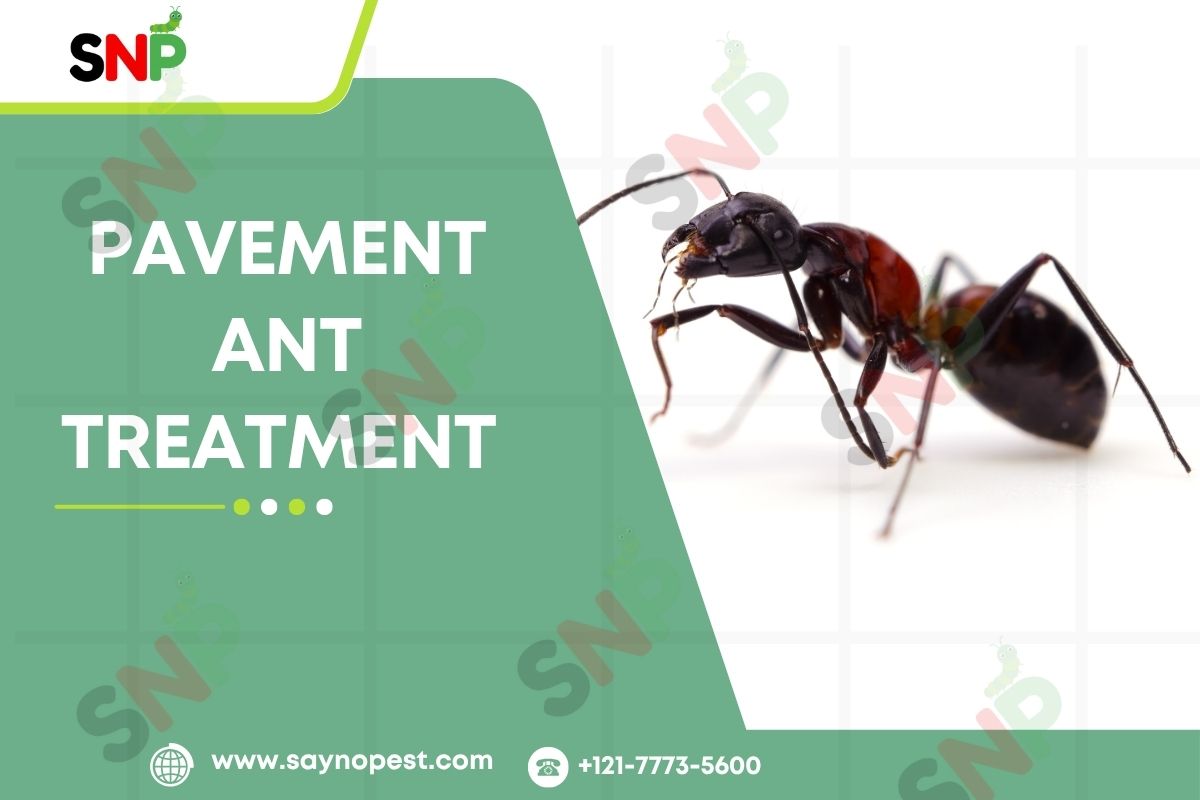
    These ants are annoying pests that establish colonies beneath sidewalks, driveways, patios, and the foundations of homes. Known for their tendency to breach kitchens and basements, these ants are drawn to sugary and greasy food residues. If you’re struggling with these invaders, professional exterminators know exactly how to get rid of pavement ants efficiently and thoroughly.

    Here’s a look at what experts do:

    Identification and Inspection: Pesticide professionals first use identification and inspection to locate the outdoor nests and estimate the colony size.

    Bait and Treatment: Rather than driving ants indoors with scatterers, pest control professionals apply bait that is slow-acting and non-repellent insecticides. Ants are permitted to bring back the poison into the nest, infecting the entire colony in the long term.

    Barrier Protection: Companies also seal narrow cracks and openings, Manufacturing Professional Ant Control Methods system to prevent reinfestation.

    Long-Term Monitoring: Regular  inspections ensure the treatment is effective and provides continued protection.

    Understanding exactly how to kill pavement ants allows professionals to provide long-term results far more than products available over the counter can provide.

    Infestation of Pavement Ant

    A pavement ant infestation may start small—a single line along your tiles—but these tiny ants are but a part of something much larger beneath the surface. Colonies can consist of tens of thousands of ants and work with greater than one queen, so they’re tricky and complex to eliminate without the right equipment and procedures.

    Signs that you have an infestation of pavement ants include:

    • Ant trails on kitchen, bathroom, or baseboard surfaces
    • Soil-like substance in cracks and crevices
    • Swarming of ants in warm weather around foundations or walls

    Professional Ant Control Methods offer treatment-by-treatment solutions that include:

    Colony Elimination: Using bait systems and slow-acting chemicals that worker ants transport back to share with the queen and larvae.

    Enduring Defense: Using professional-strength perimeter sprays and dust treatments in voids, baseboards, and cracks.

    Continuous Monitoring: Experts don’t just fix the problem—they ensure the colony is destroyed by following up on follow-ups.

    With a chronic  infestation of pavement ant, speed and technique matter—and that’s what experts provide best.

    The Bigger Picture: Ants, Ticks, and Other Household Pests

    In pestering ants, homeowners must not omit treating other bugs like ticks. It is essential to know common Tick Types in the US for full pest information. Dog owners especially ought to be well-informed about Tick Types in America for dog such as the American dog tick and black-legged tick—both of which are essential health threats.

    Interestingly, the conditions that draw ants (vegetation, moisture, and heat) are also favorable to ticks. That makes pest control experts your one-stop ally in all-around protection against home invaders big and small. The majority of the services using Professional Ant Control Methods are also effective at evaluating, preventing, and treating tick infestations.

    Whether researching ants control or shopping for information on Typical Tick Types in the US, don’t delay seeking the help of the experts for a full-service solution.

    Conclusion

    Caring for ants is not all about what you see—it’s all about dealing with what’s hiding behind your walls, foundations, and driveways. Whatever your need is, be it the best method on how to get rid of pavement ants, dealing with an infestation of pavement ant, or whether they’re somehow related to the environment that hosts common Tick Types in the US, one thing is clear: Professional Ant Control Solutions are the smart choice.

    These solutions are more than just mere sprays and offer strategic, science-based solutions. You benefit:

    • Permanent colony removal
    • Your home’s foundation safeguarded
    • A cleaner, healthier home for your pets and loved ones

    At saynopest, we specialize in targeted treatments using established industry practices and up-to-date pest control technology. Our professionals are aware of Professional Ant Control Methods, how to handle an infestation of pavement ant, and even how to guide you through issues such as Tick Types in America for dog.

  • Types of Ants: Identification, Control, and Solutions to American Homes

    Types of Ants: Identification, Control, and Solutions to American Homes

    Ants are one of the most prevalent household pests in the United States with over 1,000 native species in North America alone. To be effective at pest control, one needs to know what kind of ant infests homes and yards. The guide sets the most prevalent types of ants, provides homeowners with useful information on pavement ant control, and provides useful information on flying ant elimination all within American homeowners’ grasp.

    Common Types of Ants in the United States

    The diversification of ants in the usa is vast, but a handful of species are prominent for attacking homes and outdoor spaces. Here are the most common types of ants you’re likely to encounter:

    Pavement Ants: Tiny, and usually tan-black ants with dull legs, erect nesting under sidewalks, driveways, and building base. In Indoors, they’re attracted towards greasy foods and crumbs.

    Carpenter Ants: Large, and Normally black or reddish ants that dig in wood and will ruin buildings.

    Odorous House Ants: Pungent-smelling ants, like coconut when they are crushed. Dark brown to black, small, and usually near food.

    Fire Ants: Red-colored ants whose bite is agonizing, usually found in the south states.

    Pharaoh Ants: Light yellow-colored, small ants that infest houses, particularly warm, humid places.

    Argentine Ants were light to dark brown color, gigantic colonies, and will take over native ant colonies.

    Thief Ants were tiny, yellow to light brown ants that nest near other ant colonies to rob them of their food.

    Each one is a unique challenge to the homeowner, so identification becomes significant in successful control. Identification is worthwhile to take since each species responds differently to treatment methods. Some, for instance, are highly sensitive to baits and will need tender care in the nest.

    Pavement Ant Control: Effective Methods

    It’s necessary to pavement ant control for almost any American homeowner because the ants are one of the most common invaders. This is the ideal method to use to assist in controlling them:

    Clean Home: They fall for food scraps, mostly grease and sweet food. Sweep floors, countertops, and trash cans regularly erase attractants.

    Seal home entry Points: Seal cracks in the foundation, near windows and doors, and near where the utility lines enter so that ants are not able to get inside.

    Use Ant Baits: Baiting is the most effective method of eliminating pavement ants. Put ant bait stations in ant trails; worker ants will carry the bait back into the nest and kill the queen and future generations. Homemade baits made of borax and honey or syrup will kill them too.

    Sprays and Insecticide Dusts: Use a properly labeled insecticide spray to kill outdoor nests. Inside, don’t spray ants that are visible because this will only destroy workers and won’t kill the colony.

    Perimeter Treatments: Spray bug barriers along the house foundation, especially points of entry and areas where ant traffic is heavy.

    Regular application of these flying ant treatments will go a long way in reducing or eliminating infestation. Make sure to oversee the area even after treatment because flying ants are breeding machines and would re-colonize if the food sources or entry points are not blocked.

    How to Get Rid of Flying Ants: Quick and Permanent Solutions

    how-to-get-rid-of-flying-ants

    Homeowners are generally caught off guard each summer with flying ants—reproducing females and males from the colony to form new colonies. It is to be found how to eliminate flying ants so as not to have fresh infestations:

    Soap Spray DIY: Mix dish soap in water and spray flying ants. This dissolves their exoskeletons and kills them instantaneously.

    Vinegar Solution: Spray trails and flying ants with a water and white vinegar solution, which kills their pheromone and repels others from trailing.

    Vacuuming: Sweep indoor infestations indoors by vacuuming rapidly over large areas of flying ants.

    Remove Food Sources: Flying ants are drawn to food and water. Clean the kitchen and seal food in containers.

    Seal Entry Points: Seal windows and doors with screened doors, and seal gaps in such a manner that flying ants are kept out.

    Kill the Colony: The final long-term solution on how to get rid of flying ants is to destroy the source. If you can locate the nest, kill the nest using insecticidal dust or bait traps.

    Types of Ants Prevention Tips

    Landscaping: Plant bushes and trees away from your house side in an attempt to inhibit the construction of ant bridges.

    Moisture Control: Dry out standing water and seal cracks since most ant species need water.

    Regular Inspections: Check your home regularly for ants under observation, particularly following rain or heat.

    Knowing the secret to successful pest control, what ants infest American houses, solutions are designed to suit. There are unwelcome pavement ants that won’t leave, flying ants that appear by the score during seasons, and solutions are bespoke. Be clean, close cracks and crevices, and apply baits and treatments in a strategic manner for optimum success at the pest control of pavement ants and how to kill flying ants.

    For expert advice, products, and services for all ants, call SayNoPest your key to pest-free life. Your home is worth it to use SayNoPest for tried and trusted solutions. Let ants not take over your home all now and enjoy a cozy, pest-free home all year around!

  • Pavement Ant Treatment Without Chemicals

    Pavement Ant Treatment Without Chemicals

    Introduction to pavement ant treatment

    Are you exhausted after beholding tiny pavement ants moving out of your kitchen counter or from your patio? You are not the only one! A lot of people in America are very keen on keeping their homes free of pests but at the same time do not want to use chemicals that are unsafe for their health. Let’s enter the world of pavement ant treatment and find out the best natural ways to reclaim your space.

    Pavement ants are known for their not giving up nature. They are usually able to enter people’s homes through the little crevices in the foundation, sidewalks, or driveways.

    Ant Bait for Pavement Ants

    One of the most efficient DIY methods of how to get rid of pavement ants is through luring them with ant baits-

    • These are a combination of a food attractant and a slow-acting insecticide which are available in different forms of liquid, gel, granules, and mix stations. Ants are attracted to sweet or protein-based baits, e.g. boric acid, peanut butter, sugar.
    • Inside your house, keep a check under sinks, and after appliances as these are the most popular spaces for infestation. Outdoor treatment requires sealing of cracks in pavement, houses, and gardens.
    • It is very important to use both sugar-based and protein/grease-based baits. Sweet baits may be used throughout the year, whereas protein baits are particularly used during spring. Change the type of bait or move it nearer the trail when ants are not responding to it.
    • For better results, baiting should be done consistently until the activity of ants stops. If the bait is not enough or it is removed too soon, it will only lead to a rebound in the colony. The most effective method for dealing with small to minimal infestations is to employ the use of ant bait for pavement ants.

    How do Baits Work?

    The bait you place attracts the worker ant. They eat the bait and carry some of it back to the rest of their ant friends. As a result, the dwellers of the nest help in spreading the poison to other parts and ants of the colony. The method ensures that the bait reaches the farthest parts of the nest before killing the ants. In the long run, such a strategy deals with the root of the problem and not just the visible foragers hence leads to the total control of the pests.

    Top 5 Natural Pavement Ant Killers

    Top-5-Natural-Pavement-Ant-Killers

    Instead of using a chemical spray, opt for the following effective natural remedies for the pavement ant treatment:

    • Diatomaceous Earth: This is not only safe to humans and pets but also deadly to ants. Apply food-grade diatomaceous earth on ant trails and entry points. It dehydrates the ants.
    • Boric Acid Baits: Combine one teaspoon of boric acid, two tablespoons of sugar and a small amount of warm water. Put cotton balls in this mixture and place them in places where an ant has been spotted. The worker ants bite the bait and carry it back to their nest thereby killing all the ants in the long run.
    • Vinegar Solution: Ants hate vinegar! The scent of the vinegar covers the odor and the ants become disoriented and confused.
    • Volatile oils: Oils like Peppermint or tea tree work wonders. 10–15 drops of each oil should be mixed with a cup of water. This mixture should be used to mist the entry points. The smell is too strong for ants and this is what keeps them away.
    • Cornmeal or Cream of Wheat: Ants may be drawn to the trails, but they are unable to digest the food, which makes it a natural step of the process of cleaning the colony.

    Safe, affordable, and easy-to-use are the three most important features of these solutions. Also, it means you won’t have to give up your health while using pavement ant treatment.

    5 Steps to Pavement Ant Control

    • Close the Openings: Caulk can be used in sealing cracks on the floors, windows, and doors. Ensure that there are no plants touching the walls of the house. These are the necessary precautions to avoid ant invasion and this is important for any pavement ant treatment strategy.
    • Keep it Neat: Store all pantry items in containers with tight lids, and you should clean all up the crumbs and spills instantly. Don’t forget to discard the trash frequently and make sure house is always neat.
    • Avoid Dampness: Pavement ants prefer living in a moist environment. Repair any leakage, use a dehumidifier, and maintain suitable ventilation. Dry out wooden constructions or just wait for them to become less habitable.
    • Use Natural Ant Bait for Pavement Ants: Put DIY or store-bought bait stations around the ant tracks and paths so they can be drawn into it. The workers will carry the toxic bait and spread it to the rest of the colony, thus eliminating the queen and her brood. No pavement ant treatment is more effective overall than this slow-acting approach whose extended duration effect is to kill them all until their mating inside the next cycle is over.
    • Repeat as Needed: Some natural methods might also need to be used a few times to be effective.
    Pavement-Ant-Control

    Conclusion

    Nothing can stop you from having a clean house and a green environment. By using the above-mentioned pavement ant treatment methods, you can be sure that the problem is solved efficiently without any harmful effects.

  • All About Flying Ants in the United States

    All About Flying Ants in the United States

    Have you ever seen a crowd of flying ants in your house or office? We understand how unfortunate and disturbing this can be! These tiny-flying invaders are a unique and fascinating part of the ant world.

    In this blog, we’ll explore everything you need to know about these ants and the strategies for how to get rid of flying ants and why do they appear out of nowhere.

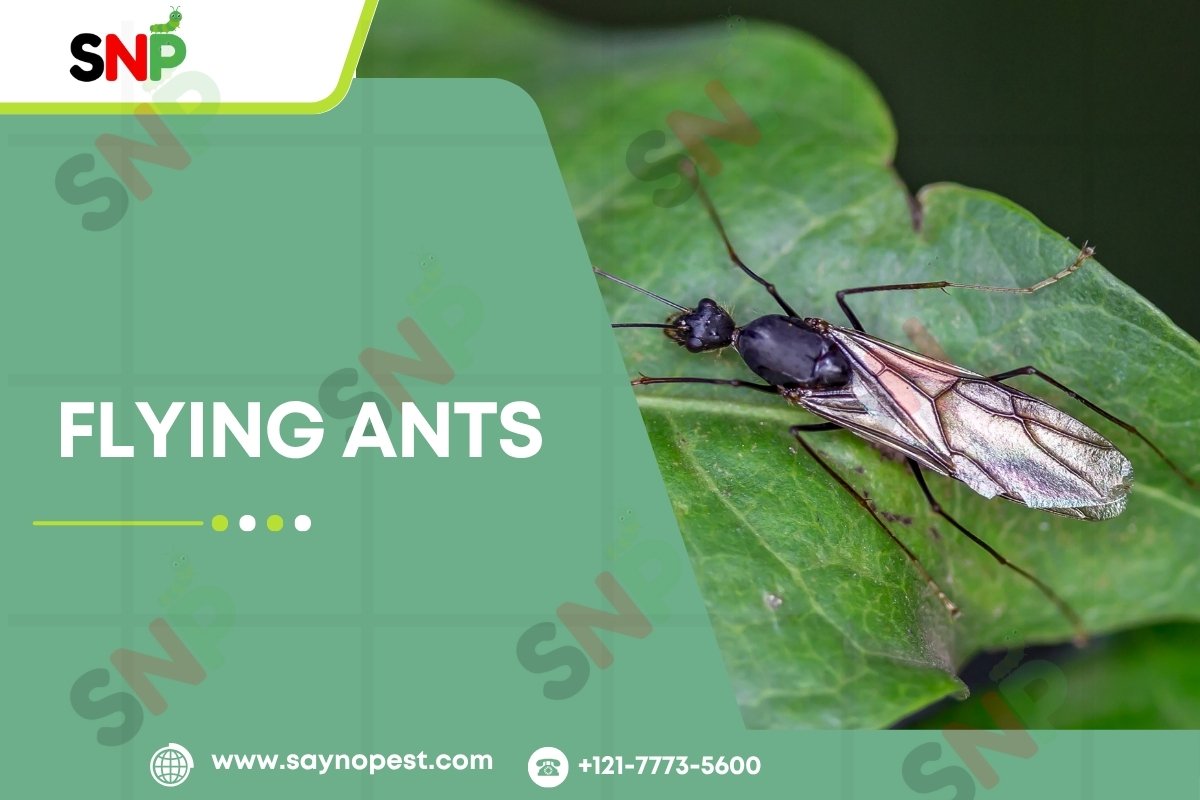
    Alates are also called flying ants. They are the male ants and future queens that leave the colony to start new ones. You can figure them about easily from regular ants because they have two pairs of wings, the front wings are longer than the back ones. People also mistaken them with termites but these ants also look different from termites. While termites have thick, straight bodies, alates have thin bodies with a narrow waist, kind of like an hourglass shape.

    Most of these ants are black or brown in color, though some species, like fire ants, may have a red-brown tone. 

    Size: Queens are the largest and measure 15mm, males and workers are smaller and measure 2-8mm.

    Do Flying Ants Bite?

    Flying ants are an aggressive species of ants and they do not normally bite or sting human beings.But here is a twist! There are black ants that are harmless and there’s red ants also known as fire ants that can bite or sting. They are ants that may make you feel uncomfortable or develop allergies in case you have a sensitive skin.

    But the positive side is, flying ants are more interested in mating than biting people, so the bites are not common!

    The ants have their big moment during a nuptial flight (ant mating party). This is when lots of them swarm out of their nests at the same time. It happens after rain when the weather is warm and humid. Ants search for a mate by flying into the air during the nuptial flight. The fertilized female ants land and start creating new colonies after the male ants die after mating.

    In terms of diet, flying ants are omnivorous. They are attracted to sugar, sweet foods, sweet food crumbs, and they feed on nectar, honey, and small insects. Sometimes they also feed on dead insects for protein needs.

    HOW DO YOU AVOID FLYING ANT IN YOUR HOME?

    Dealing with flying ants in house can be a task, but there are many effective ways for how to get rid of flying ants

    1. Use a Vacuum Cleaner: Quickly remove all the ants in house with a vacuum cleaner.
    2. Soap and Water Spray: Make an anti-ant spray! Mix water and dish soap together, you will get an anti-ant spray and you can spray directly on the area affected with the ants. This kills them on contact.
    3. Sticky Traps/Baits: Place sticky traps near windows or entry points. Use ant baits to target the colony. The ants bring the bait back, eventually removing the nest.
    4. Seal Entry Points: Seal the cracks, windows, doors, etc to avoid future attacks.
    5. Essential Oils and Natural Repellents: You can use natural ant repellents like- Peppermint, Tea tree, and Lemon oils mixed with water. All these can kill flying ants when sprayed around entry points.
    6. Professional Pest Control: If you have a continuous or large infestation, contact a professional for expert and safe treatments.

    Why Do Flying Ant Suddenly Appear?

    Seeing a bunch of flying ants suddenly appear in your house? This might seem random, but it’s actually part of their natural love story! This process is called nuptial flight. It occurs when mature ant colonies send out males and females to mate and start new colonies. These swarms usually happen after rain, when the weather is warm and humid which is perfect flying conditions.

    All the ants take off around the same time to boost their chances of finding a mate and mixing up their genes. If you spot them indoors, especially near windows or lights or you find tiny wings lying around, it could mean there’s a mature colony nearby or even hiding somewhere inside your home!

    5 FUN FACTS ABOUT FLYING ANT

    1. Flying ants are regular ants with wings!
    2. Queens fly find mating partner and when they mate with a male, they set up new colonies.
    3. Flying ants might be annoying but they do not harm!
    4. Female Flying ants are bigger than male ants.
    5. After mating, queens bite off their own wings and discard them.

    Conclusion

    Flying ants= Occasional trouble makers? Yes, when they target your home they become a huge trouble! However, they are important in the natural world. Being aware of their appearance, their behaviour, and the way to eliminate flying ants can help you cope with these tiny terrors.

    Remember, most flying ants in house are harmless and temporary visitors so call the experts to take economical measures while appreciating the ecological role these insects play.

  • Dangers of Fire Ant Bites on Humans and Pets

    Dangers of Fire Ant Bites on Humans and Pets

    Introduction to Fire Ant Bites

    Fire ant bites can be life threatening! These ants are both very aggressive and are fast in attacking. They gather and attack any threat that comes their way. Fire ants are unique not because they can bite and sting. But they also release a venom that makes your skin feel like it’s on fire.

    What does a fire ant bite look like?

    From what is known, fire ant bites has symptoms of a red, swollen bump which usually appears immediately after the sting. Some people even have had a group of small, itchy blisters sometimes in a semicircle especially if they have had a close encounter with fire ants. It is usually possible to recognize these blisters. These can last for several days and even leave an infection which can become a scar.

    Symptoms and Causes of their Bites

    Symptoms-and-Causes-of-Fire-Ant-Bites

    The primary reason for fire ant bites is their aggressive defense mechanism, through which fire ants attack with a pack mentality and take bites out of the skin while stinging. This venom triggers a wide variety of symptoms, such as:

    • First, you will feel burning or stinging at the site of the fire ant bites.
    • Next, you will observe red, raised bumps that quickly become blister filled with fluid.
    • There will be uncontrollable itching that can last more than a few days.
    • Moreover, there is a possibility that the swelling may extend beyond the sting site, particularly when numerous fire ant bites are in the same location.

    The symptoms are not dangerous but uncomfortable. However, there are people who can have serious allergic reactions.

    • Severe swelling and redness
    • Feeling sick
    • A feeling of tightened chest
    • Troubled breathing
    • Swelling in the tongue and throat.
    • Feeling dizzy
    • Experiencing low blood pressure (these are some signs of a life-threatening allergic reaction).

    Pets can also be in danger. The immune systems of dogs that have been bitten by fire ants may display signs of pain, itching, and swelling on areas that have little fur like the belly or around the eyes.

    What happens when you get bitten by fire ants?

    They first bite into your skin using their jaw. Then, the ants turn around and sting you many times, injecting venom with each sting. The venom is the one that causes the pain and blisters. The ants only attack in groups, so it is very common to be bitten by several fire ants at once. The pain can last up to one hour, and the itch and swelling can still be there after several days.

    How to treat fire ant bites?

    How-to-treat-fire-ant-bites
    • Leave the place quickly to avoid more bites.
    • Wash the bitten part with soap and clean it carefully to remove any infections.
    • In order to ease the pain and decrease swelling, apply an ice pack for 15 minutes and remove it. Do it for 15 minutes and then repeat.
    • Visit a drug store and purchase some cortisone cream. Use a prescribed medicine for itching and swelling. This will be especially useful if you have quite a few fire ant bites.
    • Use an oral antihistamine for itching and swelling. This will be especially useful if you have quite a few fire ant bites.
    • Don’t scratch the blisters because not doing so will prevent infection and scarring.
    • Non-prescribed pain relievers can be used not too frequently only when pain occurs.
    • If any signs of the infection occur (increased redness, pus, or fever), the most important thing to do is calling a healthcare professional.

    Conclusion

    Fire ants are not only a mere inconvenience but may also cause a lot of pain, discomfort, and in rare cases, serious health problems. Identifying fire ant bites in time will keep you in no danger zone. Keep in mind the fact that quick action accompanied by proper care is the best way to prevent the venom of fire ant bites.

  • What Attracts Pavement Ants to Your Home?

    What Attracts Pavement Ants to Your Home?

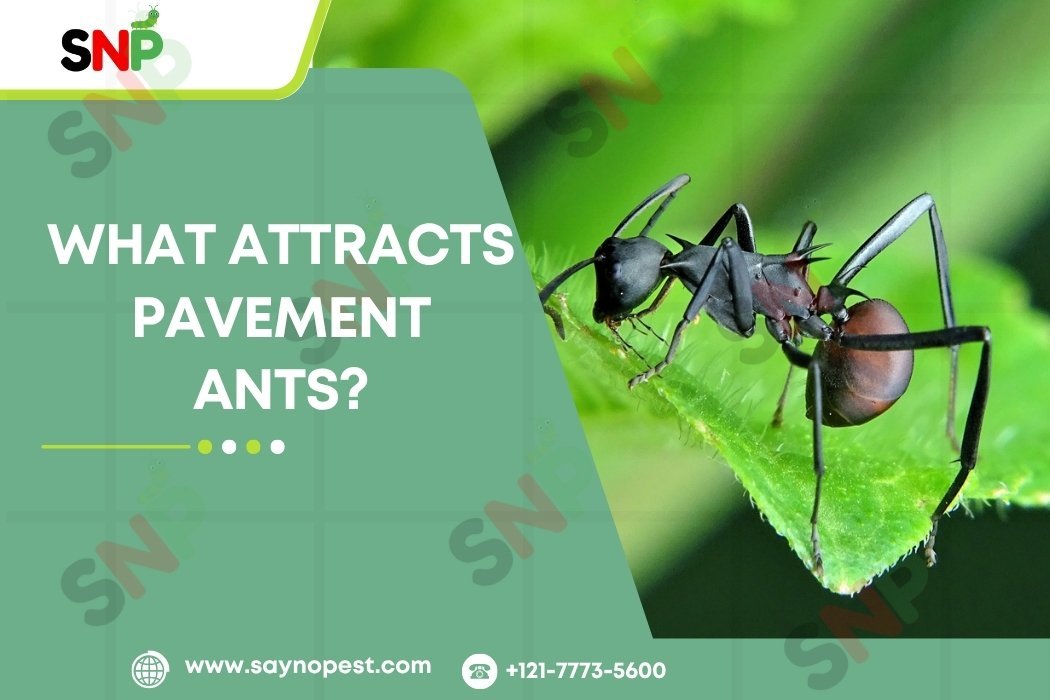
    Knowing what attracts pavement ants becomes a very important step for homeowners who are after the most effective pest management solutions. Pavement ants are a species that most definitely have topped the chart of most persistent house insect pest around the United States.

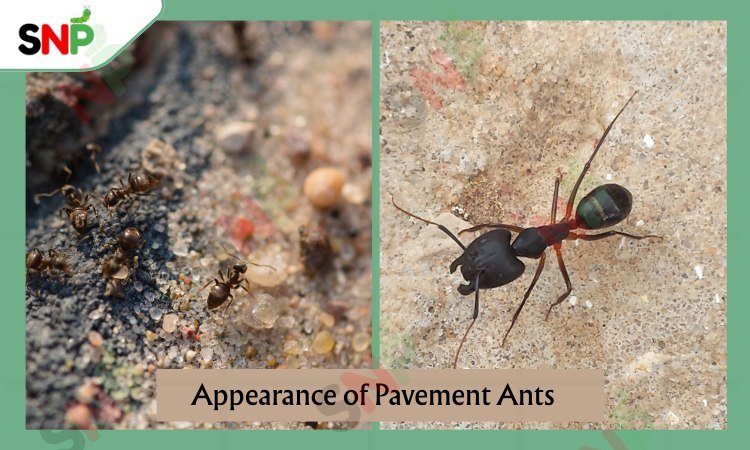
    Appearance of Pavement Ants 

    Dark brown to black in color, these small insects are known for their notorious behavior of establishing their colonies under sidewalks, driveways, and concrete structures.  These tiny invaders have a length of approximately ⅛ inch and distinguish themselves by the small mounds of excavated soil they make around pavement cracks.

    The ant colonies of pavement ants can consist of 3000 to 10,000 ants, but some colonies reach 30,000 ants in number. More than one queen in a larger colony makes it harder to get rid of these pests.

    Appearance-of-Pavement-Ants 

    What Attracts Pavement Ants to Your Yard?

    1. Food Sources

    Pavement ants love all kinds of food. Be it sweet or not, and thus your home becomes a very attractive place to them.

    The list below represents the ants main food that they like:

    • Greasy food
    • Meat
    • Nuts
    • Cheese
    • Honey
    • Jam and cookies
    • Bread
    • Crackers, and what not!
    • The ants will also eat honeydew from aphids, dead insects, plant juices, pet food, garbage scraps, etc.

    These ants are very active in searching for carbohydrates and proteins, and among other things, grease, and meat are the most preferred by them. The ants feed on various things such as sugar, nectar, tiny seeds, and the remains of insects.

    2. Moisture

    What attracts pavement ants is not only related to food but also to the moisture sources. These creatures only survive if they have continuous water supply, and are humid. Besides, kitchens and bathrooms are the most favorable due to the higher moisture levels that they have.

    Moreover, leaky faucets, dripping pipes, pet water bowls, and condensation around appliances will turn out to be perfect spots for them.

    3. Warmth and Shelter

    Pavement ants have a very strong preference for warm environments. Within homes, these bugs go wherever there is heat. They make their nests in the closest distance to where the heating apparatus, furnace, air conditioning, and other such parts of the building.

    The perfect temperature accordingly to pavement ant’s needs l is between 21-27 degrees Celsius.

    During winters, the problem with the pavement ant is more severe because outdoor food becomes scarce. So, they invade homes.

    4. Structural Entry Points

    Another point in what attracts pavement ants is that they need openings to enter homes. In order for them to be undisturbed, they look for crevices in the foundation, basement windows and doors, and gaps around places where they can run their wires through. The most common places they use to get in are the weep holes, the areas where the pipes go through the walls, and the cracks that are in the basement walls or concrete floors.

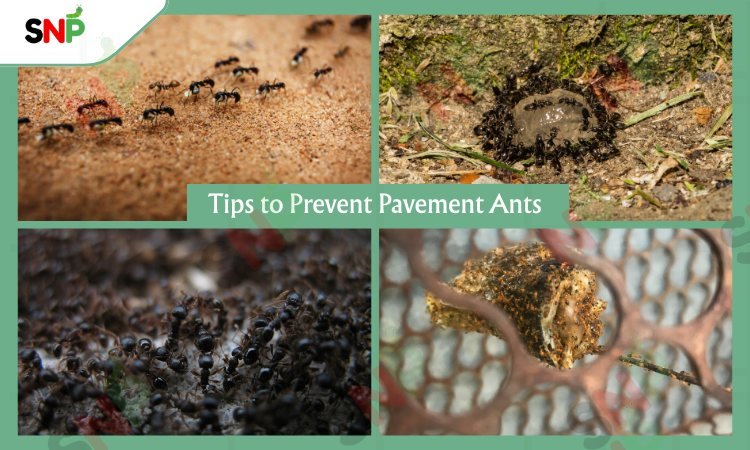
    5 DIY Control Tips to Prevent Pavement Ants

    1. Eliminate Food Sources Completely

    • Clean all the spaces daily.
    • Keep food in airtight cans and clean the crumbs, spills, and any other residue immediately.
    • Empty the trash daily and keep it in a closed container outside the house.
    • Pet food needs special care, thus bowls should be removed after feeding and feeding areas should be cleaned.

    2. Create Natural Repellent Barriers

    • Essential oils can be considered as a powerful weapon for nature against the things that bring to the pests that attract pavement ants. The oil of spear mint is one of the strongest natural repellents for ants. Make up a spray solution with 30-40 drops of essential oil, 30 drops of alcohol, and 60ml of distilled water. The list of good oils goes on and includes tea tree, lemon, eucalyptus, cinnamon, and clove oils.
    • Top areas where ants tend to come in, for example, doorways and windows, with essential oil spray.
    • Do not forget to reapply the solution regularly, particularly after cleaning, and also when the ants come back.
    • Mix oils to obtain a more efficient formula – peppermint, clove, and citrus oils are the perfect combination.
    • Vinegar is another natural alternative since a half and half mixture of white vinegar and water will erase the scent that ants have been using to follow.

    3. Deploy Strategic Bait Systems

    Ant baits that are homemade attract the needs of pavement ants and at the same time kill their entire colonies.

    Put stations with poison along the trails where ants are seen and near the place where they get in.

    Provide baits to the ants without any restrictions as they will carry the poison to the nests thus killing queens and larvae.

    It’s important to keep the bait stations until no ant activity is noticed at all. Also, refill the baits if it is needed.

    4. Seal Entry Points

    By systematically sealing entry points, you definitely make it harder for ants to find their way into your house. To fill cracks use either caulk or a concrete patch.

    Do it around windows and doors, weatherstripping will be applied so that gaps will be eliminated. Sealing will be done at the place where pipes and wires enter the home.

    Fill gaps of the joints formed during the expansion of the slabs and mend the mortar parts that are damaged in the brick facades. Be extra careful in the areas that are closest to heat sources because that is where ants mostly enter. But, when bait systems are used, it is better to wait until ants are completely inactive before sealing. If sealing is done before it is time, the ants will not be able to carry the poison to their nests, hence, the treatment will be ineffective.

    5. Modify Environmental Conditions

    • Clean gutters regularly and direct downspout water away from buildings.
    • Fix all leaking plumbing, including faucets, pipes, and irrigation systems. Remove standing water sources around the property.
    • Trim vegetation so there is at least six feet of clearance from structures. Replace wood mulch with pea gravel to minimize nesting areas.
    • Remove potential nesting sites not only under landscape stones but also under pavers and other objects that are on the ground level.

    Conclusion

    Knowing what attracts pavement ants gives the homeowners the power to carry out prevention strategies that are targeted. These invaders are very persistent as they look for food sources, moisture, warmth, and open entry points within homes. It is not enough to only control one factor; all of them have to be considered if one wants to eliminate the infestation of pavement ant.