Author: Eliana

  • Most Common House Spiders in the United States

    Most Common House Spiders in the United States

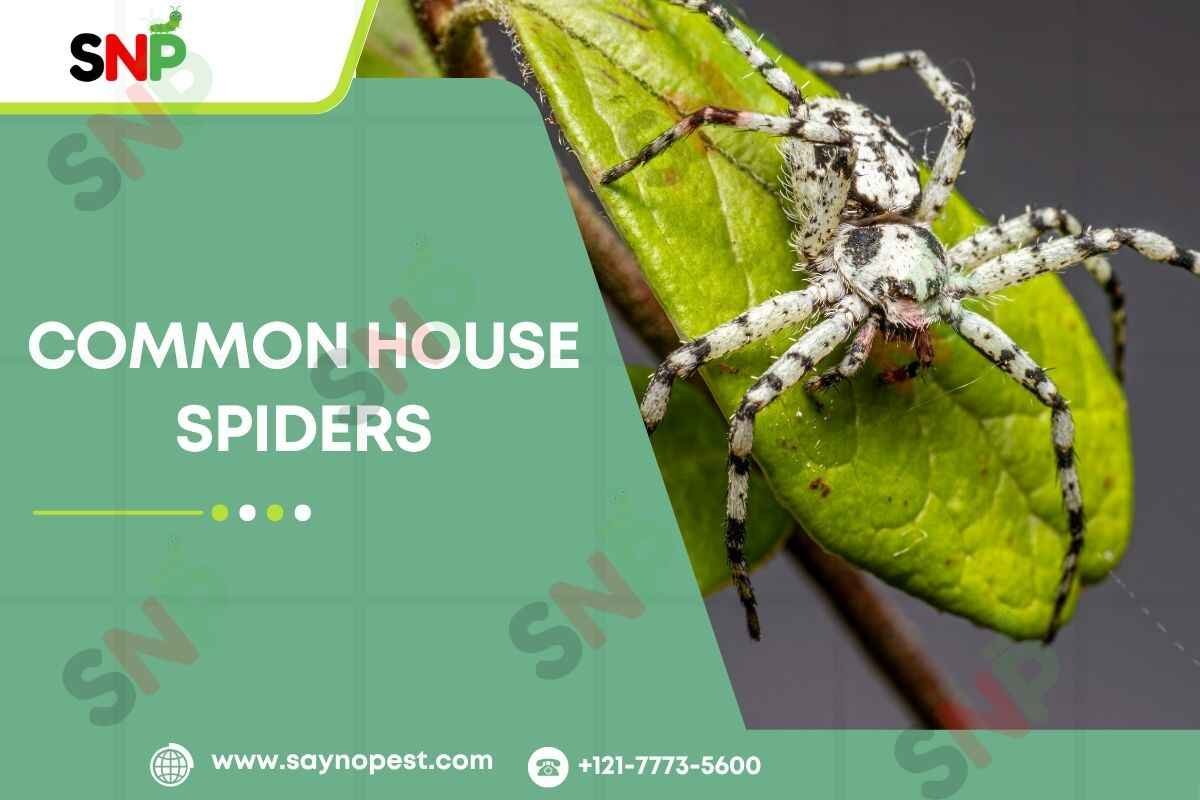
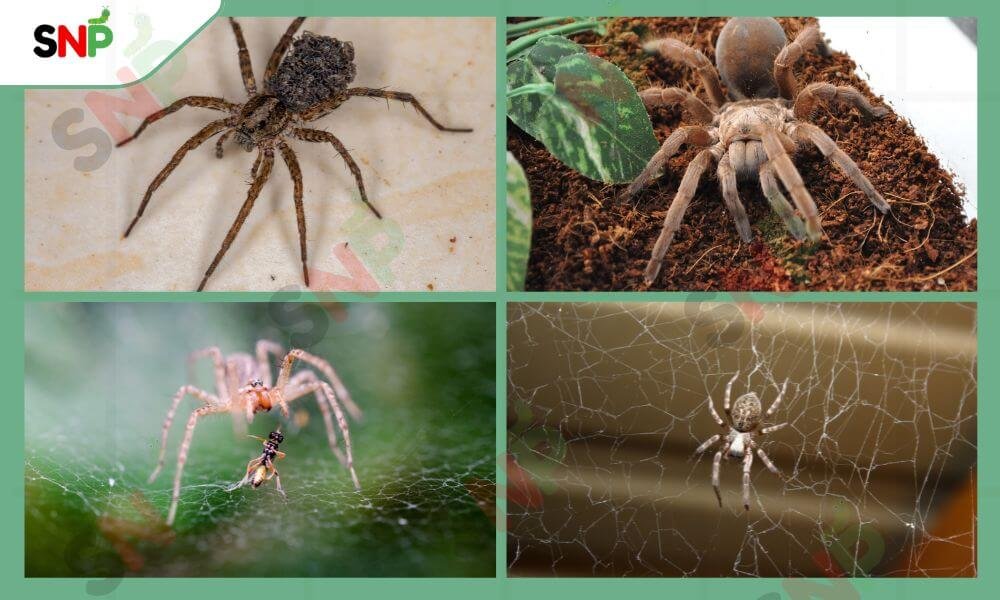
    House spiders are the most common insect we find inside our homes. If you have ever seen their web in one of the corners of your room or suddenly felt something quickly moving across your floor, you are not alone. These common house spiders are almost always found in American households. Even though it may be pretty surprising to see them around, many of them are harmless and help the house cleaners do their job. In this blog post, we will introduce the 10 most common house spiders, including the Wolf Spider, the giant house spider, the jumping Spiders, and the camera-shy wood spider. We will mention their appearance, size, colour, and hiding places we’ll answer the most critical question: Do house spiders bite?

    Common House Spiders

    Here are the most frequently encountered common house spiders in the United States:

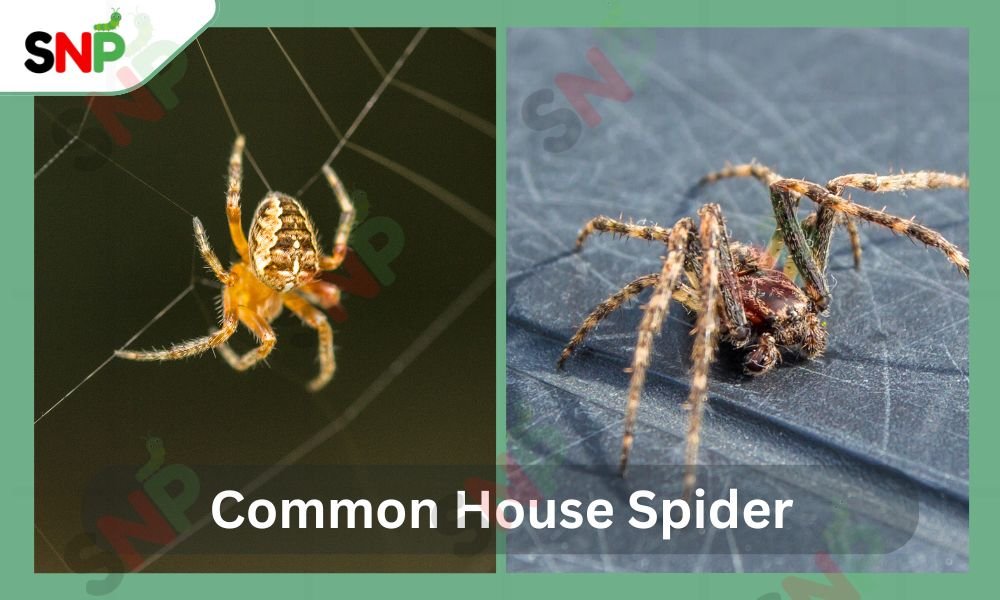
    1. American House Spider

    • Appearance: Small, with a round abdomen.
    • Colour: These spiders have a Dull brown appearance. Male spiders show yellow leg segments, while female spiders show orange leg segments.
    • Size: About 1/8″ to 5/16″.
    • Where Found: They are found in the  Corners, under cabinets, basements, and garages. American House spiders are the most common house spiders and are harmless.
    common-house-spider

    2. Wolf Spider

    • Appearance: Hairy and robust, often mistaken for tarantulas.
    • Colour: Grey, brown, or black.
    • Size:  These can grow up to 1.5 inches.
    • Where Found: Wolf Spider often found in Garages, basements, sheds, and under debris. They are active hunters and rarely spin webs.

    3. Black Widow

    • Appearance:  Black Widow displays a body in shiny black with visually striking red markings located on its abdominal areas.
    • Colour:  These spiders display a black body with red markings on their surface.
    • Size: 1/4″ to 1/3″.
    • Where Found: Typical Locations for this species include dark areas, grassy regions, mail containers and storage facilities.

    4. Jumping Spiders

    • Appearance: Compact body with large front eyes.
    • Colour:  Their colour patterns include a black base with stripes, and they also possess iridescent features.
    • Size: 1/8″ to 3/4″.
    • Where Found: Jumping Spiders from the walls tend to inhabit attics and outside near trees, and they also reside on ceilings and on the walls of interior spaces. Jumping spiders are energetic hunters.

    5. Yellow Sac Spider

    • Appearance: Slender with a dark V-shaped mark.
    • Colour: They have Pale beige or yellow Colour. 
    • Size: 1/4″ to 3/8″.
    • Where Found: It can be found on the ceilings, corners, living rooms, and bedrooms. They hide in silk sacs during the day.

    6. Giant House Spider

    • Appearance: Giant House Spiders are  Large, with long legs.
    • Colour: They have Dark orange, brown, or beige Colour 
    • Size: Can reach up to 2.9 inches.
    • Where Found: TIt can be found in Basements, garages, between bricks, and in piles of firewood. The giant house spider possesses a formidable size that does not lead to aggressive behaviour.

    7. Woodlouse Hunter (Wood Spider)

    • Appearance: Notable for their large fangs and reddish legs.
    • Colour: Reddish legs, tan body.
    • Size: 3/8″ to 5/8″.
    • Where Found: Foundations, basements, and moist cellars, the wood spider is a specialised hunter and rarely bites humans.

    8. Checkered Cobweb Spider

    • Appearance: Small with checkered markings.
    • Colour: These display either yellow or brown pigmentation in their bodies.
    • Size: 1/8″ to 1/4″.
    • Where Found: The spiders reside close to doorways and window openings within messy home web structures.
    Do-House-Spiders-Bite

    9. Common Crab Spider

    • Appearance: Flat, crab-like body with long legs.
    • Colour: Grey, often bark-textured.
    • Size: About 1/4″.
    • Where Found: Rural homes, on tree bark, or under debris. These spiders are well-camouflaged.

    10. Dark Fishing Spider

    • Appearance: Large, with W-shaped marks.
    • Colour: Light and dark grey or brown.
    • Size: Can grow up to 3 inches.
    • Where Found: Near water, basements, woodlands, and sometimes indoors.

    All over America, common house spiders like the Wolf Spider, the giant house spider and the Wood Spider, and the jumping Spiders do a lot of good in the household, viz., keeping the insect pest population under control. Their existence is an indication of the home’s healthy ecosystem.

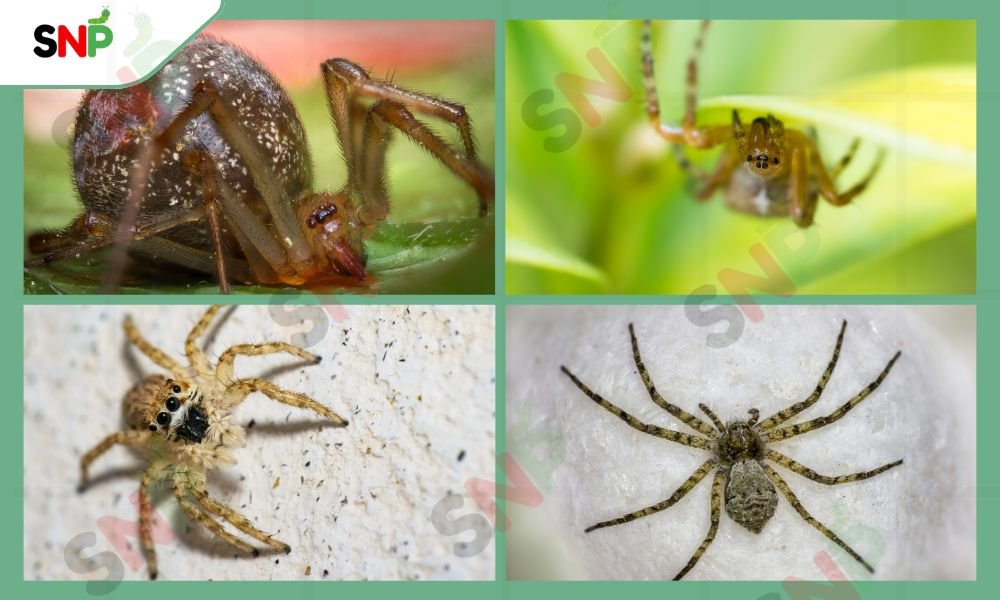
    Do House Spiders Bite?

    Many homeowners ask whether house spiders are likely to bite. Do house spiders bite? The answer is that most common house spiders are uninterested in biting humans. Spiders only bite humans during life-threatening defence measures or when they feel attacked, although their jaw muscles probably cannot puncture human flesh. An actual spider bite usually produces no more than temporary redness, swelling, and mild irritation resembling a mosquito bite response.

    Severe reactions rarely affect the black widow and brown recluse spiders, though these two types are not usually found in homes. Typically, skin irritations that people suspect as spider bites actually stem from either insects or unrelated skin issues. The Wolf Spider, giant house spider, wood spider, jumping spider, flying spider, and other common house spiders are likelier to run and hide than to bite.

    Conclusion

    Although ordinary house spiders, such as the Wolf spider, jumping spiders, giant house spider, wood spider, and the flying spider may look terrifying, most are not harmful and are the best fighters in the anti-revolting war against household pests. Case reports of people being bitten by these spiders are rare and usually not serious. Regular home cleaning and expert pest control consultation are the most effective methods to maintain your home free from spider webs and toxins. Trust Say No Pest to provide assistance and protective methods against unwanted pests, while you can contact their company for help and advice.
  • How to Get Rid of Spiders: Top Solutions for Your Home

    How to Get Rid of Spiders: Top Solutions for Your Home

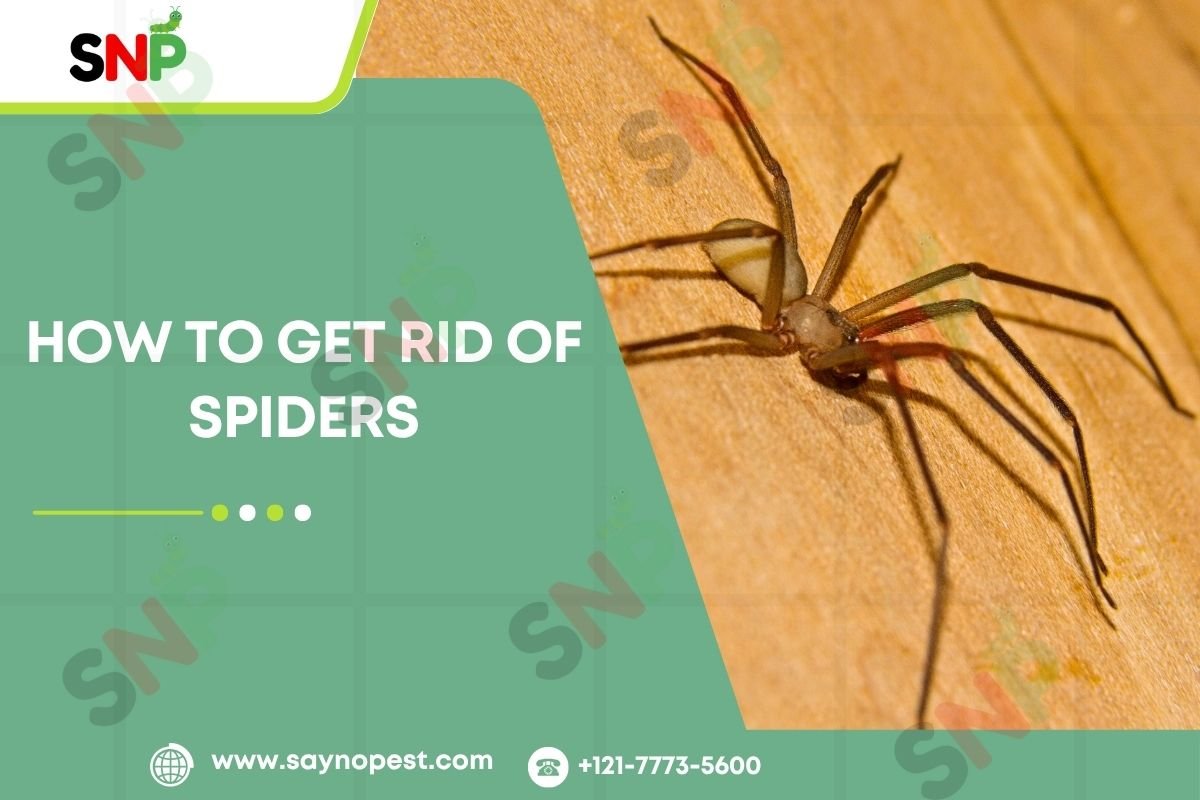
    Do you have a few more spiders you would like to see around your house now? Decided how to get rid of spiders by yourself long-term? Regarding this point, Say No Pest feels your fear and says that it is not easy to deal with spiders, especially when you do not know the harmless ones from those that can be harmful. This paper will expose the danger, offer you the most suitable approaches for removal, and show you the undiscovered cranberry spiders of the U.S.

    spiders

    Diseases That Spiders May Cause

    Most spiders living in the United States have minimal impact on human health, and the total spiders posing such a risk remains very low. Most spider bites only result in redness, swelling, and itching. Some spiders like black widows and brown recluse,s cause serious health threats when they bite because their bites generate potential symptoms involving fever, nausea, muscle cramps, and site ulceration. The poison from spiders can trigger secondary infections when venom enters the body during the most severe bites. You must call a doctor now if you have experienced one of the most serious symptoms after a spider bite.

    The distinction requires emphasis that spiders do not spread diseases in the same way as mosquitoes or ticks. The primary hazards emerge from allergic responses and wound infections due to unsuitable treatment practices. A clean and uncluttered house would be a great and simple way of keeping away spiders.

    Tips to Get Rid of Spiders

    If you’re looking for a solution to how to get rid of spiders, you’re not the only one. Here are some proven tips that can be helpful to get your space back:

    Declutter and Clean Regularly

    Regular cleaning alongside decluttering operations reduces spider habitats since these arthropods prefer dark, unattended areas like basements and attics, and garages. Vacuuming and cleaning tasks will achieve two goals: they eliminate the hiding places for spiders and any cobwebs through which your house becomes uninviting to spiders.

    Seal Entry Points

    Doors, windows, and foundations are the first to be inspected for cracks. Closing these pipes can significantly help keep spiders away from your house.

    Trim Vegetation

    Always keep your house wall clear of greenery by frequently pruning the hedges, trees, and other plants. Many plants invites spiders to pass inside the property as a natural home shelter.

    Use Natural Repellents

    People should use natural repellents composed of peppermint, citrus, and eucalyptus essential oils because these substances effectively deter spiders. Spray solutions made from diluted oils should be applied near windows, doors, and baseboards. 

    Remove Food Sources

    Besides the creatures they keep in their webs, spiders feed on insects. If you regularly update your home with the latest technology, you should keep that in mind. Trap those still on the loose, and sign up for a spider-control program if they persist. 

    Professional Help

    Although you are fully committed to getting rid of spiders, there are times when they come back. It’s a good thing that a spider exterminator can solve the problem. 

    If you’re struggling with how to get rid of spiders, remember that a combination of these strategies—along with the support of a trusted spider exterminator, offers the best results.

    What Are Cranberry Field Spiders?

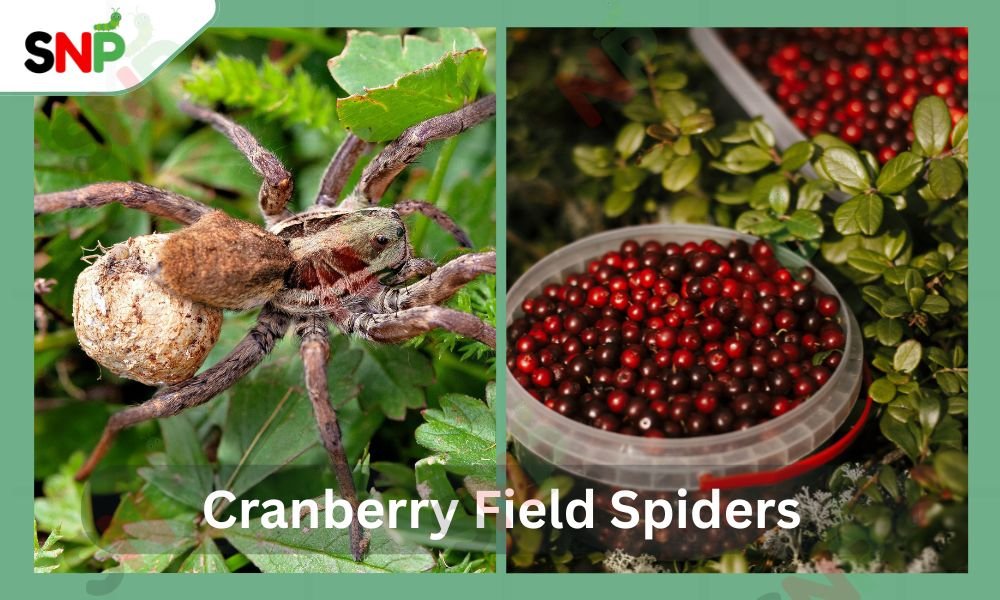
    So, the name cranberry spiders ringing a bell yet? However, let us be clear about what they are. Within the U.S. agriculture industry, and like in all cranberry bogs, the term cranberry spiders refers to a group of spiders living in the said areas (though the species are not identical). These cranberry spiders are the natural enemies of many insects whose feeding can significantly damage cranberry production. If insects attacking the crop are many larvae or caterpillars, with the crop likely being extensively damaged, pets like cranberry spiders can dispose of them effectively and ecologically.

    Cranberry spiders are beneficial in fields as they help lower the requirement for chemical pesticides. Through their presence, these spiders indicate the presence of a healthy and balanced ecosystem. On the other hand, suppose you have cranberry spiders in your house. It will be the same information for cranberry spiders on how to get rid of spiders. First, clean your space, seal entry points, and hire a spider exterminator for professional help if necessary.

    Conclusion: Say No Pest—Your Partner in Spider-Free Living

    Sometimes, dealing with spiders is a challenging task, but if you approach it the right way, you can protect your family and your home. Regardless of whether there are small household spiders, a type of cranberry surveying, or a dependable spider exterminator is needed, Say No Pest will be the perfect partner for you. We provide you with high-quality services and the best professional advice so that you will never have to worry about how to get rid of spiders.

    Your peace of mind should not be left to disruption from spiders; instead, take action and make your way to free yourselves from spiders in the most effective. 

  • How to Keep Spiders Out of Your House

    How to Keep Spiders Out of Your House

    Spiders may be small, but they know how to make a Haunted entrance, usually when you least expect it, like relaxing during a midnight snack run or a Calm shower. While most of these eight-legged, unwanted guests are harmless (and surprisingly sometimes helpful in controlling other pests), their sudden appearances can trigger high jumps. If you’ve ever searched how to keep spiders out of your house, you’re not single —and luckily, you’re in the right spot. From the infamous black widow to the lightning-fast wolf spider, these creepy crawlers have a knack for turning peaceful corners into spider Web. But fear not! We have tips, tricks, and spider-stopping secrets to help you reclaim your home. So grab your coffee and let’s spin a web of knowledge that keeps the spiders outside—where they belong.

    Spiders in the United States and Their Impact

    how-to-keep-spiders-out-of-your-house

    Households across the United States frequently encounter spiders as residents see them in their homes. The hunting abilities of these Tiny crawlers make them important in pest control operations, though their appearance often causes fear among human observers. Spiders create a double problem for homeowners since they are visually displeasing and they present a health danger, specifically through venomous species including the black widow and brown recluse. A spider web in the corner or an unexpected eight-legged being are the things that can quickly change the feeling of comfort into worry. Because spiders are looking for shelter during the winter, that is a time when humans should know how to prevent such situations, and therefore, the question of how to keep spiders out of your house is very important as it will make your living environment safe and convenient.

    Types of Spiders Found in the United States

    Spiders, in general, are not the most popular animal, to say the least, but the US has approximately 3,500 species of them. Nonetheless, only a fraction of these species end up in human dwellings, or do they pose any hazard? Here are the most remarkable types of spiders:

    1 House Spiders

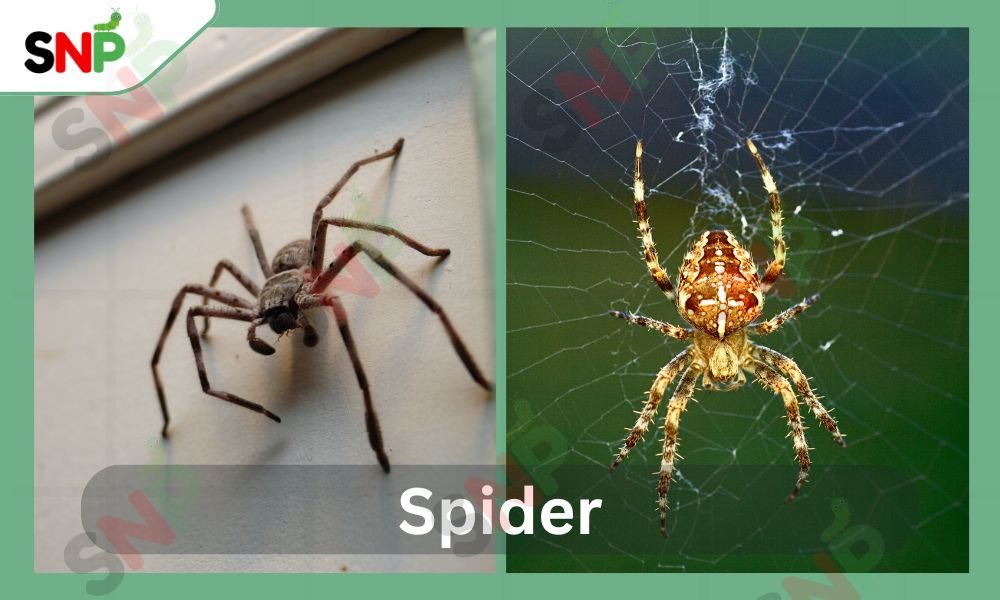
    These are the spiders we notice the most, as they are frequently found inside our houses. They are usually yellowish-brown with long abdomens and create an untidy Spider web in dark areas.

    2 Black Widow Spiders

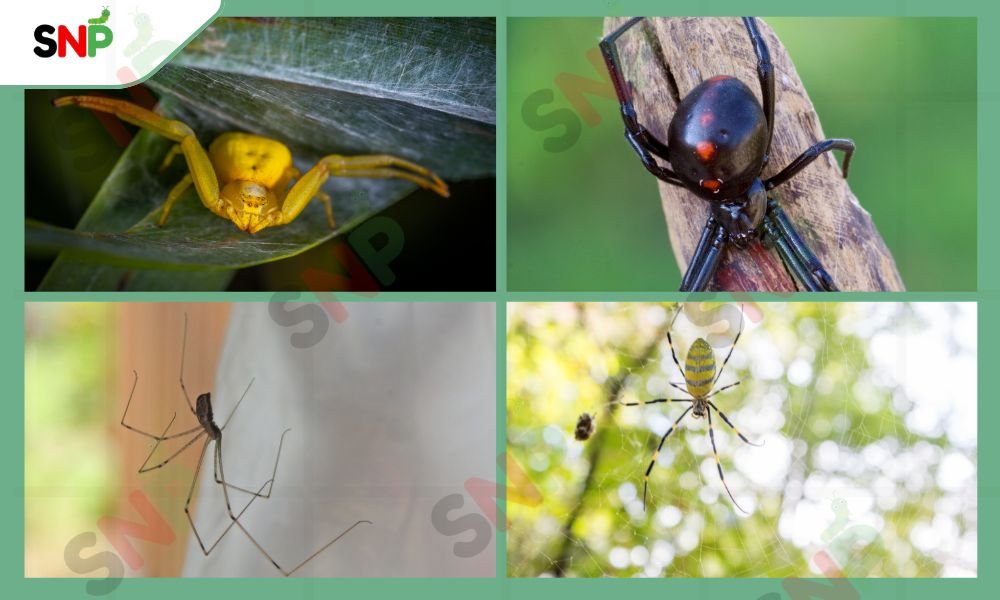
    One cannot fail to recognize an ordinary-looking shiny black body with a red hourglass mark, and this is a black widow Spider. They live throughout most US regions, but you’ll find them more in the South. Their bite can cause some nasty symptoms, but fatalities are very unlikely.

    3 Brown Recluse Spider

    Medium-sized, unicolored brown, and a medium-sized violin-shaped mark are the characteristics of brown recluses. They mainly live in the southern and central US. Their bites can cause severe skin damage.

    4 Wolf Spiders

    Wolf spiders are scary-looking creatures with large bodies and a lot of hair. These wolf spiders mostly don’t build a Spider web and are quick to attack on their victims. Sometimes, they are spotted in buildings during their raids to lure their prey outside.

    5 Jumping Spiders

    Jumping spiders are small and have a black body with spots of different colors. They are generally seen on walls and floors. They are always jumping, running, and climbing. They frequently live in open places like window frames, doors, etc.

    6 Cellar Spiders (Daddy Long Legs)

    The name ‘daddy long legs’ comes from the fact that the cellar spider, like so, has such long, fine legs and bodies that are so small. That is why they are mostly found in humid and dark areas such as cellars and basements.

    7 Yellow sac spiders

    These are quick while moving and are yellow with a hint of lightness. They often found indoors, and even though they are not dangerous, their bites are not the most savory thing in the world. OK, well, their bites are not the most savory thing in that case.

    8 Joro Spiders

    Joro Spiders are extremely bright and vividly colored orbs that are probably the invasive species conquering the South and East coasts. The plans are entirely safe, but the webs will be wonderful.

    How Long Do Spiders Live?

    How Long Can Spiders live? The survival of spiders for a given period ranges significantly due to the species and habitat they are in:

    • Some house spiders can live for a year or more, but some individuals can live together for a long time with suitable enviroment.
    • A black widow spider exists between one to three years but female spiders survive longer than their male counterparts.   
    • A brown recluse spider lives for two years which happens to be one of the longest durations for this group of spiders. 
    • A wolf spider usually lives one year but certain female specimens can reach additional years of survival. However, the male’s longevity is no greater than one year. 
    • Some Tarantulas and trapdoor spiders (which are not common from the ones found in households) can live up to several decades, with the longest fangs recorded at 20 years and more.
    • For a spider to be able to tolerate living indoors, there must be availability of food, no appearance of predators, agreeable temperatures, and a favorable climate. Otherwise, the lifespan of the said spider will be drastically reduced. 
    types-of-spider

    How to Keep Spiders Out of Your House

    Trying to prevent how to keep spiders out of your house requires implementing these proven techniques to reduce their attraction to your residence.

    Declutter Like a Pro

    Spiders establish their spider web shop places through suitable nesting sites found in clothing piles and cardboard boxes as well as old magazines. It’s like a five-star hotel for them! Keeping your storage spaces neat and clutter-free gives these sneaky insects a lot of places to crash.

    Seal the Deal (and the Cracks)

    Think of spiders as tiny ninjas—if there’s a crack, crevice, or hole, they’ll find it. Use caulk or weather-stripping to shut them out like a pros. Remove these Tiny unwanted guests out of your house. 

    Jaustice with a Vacuum

    Cleaning isn’t just for aesthetics—it’s a secret weapon for your home in your spider battle plan. Regularly use vacuum for spider famous spots: corners, under furniture, and along baseboards. Spot a web? Tear it down, take care of the eight-legged tenant, and clean it up like a boss. Spider eviction complete!

    Tidy Up the Yard

    Spiders will not receive welcoming treatment when you leave firewood stacked or permit garden debris accumulation next to your house. Maintain your outdoor area in a neat condition with regular trimming and empty your yard of spaces that attract spiders. A clean perimeter means fewer uninvited guests inside.

    Beat the Bug Buffet

    Spiders are snackers—they hang around where the bugs are. Reduce the population of indoor insects like flies, ants, and roaches, and you’ll take away the spider’s dinner menu. Less food = less interest in your living room.

    Spritz Some Scents

    Want to fight spiders with fragrance? Essential oils blended with peppermint, tea tree, and citrus should be applied to create a barrier. Spiders cannot tolerate the scents, so they will steer clear of them. When combined properly in a spray bottle, you should mist all surfaces, including entryways, baseboards, and corners, to create an enjoyable-smelling spider repellent.

    Conclusion

    Spiders are a common phenomenon in the United States. However, that does not mean that you have to house them. Once you get to know the various spiders you will mostly find and their lifespans, and by adopting preventive methods, you will considerably reduce the chance of being a part of undesired occurrences. If you are still facing a stubborn infestation or just need peace of mind, a spider exterminator could offer some of the best solutions, customised and professional, to meet your needs. Do not let spider web and insects take your space as their own. Get more information about how SayNoPest will help you deal with how to keep spiders out of your house by visiting SayNoPest’s website, and feel safe and secure in your spot again today.

  • What Does a Termite Look Like? A Complete Guide – 2025

    What Does a Termite Look Like? A Complete Guide – 2025

    Have you ever heard the phrase “it’s what’s inside that counts”? Well, regarding termites, what’s inside your walls could cost you thousands without knowing it! These sneaky little critters are among the most destructive wanted guests in the United States—causing billions in property damage yearly. And the worst part? They’re masters of staying hidden until it’s too late. If you’ve ever asked yourself, what does a termite look like?” — you’re not alone. In this blog, we’ll help you crack the code. From spotting what does a termite look like to early warning signs and understanding the different types yes, there’s more than one! — we’ve got you covered.

    What Does a Termite Look Like?

    Termites are small wood munchers, often similar to ants and can easily confuse you when seen inside your property. Below is a step-by-step guide on how to identify them:

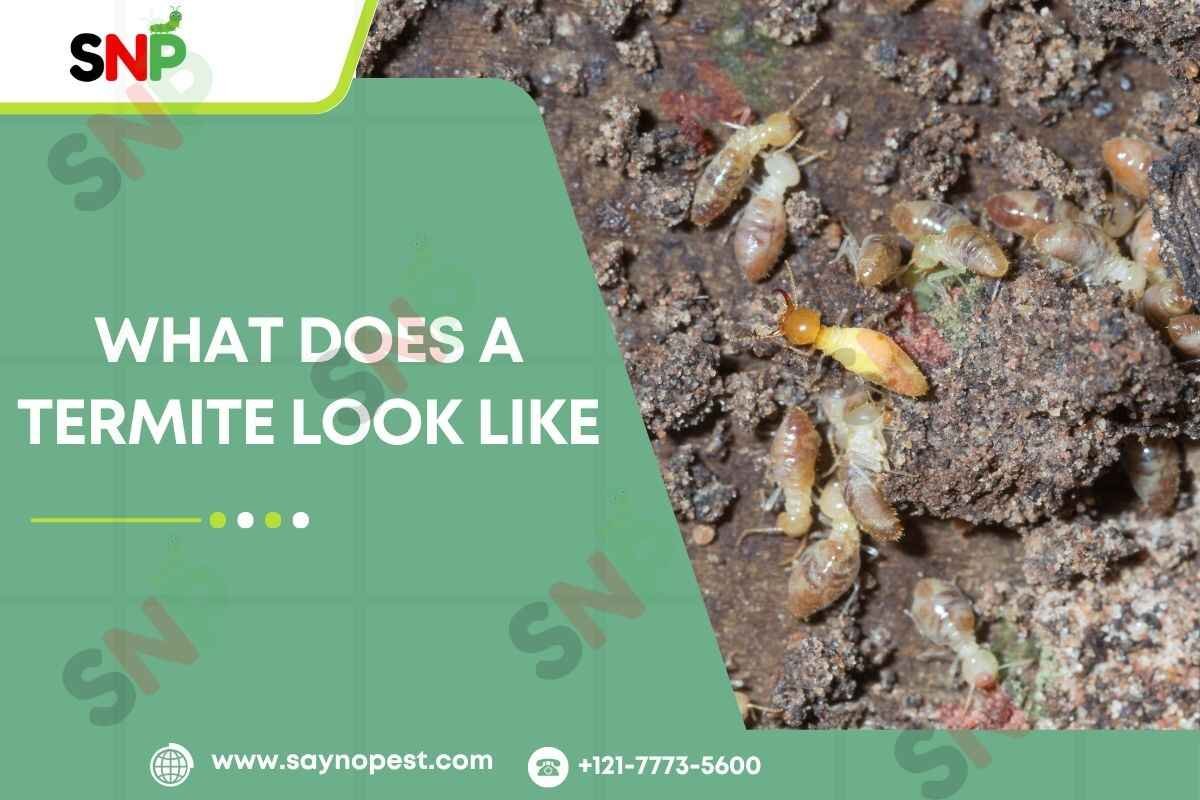
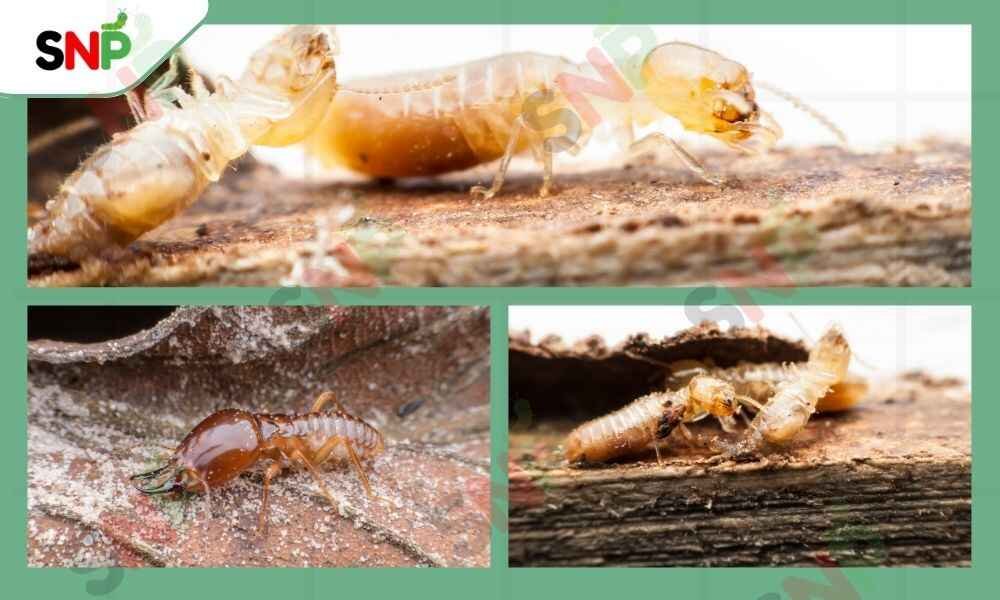
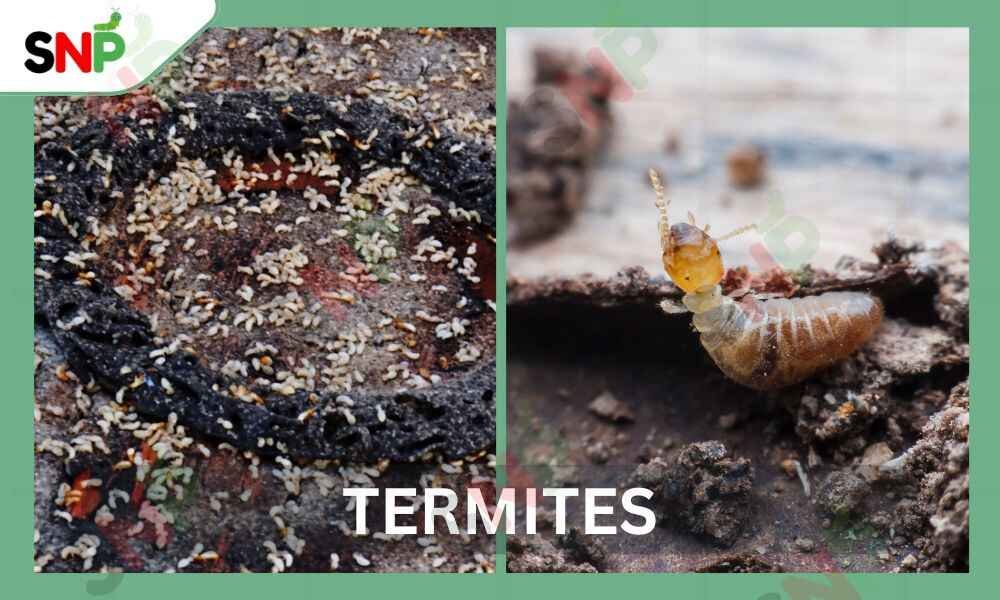
    Colour: Most termites are cream-coloured, which will be creamy white to light brown. Also, Worker termites, the most common caste, are pale and almost clear, while soldiers have cloudy heads. Reproductive termites (swarmers) are mostly brown or black with wings.

    Body Shape: Termites do not have the typical “waist” of ants and have a straight body that is consistent in width. Also, their antennae are straight and necklace-like, not curved.

    Size: The workers and soldiers are almost 1/4 inch in length. On the other hand, slimmers (future kings and queens) are slightly larger, with wings as long as their bodies, twice that of the standard ones.

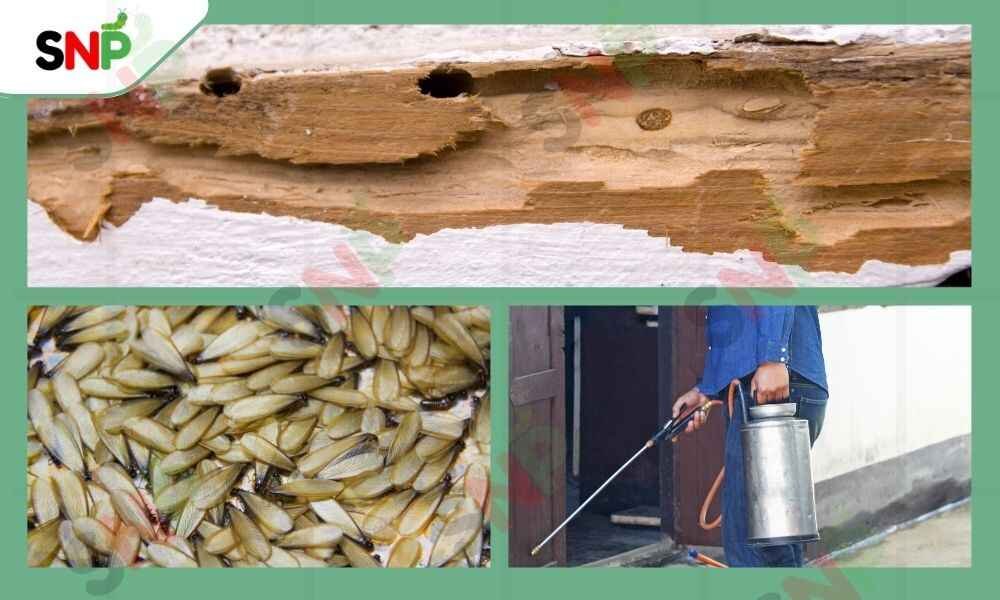
    Wings: The reproductive termites have double pairs of wings, both of which are transparent and of equal length. After the flights for mating, these are often thrown away, leaving the wings dissected near the windows or at the doors.

    Recognizing termites at home is a tough task, but confirming what does a termite look like is the first thing to do to prevent and control these tiny wood eaters .

    Signs of Termites Activity

    Some signs of termites infestation are the very quiet destruction, usually until severe damage is done. These warning signals will tell you that there is a termite in your house:

    Swarmers or Discarded Wings: The sight of flying termites or discovering heaps of discarded wings, particularly in the spring, is a surefire indication.

    Mud Tubes: Forage termites, in contrast, establish small, tube-like, and thin tunnels from the foundation, walls, or crawlspace of the house to the source of their food.

    Wood Damage: Wood could be hollow because termites eat it from the inside. It could also have a blister-like appearance and feel weak.

    Frass (Droppings): Drywood termites get rid of tiny, ridged-shaped droppings called frass, often found in small piles near infested wood.

    Bubbling or Uneven Paint: Paint can bubble up or warp due to termite activities that lead to moisture.

    If you notice any of these signs of termites in house, it’s time to call a pest professional for a thorough inspection.

    Stages of Termites

    Understanding the stages of termites’ life cycle helps explain why infestations can proliferate, and these pointers will help you to detect what does termites look like so that you can control these wood munchers quickly. Let’s discuss them:

    • Egg: The termite queen lays thousands of tiny, white eggs every day, which hatch after a few weeks. This was interesting!
    • Nymph: Newly hatched termites (nymphs) are pale and soft. Depending on colony needs, they molt several times, eventually developing into workers, soldiers, or reproductive termites.
    • Adult: Adults fall into three main castes:

      Workers: Most are responsible for feeding the colony and caring for eggs.

      • Soldiers: Defend the colony with strong jaws.

      Reproductives (Swarmers):The reproductive swarmers develop wings to depart the nest for mating activities, which establish new colony environments.

    All termite queen colony development depends on the queen, who produces eggs as she rules the colony through chemical signals (pheromones).

    Types of termites

    Type of TermiteAppearanceWhere FoundDamage Potential
    SubterraneanCreamy white to dark brown or black; 1/8–3/8 inch; straight waist; soft body; build mud tubesEvery state except Alaska; thrives in moist environments; underground coloniesMost common and destructive; causes 95% of termite damage in North America; and can destroy foundations, beams, and more


    DrywoodPale brown to dark brown; 3/8–1 inch; do not require soil contact; live entirely in dry woodSouthern tier states (California, Southeast, Gulf Coast); attics, doorframes, wooden furnitureSerious but slower than subterranean; damage wood from the inside out; can go undetected for years


    DampwoodLarger than other termites; light brown to dark brown; prefer moist, decaying woodPacific coastal states, desert Southwest, southern Florida; attracted to damp wood and plumbing leaksLess common in homes but can cause smooth, clean damage in wood; thrive in high-moisture environments
    FormosanCaramel to yellow-brown; 1/8–1/2 inch; massive colonies; aggressive; build mud nestsSouthern U.S., Hawaii, Gulf Coast (Louisiana, Texas, Florida, California, Carolinas, Georgia)Most destructive; can cause extensive damage in a short time; difficult to control once established
    ConeheadDark brown to black; aggressive foragers; move above ground like antsLimited to parts of South Florida (Broward County); invasive speciesExtremely aggressive; spread quickly; cause widespread property damage in a short period


    Conclusion

    If you’ve got termites in house, you’re not alone. These destructive little invaders threaten homes across the U.S., especially in warm, humid places like Florida, Texas, California, and much of the Southeast. And here’s the kicker: when you see the damage, it’s often already deep inside your walls.

    That’s why it’s so important to know what does a termite look like and catch the warning signs early.

    Here’s a smart move: if you suspect a termite queen, get a Professional ASAP. SAYNOPEST will help you connect with the best Professional who suits your location and prices. Your home is one of your most significant investments—don’t let a secret colony chew it to pieces.

  • How to Get Rid of Termites : The Trust Worthy Guide

    How to Get Rid of Termites : The Trust Worthy Guide

    Termites may be small, but their impact? Massive. These little destroyers cause billions in property damage across the United States every year, and most homeowners don’t even know they’ve got a serious problem until it’s too late. If you’ve been searching for how to get rid of termites, you’re at good place. And guess what? You’re about to get real answers.

    In this guide, we’re diving into everything you need to know to protect your home from a termite takeover. From spotting the early signs of an infestation, to smart DIY termite treatment hacks, what to expect when budgeting for professional help, and even the top 10 termite sprays trusted in the U.S. pest control scene—we’ve got you covered.

    So grab your coffee (or bug spray), and let’s get into it. Peace of mind starts with effective pest control.

    How to Identify a Termite Infestation

    termite-sprays

    Early detection is vital for the successful treatment of termites. The following are some of the things to look for:

    • Flying Termite Swarms: If you see swarmers (winged termites) inside or around your house, it is a clear sign of an infestation.
    • Discarded Wings: Look for piles of little, fish-scale-like wings near window sills and doors. These can be the remains of termites.
    • Mud Tubes: The subterranean termites will make mud tubes the size of a pencil, which they use to move along the foundations or maybe crawl spaces.
    • Hollow-Sounding Wood: The sound made after tapping on wood should be considered, and a hollow sound means that the termite damage is internal.
    • Droppings (Frass): Drywood termites produce a small pile of pellets- the frass. 
    • Damaged or Warped Wood: The unexplained change of regular shape and interactive pattern marks is clearly the undeniable presence of termites. 
    • Discolored or Drooping Drywall: The efflorescent marine life from termite activities can introduce a physical style of paint and drywall that has bubbled or curved the wall.

    If you see any of the above mentioned warning signs, you should take action immediately since the earlier you act the easier your question is. Which is How to get rid of termites.

    DIY Termite Treatment Tips

    Planning how to get rid of termites without professional help but not sure where to start? Below are some DIY termite treatment tips that have been proved to be effective:

    • Termite Spray: Employ a good termite spray to create a protective barrier or cope with those pests that are already visible. Sprays are beneficial for surface-lurking termites but may not infiltrate hidden colonies.
    • Termite Baits: Put the traps around the perimeter of your property. Termites eat the poison and bring it back to the rest of the nest, resulting in an all-inclusive resolution.
    • Foams and Dusts: Termite foams and dusts have to be sprayed into the fissures and opportunistic points where termites are concealed.
    • Essential Oils: Termites can be deterred by such essential oils as Orange, neem, clove, and garlic. A few drops of the oils should be placed onto a cotton ball and then it should be placed in the affected areas.
    • Boric Acid (Borax): The substance should be sprayed as a powder or mixed with water into a termite spray. The power of dehydration naturally kills termites and makes them unable to move.
    • White Vinegar Solution: A homemade termite spray for minor infestations can be prepared by mixing a solution that contains lemon juice, vinegar, and water. It is a very practical solution.

    Note: DIY methods are best for small or early-stage infestations. Complete eradication of severe infestations requires professional termite treatment.

    Average Cost of Termite Treatment

    Understanding the average cost of termite treatment helps you budget for this essential service:

    LocationAverage Cost Range
    Florida$1,300 – $2,500
    California$445 – $7,370
    National (U.S.)$300 – $6,400

    Factors Affecting Cost:

    • Size and type of termite infestation
    • Home size and construction
    • Treatment treatment menthod (spray, bait, fumigation, etc.)
    • Prevention Plans: Typically $399–$795 plus a monthly fee3

    Investing in professional termite treatment can save thousands in future repairs.

    DIY-TERMITE-TREATMENT

    Top 10 Termite Sprays in the United States

    Choosing the right termite spray is key to effective termite treatment. Here are the top-rated products trusted by U.S. pest control professionals and homeowners:

    RankProduct NameKey Features
    1Termidor SC Termiticide/InsecticideIndustry leader, undetectable, kills by contact/ingestion
    2Taurus SC Liquid TermiticideHighly potent, long-lasting barrier, professional-grade
    3BioAdvanced Termite KillerGranule-based, easy application, 6-month protection.
    4Spectracide Terminate StakesDetects & kills, easy to install, for outdoor use.
    5Termidor Foam Termiticide/InsecticideExpands in crevices, odorless, indoor use.
    6Harris Termite Control TreatmentOdourless, non-staining, easy application
    7Nisus Bora-CarePenetrates wood, long-term prevention
    8Bayer Premise Foam TermiticidePinpoint accuracy, long-lasting residue
    9Alpine Ant & Termite FoamProfessional-grade, effective in hard-to-reach spots
    10Talstar Professional InsecticideBroad-spectrum, long-lasting, indoor/outdoor use

    These termite spray solutions are available online and at pest control retailers nationwide. Always follow label directions for safe and effective termite treatment.

    Conclusion 

    Let’s face it—termite damage isn’t just annoying, it’s expensive. But the good thing is that? You have options; taking control starts with the correct information and tools. From learning how to get rid of termites to picking a powerful termite spray and understanding your full range of treatment solutions, you’re already on the right track.

    Whether you’re the hands-on, DIY type or prefer to let the pros handle the heavy lifting, being proactive is the secret sauce to keeping your home termite-free.

    Need a little extra help? Looking for trusted advice or products that actually work? Head over to saynopest—your go-to resource for smarter pest control, all in one place. Because when it comes to protecting your home, knowledge isn’t just power—it’s peace of mind.

    Your home deserves it. Your wallet will thank you.