Author: Eliana

  • Drywood Termites: Identification, Eggs, Elimination

    Drywood Termites: Identification, Eggs, Elimination

    If you are a house owner or have some real estate in the USA, especially in warm regions, drywood termites are not an unfamiliar problem for you. These creatures are so skillful at ruining wood without noise and therefore making you suffer unexpected huge expenses to recover your house. In the forthcoming article, we shall unveil the myth of drywood termites, analyze the tactics of drywood termite eggs identification, and most importantly, suggest a way to permanently solve the drywood termite problem.

    What Are Drywood Termites?

    Drywood termites are a rare species of termites that survive well in wood and dead tree branches, completely dry conditions prevail in these places unlike their subterranean counterparts, which don’t require contact with the soil or outside water to survive. This is why they are often found in coastal areas from South Carolina to Texas, and along the West Coast, as well as in Florida and Hawaii; these insects mainly infest structural wood, furniture, picture frames, and wood handrails.

    Drywood-Termites

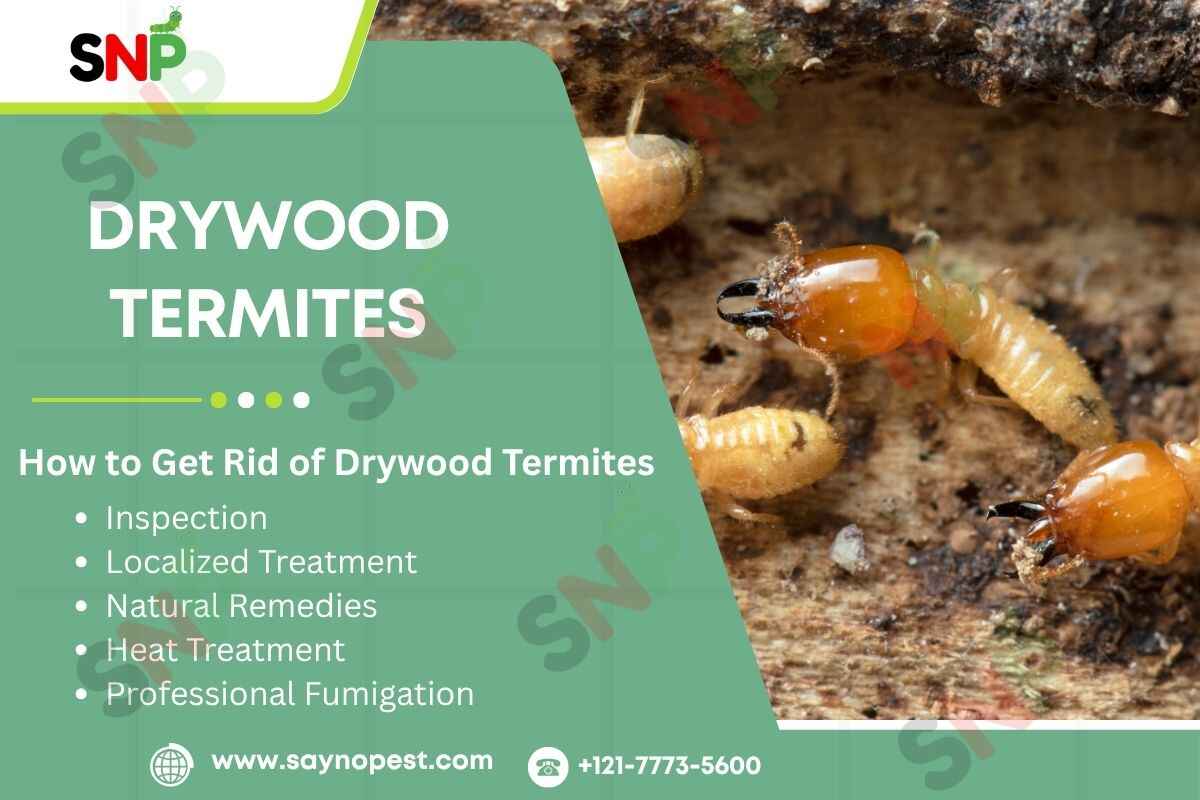
    The drywood termite colony typically has a handful to only around 2,700 members. The most common drywood termites in the U.S. are the light brown and creamy white ones with their narrow, oval-shaped bodies and six legs. They are capable of eating wood without moving to other areas, unlike the other termites, drywood termites. They feed on the wood for most of their life cycle and live in the same environment, but they reproduce elsewhere.

    Unlike subterranean and dampwood termite nests, drywood termites do not have their nests on the ground, thus, they are very difficult to detect and thus more destructive. Drywood termites are light brown to creamy white with slim, elongated, white, oval bodies with six legs. Typical drywood termites are not as regular in the way they move and travel as other termites because they move through their galleries in the wood, hence, not much can be detected until the damage has already spread. As such, these termites leave behind only slightly carved wooden galleries and heaps of powdery, dust-like sand particles that are their faeces—known as “frass”.

    Drywood Termite Eggs: The Start of an Infestation

    The drywood termite lifecycle starts with the egg stage. Drywood termites lay eggs in the hidden tunnels are not easily identified without the splitting of the galleries. These drywood termite eggs will be look after by the immature termites, first of all by a species that doesn’t have separate workers. The nymphs that hatch from the eggs after some time will change into adults after a few moults. The tasks of those nymphs that lead to the workers are finding food and space within the woodwork of the home for the expansion of the infestation. Their presence mainly signifies that a two-winged, able insect pest that has also increased in size is in the house already, which is why early detection and intervention are very important.

    How-to-Get-Rid-of-Drywood-Termites

    How to Get Rid of Drywood Termites

    Suspect termites in your home; the situation requires immediate intervention. Here’s a working guide on how to get rid of drywood termites successfully:

    Inspection

    The first step is examining and evaluating the whole of your property. Don’t miss any wooden part, focus on the accommodation, including the furniture such as the attic beams and window frames, as well as any other above-ground wooden material. If you observe frass heaps, wings that were shed, or the wood sounds hollow, then you have found a potential cause of the termite problem.

    Localized Treatment

    As for small, local infections, the acoustic method is the fastest, going for the drilling of holes and the pouring in of chemicals, into them, has turned out to be the most convenient method. Plus, the gallon of termiticide fluid injected into the holes of the wood, aiming at the main entrance of the termites, will reach the galleries that are a result of the termite and drywood termite eggs symbiosis.

    Natural Remedies

    Homeowners resort to natural solutions like aromatic orange oil, the herbal product neem, or the dishwasher vinegar and lemon extract composition for killing the species naturally. Those could also rubbed into the cracks as they are less toxic, though they still work better in slight cases of incursions.

    Heat Treatment

    The natural extermination of drywood termites is achievable by directed high temperatures, which should be a minimum of 120°F and needs to last half an hour at least. By these means, we will not only remove adult termites but also terminate drywood termite eggs entirely.

    Professional Fumigation

    Professional fumigation is the most effective method that can eradicate drywood termites off your entire house, especially for extensive and severe termite attacks. This method is about captivating the fume inside the building and letting the gas seep into the wood, thus killing the termites at all stages.

    It’s worth noting that how to get rid of drywood termites usually comes down to the size and the location of the swarm if left to their own devices. Otherwise, seeking advice from a licensed pest control professional is the most suitable option they will inspect your problem and suggest what treatment plan will work most efficiently

    Conclusion

    Homes and structures in warmer, coastal regions of the United States are threaten by drywood termites. Because they can hide for years inside dry wood, it is usually hard to detect them early on. By recognizing drywood termite infestations, noticing their eggs and removing them, you save yourself costly home repairs.
    If you have drywood termites in your home, don’t wait—check for them, use treatments, and telephone a professional when required. You can protect your property and relax knowing more about drywood termites.
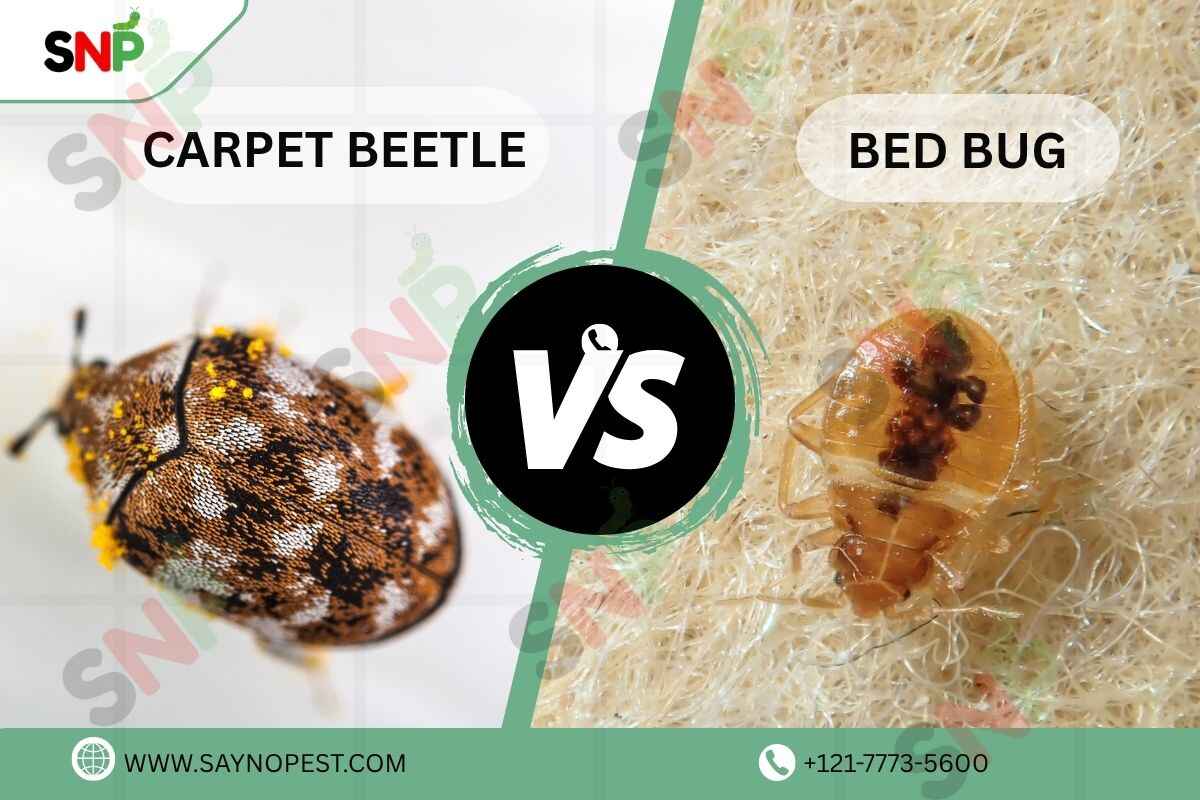
  • Carpet Beetle vs Bed Bug: How to Identify, Prevent, and Remove

    Carpet Beetle vs Bed Bug: How to Identify, Prevent, and Remove

    If your furniture, rugs or clothes continue to get damaged and you also observe suspicious insects in the house, you might think you have a carpet beetle vs bed bug infestation. Ticks, bedbugs and beetles are common pests in the US and can also create a range of issues, but act differently and are not equal. Perfectly knowing the difference between carpet beetle vs bed bug is important as this will help you to easily remove them from your house.

    Carpet Beetle vs Bed Bug: Appearance, Size, Habitat, and Behaviour

    Carpet-Beetle-Vs-Bed-Bug

    Appearance and Size

    • Adult carpet beetles are small in size and have an oval body structure, mainly between 2 and 3 long in length (about 1/10 to 1/8 of an inch). They have different colours like brown, black, yellow and orange. Moreover, their larval forms are long, hairy, and look like small cigars or bands.
    • The adult bed bug are bigger, ranging from 4 to 5 mm in length and appearing like small, flat and red-brown apple seeds. Nymph bed bugs are young, smooth and a lot smaller than larval carpet beetles, which have bristles.

    Habitat

    • Carpet beetles often feed on natural material and tend to live in carpets, clothing, upholstered furniture, and sometimes in museums, feeding on old fabrics or taxidermy. The adults of this species consume pollen outside but lay eggs indoors. Larvae rely on wool, silk, leather, and the hair of animals as their food source.
    • Bed bugs like to stay in places where people hang out or sleep, mostly around your bed. They usually hide in seams of your mattress, bed joints, or even small nearby cracks. At night, they crawl out to bite and feed on blood.

    Behavior

    • It is the larvae of the carpet beetle that cause the real issues, as they are the ones who feed during the day and do so by causing serious damage to fabrics and fibres. Adults are not responsible for the damage, and they do not bite.
    • Bed bugs are always active during the night and eat human blood only. They normally bite individuals while they sleep, which leads to the formation of itchy and red welts. Baby bed bugs carry out their daily activities in the same way as the adult bugs do, but in a lesser extent.
    Carpet-Beetle

    Signs of Infestation: Carpet Beetle vs Bed Bug

    Carpet Beetle Infestation Signs:

    • Wool rugs or clothing will appear with thin, bare patches as they suffer from Carpet Beetle attacks.
    • Noticeable damage will be on blankets, furs, and upholstered furniture that the beetles infest.
    • Shed larval skins (translucent, brownish, and shaped like sunflower seeds).
    • Small dark fecal pellets, about the size of table salt.
    • Adult beetles are found near windowsills or slowly climbing walls.

    Bed Bug Infestation Signs:

    • One can find tiny bites that are itchy and occur in clusters, mainly on arms and shoulders.
    • Blood spots on sheets or mattresses.
    • Black and dark brown shed bug skins that look just like the bugs themselves.
    • Shed skins that resemble the bugs themselves.
    • Tiny white eggs or eggshells.
    • A sweet, musty odour near the bed.
    • Sightings of live bed bugs or baby bed bugs. If you suspect the presence of the condition call the pest control service provoider.

    Diseases Caused by Carpet Beetle vs Bed Bug

    1. Wool rugs or clothing will appear with thin, bare patches as they suffer from Carpet Beetle attacks. Papular urticaria can cause skin rashes in people exposed to carpet beetles. In susceptible individuals, the larvae’s hairs and shed skins are common allergens. Respiratory allergies are the most crucial health consequence of exposure to carpet beetles, but they do not transmit diseases.
    2. Bed bugs can’t transmit diseases to people. Even though experiencing bed bug or baby bed bug bites can result in itching and, at times, an infection, medical research does not point to them being responsible for spreading infections.
    Bed-Bug

    Tips to Remove Carpet Beetle vs Bed Bug

    Carpet Beetle Removal.

    1. Make sure to deep clean carpets, rugs, upholstery and curtains with a vacuum, perhaps one with a HEPA filter.
    2. Apply steam to the fabrics to get rid of any eggs and larvae
    3. Clothes and bedding with bed bugs should be washed at a high temperature.
    4. Store things that cannot be washed in strongly sealed plastic bags for at least two days before using.
    5. Take care of your vacuum bags regularly and think about cleaning your valuables once in a while by a professional.

    Bed Bug Removal:

    1. Wash all your bedding, linens and clothing at the highest temperature available and dry them at the highest setting.
    2. Make certain to clean carefully all mattresses, bed frames and the places around them.
    3. Wrap both the mattress and the box spring in bed bug-proof covers.
    4. If there are many bed bugs, use special sprays or contact a professional for treatment.
    5. Make sure to check for bed bugs and baby bed bugs in any room where you sleep.

    Conclusion: Carpet Beetle vs Bed Bug

    Understanding the difference between carpet beetle vs bed bug infestations is vital to American homeowners. Carpet beetles can still damage things in your place, but bed bugs are the ones that bite the owner. Both the carpet beetle vs bed bug need the perfect treatment to get out of the house. If you notice pests in your home, along with their shed skins, bites or torn clothes, then you must need to take immediate action to get rid of these pests because these pests can infest your home very badly if not treated in a right way. Call the Pest Control service provider, because they are aware about how to handle them, and they will assist you in managing this issue and inform you about any other issues.

    If you stay informed about attacks and make the right treatment, you will at the same time prevent both bed bugs vs carpet beetle infestations, and your family will enjoy peace and comfort.

  • Carpet Beetle Bites: What Every American Needs to Know

    Carpet Beetle Bites: What Every American Needs to Know

    If you find some rashes, holes on your favourite sweater, or unusual damage to your carpets, you could be encountering a relatively common but not well-understood pest called a carpet beetle. Almost all of the people are looking for information about carpet beetle bites, do carpet beetles bite, and are carpet beetle harmful. This blog post will give you the answers, explore a lot of other questions, and allow you to take care of the problems with the help of your veterinarian or doctor when there is carpet beetle bites.

    Do Carpet Beetles Bite?

    Carpet beetles do not bite people – this is the fact that needs to be highlighted. Many people doubt that do carpet beetle bite, so the answer is no. The revelation comes from the source of the very confused: as we know, adult insects feed on the contents of flowers and the like, they are not engaged in the blood of people or animals. Also, their mouthparts cannot bite people or pets. Yet, there is a risk of their larvae – the young beetle stage – causing skin irritation as they are equipped with minute hair-like structures which can provoke it when they touch the skin.

    Carpet beetle dermatitis is the term usually referring to such conditions. That is just one symptom of an allergic reaction, and it can appear as spots or welts, closely resembling bug bites. The response is not an insect bite but rather hypersensitivity to the bristles or moulted skins that the larvae have scattered. In case there are no insect bites, but you notice red, itchy nodules on your body in the morning, then a carpet beetle larva might be the perpetrator.

    Carpet-Beetle-Bites

    Are Carpet Beetle Harmful?

    So, what about the harm level of a carpet beetle? In this case, there is negative potential, but it appears to be an unexpected one. Insects and larvae of these species cannot be consider vectors of diseases, and they don’t bite either, but they pose a serious problem at home.

    Health Concerns

    Their hair and exuviae discover the main cause of allergic reactions, like skin rashes, eye irritation and in serious cases, respiratory troubles when the particles become airborne as well as if one is repeatedly expose. Only some individuals might discover their sensitivity having been from little or no exposure.

    Damage to Belongings

    The greatest harm is to the eating pattern of the larvae. You should also know that bristle which is on the larvae also forms part of their diet. They eat fabrics like wool, silk, fur, etc and sometimes the pet’s hair. Which means they not only damage the carpet, they also damage our clothes, furniture and our all house.

    Food Contamination

    Carpet beetle larvae cause harm by destroying clothes and also known to leave feces and shed skin in pantries, leading to allergies or further unhealthy conditions.

    How-to-Get-Rid-of-Carpet-Beetles

    Lifecycle of the Carpet Beetle

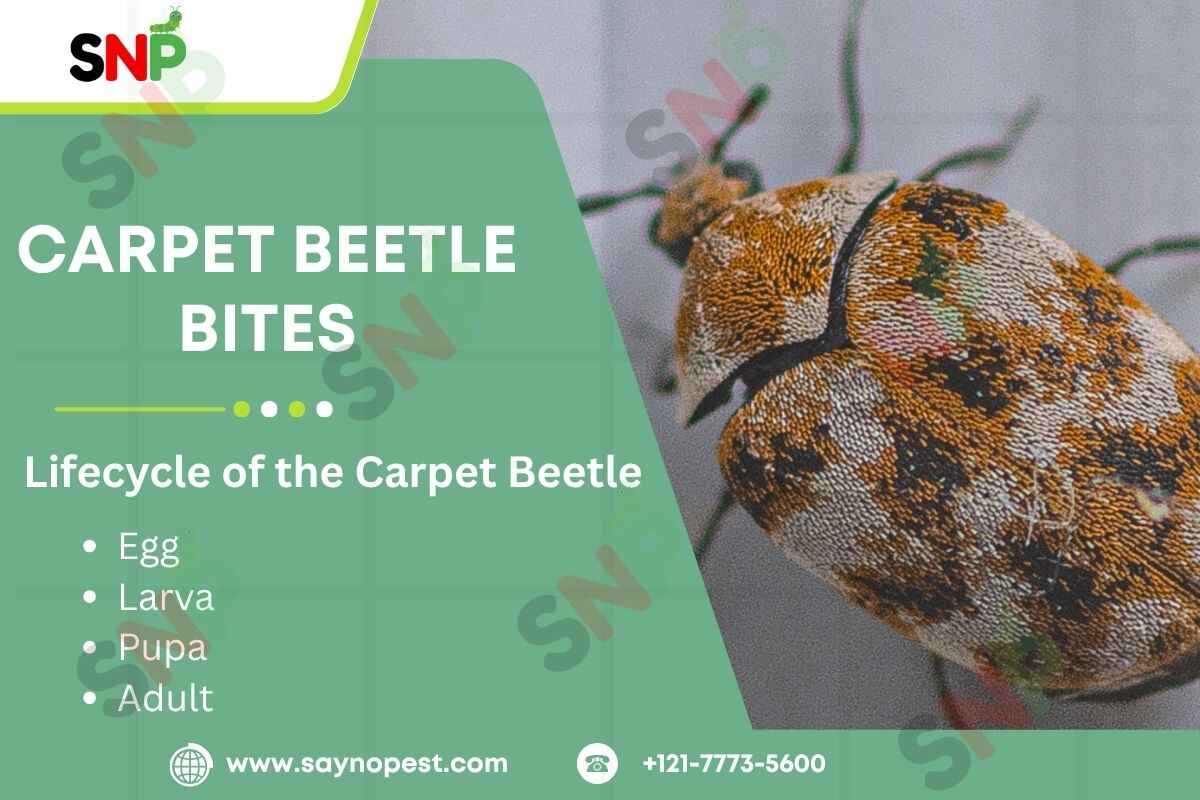
    It is the knowledge of the lifecycle of the carpet beetle that one must have in order to get rid of them properly. The different species of the carpet beetles undergo a complete life cycle with the help of changes in their bodies and types of food. The change happens through four different stages: egg, larva, pupa, and adult.

    1. Egg: The grown-up female is laying the eggs of the carpet beetle at the quantity of about 150 and she is doing that many times, normally in dusty vases, where eggs can be hidden or under the carpet, or stored fabrics. Every single egg hatches within about 7 to 35 days.
    2. Larva: This moth is very dangerous if it is in this stage. So what we can say is that carpet larvae experiments will have more strength, they will not eat anything for many weeks, they will be able to cause damage to the disaster of natural fibres of your house calmly and silently.
    3. Pupa: Preparing for the adult stage is what the larvae do after they have had a great meal. This metamorphic process is the time when the larvae become motionless before giving birth to the new adult. Adults usually stay as pupae depending on the habits of the local environment for a few weeks or even months.
    4. Adult: Adults of carpet beetles are not insects that last for a long time, as their life span is just within the limit of a few weeks. They are phototactic and feed on plant secretions like sugar, pollen, and nectar, so they do not eat anything at home.

    The full life span could range from a few months up to many years, based on the kind and amount of food.

    Conclusion

    The name carpet beetle bites is not accurate for these pests, given that they do not bite us, but the larvae can still harm us and our belongings. Wondering about carpet beetles? Are they dangerous, or do they bite?

    • You don’t have to worry about carpet beetles hurting people directly.
    • The insects at this stage may provoke allergies and erode your bed, sofa and carpets.
    • An infestation by carpet beetles may cause damage to your property and put you at risk of allergic reactions.

    Take time to examine your home, clean it thoroughly and store your natural fiber stuff properly to avoid any infestation. If you believe you have carpet beetles, seek professional help and the problem will be taken care of efficiently.

    Don’t worry too much about carpet beetle bites. Do whatever you can to prevent these pests from attacking your home and belongings or you can contact the pest control company they will help you to get rid of them.

  • How to Get Rid of Pantry Moths: A Complete Guide

    How to Get Rid of Pantry Moths: A Complete Guide

    If you have ever found worms or moths coming from a bag of flour or cereal, these are usually pantry moths. These little beasts invade your kitchen space, infect food, and, worst of all, they are very annoying. This article will show you how to get rid of pantry moths, help you to know what stage of their life cycle they are in, and what measures to take to keep your pantry free from pests.

    Signs of Pantry Moths

    Understanding the early signs is the first step when it comes to dealing with the problem of pantry moths. These signs can help:

    1. Webbing: The larvae of pantry moths produce silk to hold together and attach the food on the outside or inside the plastic bag and on the garden shelf. The characteristic of these webs is that they are usually discover on the edges or on the surface of grains and cereals.
    2. Clumped Food: The sweet and sticky substances that the larvae of pantry moths secrete can cause the food to stick or clumped together on the packaging.
    3. Unpleasant Odor: The moldy and musky scent that comes from your kitchen is another sign of an outbreak that originated from the food that the moths released when they first came into your home.
    4. Small holes in packaging: Pantry moth larvae are able to chew their way into plastic and cardboard packaging. Therefore, the packaging, though unopened, might still be infestation.
    5. Visible Moths or Larvae: Brown and small pantry moths can seen fluttering about in the pantry. You can find the larvae of pantry moths which have a wiry body and are either white or cream, on your pantry walls or crawling on your food.
    Pantry-Moths

    Are Pantry Moths Harmful?

    Pests like pantry moths are of no use to the household, however, the fact that they are not harmful to humans is a relief. Neither the phylum Lepidoptera, to which the pantry moths belong, nor any of its insects, larvae or eggs are carriers of human diseases or producers of toxic substances. The intake of the pantry moth larvae or the pantry moth eggs is generally safe when it is accidental, although it is not at all attractive. The major danger lies in food contamination- pantry moths and their leftovers (webs, feces, exoskeletons) can spoil food, causing it to wasted and possibly with bacterial contamination if the infested food goes unnoticed. Ensuring safe food and disposing of the contaminants when they happen is and will always be the most advisable path to take.

    Pantry Moth Lifecycle: The Stages of Their Life Cycle

    Getting to know the life cycle of pantry moths is very important because it is the first step to end this unwanted cycle. Here is its step-by-step process:

    1. Pantry Moth Eggs: The female moths spread their 100-300 barely visible microscopic eggs through food like wheat, flour, and cereal. These eggs are very small in size, so we can’t easily detect them, and due to which leads to the infestation.
    2. Pantry Moth Larvae: After a few days, pantry moth lay their eggs and covert themselves into larvae stage, and they are small in size and called the white caterpillar. The pantry moth larvae are the biggest source of problems as they consume what you store, cast cobwebs, and become a source of pollution for your food.
    3. Pupa Stage: Once the pantry moth larvae are fully fed, they get out of the food source and seal themselves in cocoons in the cracks or gaps where they pupate. The larval stage usually stretches for several weeks.
    4. Adult Moths: Adult kitchen moths fly out from their pupa cases, start mating, and the life cycle repeats. Adults usually survive three weeks or one week only from the emergence time, but the total life cycle can be as short as 30 days in tropical areas and up to 10 months in cooler places.
    Pantry-Moth-Lifecycle

    How to Get Rid of Pantry Moths

    If you’re looking for a way how to get rid of pantry moths permanently, that would work. Follow these steps to the end:

    Inspect Everything

    Get all the supplies out and put them away in bags. Dispose if they are contaminated since some can be carriers of the eggs of the Pantry Moth and the Moth larvae. Do the items in the garbage bin outside, and let the items also be treated according to the instructions given on how to treat them.

    Deep Clean

    Vacuum up very well all the corners and shelves that have been used for storing foods before disposing of the pests in the pantry. The dirt collected in the vacuum cleaner should also be treated outside immediately or changed otherwise.

    Wash Surfaces

    Embrace the use of a cleaning material that has white diluted vinegar and hot water in equal proportions of 1:1 to clean blisters, walls, and containers. Pantry moths and larvae can be kill and their population controlled through the use of vinegar and its odour. The dirtiness attach to the vinegar is also a good repellent to the moth, shushing them away from the recipients that the vinegar must used in addition to the fact that they can easily cleaned.

    Replace Liners

    Does the old liner have to removed, and then can a new one be put in its place, after which the eggs present will be set free?

    Store Food Properly

    Placing dry store items in airtight, high-quality plastic or glass containers will safeguard them from insects and keep them fresh for a long time. There is a huge chance of the pests destroying the bags and containers of the goods if they are made of thin plastics and cardboard. It is important to have a strong container.

    Freeze New Purchases

    Always ensure you freeze the flour or grain for a period of not less than 7 days, in that way no Moths eggs would survive the process and later be a headache to the stored food.

    Set Traps

    Use flypaper for killing household pests and moths that fly on the market. Place space as close as possible where pests are prone to gather. This is really effective and kills the pests with less harm to the environment.

    Repeat as Needed

    Keep checking for and cleaning up the problem until the pantry moths gone. Be aware that it can take a while for this technique to get rid of them, meaning there may still be pantry moth larvae due to missed eggs.

    Conclusion

    It can be very disillusioning to work on a pantry moth elimination plan. Nonetheless, an orderly method can go a long way. By understanding the lifecycle, preventing the eggs, and getting rid of the larvae, you will identify the problem, and in turn, your food will be much safer and your home will be clean. Let it not slip your mind that the answer to how to get rid of pantry moths is strictly thorough cleaning, proper food storage, and constant checking. When you act on the early signs of infestation, you will have a pantry free from moths forever.

  • How to Get Rid of Carpet Beetles: Signs, Solutions, and Prevention

    How to Get Rid of Carpet Beetles: Signs, Solutions, and Prevention

    Carpet beetles have been tolerating and enduring it for homeowners in the United States, especially for those with prized rugs, clothing, and upholstered furniture. If you are hoping to find expert advice on how to get rid of carpet beetles, knowing where they live and recognising the signs of carpet beetles are the early pointers to keeping your home safe and your belongings intact. Following these steps, you will make sure that the methods given in this tutorial will help you to know, remove, and avert such pests as the carpet beetles effectively.

    What Are Carpet Beetles?

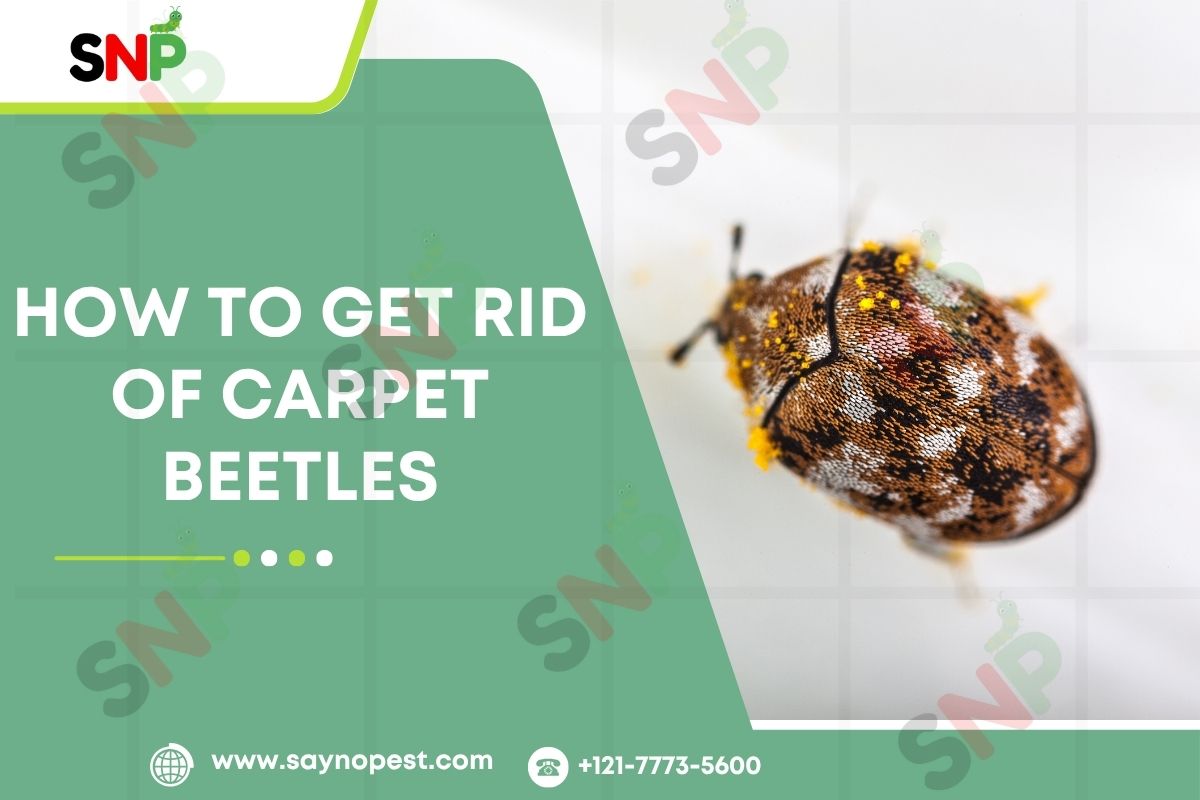
    Carpet Beetles are small; their body structure is oval. They belong to the Dermestidae. Their body size is 1/16 inch to 1/8 inch. Each specie have a different colour like black, brown, yellow and orange. Adult carpet beetles, while outside, prefer to eat flower pollen. The larvae are, however, the ones that are causing all the fuss in the house. They are tan to brownish, have bristles covering them, and are about 1/8-1/4 inches long.

    Carpet-Beetle

    The darkness, quietness, and food in such places are something that the larvae like most. Keratin is found in many of their favourite things, including wool, silk, leather and pets’ hair. Examples of these items in our homes are rugs, carpets, blankets, clothes and electrical services. For the next generation, it is the adults of the carpet beetles that always get into the homes, through open windows, or together with groceries, that deposit the eggs on the fibres that are there, and they provide food for when the larvae hatch.

    Signs of Carpet Beetles

    As soon as you can identify the pests, you will significantly reduce the costs of eliminating them from your property. The most frequent signs of carpet beetles are as follows:

    • One of the signs might be the presence of thin, balding areas on the rug surface made of wool or wool blend thread.
    • Another indicator of a carpet beetle is damage clothes or torn blankets and upholstery with irregular holes.
    • More signs might be observe in animal-based textiles because they lose hair on their own, besides the fact that natural fur might be disintegrating.
    • Any other sign of a carpet beetle infestation can identify the pest causing the ugly dirty brown or yellow exuvia, which dried-out and contain no living creature.
    • Every now and then, you might also come across the mess made by small dark fecal pellets that has the resemblance of sand particles.
    • Occasionally, you might see the tiny beetles coming out from the walls or near the windows; also, they might be at dead end on the windowsill.

    Areas with lots of fabric folds, under rugs, and inside storage boxes are commonly infeste by the larvae. Their shed skins and fecal pellets are normally found at the places that they feed upon (under furniture or at the base of the wardrobe). It is important to notice the signs of carpet beetles, and once you catch them in your house, contact the pest control service provider

    Carpet-Beetle-bite

    How to Get Rid of Carpet Beetles

    Looking for tips on how to get rid of carpet beetles. Here’s how to go about cleaning, using a treatment and preventing future issues:

    1 Thorough Cleaning

    • Clean all carpets, rugs, sofas and baseboards with the vacuum thoroughly. Check the areas where bugs often hide such as corners, cracks and cupboards.
    • Wash any infected clothing, mattress covers, towels and bedding in hot water to destroy any eggs or larvae that may be there.
    • Steaming will be of advantage to carpets and furniture, as it can penetrate through the fibre to eliminate any concealed pests.

    2 Targeted Treatments

    • Use chemical sprays with cyfluthrin, bifenthrin or deltamethrin to deal with carpet beetles.
    • If you are going for a natural approach, consider using essential oils of cedar or neem. Test pesticides on a hidden part first and then spray them only where they are needed.
    • Sprinkle a layer of food-grade diatomaceous earth in areas where pests may be found. Apply this powder to your carpet; it kills carpet beetles on the spot and should followed by a thorough vacuum immediately after application.
    How-to-Get-Rid-Of-Carpet-Beetles

    3 Locate and Remove Nests

    • Look in closets, air ducts and under furniture for any hidden egg masses or larvae. Handle and deal with infested things as soon as you find them.

    4 Professional Help

    • If the pest infestation is very bad, hiring professionals might be needed. Experts apply different treatments appropriate for both the adults and the larvae, with attention given to the sites where the insect breeds and prevention over the long term.

    5 Prevent Future Infestations

    • Pack up exposed textiles into properly sealed containers.
    • Vacuum and mop natural fibre carpets regularly, taking special attention to edges and baseboards under furniture.
    • Seal all the cracks and edges of the window to prevent them.

    Conclusion

    Carpet beetles are bad for your house because they eat up almost everything with textiles, and they can make a mess if they live there unnoticed. As long as you know how to recognise the signs of carpet beetles and if you already have methods of how to get rid of carpet beetles, plus understanding what carpet beetles are, you can still make your safe and clean environment as before and preserve your investments. Your best bets against the pests are regular cleaning, through inspection, and immediate treatment. In the case of prolonged or heavy infestations, a professional pest control service is the right step to take. Do not think twice, because you may need your peace of mind and also because your home fabrics are precious.

  • How to Get Rid of Clothes Moths: A Complete Guide

    How to Get Rid of Clothes Moths: A Complete Guide

    Your favourite clothes and precious family items can easily become damaged by clothes moths. Should you notice holes in your clothes or small moths in your closet, it’s not unusual. Over the years, many homes in America have dealt with these constant pests. This guide will teach you how to get rid of clothes moths, see why moths like to eat our clothes, What do clothes moths look like and keep them away for good.

    Clothes-Moths

    Why Do Moths Eat Clothes?

    Have you ever wondered why do moths eat clothes and or enter our closet? The easiest answer is no. It is usually the larvae that destroy fibres, and not the adult moths. Clothes moth caterpillars are the ones to eat keratin, a protein found in animal-based fibres like wool, silk, cashmere, feathers, and fur. The larvae use these materials to build their bodies and develop into adult moths. That is why your warm woollen sweaters, fine silken scarves and even your rugs can appeal to these worms. Yet even these adult moths do not feed AT ALL and exist to lay their eggs on the suitable fabrics, which the offspring can eat from when they hatch.

    How Do You Know If You Have a Clothes Moth Infestation?

    The quicker you find a clothes moth infestation, the less the damage will be. Here is how you can figure out if a moth problem has occurred at your place:

    • Do a check on the clothes for the holes that have particularly irregular shapes in them, this usually happens in wool, silk, or fur clothing.
    • Silky tunnels or webs mostly on or near fabrics are the typical signs left by moth larvae.
    • Can you see tiny, sticky tubes (larval casings) clinging to clothes, rugs, or the corners of closets?
    • Would you notice any inordinate shedding from fur garments or a loopy damage on wool rugs?
    • Login to look for those small, pale, and sluggish moths which usually fly or crawl on fabrics, especially in dark, and rareky disturbed areas such as closets or storage boxes.

    If you identify any of the above signs, you should immediately take any required steps to get rid of the clothes moths and then click here to learn more about how to get rid of clothes moths before the problem escalates.

    How-To-Get-Rid-of-Clothes-Moths

    What Do Clothes Moths Look Like?

    It is very important to know what do clothes moths look like so that are there for effectively managed. Clothes moths are tiny in size, usually no more than 1 cm long and have a pale yellow or greyish colour. They usually shun light and like to stay in dark and hidden parts. The pests of the clothes, which are the ones doing the real damage, are small and yellowish caterpillars with brown heads. Another way of detecting them is with their webbing or case trails, which will take the shape of small tubes or be spotted as small silky formations on the fabrics.

    How to Get Rid of Clothes Moths

    If you’re looking for advice on killing clothes moths, these effective ways are worth following:

    Deep Clean and Declutter

    Do away with all clothing and soft furnishings from infected areas. To keep the items, either wash or dry-clean them–clothes moths at a high temperature of water (over 120°F) or professional dry cleaning will kill larvae and eggs. Several clothes cannot be wash, so to clean them, you can use heat treatment by using a dryer, or low oven, or freezing them

    Vacuum thoroughly

    Clean your wardrobe, drawers, and carpets properly. Remove every crack, crevice, and dark corner that is infeste with moths and larvae. Moth expands into them. They can hide unseen all sorts of filth and garbage you might not think are actually there.

    Discard Heavily Infested Items

    If an item is so damage that the infestation is in a critical stage, it’s a good idea to get rid of it to avoid it from spreading.

    Use Moth Traps

    Harbour lures with pheromones in closets and storage areas. These lures can attract and capture male moths, stopping the breeding cycle and indicating the degree of infestation that you face.

    Apply Moth Sprays

    Insecticidal sprays that are suitable for clothes moths will be needed for significant infestations. Biological pesticides that are daisy-based insecticides, particularly chrysanthemum, can also be as effective and safe for most types of fabrics.

    Store Clothes Properly

    Make sure to get clean clothes properly store since body oils and food stains usually lure in moths. Put out-of-season clothes in airtight storage bags and also you can put natural repellents like cedar or lavender into the closet and drawers optionally.

    Monitor and Repeat

    Be sure to inspect potential moth locations frequently. Afterwards place new monitors every couple of months and in addition keep up with cleaning in order to prevent reinfestation.

    Conclusion

    Understanding How to get rid of clothes moths is necessary to preserve your clothes and living space. Spotting clothes moths, understanding their reason for eating clothing and acting right away can prevent them from damaging your possessions. Keeping your clothes clean, putting them away in a tight space and using traps/sprays will prevent moths from appearing. Steer clear of moth damage to your wardrobe by addressing the problem now and enjoying the security of knowing they are safe. Get the best help for your clothes moth problem by calling a specialist who has dealt with similar infestations.

  • Are House Centipedes Dangerous? Everything You Need to Know

    Are House Centipedes Dangerous? Everything You Need to Know

    Have you ever seen a swift many-legged insect running on your bathroom floor? Then you’ve probably asked yourself, are house centipedes dangerous? The odd appearance of house centipede combined with their many legs can be alarming but learning about their characteristics lets you determine if they pose a threat to your household.

    What Is a House Centipede?

    The house centipede is by far one of the most common arthropods in U.S. homes. The house centipede is not like other species of centipedes. It can be recognized by its very thin and yellowish grey body marked with three dark stripes along the back and the presence of up to 15 pairs of extremely long and delicate legs – a “feathery” look as they run quickly along the walls and the floor. Adult house centipedes measure 1 to 1.5 inches from head to tail, yet their long legs make them appear much larger. The cylindrical body structure of house centipedes sets them apart from flat species because they move at speeds far greater than other flat species.

    house-centipede

    House Centipede Diet: Nature’s Pest Controller

    One main reason why many professionals and homeowners are okay with the existence of house centipedes is that they act as a wide range of pest controllers. Over 90% of the house centipede diet made up of other insects and arachnids, meaning they mostly eat their kin. Their main prey items are cockroaches, spiders, silverfish, ants, bed bugs, moths, termites, and sometimes even other centipedes. By putting their long antennae to use and locating the prey, house centipedes have a very effective way of removing their unwanted home bugs with the use of paralyzing venom from adapted claws. They can crawl under fridges and other appliances, reaching out to dark corners, chasing and eliminating pests very effectively.

    These different types of food are consumed, and it make them more effective in the destruction of various species of undesirable bugs. Furthermore, the house centipedes’ love for live bait will make them indispensable in pest control in your home, meaning that chemical treatments will not always be needed.

    House Centipede Lifespan: How Long Do They Live?

    The longest-lived attribute about house centipedes stands as their extraordinary lifespan. House centipedes survive for more than seven years while typical insects survive for only a few months, but most house centipedes reach three years of age before death. House centipedes complete their life cycle through four distinct stages that follow this sequence: eggs to larvae to larval molting to adult centipede. First, the eggs hatch into the larval stage, with only four pairs of legs. The lifecycle begins when eggs produce larvae, which start with four legs before molting progresses to more legs until adult house centipedes develop numerous legs.

    Are-House-Centipedes-Dangerous

    Are House Centipedes Dangerous to Humans or Pets?

    So, are house centipedes dangerous? The answer is: not really. Due to their weak jaws, house centipedes deliver bites that create no significant pain when they bite human tissue. The pain from a house centipede bite feels like a bee sting, although severe reactions from these bites occur rarely. House centipedes spread no diseases and neither destroy property nor threaten human beings or their pets. The biggest “danger” they can pose is frightening someone, which will lead to an accidental fall or injury. For most people, their being is more a source of mental disturbance than an actual danger.

    Where Are House Centipedes Most Common in the U.S.?

    House centipedes are a species widely distributed in the United States, but they are mostly found in the hot, moist regional areas where they can get their higher chance of better prey. Based on pest control reports and the most favorable environmental conditions for their proliferation, we can mention the top states where house centipedes are the most common:

    1. Florida
    2. Texas
    3. California
    4. New York
    5. Pennsylvania
    6. Illinois
    7. Ohio
    8. Georgia
    9. Washington
    10. Oregon

    These states offer the damp, cool environments that house centipedes prefer, such as basements, bathrooms, and crawl spaces.

    Conclusion: Should You Worry About House Centipedes?

    So, are house centipedes dangerous if we sum everything up? If we go directly to this point of the essay and answer the simple question- if house centipedes are dangerous- the response will be negative, meaning they are not harmful to people or animals, and their attacks are rare and not severe. The house centipede is a consumer of unwanted insects and thus it is recognize as a valuable executor due to its different diet from the pests in your house. These creatures might be interpreted by you as long-time partners-their life cycle is around seven years-that will help you eliminate the invaders of your space. Not only that, they are also the source of a big surprise in your life.

  • Giant Water Bug: America’s Aquatic Predator

    Giant Water Bug: America’s Aquatic Predator

    The giant water bug is the most impressive and also the fiercest aquatic insect found in the United States. People know this specie for the highest quality and the most deadly, and they usually seen in ponds, lakes and streaming rivers and sometimes will even emerge under bright lights even in the evening. In case you’d like to learn more about the giant water bug, its body, life cycle, giant water bug bite, and Are Giant Water Bugs Dangerous, then continue for a complete, authentic guided tour.

    What Does a Giant Water Bug Look Like

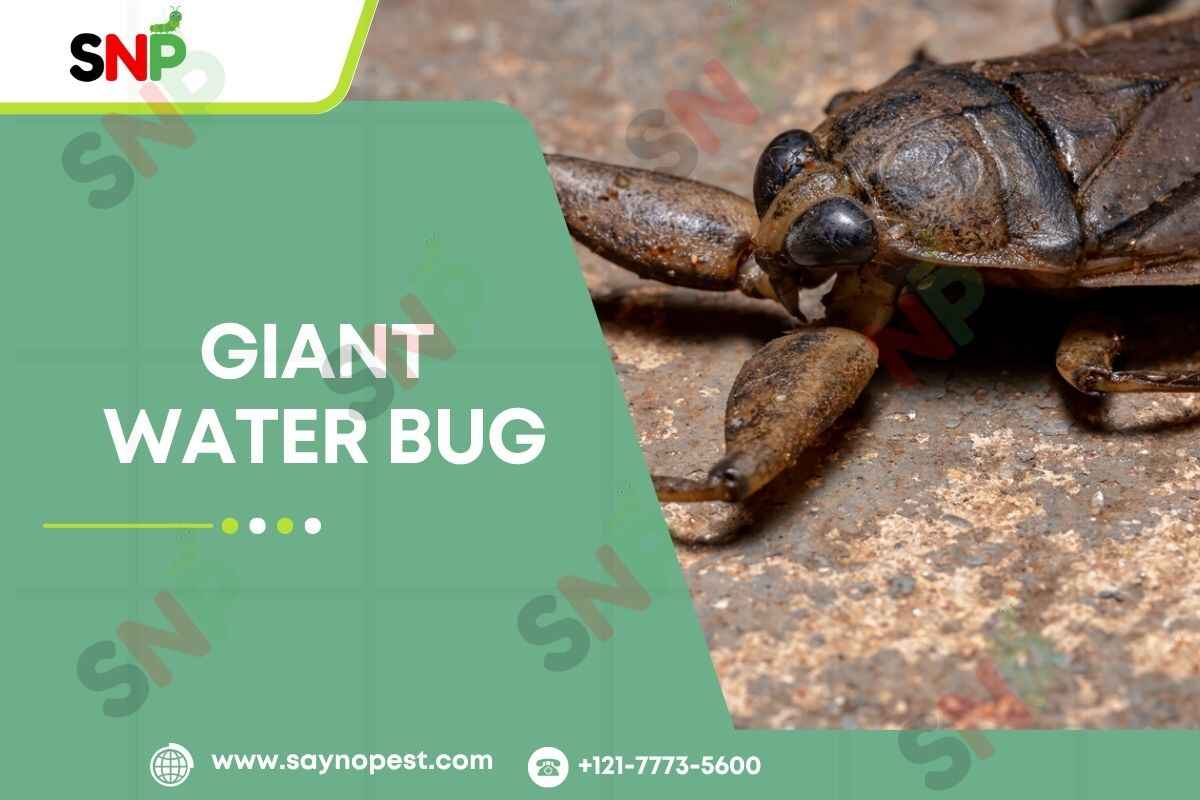
    A giant water bugs is a bug that appears unlike most other bugs when you first lay eyes on one. Adults reach sizes of 2 to 4 inches, making them some of the largest insects we have in North America. They typically range from dark brown to tan, are flat, oval in shape, and resemble a great deal like aquatic animals, and worth noting is that they’re difficult to keep out of reach of other animals. The legs at the front are the parts that represent those hostile features, which are banded by the bug with the needles that for the bug to catch the victim. The legs have hook-like claws at their ends, which means that they can easily grasp and touch the slippery prey.

    water-bug

    The giant water bugs is also equip with a rostrum, which is the name of the short and pointed beak placed under its head. It is use for piercing the next presumable prey of the bug. The hind legs of the bug are flatten, and the hairs fringed them, thus forming the paddles for the swift swimming. The wings are unattractive when they are the last ones on the back, and the abdomen forms a pattern that represents the symbol “X”. The last segment of the bug’s belly is a breathing siphon, which allows the bug to be in water and still breathe.

    Giant Water Bug Eggs: Life Begins Above Water

    Reproduction for the giant water bugs is very special and interesting. After the mating season has passed and it is still summer, the female lays on the leaves of the aqua many of those giant water bug eggs that have a brown colour, which are unbelievably 150 in number and waits for the eggs to be gilled. In some cases, females may deposit the giant water bug eggs on the male’s back, and the male will then be the one who will take care of and aerate the eggs until they hatch if present possibly providing a food source for the individual that hatches.

    This is the assurance of the life cycle continuity of the insects when the mother looks after the eggs and then oversees their hatching and growth of the larvae. Such larvae proceed through several different stages before the pupae of nymphs turn into adult water bugs, where in each stage, they moult off their skins and grow bigger every time.

    Giant Water Bug Bite: A Powerful Weapon

    The function of the giant water bug bite is primarily as a hunting tool, and it can also be a defence mechanism. Through the use of its sharp rostrum, the bug can inject a deadly bite into its prey. Digestive enzymes released will then paralyse and liquefy the victim. With this ability, the giant water bugs can consume its victim seamlessly such as if it were a protein shake. Although being a direct food supply, humans, either through inadvertent handling or disturbance of these bugs in the water or may suffer some bites. In reality, the giant water bug bite is indeed very painful, often categorised among the most severe insect bites and yet, in most cases, this does not pose danger to the common healthy adult.

    Are-Giant-Water-Bugs-Dangerous

    Are Giant Water Bugs Dangerous?

    The giant water bugs is a main player in water food chains and holds its place as being fearful, but normal people are not threatened if they see one up close. But if an individual does get bitten by the giant water bug, they will experience the following: children will become painful, swollen, and develop an allergy that is not always apparent in adults. These bugs usually do not attack people, and when they do so they do for their safety. The giant water bug eats snails, fish, etc. They help to maintain the ecosystem by doing that. If there were no predators such as the giant water bug, small animals in lakes and ponds would compete for food, disrupting the balance.

    Conclusion

    Besides being interesting, this bug is crucial for American freshwater populations. With its big size, strange form, special way of reproducing, and powerful hunting ways, the giant water bug earns a lot of respect in water environments. When a giant bug bites you feel uncomfortable, they are not out to bite people and best observed from afar. If you find eggs of giant water bugs or see one swimming in the water, it shows their strong hunting expertise.

    Knowing about the giant water bugs is helpful if you love nature, have a house by a lake, or simply want to know what is living in the water.

  • Types of Water Bug : Identification, Habits, and Control

    Types of Water Bug : Identification, Habits, and Control

    Water bugs are insects that belong to a widely varied group and can be found throughout the United States. They tend to multiply most in wetlands like lakes, ponds, and streams. The term water bug is being used to refer to cockroaches on some occasions, although real water bugs are not only insects with unique behaviours but are aquatic as well. First of all, knowing the types of water bug, how they behave, and how one can control them can be of great help to keep your house and surroundings free of these pests.

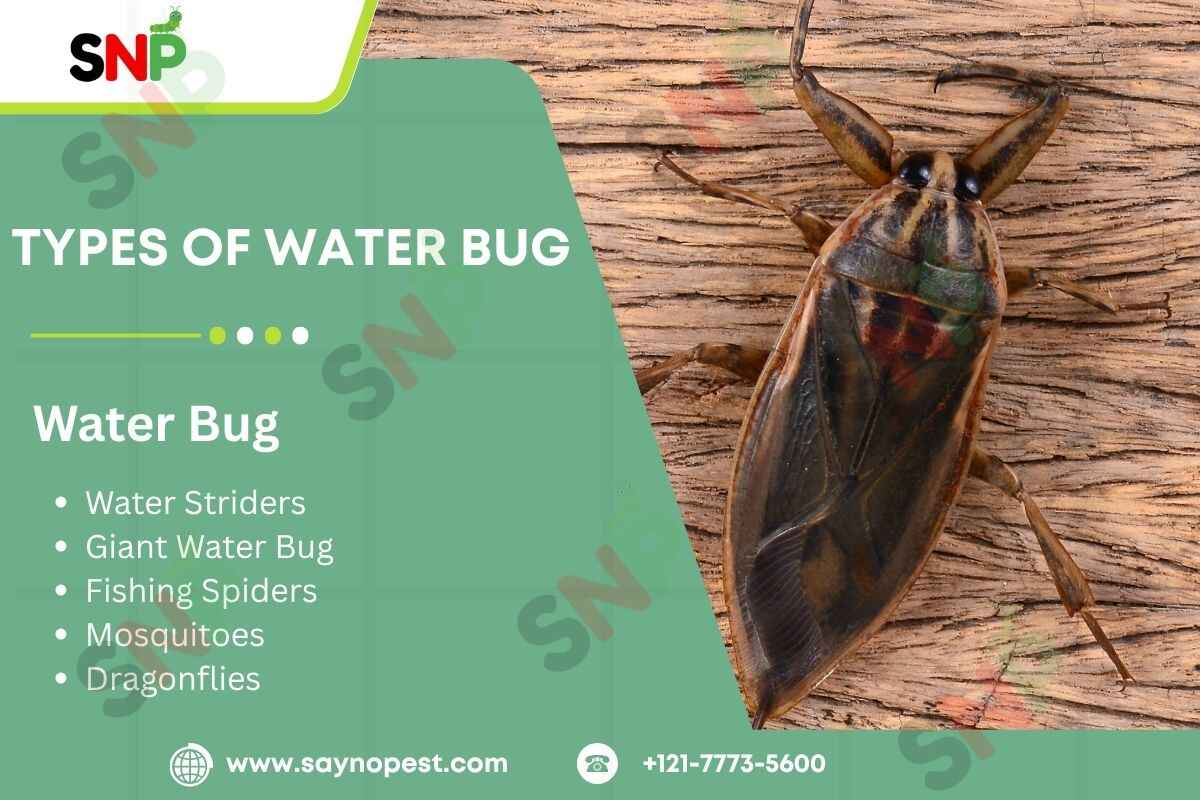
    Types of Water Bug

    types-of-water-bug

    Water Striders

    Water striders are some of the sweetest and cutest animals that are there in the many types of water bug living in the water. It’s their long, skinny legs that make them very easily recognisable, and through them, they can “walk” on the water. This interesting capability comes from the hydrophobic (water repellent) hairs on their legs, which distribute their weight evenly and do not let them sink. Water striders all thrive on insects that fall on the water, and this makes them natural pest controllers, beneficial for pond and stream life.

    Giant Water Bugs

    Giant water bugs are the king, I mean, the giant among water bugs. They even got the nickname “toe biters,” which is purely spot on. Not all bugs can compare. They are among the big in North America, with a size of 4 inches. Their body structure is flat, oval-shaped shaped and has powerful front legs to catch the pest and their food. Giant water bugs is being describ as very aggressive fish feeders that preying on amphibians, fish, and turtles. They are not to anyone’s liking as long as they do not provoke humans into a fight.

    Fishing Spiders

    Fishing spiders are a types of water bug that will be most interesting to anyone who is into insects. They are everybody’s secret favourite water bug species. Even though fishing spiders are engrossing predators, they cannot parachute down from high altitudes to catch prey. Due to their hydrophobic legs, they have the privilege to walk on the surface and, when needed, perform underwater activities such as hunting for food. They mostly found at the corners of ponds and streams, and lakes, in search of food.

    Mosquitoes

    Many people don’t know that mosquitoes also come in the category of water bugs, but this is tru;e they also share the same habitat. Their larvae are pupae that come from standing water, and adult mosquitoes that usually rest as floats on the water surface. There is no need to introduce them a lot as they are well-known for their biting behaviour and are the typical annoying presence around water bodies.

    Dragonflies

    Dragonflies are truly unreal water insects with large, multifaceted eyes and two pairs of powerful wings. As naiads (nymphs), dragonflies spend the first stage of their life in the water, where they are the natural enemy of almost all aquatic insects, but in reality, mainly of mosquito nymphs. After the nymph stage, only the stronger ones reach adulthood. Once they fully grow, they have developed magnificent power and could challenge almost anything. A very important, indeed essential, stage in the development process of dragonflies is the emergence from the nymphs. The fully grown dragonflies only emerge from the nymphs once they are ready to be adults.

    Can Water Bugs Fly?

    One of the most curious questions is, can water bugs fly? The answer to this might be yes or no, depending on the particular species. The majority of water bugs can fly. As an example, females, who are the larger ones, present in a variety of habitats, can do so, as they are especially drawn by light at night. They may be found near porch lights or streetlights during the warm season. Still, there are some species, such as water striders, which do not fly, but only through the movement that takes place over the surface of water.

    giant-water-bug

    Water Bug Traps

    Preventing water bugs from appearing indoors usually requires a range of methods. Furthermore, water bug traps are a really helpful tool when it comes to the capture of such insects, especially in places like the basement, the crawl space, or the near the drains that are damp. Sticky traps, glue boards, and bait stations can put where water bug are active. For larger infestations, professional pest control may use more advanced water bug traps and targeted treatments.

    When it comes to the green part of controlling water bugs, natural treatments also make a difference. Boric acid and baking soda are among those natural remedies which can be of real help. As they are both very dry, these two substances kill the water bugs upon contact. A powder made from the remains of algae, for example, diatomaceous earth, may also be of use. If chemical substances need to avoid at all costs, essential oil sprays such as peppermint or eucalyptus can sprayed near the water areas where bugs are most likely to nest as a preventative measure.

    How to Identify the Signs of Water Bug Infestation in Your House

    The first symptom of a water bug infestation that leads to action is crucial:

    • Poop or Cases of Eggs: Small black pellets could signify cases of water bug droppings or egg casings.
    • Spottings: The finding of those big, flat insects moving around in a moist place, especially at night, is a sure indication of their presence.
    • Strange Smells: Some water bugs may emit a bad or musty odour.
    • Wetness Issues: Persistent dampness, leaks in pipes, or water that is not moving invite water bugs indoors.
    • Algal Blooms: Algae can attract a few types of water bugs, usually in pools or near furniture.

    Conclusion

    Educating yourself on the types of water bugs inhabiting the whole of the US is important for the successful destruction of the water bug infestation. As water striders, giant water bugs, fish, mosquitoes, and dragonflies are examples of such species, people and, especially, children should be educated about wildlife and their roles in the ecosystem for sustainable living. Most types of water bugs have wings and can therefore move around in houses or bunch together near lights outside. Prevention of these pests is attainable through the installation of traps, ensuring that your residence remains dry, and treating dampness. In case you suspect that there could be such pests in your residence, you are advised to contact professional pest control agents. They can give you a solution that targets the killing of water bugs and thus making your home their territory again for comfort.

    Staying knowledgeably updated and vigilant will certainly keep you free from bugs while learning about the interesting world of nature through water bugs.

  • Do Water Bugs Bite? Everything You Need to Know

    Do Water Bugs Bite? Everything You Need to Know

    If you’re asking yourself the question of do water bugs bite, then, obviously, you have a lot of company. Water bugs, aquatic insects and their interactions with humans are something that many Americans have experienced, and the scary look of water bugs is usually the first reason why anyone gets worried about their safety. In this piece, we are going to figure out the ins and outs of the water bug world, tackle issues like Are Water Bugs Poisonous, and explain the procedure of getting bitten. No matter if you are a homeowner, a swimmer, or just an outstanding, early inquisitive, here are some of the most significant aspects of water bugs and their bites for you.

    What Are Water Bugs?

    Water bugs, being giant water insects, are animals that live in the United States primarily in lakes and ponds of slow or stagnant water. The biggest of the water bugs, for instance, the giant water bug, also called a “toe-biter,” can grow to 4 inches in the most menacing scenario. Conversely, there also exist tiny bugs that inhabit water, like backswimmers and water boatmen, which usually occur in pool water in backyard pools.

    It’s a myth that water bugs are roaches. They have wide, oval bodies and their front legs are very powerful, which helps them to catch their prey powerfully, and they swim like fish. Most of the time, that is, during the night, both the small water bugs and their big relatives act as nocturnal predators, the prey being fish, tadpoles, and other creatures that live in the water.

    Do Water Bugs Bite?

    The answer is yes-do water bugs bite humans? Absolutely, but only when threatened or handled. The giant water bug, in particular, is infamous for its painful bite. While the smallest of water bugs, such as backswimmers, can also bite, the pain caused by it is not that severe.

    If a water bug bites, it does not follow the way a mosquito or a spider bites, but the former uses a pumpkin-shaped rostrum to break through the skin while injecting the prey with digestive enzymes. After it has happened, you will feel a sharp and unbearable pain, even after several hours. Remember, the bug only attack when someone confined or handled, since, in general, small water bugs and their relatives will not go out of their way to cause problems for people.

    Are Water Bugs Poisonous?

    The question that comes up most often is whether water bugs are poisonous. Water bugs do inject a poison-tinged saliva into their prey, which leads to their paralysis, and then the bugs are eaten. On the other hand, how about humans, are water bugs poisonous in a dangerous way? Not at all. Although their bite can be excruciatingly painful, the venom is not one of the major causes of death amongst people. Rarely will the worst you will experience be signs of local pain, swelling, and some tingling or numbness in a particular area. In some, very few cases, these are allergic signs of breathing that are difficult or a breakout of hives. In these cases, medical attention is critical.

    Even though it may be true that do water bugs bite and inject venom, the response to are water bugs poisonous is that they are not dangerous in the way snakes or spiders can be.

    Do-Water-Bugs-Bite

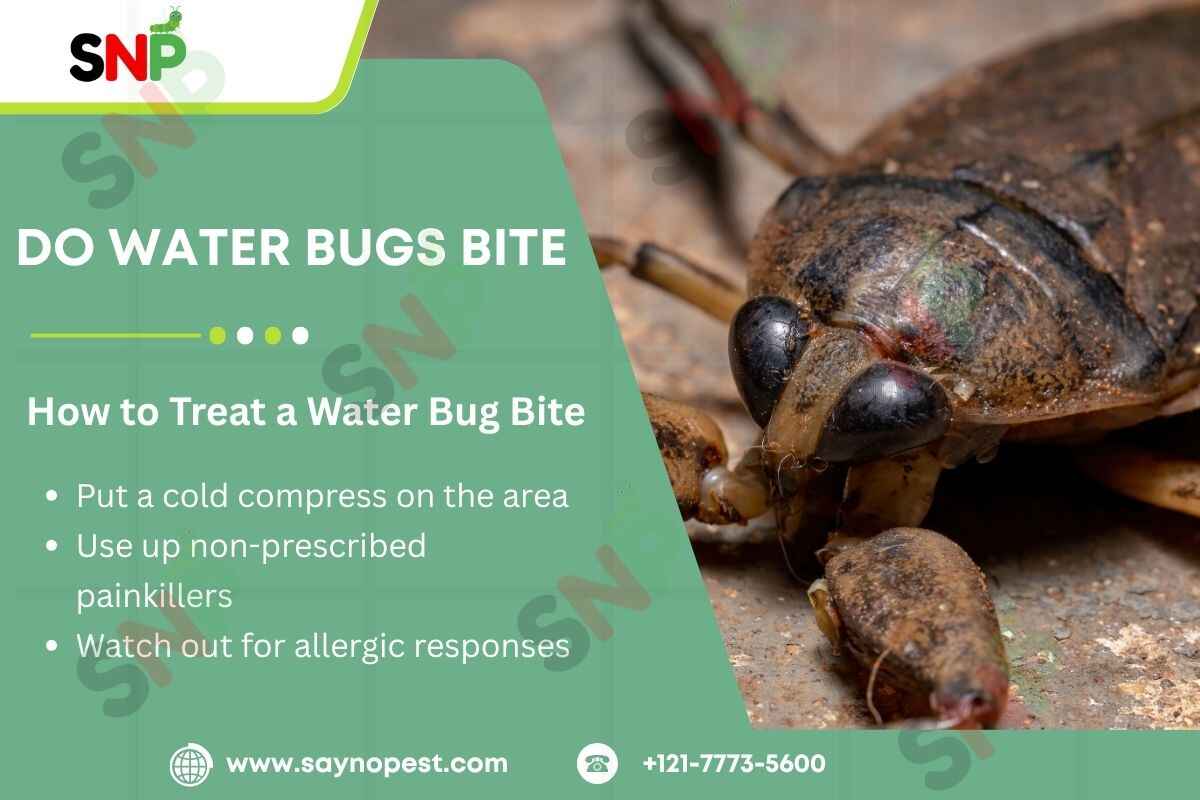
    How to Treat a Water Bug Bite

    When water bug bite, the following steps should taken to treat the water bug bite:

    • Put a cold compress on the area: This reduces pain and swelling.
    • Use up non-prescribed painkillers: Ibuprofen and acetaminophen are pain relievers which can used to alleviate discomfort.
    • Watch out for allergic responses: If you have shortness of breath, skin rash, and you find local swelling getting bigger, than don’t hesitate to seek help from a doctor.

    Most bites from small water bugs and their larger relatives clear up within a few hours, although a sensation of numbness or tingling may persist for up to five hours. Don’t scratch the bite, as this can lead to more infection.

    Conclusion

    Is it true do water bugs bite? First of all, the direct answer should be no. The pain from a water bug bite is very disturbing but not severe. Are water bug poisonous? Their toxin is used for the prey, not humans, so there is no need to worry. The interaction with a water bug sting will be nothing more than temporary pain and a bit of swelling, and usually, simple first aid will be enough. Keep in mind that both small and large water bugs shun people, so the most effective method is to leave them alone and keep your swimming areas clean.

    Figuring out the conditions of whether water bugs bite, if water bugs are poisonous, and if a water bug bite happens to you, you can venture outdoors with the utmost assurance. If small water bugs and their bigger versions pay too much attention to you, it is a wise option to get in touch with the professionals of a reputed pest control service and enjoy a trouble-free life at home.