Author: digimach10

  • Pink Dragon Millipede: Nature’s Shocking Pink Defenders

    Pink Dragon Millipede: Nature’s Shocking Pink Defenders

    Pounding and exotic arthropods are an inevitable subject, and none are so captivating as the pink dragon millipede. One of those animals that are instantly distinguishable just by showing up at them because of their really bright. Almost-neon pink coloration, pink dragon millipedes have made headlines and attracted curiosity among scientists and nature lovers worldwide. While they might seem to have sprung directly from the pages of a novel. Pink dragon millipede are all too real.Their tabloid-sensational appearance is one which they do exceedingly well in the wild.

    Pink-Dragon-Millipede

    What are Pink Dragon Millipedes?

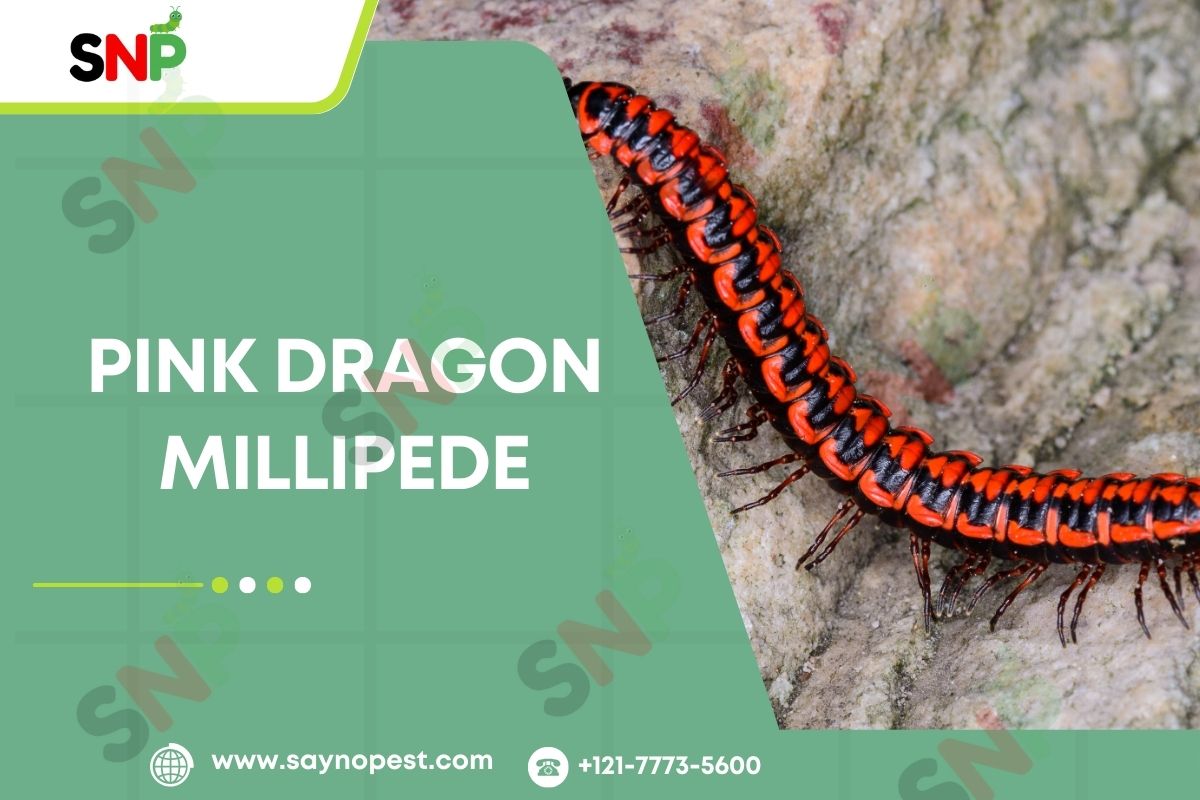
    Pink dragon millipede, or Desmoxytes purpurosea, are a beautiful-looking creature that were first found in 2007 in Thai limestone caves. They are around 3 centimeters long and 2 of the largest of their genus. The most striking thing to see visually with these millipedes is the vibrant pink color, but it isn’t necessarily skin deep. It’s a case study in aposematism, naturally warning the predators that the organism is toxic.

    These pink spiny dragon millipedes have unique hydrogen cyanide-containing glands that hold a foul smelling noxious chemical defense. This toxicity and their gaudy color are an ugly sight for any would-be predator. Ensuing rain showers, pink dragon millipede appear in big groups moving out in the open on leaf litter. They are thus a shock encounter in the wild.

    Dragon Millipedes: Desmoxytes Genus

    The Desmoxytes genus of dragon millipedes is a very diverse group of species that is marked by intricate body ornamentation, and also colorful. Although the most well-known are probably the pink dragon millipede, others within the group may be red, brown, or pale colors themselves . The genus occurs mainly in Southeast Asia, where disjunct distributions are seen among the species in Thailand, Malaysia, and Myanmar. They have dispersed themselves as far as islands such as Sri Lanka and Fiji by man.

    Why the dragon millipede stands away, as it has the ability to release HCN as a defense, a relatively rare adaptation for a millipede.

    Combined with their spine-tipped form and deeply colored coloration, this makes it an intriguing subject of scientific investigation and pest control training.

    Habitat and Behaviour

    Pink dragon millipedes live in humid, wooded habitats more specifically soil with a high level of leaf litter and limestone landscape. They are detritivorous and feed mainly on dead vegetation, which is a matter of prime value in the nutrient cycle of their environment. By day, they will be basking on rocks or ambling on the forest floor after rain. Their reproduction is also intriguing, with females spawning clutches of 10 to 300 eggs in one go, often using sperm from the spermatheca to fertilise the clutches.

    Apart from their ecological role, the way pink dragon millipedes exist is fascinating in the way that they organize themselves into enormous aggregations. Their social existence, especially on rainy days. It is said to maximize their survival as a group by inundating predators with an abundance of toxic defense. Their spined body even serves as a defense shield against predators when trying to engulf them.

    Dragon-Millipede

    The Pink Dragon Millipede: Its Role in Pest Identification

    Although pink dragon millipedes are not naturally found in the United States and are not an infestation problem here. They are a great lesson in how nature controls pests. Their chemical defense is the way some arthropods have evolved defense systems to ward off danger without harming the environment. Something that will promote American homeowners and pest control operators towards more environmentally friendly methods of pest control.

    More on the informing the public about such rare species makes them sensitive to biodiversity and natural habitat conservation. Through viewing such creatures as the pink dragon millipedes, human beings can expand their knowledge regarding the equilibrium of ecosystems and the function of every organism even those which, at first glance, are abnormal or terrifying.

    Commercial and Educational Value

    To pest control companies, knowledge of exotic species such as the pink dragon millipedes can be a viable marketing option in engaging the audience. Revealing interesting facts and the role of varied arthropods in the food chain not only engages the readers. They also makes your company seem like a learned expert in the industry. The provision of real and researched facts creates credibility with your audience. It shows that you are dedicated to learning and efficient pest control.

    Making references to such exotic creatures as pink dragon millipedes in your site or content will make your site stand out from the rest. It is a sign that your business, saynopest, cares for science fact. the planet, something more valuable for environmentally conscious consumers today.

    Conclusion

    The pink dragon millipede life cycle is as sophisticated as colorful. From their stunning looks to their potent chemical deters, these creatures are a testament to the wonder of natural adaptation. Even if you yourself may not have pink dragon millipede overrunning your yard, by reading about the m we’re reminded of life’s richness and the importance of efficient, properly-advised pest control. For additional interesting facts and expert advice on all about pests, visit saynopest, your guide and informative website on pest control.
  • Mosquito Bites vs Bed Bug Bites: How to Distinguish

    Mosquito Bites vs Bed Bug Bites: How to Distinguish

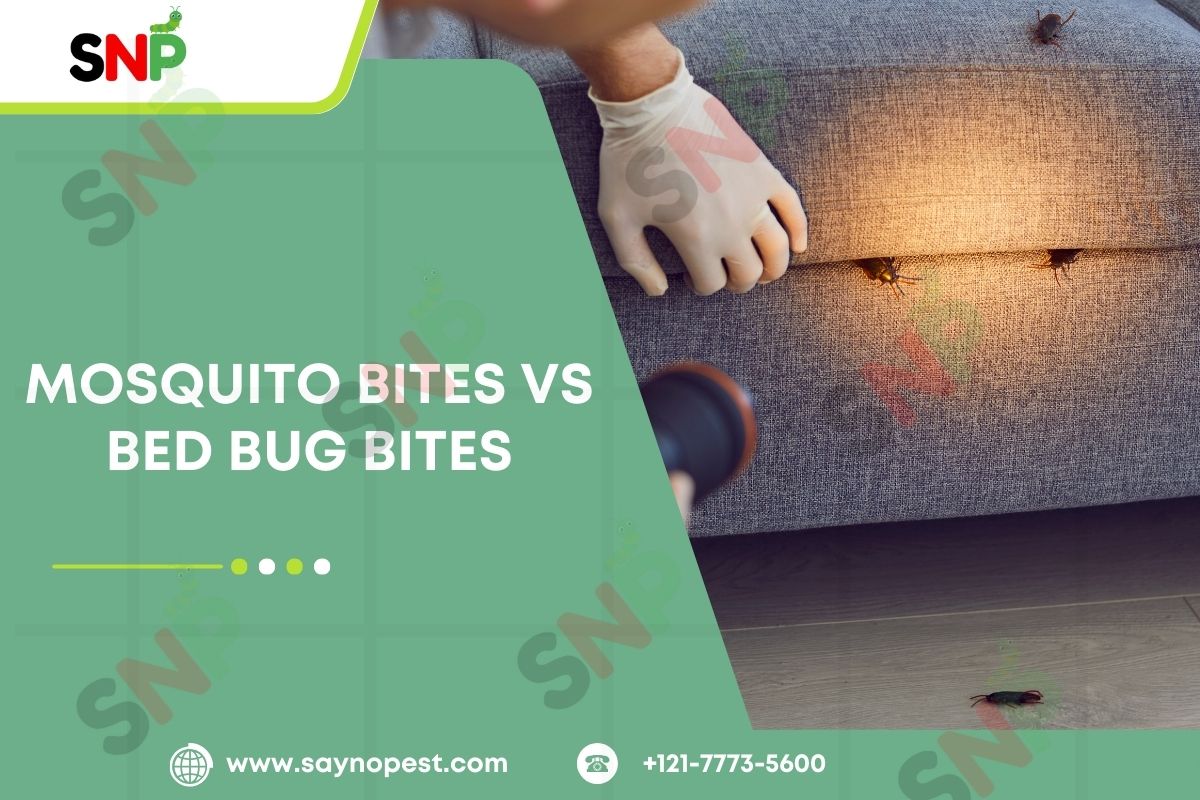
    For a peaceful night of rest or evening outdoors spent resting, nothing will destroy tranquility faster than obnoxious, scratchy bites. Two of the sneakiest culprits in America are bed bugs and mosquitoes. It is a blessing to be able to distinguish between Bed Bug Bites vs Mosquito Bites so you can maintain your sanity, household, and home. We’ll clear up the mystery of the distinctions in this article. Teach you how to determine what critter is infesting you, and take you through solutions that work.

    Bed bugs and mosquitoes are both blood-suckers, and either bite will superficially resemble each other.

    But noticing the minor difference between the mosquito bites vs bed bug bites may be what inhibits you from taking action & hence experiencing issues in the future. These Mosquitoes are outstanding for the buzzing sounds outdoors. In the evening and early morning hours, but bugs are quiet insects that stay under mattresses and furniture and come out at night to feed. Knowing the difference between mosquito bites vs bed bug bites is not about convenience, it’s about health and safety. Mosquitoes are the vectors for West Nile Virus and Zika, whereas bed bugs, as little as spreading no disease yet to be known, can result in allergic reactions and restless nights.

    Bed Bug Bites vs Mosquito Bites: Spotting the Differences

    Let’s take a closer look at bed bug bites and mosquito bites so that you can determine the cause of your discomfort.

    Appearance and Pattern

    mosquito bites vs bed bug bites: Puncture-centered, balloon-up red papules are most commonly what it will be. They are random and can occur anywhere on patches of exposed skin.

    Bed bug bites compared to mosquito bites: Bed bug bites will be together in clumps or in a line—be better termed as the “breakfast, lunch, and dinner” pattern. Bed bug bites are red, tiny, typically swollen, and can have a darker center shade.

    Timing and Reaction

    Mosquito bite: They itch right away and are uncomfortable, most people must scratch minutes following the bite. Discomfort will subside after a day or two.

    Bed bug: This may not even be felt initially. The reaction can take hours, or even days, to surface, and itching or swelling will last much, much longer, a week or more.

    Location on the Body

    Bed bug bites and mosquito bites: Mosquitoes bite on anything, even thin cloth. Bites will usually be on arms, legs, neck, and ankles.

    Bed bug bites and mosquito bites: Bed bugs bite on skin that is exposed to bedding, e.g. face, neck, arms, and shoulders. Less frequently bites below clothing.

    Health Risks

    mosquito bites: Mosquitoes transmit many diseases and therefore These bites are a health risk.

    Bed bug: These bugs are not disease transmitters but the bites lead to secondary infection as a result of scratching and tension or insomnia.

    Duration and Severity

    Bed bug vs mosquito bites: Insect itching from bite decreases very soon without treatment.

    Bed bug bites vs mosquito bites: This remain the same, whereas repeated exposure will produce increased sensitivity of skin, which will lead to future amplified responses.

    Conclusion

    To recognize bed bug bites and mosquito bites is to recognize effective pest control and remain sane. Both bite and sting, of course, but to be able to distinguish between bed bug bites and mosquito bites says you best what to do spray the mosquitoes or call in the professional on the bed bugs.

    We at SayNoPest are committed to helping American families detect and eliminate pest infestation. If you wish to discover whether your bites are bed bug or mosquito or need professional assistance in treatment and prevention, trust SayNoPest to walk you through it step by step. Bites no longer need to dominate your life act now and reclaim your comfort with SayNoPest!

  • Advantages Flea Control for Dogs: Giving Your Pet Full Protection

    Advantages Flea Control for Dogs: Giving Your Pet Full Protection

    Fleas are more than just a nuisance for dogs. These fleas can cause severe discomfort, allergic reactions, and even transmit diseases. For American pet owners seeking a fast, reliable solution, advantage flea control for dogs stands out as a trusted option. In this blog, we’ll explore how advantage flea control for dogs works. why it’s a top choice for many. How it compares to natural flea and tick prevention for dogs.

    Introduction to Advantage Flea Control for Dogs

    With respect to protecting your precious pet, advantage flea control for dogs gives them immediate relief and protection against fleas. This vet-approved topical solution can be used on dogs that are seven weeks or younger and weigh three pounds or more. In contrast to a few of the over-the-counter medications found in pharmacies, advantage flea control for dogs is applied directly on the skin, and pet owners will find it easy to use.

    Benefit flea control for dogs begins killing fleas in minutes, contact-killing fleas. These fleas don’t need to bite your dog to die. Not only delivers quick relief from scratching and irritation but also prevents flea-borne disease and re-infestation.

    Advantages-Flea-Control-for-Dogs

    Flea Control for Dogs

    Successful Flea Control in dogs is important for their health and well-being. Fleas induce allergic dermatitis, are the vectors of tapeworms, and cause anemia in small puppies and dogs. Advantage flea control in dogs interrupts the flea life cycle by killing adult fleas, larvae.

    This is how advantage flea control in dogs functions:

    Fast Acting: Kills fleas within 12 hours of use, halts bites in 3–5 minutes.

    Long-Lasting: A single treatment gives protection of up to 30 days even subsequent a swim or bath.

    Easy to Apply: Pre-measured tubes. That just brush dog’s coat apart and squeeze onto skin on the neck or along the back.

    No Prescription Needed: Over-the-counter status gives easy method of purchase and usage by owners.

    Use for best effect must be used advantage flea control for dogs monthly and as directed. Monthly use gives long-lasting Flea Control in dogs and prevents reinfestation.

    In addition to applying advantage flea control to dogs, the home and yard must be treated. Fleas live on carpets, bedding, and outdoors. A complete plan for Flea Control for dogs will keep your pet and your environment pest-free.

    Natural Flea and Tick Prevention for Dogs

    Whereas chemical medication like advantage flea control for dogs functions so well. Natural flea and tick prevention for dogs is preferred by others. Natural prevention tries to keep your dog away from fleas and ticks to the barest minimum without employing human-made chemicals.

    Among the most common natural flea and tick prevention for dogs are:

    Daily Brush and Bathe: Prevents the ticks and fleas from attaching before they have a chance.

    Essential Oils: Some of the essential oils that are safe for pets will ward off pests.

    Clean Living Environment: Cycles of fleas can be broken by washing the bed and vacuuming carpets.

    Supplements in Diet: Certain natural supplements will help the skin health and make dogs unattractive to pests.

    While natural flea and tick control for dog use may prove a very worthwhile addition to your regimen. Keep in mind that such treatment will tend not to be as speedy in the situation of worst infestations.

    Natural Tick and Flea Control for Dogs

    For people who choose Natural Tick and Flea Control for dogs, employing many disparate. It varied approaches together can offer optimal overall protection.

    Yard Care: Lawn mowing and raking leaf litter reduces tick breeding sites.

    Natural Sprays: Plant product sprays keep your home, home again, and your pet flea and tick-free.

    Physical Barriers: Tick collars or outdoor clothing provide an added barrier.

    A natural powder, is also used by other pet owners on carpets. Bedding as part of their Natural Tick and Flea Control for dogs package. But ensure whatever product is used is pet-safe. It is most essential to speak with your vet first prior to implementing any natural flea and tick control for dogs. Flea Control for dogs program since some of the ingredients in nature may be toxic if used improperly.

    While Natural Tick and Flea Control for dogs is so enticing because it is not invasive, it’s best to check your dog for tick or flea activity and first consult with your veterinarian before solely depending on natural remedies. Advantage flea control for dogs is still the standard in risk zones or heavily infested regions.

    Conclusion

    Flea protection for your dog is essential to its happiness and health. Advantage Flea Control for dogs is fast acting, powerful, and long lasting. It is the number one choice among American pet owners. Natural flea and tick protection for dogs and Natural Tick and Flea Protection for dogs may be used as an addition to your routine, but there is nothing better than the tested strength of advantage flea protection for dogs to achieve complete Flea Protection for dogs.

    For additional advice, good products, and professional tips on how to keep your pets pest-free from infestation, visit saynopest. The best buddy of your pet protection and care. With the proper use of the right amount of advantage flea control for dogs and smart prevention strategies. You can have a healthy, happy, and pest-free dog for a lifetime.

  • Cluster Flies vs House Flies: How to Identify and Control These Common Pests

    Cluster Flies vs House Flies: How to Identify and Control These Common Pests

    When buzzing insects infest your house, it’s natural to believe they’re all the same. But knowing cluster flies vs house flies can be essential to effective pest control. The two species have striking differences in traits, behavior, and dangers that every American homeowner needs to know.

    Introduction to Cluster Flies vs House Flies

    Houseflies and cluster flies are two of the most common varieties of flies to infest homes in America, but they couldn’t have a more disparate motivation and attitude. Both fly varieties are annoying to get rid of, but knowing whether you’re trying to get rid of the one or the other will make the best way to stay away from them and prevent them from returning.

    House flies (Musca domestica) are the common insect flies that buzz in and out of your kitchen, attracted by food and garbage. Cluster flies vs house flies is a primary distinction when you come to realize cluster flies (Pollenia rudis) are seeking shelter, not sustenance, when they enter your home. Understanding these simple differences is the secret to effective pest control.

    Physical Differences: Cluster Flies vs House Flies Distanced

    Size and Color

    Their body form is the most pronounced difference cluster flies house flies. They are bigger than house flies, and they measure around 7-10mm (around 3/8 inch), while house flies measure 4-7mm (1/4 inch).

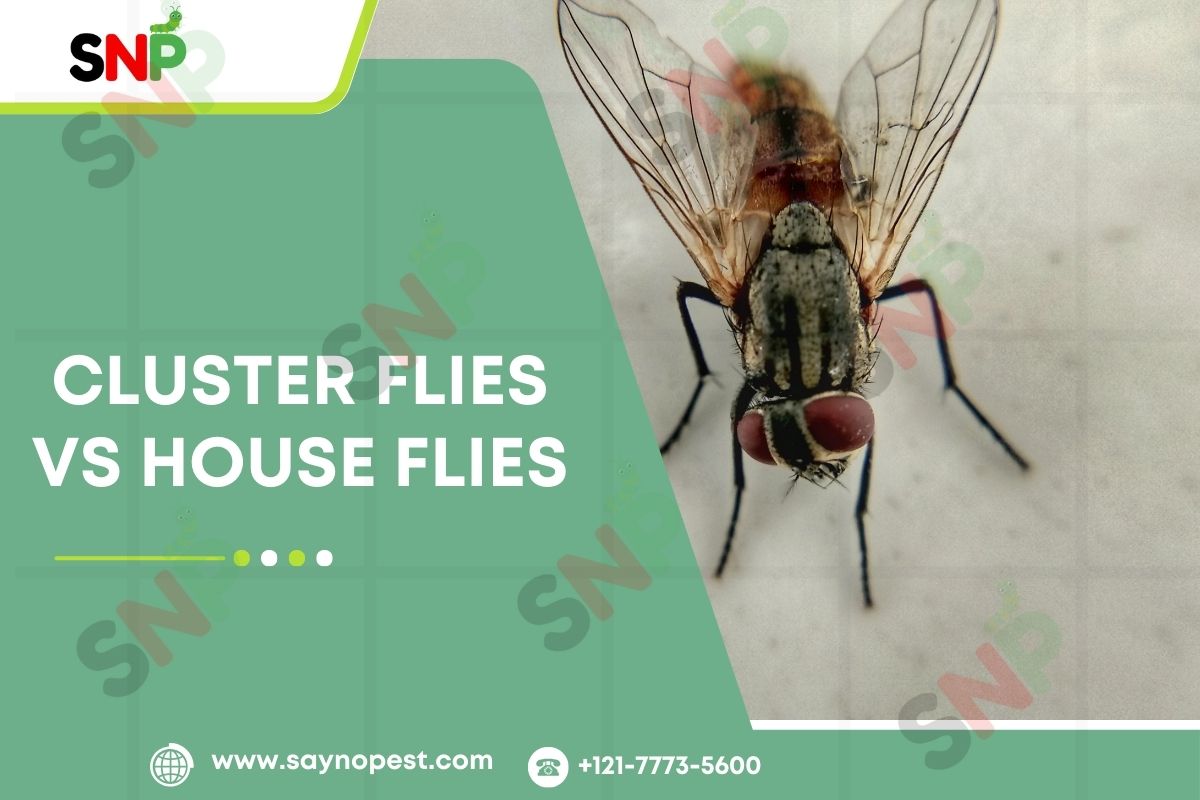
    House flies possess a gray body with four black thin stripes running along their thorax, giving them a metallic sheen. Cluster flies acquire a darker gray to black body along with a checkered abdominal pattern but lack the metallic sheen of house flies.

    Golden Hairs and Wing Position

    Another very noticeable feature comparing cluster flies and house flies is short, yellow or golden hairs on the thorax of cluster flies. The golden crinkly hairs cause the recognizable appearance of cluster flies, though these do eventually drop with age.

    Alignment of wings is also varied among these species. They overlap wings over the abdomen when resting, scissor mode, while house flies have separate wings in V-mode.

    Patterns of Behavior

    Patterns of Movement and Flight

    The contrast between the flight patterns of the house fly and cluster fly is impressive. House flies fly jerkily and with great speed as they scurry about within the rooms and change direction quickly. They are active during the daytime and possess crazy, far-stretching movements that make them hard to swat.

    Cluster flies move slowly and sluggishly, however. They fly around in a lazy, drowsy manner and will appear to be drowsy, especially when they are emerging from hibernation. This makes them easily catchable but also very noticeable as they zip around walls and windows.

    Seasonal Activity Patterns

    It should be noted that seasonal habits need to be taken into consideration when working with cluster flies versus house flies. The house flies tend to be most active mainly on hot summer days and year-round active in temperate conditions indoors. House flies are attracted to food and breeding material year-round over the length of their active life.

    Cluster flies have a far more erratic pattern. They are only pests in autumn (August-September) when they seek out locations in which to overwinter. In the spring when they leave their winter hibernation sites. During the winter, they overwinter in cavities in walls, attics, and other protected areas and only become active with a break in the temperature below 54°F.

    House flies live for only 7 days under optimal conditions, and the females lay 100-150 eggs within one batch in decaying organic matter, garbage, and animal excreta. Their short breeding season makes house fly populations grow rapidly. Thus the flies are a nuisance throughout the summer season.

    Cluster Fly Life Cycle

    Cluster flies also have a unique and fascinating life cycle that differentiates them from the cluster flies vs house flies. The females oviposit in soil near earthworm burrows, and the larvae infest earthworms. Egg to adult takes 27-39 days and has four generations of flies per summer.

    Health Hazards: Cluster Flies vs House Flies Pathogen Dissemination

    House Fly Health Hazards

    Compared to house flies, cluster flies as disease vectors are much lesser in number. House flies have been found to transmit no fewer than 65 diseases to man, including typhoid fever, dysentery, cholera, food poisoning, salmonella, and tuberculosis. They become vectors of these diseases by feeding on rubbish, garbage, and festering organic substances, and they transfer these to human surfaces and foods.

    Spread of the disease is caused by mechanical transmission – flies spit and urinate wherever they land. They transferring bacteria and viruses. House flies are hence a critical public health problem, particularly in food preparation areas.

    Cluster Fly Health Risks

    Cluster flies are less of a human health concern than house flies are in the cluster flies vs house flies health comparison. They are not able to bite human beings, will not lay eggs on foods, and are not trained to be employed in disease transmission as house flies are. However, they may carry some bacteria on their external surfaces. Its huge infestations might pose sanitation concerns through their fecal matter and dead bodies.

    Entry Points and Attraction Factors

    Why House Flies Occupate Houses

    House flies occupy houses primarily for food and water sources. They are attracted by odors in the kitchen, trash, pet food, and to any source of rotting organic material. They have a food-motivated drive and so are relentless once in their active phase.

    Why Cluster Flies Occupy Houses

    Cluster flies infest homes for much different reasons in the cluster flies vs house flies behavioral analysis. They seek warm, secure areas to spend the winter, often entering through cracks and crevices in late summer and early fall. They’re attracted to south walls in sunny areas and choose to occupy homes on hills or other elevated portions of land.

    Prevention and Control Strategies

    Preventing House Flies

    Effective house fly control hinges on cleanliness and elimination of food sources, Seal garbage canisters tightly, clean kitchen counters regularly, and eliminate standing water locations. Screen windows and doors, and practice good sanitary practices around pet food areas. 

    Prevention of Cluster Flies

    Cluster fly control for the cluster flies vs house flies comparison requires a specialized solution. Plug up building exterior walls, windows, and doors prior to late summer. Close south-facing wall entry zones first where cluster flies tend to concentrate.

    Both house and cluster flies may be treated professionally in instances of large infestation. Time and technique are, however, vastly dissimilar. House fly control entails continuous source reduction and cleaning, and control of the cluster fly entails exclusion and seasonally scheduled treatments.

    Conclusion

    Knowing the distinctions between cluster flies and house flies is key to successful pest management in American homes. While house flies are more of a public health problem and the subject of constant sanitation practices. The cluster flies are seasonally infesting and need to be actively excluded.

    The difference in house flies and cluster flies management is merely in terms of motives – the former seek breeding and food, while the latter seek shelter in winter. Home owners can easily control both species if they understand the difference and take the right preventive measures accordingly.

    For full pest control treatments and advice on cluster fly control compared to house fly control, rely on the experts at SayNoPest. Our trained staff is aware of the specific issue each insect causes . They can offer bespoke solutions to ensure your home remains pest-free throughout the year. Allow flying insects to infest your home – call SayNoPest today for effective. Trusted pest control treatments designed to meet your needs.

  • Where Do Bed Bugs Hide in Your Home

    Where Do Bed Bugs Hide in Your Home

    Bed bugs are one of America’s most evasive and resilient home infesting insects. The tiny blood-feeding pests are notorious to hide during the day, hence making it extremely hard to find and kill them. It is important to know where do bed bugs hide in your house to be able to successfully identify and treat their infestations.

    where do bed bugs hide in your house is a question all homeowners should be asking themselves, given the heightened cases of bed bugs across the United States. The parasitic creatures are experts in hiding, making use of their flat bodies to squeeze into the tiniest crevices and openings within your house. Despite their name, bed bugs don’t live in beds, they’ll establish colonies in a lot of other locations where they’ll be undisturbed during the day.

    They are attracted to warmth, co2. The most important reason they tend to hide close to where people relax and sleep. The insects can live for weeks or months without feeding, making them particularly supple and difficult to erase, once they settle into your home. Being aware of their hiding spots is crucial for detection and successful treatment early on.

    where-do-bed-bugs-hide-in-your-home

    Where Do Bed Bugs Hide

    Where bed bugs will hide is mainly determined by the need for dark, undisturbed spots close to their food source. Bed bugs prefer to have places that are protected from light and humans with convenient access to sleeping areas. Let’s discuss the most common places to hide in your home.

    Your Bed and Bedroom

    The bed remains the focal point where bed bugs will hide in your house. They will typically establish their large infestations within a distance of eight feet of human’s sleeping zone. In your bed, they will primarily hide in seams of mattresses, particularly on piping and labels. The box spring offers many hiding spots, particularly at the bottom where fabric is stapled onto the wood frame.

    Headboards and bed heads are excellent bed bug hiding places, particularly in screw-holed, cracked, and jointed wood furnishings. The headboard area is a very comfortable place for bed bugs because it’s infrequently visited and enjoys direct access to sleeping customers. Such areas often show bed bug infestation in the form of rusty blood stains, exoskeleton sheddings, and dark fecal stains.

    Upholstered Furniture

    where do bed bugs hide is not just the bedroom but living room furniture either. Sofas, chairs, and recliners are common hiding spots, especially if people tend to sleep or lie down on them. The bugs infest cushion seams, inhabit cushions, and colonize inside the upholstered furniture frame.

    The attractiveness of upholstered furniture to bed bugs is that it is so similar to mattresses – it contains soft crevices and seams where bed bugs will conceal themselves while remaining close to possible hosts. Inspecting the seams of furniture regularly, especially around sleeping areas, is critical to discovering them at an early point.

    Cracks and Crevices

    where do bed bugs hide in your home generally means the smallest space possible. They wrap themselves into cracks as thin as a credit card, so baseboards, moldings, and the junctions of walls are ideal hiding spots. These bugs also like to hide behind loose wallpaper, behind wall cracks, and ceiling-wall junctions.

    Baseboards are so attractive because they offer hiding places with close proximity to beds. Baseboard spaces are what these bugs use to hide behind baseboards regardless of the floor type and take advantage of cracks at the top where walls and baseboards meet. These spaces need to be checked frequently, most notably in bedrooms, in an attempt to have clear bed bug identification.

    Where-do-bed-bugs-hide

    Electrical Outlets and Fixtures

    One of the least expected areas that bed bugs prefer to hide is behind outlet covers and switch plates. They are warm, secure, and near beds and therefore make excellent hiding spots. Bed bugs can squeeze into even the smallest cracks in outlet covers, where it is dark and they are not bothered.

    Bedside electrical outlets are more prone to infestation as they also offer heat alongside easy access to sleeping hosts. Pest control experts typically discover bed bugs in these locations when the infestation is high. Inspection of electrical outlets is proactive and might involve hiring professionals for safety reasons.

    Furniture Joints and Drawers

    where do bed bugs hide in your house are the joints in the furniture, and they prefer dressers, nightstands, and other bedroom pieces of furniture. Joint fittings, staple holes, and drawer runners are havens for the bugs. Drawer drawers of a dresser are especially appealing since they are warm, dark, and perhaps not disturbed.

    Bed bugs congregate near beds in the vicinity of furniture because these provide them with a congenial environment. These provide them protection and easy access to food. The joints of the furniture, where drawers are pulled out for inspection, need to be checked for effective detection of bed bugs.

    Curtains and Drapes

    Where bed bugs are hiding also encompasses window treatments, namely curtains and drapes that are adjacent to beds or living spaces. These textile articles have ample hiding spots in their folds, seams, and pleats. Bed bugs prefer curtains of floor length because they are also provided with additional protection and coverage.

    Bed curtains are especially vulnerable since they’re close to bed bug food sources but are relatively undisturbed. Folds and seams in the material provide ideal hiding places, and bed bugs even inhabit curtain rods.

    Clothing and Closets

    Where bed bugs prefer to hide in your house are areas where apparel is kept, namely closets and wardrobes. Although bed bugs don’t usually live in clothing, they will hide in stacks of apparel, particularly soiled clothes. Closets provide them with the dark, quiet places that they prefer.

    They are particularly drawn to a human scent, making dirty clothes twice as appealing as clean clothes. They couch into folds of clothing, seams, and pockets, mostly in messy closets or on the floor. Regular washing of clothes and proper storage reduces these hiding places.

    Books and Personal Items

    Where do bed bugs hide also includes personal items, particularly books, picture frames, and electronics. Bed bugs will hide between pages and the spines of a book, particularly books that are kept in close proximity to beds. Picture frames provide hiding spots behind the frame and between the picture and the frame.

    Bed bugs use electronics like televisions, phones, and alarm clocks as hiding areas, particularly those located next to beds. Electronics provide heat and hiding areas since they are always near sleeping areas. Successful bed bug monitoring requires regular inspection of personal items, primarily those near beds.

    Less Common Hiding Places

    Where the bed bugs will hide in your home may be unlikely areas in severe infestation. The bugs have even been discovered in smoke detectors, light bulbs, and air conditioners. They also hide in suitcases, back packs, and footwear, particularly those which have been within infested rooms.

    In multi-family dwellings, These bugs can move from unit to unit through wall voids, electrical conduits, and plumbing penetrations. They can harbor along edges of carpeting, especially where carpet and wall meet. Being knowledgeable about these less typical hiding places is crucial in order to conduct complete inspection and treatment.

    Conclusion

    Being knowledgeable about where the bed bugs are hiding in your house is the solution to every American homeowner with such chronic infestation. Bed bugs are very good at concealing themselves, and they utilize everything from mattress creases and furniture joints to electrical outlets and clothing folds. What bed bugs utilize for cover is determined by the degree they need dark, quiet space proximity to human hosts, and for this, they will be within eight feet of sleeping areas.

    Effective bed bug removal depends on conscientious examination of all potential hiding spots. Remember that where do bed bugs hide in the house is not confined to beds – these sneaky pests can establish colonies in baseboards, curtains, electronics, and even behind wallpaper. Detecting infestations early through regular inspection of these locations can prevent small infestations from escalating into full-blown problems.

    For thorough bed bug inspection and treatment services, dial saynopest – your trusted expert in eliminating these unwanted household pests. Our seasoned professionals understand where do bed bugs hide in your house and can create effective treatment solutions to restore the comfort and safety of your home.

  • Dead Flea Eggs: A Complete Handbook for American Homeowners

    Dead Flea Eggs: A Complete Handbook for American Homeowners

    Dead flea eggs are a key to successful pest control in flea infestation. As tiny proof of unsuccessful flea development, dead flea eggs are included in the complete flea life cycle, and the ability to identify them helps homeowners determine the success of their treatments. Dead flea eggs exist where conditions in the environment will not accommodate normal development, chemicals are effective, or the egg themselves cannot hatch independently.

    While live flea eggs are a constant threat to your home being flea-free, dead flea eggs are a victory in your fight against unwanted parasites. However, be informed that spotting dead flea eggs isn’t always a sign that your flea infestation has been completely eliminated since they can also mean successful treatment and even higher infestation.

    dead-flea-eggs

    Understanding Flea Eggs: The Key to Flea Management

    Flea eggs are the source of all flea infestations and thus an extremely crucial target for effective pest control. Small, oval-shaped structures, flea eggs  about 0.5 millimeters long and 0.3 millimeters wide and are almost impossible to spot without the aid of a microscope. Adult females will lay up to 50 flea eggs daily, and a flea will hatch about 2,000 eggs during her lifetime.

    Flea eggs are small, white or off-white oval spots which strongly resemble grains of salt or sand. New flea eggs are transparent and shiny but grow more opaque and pearlescent with age. 

    These eggs are sticky when first dropped onto your pet’s fur but harden and fall off within a brief time into the environment. The flea eggs are everywhere in your home, specifically on carpets, bedding for pets, upholstered furniture, and floor crevices where your pets sleep.

    Flea egg life cycle mostly relies on the environment. In best conditions with a temperature of 70-85°F and humidity of 70-85%, flea eggs hatch within 1-2 days. At worst conditions, 8-12 days pass before eggs hatch, and others never hatch at all and become dead flea eggs.

    How to Tell Dead Flea eggs from Live Flea Eggs

    Dead flea eggs are also virtually indistinguishable in appearance from live flea eggs in overall physical description but contain more subtle differences that make them distinguishable. Live flea eggs maintain their smooth, oval shape and translucent to opaque white color, whereas dead flea eggs show a slight discoloration, yellowing or bluing of appearance.

    One of the important signs that they exhibit is that they are not structurally hard. The hard, smooth exterior of live flea eggs, as opposed to the wrinkles, collapse, or dimple formation that can occur in dead flea eggs. Flea eggs, once exposed to environmental stresses or insect growth regulators, become a darker purplish to brownish color, which is an unmistakable sign that it is a dead flea egg.

    They can usually be attributed to one of the following: excessive dryness (below 50% relative humidity), temperature fluctuations, chemical treatment exposure, or merely failing to naturally develop. They are not like live flea eggs that would proceed to grow into larvae and become a threat to your house pest control operation no longer.

    When looking at suspicious specks at home, they will not have internal development signs. Live flea eggs near hatching time may have larvae seen through their semi-transparent membrane, but they will always be evenly opaque.

    Successful Control and Prevention Methods

    Dead flea eggs can be successfully managed and fresh infestations prevented through a multi-stage approach against the whole cycle of the flea life. The best solution is a combination of good cleaning, specific treatment, and continual prevention.

    Effective cleaning forms the basis of flea egg management. Clean all bedding, blankets, and washable materials in hot water (at least 130°F) to eliminate live and dead flea eggs. Killing flea eggs and larvae requires heat. Utilize high-heat drying afterwards to ensure complete removal.

    Vacuuming is needed to kill flea eggs on floors, furniture, and floor crevices. Vacuum the places where your pets spend a significant amount of time since these contain the most number of flea eggs. Vacuum busy areas daily and other areas weekly. Always discard vacuum cleaner bags after use to avoid any existing eggs from hatching.

    Targeted Treatments have chemical and natural components. Insect growth regulators (IGRs) inhibit eggs from becoming successfully larvae, and there are over-the-counter flea fogs and sprays that kill flea eggs on the spot. Natural substances such as diatomaceous earth and salt will dry out flea eggs to dead flea eggs.

    Steam cleaning provides another strong method of flea egg killing through exposure to high heat. Steam cleaning can kill eggs in carpets and upholstery and, in the process, induce premature hatching of some eggs, exposing them to other treatments.

    Flea-eggs

    conclusion

    Knowledge of dead flea eggs is crucial to effective flea control for American households. Though dead flea eggs are a sign of progress in your pest control campaign, they reflect an infestation that needs regular maintenance. The secret to long-term success is having thorough strategies that address all phases of the flea life cycle.

    Keep in mind that flea eggs constitute a rough estimate of 50% of any flea infestation in your domicile, so they are a major area of control emphasis. Through advantage of good housekeeping, targeted treatments, and prevention, you can easily erase live as well as deceased flea eggs within your environment.

    For long-term flea rot problems, it may be a good idea to take the help of professional pest control services like saynopest, can provide expert advice and treatment regimens specifically molded for your needs. Through proper understanding and consistent efforts, one can ensure a flea-free dwelling and protect your family and pets from these nuisance parasites.

    It is a war of ability and assurance, yet through commitment and the role dead flea eggs have in your system of control, you can bring about lasting success in your pest management campaigns.

  • Flea Dirt: The Less Common Flea Sign

    Flea Dirt: The Less Common Flea Sign

    You’re an American pet owner, and there’s a sure safe bet that you’ve heard of the term flea dirt, but if you actually do know what it is, or even why you should even bother with it at all, is a whole different story altogether. Information is highly crucial in keeping pets’ good health and your home pest-free. We at saynopest like to inform you, educate you, and conquer this epidemic problem with ease.

    flea-dirt

    Introduction to Flea Dirt

    Flea dirt is not just annoying, but also a definite sign that fleas have infested your pets or in your homes. It is mistaken as ordinary dirt, but in fact they are pieces and shreds of the fleas after they have consumed your pet’s blood. Identification and elimination of flea dirt early will avoid further infestation and your pets and your home from any more harm to their health.

    Why is Flea Dirt handy

    Not only are they pesky, but they also carry disease and allergy in animals and humans. Flea dirt will usually be the first indicator you realize you have an infestation, before you ever see the fleas themselves. If you catch flea dirt at the initial stage, you can treat it immediately before the infestation has reached too far out of hand, which saves time, money, and headaches.

    Flea Dirt on Dogs

    The best place where to look for flea dirt is on your dog. It is on a dog not only looks disgusting, but it is also a confirmed indication that fleas have or are infesting the dog. Dogs with this usually experience severe itchiness, skin inflammation, as well as allergy. The flea dirt indicates that the fleas were fed, digested blood, and expelled waste, which, if they are not treated right away, will lead to other illness problems.

    How to Identify Flea Dirt on Dogs

    In order to look for dog flea dirt, rub the coat of the dog—particularly at the base of the tail, belly, and groin, while looking for small dark specks. If your dog is excessively scratching, or red bumps and clumpy hair loss are visible, these might be indications of fleas and flea dirt on dogs. Grooming and examination need to be frequently carried out to achieve early identification.

    The Effects on the Health of Dogs

    Skin Diseases: Flea dirt and flea bite dermatitis in dogs may result in secondary skin diseases.

    Flea Allergy Dermatitis: Some dogs are sensitive to the saliva of fleas, deposition on dogs has a potential for causing allergic reactions leading to extreme discomfort.

    Anemia: In heavy infestations of puppy or toy breed, anemia can be caused by feeding (and thereby flea dirt production), weakening and draining your pet.

    What Is Flea Dirt

    Flea-Dirt-on-Dogs

    So where is flea dirt, exactly?Dirt is nothing but the waste from adult fleas, and it’s nothing but digested blood from your pet. Fleas consume your pet, digest the blood, and spit it out in the form of small dark spots, dirt. And not just on pets, though, but on pet beds, carpets, or couches where pets like to congregate.

    Where Else Will Flea Dirt Be Found?

    Pet Bedding: Fleas will lay dirt and eggs on your pet bedding, so it’s something that must be at or very near the top of the list to infest.

    Carpeting and Rugs: Fleas will happily make themselves at home in carpeting, especially where your pets like to sleep.

    Upholstery and furniture: Armchairs and sofas are not unusual locations to discover, especially if your pets have unlimited access to the furniture.

    Flea dirt is also a sure indicator of a infestation. You might not see the live fleas but be able to see flea, then you know that fleas were (or are) feeding on your pet. That makes dirt a possible red flag for you and a signal to act now.

    What Does Flea Dirt Look Like?

    You might wonder, what does dirt look like? This will likely be the most common question that pet owners will pose—and they have the right to. It appears as tiny dark brown or black specks, and are usually likened to ground black pepper or coffee grounds. They can be tricky to distinguish from plain dirt, but there is a quick test: place suspect spots on a moist white paper towel. If the specks dissolve and leave a reddish-brown stain, you’re looking at flea —the color comes from the digested blood content.

    Additional Tips for Identifying Flea Dirt

    Location: Focus your search on areas where fleas coose to hide: the base of your dog’s tail, the belly, groin, and sometimes on their bedding.

    Texture and outlook: While regular dirt may crush, It tends to retain its shape until moistened.

    Frequency of Inspections: Check on your pets regularly, especially during warm months when fleas are the most active.

    what does flea look like? is not just a matter of how it looks, it’s recognizing the signs and taking action right away to protect your pet.

    Removing Flea Dirt

    Knowing the discovery of on dogs, it is necessary to act quickly and eliminate both the fleas and their flea dirts.

    Instructions for the removal of Flea Dirt

    Bathe Your Dog: Bathe fleas and flea off your dog with a vet-approved flea shampoo. 

    Comb Thoroughly: Traps fleas and shakes out from dogs with a flea comb having fine teeth. 

    Wash Bedding: Wash the entire pet bedding, blankets, and toys in hot water to get rid of any stray fleas.

    Vacuum : Vacuum carpets and lavish furniture often to remove fleas, eggs.

    Treating Your Home: Treat your home with safe, effective flea control products to avoid re-infestation.

    Preventing Flea Dirt and Flea Infestation

    Prevention is always better than cure. Take the following tips to keep your pets as well as your home flea-free:

    Year-Round Prevention: Use veterinarian-recommended preventatives year-round.

    Grooming: Bathe and inspect your pets regularly for dog fleas, grime and other signs of fleas.

    Cleaning Living Spaces: Clean your home and pet bedding regularly with the vacuum cleaner.

    Conclusion

    You do have fleas on and in your pets. If you find flea on your dog, busy-work time, aggressive cleaning, routine grooming, and simple-to-use flea control preparations are your best protection. Flea is a reminder to catch problems in the earliest stages, before they become deep-rooted infestations.

    We at saynopest remain committed to providing you with the information and products necessary for you to maintain healthy homes and pets. Don’t turn a blind eye, tackle today, and enjoy healthy, happiness with your pets. Continue to read, continue to view, and rely on saynopest for all your pest control supplies

  • Bed Bug Traps: Your Shield Against Nighttime Invaders

    Bed Bug Traps: Your Shield Against Nighttime Invaders

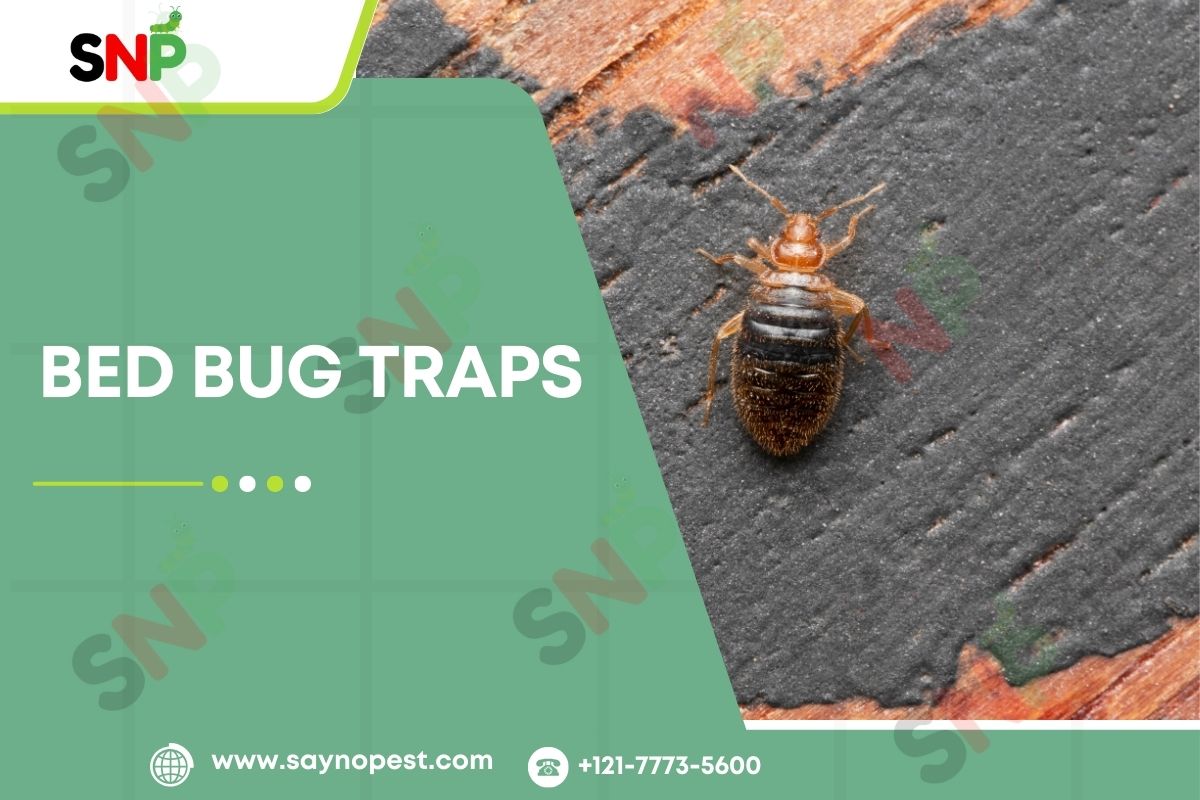
    When its about bed bugs, early detection and proper monitoring are crucial for successful elimination. bed bug traps is your first line of defense against these persistent pests, offering both detection and protection capabilities that can make the difference between a minor inconvenience and a major rot.

    bed-bug-traps

    Understanding Bed Bug Traps

    Bed bug traps are highly specific machines engineered to intercept, catch, and track these nighttime infesting bugs as they traverse the distance between their hiding spots and their dining locations. These clever devices operate by exploiting bed bugs’ lack of climbing skills on glossed-up surfaces while making free entry through textured openings.

    Bed bug traps are effective due to their strategic positioning. Research indicates that interceptor-style bed bug traps are able to identify bed bugs at a remarkable 93% detection rate within 7-14 days, making them valuable assets for early detection of infestation. Professional pest control firms use these devices repeatedly because they are able to capture six to seven times as many bed bugs as if they were simply using visual cues.

    The Science Behind Bed Bug Lifecycle and Trap Effectiveness

    Bed bug life cycle is essential for maximizing trap effectiveness. The bed bug lifecycle consists of 3 crucial stages, egg, nymph, and adult, with the entire process taking approx 37 days under optimal conditions.

    Throughout the lifecycle of the bed bug, bed bugs will produce a maximum of 500 eggs during their lifespan, with around 5-6 eggs being laid each day in protected areas. The eggs of bed bugs are minute, around 1mm long, and dull yellow or white in color. Five nymph stages of the bed bug lifecycle follow, with each stage necessitating a feed on blood to reach the next stage.

    The bed bug life cycle is also an important factor in trap efficacy since the various stages of life have different behaviors. Adult bed bugs in the bed bug life cycle are more active searching for hosts and will be more likely to find traps during their nighttime host-seeking activity. 

    Types of Bed Bug Traps: Selecting Your Tool

    Interceptor Traps

    Interceptor bed bug trap are passive monitors that have two concentric walls and a pitfall between them. That are made to look like plastic dishes. They are positioned under bed legs or pieces of furniture and form an efficient barrier that catches bed bugs climbing up or down. The outer walls have a rough texture, on which the traps can be climbed up by the bed bugs. The inner walls are smooth, preventing escape after the bed bugs fall inside the trap.

    Homemade CO2 Traps

    Sugar-Yeast Trap (Most Effective)

    This simulates human breath that will attract bed bugs. Mix 10 tablespoons sugar and 2 tablespoons active dry yeast in a retired coffee mug. Add 1.5 quarts of warm water, stir gently until frothy, and place the mug inside an inverted dog dish. CO2 produced by the yeast will be attractive to bed bugs.

    DIY Interceptor Traps

    Two-Container Method

    Use two plastic containers (small, and larger). Place tape around the exterior of the large one for easy handling. Cut 4 pieces of tape and press them inside the small container standing up. Glue the small container onto the bottom center of the large one. Baby powder should be sprinkled between containers so bugs can’t escape when trapped.

    Simple Glue Traps

    Buy sticky traps at most stores, remove paper backing, and place flat on floors. They are cheap but not as good as other methods.

    Strategic Placement

    Critical Locations:

    • Under every bed leg (most important location)
    • Along baseboards where bugs crawl
    • Near chair and sofa legs
    • Near sleeping areas within 6 feet
    • Push beds 6+ inches from walls to force bugs through traps.

    Natural Deterrents

    Diatoms Earth: Light dust food-grade powder along baseboards and bed legs. Dehydrates insects.

    Heat Treatment: Hot water wash (115°F+) bedding 30 minutes, dry on high 30+ minutes.

    Freezing: Bag infested items, freeze at 0°F for 4-5 days.

    Daily Prevention

    • Vacuum every day, particularly beds
    • Seal vacuum bags as soon as they are used and toss outside
    • Clothing in sealed plastic bins
    • Use mattress encasements
    • Keep bed linens up off floor
    • Reduce clutter

    What Not to Do

    Evade usage rubbing alcohol, bug bombs, or moth balls.

    Key Reminders

    These traps monitor and trapping of bed bugs but won’t take care of large infestations on their own. Use several methods together for optimal results. Allow a few weeks – it can take that long to maximize effectiveness. Inspect traps frequently and continue cleaning until no bugs are trapped for several weeks. It’s much easier to control them early.

    DIY Bed Bug Traps

    For budget-conscious individuals, homemade trap can prove to be very effective. Homemade traps utilizing widely available household materials could be as effective as commercial traps.

    Easy Interceptor Trap:

    Utilize two plastic containers (a smaller one and a larger one)

    Wrap the exterior of the large container with textured tape

    Put the smaller container within the bigger one

    Pack the gap between containers with talcum powder

    CO2 Attraction Trap:

    Combine sugar, yeast, and warm water to make CO2

    Apply a 2-liter bottle cut and turned upside down to form a funnel

    Pour the CO2 mixture into it to draw in bed bugs

    Monitoring and Maintenance: Maintaining Your Defenses Strong

    Monitoring bed bug trap regularly is key to their success. Inspect traps a minimum of weekly, and sanitise them every 2-4 weeks to avoid dust accumulation which affects their efficiency. Upon identifying bed bugs in your traps, kill them in sealed plastic bags to avoid escape.

    Pest control professionals advise keeping bed bug traps for a few months following initial treatment to provide absolute elimination. It has been proven through studies that it will take four consecutive weeks of trap catches being zero in order to have 97% confidence of the elimination of bed bugs.

    Limitations and Realistic Expectations

    bed bug traps are useful devices, one should consider their limitations. bed bug traps are mostly intended for detecting and monitoring, not for eliminating. In cases of moderate to heavy infestations, bed bug traps must be incorporated into an integrated pest management plan that involves professional intervention.

    The complexity of the bed bug life cycle implies that traps by themselves cannot deal with all stages of life satisfactorily. Eggs, an important component of the bed bug life cycle, are not caught by traps and need other means of treatment to eliminate them.

    Conclusion

    Bed bug traps are an Important tool in the battle against these persistent insects. Know about the bed bug life cycle and making strategic trap deployment, you can establish a monitoring and detection system that safely guards your home and family.

    Whether you use commercial bed bug traps, the secret is in regular monitoring, strategic placement. That these devices function best as one component within a well-designed pest control strategy. When doubled with the professional know-how and correct treatment methods. Bed bug traps become effective partners in regaining your restful nights.

    For effective bed bug solutions and professional advice, rely on SayNoPest to offer you the expert assistance. You require in getting rid of these unwelcome intruders from your house for good.

  • Are Drain Flies Dangerous? An In-Depth Guide for US Homeowners

    Are Drain Flies Dangerous? An In-Depth Guide for US Homeowners

    Have you ever noticed Tiny, fuzzy flies hovering around your kitchen or bathroom sinks? You can’t help but wonder: are drain flies harmful? Those nasty little bugs that you discover in every nook and cranny of American homes have the potential to be extremely distressing if they exist in large quantities. Understanding whether are drain flies harmful is extremely essential in order to maintain a healthy home and understand when it’s necessary to take action.

    are-drain-flies-harmful

    Introduction to Are Drain Flies Harmful

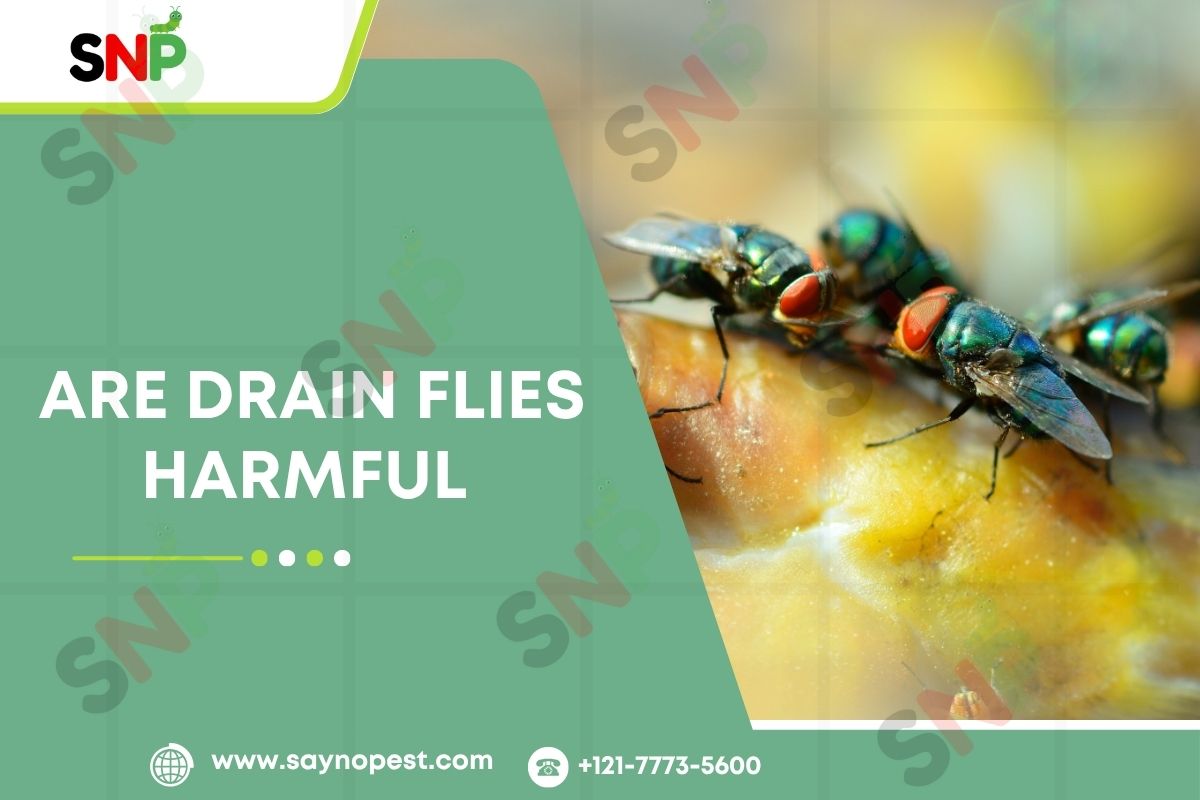
    Drain flies, sewer gnats, and moth flies are all names for these small insects that thrive in moist areas where there is decaying matter. Drain flies are generally around 1/8 inch long and have fuzzy, moth-like wings. Homeowners first see these insects and think: are drain flies harmful? The answer has some background to it about their habitat, potential health reasons, and why they are drawn to your home.

    These flies clutch in sewers, drains, & other stagnant water with organic materials. Though drab to behold, especially if they breed fast in huge numbers, whether drain flies are dangerous relies on some factors like their health hazards, cleanliness problems, and impact on your home.

    Are Drain Flies Harmful to Humans?

    The question whether drain flies are harmful to human is a Tough question. Drain flies don’t bite, sting, or transmit diseases to human beings. Drain flies have no mouth parts to bite human beings, as the case of mosquitoes and biting flies. It doesn’t mean that they are totally free from the effects of health.

    Are drain flies harmful to human respiratory health?  It’s a Yes, they are. Heavy  can cause bronchial asthma in susceptible individuals. When drain flies die, their rotting bodies can be capable of releasing airborne particles that may worsen underlying respiratory illness. Degraded drain fly dust triggers allergic reactions in susceptible individuals.

    Also, since drain flies develop from dirty surroundings, they can spread germs and bacteria from dirty surroundings to clean surfaces. While they do not cause specific diseases, they are signs of potential cleanliness issues that can be secondary health issues. The flies can spread germs from drain dirt and organic matter to the food preparation surface, causing gastrointestinal disorders if consumed with contaminated food.

    Are Drain Flies Harmful

    are-drain-flies-harmful-to-humans

    The key question is are drain flies harmful? and it focuses on the larger issue of how they affect home cleanliness and well-being. Although drain flies themselves are not themselves harmful in small quantities, they are a symptom that there is some underlying issue that must be addressed.

    Are drain flies harmful? Yes, if they are a sign of a dirty Environment. Blocked sewage or organic deposits that have accumulated & serve as breeding grounds for bacteria and other disease-producing micro-organisms. Where more serious health risks can develop, including mold growth and bacterial infections.

    Severe infestation can be a problem in several ways. First, they expose concealed moisture problems which could lead to structural harm and mold infestation. Second, the flies themselves will transfer bacteria onto surfaces and food, particularly in places like kitchens where the potential for contamination is most lethal. Third, are drain flies dangerous? is an emphatic yes when one realizes that drain flies can transfer disease-causing germs like E. coli and Salmonella from unclean drains to clean spaces.

    The drain flies will also worsen existing health conditions. People with a weak immune system, elderly individuals, and respiratory disease patients can be most susceptible to problems due to drain fly infestation.

    Are Drain Flies Toxic to Dogs?

    Pet owners are usually inquiring if drain flies are harmful to dogs. Drain flies are not much direct danger to dogs. Drain flies do not bite or sting dogs, and they do not infect animals.

    But are drain flies harmful to dogs indirectly? Perhaps. When dogs are offered water contaminated by drain fly larvae or bacteria from infected drains, they acquire mild gastrointestinal upset. Vomiting, diarrhea, or abdominal pain can ensue, although such occurrences are comparatively rare.

    In unusual cases, drain flies cause myiasis in pets – an infection where fly larvae infest live tissue. This is more within the province of other flies and is most frequently observed in open-wounded or otherwise injured animals. For healthy animals, is drain fly bad for dogs is most often answered in the negative, although clean water sources and toilet drains remain a concern to overall pet health.

    Breed dogs with pre-existing health complications or compromised immune systems are vulnerable to problems if exposed to contaminated water. Additionally, drain flies typically indicate filthy conditions with long-lasting health implications on household members as well as pets.

    Conclusion

    Information on are drain flies harmful helps ensure a clean home. Although the pests are harmless by biting or disease transmission, they indicate that there are sanitation issues that must be solved. are drain flies harmful to humans? They will lead to respiratory issues in vulnerable people and spread germs from unpleasant places. are drain flies harmful? Yes, particularly when they indicate poor drainage conditions that can cause serious health hazards.

    For dog owners asking if drain flies are poisonous to dogs, their instant harm is minimal, but maintaining clean water sources and their working drains saves pets and residents of the house. Drain fly infestations are treated by the removal of breeding grounds by cleaning and maintenance.

    If you have recurring drain fly infestations, take note that these insects are a sign of things that must be resolved by professionals. Don’t let minor issues turn into ginormous health risks. For efficient pest control solutions and expert guidance for a healthy home ambiance, rely on SayNoPest to help you get rid of drain flies and destroy the chance of future infestation.

  • The Complete Guide to Mosquito Bites: How to Identify, Avoid, and Defend Your American Home

    The Complete Guide to Mosquito Bites: How to Identify, Avoid, and Defend Your American Home

    Evening courtyard parties on hot summer evenings, back-yard barbecues, and outdoor activities across America have a mean sidekick: mosquito bites. Not only a bad nuisance, the flying pest carries deadly diseases like West Nile virus, dengue. Knowing why mosquitoes bite. what to look for, and how to prevent mosquito bites that will make you and your loved ones sickness-free.

    Mosquito-bites

    Introduction to Mosquito Bites

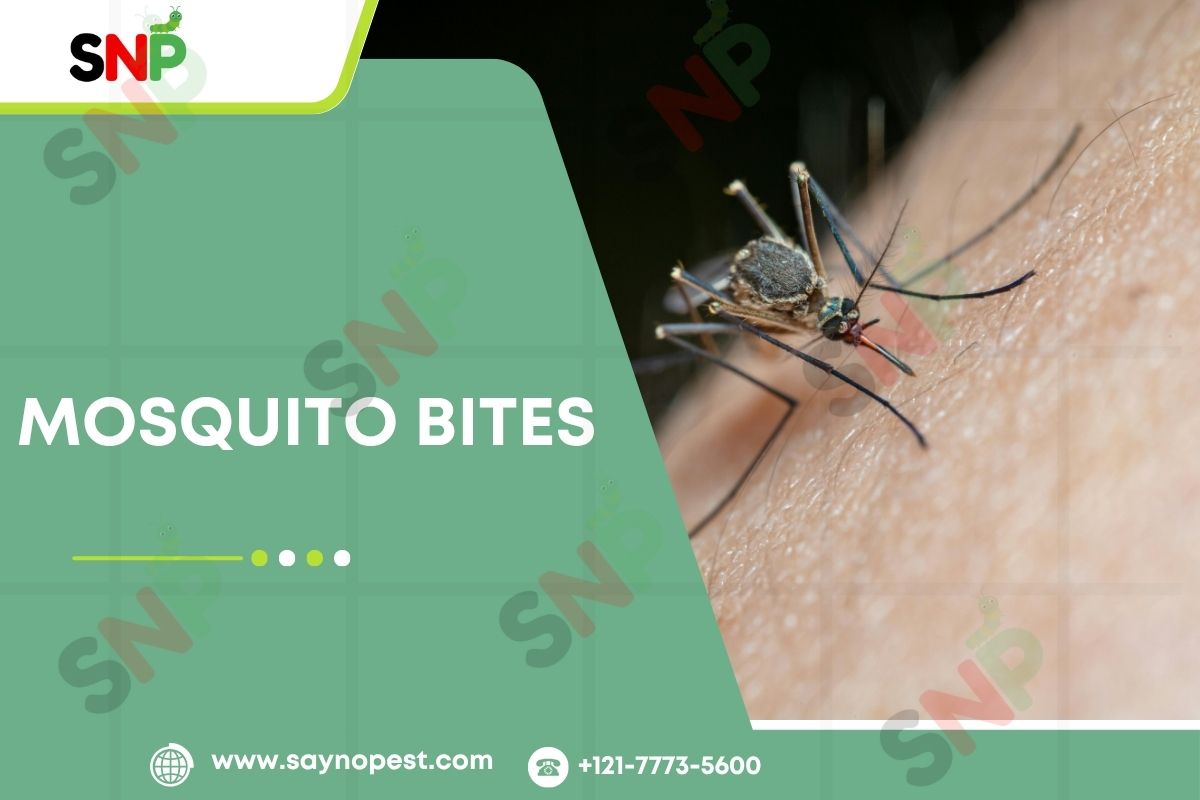
    Mosquito bites are painful, itching welts on your body after a female mosquito takes a suck from your blood. The ugly welts are your reaction to the protein components of mosquito saliva that inhibit blood clotting. While bites are only an annoying short-term problem, sometimes they pass along more serious diseases in children. The elderly, and those with weakened immune systems.

    Mosquito bites do more than sting. American mosquito bites can spread as much disease as West Nile virus, which infected 1,035 people and killed 79 in the year 2022 alone. Mosquito bites are something all families should be aware of because mosquitoes infest. All 50 states and could bring a lot of harm to serious health conditions.

    what it does is that it pierces your body with a needle-like proboscis. It injects saliva so your blood won’t clot, and sucks your blood. Your body can sense the mosquito saliva as foreign substance and release dopamine. This is the only reason behind the itching, redness, and swelling of mosquito bites.

    Why Do Mosquitoes Bite: The Science Behind the Sting

    how to evade them, you must know why they bite. And only females bite, and they bite for one biological reason: reproduction. Why do flowers and humans get consumed by mosquitoes, then? The female mosquito needs protein & iron from the blood so that she can be able to build and lay eggs.

    Why do mosquitoes bite? is a fascinating question if we append how mosquitoes select their victims. Human victims are identified by mosquitoes via a sense, or stimulus, input system of great refinement. The co2 we exhale is a distant lure to mosquitoes and which they can detect at more than 100 feet. Why am I and others bitten by mosquitoes? Mosquitoes have been scientifically established to be attracted by some things such as the blood group. The body temperature, sweat, & even the bacteria in the skin.

    Why are mosquitoes biting me in the daytime?

    The majority of the mosquito types are most active early in the morning & late in the evening when wind speed is low and humidity is high. The hours selected are the reasons why they bite at these times. Why mosquitoes bite human beings and not animals is because of their evolutionary adaptation. As some like Aedes aegypti have adapted to feeding on human hosts exclusively.

    How to Prevent Mosquito Bites?

    It is an adjuvant method, a synergy of personal protection and environmental alteration, in the literature on how to prevent mosquito bites. The best method of how to prevent mosquito bites is with EPA-registered repellents which have DEET, picaridin, IR3535, or oil of lemon eucalyptus. These medications, well-researched, are long-lasting for hours and the gold standard for how to prevent mosquito bites.

    Mosquito bite protective clothing can entirely restrict your exposure. Long sleeves and pants and closed shoes covered clothing make an insect bite a physical shield. Tight-fitting clothes and tightly woven in light colors are most appropriate to prevent getting bites because mosquitoes are attracted to black and light cloths that have an easy airflow through them. Clothing treated with Permethrin is also a protective element in your strategy on how not to get mosquito bite.

    Environmental changes are of the highest importance in learning about the avoidance of bites indoors. Elimination of breeding site sources of areas that have standing water where the larva of the mosquitoes flourishes is of the highest importance in learning about the avoidance of mosquito bites . They involve draining pots on a frequent basis like flowerpots, rain gutters, bird baths, and any other container utilized to harvest rainwater. Window and door screen installation and repair are also bought to avoid the stings of mosquitoes.

    Schedule your outing during the day and you are preventing yourself from mosquito biting. You learn after learning how mosquitoes bite more during the morning and evening. Your opportunity for mosquito biting is minimized if you remain indoors when they come out. Whenever you get the opportunity to go out when they come out, extra precautions add to your opportunity to prevent mosquito bites.

    Having fans outside with boxes is a wonderful way of how to get rid of mosquitoes. Mosquitoes are not good fliers, and even the gentle blowing of a box fan will prevent them from being able to land on you. So a wonderful way of how to keep mosquitoes away. Having air blown down over your lower area by a fan is a wonderful trick because mosquitoes fly low.

    Fix Your Home: The SayNoPest Solution

    Mosquito bites not always spoil your outdoor fun or pose a health threat to your family. Understanding why mosquitoes bite, acknowledging the deadly health threat. They can pose, and taking keen measures to ward off mosquito bites can turn your home into a haven for your family.

    We at SayNoPest realize that mosquitoes are not only annoying, but a significant health threat to American families. From coastal regions where Aedes aegypti mosquitoes are battled to interior regions where Culex mosquitoes transmit West Nile virus. There is still another issue of mosquito bites across the United States. Mosquito-borne diseases doubled in 2004-2016 in the United States, and prevention has thus become more crucial.

    Don’t miss that mosquito bites not only avert current suffering but against deadly diseases such as West Nile virus, dengue, and Zika spilling into American populations. Global warming is boosting mosquito breeding pools and global travel is bringing new emerging risks of disease, so your prudent foresight of avoiding mosquito bites is your family’s best defense.

    Take action now and safe your family from the greif of mosquito bites. Try these easy prevention methods, talk to local mosquito populations, and allow the irritation of these infuriating bugs not to spoil your life outdoors. With effective mosquito bites eliminated, you can have everything with the wonderful outdoors and your healthy and secure family.