Author: digimach10

  • Introduction to the Life Cycle of a Field Mice

    Introduction to the Life Cycle of a Field Mice

    Few people mind the pests, and when they do, the humble field mouse does not come to mind. Tiny rodent has a very fascinating history that is scattered across the farmlands, plains, and even the fringes of American suburbs. To keep your home, garden, and crops safe, it’s necessary to Know the Life Cycle of a Field Mice and how they thrive.

    These tiny creatures are highly robust, employing their keen senses and high reproductive ability to survive wherever they may be. Knowledge about the facts of the Life Cycle of a Field Mice will help you detect problems early and act prior to infestation getting out of control. 

    Life-Cycle-of-a-Field-Mice

    The Life Cycle of a Field Mice

    Field mouse life starts in some remote nest, usually dug into the earth or hidden deep inside thick grasses. Each Life Cycle of Field Mice starts when a female gives birth to pups typically after a brief pregnancy of around 20–25 days. Typical litters are between 2 and 11 pups, although in ideal diet and living conditions, a female can give birth 6 to 8 times a year, with dozens of young mice a year.

    Puppies are born blind, hairless, and entirely dependent on their mother. They start to open eyes and develop a soft coat of fur after two weeks. Weaned from their mother’s milk and begin consuming solid foods after 3–4 weeks old. This is the phase of very fast growth and independence.

    Once weaned, the mice complete juvenile development, learn to hunt, how to evade predators, and how to live in harmony with other field mice. Such a fast growth rate ensures that young field mice are ready to mate independently within a meager 5 to 8 weeks, and the cycle is fulfilled at breakneck speed.

    A Field Mice lifetime in the wild is usually brief and horrific. The average Life Cycle of a Field Mice is a mere one year occasionally less, due to predators, adverse weather, or disease. Theirs is however a high rate of reproduction that makes their numbers healthy at all times, which may be the reason why they’re so famous as tenacious pests across rural America.

    What Do Field Mice Eat

    A lot of the Field Mice Life Cycle depends on what they eat. What Do Field Mice Eat dictates their lifestyle, their crop destruction, and how susceptible they are to barns and houses. Field Mice are actually opportunistic omnivores with a penchant for vegetables.

    What Do Field Mice Eat Most Days?

    Grains and seeds form the bulk of their food those found within grasses and crop plants like oats, corn, bean and pea seeds. They will gladly consume fruits, berries, nuts, and greens like clover, grass, and leaves. The fresh sprouts and fruits of summer provide them with water and energy and thus field mice loot farms and gardens to get those treats.

    But seasonally, their diet does shift. When finances are lean  particularly in winter  What Do Field Mice Eat can include bark, roots, bulbs, and even tiny insects, caterpillars, earthworms, and snails. There’s a reason they do so well in fields and around houses: They’ll eat anything.

    In human habitats, What Do Field Mice Eat consists of pet food, stored grains, and whatever they can discover spills or food waste in the cupboard. This adaptability combined with their fast breeding makes them proof pests to be managed.

    It is not just starvation that sends them  field mice to be realistic caching experts. In Field Mice Life Cycle, members will cache seeds close to their home to have an ample amount to prepare for future lean months to kick in. It becomes an issue of ownership because food cached within fields and barns give rise to more mice, carrying on to create the threat of infestation.

    Life-Cycle-of-a-Field-Mice

    Conclusion – Hold Your Position with saynopest

    The Life Cycle of the Field Mouse is one of determination but a warning to any home owner, gardener, or rural American entrepreneur. Their high breeding rate, short life cycles, and continuous reproduction cause it to become a little issue that magnifies into a large one unless found early before it gets out of hand.

    Knowing What Do Field Mice Eat is your prevention beginning. Sealing food in tight containers, sealing holes and cracks, and tidy yards can all deter these unwanted little critters. If you spot the telltale signs  nibbled plants, droppings, or night-time activity little shadows  something has to be done right away.

    At saynopest, we would like to give you the information about and services required to deter field mice from infesting your property. If you know the Life Cycle of a Field Mice and above all else What Do Field Mice Eat, then you can protect your property and sleep tight.

    Let saynopest be your trusted partner in pest management bridging know-how to hard outcomes for homes and businesses across the country.
  • Reasons for drain fly infestation: What American Homeowners Need to Know

    Reasons for drain fly infestation: What American Homeowners Need to Know

    If you notice small, fuzzy flies flying in swarms around bathroom sinks or bathroom drains. Then chances are that you have an infestation of drain flies. These annoying little creatures can become a long-term problem for American households all over the United States. In this saynopest article, we are going to expose the bottom line regarding what truly reasons for drain fly infestation, discover Where Do Drain Flies Come From, and introduce you to the lesser-known behaviors of the notorious Drain Fly.

    reasons-for-drain-fly-infestation

    Introduction to Causes of Drain Fly Infestation

    Drain pests are not just a nuisance occasionally, they are a sign of something else being wrong with plumbing or hygiene. The main reasons for drain fly infestation can start with something as harmless as a small amount of still water or organic material inside your pipes. Why these infestations occur in order to control pests and maintain a healthy home.

    Where Do Drain Flies Come From?

    The most valuable thing a homeowner can ask is, Where Do Drain Flies Come From? Well, the answer lies in the name drains. But that’s not all. That’s why the little pests infest your living space:

    Standing Water: Stagnant or clogged water is the most common trigger for the cause of drain fly infestation. This gets accumulated in clogged or unused drains and is the perfect breeding site for a Drain Fly.

    Organic Material: Flies are attracted to the messy organic material buildup at the bathroom drain, kitchen sink, and even the waste bin bottom. Grease, food particles, soap scum, and hair all contribute to giving a likely egg-laying spot.

    Loose or Leaky Pipes: Under-sink or crawl space leaks will eventually produce crevice-like pockets and buildup where Drain Fly larvae will mature.

    Outdoor Entry: Your drains may be clean but continue to allow flies to get inside around windows, doors, or plumbing vents if your home is located near outside drains or is wet.

    Sewer and Septic Problems: Backflow from sewage or septic tanks that have been flooded out are also probable since flies are attracted to spaces with a surplus of organic waste.

    All of these cases cover Where Do Drain Flies Come From, showing how prevention is started with cleanliness and maintaining the right plumbing.

    Drain Fly: The Sneaky Pest in American Homes

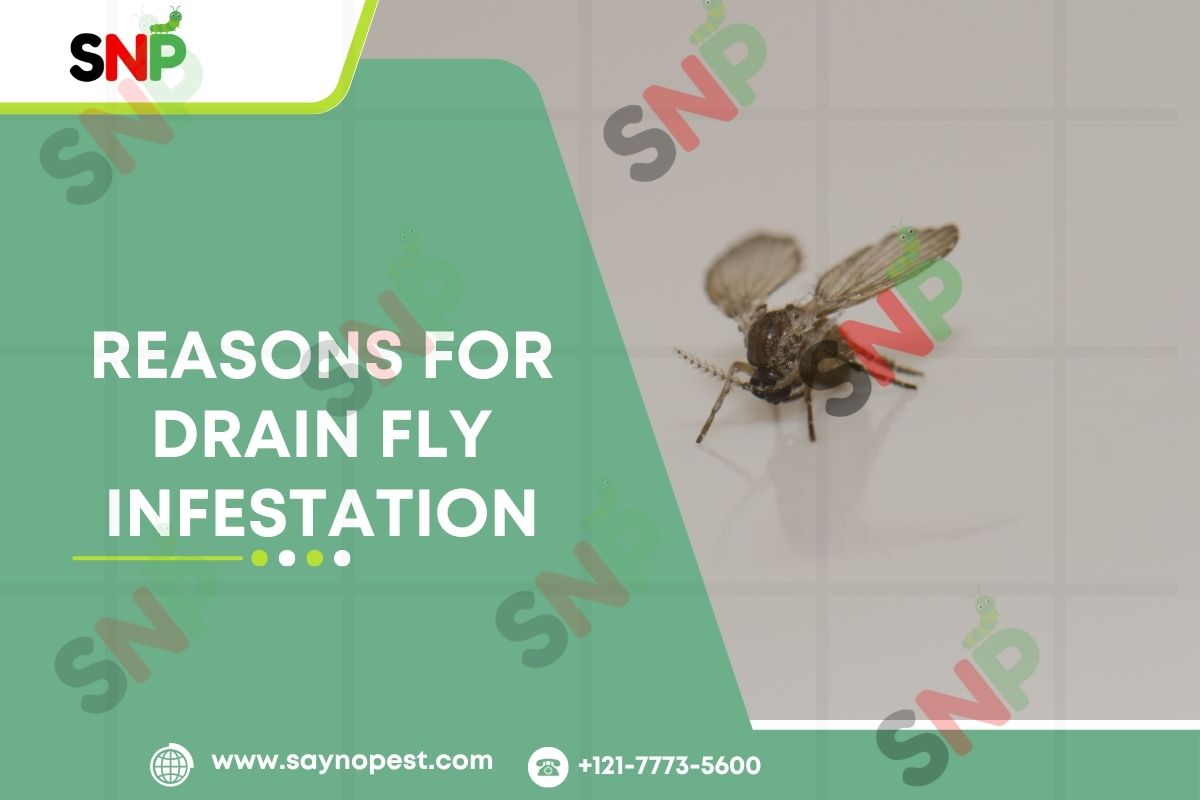
    A Drain Fly is less frequent than that of a housefly. The small, moth-like bugs have fuzzy wings and will remain on the walls near their home. They are about 1/8 inch in size and will more than likely be mistaken for fruit flies or gnats. This is what you need to know:

    Life Cycle: A Drain Fly will lay 100 eggs just above the water surface in a drain. Eggs will hatch within a matter of less than two days, and the larvae will live off organic film inside pipes for two weeks to develop into adults.

    Diet: The adult and larvae live off of bacteria, fungi, and other organic material clogged in drains, rotting vegetation, or. compost heaps.

    Habitat: Adult Drain Flies settle close to kitchen sinks, showers, bathtubs, and even basement sinks. Flimsy flying renders the flies catchable but hard to completely eliminate once conditions are favorable.

    Reproductive Speed: The rapid lifecycle of drain flies means that an undercover population multiplies at light speed, thereby increasing the work of infestation by drain flies.

    Identification and recognition of the Drain Fly is the biggest step towards attaining in resolving an infestation.

    Most Likely Culprits of Drain Fly Infestation

    Homeowners inquire about the most likely causes of drain fly infestation. The likely causes, in simple language, are as follows:

    Unsatisfactory or Clogged Drains: Organic waste buildup in pipes make for the perfect breeding ground for these flies.

    Sporadic Plumbing Use: Vacant bathrooms or vacation homes are prime targets for immediate infestation due to water stasis contained within pipes.

    Stealthy Leaks: Leaking pipes, generally hidden behind a wall or under a floor, are an invitation to Drain Fly infestation.

    Slow Drainage: Poor drainage is not only an invitation to flies, but also an indication of deeper plumbing issues.

    Dumpsters and Traps Left Behind: Left-behind trapped food waste or leftover is heaven for drain flies.

    High Humidity: Basements and bathrooms where there is consistent moisture are the ideal breeding ground for infestation.

    With this knowledge of these prevalent reasons for drain fly infestation, you will be in a position to act in time.

    Solutions: Prevention and Control of Drain Fly Infestations

    Having learned this about Where Do Drain Flies Come From and the life cycle of Drain Flies, let’s move on to prevention and removal processes:

    Clean Drain : Clean off the organic material using a brush, but never boiling water.

    Repair Leaks: standing water immediately.

    Dispose Waste: Always clean garbage disposals and drain garbage cans.

    Test Trouble Areas: Set traps or cover drains with plastic overnight to determine if there is activity and where from the drain.

    Early maintenance and timely action are the best prevention against irritation from these insects.

    Conclusion: Act Now Against Drain Flies with saynopest

    Drain fly infestation control does not necessarily have to be a daily battle. With the eradication of the causes of drain fly infestation, remembering Where Do Drain Flies Come From, and vigilant monitoring of the signs of an unseen Drain Fly colony, you can protect your home and loved ones from the pest.

    Don’t forget: constant organic buildup, unchecked leaks, and forgotten drains are open doors to these pests. Stop by saynopest for quality guidance, superior products, and expert assistance to ensure your home is fly-free. Get a grip on your home’s health, don’t get caught out by a drain fly outbreak!

  • Everything You Need to Know concerning the Lifespan of a Tick

    Everything You Need to Know concerning the Lifespan of a Tick

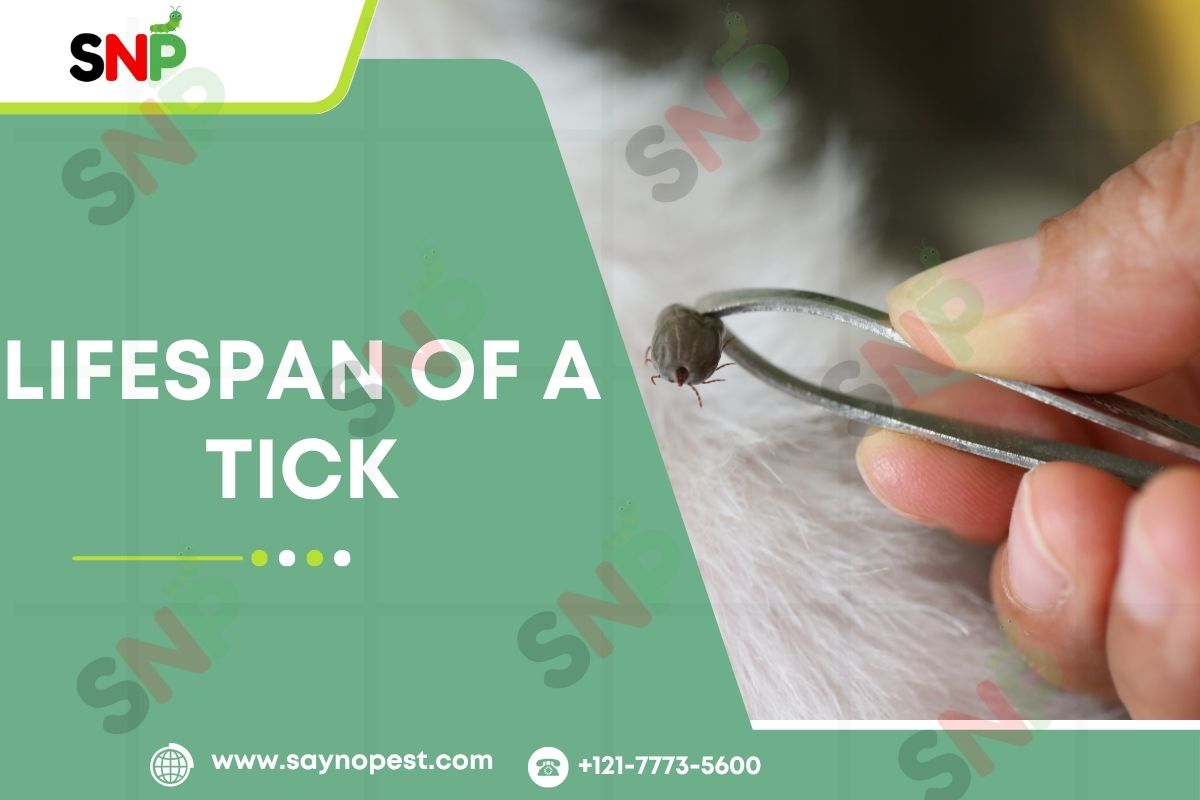
    Ticks are tiny but pesky, especially for the whole nation of America. When summer heat comes every year, so do they. That is why people who live at home as well as those who labor outdoors ought to know everything they need concerning the life expectancy of a tick. Understanding the  lifespan of a tick and how they may live on can in fact help you regain control of your surroundings and protect your loved ones from potential bites and tick-borne illnesses. Let us learn the lifespan of a tick and the most important factors of it.

    Introduction to the Lifespan of a Tick

    The existence of the tick comes as a shock to the majority due to its nature and durability to be able to survive for an extended duration. Ticks are special in relation to other insects as they are parasitic arachnids that feed on animals’ and human beings’ blood. The  lifespan of a tick is composed of a variety of different stages: egg, larva, nymph, and adult. Development from egg to maturity is based on how well a tick can find hosts and survive where it is. A tick’s life doesn’t come in terms of calendar years; its life comes in terms of enduring the elements, finding nourishment, and avoiding natural predators along the way.

    Ticks spend the majority of their life when the host is not present, resting silently in moist vegetation until the next feeding. At every stage of tick life, its survival depends on the next blood meal. Let us now go further to discuss how long do ticks live and what are the factors that determine that great survival story.

    How Long Do Ticks Live?

    You may ask, how long do ticks live? The life cycle is based on a number of factors, such as tick species and host availability. The life cycle of the average tick is two to three years. This encompasses all life stages for the United States’ two most prevalent hard ticks, the blacklegged (deer) tick and the American dog tick.

    This is the way in which the tick’s life cycle is split into stages:

    • Egg: Female lays, in thousands.
    • Larva: Hatches and searches for a small host (e.g., bird or mouse). Feeds to advance to the next stage.
    • Nymph: Having shed its skin, searches for a second blood meal, typically from a larger animal or human than itself.
    • Adult: Requires another meal, typically from larger hosts such as deer or dogs, to mate and lay eggs.

    In every phase, ticks can survive without eating for months a year, even depending on the circumstances. It is the reason why it should be noted that when people ask how long do ticks live, ticks can live with pets with extended times in between meals by slowing down the process of metabolism or hibernation.

    Some tick species like the brown dog tick will survive for three months if they infect hosts immediately, but most ticks that survive outdoors have very long life cycles since they do not have hosts. Note that tick life decreases if it ever fails to acquire a host or gets destroyed by predators.

    Lifespan-of-a-Tick

    Environmental Factors that Affect How Long Do Ticks Live

    The Environmental factors that Affect How Long Do Ticks Live and on how long do ticks live. Ticks are environmentally sensitive. This is the way various factors affect their lifespan and how long a tick lives:

    Temperature: Ticks love warmth and dislike cold temperatures. Ticks perish during extremely hot or cold conditions, but will survive winter by remaining under leaf litter or soil.

    Humidity: Ticks need humidity. Low humidity dehydrates ticks, making their tick life span short-lived.They burrow in humid, dark spaces such as woods or thick grasses.

    Host Availability: Ticks starve when the hosts are unavailable and the tick life cycle is shortened. Some manage a few months or even years without a host, particularly in the nymphal and larval phases.

    Rain and Global Warming: Heavy rain and mid-winter temperatures make the tick season longer, and drought or hard freezes may reduce the number of ticks drastically. Global warming already makes the seasons of tick activity longer in the United States.

    Natural Enemies and Predators: Birds, reptiles, and small mammals eat ticks, and this influences how long do ticks live in the wild.

    Briefly, climatic factors affecting the lifespan of ticks are by no means inferior to their biology. Based on this, their density & activity can essentially vary geographically across various regions of the nation & seasonally during the course of the year in america.

    Conclusion: Keeping Your Home Tick-Free

    The tick lifespan determines how resilient and flexible such insects are. Having a capacity to stay alive for years, they possess mechanisms to endure dry seasons and frost bites as well. Ticks are not a simple thing to eliminate without intelligence and foresight. Knowing how long do ticks live &  other climatic factors affecting on how long do ticks live puts control in your own hands to ensure that your house and your loved ones are safe.

    To help decrease the number of ticks, maintain your yard in its best possible condition by raking leaves and trimming tall grasses, exercise effective pest management techniques, and inspect pets and humans for ticks when entering indoors from outdoors. Keep in mind ticks are not very neat, but by knowing the right things and using the right equipment, you can be the victor.

    For additional tick control professional tips and to remain up to speed with live pest tips, visit saynopest and we can help with ensuring your home remains pest-free!

  • What Do Ticks Eat? Find Nature’s Tick Predators 

    What Do Ticks Eat? Find Nature’s Tick Predators 

    Ticks are more than just a problem; a run-in with one on your body can turn a forest walk into a health hazard. If you ever asked yourself What Eats Ticks and how you can get your yard to be a healthier place, you’re in the right place. This article explores the untold life of tick predators, the dangers that accompany these insects, and how employing the natural food chain might be utilized to contain the tick populations. To homeowners, families, and homes throughout the United States, know-how is the key to effective pest control and saynopest is ready to take the lead.

    Introduction to What Eats Ticks

    As you look at what ticks feed on, you can imagine the great outdoors just letting the little critters have their way. But some natural predators of ticks work to stop them from getting their way.

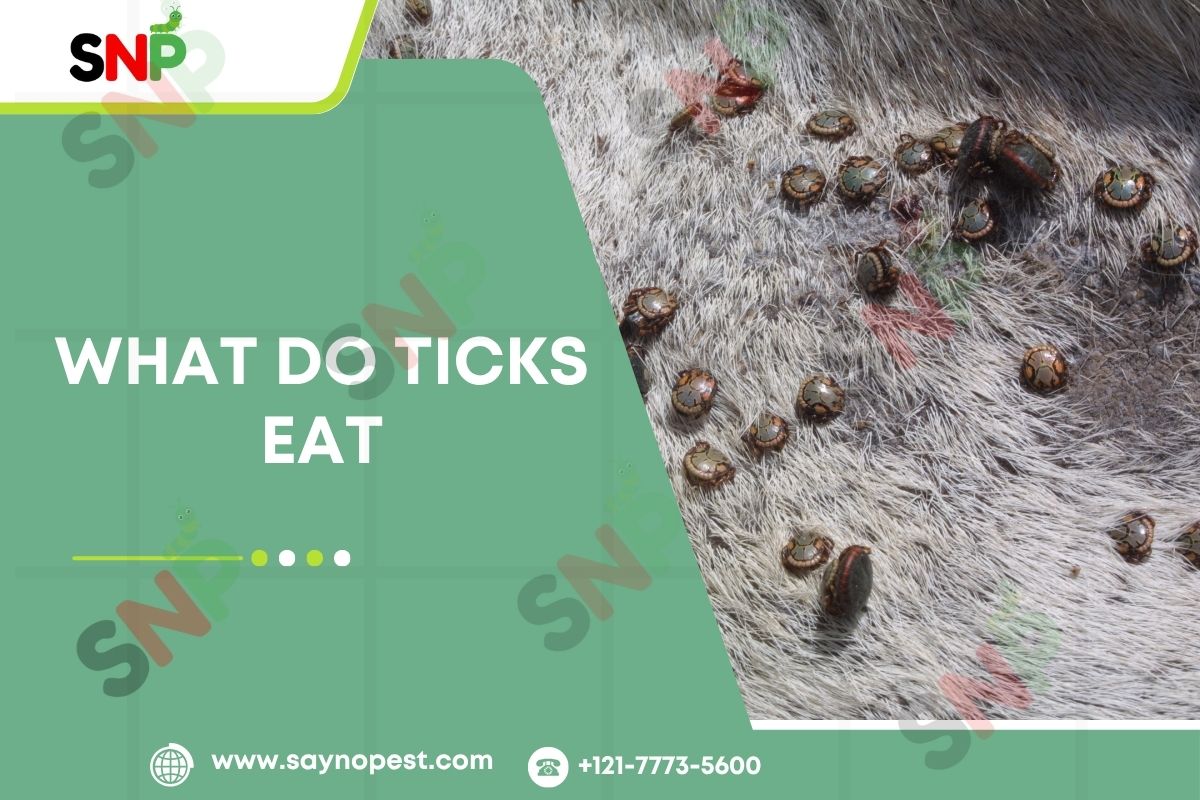
    Ticks are mites and ticks that parasitically feed on reptilian. Smaller than they look, ticks belong to an advanced life pattern lifestyle. What do ticks consume? Birds, reptiles, mammals, amphibians, and other insects take turns to carry out this responsibility.

    Birds: Avian Tick Predators

    One of the best-documented ways of solving What EatsTicks  is birds. Birds like chickens, guinea hens, wild turkeys, quail, and ducks even fallen in love with ticks. They graze on the grass & leaf litter and naturally reduce tick numbers:

    Chickens and guinea hens: Usually farmed as a natural pesticide.

    Wild turkeys & quail: Turkeys and quail live in grassland and forest, eating seeds and insects as they do so and thereby, accidentally ingesting ticks.

    Other birds: Roadrunners and some songbirds also consume ticks as part of their foraging activity.

    While birds are effective, the overall part they play is predicated on where and what the terrain is like. But they are useful in combatting ticks.

    Mammals and Their Role in Tick Control

    In the second position of tick snackers are mammals. A few of the most effective small creatures in North America might just surprise you with being tick-eating superheroes:

    Opossums: These humble heroes will consume an average of 5,000 ticks in a year, with most being eaten through grooming. They kill about 90% of the ticks that try to feed on them.

    Squirrels, shrews, and rodents: Rodents harbor ticks, but a few of these, especially shrews, will eat ticks when given a chance.

    Raccoons and bats: Opportunistic tick feeding, especially on grooming or grooming young.

    Foxes and coyotes: Indirectly combat ticks by eating rodents, rodents are the favorite hosts of ticks.

    Having such mammals in your backyard will reduce the frequency of tick infestations, so they’re a natural tick repellent.

    Reptiles, Amphibians, Insects: Further Solutions to What to Eat Ticks

    Birds and mammals are not the only options in nature’s toolbox. Reptiles, amphibians, and insects qualify under it when it comes to eating ticks:

    Lizards, which are skinks: They eat leaf litter and undergrowth ticks as a routine affair in tropical ecosystems.

    Frogs and toads: Being insectivorous, they will hardly refuse a tick if they encounter one.

    Fire ants, carpenter ants, and beetles: Among the most effective bugs at getting the job done, stalking and consuming ticks at any stage of life. There are beetles that are especially dedicated to stalking for ticks among leaf litter.

    There are plenty of tick predators, and yet within all this, tick numbers can grow exponentially when nature’s own predators are absent or when there is some kind of habitat imbalance.

    Tick-Borne Diseases: A Hidden Threat

    The fact that you want to know What EatsTicks is something that you want to recall when you are thinking about how prevalent tick-borne diseases are across America. Ticks infest bacteria, viruses, and parasites that are harmful to your loved ones, pets, and wildlife that inhabit your environment. Let us discuss the most prevalent tick-borne diseases:

    Lyme Disease: The most common tick-borne disease in the U.S., spread most often by the blacklegged (deer) tick. Its symptoms may be rashes, fever, arthritis, and if treated chronic neurological issues.

    Rocky Mountain Spotted Fever: Fatal if not treated. Its symptoms start with fever and progress very quickly.

    Anaplasmosis and Ehrlichiosis: Both are contagious diseases both cause fever, chills, headache, and aches.

    Babesiosis: Lone star tick-transmitted disease is harmful to persons with impaired immune systems.

    Alpha-gal syndrome: New meat allergy, resulting from lone star tick bites.

    Tularemia and Powassan virus: Less common and more disabling, with rapid-strike symptoms and convoluted recovery.

    Repeating tick-borne diseases six times isn’t redundancy. It’s a recognition of the extreme significance that these insects hold in public health.

    Problems Caused by Ticks: More Than Disease

    Preventing individuals from becoming ill as a result of ticks is merely a part of tick control. Disturbances caused by ticks interrupt the quality of life nationwide. Infestation is much more than that, take the following into consideration:

    Pet health concerns: Ticks infest feline and canine pets, annoying, infecting, and anemia-inducing. Pets will bring ticks into the house, leading to further infection.

    Human allergic response and contact dermatitis of the skin: Tick bites induce abysmally bad itching, rash, and secondary infection.

    Home and yard infestation: A house or yard can be infested with thousands of eggs that become colossal infestations in a matter of overnight.

    Economic cost: The cost to human society will increase with every tick season in the way of medical attention, care for pets, and exterminator management.

    Highlighting the problems caused by ticks six times puts the whole list of problems American homes go through into perspective.

    The Balance of Nature: Taming Ticks in Contemporary Times

    Understanding what tick populations eat isn’t a reason to abandon tick control but an introduction to integrated pest control. With a few predators of ticks animals, reptiles, insects, and birds on your lawn, you’re contributing to creating a healthier, more balanced world. Predators won’t, however, accomplish elimination of all annoyances caused by ticks or total annihilation of tick-borne diseases. The best householders practices incorporate:

    Regular lawn maintenance (brush trimming, leaf trash management).

    • Native tick predators stimulated.
    • Pest control product application for protection.

    Daily inspection of pets and proper tick preventive products.

    What-Do-Ticks-Eat

    Conclusion: Nature’s Answer to What Ate Ticks.

    Nature is filled with numerous answers to the question: What consumes ticks? From opossums & chickens to ants, lizards, beetles, and more, nature is abundantly populated with tick-warrior enemies. By learning and interacting with such natural enemies, you can curtail the impact of problems caused by ticks in your home’s daily living and prevent the incidence of tick-borne disease. But because of the diversity and craftiness of ticks, an informed, preventive strategy must be employed.

    At saynopest, we value that defeating ticks was hard, defeating tick-borne disease, and wondering What EatsTicks all require actual, fact-based science and business solutions you can count on. For comprehensive pest control and more details about how to turn your house into a sanctuary, check out saynopest and reclaim your out-of-doors spaces fast and naturally.

  • Introduction to Tips to Prevent Pavement Ants

    Introduction to Tips to Prevent Pavement Ants

    Having a pest-free home and property is needed for convenience and cleanliness, especially when it comes to pestering pavement ants. These small individuals are omnipresent in the United States and are infamous for turning from small nuisance to unwelcome intruder within the blink of an eye. In this in-depth saynopest blog, we will give Tips to Prevent Pavement Ants in actual, tangible steps to take, point out the Appearance of Pavement Ants to you, and guide you to a pest-free home. All tips are from credible sources and adapted to American homes.

    Tips to Prevent Pavement Ants

    If you ever catch the whizz by of ants scurrying up and down your driveway, sidewalk cracks, or into your kitchen, there’s a pretty safe bet you’re entertaining pavement ants. Pavement ants are home bases for urban and suburban locations, and they in-migrate quite finely to foundations and beneath concrete slabs. So it stands to reason to read Tips to Prevent Pavement Ants before they make themselves at home on your turf. Traveling with a quick pace not only saves time and stress but can even protect your property from potential food contamination and trouble.

    Preventive actions will render pavement ants one-time visitors. Proceeding, we’ll guide you step by step through how to get your premise ant-free, all in compliance with the current body of knowledge for pest control.

    Appearance of Pavement Ants

    Knowing How Pavement Ants Appear is the best way to have them under control. Pavement ants are extremely identifiable the instant you know what they appear like. Knowing how to know when to take action early will make you do the correct Tips to Avoid Pavement Ants before little issues grow into significant ones.

    Color: Black or dark brown, or nearly black with light-colored legs.

    Distinctive Features: Pavement Ant Appearance has parallel fine lines or grooves on their head and thorax. Two extremely minute spines are visible on the dorsal side of their thorax and a waist having two extremely minute nodes.

    Nesting Clues: Outdoors, observe small heaps of disturbed soil in cracks on sidewalks, driveway cracks, or foundation cracks. Indoors, their observation usually occurs by baseboards, kitchen floors, or pantries.

    Behavior: Open paths usually have foraging workers present, and when there is swarming, flying reproductive ants may be observed.

    Being familiar with the Look of Pavement Ants will enable you to take action quickly, utilizing Tips to Prevent Pavement Ants as soon as you observe these signs.

    Rapid and Effective Tips to Prevent Pavement Ants

    The below are the best Tips to Prevent Pavement Ants broken down so that you can start using them today.

    1. Seal Entry Points

    Seal gaps & cracks: Look at windows, doors, and the foundation of the house. Ants can find their way inside through teeny openings.

    Weatherstrip doors and windows: Replace weatherstripping with new one. A good seal can cut unwanted guests in half.

    Trim plants: Pull tree limbs and bushes away from the house since ants utilize natural “bridges” to get inside your home for heat and water.

    2. Keep it Clean

    Remove food origin: Store foods in sealed containers & promptly sweep or vacuum crumbs, spills, and dishes. Cleaning the kitchen is the best Tips to Keep Pavement Ants Away.

    Clear garbage regularly: Trash is an ant banquet. Empty trash cans regularly, especially those containing rubbish food.

    Deal with pet food: Avoid leaving overnight food and water bowls, and clean spilled food.

    3. Control Moisture

    Seal leaks: Repair leaky taps, pipes, & evaporate any water in the area around your house’s foundation.

    Dry moist places: Dry moist places such as kitchens to make them less attractive to ants.

    4. Employ Natural and Commercial Repellents

    Vinegar solution: Vinegar applied on wiped-clean-off affected areas that is diluted interferes with the pheromone trails the ants take.

    Lemon juice: These contain natural ingredients that can repel ants from approaching and staying in specific areas.

    Ant baits & insecticides: Yes, place sweet or protein-based baits alongside entry points and ant trails. Regularly repeat this process, and place baits until ant traffic completely stops. At times of heavy infestations, use professional products or call an expert

    5. Practice Outdoor Prevention

    Eliminate trash: Remove woodpiles, rocks, or other debris from against your home foundation—the pavement ant’s favorite nesting sites.

    Use gravel landscaping: Around the perimeter, rather than wood chips or mulch, use gravel to form a low ant nest site.

    To Stop Pavement Ants and get your pest issue and your home back to being an insect-free, comfortable haven, follow these instructions:.

    Tips-to-Prevent-Pavement-Ants

    Why It’s So Critical to Detect the Presence of Pavement Ants Early

    Early Pavement Ant Vision is crucial. The sooner you notice their telltale glaze dark mark, parallel ridges, tiny dirt piles the sooner you can apply the best Tips to Keep Pavement Ants at Bay. Early detection means less stress, less mess, and less time wasted battling a monstrous, established colony. Ancient city walls did not crumble overnight. Neither do Pavement Ant colonies.

    Conclusion

    Pavement ants are a seasonal infestation, but with caution and continued effort, your residence can be secure. Keep in mind that seeing the Appearance of Pavement Ants is your signal to do something, and with these Tips to Prevent Pavement Ants, you’ll be in charge. 

    Stay ahead of the game, and keep your home off-limits to these unwelcome visitors. For additional advice, information, or product recommendations to support your prevention strategies, visit saynopest. Your first line for every pest control issue!

  • What Do Cluster Flies Eat? Complete Guide for American Homeowners

    What Do Cluster Flies Eat? Complete Guide for American Homeowners

    If you’ve ever noticed sluggish black flies gathering around your windows in late fall or early spring, you’ve likely encountered cluster flies. Many U.S. homeowners ask. What Do Cluster Flies Eat? Knowing their diet is the key to both appreciating their role in the environment and finding ways to manage their presence. In this comprehensive guide, we’ll answer What Do Cluster Flies Eat, discover How cluster flies in house happens, & explore the latest Methods to Get Rid of Cluster Fly. Stay tuned for important tips from saynopest!

    What-Do-Cluster-Flies-Eat

    What Do Cluster Flies Eat: The Real Diet of a Mysterious Pest

    Cluster flies have an extremely divergent life cycle from the majority of house insects. Handling cluster flies is a different story if you know What Do Cluster Flies Eat.

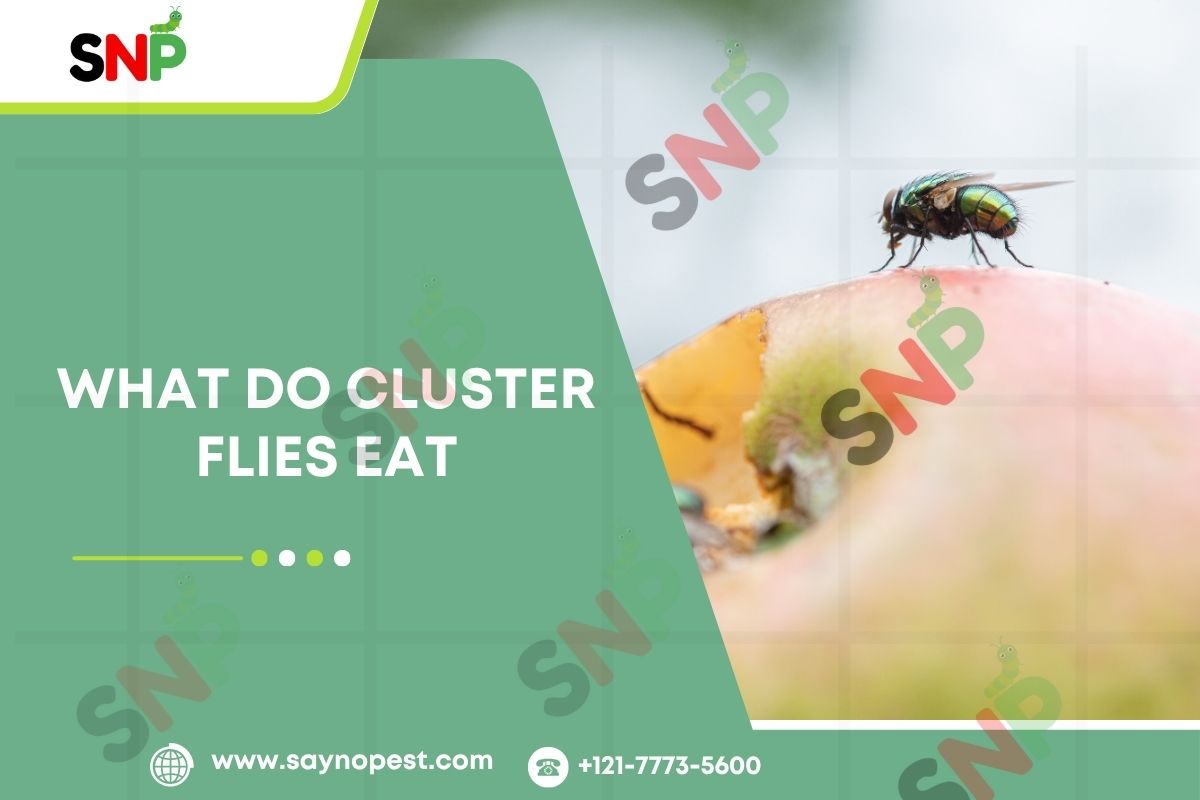
    Adult Main Diet: Adult cluster fly nutrition consists primarily of plant food. Fruit juice, plant sap, and flower nectar are their preferred diet. Unlike typical houseflies, leftover food, trash, or decaying items within the home are not what they like.

    Larval Diet: The twist in What Do Cluster Flies Eat occurs at the larval stage. The maggots or larvae are earthworm parasites by nature. They hatch from eggs that have been laid on the ground and proceed to infest earthworms and eat them up until they are big enough to pupate.

    No Winter Nourishment: Adult cluster flies eat nothing during winter. When in your attic or walls during the period of overwinter, they’re in dormancy and survive only on saved energy until spring.

    Mind you What Do Cluster Flies Eat will not normally consist of whatever is in storage in your home, so cleaning and food storage will not deter them.

    How Cluster Flies in House: Why They Invade American Homes

    Ever curious How cluster flies in house become an issue, particularly if your kitchen is spotless?

    Seasonal Pests: How cluster flies in house occurs when the flies are looking for winter quarters. Cluster flies cluster on exterior walls of your structure in late summer and early fall. Their instinct compels them to look for cracks, crevices, or openings in windows, doors, eaves, pipes, & vents.

    Hibernation Behavior: After they find their entry point into houses, cluster flies migrate into wall cavities, attics, or even sometimes vacant rooms and take their rest in enormous clusters there during winter. They remain mostly sleeping until spring warmer conditions “wake” them up.

    Unwelcome Surprises: Unwelcome winter heat weather bursts have the tendency to confuse concealed cluster flies, and they crawl or fly very slowly towards light and windows. It educates us How cluster flies in house even in cold weather for many American citizens.

    Repeat Guests: If not treated, however, the infestation can repeat annually because cluster flies are bent on coming back season after season.

    What-Do-Cluster-Flies-Eat

    Ways to Get Rid of Cluster Fly: U.S. Home Best Practices

    No one would like flies in their home. Ways to Get Rid of Cluster Fly are thus necessary for anyone who has such unwanted guests. Here are things you can do to control this pest naturally, manually, and commercially:

    1. Seal Up Your House

    • Seal cracks with caulk or weatherstripping sooner is early fall.
    • Don’t forget to tighten or replace tight-fitting attic vent and window screens.

    2. Physical Removal

    • Vacuum cluster flies indoors. Get rid of the bag as soon as possible to get rid of any remaining odor.
    • Fly swatters and sticky traps may catch sluggish adults, especially in warm window spots where they congregate.

    3. Professional Controls

    • For extreme infestation, use pest control operators. They may in fall spray outside walls with residual insecticides to break the year-to-year re-entry cycle.
    • For extremely severe infestations, apply spot dusts or aerosols in attics and wall cavities where group flies congregate, creating gigantic aggregations.

    4. Long-term Prevention

    • Make your home immaculate, but remember, Methods to Get Rid of Cluster Fly aren’t killing what humans consume—because What Do Cluster Flies Eat is plant or earthworm, not domestic garbage.
    • Have neatly mown lawns and garden beds to reduce entry points for temptations of their earthworm hosts, but realize complete extermination outside isn’t feasible.

    By such an approach, American homeowners can make Methods to Eliminate Cluster Fly part of routine home maintenance.

    Cluster Flies and Your Home: What You Need to Know Beyond

    It’s worth knowing:

    • Cluster flies are harmless, they don’t bite or transmit disease.
    • The only nuisance is flying in huge congregations, defecating, and annoyance on flight as spring migrants.
    • Dead cluster flies will also attract other insects, such as beetles. Early elimination is advised.

    Conclusion: What Do Cluster Flies Eat, And How Saynopest Can Help

    Last of all, What Do Cluster Flies Eat? Nectar, plant sap, and fruit juice are favored by adults. Larvae eat earthworms. They do not eat garbage or typical human food, so a quick cleanup won’t be enough. How cluster flies in house happens is simply a case of searching for winter refuge cluster flies infest even perfectly clean houses by coming in tiny cracks for a warm spot to overwinter.

    Don’t let these pesky winter pests get you down. Employ the best Means to Eliminate Cluster Fly close up your house, clear unwanted guests immediately, and check out professional pest control for stubborn infestations. Saynopest is committed to helping you protect your home, with professional guidance and solutions to meet every American homeowner’s needs.

    For expert pest advice, effective pest solutions, and peace of mind, rely on saynopest your living pest-free companion!

  • Ant Habitats: Life in Secret Beneath Your Feet

    Ant Habitats: Life in Secret Beneath Your Feet

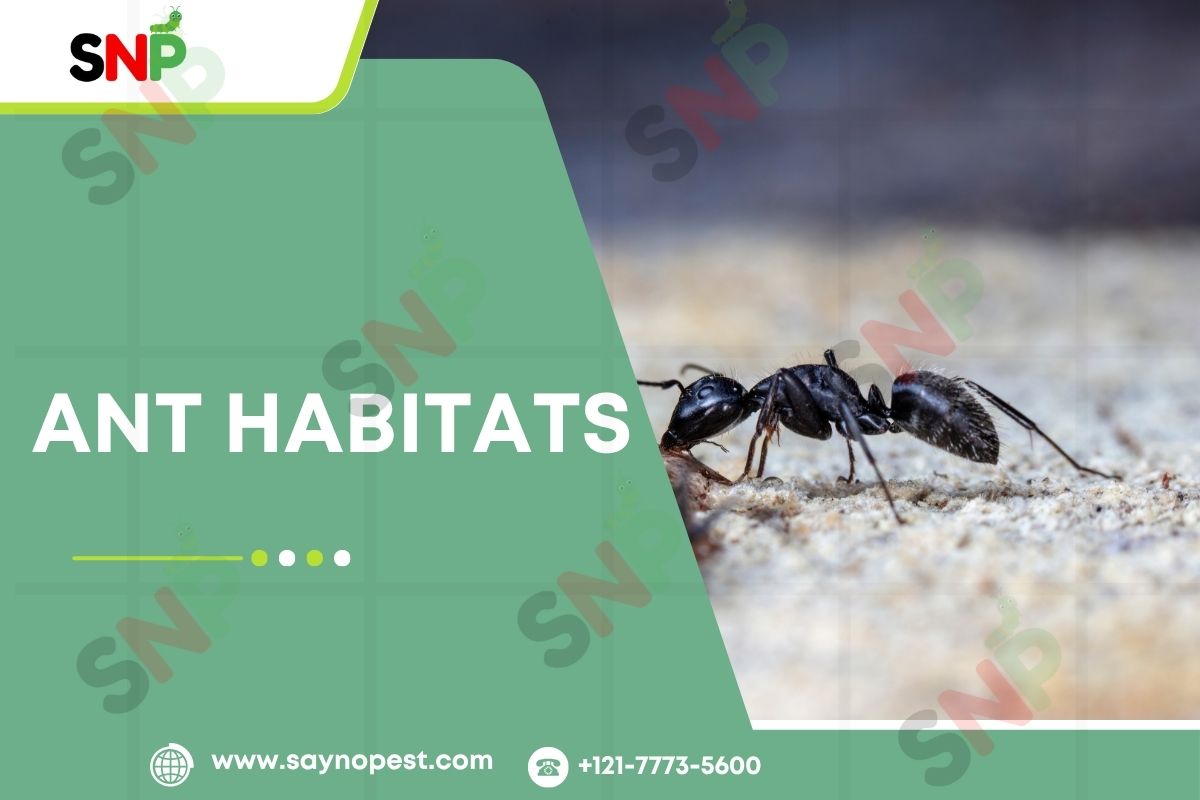
    Ant Habitats are usually very complicated colonies that consist of thousands, and sometimes even millions, of ants. Ant colonies live underground, in decaying wood, beneath rocks, or in man-made structures such as building cavities. The purpose of the colonies is for shelter, temperature regulation, and the highly socialized social structure ant colonies require for them to survive. Homeowners and property owners must know the indications of Ant Habitats if they do not wish to have extensive infestations.

    Ant Habitats are not just mounds of earth or chunks of wood branches; they are creations. Colonies are intricate networks of tunnels, nurseries, storage rooms for food, and even respective queens’ and workers’ dorms. While beneficial members of ecosystems—breaking down organic matter, aerating the ground, and snacking on other insects—ants are also a nuisance or threat when vying with humans for space, resource, and shelter. In order to be in a position to manage ants most efficiently, knowledge of the most prevalent species that infest Americans, i.e., black ants and carpenter ants, is necessary. How Do Black Ants and Carpenter Ants Appear

    They are black, red, or brown or a combination of the three based on species. Their telltale features are a heart-shaped head, curved antennae, and an even arced thorax. If you have been blessed by fate with wings, carpenter ants have two pairs. The hind pair is marginally shorter than the front pair. Winged carpenter ants, also referred to as swarmers, are easily seen in the spring since they fly in to start new colonies.

    They are consistently clean, glossy black and have an irregularly-shaped thorax. Black ant is also marked by a waist (petiole) made up of two visibly separate segments, thus slightly bumpy in profile than the more smooth carpenter ant profile. Black ants are generally not winged as carpenter ants, and even if they do have wings, it will be mating time. To conclude, 

    How Do Carpenter Ants vs Black Ants Look

    • Size: More awkward and larger, carpenter ants; black ants, small and slender.
    • Color: Black, red, brown, or blend, carpenter ants; black, black ants.
    • Body: Smooth and level in profile, carpenter ant; divided “waist” of black ant.
    • Wings: Carpenter ants are occasionally winged, depending on season; black ants are seldom winged.

    Knowing How Do Carpenter Ants vs Black Ants Look not only guarantees accurate identification. It is most critical in the process of choosing the right control method for your home or business.

    Difference in Behavior between Do Carpenter Ants vs Black Ants

    Let’s engage in some Behavior Differentiation between Do Carpenter Ants vs Black Ants. since knowing the behavior of these insects will make all the difference in having your property pest-free.

    Carpenter ants have a reputation for tunneling into soft, wet wood.

    They do not eat the wood like termites, but tunnel complex holes, and in the process, cause structures to weaken over time.

    You might spot sawdust material accumulations in their nests that’s a definite sign they’re around. Carpenter ants are nocturnal, so nights and evenings are when they’re active. They do not forage in line in a sequential manner but forage individually for protein food. Sweet food, especially honeydew from aphids.

    Black ants nest more outdoors in ground, rocks, or under sidewalks but will invade buildings indoors in order to obtain food. They also occupy smaller, less damaging colonies and diel activity cycles they are daytime-active.

    Black ants are also notorious for leaving trails that one would observe between the food and their nests, typically from your kitchen or pantry to the outdoors. They like to eat sugars like fruit, juice, and waste food in the kitchen but will also search for protein and grease. In brief, Behavior Differentiation between Do Carpenter Ants and Black Ants is as follows:

    Nesting Habits: Carpenter ants burrow into wood in order to destroy it; black ants hang into cracks or dirt but seldom result in building destruction.

    Activity Patterns: Carpenter ants are active at night; black ants are active during daylight.

    Foraging Behavior: Carpenter ants forage on their own; black ants forage along visible line.

    Diet: Carpenter ants consume proteins & sweets; black ants consume sugars but are not picky.

    Conclusion: Manage Ant Habitats

    Ant Habitats is not a pastime. it’s a simple means of saving your home. The moment you know How Do Carpenter Ants vs Black AntsLook. Can spot the Behavior Difference between Do Carpenter Ants vs Black Ants. You can act in good time before ants ruin your home or food.

    Whether homeowner, property manager, or otherwise interested in the natural world, understanding. How to identify and deal with Ant Habitats places the keys to the kingdom in your hands to take action early and intelligently. Remember that while carpenter ants may be quietly eating away at your structure. Black ants may be innocently doing nothing but driving you crazy in pantries and kitchens.

    For full pest control treatment and expert consultation as per the American market, count on saynopest. Our experts are trained to inspect and treat all types of Ant Habitats. That helps you know How Do Carpenter Ants vs Black Ants Appear. It Give you solutions as per the Difference Between Do Carpenter Ants vs Black Ants Behavior. Hire saynopest to make your premise secure, healthy, and ant-free.

  • Do Carpenter Ants Bite?: Knowing and Controlling These House Invaders

    Do Carpenter Ants Bite?: Knowing and Controlling These House Invaders

    Do carpenter ants bite? Yes, carpenter ants bite human beings but not a normal phenomenon. Carpenter ants due to their enormity and boring habit in wood, bite if attacked or provoked by intruding their nest. These ant bites are less harmful to human beings but painful, inflamed, and itchy for up to 48 hours.

    Carpenter ants are the largest colonies of ants in the United States, measuring their length typically from 1/4 to 5/8 inch. They are said to be widespread throughout the United States with the most dense area being in the north regions of the United States. Carpenter ants do not eat wood but dig it out to construct smooth tunnels and galleries upon which to build their nests.

    When Do Carpenter Ants Bite?

    Do carpenter ants bite human beings frequently? No – carpenter ants do not bite human beings frequently but bite in some situations. These are:

    1. When their colony is provoked or disturbed
    2. When they are inadvertently stepped on or touched
    3. When they are protecting their territory from being destroyed

    Carpenter ants use their powerful mouth to bite wood, but they can use them as defense in the event of attack. The same powerful jaws that enable them to bite wood are powerful enough to crush human flesh when biting.

    What Is Unique About Carpenter Ant Bites?

    Carpenter ants bite with their powerful mouth that can chew through wood. Carpenter ant bites are much larger than most other ants and more sensitive and noticeable as well. The bite feels like an acerbic pinch, and the burning, aching feeling can follow the pain.

    One of the peculiar facts regarding carpenter ant stings is that they will spray formic acid on the affected region. The defense chemical, the same acid that is present in bee stings, will increase the pain and give a burning feeling for a long time. It is this formic acid injection that makes carpenter ant stings so unpleasant compared to other minor ant species stings.

    Symptoms of Carpenter Ant Stings

    Symptoms of a carpenter ant bite will probably be as follows:

    Physical Symptoms:

    • Stinging and piercing sensation at the biting area
    • Redness and swelling at the biting area
    • Red spot or bump resembling a pea-sized mark
    • Itching lasting for days
    • Possible skin breaking and superficial bleeding

    Duration and Healing:

    In acute pain which can continue for hours

    • Inflammation and swelling which can continue for 24-48 hours
    • In others, the symptoms last more than one week to completely resolve

    Burning when formic acid was added to the wound

    Are Carpenter Ant Stings Dangerous?

    Carpenter ants sting but have very little medical impact on individuals. Their stings are not toxic and are not disease-bearing. Fire ants or more dangerous species, as opposed to carpenter ants, are of medical significance.

    Even with all this, the allergic or sensitive will be more severely affected. Extremely rare allergic responses are:

    • Shortness of breath
    • Increased heart rate
    • Flu symptoms
    • Severe hives or swelling

    How to Kill Carpenter Ants: Effective Methods

    how to kill carpenter ants is a process of several steps, targeting the carpenter ant stage and their underground colonies. The most effective way of Carpenter Ant control is by using over one type of method in an effort to ensure complete elimination.

    Locating Carpenter Ant Colonies

    The most effective carpenter ant control is finding and destroying their nests. Best killed by carpenter ants will be foraging in the whole colony, not just foraging workers. Signs of carpenter ant nests include:

    Sawdust-like material (frass) around wood surfaces

    • Rustling or tapping noises in walls
    • Prominent ant trails, activity at night
    • Tiny holes in wood surfaces

    Baiting Strategies

    How to kill carpenter ants using bait is one of the best methods because it kills the entire colony. Professional-strength baits include:

    Maxforce Fleet Ant Bait:

    • Fipronil active ingredient
    • High moisture gel formula carpenter ants are drawn to
    • Destroy colonies within 3-5 days

    Advance Carpenter Ant Bait:

    • Abamectin active ingredient
    • Provides carpenter ants protein-based nutrients they require
    • Use indoors and outdoors

    Homemade Bait Solutions

    • Combine 1/3 powdered sugar and 2/3 boric acid
    • Place saturated cotton balls along ant trails
    Do-Carpenter-Ants-Bite

    Chemical Control Methods

    What in chemical control kills carpenter ants are several families of insecticides:

    Pyrethroid Insecticides:

    • Permethrin and cyfluthrin make good spray options
    • As perimeter sprays around the home
    • Fipronil formulations work well but must be applied professionally

    Dust Insecticides:

    • Diatomaceous earth dehydrates and kills ants
    • Boric acid dusts can be applied directly to nests
    • Silica gel desiccant dust (for professional use only)

    Non-Repellent Insecticides:

    • Taurus SC and Dominion 2L are professional formulation products
    • Applied as barrier treatments on the outside of the home’s perimeter
    • Allow ants to make contact with the chemical and then return and kill the colony

    Direct Nest Treatment

    Methods to kill carpenter ants in nests include direct application of insecticides:

    Drilling Method:

    • Drill tiny holes (1/8 inch) around potential nest areas
    • Sprinkle boric acid dust from time to time every few days
    • Rerun treatments until elimination is confirmed

    Foam Treatments:

    • Aerosol foam insecticides for cavity walls
    • Treat near plumbing penetrations, windows, and doors
    • Foam insulates the cavities and kills hidden ants

    Natural and Organic Control Measures

    What Carpenter ants are naturally killed by a few environmentally friendly alternatives:

    Diatomaceous Earth

    • Indoor-safe food-grade diatomaceous earth
    • It acts by penetrating ant exoskeletons and dehydrating
    • Spray as a fine powder along trails and entry areas

    Must remain dry in order to act

    Essential Oil Treatments

    • Orange peel oil is FDA-approved for application on food surfaces
    • Tea tree, cedarwood, and citrus essential oils disrupt scent trails
    • Peppermint and geranium essential oils kill ants and drive them away

    Home Remedies

    • White water and vinegar solution (1:1 ratio) disrupts scent trails
    • Boiling water splashed over outside colonies kills immediately
    • Cornstarch applied on ants, then followed with water later, traps them

    Professional Treatment Techniques

    How to get rid of carpenter ants with professional assistance has several advantages:

    Professional-Strength Treatments

    • Poteiner formulations available only for sale to professionals
    • Customized application methods for optimal performance
    • Treatment with more than one type of product mixed together

    Conclusion

    Discovering if carpenter ants bite is just the beginning of having to deal with such potentially damaging insects. Although carpentry ant bites are not harmful to humans, they are painful and also a sign that something more complex is wrong. What’s really the issue with carpenter ants isn’t that they bite, but that they have the ability to structurally damage your house in the long run.

    Effective carpenter ant control is a multifaceted process involving identification, focused treatment, and prevention. Employing professional-strength chemical solutions, natural solutions, or a combination of both, the bottom line is to eliminate the entire colony and not the ants that are readily seen. Most consistently what eliminates carpenter ants is repeated use of tried methods as well as removing the conditions which invite them into your house.

    Early discovery and immediate treatment are critical in stopping the further severe damage of woodwork in your home. Once you open a carpenter ant infestation, do not hesitate – take immediate action to protect your property. Keep in mind that carpenter ants bite only when  they get irritated, their presence is a sign of much greater damage that requires strict pest control measures.

    For homeowners who have been captivated with repeated cases of carpenter ant infestation, hiring professional pest control experts like those at SayNoPest will provide you with the training and equipment to eliminate these unwanted visitors permanently. Following due procedure and taking the time and effort will allow you to eliminate carpenter ants from your properties in a safe manner and prevent future infestation.

  • Places Where You Can Find American Giant Millipedes

    Places Where You Can Find American Giant Millipedes

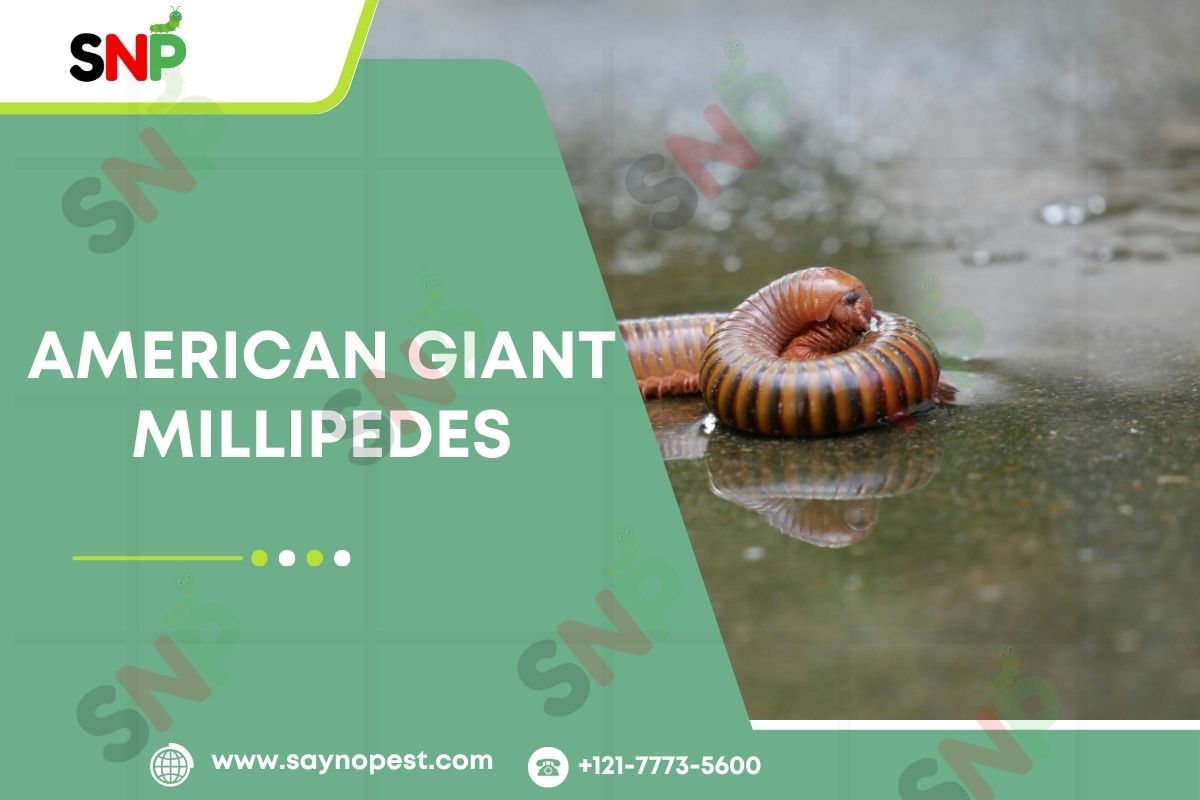
    As you walk around woodlands, parklands, or even in your backyard in the eastern United States, it is easy to imagine that you will step on a long, many-legged beetle crawling laboriously along the ground. If you have ever stopped and wondered what an American giant millipede looks like, you are not alone. These amazing arthropods are crucial to our world, and learning about what they are can enable you to identify and appreciate one whenever you see the next one. 

    Let’s begin a step-by-step reader-friendly guide that will be answering the following question: What does American giant millipede look like, identifying marks, where are they located, and why it is essential to know them to a pest-aware home.

    American-Giant-Millipedes

    Introduction: What Do American Giant Millipede Look Like?

    The question floating in the mind of every homeowner and nature enthusiast is: Places Where You Can Find American Giant Millipedes, With all of those small creatures running around, it is reassuring to know what distinguishes the American giant millipede. By knowing what they appear to be like, you will be aware that they are not like insects like centipedes, and it enables us to accord these harmless, helpful break-downers their rightful respect.

    Get to Know the American Giant Millipede

    The American giant millipede (Narceus americanus), or “iron worm” and “worm millipede,” is North America’s largest naturally occurring millipede. It occurs most frequently in the south and east of the United States and manifests when it is wet and damp, most often in woodland, under rotting logs and leaf litter, and sometimes within cities when it is right for it to live.

    Important Facts About the American Giant Millipede

    1. They reach a length just shy of 5in (the size of an adult finger), the biggest of their genus in North America.
    2. They occur naturally from the Atlantic coast to Texas and as far north as the Canadian border.
    3. American giant millipedes are an extremely useful detritivore, breaking down and re-cycling plant death into soil nutrients.
    4. Information regarding How Do American Giant Millipede Look
    5. is useful both for the appreciation of nature and effective, non-destructive pest management.

    How Do American Giant Millipede Look?

    Therefore, how do American giant millipede appear like when viewed with a microscope? Let us consider the most significant features that distinguish them:

    Size and Body Shape

    • Length: The adult American giant millipede usually grows, (10–13cm) long.
    • Build: Their nearly cylindrical and tube-formed bodies are elongated.
    • Weight: They weigh typically below 0.1oz (2–2.5g).

    Coloration and Markings

    • Their typical color is dark brown or dark gray, which is typically glossy-looking, thereby appearing shiny.
    • There is a red or orange stripe along each body segment that creates a typical pattern.
    • The legs and feet are generally the same reddish hue as the segment adjacent to and, when close up, a burst of color.

    Segmentation and Legs

    • The American giant millipede has many hundreds of legs never actually 1,000, its name perhaps suggesting, but typically 80 to 400 pairs.
    • Two to a body segment, all in line so they move smoothly in the shape of a wave.
    • Their legs are folded in under the body and thrust en masse, propelling them through earth, leaf mold, and even small obstacles.

    Head and Sensory Structures

    The millipede head is small relative to the body and contains:

    • A short sensitive pair of antennae for orientation.
    • Simple mouthparts to mill up soft vegetable material.

    Defensive Tactics

    American giant millipedes roll up tightly when threatened to defend their sensitive under-side.

    • They can emit a foul yellowish or brownish fluid (benzoquinones) which is only mildly irritating to skin but otherwise benign when handled for short periods.
    • They don’t bite and sting like centipedes do—a factor when considering how do American giant millipede appear and behave.

    Habit Habits

    Commonly in damp, dark places: forest, under rocks, decaying wood, or leaf mold in your yard.

    • Infrequently in sunlight or dry areas, as they are desiccation-sensitive.

    Life Cycle

    American giant millipedes enjoy a long-lived invertebrate life of 5–11 years outdoors.

    • They produce one egg per brood, closely encasing it with themselves until it hatches.
    • They acquire many segments and additional legs at each molt (shedding of exoskeleton).
    • Juveniles are accordingly like small replicas of the adults but with fewer legs and segments.

    Why Identification is Important

    Information about what do American giant millipede look like is not an afterthought—it avoids unnecessary pest control actions. They won’t harm humans, pets, or plants, and are actually beneficial to gardens as they break down organic matter and function as fertilizer to the garden. Referring to them as centipedes (which bite) and destroying them would be the unnecessary destruction of a garden asset.

    Conclusion

    Observe their typical curling and sluggish movement.

    When handled, pick them up gently and keep contact as minimal as possible to prevent pale skin color change from their defense fluid.

    You already know the answer to the question How Do American Giant Millipede Look. American Giant Millipedes are easily recognizable by their light grayish-to-brown, elongated bodies, orange or reddish-edged segments, and beautiful leg number. They are useful decomposers, a part of natural and managed ecosystems across the United States.

    By knowing how American giant millipedes look, you may keep and maintain such beneficial arthropods, your garden in good health and your pest control purposeful and educated. For expert pest control advice and other guides such as the one above, rely on saynopest—your ally in efficient, responsible pest control.

  • The Complete Guide to Fire Ant Infestation across the United States

    The Complete Guide to Fire Ant Infestation across the United States

    Background of Fire Ant Infestation

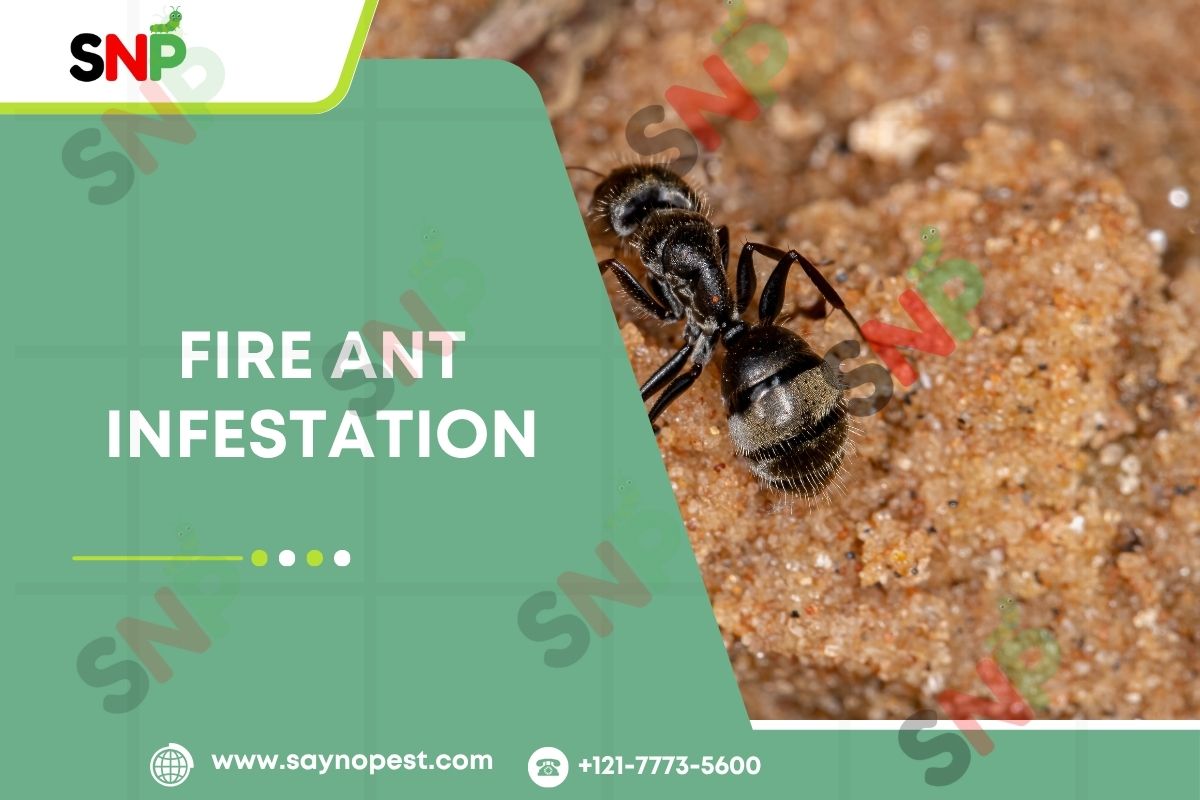
    Fire ant infestation is among the toughest. The most abundant pest issues for homeowners and companies across the country, but particularly the South, Southeast, and California. Fire ant colonies develop with such rapidity that they can infest backyards, parks, fields, and even creep indoors. Not just pesky but an actual health risk, these fire ants are famous for their ferocity. Painful stings that can induce allergic shock in the afflicted. With mounds breaking out everywhere across lawns and landscapes. The situation of the fire ant infestation is more or less of distinct concern in an effort to offer quality control.

    Fire ants previously lived in South America decades ago, and fire ant infestation has expanded since then to over 367 million acres in the United States alone. Fire ants, once they infest, kill native wildlife, agricultural produce, and human life, causing gigantic economic and ecological loss. At SayNoPest, you will learn about how to detect, prevent. Treat a fire ant infestation to provide a healthier and safer environment for your family, pets, and property.

    Red Ants and Fire Ants

    Red ants are confused with fire ants because they acquire the same hue, but one must distinguish these two so that pest control can be effective. 

    They are smaller, 1/8 to 1/4 inch in length, &  typically reddish-brown with darker abdomens. Fire ants are very aggressive when threatened and bite in large numbers, causing painful burning stings.

    Red ants is a general description, occasionally applied to several red species of ants, which are non-stingers. True “red ants” are bigger, 1/4 to 1/2 inch, and less inclined to sting, they bite. They also have less aggressive colonies and mounds are not as large.

    The “Red Ants vs Fire Ants” problem is one that pest control service businesses encounter frequently because proper identification plays a key role in the determination of treatments.

    Fire Ants vs Red Ants Treatment

    The Fire Ants vs red ants treatment procedure to get rid of an infestation must be conducted in the correct process. Fire ants Lets  understand the treatment procedures makes it efficient and safe for your property. Fire Ants vs Red Ants treatment varies since the bugs are a different species and are harmful in a different manner.

    For Fire Ants:

    Labeled mound treatments or directed baits for application on fire ants.

    Fire ant baits will move quickly throughout the colony, preferably to the queen, as if the queen survives, the infestation persists.

    Severe fire ant infestation is typically treated using lethal chemical controls, contact insecticides, and growth regulators.

    Fire ant stings are unbearably painful and possibly life-threatening, so professional, immediate treatment where much of the time is spent in locations of high use. Children and pets spend considerable time playing is warranted.

    Red ants are more readily controlled with less drastic means, such as baiting with food items, boiling water spraying, or organic control using agents such as diatomaceous earth.

    Issues indoors will typically require substitute methods, such as sealing doors and windows, hand extraction of nests, or using indoor-safe pesticides.

    Prevention and exclusion is the best method because most red ants will not have as big or as aggressive a colony as a fire ant.

    If you’re not sure which ants you’re fighting, then professional advice is the way to go. SayNoPest can assist you in finding approved pest control service for correct diagnosis and targeted treatment.

    Fire Ants vs Red Ants Treatment: Best Practices

    Since the need for the proper Fire ants vs red ants treatment, following are best practices for both:

    Broadcast Baiting: To control yard-sized infestations outside, bait ants over the entire yard rather than the mound itself. This is an effective method of fire ant infestation since it kills the exposed and underground colonies.

    Direct Mound Drenches: Treat boiling water or insecticides directly into mounds in a manner that they reach the queen.

    Combined Treatments: Apply a combination of bait, soil application, and barrier sprays for general or repeat fire ant infestation.

    Watch and Repeat: Fire ant invasions as well as other ant invasions will often rapidly return. Treat again as appropriate, and constantly keep watch for new mound formation.

    Remember, Fire ants vs red ants treatment is always never one-size-fits-all. The difference between fire ants and red ants in aggressiveness and fire ant and red ant resistance makes you selectively adopt products and approaches after proper identification.

    Conclusion

    Fire ant infestation is an issue that endangers the comfort, well-being, and worth of your home and family. And with their aggressive nature to the pain and even toxic bites they carry, it’s no wonder something needs to be done pronto. Proper identification of fire ants vs red ants guarantees that you apply the correct Fire ants vs red ants treatment, providing yourself with the best chance at long-term control and assurance.

    Don’t let fire ants overrun your home or business. SayNoPest gives you great information and connects you with professional pest control experts, so you can tackle issues effectively and safely. Having learned how to identify fire ants and red ants, you can make effective product and technique decisions. Whatever it is, a complete treatment or ongoing prevention, rely on SayNoPest to help you regain your property.

    Take back your yard, safeguard your family, and know what’s going on with SayNoPest, the intelligent answer to every fire ant invasion in America.