Author: digimach10

  • Aedes mosquitoes in the U.S.

    Aedes mosquitoes in the U.S.

    The 3 types of Aedes Mosquitoes that exist in the U.S.-

    1. Aedes aegypti
    2. Aedes albopictus
    3. Aedes sollicitans
    types-of-Aedes-Mosquitoes

    Aedes aegypti

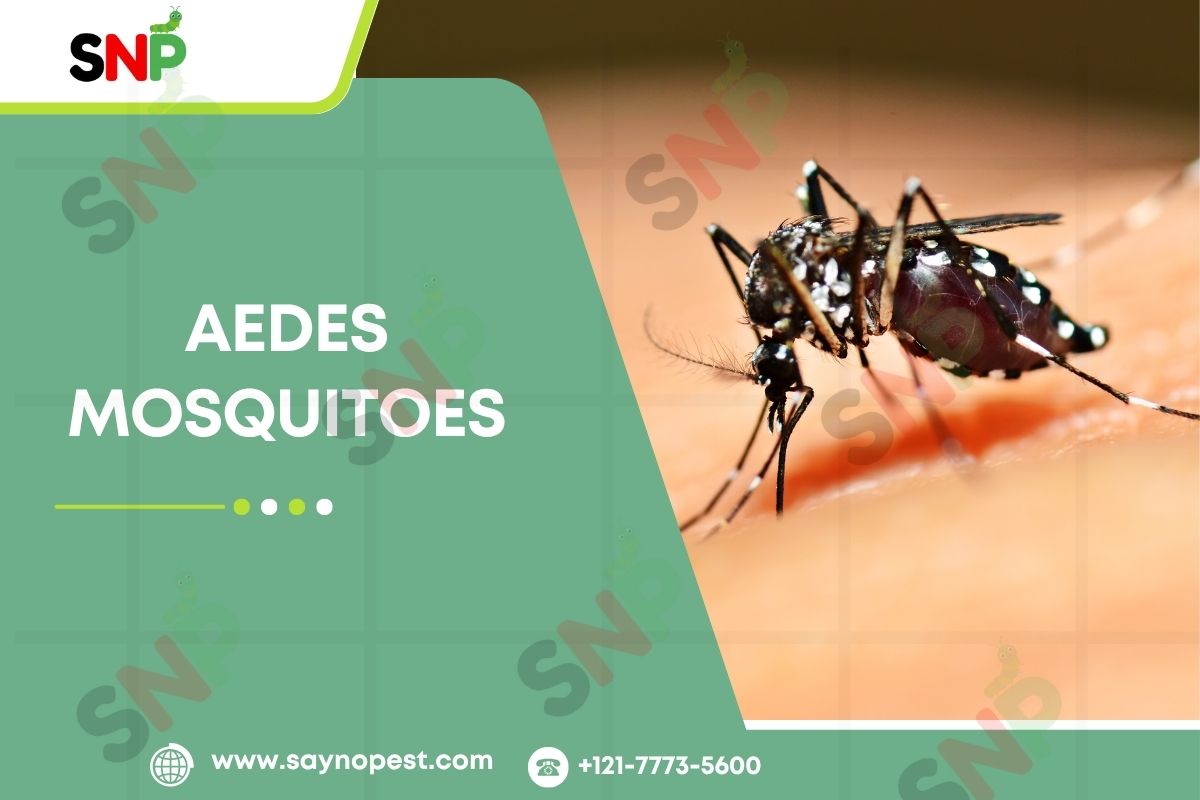
    Because Aedes aegypti mosquito causes Yellow Fever, it is commonly known as the yellow fever mosquito. This mosquito has black and white texture and targets both humans and animals during the day time.

    This mosquito has a violent behaviour and is known to transmit viruses, such as-

    •Zika

    •Dengue

    •Chikungunya

    •Yellow fever

    The eggs of Aedes aegypti mosquito have the ability to survive even in dry environment for a long-long time.

    These are also called Asian Tiger Mosquito. This mosquito shows aggressiveness in the daytime. This insect consumes blood from three different groups of hosts which include people and animals together with birds.

    Alboictus is known to transmit viruses, such as-

    • Encephalitis
    • Dengue (all four serotypes)
    • Yellow fever
    • Dog heartworm.
    • West Nile virus has also been detected in the east of U.S.

    Aedes sollicitans

    Aedes sollicitans is also called the Eastern Saltmarsh Mosquito. They have a rusty colour and banded legs. They become widespread after high tides and heavy rain and are found all year long when the weather is warm and humid. During the colder months their numbers are reduced.

    Aedes sollicitans normally bite in the early morning or late afternoon, but when disturbed during the day, females that are at rest will attack wholeheartedly.

    Females of this species can lay their eggs in different places such as-

    • Birdbaths
    • Flowerpots
    • and other similar containers.

    Common Characteristics of Aedes Mosquitoes

    Aedes mosquitoes demonstrate aggressive feeding behavior while seeking their blood meals between day-time hours. During each feeding period these mosquitoes target multiple hosts so they increase their chances to transmit diseases.

    The mosquitoes lay eggs in natural and artificial water containers such as tree holes, tires and buckets, etc. They lay eggs outside water and retains the ability to survive without water until the habitat becomes moist again.

    The complete life cycle needs around seven to ten days under conducive weather to proceed from egg to adult which promotes rapid population growth.

    The adaptive features of Aedes albopictus mosquitoes along with other Aedes species allow them to thrive in colder temperature environments.

    Aedes mosquitoes show aggressive bite habits and transmit multiple diseases due to their transmission ability which creates a major public health concern when mosquito infestations become prevalent.

    How To Protect Yourself From Their Bite

    How-To-Protect-Yourself-From-Mosquito-Bite
    • Apply repellents containing EPA registered ingredients.
    • Wear long sleeve clothes, socks and shoes to protect yourself.
    • Doors and windows at your house should be properly shut if you want to stop mosquitoes from entering.

    Life Cycle Of Aedes Mosquito

    1. Eggs Stage- The egg-laying process of female mosquitoes takes place in containers that retain water such as buckets and birdbaths alongside flowerpots and tree holes. The eggs which mosquito females place become exceptionally durable allowing them to survive in dry areas for months.

    When the eggs come in contact with water due to rain or when someone waters the plants, they hatch into larvae.

    2. Larvae Stage-Larvae live in water. These larvae look like tiny worms.They breathe via tubes at the surface and eat tiny stuff present in the water.The growth of these Larvae is fast.In about 5 days, they change into the next stage called the pupa.

    3. Pupa Stage- At this stage, the pupa stays in the water and doesnot move and it looks like curled up little commas. Before getting ready to come out, the adult mosquito spends 2-3 days maturing inside its cocoon.

    4. Adult Mosquito- At this stage, the mosquito comes out of the water and starts to fly! Adult females go looking for blood so they can lay more eggs. Male mosquitoes don’t bite, they feed on honeydrew and plant nectar.

    After obtaining blood through feeding, the female mosquito lays eggs before starting a new cycle.

    Total Time:

    From egg to adult can take as little as 7–10 days if the weather is warm and conditions are right. That’s why these mosquitoes multiply so quickly!

    Conclusion

    The aedes mosquito is an issue in the U.S. Therefore, knowing their appearance, understanding their life cycle, is important to get rid of them is an important step for your and your family’s safety.
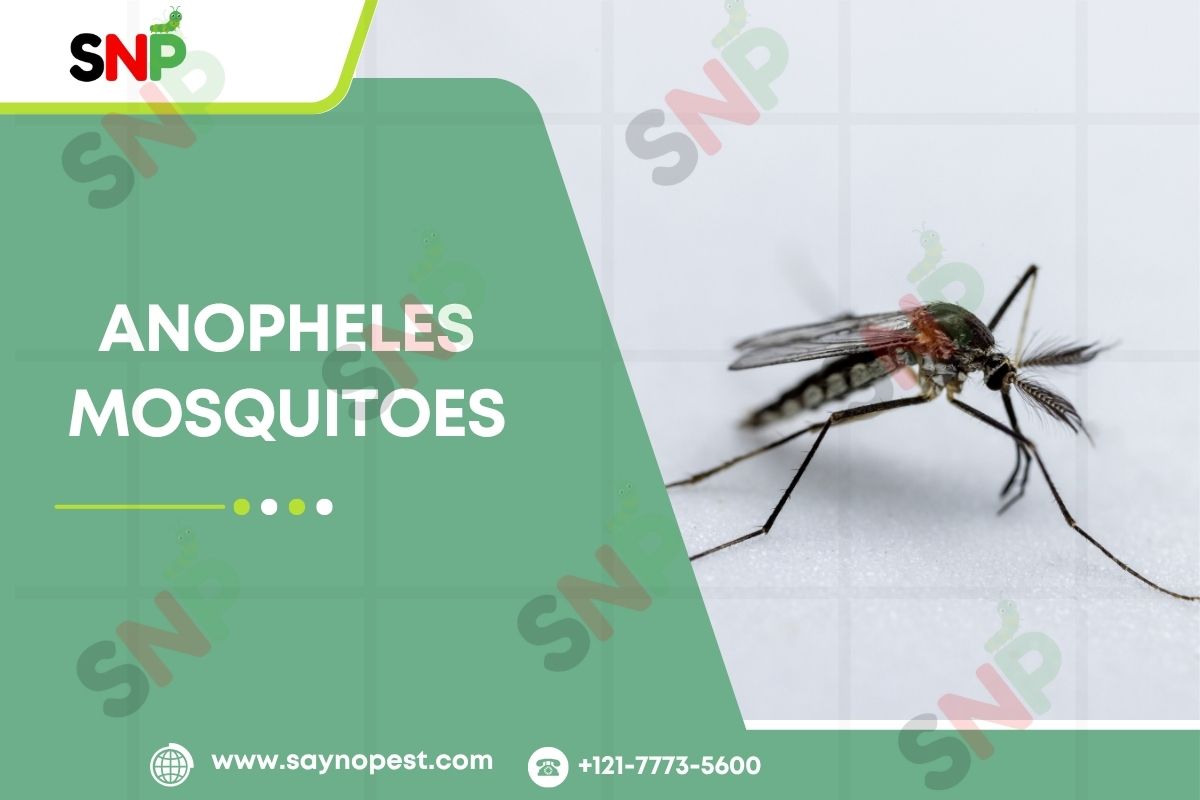
  • Anopheles Mosquitoes: Identification and Control

    Anopheles Mosquitoes: Identification and Control

    Anopheles mosquitoes are the one’s that spread malaria. Hence, this is an important mosquito species to know about.

    If you want to avoid mosquito bites and protect your space-

    • Know what Anopheles mosquitoes look like!
    • Understand when and how they are most active!
    • And learn simple steps to control or reduce their numbers!

    Not a pest control expert?, donot worry! Just knowing a bit about these mosquitoes can go a long way in keeping yourself and your family safe.

    This blog will help you understand anopheles malaria mosquito patterns in depth, covering their appearance, habits, what they eat, the life cycle of anopheles mosquito, and practical tips for how to get rid of anopheles mosquito.

    A Few Facts About Anopheles Mosquitoes-

    • Anopheles mosquitoes do not just cause malaria but are also responsible for causing other diseases like encephalitis, and more.They are easy to identify.
    • They lay their eggs in clean, and still water.
    • These mosquitoes are highly flexible.
    • Only female anopheles mosquitoes bite, and after a blood meal, they can lay hundreds of eggs in their lifetime.

    What do Anopheles Mosquitoes Look Like-(Appearance, Color, and Size)

    What-do-Anopheles-Mosquitoes-Look-Like

    Anopheles mosquitoes are easy to spot. They are medium-sized and usually light brown in color. One thing that makes them stand out is their wings. They’re fully covered in brown scales and often have four dark spots. Anopheles wings don’t have shiny copper-colored tips.

    1. Female Anopheles mosquitoes- These are about 5 mm long, which is about the length of a grain of rice. Their wings are just about the same size.
    2. Male Anopheles mosquitoes- They are a little bigger, around 5.5 mm, and they have big, fluffy antennae that look like tiny feathers — that’s how you can tell them apart.

    Spot The Anopheles Mosquito via its Posture!

    Anopheles mosquitoes reveal themselves through their angled position while resting. Anopheles mosquitoes hold different body positions than other mosquitoes because they elevate their bodies instead of resting flat.

    Do Anopheles Mosquitoes Bite?

    Only the female Anopheles mosquito bites. Female Anopheles malaria mosquitoes need a blood meal to lay eggs. They bite during the night. However, males of this species do not bite. They consume plant juices and nectar. Although both sexes get their energy from plant nectar, only females have the unique mouthparts required to bite human or animal skin and obtain blood.

    Anopheles mosquito larvae obtain their sustenance from the organic substances together with algae and microorganisms that exist in their aquatic birth habitat. Pupal form consumes no food since it exists in a period of suspension which leads to adult metamorphosis.

    Life Cycle of Anopheles Mosquito

    Anopheles mosquito is a Malaria causing mosquito.  These are dark brown or black in colour. Malaria mosquito’s stomach points upward. You can find Anopheles mosquitoes almost everywhere in the world but they are not a major threat in the U.S.

    Fun Fact- Malaria mosquitoes can lay their eggs in many different places. Female anopheles have the ability to lay thousands of eggs during their entire life.

    The life cycle of anopheles mosquito

    1. Stage 1 (Egg): Females lay 50–200 eggs each time on a moist surface. The eggs float and hatch within 2–3 days in warm conditions.
    2. Stage 2 (Larva): Larvae live in water, floating parallel to the surface, and feed on organic particles. They shed four times before turning into pupae.
    3. Stage 3 (Pupa): Pupae remain in water but do not feed. After a few days, the adult mosquito appears.
    4. Stage 4 (Adult): Adults mate soon after emerging. Females take blood meals to produce eggs, while males feed on nectar.
    5. The life cycle of anopheles mosquito can take around 9 to 20 days. It depends on the weather.

    How to Get Rid of Anopheles Mosquito-

    1. Immediately get rid of Still and Standing Water at your place – Mosquitoes lay their eggs in standing water. Hence, keep gutters and drains clean.

    3. Clean your Yard Regularly – Cut the grass and trim bushes frequently because these are the places where the mosquitoes rest.

    4. Natural Methods that can help-

    • Use outdoor fans.
    • Plant mosquito fighting plants in your backyard.
    • Make use of mosquito traps.

    5.Professional Pest Control Service- In case mosquitoes are still bothering you, it is advisable to call a pest control professional to help you with some targeted treatments.

    Final thoughts

    The malaria causing mosquito is a pest and public health concern in the U.S. Therefore, knowing their appearance, understanding their habits, and knowing how to get rid of them is an important step for your own health and safety.

  • Are Field Mice Dangerous or Harmless?

    Are Field Mice Dangerous or Harmless?

    The health-conscious person you are, perhaps you may have stopped for a moment and asked yourselves: Are field Mice Dangerous? We will now find the facts about these typical U.S. rodents and the things you didn’t know they could do to your home, health, and peace of mind.

    Introduction to Are field Mice Dangerous

    Field mice, also named meadow voles, are small animals which have a brown or gray coat of fur, and are usually 4 to 7 inches long including their tails. They are present in grassy fields, meadows, and suburban yards in the whole United States. While their place of origin is the outdoors, these adaptable creatures can enter homes especially when going out to find a warm place as weather gets colder. The main question still being are the field mice dangerous besides this?

    Are field Mice Dangerous?

    field-mice-property-damage

    1. Disease Transmission

    The most important thing when deciding, Are field Mice Dangerous, is the possibility of them being the carriers of the diseases. Mice of the field can be vectors of hantavirus, a very rare but very dangerous respiratory illness.

    Transmission occurs by inhalation of dust contaminated with mouse urine or feces. The symptoms of this sickness are-

    • high temperature
    • tiredness
    • breathing problems

    Therefore, it is a very serious threat to the health of the people. Besides, field mouse can be the vector of parasites that will get into your house. They will be the source of illnesses that they will bring if their parasites are the carriers (flea, tick cause Lyme disease).

    2. Property Damage

    As a result of their teeth being very sharp and their permanent need to gnaw, mice cause fires by chewing the electrical wires. They also frequently cause fire and need for expensive fixing. Your lawn, garden, and even the roots of the plants and trees may get damaged by their burrowing and their feeding activities.

    3. Food Contamination

    Field mice are known to pollute food with their droppings, urine, and saliva. Such contamination can lead to the transfer of bacteria in your kitchen. Due to this your  family’s health can be at risk.

    4. Allergic Reactions

    For very sensitive people, the presence of field mice can be the main cause of the allergy and allergic symptoms. The contribution of their fur, and droppings to respiratory disorder or skin reaction may be significant, especially in the case of children.

    5. Infestation Potential

    Field mice are prolific breeders. Thus, a few of them can soon become a major problem if the situation is not rectified in time. They are nocturnal animals, thus, even during the day, you will hardly see them; however, the places where they leave their droppings, gnaw marks, or the scratching sounds will be a giveaway of their presence at night.

    Are field Mice Dangerous: How Do They Get Inside?

    How-Do-Mice-Get-Inside-Homes

    Although field mice prefer to live outdoors, but they can come into houses through tiny cracks in your home, gaps under doors, or from somewhere else. You might not even notice their entry points most of the times. They are very good at moving through narrow openings and will come in searching for warmth and food during the coldest months. Moreover, they can make their nests in attics, basements, or even behind walls.

    Signs of Field Mice Infestation

    Before you even get to know whether Are field Mice Dangerous you need to recognize the signs of their presence:

    • Near food, fences, or outbuildings you may find small black droppings that look like grains of rice.
    • On food packages, wires, or wooden structures there will be some gnaw marks.
    • Decided areas such as under the furniture or inside closets would be full of the nests made of shredded paper or fabric.
    • At night, you will hear scratching or rustling sounds.
    • In the grass or under the snow you will see runways or tunnels if the mice have got there.

    Do not wait if you have any of these signs present in your home.

    Conclusion

    So, Are field Mice Dangerous? The answer is definitely yes. They are not only infected with various health problems but also have the capability to cause you a large-scale damage and can contaminate your food and living spaces. In fact, they might be even more dangerous than we expect if they manage to spread disease, become an allergy trigger, or cost us high repair bills. However, if you will be alert, looking after your property regularly and taking immediate action when you notice the first signs of house invasion, you will be able to shield your family and home from the harm caused by the field mice they need.

  • How to Kill Flies in Drain Fast

    How to Kill Flies in Drain Fast

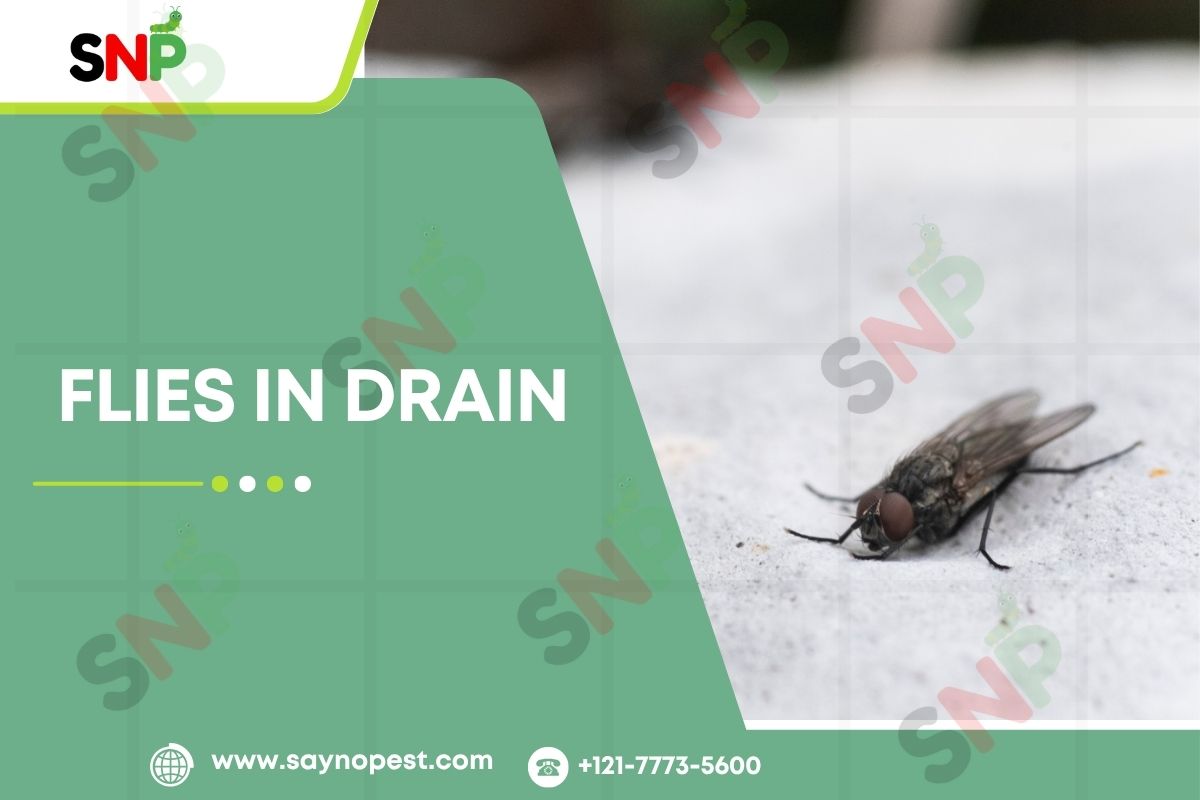
    Flies in drain go by various names such as drain flies, sink flies, or sewer gnats. The thing is that they can live in moist areas. The places where you are most likely to find these flies are sinks, tubs, or showers.

    They multiply quickly and can be an indication of a hidden problem in your plumbing. Although flies in drain are not our direct problem, as they do not bite or carry diseases, they can become a source of allergy and asthma for sensitive people, therefore, they are a health-conscious family’s enemy.

    What Do Drain Flies Eat?

    What-Do-Drain-Flies-Eat

    Knowing exactly the answer to the question of what do drain flies eat is very important if you want to solve the problem.

    • Drain Flies indulge themselves with decomposition materials found in the slime film called biofilm. This film accumulates on the inner walls of drains, pipes, and traps.
      The components of this biofilm include hair, grease, soap scum, food particles, and other organic debris.
    • The larvae are the ones that are totally happy in this environment because to them it is a never-ending buffet of bacteria, fungi, and microscopic life forms that can usually be found in the goo. Adult flies drink dirty water but their main meal comes from the sludge that is inside your plumbing.
    • Thus, an ultra-clean kitchen or bathroom can still be the perfect place for these pests if under the sinks there is enough organic stuff. So, if you are still asking what do drain flies eat, they are largely dirty, damp, and full of organic matter hyphens that are located deep inside your pipes.
    • It is undeniable that the more organic material there is, the more food there is for the pests. This is one of the main reasons why cleaning and maintenance on a regular basis are very important.

    If your health is a major concern, learning good things about the nutrition of drain flies will definitely make you realize that getting rid of drain buildup is the only way to have a house free from pests.

    Reason for Flies in Drain

    The cause can be found in the inside of your pipes. The flies are feeding on water, which is either still or moves very slowly. The most common reasons for the flies in drain are:

    • Blocked Drains- Drains that are blocked or slow can lead to accumulation organic matter and moisture.
    • Leaked Pipes- Leaks in pipes or water that is not being drained. Places where the water movement is absent, such as sinks or toilets that are rarely used, allow biofilm to accumulate.
    • Fly nests in the outside environment may provoke cracks or gaps in the plumbing where flies can easily enter.

    For instance, if you have been on a vacation and have returned back or you have an unused sink for some time, you may suddenly find that there are flies in drain.

    The major cause for the flies in drain is the moisture and the organic matter, which are the exact things that pests need for their feeding, and moreover, it provides them with fields for reproduction. The first action should be the elimination of such factors if you are willing to get rid of the infestation.

    Best Drain Fly Killer

    Best-Drain-Fly-Killer

    Are you looking for the most effective drain fly killer? A good one is that which takes care of both the adult flies and the place where they lay their eggs. Here is an easy way to get the job done correctly:

    Clear the Drains Completely:

    Take a plumbing snake or a stiff brush for this work and remove biofilm and other dirt from the pipes. It cuts the larvae food source and interrupts their reproduction.

    Enzymatic Drain Cleaners:

    These are natural enzyme-based cleaners that digest the organic matter present inside the pipes. The enzymes are therefore the best drain fly exterminator option for families who are concerned about their health. Stay away from aggressive chemicals since they have the potential to destroy the pipes and pollute the environment.

    Boiling Water:

    A quick pouring of boiling water down a drain can go a long way in loosening a part of the dirt and flushing the larvae out as well. Make it your daily habit and repeat this process for seven consecutive days for maximum effect.

    Trap and Monitor:

    The easiest way to catch pests is to use a trap. You can set it, for example, be a clear plastic cup that is destained with petroleum jelly, thus, over the drain, it will be eliminated overnight. The principle of this trap is that it will grab new emerging flies thus enabling you to track their source.

    Fix Leaks and Eliminate Standing Water:

    In order to do this, you have to mend any plumbing leaks and also make sure the water is circulating in all drains so that there is no stagnant water.

    In case you find the situation getting out of your hands, professional pest control may be the best solution. They will locate invisible places where the pests are breeding and then carry out the action targeted only at the place where the problem came from thus, they will eliminate the issue once and for all.

    Getting rid of both the source of their food and the breeding places will protect your home, help it to breathe freely, and will keep it pest-free.

    Conclusion : Flies in Drain

    Drain flies are not only a nuisance but they also are an indication that your plumbing is in need of repair.  Take care of your drains, fix any moisture problems, and you are good to go. You will be able to protect your home and your health from these bothering pests that do not go away easily.

  • Do You Have Carpenter or Black Ants?

    Do You Have Carpenter or Black Ants?

    One thing is certain, ants are everywhere you go but not all ants are the same. The two most common types that you will find in your house are carpenter ants vs black ants. At first glance, they may look alike but the knowing the different features of carpenter ants and black ants is important. Especially for the safety of your home and the safety of your environment. In this article both these ants are defined, so that you can take action before this becomes a real danger.

    How Do Carpenter Ants vs Black Ants Look?

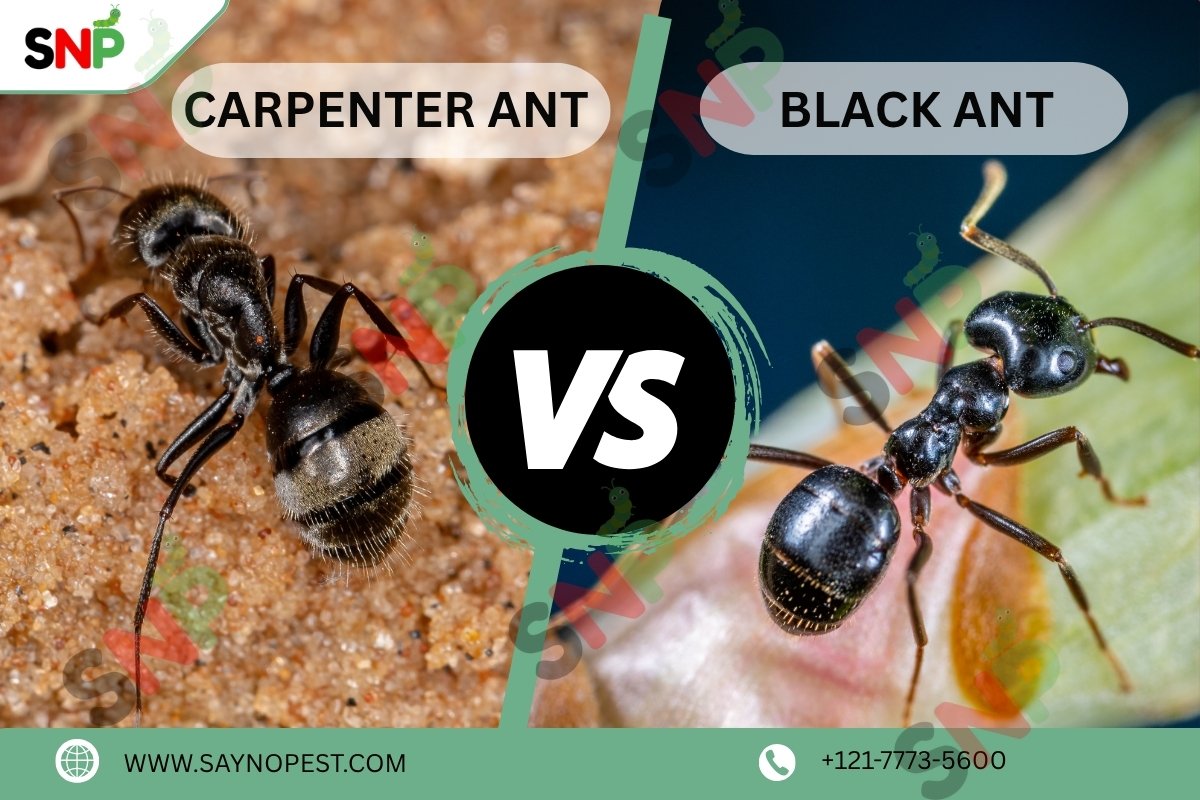
    Spotting the difference between starts with size. Carpenter ants vs black ants-

    • Carpenter ants are the ant royalty when it comes to size. The black ants are generally 1/16 to 1/8 of an inch long in size that makes them twice smaller than the biggest of the carpenter ants. Carpenter Ants are the ones that are 1/16 to 1/8 inch long.
    • When you see a larger than usual ant in your house, the probability of it being a carpenter ant is high.
    • Color is another distinguishing feature and if you know it, it is very easy to identify the type of ants even from a distance. Carpenter ants have a black, red, brown, or very dark maroon, and some may have a combination of these colors. Black ants may be shining black or very, very dark brown.
    • Carpenter ants have a heart-shaped head, and a single “waist” (petiole) segment that connects their thorax to their abdomen. They also have bent antennae.
    • Black ants are more slender, have a rounded body having two petiole segments. Besides, their head is small and round, and the antennae are almost not visible. Moreover, they are longer and thinner than those of carpenter ants.

    Behavior Differentiation

    Behavior is seen as the decisive factor in the carpenter ants vs black ants riddle. Carpenter ants, for the most part, are nocturnal. They find food during the night, and they hide from predators all day. They are not as likely to lay down visible trails but you could witness them being attracted to a food source or encountering them exit from wall cracks. If they face any disruption, they can become highly dangerous and will fight fiercely to protect their colonies.

    Unlike carpenter ants, black ants are day-to-day ants and their most obvious feature is the formation of trails between the nest and the food source. Being social animals, they are the basic collective worker that performs their queen’s care and build the colony. However, they mostly do not bite or are not aggressive.

    Carpenter vs Black Ant Habitats

    Location is a significant matter of the carpenter ants vs black ants conversation!

    Carpenter Ants- Wet and decayed are the two words that would best describe the wood that carpenter ants love. They are outdoor species and their nests are generally found in decaying wood like:

    1. Rotting logs
    2. Stumps
    3. Dead braches
    4. Inside of hollow trees.

    When infiltrating human dwellings, they usually hang out in wet wooden parts (basements, attics, wall voids, or even water-leaking spots in the house). Besides, they are very good at digging their way and going further carrying the dropped-off wooden particles.

    The carpenter ant has primary and satellite colonies. The queen and its attendants, are the usual inhabitants of the main colony, which is mostly located in the fresh air of nature. The other colony, on the other hand, could be anywhere, most likely within the wood of your home, and it is a part of the satellite colonies.

    Black Ants- Black ants prefer hanging out outdoors in the soil, below stones or inside garden beds. They build tiny mounds and are usually found in unused paving stones or in piles of things.

    This social insect may live in the walls, under the floors, or behind the baseboards, and the food sources is a key factor, yet they still do not cause cavities in wood. The societies of the black ants are often very small, and they are easy to locate due to the trail they leave behind.

    To Sum Up-

    Knowing all about Carpenter ants vs black ants goes beyond being curious – it is about protecting your house and your health. Carpenter ants are the bigger, more destructive type and they like to build their nests in wet, rotting wood. This often leads to significant destruction of the building structure. On the other hand, black ants will look for their own food, and thus, they don’t pose any danger by breaking the walls or floors.

    When you see the big ones, especially in wood or damp places, the best thing to do is to act promptly. Watch for such symptoms as frass, wood that sounds empty, or night activity. As for the small, uniform, black ants that run to your pantry, your effort should be on food and entry points sealing.

    Conclusion

    Whether it’s one kind or the other that turns up, early recognition and directed treatment are the solutions. The health-conscious homeowners, who keep the space neat and dry and their homes secure, are the ones that will not easily be affected by pests. Furthermore, call an expert if you are uncertain, for your peace of mind, as well as your property’s integrity, are invaluable. Remember, in the fight of carpenter ants vs black ants, knowledge is your ultimate weapon!

  • Fire Ants vs Red Ants: Spot the Threat Early

    Fire Ants vs Red Ants: Spot the Threat Early

    What if, one day, you spot little red insects in your yard? Your mind goes dizzy with questions like what are these insects? Are they deadly fire ants, or are they just harmless red ants? Almost every American homeowner is in a dilemma because of this question. Knowing the major differences of fire ants vs red ants can be an assurance of your family’s safety.

    However, most of the people mistakenly identify the red ants as being dangerous insect just because of their red bodies. The problem with this is that they are not aware of the potential hazards until something worse happens.

    Size

    Fire ants vs red ants size issue really is a piece of cake. Fire ants are 1/8 to 1/4 inches long while red ants are bigger in size.

    The truth is that different ants in the same community differ significantly in size. A colony of fire ants may consist of some worker ants that are as short as 1/16 inch, and some others almost 1/4 inch long. On the other hand, red ants are more uniform when it comes to size.

    Appearance: Fire ants vs Red Ants

    One of the most essential things to remember about the physical features that separate fire ants vs red ants is not just a size disadvantage.

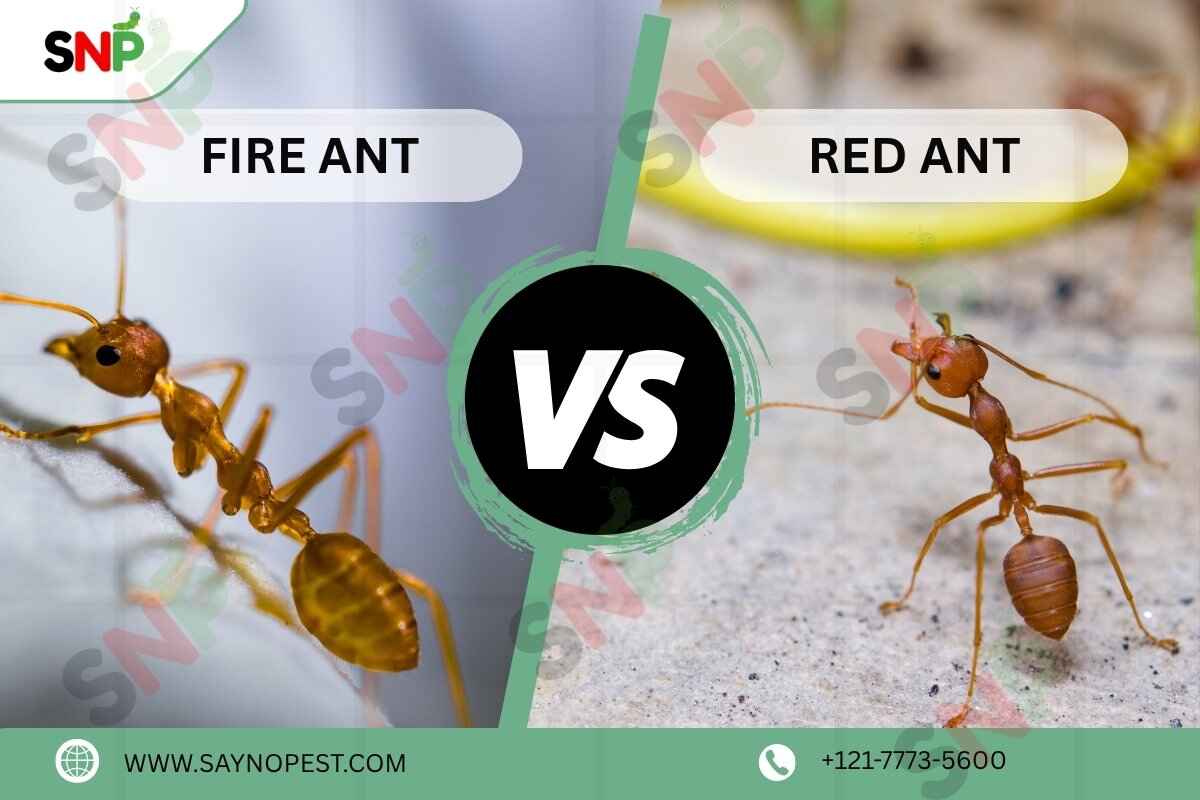
    • Fire ants have two petioles (small bumps that are connecting the thorax to the abdomen). Red ants, on the other hand, have a single petiole in the same body region.
    • Another most important feature is their antenna’s structure. While the fire ants have 11-segmented antennae with the club made with 2 segments, the red ants have 10-segmented antennae with a similar club part but bigger and bolder than the fire ants.
    • The shape of the head of the red harvester worker ants is more contrasting, and it sometimes resembles a square head.

    What Do Fire Ants and Red Ants Eat?

    Food preference is the major behavior difference between fire ants and red ants as indicated by a variety of food sources from which they can choose.

    Fire ants are omnivorous. They eat both plant and animal matter. They get their food from insects, earthworms, spiders, seeds, nectar, fruits, and even small vertebrates. In addition, these pests feed on dead animals, and at any time, they can be seen seeking out protein sources. Fire ants are hunters and tend to eat whatever they can find. They are able to eat both liquids and solids, but only adult ants rely on larvae to break down solid foods.

    Red harvester ants are also called seed collectors as they gather and store seeds. Red ants usually collect seeds at certain times of the year and tend to forage at regular times.

    Color Differences

    Color differences between these pests can help you tell a lot about fire ants vs red ants. Fire ants have red-brown heads and thoraxes, but their abdomens are usually darker and often black. The two-colored bodies of fire ants make their pattern easy to identify in most species. Red fire ants have a copper-brown color, but their backs are darker.

    Their typical bright red to dark brown color is consistent throughout the body of red harvester ants. The two-colored patterns are confined to their respective species but may vary based on different environmental conditions.

    While some fire ants are completely black, others, mainly the worker ants, have a mix of red-brown and black color. Unlike fire ants, red ants can have black spots, but they do not have the clear two-color appearance.

    What to do for Red and Fire Ants in Your Yard?

    FIRE-ANTS-APPEARANCE

    The existence of fire ants and red ants in your yard means that you should make quick decisions using different strategies-

    The fire ants are the most aggressive and destructive group of insects while they are also venomous and can cause painful stings. Without delay, call in a professional pest control team at once in case you find any fire ant mounds where children or pets usually play. Fire ants reacting to the slightest of disturbance come out in large numbers and are capable of causing severe reactions in people who are allergic to them.

    If you want to control the fire ant infestation, do not use any DIY treatments that are not certified safe for use in the problem. The exterminators have baits and treatments that are made for professional use only and cannot be purchased by homeowners.

    Fire ants moves inside your house when the weather gets too harsh outdoors. They come in search of food, water, and a place of shelter. Make sure to seal all the entry points around your house.

    Red ant management usually requires less intensive measures to be taken since these species hardly ever sting humans.

    Fire ants vs red ants treatment approaches differ significantly in urgency and methodology. In fact, red ants offer pest control benefits as they eat harmful insects and make the soil airy. Nevertheless, their painful stings near high-traffic areas demands professional removal.

    The two ant types can be controlled by using bait systems as well. It is a good practice to check around your property constantly whether there are any fresh mounds, most especially after heavy rain when fire ants are prone to changes in terms of the location of their colonies.

    Conclusion

    To sum up- knowing the differences between Fire Ants vs Red Ants helps with better pest management. Fire ants are dangerous to health because they swarm and sting painfully. It should be handled by professionals. Red ants are not harmful and can help the environment in many ways. When you know the difference between fire ants and red ants, it helps in right decision making to deal with these pests.

  • What Do Field Mice Eat & Why It Matters

    What Do Field Mice Eat & Why It Matters

    Introduction

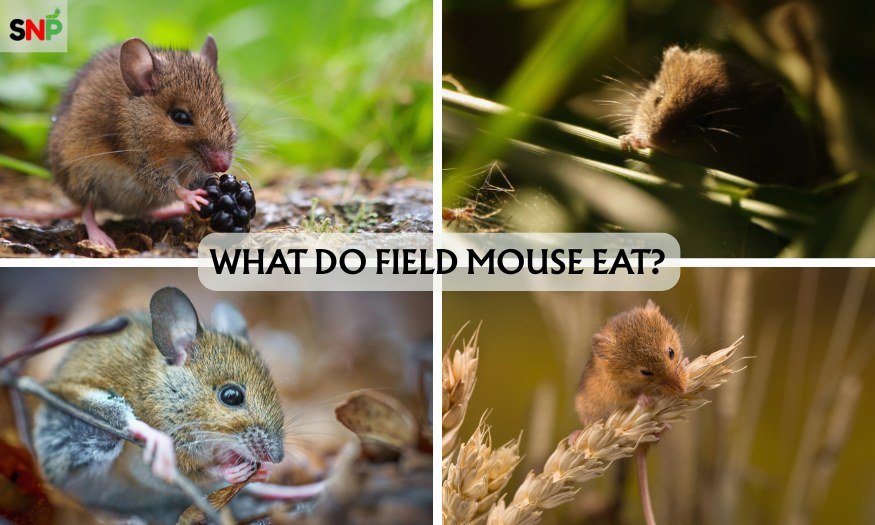
    At SayNoPest, one of the most common questions we receive is about what do field mice eat. And knowing their diet will help you take the first step in getting rid of these unwanted visitors from your home and garden. If you want to know exactly how to protect your home from these pests, you first need to know what do field mice eat in detail.

    Field Mice

    Most field mice live only several months to a year; however, they never stop searching for food and shelter during that time.

    Food consumption plays a big role in life-sustaining endeavors. As opportunistic feeders, field mice consume whatever is at their disposal, thus they quickly adjust to changes in the natural environment. This indicates that eating habits of field mice can be different depending on the season as well as the location.

    It is obvious that their characteristic of food searching often make them go into places like gardens, sheds, and even homes, especially when foods become scarce outside.

    Life Cycle of a Field Mice

    Life-Cycle-of-a-Field-Mice
    • The life of a field mouse is a road of rapid growth and reproduction.
      A female, in a period of 20 to 25 days, carries a pregnancy and then gives birth to a litter that can have from 2 to 11 pups.
    • Two weeks after birth, the opening of eyes and ears, and the appearance of fur begin.
    • At three to four weeks of age, they quit sucking and enter the stage of eating solid foods and learn the basic of foraging from their mother.
      Field mice are able to reproduce very quickly and do so after their sexual maturity, which is typically reached somewhere between five to eight weeks.
    • This rapid growth permits them to reproduce throughout the year, occurring multiple times.
      A solitary female is able to give several litters in a year thereby resulting in a population explosion provided the food is abundant.
    • After they have become adult, field mice continue their relentless search for food, make their nests, and protect their territory from other mice.
      Their short life-span implies that they have to find food and shelter every day that they can hide from predators.

    What Do Field Mice Eat?

    The answer to what do field mice eat is pretty simple!

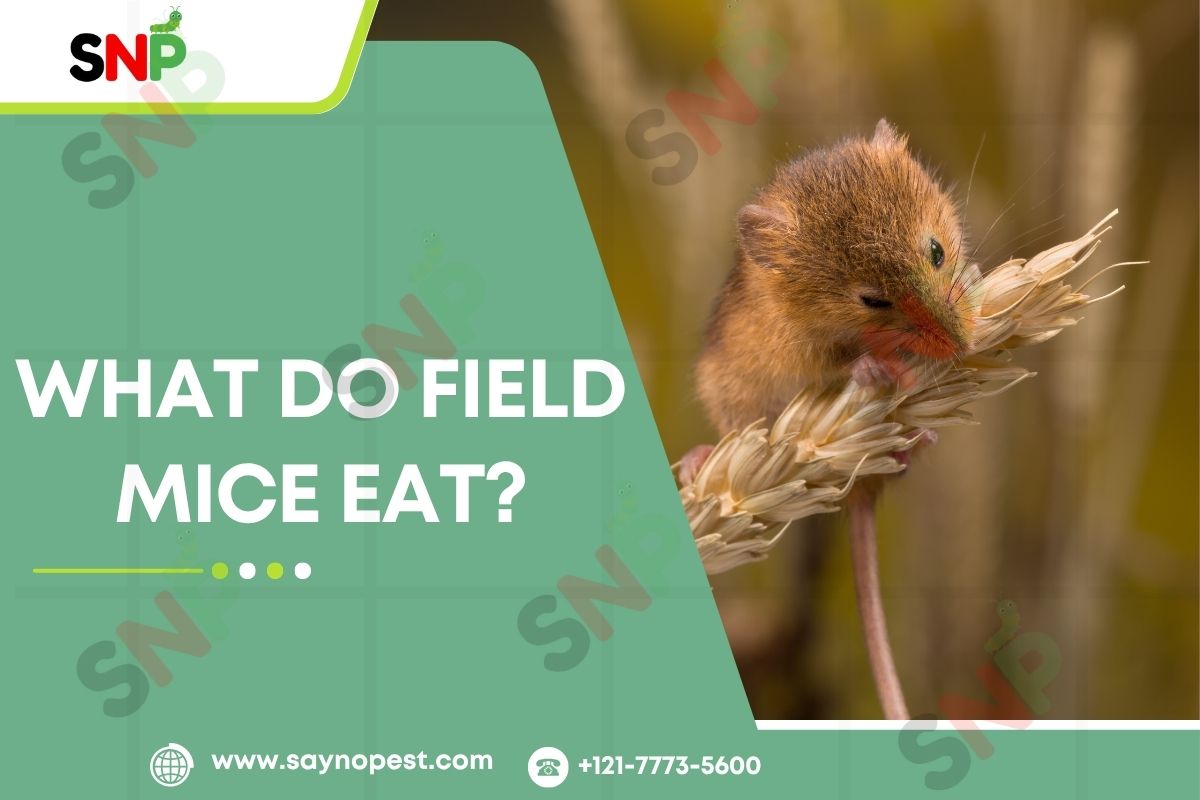
    • Seeds and Grains- Field mice are mostly herbivores, however, they have no preference. Their diet is mainly includes seeds, grains and green plants such as grass, clover and leaves.
    • These foods give them the necessary nutrients and moisture, particularly in the warm season when the vegetation is plentiful.
    • Fruits and Berries- They change their diet to fruits, berries, mushrooms, and even insects when there is no plant food.
    • Nuts- In general, animals living in the wild are not picky eaters, they will eat whatever they find, including nuts of different kinds, such as acorns, hazelnuts, beech nuts, as well as the occasional insect or invertebrate.

    Among other reasons, their great adaptability explains why field mice diet may vary with seasons-

    • At the time of spring and summer, these rodents have a feast of both fresh greens and insects.
    • And during the winter, after collecting and storing seeds and nuts in fall, they can hibernate or not but they will have food.
    • Besides that, the field mice have been known to be destructive as they can drive birds away if they raid their feeders.
    • At the same time, they gather and store food in the vicinity of their nests.
      Of course, this action will give them the security of a food supply in the time of scarcity. But this may lead to over-eating so that there will be a shortage of the stored food.
    • Additionally, their omnivorous nature makes them a never-ending problem to the farmers and the homeowners.

    Conclusion:

    Knowing what do field mice eat is a major factor in keeping them from invading your house or the garden. On top of that, their easily available diet and high reproduction rate make them extremely difficult to handle. Knowing what do field mice eat allows you to make use of this information in order to be one step ahead of the rodents take food away from them, close up your home tightly, and don’t risk your health.

    Be Cautious!

  • Field Mice: Tiny Yet Huge Troublemakers

    Field Mice: Tiny Yet Huge Troublemakers

    Imagine stepping into your garden and finding a quick, brown blur darting through the grass. That’s probably a Field Mouse one of the most common rodents in the United States. You have no idea about the energy these mice have.  Do not ever judge them by their furry appearance. The possibility of damage they can do to your house is quite extensive. Here we are going to give you all the facts that you need to know about Field Mouse vs House Mouse.

    What Does a Field Mice Look Like?

    These usually have a 3-4 inches long body, keeping their tail aside. The tail is often just as long as their bodies. The color of their coat could be anything from sandy or red-brown on the back to white or gray on the underbelly, making them very easy to recognize among other mouse types. Their tail is dark on the top and light from the bottom, besides being bi-colored it is also covered with fine hair.

    The Deer Mouse or “Field Mice” are the rodent species that have exceptional hearing capabilities. Their night vision and hearing are perfect for detecting food and avoiding predators. Spotting a mouse with a round body, big eyes, and a tail as long as its body, I can tell you to not think further, because it is a Field Mouse.

    Major Differences between a Field Mouse vs. House Mouse

    While both are small rodents, Field Mouse vs House Mouse have very different lifestyles and habits.

    • Habitat: Field Mice can be seen in open areas such as fields or gardens. They occasionally enter buildings if the weather outside is bad or during winters. House Mice prefer to live inside, so they are more likely to stay near you.
    • Behaviour: Field Mice are solitary animals but during winter they may form small groups for warmth. They often store their food near their nests. House Mice are more social and they store food less frequently.
    • Droppings: The droppings left by Field Mice are pointed at the ends, while House Mice make round ones. This might help you know which species of mice has occupied your place.
    • Smell: House Mice have a strong, foul odor, whereas Field Mice do not have any as such.
    • Feet: Field Mice have large hind feet for jumping, whereas House Mice have smaller feet due to which they can easily enter your house even through tight indoor spaces.
    • Reproduction: Both are prolific breeders, but the Field Mice can breed as high as 6-8 litters in a year and each litter can have 10-20 pups. Thus, they can cause a huge problem if they are left uncontrolled.

    Field Mice Dangers

    Field-Mice-Dangers

    Don’t be fooled by how small and cute field mice look, they can actually cause a lot of problems in your home and on your property.

    Health Hazards-

    Field mice can spread dangerous diseases like:

    • Hantavirus (a severe lung disease),
    • Salmonella (causes food poisoning), and
    • LCMV (Lymphocytic Choriomeningitis, which affects the brain).

    How?

    Among the animals, the mice are the most dangerous ones. It was claimed that such diseases can be spread by the mice’s excretions, urine, or even saliva. For example, imagine if a mouse has wandered on your kitchen counter and has left its droppings. You without realizing it have prepared the food, this might lead to you getting very sick.

    Field Mice Bring Parasites

    Field mice don’t come alone, they bring ticks, fleas, and mites attached on their bodies to your house.

    • Ticks can cause joint pain and fatigue.
    • Fleas can cause illnesses like typhus.

    So, a single field mouse could bring a whole group of tiny pests into your home.

    They Chew Everything

    Mice chew constantly because it is the only way to keep their teeth from getting overgrown. This results in:

    • Chewed electrical wires, that could spark and cause a fire in the house.
    • The destruction of pipes and the insulation can result in costly repairs.

    They Destroy Food and Crops

    Field mice can sneak into:

    • Pantries and eat through packaging to get to grains, cereals, or snacks.
    • Gardens or farms, where they eat seeds, vegetables, and damage crops.

    Conclusion:

    Field Mice are indeed very cute, but they are capable of causing damage to health and property that are definitely not minor.  Field Mice are dangerous because their number increases a lot faster. They spread diseases and are very destructive. It is crucial to solve the Field Mice problem as soon as possible.

    In case you think that these pests are in your home or yard, act immediately! Waiting too long can lead to serious consequences that would make you regret.

  • Difference Between Mice and Rats: Mice vs Rats

    Difference Between Mice and Rats: Mice vs Rats

    Mice and rats might seem similar at first, but they’re actually quite different. These differences matter to know how you are going to manage rats and mice at home and that is why it is important to know what you’re dealing with. We’ll break down the basics:

    • what mice and rats look like
    • how they behave
    • the best ways to keep them out of your space for good.

    What Mice and Rats Look Like – Size, Shape and Colour

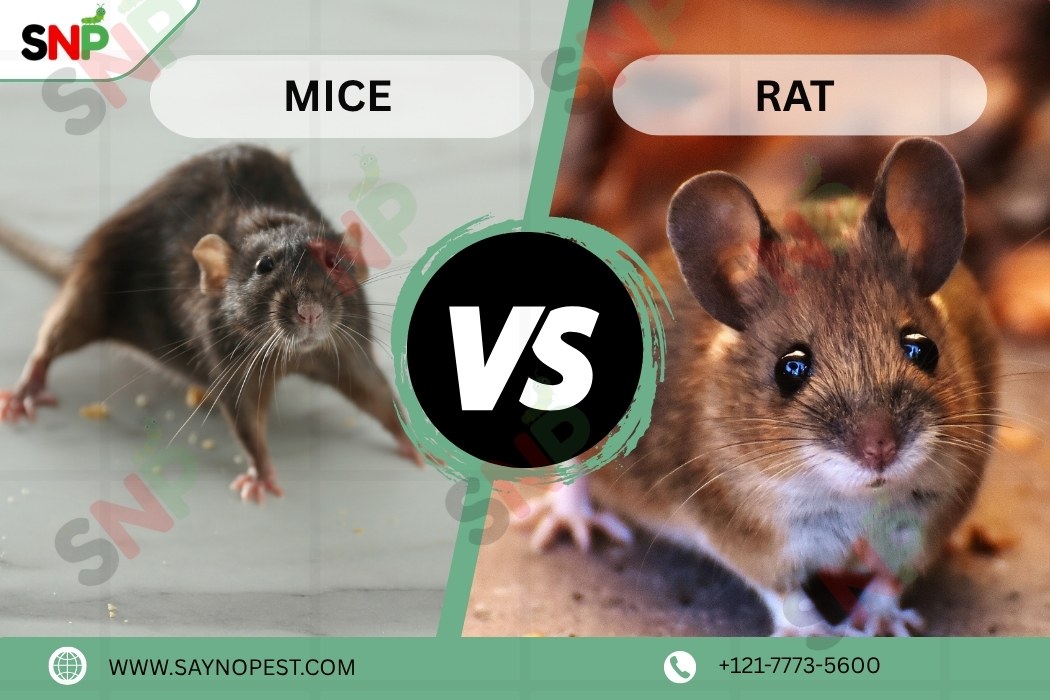
    Mice- These are tiny and slim. They are 2.5 to 4 inches long, and their tails are just as long as their bodies and their weight is just half an ounce or one ounce. They don’t weigh much, their weight is just half an ounce or one ounce. Some house mice are light brown and some are grey in colour. They have big, round ears, a small pointed nose, and long, thin tails covered with tiny hairs.

    Rats- They are much bigger and heavier in size. Grown-up rats are normally 7 to 10 inches long, and their tails are thick, scaly, and usually hairless. In comparision to mice, rats look tougher, with bigger heads, feet, and are bulkier.

    Can Mice Bite You?

    Yes, mice can bite, but they do not do it normally. Mice prefer to escape and hide. They do not like fighting but when a mouse is scared, it may bite to defend itself. Mother mice may also bite when they believe that their babies are under threat.

    In case you are ever bitten, wash it thoroughly and consult a doctor. Wild mice should not be touched and should be left to the professionals.

    What do Mice Eat and How do they Behave

    They eat both plants and animals. When they are outside, feed on seeds, grains, and fruits. But if they get access to your house, they’ll eat almost anything like crumbs, pet food, and sometimes even things like soap or paper if they can’t find real food.

    Mice eat a lot and by a lot I mean around 15 to 20 times a day, so they make their home near places where food is easy to find and always available.

    How Big Do Mice Get?

    Mice in the U.S. are normally 2.5 to 4 inches long. Their tail can add another 2.5 to 4 inches. They are extremely lightweight. They are tiny and can fit into small holes and cracks in your house.

    Want to know How Smart Are Rats?

    Rats are really smart animals. They can solve problems, notice patterns,  and learn tasks. In some cases, they are even better than humans at smartness. Rats are also social creatures that can form friendships with other rats and even with humans, recognizing people by their scent. Their intelligence makes them more careful and harder to trap than mice.

    Effective Methods on How to Get Rid of both Mice and Rats

    To end rodents infestation, follow the steps mentioned below:

    • Find Entry Points
    • Place Traps in the Right Spots
    • Choose the Right Bait
    • Keep Things Clean
    • Get Rid of Dirty Storages
    • Take Professional Help

    Use mice control products and regularly inspect your home for new signs of activity.

    Conclusion

    Mice are smaller and easy to capture whereas rats are larger, smarter and difficult to capture. Both are capable of health problems. Always be quick to take action when you suspect the presence of mice or rats and always keep in mind that the best way to defend your home is to know them.

  • Types of Bed Bugs: Not All Bed Bugs Are the Same

    Types of Bed Bugs: Not All Bed Bugs Are the Same

    Many people worry that bed bugs inhabit their homes at present. Your sleep can suffer and your skin becomes irritated from bed bugs which simultaneously generates significant mental distress in you. Homes throughout the United States battle with three different types of bed bugs species: Cimex hemipterus, Leptocimex boueti and Cimex lectularius that is the most commonly identified strain.

    The Main Types of Bed Bugs

    Types-of-Bed-Bugs

    Common Bed Bug (Cimex lectularius)

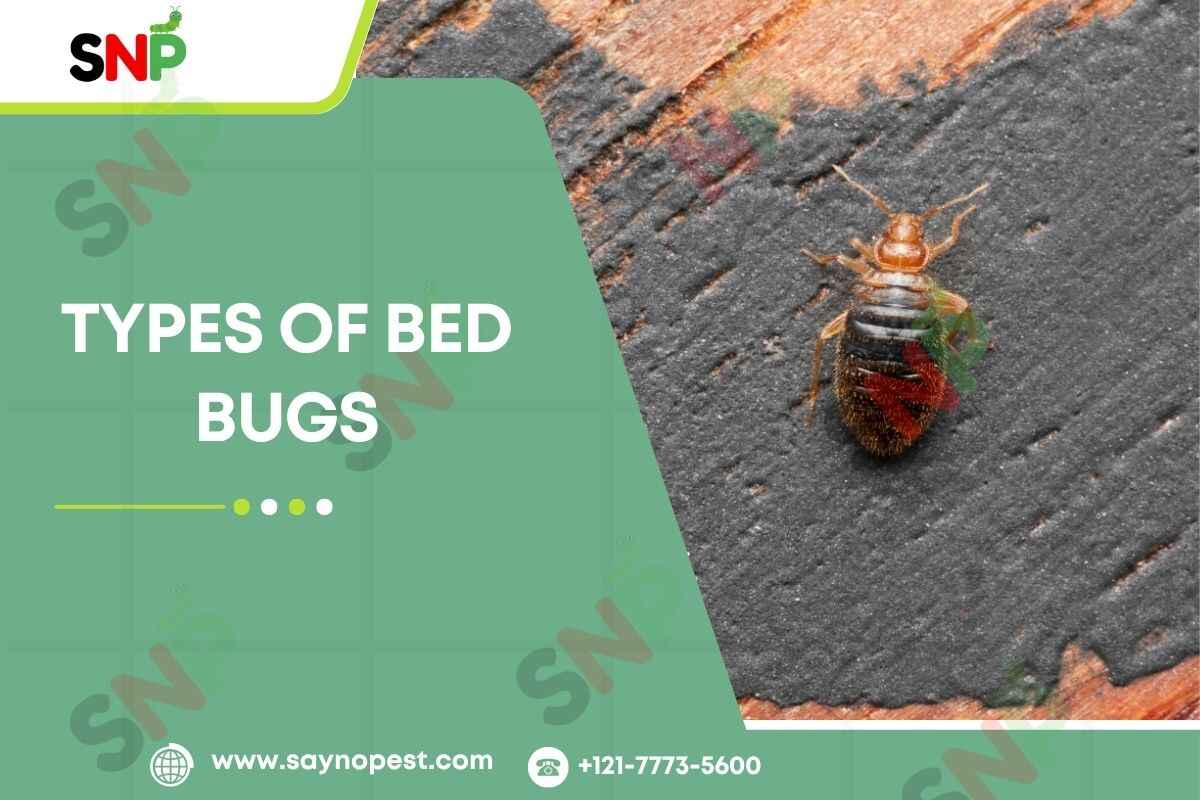
    The most common types of bed bugs found in America is called Cimex lectularius. They are called the “common bed bug.” Bed Bugs live their best life in not too hot or not too cold places, which makes homes, hotels, and apartments a perfect place for them.

    The tiny body of bed bugs allows them to fit into minute openings such as mattress seams and box springs as well as headboard crevices and areas behind wallpaper. Bed bugs emerge mainly during nighttime hours for human blood feedings while people rest. Various people experience mysterious itchy red skin bites upon waking up without recognizing their night agencies. Bed bugs do not spread diseases but they create irritation as they are extremely difficult to eliminate. Regular room cleaning along with regular bed bug inspection efforts will help you maintain a bed bug–free environment.

    Tropical Bed Bug (Cimex hemipterus)

    Another type of bed bug you should know about is The tropical bed bug (Cimex hemipterus). It is also called the tropical bed bug. As the name suggests, it is found in warm, and tropical places. However, because of more people traveling in such places and due to the changes in the weather, this bug has started showing up in homes in the southern parts like Florida.

    You might feel that it looks a lot like the common bed bug. But you find it a little bigger and rounder than them. It lives in small and narrow crevices and feeds on human blood at night like other bed bugs. It conceals itself in small and narrow places around beds like other bed bugs, and it feeds on human blood during the night.

    The Bed Bug (Leptocimex boueti)

    The occurrence of bed bug (Leptocimex boueti) in American homes remains very low despite its worth knowing existence. The bed bug (Leptocimex boueti) exists mainly in West African and South American regions even though it occasionally proves present in U.S. territories adjacent to bat habitats. The Bed Bug (Leptocimex boueti) targets bat blood exclusively because it does not feed on human blood. The bug tends to feed on bats however it will bite human beings when bats are absent from the area. Due to its stretched upper body hair, this distinctive species shows close resemblance to the common bed bugs and are found in places where there are bats present.

    How Can You Tell If You Have Bed Bugs at your Place?

    How-Can-You-Tell-If-You-Have-Bed-Bugs-at-your-Place

    Finding the types of bed bugs is a task because they are great at hiding. Then, how can you tell if you have bed bugs invasion? Here are six signs that can tell if you have bed bugs:

    Bed bugs are hard to find because they are clever little insects that are excellent at hiding. Even so, you can detect them early if you know what symptoms to look for. The following six easy signs might point to the presence of bed bugs:

    • Itchy Bites: You may experience a line or tiny, red, itchy pimples on your skin. These normally appear on the arms, shoulders, or any exposed skin during sleep. The absence of bites does not mean the absence of bugs.
    • Blood Spots: Tiny blood spots on your sheets or pillows also mean you might have bed bugs at your place.
    • Dark Spots: One of the best signs that bed bugs are present is the presence of these droppings.
    • Shed Skins: Bed bugs develop pale yellow skins as they mature. They may be present in furniture cracks or inside bed mattress.
    • Eggs and Eggshells: The tiny, sticky, white eggs of bed bugs are approximately the size of a pinhead. They often appear in bed mattress seams or in hidden corners.
    • Weird Smell: If you have bed bugs at home, you might have a weird and funky smell in the room.

    Noticing even a few of these signs helps you check more closely and take action fast! To answer how can you tell if you have bed bugs, do a thorough inspection of your bed. Check all the furniture. Don’t forget to check behind house frames, under baseboards, and inside electrical outlets.

    Why Identification of all the Types of Bed Bugs Matter?

    Know the types of bed bugs that are present on your property? Lucky for you, you made it simple for the pest control professionals to provide the best solution. If you’re still wondering how can you tell if you have bed bugs, remember that professional inspection is always the solution for peace of mind.

    Types of bed bugs and how can you tell if you have bed bugs are questions every homeowner should be able to answer. Stay informed!