Author: digimach10

  • What Attracts Pavement Ants to Your Home?

    What Attracts Pavement Ants to Your Home?

    Knowing what attracts pavement ants becomes a very important step for homeowners who are after the most effective pest management solutions. Pavement ants are a species that most definitely have topped the chart of most persistent house insect pest around the United States.

    Appearance of Pavement Ants 

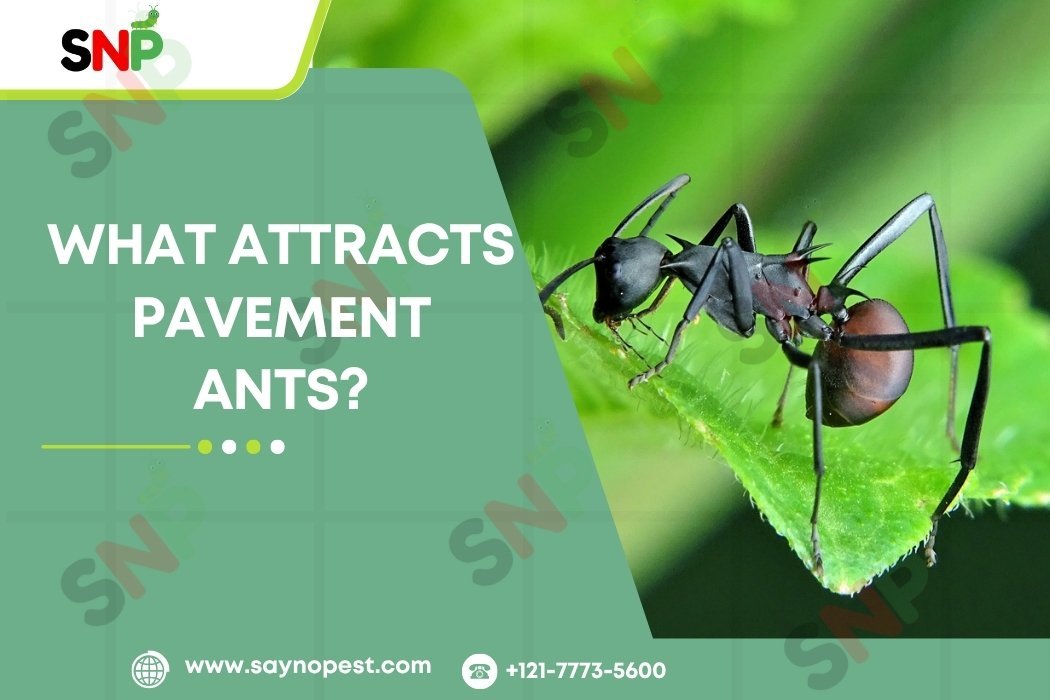
    Dark brown to black in color, these small insects are known for their notorious behavior of establishing their colonies under sidewalks, driveways, and concrete structures.  These tiny invaders have a length of approximately ⅛ inch and distinguish themselves by the small mounds of excavated soil they make around pavement cracks.

    The ant colonies of pavement ants can consist of 3000 to 10,000 ants, but some colonies reach 30,000 ants in number. More than one queen in a larger colony makes it harder to get rid of these pests.
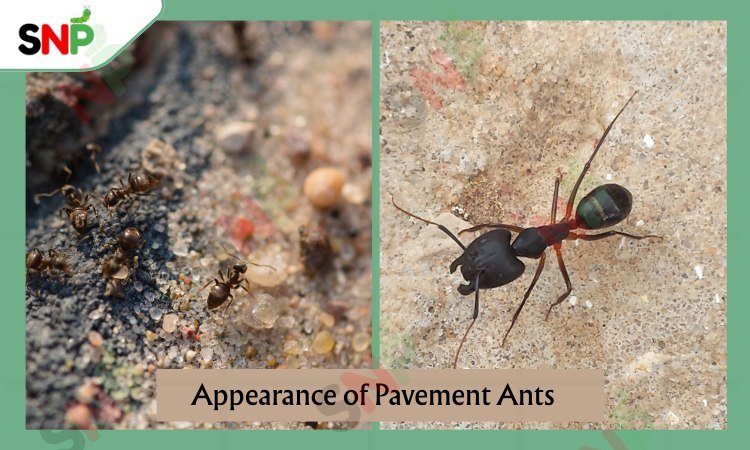
    Appearance-of-Pavement-Ants 

    What Attracts Pavement Ants to Your Yard?

    1. Food Sources

    Pavement ants love all kinds of food. Be it sweet or not, and thus your home becomes a very attractive place to them.

    The list below represents the ants main food that they like:

    • Greasy food
    • Meat
    • Nuts
    • Cheese
    • Honey
    • Jam and cookies
    • Bread
    • Crackers, and what not!
    • The ants will also eat honeydew from aphids, dead insects, plant juices, pet food, garbage scraps, etc.

    These ants are very active in searching for carbohydrates and proteins, and among other things, grease, and meat are the most preferred by them. The ants feed on various things such as sugar, nectar, tiny seeds, and the remains of insects.

    2. Moisture

    What attracts pavement ants is not only related to food but also to the moisture sources. These creatures only survive if they have continuous water supply, and are humid. Besides, kitchens and bathrooms are the most favorable due to the higher moisture levels that they have.

    Moreover, leaky faucets, dripping pipes, pet water bowls, and condensation around appliances will turn out to be perfect spots for them.

    3. Warmth and Shelter

    Pavement ants have a very strong preference for warm environments. Within homes, these bugs go wherever there is heat. They make their nests in the closest distance to where the heating apparatus, furnace, air conditioning, and other such parts of the building.

    The perfect temperature accordingly to pavement ant’s needs l is between 21-27 degrees Celsius.

    During winters, the problem with the pavement ant is more severe because outdoor food becomes scarce. So, they invade homes.

    4. Structural Entry Points

    Another point in what attracts pavement ants is that they need openings to enter homes. In order for them to be undisturbed, they look for crevices in the foundation, basement windows and doors, and gaps around places where they can run their wires through. The most common places they use to get in are the weep holes, the areas where the pipes go through the walls, and the cracks that are in the basement walls or concrete floors.

    5 DIY Control Tips to Prevent Pavement Ants
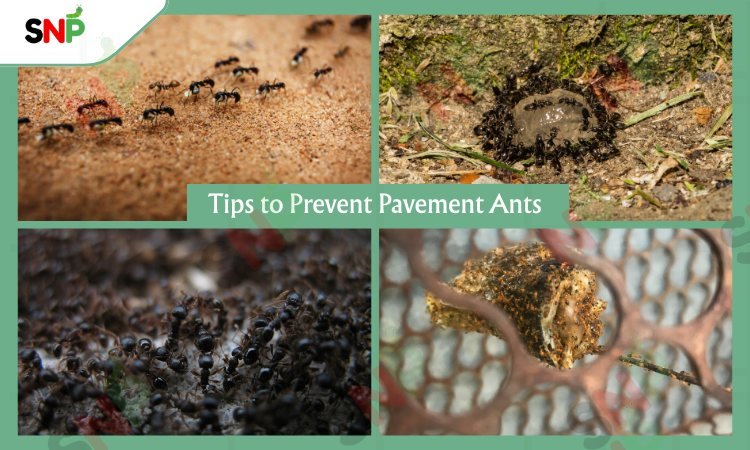
    1. Eliminate Food Sources Completely

    • Clean all the spaces daily.
    • Keep food in airtight cans and clean the crumbs, spills, and any other residue immediately.
    • Empty the trash daily and keep it in a closed container outside the house.
    • Pet food needs special care, thus bowls should be removed after feeding and feeding areas should be cleaned.

    2. Create Natural Repellent Barriers

    • Essential oils can be considered as a powerful weapon for nature against the things that bring to the pests that attract pavement ants. The oil of spear mint is one of the strongest natural repellents for ants. Make up a spray solution with 30-40 drops of essential oil, 30 drops of alcohol, and 60ml of distilled water. The list of good oils goes on and includes tea tree, lemon, eucalyptus, cinnamon, and clove oils.
    • Top areas where ants tend to come in, for example, doorways and windows, with essential oil spray.
    • Do not forget to reapply the solution regularly, particularly after cleaning, and also when the ants come back.
    • Mix oils to obtain a more efficient formula – peppermint, clove, and citrus oils are the perfect combination.
    • Vinegar is another natural alternative since a half and half mixture of white vinegar and water will erase the scent that ants have been using to follow.

    3. Deploy Strategic Bait Systems

    Ant baits that are homemade attract the needs of pavement ants and at the same time kill their entire colonies.

    Put stations with poison along the trails where ants are seen and near the place where they get in.

    Provide baits to the ants without any restrictions as they will carry the poison to the nests thus killing queens and larvae.

    It’s important to keep the bait stations until no ant activity is noticed at all. Also, refill the baits if it is needed.

    4. Seal Entry Points

    By systematically sealing entry points, you definitely make it harder for ants to find their way into your house. To fill cracks use either caulk or a concrete patch.

    Do it around windows and doors, weatherstripping will be applied so that gaps will be eliminated. Sealing will be done at the place where pipes and wires enter the home.

    Fill gaps of the joints formed during the expansion of the slabs and mend the mortar parts that are damaged in the brick facades. Be extra careful in the areas that are closest to heat sources because that is where ants mostly enter. But, when bait systems are used, it is better to wait until ants are completely inactive before sealing. If sealing is done before it is time, the ants will not be able to carry the poison to their nests, hence, the treatment will be ineffective.

    5. Modify Environmental Conditions

    • Clean gutters regularly and direct downspout water away from buildings.
    • Fix all leaking plumbing, including faucets, pipes, and irrigation systems. Remove standing water sources around the property.
    • Trim vegetation so there is at least six feet of clearance from structures. Replace wood mulch with pea gravel to minimize nesting areas.
    • Remove potential nesting sites not only under landscape stones but also under pavers and other objects that are on the ground level.

    Conclusion

    Knowing what attracts pavement ants gives the homeowners the power to carry out prevention strategies that are targeted. These invaders are very persistent as they look for food sources, moisture, warmth, and open entry points within homes. It is not enough to only control one factor; all of them have to be considered if one wants to eliminate the infestation of pavement ant.
  • How to Get Rid of Bed Bugs and Fleas

    How to Get Rid of Bed Bugs and Fleas

    People often find that bed bugs have ridden home with them after their trip. To know how to get rid of bed bugs, read the article further. Normally, dogs and cats are the primary source of pet flea infestations in homes, but if an animal happens to be crossing a clothing line or picking up along the way, it can become the source of a flea invasion as well.

    They reproduce at a super-fast pace and very short time they can become a major problem since they are prolific. According to one research, a single bed bug female can be capable of laying up to 500 eggs a lifetime. Fleas are also produce as many as 50 eggs in a day. To successfully eradicate bed bugs and fleas, one must be aware of their behavior and ways to remove them.

    How to Get Rid of Bed Bugs and Fleas

    Bed bug bites look like small red spots with darker centers, and they are usually connected in a row. Furthermore, a lung-head-heavy infestation of bugs may be the cause of people with weak conditions of different anemia forms to get sick.

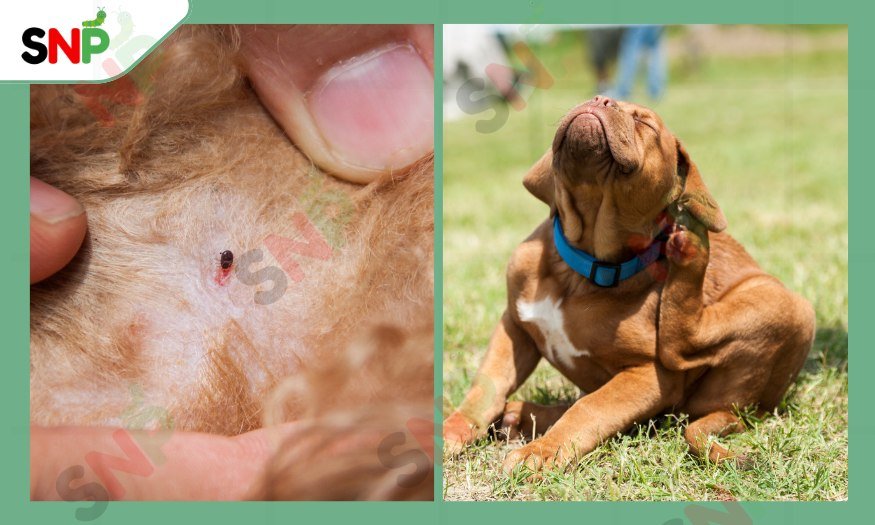
    On the other hand, fleas are more dangerous in the sense that they are more likely to be the disease carriers. Fleas-borne typhus, plague, and cat scratch disease are some of the diseases that fleas can spread through their bites. The itching caused by flea bites is usually very severe and they appear mostly on the lower legs and ankles. The possibility of children accidentally ingesting infected fleas not only posing a risk of losing the infection among themselves, but also sharing the infection to their human hosts through the transmission of tapeworms is another point to consider here.

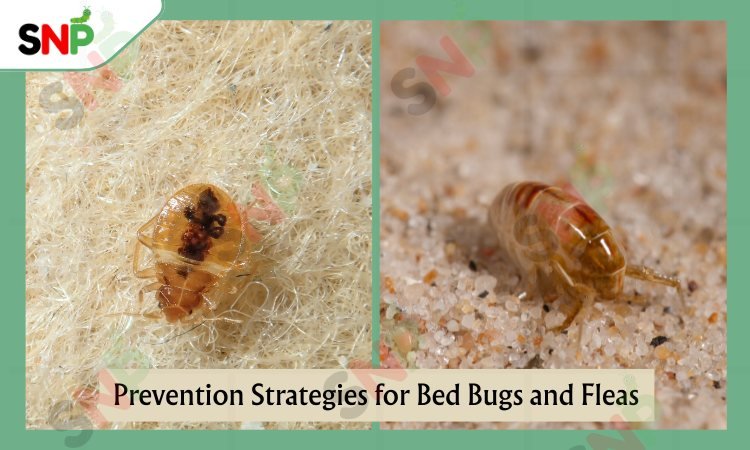
    Prevention Strategies on how to get rid of bed bugs and fleas

    Prevention-Strategies-for-bed-bugs-and-fleas

    Prevention of bed bugs

    It is recommended that you go through the used furniture very thoroughly in order to be sure that it is clean and that it won’t bring any bugs with it when you get it into your house.

    Also, it is very important to re-check your luggage and clothing after your trip, particularly if you are coming from a hotel or an infested area. Besides that, make an effort to get rid of as much clutter in your bedroom as possible, so there won’t be any hiding places for the bugs.

    Prevention of fleas

    Prevention of fleas is mainly connected with the care of animals and the management of the garden.

    Do not forget to keep up with a schedule for flea treatments for your pets during the whole year.

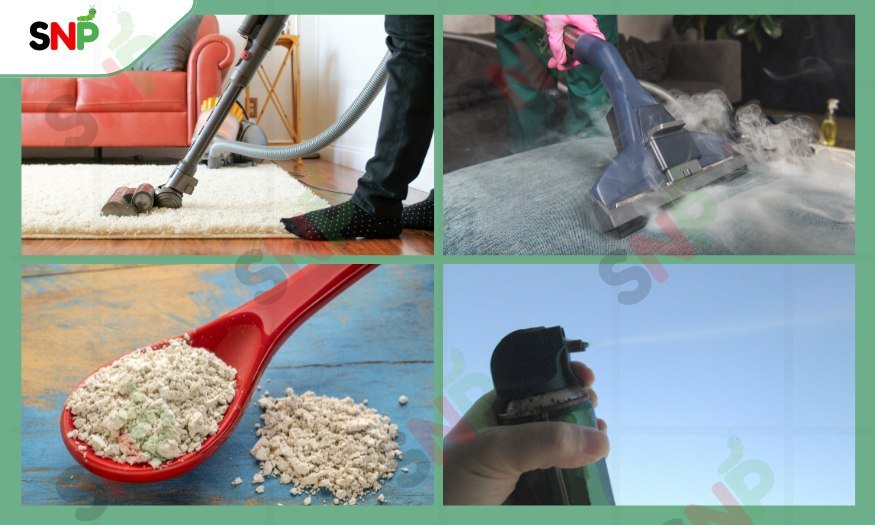
    Routinely vacuum carpets and upholstery as well as at spots where the pet frequents and sleep areas, so that you get rid of eggs and larvae.

    Also, keep grass short and shrubs trimmed so that outdoor breeding areas are at a minimum. Additionally, do not let wild animals get food on your property, as that will attract them.

    Treatment Methods for Bed Bugs

    To eliminate bed bugs and fleas, it is best to follow a targeted plan which starts from confirmation. The first step is to check the mattress and furniture for bed bugs by looking for living bugs, blood stains, and dark spots.

    Heat treatment is a very good solution for bed bugs.

    Wash all your clothes and bedding with hot water at a temperature higher than 120°F. Besides, dry your clothes at the highest temperature for at least 30 minutes.

    Steam cleaning helps to get rid of bed bugs in mattresses and furniture. The temperature of the steam must be at least 130°F and it has to be applied slowly on surfaces.

    On the other hand, diatomaceous earth can serve as the natural solution for the treatment of the infestation caused by bed bugs. The powder is abrasive to the bed bugs’ exoskeleton and it causes dehydration. It is recommended to spray it in the cracks, crevices, and around the bed frame in a thin layer.

    Treatment Methods for Fleas

    To get rid of fleas it is essential to treat your pets and the environment at the same time. First, give your animals professional treatments from a veterinarian. Also, wash pet bedding every week with hot water and vacuum the area carefully.

    Vacuuming is a way of getting rid of fleas in all their life stages from carpets and upholstery. Move the vacuum slowly and carefully, do not miss any beds or places where the pets are. Take the vacuum bags out immediately and put them in a closed container outside the home.

    Using a steam cleaner on carpets and upholstery can definitely get rid of fleas at any of their life stages. The heat generated by the steam goes right into the fibers. To be sure that you have a thorough flea control, also vacuum the affected areas regularly along with steam cleaning.

    What Kills Bed Bugs and Fleas?

    What-Kills-Bed-Bugs-and-Fleas

    Heat-Based Solution

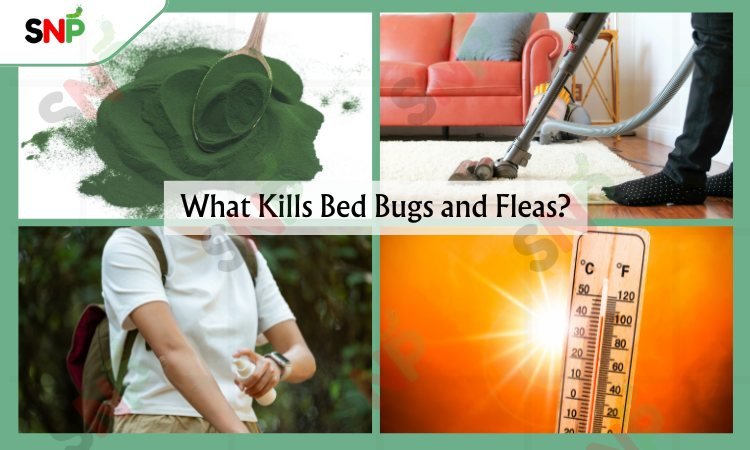
    Heat continues to be the most dependable method of slaying of bed bugs and fleas. What kills bed bugs and fleas most effectively here include the fact that temperatures of 120°F and above kept for certain durations.

    Chemical Treatment

    Bed bugs that resist insecticides from the professionals are the target. New bed bugs are capable of resisting most of the over-the-counter sprays. EPA-registered products that have certain active ingredients are more effective.

    In addition, insect growth regulators (IGRs) for fleas keep them from making offspring for a long time. Applications with permethrin are good for the time left after the application since they provide residual protection to clothing and carpets.

    Natural Methods

    Diatomaceous earth does that by drying the pests out of their water supply. What kills bed bugs and fleas naturally also includes this algae powder. Place food-grade diatomaceous earth in narrow lines where pests are likely to pass.

    Vacuuming is a physical method that operates by physically capturing pest and their eggs. This mechanical approach works immediately and drastically reduces the pest population. Combine vacuuming with other treatments for comprehensive control.

    Cold Treatment

    Temperatures below 32°F are freezing and such they can only in a matter of several days directly kill bed bugs. However, do not forget that they should be placed in the freezer for four days. It is necessary to be sure that the bed bugs are dead. This is the best solution for clothes and small pieces of furniture that cannot be exposed to heat treatment.

    Conclusion

    These creepy crawling pests such as bed bugs and fleas can be only thoroughly eliminated if multiple methods of treatment approach is being used. Being informed of how to get rid of bed bugs and fleas is important. Heating, profession-grade chemicals, and natural means like diatomaceous earth are the parts that are playing in the elimination of the pests. In addition, regular cleaning, taking care of your pet, and maintaining the house will be all that is needed to prevent future infestations and safeguard your family from those persistent pests.

  • Do Millipedes Bite?

    Do Millipedes Bite?

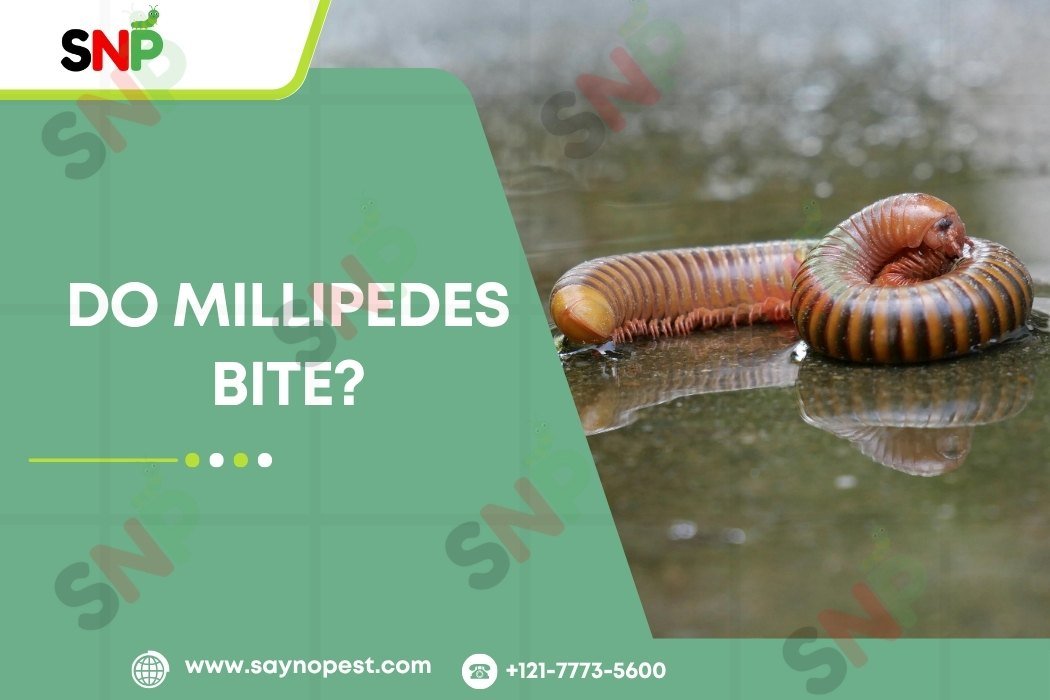
    Millipedes, sure, they are among the most misunderstood arthropods that are found all over the United States of America. People are very often the ones who come across these many-legged creatures quite unexpectedly in their gardens or basements or simply outdoors and then they immediately start wondering: “Do millipedes bite humans?” This question is obviously raised due to natural concern after finding unfamiliar creatures around their property.

    Do Millipedes Bite?

    When we try to figure out if millipedes bite, we need to check the structure of their mouth as well. Millipedes have mouthparts that are specifically designed for them called gnathochilarium, which are described by experts as fused maxillae that make a simple feeding apparatus. This part of their body is used only for processing the soft, dying plant matter and is not for giving bites to other creatures.

    The gnathochilarium is not only weak but also it is made in such a way that it can not penetrate human skin. The millipedes do not use these mouth parts for anything else but cutting up the rotten leaves, fungi that are going to be the main part of their diet. Their moving mechanism is a soft grinding and processing instead of an aggressive biting.

    Do millipedes bite even when they are feeding? Millipedes at no point even when they are feeding their favorite foods, they do gentle scraping and grinding rather than recklessly biting vigorously. Their mandibles are working hand in hand with those digestive secretions in order to soften the food materials before the intake thus making it easy.

    Are Millipedes Poisonous? What Science Says!

    Are-Millipedes-Poisonous

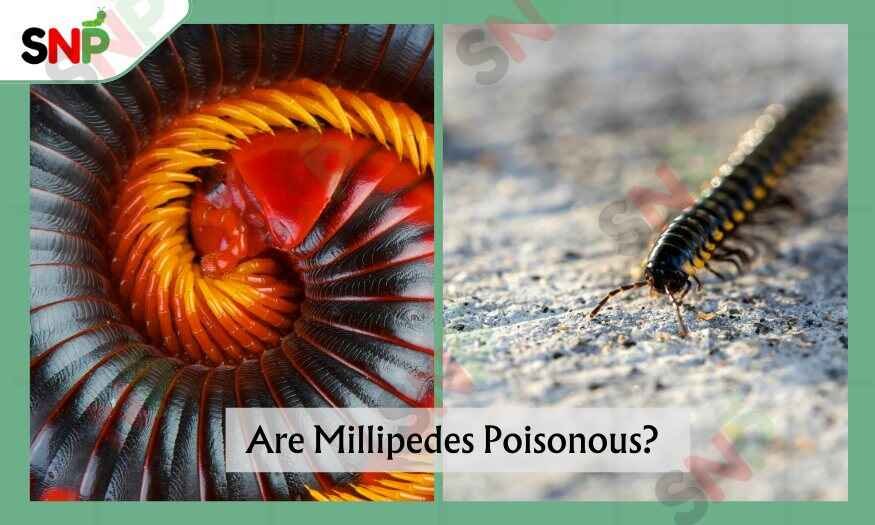
    Millipedes are not poisonous and cannot bite. But they possess special chemical defenses. Some millipedes secrete a combination of chemicals when they are threatened or mishandled.

    The quantity of poison that millipedes secrete is insignificant to cause any serious damage to human beings. But individuals with sensitive skin can experience irritation such as itching, redness, or burning sensation after contact with the secretion of a millipede. The skin can become brownish in other instances, but the problem can be resolved by washing with soap and water.

    Even larger millipedes are able to spray their chemicals up to 32 inches, although the spray is not strong enough to be harmful to most people. These defense tricks have been in use by millipedes since more than 400 million years. Each body segment has special glands that secrete their own chemical combinations.

    There are chemicals that can kill bacteria and others that are used to repel enemies. Millipedes usually curl into a ball when they are attacked and secrete smelly substances through small holes in their bodies. This cushions their tender legs and creates a shield against harm. Other millipedes enhance their own defenses by incorporating plant chemicals in the food they consume.

    Staying Safe Around Millipedes

    Although millipedes have minimal direct harm potential, following rules ensures safety. Knowing correct safety precautions becomes very necessary when you come across millipedes in your garden.

    • Use gloves for protection when you take care of millipedes.
    • You need to clean places where they have gathered.
    • Do not touch your eyes it after the contact with millipedes as their secretions can cause irritation.
    • If, however, the contact is accidental, wash the place of the contact with plenty of soap and water straight away.
    • Do not use cleaners that are alcohol-based as they can contribute to irritation.
    • If the situation becomes very severe to the extent of symptoms like wide blistering, shortness of breath, or allergic reaction signs, you should call for help immediately.
    • It is advised that pet owners keep an eye on their pets near millipedes. Pets that are full of curiosity can be endangering themselves by going after millipedes for a treat.
    • Even though millipedes secretions are minimal in terms of the harm caused to pets, they may go through a short period of irritation in the mouth or may have diarrhea.

    Key Differences between Millipedes vs Centipedes

    Millipede-vs-Centipede

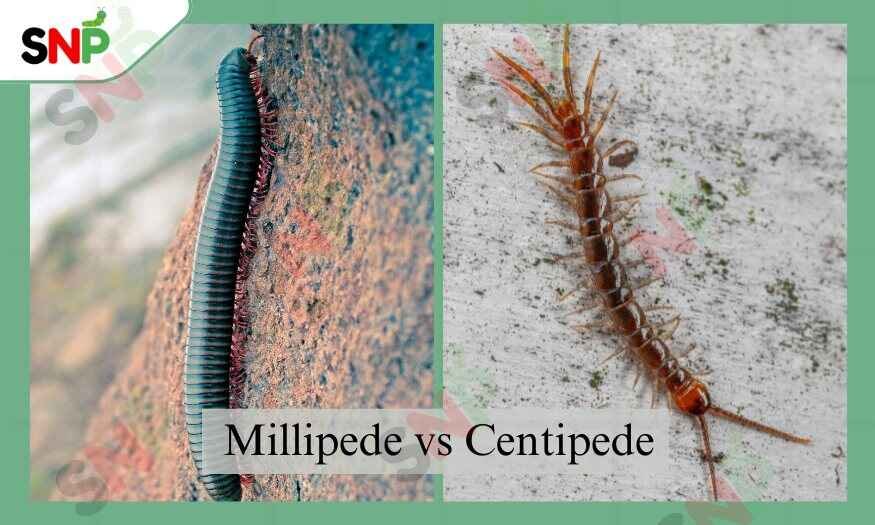
    Most people confuse Millipedes vs Centipedes with each other. From the ecological point of view, these two arthropods are very different. There are millipedes that cannot bite while centipedes are capable of giving painful bites.

    Centipedes have venomous fangs known as forcipules with which they harm the prey and also protect themselves. They give painful bites to people, however, it is seldom that they become a serious problem for the doctors. On the other hand, millipedes have no biting apparatus at all and they depend only on their chemical defenses.

    The structure of the body also vary to a large extent in these arthropod groups. Millipedes are creatures with cylindrical bodies rounded in shape that have two pairs of legs for each segment. Centipedes have flattened bodies and one pair of legs for each segment only.

    Millipedes are slow movers and they do it deliberately, while centipedes are fast moving predators that directly chase the prey of other arthropods.

    Intake of food also is the factor that makes these animals different from one another. Millipedes are peaceful decomposers that survive on dead plant material. Centipedes are go-getters and hence they outdo others in numbers by catching and consuming other arthropods, worms, and small creatures.

    Conclusion

    To answer the question “Do millipedes bite“. Millipedes have no poison in the usual sense, but if the defense chemicals they excrete come into contact with the skin of the very sensitive someone, only mild irritation can be caused. Having enough knowledge about these creatures will help you to understand how you need to behave with them.

  • What Do Millipedes Eat

    What Do Millipedes Eat

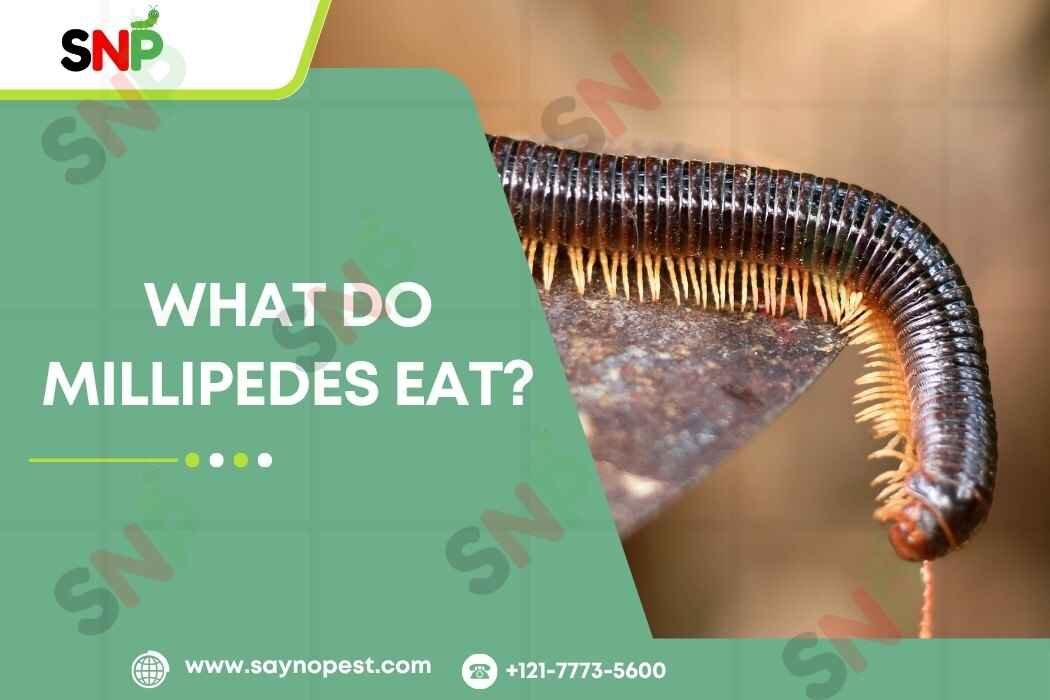
    The question of what do millipedes eat is an important one to ask. This can give us a lot of information about these interesting arthropods that are very important to the health of the ecosystem. Shocked right?   Millipedes are the nature’s helpers because they decompose organic matter and return nutrients to the soil.

    Introduction

    Millipedes are animals that fall under the class Diplopoda. They are very easily seen decomposes in the terrestrial ecosystems. These multi-legged arthropods, have different feeding habits that make them the primary contributors to the environmental health. Many people consider them as pests but knowing what do millipedes eat can open our eyes to the fact that they are a part of the recycling system of nature.

    What Do Millipedes Eat

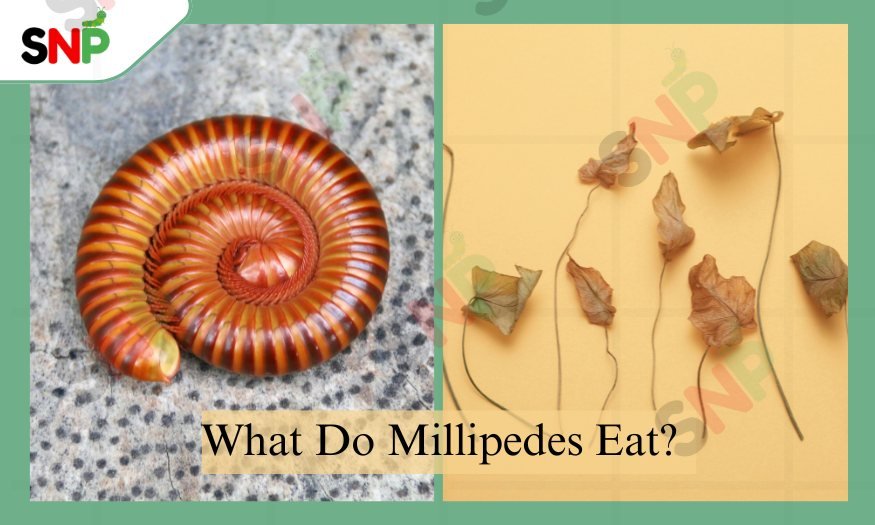
    Millipedes are mainly detritivores. They consume decaying organic matter, and not animals. Major part of their diet is made up of decaying plants, such as rotten wood, fallen leaves, and decomposing vegetables.

    Millipedes mostly consume dead and decomposing plant materials such as fallen leaves, rotting wood, and bark. All of the food they consume should be moist to some extent.

    They go after water, cow manure, clippings of lawn, and fruits that have started to decay. When these best sources get depleted, millipedes turn to plants, fungi, and fresh fruits to obtain their nourishment. They generally supplement their diet with old grasses, stems, and flower parts that they break down and thus become a part of the natural recycling process.

    They mainly consume fungi and mushrooms, especially when the other food sources are not that easily available.

    Millipedes, being vegetarian animals, are some of the few times that they may eat the remains of small animals like insects, worms, or snails, but such cases are very rare.

    Once they have shed their skin, they consume it to replace the minerals lost such as calcium and even eat their own feces to ensure that they have absorbed all the remaining nutrients. They are more active and feed more in the rainy season because their feeding habits are dependent on moisture.

    In general, millipedes are responsible for the decomposition of dead materials and soil enrichment.

    10 Interesting Facts about Millipedes

    Millipedes have definitely interesting characteristics that make them one of a kind among the arthropods:

    1. Millipedes are the ancient and modern representatives of the terrestrial fauna from 428 million years ago. The first known millipede was only 1 cm long.
    2. Although they are labeled as “thousand feet” in their name. But no millipede species even comes close to having 1,000 legs.
    3. Millipedes have the most interesting and unique defensive mechanisms. They become a solid ball when one of their parts is touched to protect their soft underparts.
    4. Millipedes develop through a quite complicated process called anamorphosis, during which they shed their skin 7-10 times before reaching sexual maturity. Each shed adds new segments and legs to the body, with young ones starting off with three pairs of legs only.
    5. Vast and diverse millipedes of the past, for example, Arthropleura, could compete with giant animals of today in length that surpassed 2m.

    A Few More Facts about Millipedes

    1. Millipedes are able to live very lengthy lives, with their lifespan being 2 to 15 years depending on the species.
    2. The lifespan of the giant African millipedes is 15 years, while those of North American species are 2-3 years on average.
    3. Female millipedes lay 10 to 300 eggs in a breeding season. To protect the eggs, which are the developing offspring, they make nests out of the soil or the decaying matter of plants.
    4. Millipedes ecosytem engineers, are causing great changes in soil structure and nutrient cycling in the environment. Through their feeding, fungi and bacteria get the larger pieces of plant material broken up so they can continue reprocessing it further, as if it were smaller particles.
    5. The millipede genus exhibits a variety so wide that it is challenging to number them. Because of their diversity only 12,000 species of millipede have been described so far. The real number is way higher than 12000. New species appear constantly in different ecological niches.

    Conclusion

    For the people facing an invasion of millipedes, it is important to have in mind that recognizing the general habits of millipedes such as what do millipedes eat, etc can help you find some new methods of pest control. Make sure the methods are environmentally friendly and at the same time, you should still be in fovour of the recycling forces of the Nature rather than opposing them.

  • Tired of Flea Eggs? Know what to do!

    Tired of Flea Eggs? Know what to do!

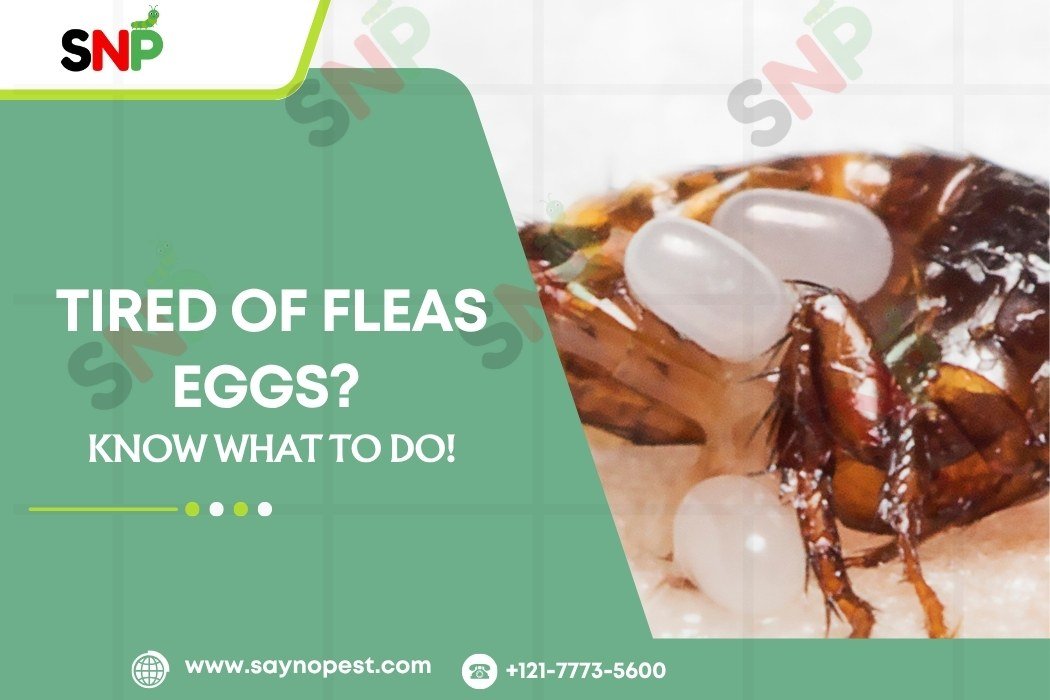
    Flea eggs are primary and the main source of the flea infestations.These minute, almost invisible invaders set the base for a bigger pest problem that affects the life of your pets and your own. Understanding the nature of these eggs is of vital importance to the people who are facing a flea infestation.

    The eggs are not only laid by the adult female fleas, but they can enter your home via your pet. They might hide in carpets, furniture, pet bedding, and inside the wall cracks. Flea eggs need to be specifically targeted if you want to break the reproductive cycle and get long-lasting solutions via pest control.

    How to Make Sure What you see are Infact Flea Eggs?

    The eggs are very tiny, and their length is only about 0.5 mm. They have a width of 0.3 mm and because of their size, they are almost invisible. They have an oval shape with round ends. New flea eggs are white to off-white in color and are somewhat translucent if you see closely. Many people compare flea eggs to salt or tiny rice grains due to their size and color.

    It is very important to keep a check. Check the bedding area of your pet, house carpets, rugs, and cracks in the furniture properly. These eggs are very commonly found in cracks between floorboards and along baseboards. To make it easier to spot the potential flea eggs, put a dark cloth or paper under them. Also, if you have a magnifying glass, amazing! Use it to look closer.

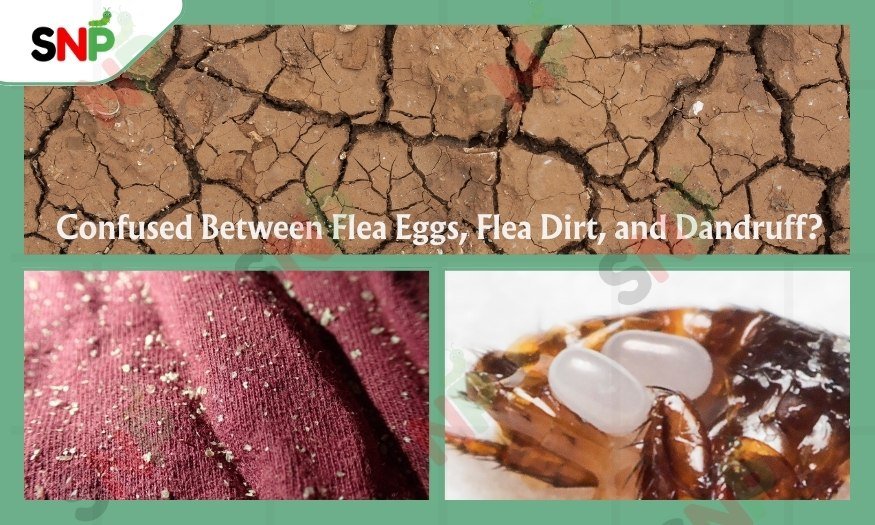
    Confused Between Flea Eggs, Flea Dirt, and Dandruff?

    Fleas eggs are very different from flea dirt and dandruff. They have particular shape ie. oval and are white in color. Flea dirt is nothing but dark brown, crumbly pieces. This flea dirt is mainly the blood that fleas feed on and have digested. This is why it is red or brown in color.

    On the other hand, pet dandruff does not have any particular shape, are flaky, and lacks the smooth oval shape which is the main feature of the flea eggs. Dandruff consists of dead skin cells that are very different in size and shape. These skin flakes get trapped into pet fur and accumulate over time.

    The Fleas eggs are easy to figure out because of their oval shape and smooth texture. They are not sticky and if you touch these spots very gently they will fall off. On the other hand, dandruff is sticky, so it will stay on the fur until removed.

    Ways to Get Rid of Flea Eggs

    1. Vacuuming- Vacuum kills all of the eggs. They face physical trauma. Your focus should be on your pet’s sleeping areas, and cracked furniture where flea eggs find a place to hide. Vacuum carpets, rugs, and upholstered furniture daily to remove up to 90 percent of flea eggs from your place.
    2. Natural Desiccants- Sprinkle food-grade diatomaceous earth on carpets and allow to settle 48 hours and vacuum. You can use baking soda or salt powder.
    3. Wash and Steam Clean- Steam clean carpets with hot steam and kill flea eggs in all stages of life. Replace your extremely dirty ped beddings with fresh, clean materials.
    4. Environmental Controls- Maintain the humidity at less than 50 percent to ensure that the eggs do not hatch successfully. Apply flea prevention products on pets that are approved by veterinarians.
    5. Treatment Option- Use insect growth regulators which specifically attack flea eggs and inhibit hatching. Use professional-grade insecticides. Follow up treatments should be scheduled after every 5-10 days to intercept newly hatched fleas eggs.

    Conclusion

    It requires proper vacuuming, environment management, and professional treatments. It is important to note that the eggs may remain dormant even after months and therefore continuous effort is the only way to make sure that they are totally eliminated.

    Understanding the identification of these eggs and implementing strategies to protect your pets against continuous infestations. Do it until no more new eggs are found in your living spaces. The key is to keep following the tips and apply the control methods consistently.

  • Flea Life Cycle: From Eggs to Adults

    Flea Life Cycle: From Eggs to Adults

    Introduction to Flea Life Cycle

    When you face the issue of flea invasion in your house or on your pets, it is important to know the Flea Life Cycle. This will help you to control the fleas and you will be able to protect your pets as well. Fleas are dangerous because they reproduce quickly. Also, because they can live in different climate conditions easily. Knowing the Flea Life Cycle and its stages, you will be able to attack these pests more effectively and avoid future epidemics.

    Facts about a Flea Life Cycle

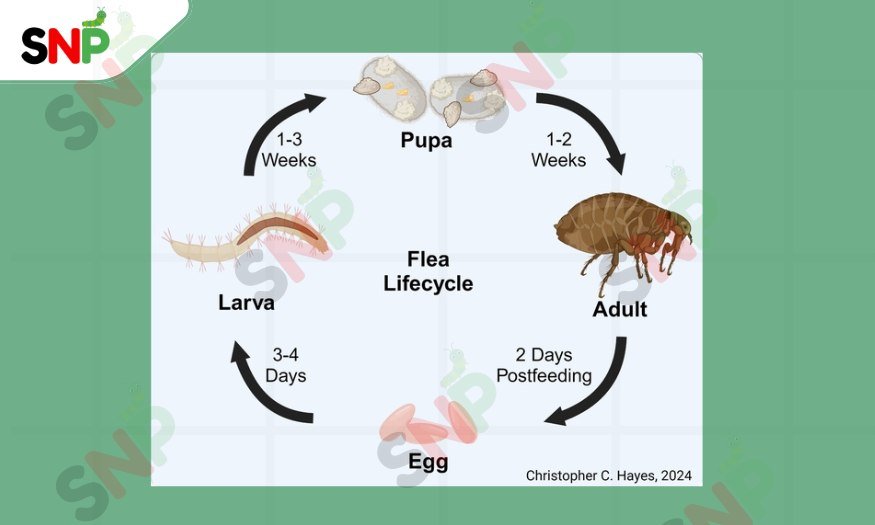
    The Flea Life Cycle includes four different stages:

    1. Flea eggs
    2. Larvae
    3. Pupae
    4. Adult fleas.

    Every stage has its difficulties and needs certain control measures. Each adult flea you observe has dozens of younger ones hiding in carpets, beds, and on floors, inside cracks, and so on. This is why it is important to consider the whole Flea Life Cycle when organizing pest control.

    A Brief on Flea Eggs

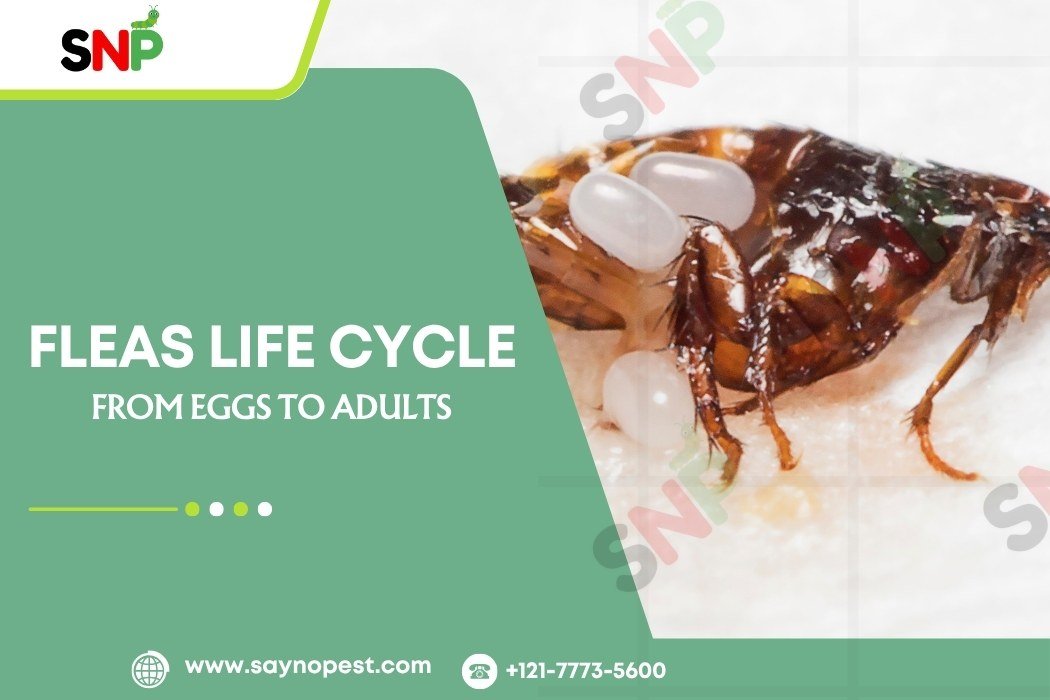
    The Flea Life Cycle begins with flea eggs. Adult female fleas deposit flea eggs on their host, which is typically a pet, after feeding. These flea eggs are small, oval and white or cream in color and are hard to see. Since the eggs of fleas are smooth, they can easily drop off the animal and spread all over the house- landing in carpets, beddings, furniture, and even in the soil outside.

    Generally, the flea eggs may hatch in a time period ranging from 1 to 12 days, still, some of them may lie dormant for weeks or even months if the conditions are changed. This feature of the flea eggs is the main reason why they are so hard to get rid of and why the infestation can still be there after the treatment.

    Stages of a Flea Lifecycle

    The four stages of a flea’s life cycle are mentioned below! At each stage, the flea displays unique features.

    1. Flea Eggs

    After a blood meal, adult fleas lay grease fleas on their host. One female can lay approximately 50 eggs in a single day. Most of the grease flea eggs fall off the host and gather in the environment, particularly in areas where the pet population is high. The hatching of the flea eggs takes place in 1 to 12 days period depending on the temperature.

    2. Larvae

    After hatching, the flea eggs turn into larvae, hence small worm-like figures that are frightened of the light and are always in the search of dark and warm places are called the flea larvae. Flea larvae consume decomposed material that consists of flea droppings and skin cells. The duration of this stage is approximately 5 to 11 days.

    3. Pupae

    The grown up, flea larvae now make a protective cocoon and thus they reach the pupal stage. The cocoon is not only sticky but also camouflaged with debris, hence the pupae become hardly visible and also they are resistant to many treatments.

    During the dormant period, which can last for several weeks or even months, pupae are still there and only upon receiving signals such as vibrations, heat, or carbon dioxide, they will decide to come out as adults.

    4. Adult Fleas

    Adult fleas come out of their cocoons when they detect a host in the vicinity. They do not waste time in looking for a blood meal and they can also start laying flea eggs within 1-2 days. Adult fleas have a lifespan of about 2–3 months, but they are capable of living longer if the conditions are suitable.

    It is estimated that only 5% of the total flea population is at the adult stage, hence most of the fleas are going to be in the earlier stages and they will always be hidden to the naked eye.

    Conclusion

    For the owner of a dog or cat who is having a flea problem, its important to understand that if you simply kill the adult fleas you still have a big problem. The problem I am talking about is the flea larva and the flea eggs. Therefore, to make pest control more effective, a plan for the entire life cycle of the insect, especially the places, where the eggs and larvae may be hiding is needed. By being smart and treating all the life stages you will be able to distrupt the process. This will keep your home and your pets safe.

  • Tick vs Bed Bug: Know All About Them

    Tick vs Bed Bug: Know All About Them

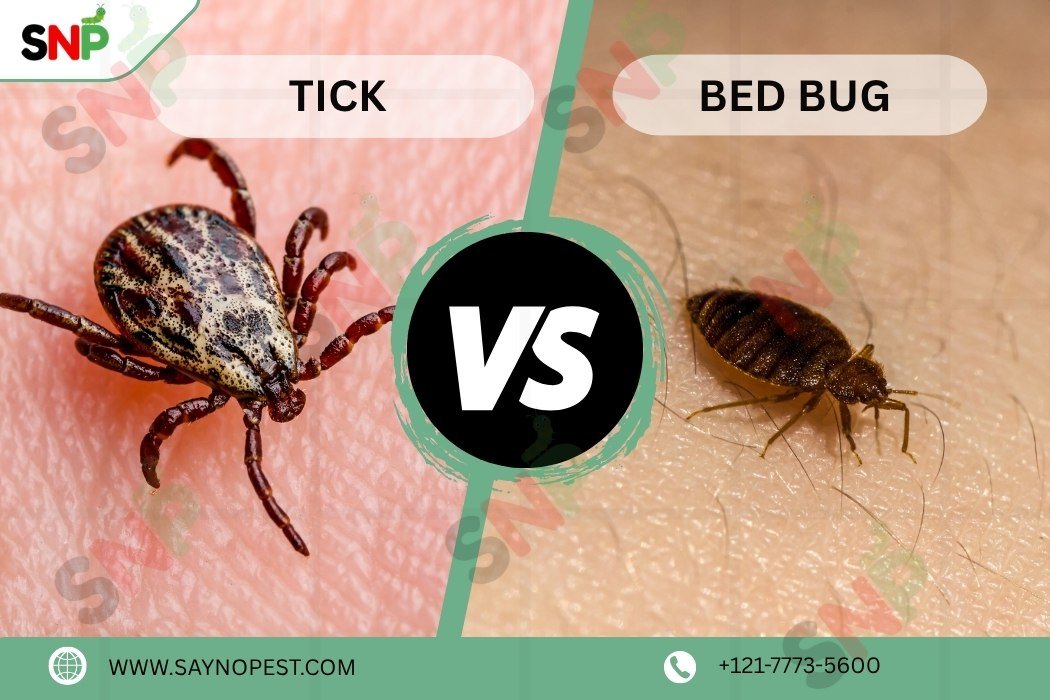
    This guide on Tick vs Bed Bug will walk you through the process of recognizing these pests and getting the facts right about the dangers they cause.

    Ticks and bed bugs are small, blood-sucking pests. You may not realise but they can be a huge nuisance to you and your pets. They are extremely different in their biology, behavior, and health hazards. Only a person who is aware of the differences can succeed in pest control and prevention.

    Tick vs Bed Bug: Major Differences

    Appearance

    • Ticks are arachnids that have eight legs and bed bugs are insects with six legs. But, tick larvae have six legs and in the later stages of development, they get eight.
    • Although, both the pests have flat oval bodies and they are brown in color. But they are not the same. On average, adult ticks range from about 3 to 4 mm, but after feeding, females can swell up to 10 mm. Bed bugs are around 5 to 6 mm, and they swell to approximately 7 mm after feeding.
    • Ticks could be of various colors such as gray, red, tan, patterned, and brown besides that, bed bugs are mostly reddish-brown in color only.
    • Although both ticks and bed bugs swell after feeding, but ticks do not change their shape much. While  bed bugs color changes to red or brown and they swell up after feeding on human blood.

    Bites

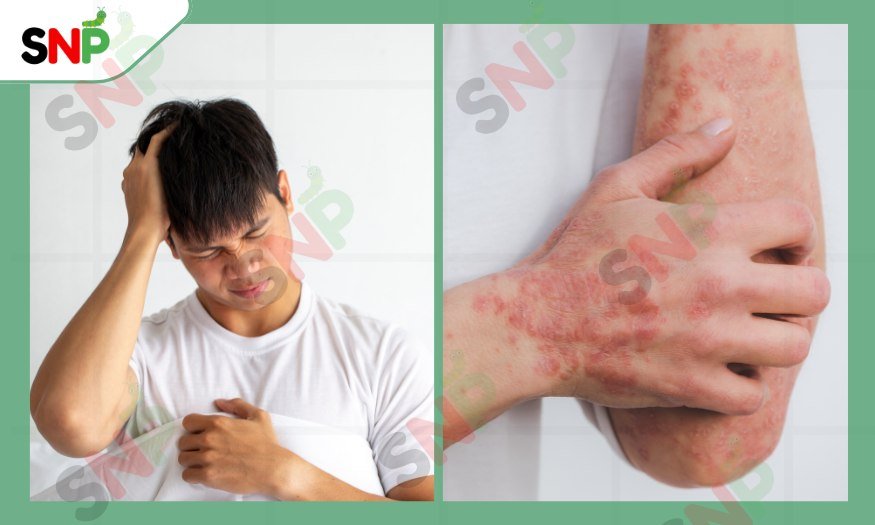
    • When untreated, tick bites may lead to life-threatening illnesses like Lyme disease, Rocky Mountain spotted fever, and more.
    • Bed bug bites result in small, red, itchy and at times burning rashes. These bites are generally found in groups or lines on the uncovered parts of the body like arms and legs. Bed bugs are nocturnal creatures and their bites can be irritating but they do not carry any diseases.
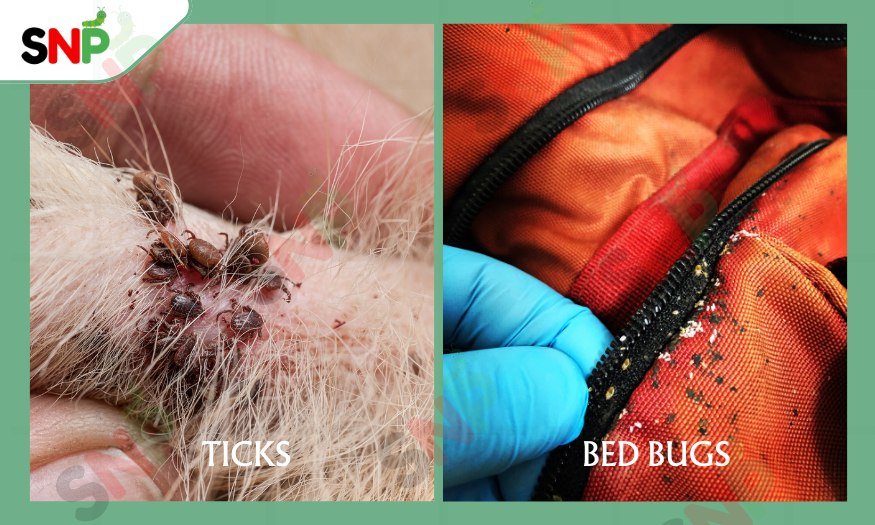
    • Ticks feed on the body by winding themselves tight into the skin and, therefore, they remain attached to the host for days. On the other hand, bed bugs only take a short meal and then they hide in their secret places.

    Habitat

    • In general, Ticks live outside only in the grassy, brushy, or wooded regions. To get to animals or humans, they have to stick there first. To go inside, ticks can hitch a ride on pets or clothing, however, they will not be able to make themselves a home in the indoor environment.
    • Bed bugs are indoor creatures and they are a nightmare for people and they have the potential to infest all the places they sleep, furniture, and any cracks in the house, hotel, and public transportation. They conceal themselves not only in mattress seams, bed frames, couches, but also in suitcases, it makes it so easy for them to be everywhere they want.
    • Though ticks lay eggs outside in bunches, bed bug eggs are small, pale, and stuck to things inside near their hosts.

    Diseases Caused by Bed Bugs

    As a matter of fact, bed bugs can arise health problems to people who get frequent exposure to them. The CDC, EPA, and other authoritative medical institutions state that bed bugs cannot be the cause of the transmission of any diseases among humans through their bites. Still, bed bug infestation can become a source of:

    • An allergic reaction (from slight scratching to anaphylaxis of a serious stage)
    • Secondary skin infections (diseases such as impetigo, ecthyma, and lymphangitis) which are caused by scratching and thus by introducing bacteria into the skin
    • Mental health impacts (the anxiety, insomnia, and stress, which are caused by the persistent presence of infestations).

    List of the Diseases Caused by Ticks

    Here are 10 most common tick borne diseases which can be life threatening as well are:

    1. Lyme Disease
    2. Anaplasmosis
    3. Babesiosis
    4. Ehrlichiosis
    5. Rocky Mountain Spotted Fever
    6. Alpha-Gal Syndrome (Meat Allergy)
    7. Colorado Tick Fever
    8. Southern Tick-Associated Rash Illness
    9. Relapsing Fever
    10. Bartonellosis

    Remember, these are names of only a few tick borne diseases, however consult a professional before coming onto conclusions.

    Conclusion: Tick vs bed bug

    When you are aware, it helps you to take the right action against these pests. People who  make the right decision with respect to the pest control measures and safety of their health effectively, are able to understand and prevent Tick vs Bed Bug.

  • House Flies vs Cluster Flies

    House Flies vs Cluster Flies

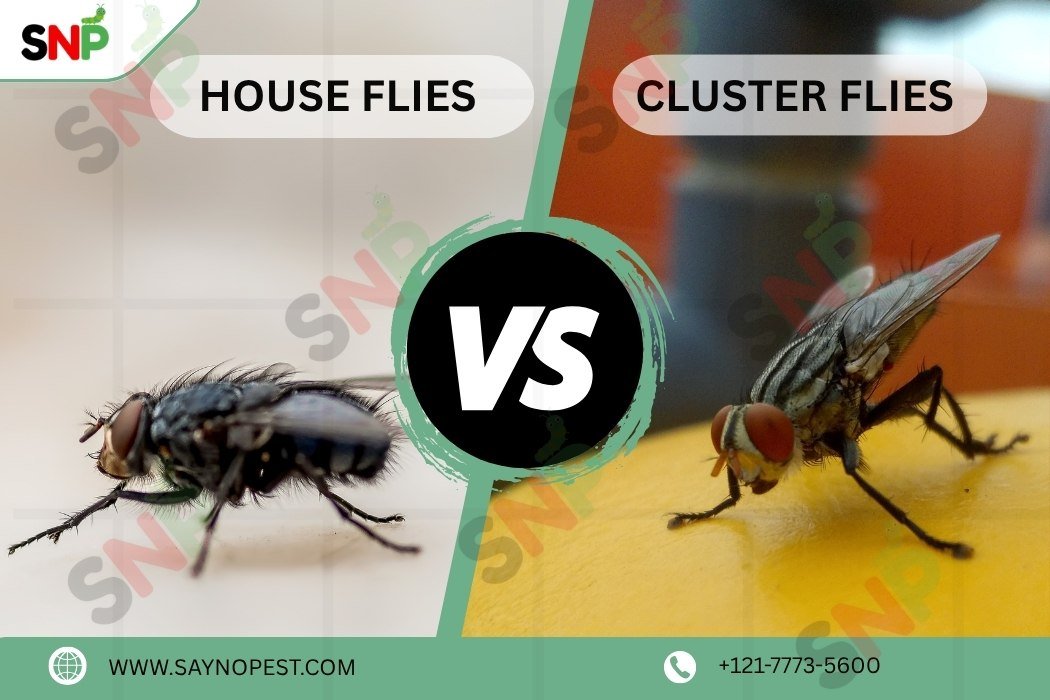
    If you are worried which fly species has invaded your home, cluster flies vs house flies? We might be able to help you figure it out. These flies have various differences. They are different in shape, color, habits, and in the health risks they pose. Let’s take a look at the main points of cluster flies vs house flies to help you spot them and get rid of these pests.

    How to differenciate between House Fly vs Cluster Fly?

    Let’s start with cluster flies!

    Cluster flies are large in size and darker as compared to the house flies. A cluster fly has a dark gray to black body with a silvery, checkered abdomen. They usually have short golden hairs on the thorax.

    Wings and Resting Position: The wings of cluster flies overlap when they rest. So if a fly is sitting near you, you will be able to tell what type of fly it is by the position of the wings.

    Movement and Behavior: One of their characteristic is their slow movement and the fact that they usually gather in clusters. Cluster flies can be in the sunlight near windows or in the attic. Due to this they form clusters.

    Habits: Cluster flies make a beeline for the houses in the late summer and fall for their hibernation, they like the attic and space in the walls. They have no intention of replicating indoors.

    House Flies

    House flies are small in size. They are about 3-8 mm long. The gray-color body of the house fly has four black stripes running along the back.

    Movement and Behavior: House flies are more energetic and move faster. You are more likely to spot them while they are looking for food or water in your house.

    Habits: House flies, in contrast, are powerfully attracted to food, rubbish, and decay. They deposit their eggs on these substances and thus they are able to multiply rapidly inside of your house.

    Lifespan of Cluster Flies vs House Flies

    The duration of lifespan of house flies vs cluster flies is different too:

    Cluster flies have been known to survive beyond a few months especially when they enter into a hibernation state during winter. Their lifetime is deeply connected with the seasons since they look for warm places in houses to survive the cold.

    The house flies are likely to live shorter which is about 15 to 30 days. But they multiply very fast and a small number of them can grow to a big number within a very short period when the weather conditions are in favor.

    Which Fly is More Hazardous?

    To decide the better option between cluster flies vs house flies, the health hazards need to be focused on first.

    Are Cluster Flies Harmless?

    Cluster flies are known as nuisance pests. They don’t transmit any diseases to people, and neither do they contaminate the food or surfaces in your house. The life of the larvae is in the soil, and they get their food from earthworms, therefore, they are not the ones that lay eggs on food or garbage.

    Are House Flies a threat to your health?

    House flies are a great danger to health. They are prime carriers of bacteria and germs. These flies feed and propagate on garbage, excrement, and the decomposition of organic matter. Pathogens can be transmitted by house flies to food and surfaces, thus, people must be careful.

    Therefore, house flies are more dangerous than cluster flies.

    Conclusion

    The first step to effectively eliminate the pests and ensure that your home is safe, is to know the difference between house flies vs cluster flies. You should focus your energy on the quick removal of house flies and the maintenance of your house, and on sealing the entry points to ensure that the cluster flies do not get into your place to hibernate in winters. By understanding house flies vs cluster flies, you can take the right steps to protect your family.

  • How to Get Rid of Rats: Effective Solutions

    How to Get Rid of Rats: Effective Solutions

    Introduction

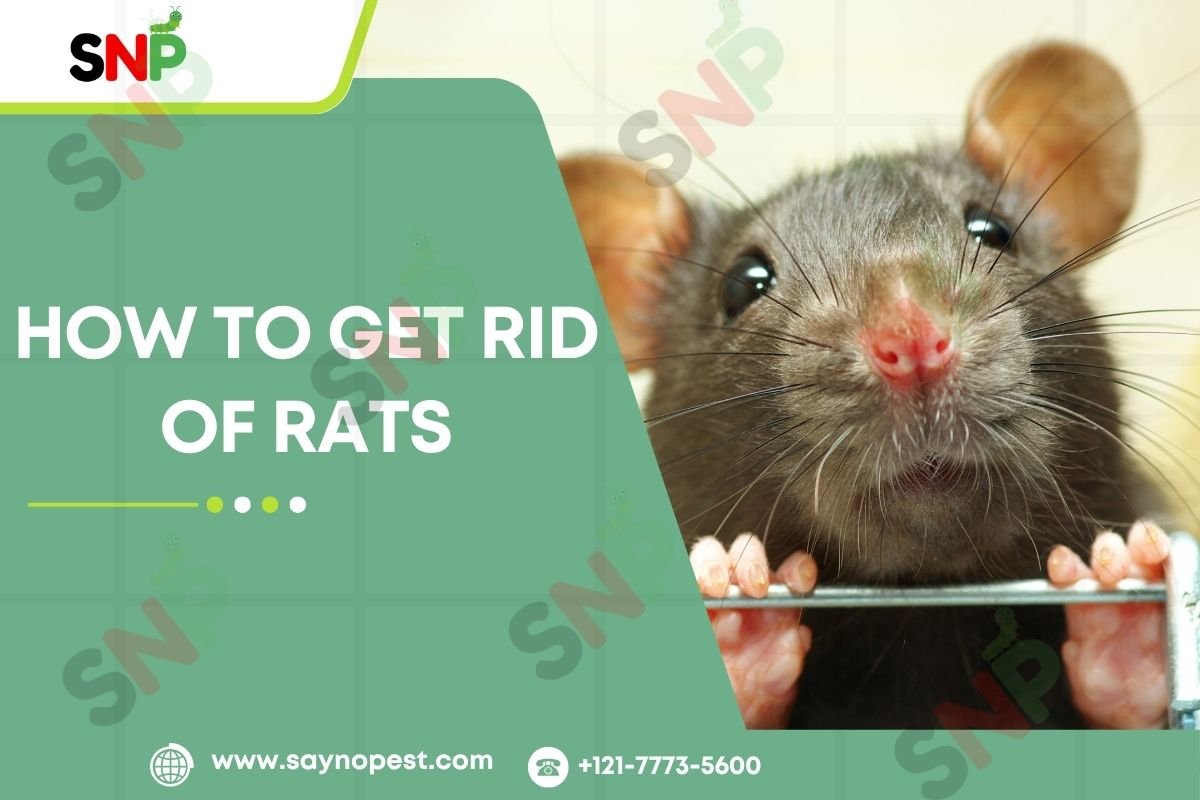
    If you are looking for how to get rid of rats, it is highly probable that you have a rat infestation at your home or business and the issue needs to be addressed quickly.

    Rats are very determined pests which cannot be stopped by any kind of barriers thus they will invade your property. They can not only annoy you but also pose a danger to your health.

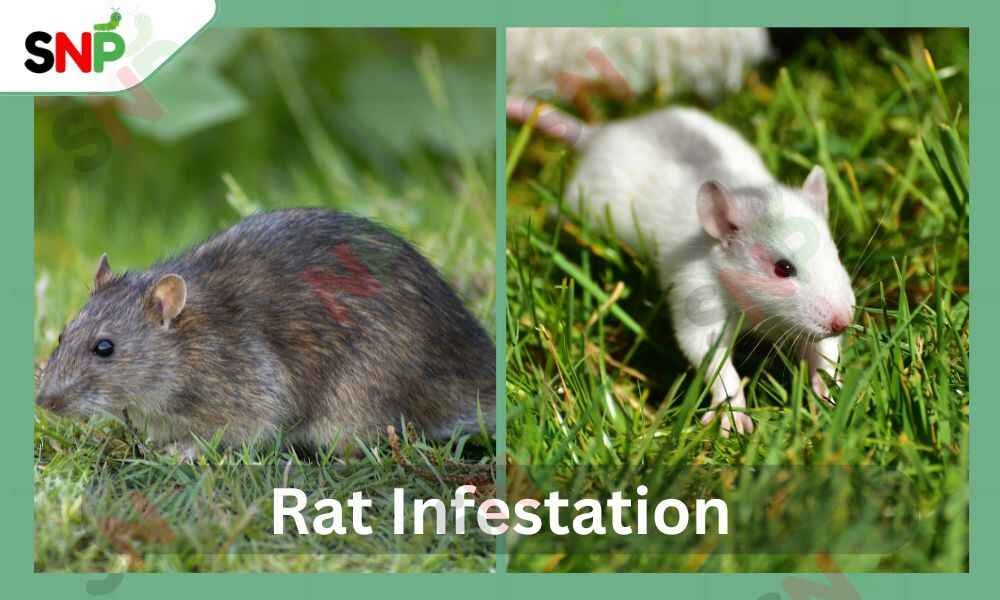
    Signs of Rat Infestation:how to get rid of rats

    • Rat droppings
    • Holes
    • gnaw marks, etc.

    These are some of the signs that indicate rat activity, so be on the lookout for these. After you are sure that the rats are there, do not waste time.

    RAT-INFESTATION

    How to get rid of Rats

    • The first step to get rid of rats is knowing their characteristics. They are looking for food, water, and shelter when they enter human buildings.
    • They go through very narrow holes, bite off materials, and what not. You should check your property very carefully at first.
    • Completely close all the gaps by using steel wool, hardware cloth, or cement.
    • Get rid of the waste and organize the pantry. Do it in such a way that the food does not become a source of attraction for the rats. For example, by storing everything in airtight containers and making sure that the lids of the trash bins are tight.
    • Snap traps are not only very effective but also free of chemicals. Thus, they happen to be the safest choice for many individuals.
    • If you would look for natural ways of how to get rid of rats, you can use some natural baits such as peanut butter or berries which you put in traps, and keep the place clean all the time so that they don’t have a reason to come here.

    You can definitely make your home free from them by following these steps.

    When to Call Professional Pest Control

    At times, even the DIY methods are not sufficient. I am going to tell you about a few instances when it is better to hire a professional if you are trying to find out ways to get rid of rats.

    1. If you spot the rats in the daytime, it frequently indicates that the infestation is large.
    2. If a few weeks have passed by and the DIY traps and baits have not lessened the rodent problem in any way.
    3. If you have been able to identify extensive property damage in a place such as chewed wires or structural issues.
    4. In case there are indications of rats in places which are difficult to reach like walls, attics, or crawl spaces.
    5. If you come across the rat nests or the lingering and strong smell that you are not able to get rid of.
    6. If members of your family or pets exhibit symptoms that may be caused by rats.
    7. If you are still not able to locate and close all the entry points despite several tryings.
    8. If you want a permanent solution as well as the professional’s help in prevention.

    Only expert pest control specialists know how to get rid of rats in the most efficient way, they have advanced techniques and tools at their disposal. They can find all the entry points, provide targeted treatments, and also, give ongoing monitoring to make sure the rodents are not coming back.

    At the same time, the money you spend on the services of a professional in the beginning may be a little more but in the long run, it saves you stress, time, and money, as well as it provides a guaranteed solution and future peace of mind.

    Conclusion

    It is still possible to succeed in how to get rid of rats by a combination of watchfulness, cleanliness, and focused endeavor. By going over the property, plugging the holes, removing the food sources, and using traps, you can fix the majority of rat issues yourself. However, if the problem is not solved or even gets worse don’t hesitate to contact those who can show you how to solve the problem once and for all. The immediate action is the only way which will protect your health, property and make you feel secured and satisfied with a rat-free environment for the future.

  • Where Do Drain Flies Come From

    Where Do Drain Flies Come From

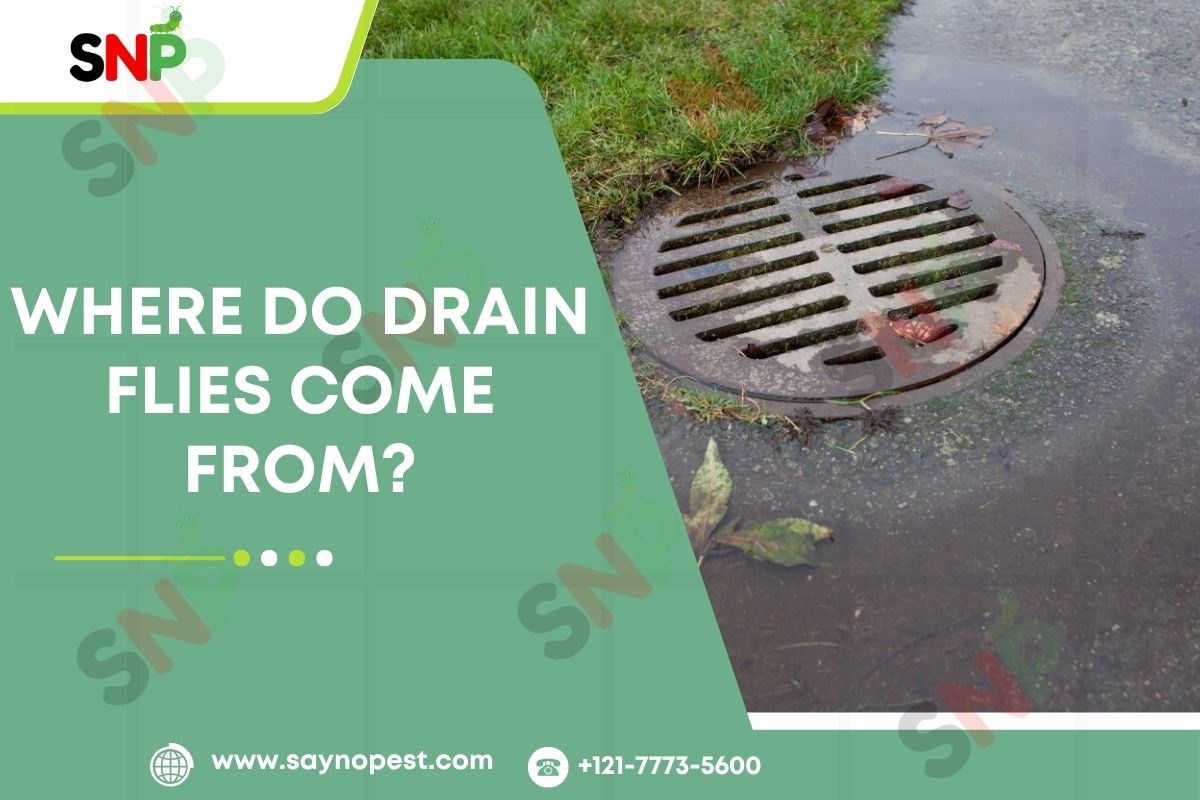
    When you see bugs resembling tiny, furry, flying things around your sink or shower, most probably you have come up with a question. Where do drain flies come from? These little biters are everywhere, and they go into homes, there is no exception. They are the most common pests that harass people living in the US. Especially those who are very health-conscious and care for a clean environment. Moreover, knowing where do drain flies come from is vital if you wish to keep your spaces clean and safe. We will discuss the topics of drain flies, the top places where do drain flies come from, and how to get rid of them in this article.

    What Is a Drain Fly?

    What-Is-a-Drain-Fly

    Drain flies are only a different name for moth flies, sink flies, or sewer gnats that are from the dipteran family. These are small insects and their bodies and wings are covered with short hair, which make them look like a small fuzzy moth. Their color can be from light gray to tan. Each of them has six legs and two antennae. Most people don’t distinguish them from fruit flies or fungus gnats. Although, drain flies lead their own, different lifestyle and are situated in the different places.

    The life span of a drain fly is very short. It lasts for 20 days during which it lays 30 to 100 eggs depending on the species. Eggs are deposited not in the water but on a moist surface just above the water line inside the drain. After 48 hours the eggs hatch and larvae start feeding. Larvae is a slimy organic substance in the drain called biofilm. The larvae stage takes 9 to 15 days, and the pupal stage only 20 to 40 hours. This is before new adults emerge. To answer the question Where do the drain flies come from is easy if we take into consideration their ability of reproduction. However, this same ability can turn into a menace if not held in check and infestations become quite unwieldy.

    Drain fly is not usually linked to diseases but when they are in large numbers, they cause a problem. They may be the cause of the allergy or asthma attack in sensitive individuals.

    Know Where Do Drain Flies Come From

    Where-Do-Drain-Flies-Come-From

    The most common places you’ll find them include:

    Clogged or Slow Drains:

    One of the most popular reasons for drain fly infestation is clogged or slow drains number one and most obvious. Such places become filled with stagnant water and organic matter that lead to drain flies deciding to use these spots for egg-laying.

    Rarely Used Toilets:

    Toilets that rarely get flushed can lead to a build-up of standing water and a deposit of organic film. This is certainly the number one top spot in the list of places where do drain flies come from.

    Refrigerator Drain Pans:

    Pans used for the drip under the refrigerator can become a place for drain flies to come, if they are not regularly cleaned, as the water and food particles in those areas create a hidden source of drain flies.

    Leaky Pipes and Plumbing:

    Moreover, any leak will cause the water to become a pool under the sink, behind the walls, or in the basement, which in turn will become a breeding place for these flies. These dark and wet places are still the most common answers to the question where do drain flies come from.

    Garbage Disposals:

    Additionally, if your garbage disposal hasn’t been cleaned of all food scraps and there is moisture present, it will become a haven for drain flies in no time.

    Septic Tanks and Sewer Lines:

    Issues with your septic system or sewer lines can lead to water that is not flowing and organic debris, that is exactly the source of drain flies.

    Basements:

    Basements are also a hub for these flies because of the high humidity and the fact that they are not normally clean.

    Drain flies may get into your home via cracks in windows, doors, or vents, as well. This happens especially when there is standing water outside.

    Conclusion

    The question- where do these flies come from is a very important one, that every homeowner who is health-conscious should think about. Where do these pests get their energy from? Is another important question. The common areas from where the flies come from are drains, pipes, and other damp places near your house. Make sure to remember that regular cleaning and maintenance can prevent them.